In this guide
Solar PV for UK Homes: The Full Guide to Panels, Inverters and Getting Paid for Export
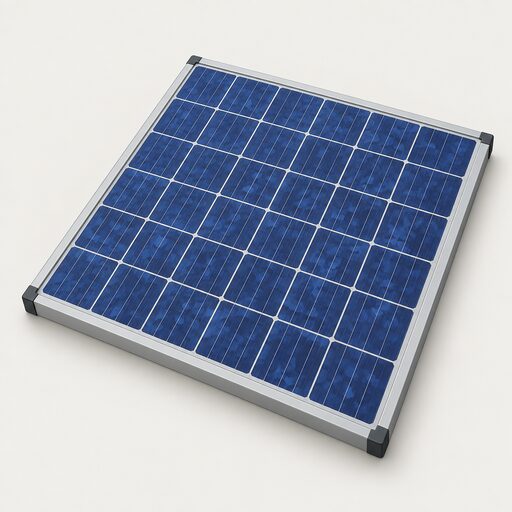
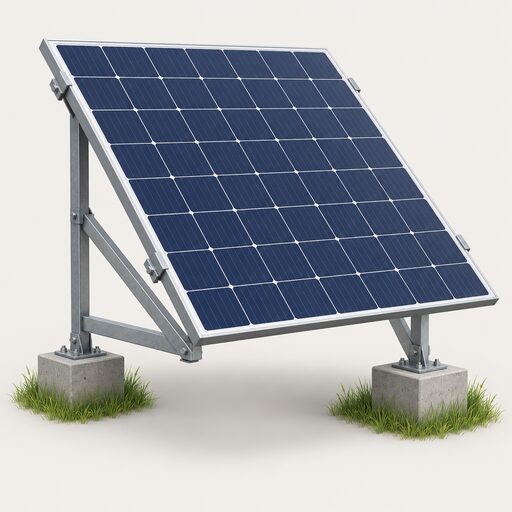
Solar photovoltaic (PV) panels capture energy from the sun and turn it into electricity for the home to use. Guidance from the London Borough of Hammersmith and Fulham describes the average UK system as around 3.5 kilowatt peak (kWp), made up of between six and 12 panels covering 10 to 20 m2 of roof. A typical installation costs around £6,100 and saves between £530 and £650 a year on electricity bills for a home without electric heating or an electric vehicle. On those figures the panels usually pay for themselves in 10 to 12 years.1
Solar is an established technology in UK housing. Which? reported around 1.65 million homes generating their own solar energy in June 20262, and the Energy Saving Trust counted nearly 1.7 million installations on homes across the UK in August 20263. The Centre for Sustainable Energy still puts the share at under 5% of the UK's 29m homes.4
The limits are as definite as the benefits. Rates for selling electricity to the grid are much lower than tariffs for buying it, so the value of a system depends on how much of its output the household uses itself1. The inverter is expected to need replacing during the life of the panels5. The main certification scheme requires a design-stage prediction of performance, not proof that the prediction was met6.
What solar PV does for a UK home
A PV system does three things, in the words of Bromley Council's guidance: it "could power your home, reduce your bills and may earn you money"8. The first two come from using the electricity as it is generated, which replaces units that would otherwise be bought from a supplier. The third comes from exporting whatever the home does not use. The Energy Saving Trust describes solar panels as the most common domestic renewable energy source in the UK.9
Published counts of how many homes have solar differ, because the documents were written at different times and count different things (homes, households or installations).
| Source and date | Figure given |
|---|---|
| Uswitch, September 2026 | About a million households10 |
| The IAA, September 2026 | Over a million UK homes11 |
| Welsh Government climate action site, January 2026 | More than 1.4 million homes12 |
| Which?, June 2026 | More than 1.5 million homes13 |
| Which? news, June 2026 | Around 1.65 million homes2 |
| Energy Saving Trust, August 2026 | Nearly 1.7 million installations on homes3 |
The more recent and more specific figures sit at the upper end of the table. The round "about a million" statements are better read as general descriptions than as current counts.
Uptake is uneven across the country. The Energy Saving Trust's 2026 analysis of solar potential uses a UK median of 123 installations per 10,000 people and a median growth of 23% compared with 2025. It identifies high-potential areas as those with below-average installation density but above-average home ownership (the UK median is 68%) and a higher share of rural homes14. Nationally, the Climate Change Committee's 2025 progress report judged that the roll-out of solar "appears significantly off track"15. For new housing, the UK Government is set to include requirements in its Future Homes Standard for most new builds in England to have solar panels.16
Geography does not rule any part of the UK out. The Energy Saving Trust states that solar panels are suitable across the UK17. The detail of which homes suit solar panels depends on the roof more than on the region.
How a system works: panels, inverter and the DC to AC step
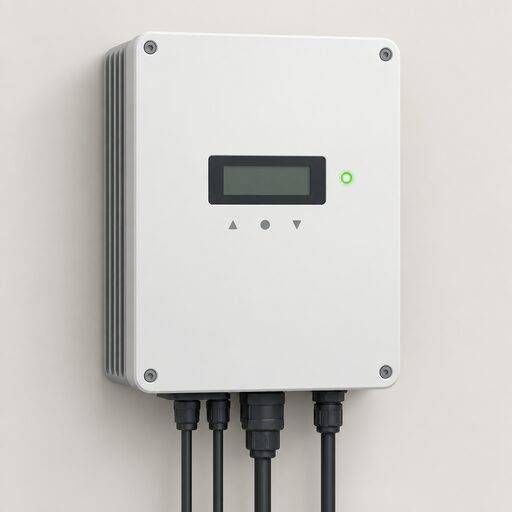
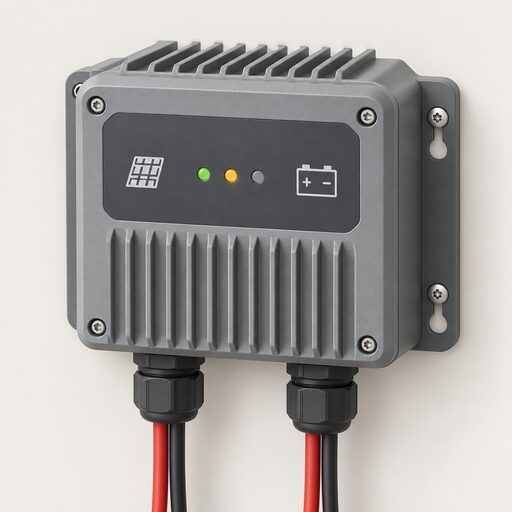
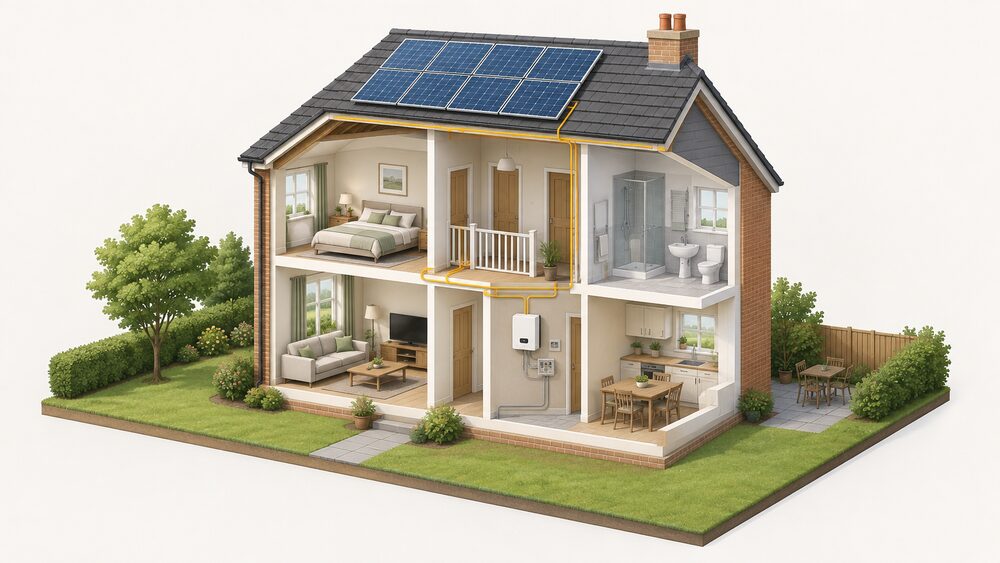
Light falling on the panels produces a direct current (DC). Household wiring and appliances run on alternating current (AC), so the DC output has to pass through a solar inverter before the home can use it1. The Energy Saving Trust puts it in one line: the inverter turns the DC electricity from the panels into AC electricity to use in the home17. Flexi-Orb's description of the installation sequence has the wiring from the panels connected to the inverter as a distinct step, and the panels then generate during the day with conversion happening continuously.18
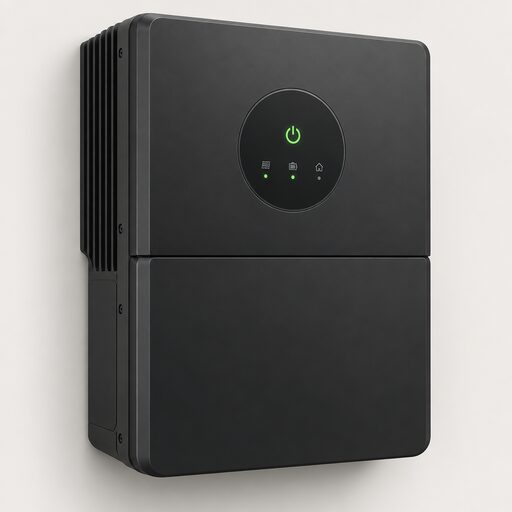
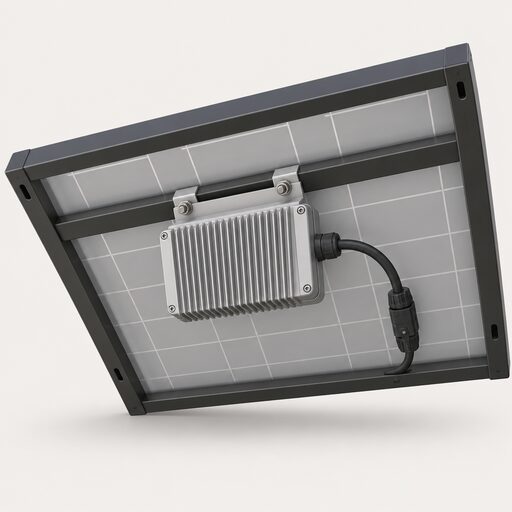
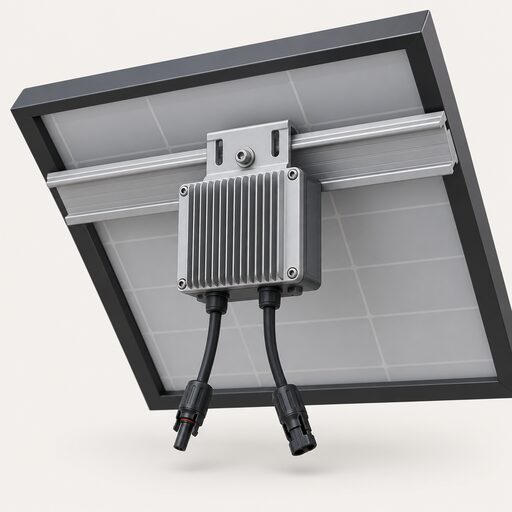
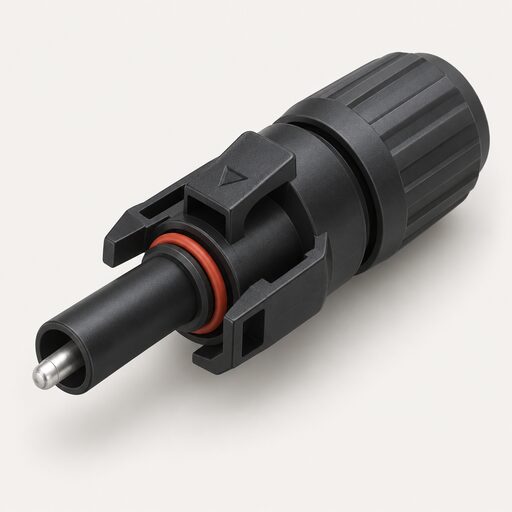
The inverter is the component most likely to need attention over the life of the system, and it comes in several forms. A string inverter handles a whole array in one unit. Microinverters convert at each panel, and power optimisers condition each panel's output ahead of a central inverter. A hybrid inverter also manages a battery. The general page on solar inverters sets out the ratings and lifespans. The cabling between roof and inverter is covered under solar DC cabling and connectors, and the roof hardware under solar mounting systems.
Panels use light, not heat
A common question is whether British weather defeats the technology. The House of Commons Library briefing on solar states that the cells do not need direct sunlight to work and can still generate some electricity on a cloudy day19. Oxfordshire County Council's guidance says that even on a cloudy day good generation can be achieved20. MCS adds the qualification that panels are more efficient in direct sunlight but still generate on cloudy days and during winter21. Which? gives the reason: panels work during daylight because they use light, not heat, to generate energy13. How far output falls in the darker months is covered in how much solar panels and batteries produce in winter.
Panel technologies: crystalline, thin-film and hybrid

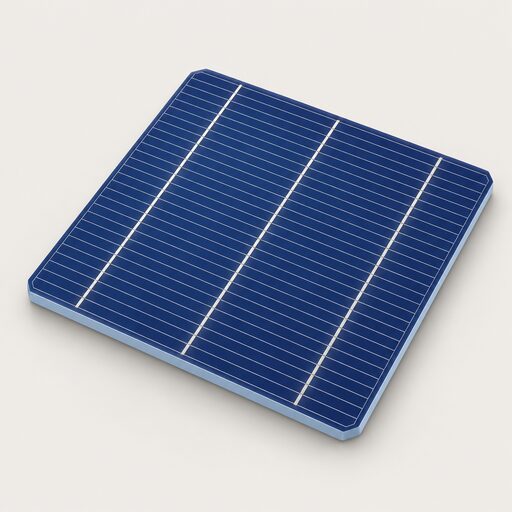
Welsh Government guidance on generating solar electricity groups PV panels into three technology types: crystalline cells, thin-film and hybrid22. Crystalline silicon is what almost every UK domestic installation uses. Within it the market has narrowed further. Which? reported in May 2026 that polycrystalline panels are being phased out in the UK and that few installers still offer them, which leaves monocrystalline panels as the default.23
Thin-film panels are made by depositing a photovoltaic material in a thin layer. NICEIC lists the common materials as amorphous silicon, cadmium telluride and copper indium gallium selenide24. Which? gives their module efficiency as up to 13%23. That low figure is the practical reason thin-film is rare on houses, where roof area is the limiting resource. Hybrid panels, which combine electricity and heat collection, are covered under PVT panels.
| Technology | What the guidance says |
|---|---|
| Crystalline cells | One of three listed types22. Polycrystalline is being phased out in the UK23 |
| Thin-film | Amorphous silicon, cadmium telluride or copper indium gallium selenide24. Module efficiency up to 13%23 |
| Hybrid | Listed as the third type in Welsh Government guidance22 |
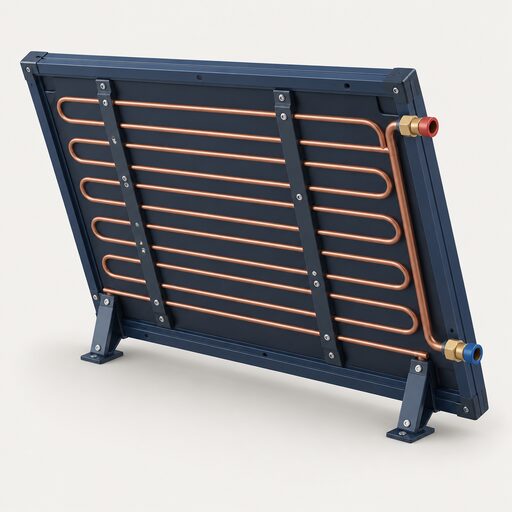
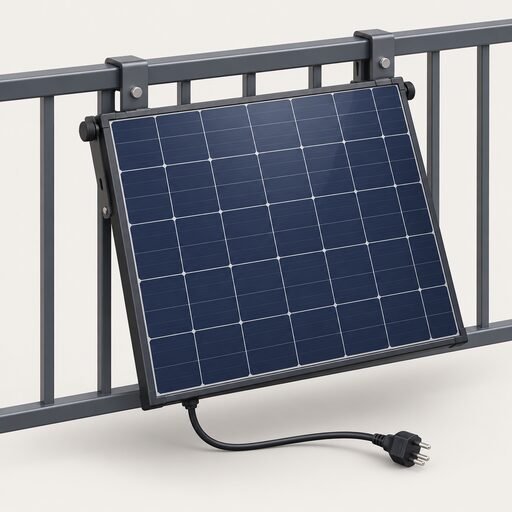
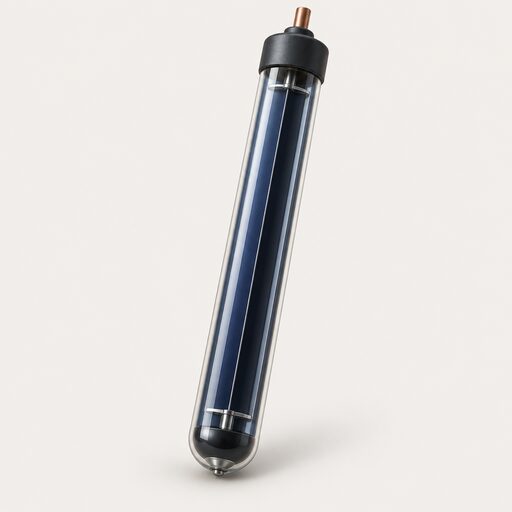
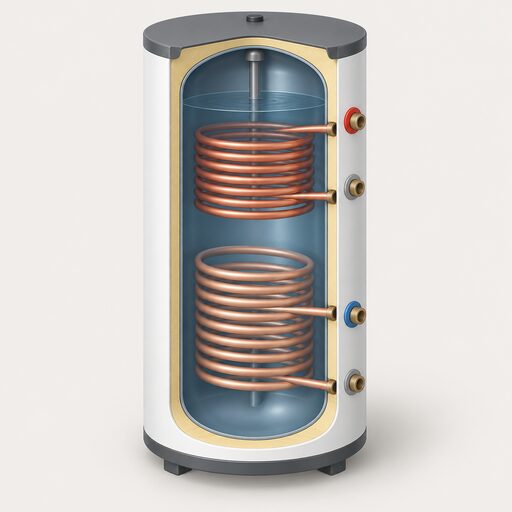
Two neighbouring technologies are often confused with rooftop PV. Solar thermal panels heat water and do not generate electricity. nidirect, the Northern Ireland government site, described them in October 2024 as the most popular form of solar energy used in the UK25. The differences are set out in solar thermal vs solar PV and solar water heating. The second is plug-in or "balcony" solar. Electrical Safety First's August 2026 consumer guide says these plug-in photovoltaic panels are now available to buy and self-install in the UK26. They are covered under plug-in solar kits and balcony solar.
Further detail on current cell designs is on the pages for types of solar panel, solar cell technology and reading a solar panel datasheet.
System size and roof space: what a typical 3.5 kWp setup needs
System size is quoted in kilowatt peak, the rated output of the array. Hammersmith and Fulham's guidance and Which? both use around 3.5 kWp1. The government's Solar Roadmap of June 2025 also describes a typical rooftop installation as 3.5 kW27. Which? buying advice gives an average of around 4 kWp28, and the Energy Saving Trust's main advice page now describes domestic systems as generally around 4.5 kWp.29
| System size | Roof area | Panels | Source |
|---|---|---|---|
| Around 3.5 kWp | 10 to 20 m2 | Six to 12 | Hammersmith and Fulham1 |
| Around 4 kWp | At least 20 m2 | Not stated | Which?28 |
| Around 4.5 kWp | 20 to 30 m2 | Around 12 | Energy Saving Trust29 |
The roof area ranges are wide, and the 3.5 kWp and 4.5 kWp bands overlap at 20 m2. The panel count for a given capacity depends on the rating of each panel: a 3.5 kWp system may need six panels or 121. In practice the usable area is the unshaded part of the roof that faces a useful direction, clear of chimneys, vents and roof windows. A site survey establishes the final count. Under the Solar Together group-buying scheme, for example, the surveyor's visit confirms the number of panels, their location, and details such as cabling locations and colour.
Capacity bears directly on independence. A larger array generates more in every daylight hour, but without storage or flexible loads the additional output mostly becomes export. The reasoning for matching size to demand is set out in what size solar system a home needs.
Orientation, shading and roof condition: where solar performs well and where it falls short
The best-performing UK roof is described consistently. Which? says a mainly south-facing roof gives the best power output, that southwest and southeast are also good, and that a pitch of around 30 degrees is best13. The Energy Saving Trust calls an unshaded, south-facing roof ideal for maximum performance29. A Which? news report gives the full specification for maximum output as a large, south-facing, 30 to 40 degree pitched roof in the south of England, free from shading.2
Few homes match that description, and the guidance gives figures for the penalty. A system facing east or west tends to get around 15 to 20% less energy than one facing directly south1. That reduction is material but does not disqualify the roof, and the economics are examined in solar panels on east or west roofs. Smart Energy GB goes further and notes that while south-facing roofs typically perform best, a household can still benefit from solar energy with north-facing roofs30. It does not quantify that benefit.
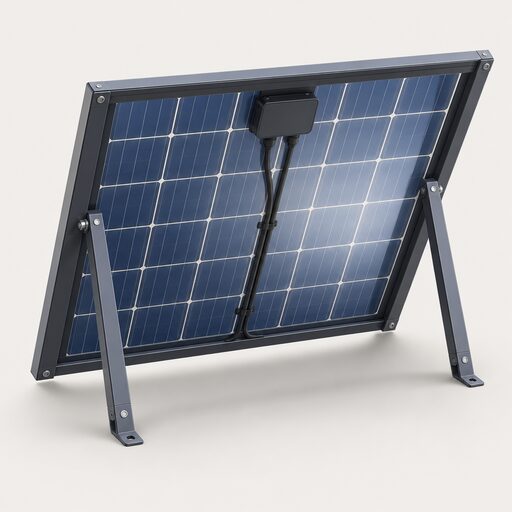
Pitch matters less than direction. Which? gives the average UK home's roof slope as 30 degrees, which is close to the optimum, and suggests that figure for calculations where the real one is unknown28. Panels can be installed on both pitched and flat roofs. On a flat roof they need to be tilted, and spaced so that one row does not shade the next, which reduces how many fit1. The planning position for those frames is on the page for flat roof solar permitted development.
Shading is the third factor, and every description of the ideal roof includes its absence. The mechanisms and mitigations are in how shade affects solar panel output and the wider page on roof orientation, pitch and shading.
A roof also has to be in a condition to carry panels for decades. Structural loading is a building regulations matter, covered below and in building regulations and roof loading. Re-roofing later means paying for removal and refitting.
Costs, savings and payback: around £6,100 installed, £530 to £650 a year off bills
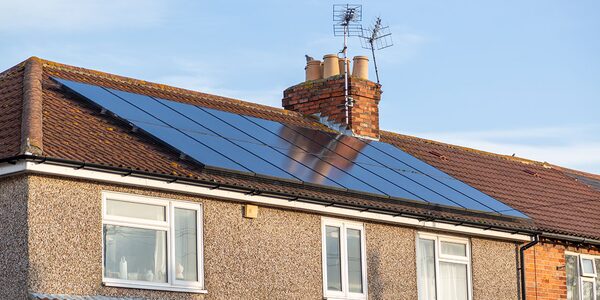
The most widely repeated UK cost figure is around £6,100. It appears in Hammersmith and Fulham's guidance for a typical house system of around 3.5 kWp, dated October 20251, in NICEIC's guidance attributed to the Energy Saving Trust24, in Which?13 and in the Energy Saving Trust's solar facts page of August 20263. Other figures are higher because they describe larger systems or later dates. None of these documents states the VAT position of its figure.
| Figure | What it describes | Source and date |
|---|---|---|
| Around £6,100 | Typical system, around 3.5 kWp | Hammersmith and Fulham, October 20251 |
| Around £7,600 | System of around 4.5 kWp | Energy Saving Trust, August 202629 |
| £7,400 | Typical rooftop system cost | Which?, April 202631 |
| £6,000 to £10,000 | Typical initial cost | The CPA, January 202632 |
| £1,500 to £10,000 | Cost range given for Scotland | Home Energy Scotland7 |
A range as wide as £1,500 to £10,000 shows that the installed price depends on array size, roof access, scaffolding, inverter type and whether a battery is included. Individual prices are installer-quoted. The page on how much solar panels cost in the UK breaks the figure down.
Savings depend on when the home is occupied
Savings vary with occupancy as much as with the hardware. MCS reports Energy Saving Trust predictions of between £590 and £650 a year for a household that is in all day, and between £470 and £530 for one that is out until 6.00pm21. Hammersmith and Fulham's £530 to £650 applies to a typical home without electric heating or an electric vehicle1. Which? gives typical expected annual savings of £605 to £675 for rooftop panels33. For Northern Ireland, an Energy Saving Trust page dated August 2026 gives £180 a year for a typical installation with occupants at home from 6pm.9
The gap between the all-day and out-until-evening figures is the cost of generating at times when nobody is at home to use the power. The official payback estimate is 10 to 12 years1. A household that shifts consumption into daylight moves towards the better end of the range, and the page on solar panel savings and payback works through the scenarios.
Plug-in panels cost and save less. They cost from around £450, or an estimated £400 to £500, and save around £70 to £100 a year according to the Energy Saving Trust, or £70 to £110 on government estimates reported by Which?34. The two routes are compared in plug-in solar vs installed solar.
Getting paid for export: why using your own solar first pays more than selling it
"rates for selling electricity to the grid are much lower than tariffs for using electricity from the grid."
This difference in price shapes how a system is best used. The same guidance concludes that using solar electricity in the home is much more cost-effective than exporting it1. A unit used in the home saves the full retail price, while a unit exported earns the lower export rate.
Uswitch published figures for a June 2026 heatwave week that show the scale of export income. Across British households with solar, the average home sold 4.6 kWh back to the grid per day, earning 55p.35
| Household modelled by Uswitch | Export earnings for the heatwave week |
|---|---|
| Average usage: seven panels, 2,700 kWh annual consumption | £3.8335 |
| High usage: ten panels, 4,100 kWh annual consumption | £5.3735 |
These earnings come from one of the sunniest weeks of the year, so export income in a typical week is lower, and much lower in winter. Export is a secondary income stream, not the core of the economics.
The route to export payment is the Smart Export Guarantee (SEG), which has administrative conditions. Which? notes that MCS or Flexi-Orb certification of the installing company is often required to get SEG payments28. Plug-in panels cannot be used to sell excess power back to the grid at all, so whatever they generate has to be used as it is produced33. The tariffs, the metering requirement and the closed Feed-in Tariff are covered in getting paid for solar export and switching from FiT to SEG.
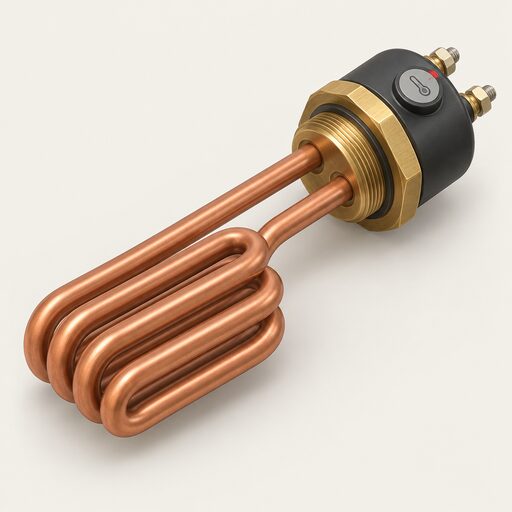
There are several ways to raise self-consumption. A solar diverter sends surplus to an immersion heater. Battery storage holds daytime generation for the evening. A household can also run appliances during daylight, which costs nothing.
Planning permission and building regulations: when permitted development applies

Most domestic solar installations do not need a planning application. Wirral Council states that placing panels on the roof of a house or flat, or on a building within its grounds, is in most cases permitted development under the Town and Country Planning (General Permitted Development) (England) Order 201536. Richmond upon Thames identifies the relevant provisions as Part 14 (Renewable Energy) of that Order37. Cornwall Council describes solar equipment on domestic buildings and land as usually permitted development "but there are a few exceptions"38, and sets out the rights for domestic premises as Class A and Class B.39
The exceptions and conditions that recur across council guidance are:
- Listed buildings. Panels must not be installed on a listed building under permitted development37. Cornwall states that they need planning permission and listed building consent39. See listed building consent for solar panels.
- Conservation areas. West Suffolk's guidance says roof installations are in most cases permitted development whether in a conservation area or otherwise40. Frome Town Council notes that in conservation areas permission is required if panels are fitted to a wall facing a public road, which in planning terms means a highway and does not include footpaths41. See solar panels in a conservation area.
- Conditions generally. Rother and Islington both stress that the right applies only if all the stated conditions are met42. Which? adds World Heritage Sites and other designated areas to the places where permission may be needed.13
- Flats and plug-in panels. Plug-in panels are treated as permitted development for flats subject to restrictions, and fixing them to the outside of a building needs the landlord's or freeholder's permission.33
Where there is doubt, a Lawful Development Certificate can be applied for to prove that an existing or proposed installation does not require planning permission.37
Planning is devolved. The Welsh Government notes that its permitted development regime for solar panels has different limits on projections and in relation to protected areas from its general rules on roof alterations44. Each nation has its own page: England, Scotland, Wales and Northern Ireland. Recent amendments in England are covered in changes to permitted development rights for solar.
Building regulations are a separate test
Planning freedom does not remove building control. Bromley's guidance states that installing panels may also require approval under the Building Regulations8. The Planning Portal advises contacting an installer who can provide the necessary advice, preferably one who belongs to the Competent Person Scheme45, and the Welsh Government gives the same advice for Wales46. Bedford Borough Council says the best way to avoid building regulations problems is to use an MCS certified installer47. A Welsh scheme specification notes that MCS certified installers generally do not need to submit a Building Regulations application but should check with local Building Control.48
MCS certification: the UK quality mark for installers and products
MCS is the Microgeneration Certification Scheme. A Ceredigion council document describes it as the body that "certifies, quality assures and provides consumer protection for microgeneration installations and installers" across solar PV, biomass, wind, heat pumps and heat products49. The UK Government calls it a mark of quality demonstrating adherence to industry-recognised standards for renewable products, contractors and their installations50. Ofgem defines it as a certification scheme for microgeneration installation companies and products51, one that aims to ensure consistent standards and provide confidence to consumers.52
Certification has several layers:
- Consumer code membership. Companies wanting MCS certification must first be members of a Chartered Trading Standards Institute Approved Consumer Code of Practice scheme.53
- Installation standards. MCS says certification ensures that installers work to industry standards and recognised safety practices.54
- The certificate. The MCS certificate is a record that the installation was done by a certified installer using certified products, and it is required when accessing some grants and incentives.54
- Technical standard. A Welsh public-sector specification requires PV systems to be installed and certified only by MCS contractors working to the latest published MIS3002 standard.48
MCS is not the only route. Which? tells buyers to check that a solar company is MCS certified or Flexi-Orb certified, noting that one or the other is often required for government support schemes or SEG payments.28
In practice, the generation estimate in a quotation is a modelled figure. Monitoring against it is left to the household, and monitoring a solar PV system explains how that is done. MCS can be contacted through its website or on 0333 103 813055. The scheme is described in full in MCS certification for solar PV.
Choosing and checking an installer

Official guidance contains practical steps for choosing an installer but does not name or recommend any firm.
- Check certification. The Energy Saving Trust's guidance is to make sure installers are MCS certified29, and MCS publishes the list. A valid certificate is issued through a body such as NICEIC, NAPIT, Simply Certification, the IAA or the British Assessment Bureau.48
- Compare quotes. The Energy Saving Trust suggests quotes from at least three different MCS-certified installers14. Bromley's guidance likewise says to get various quotes to compare prices.8
- Use the registers. Leeds City Council points to competent person registers such as TrustMark for finding an installer who will assess the property and identify suitable measures56. East Herts Council recommends always using a qualified installer57. The Welsh specification cited above requires both a valid TrustMark and MCS certification.48
- Expect a survey. Under Solar Together, a surveyor visits after the offer is accepted to assess whether the roof is suitable and to confirm the number of panels, their location, and details such as cabling locations and colour58. The scheme is described in the Solar Together group-buying scheme.
For a home bought with panels already fitted, the Energy Saving Trust describes having them checked by an MCS-certified specialist to confirm safe installation in line with safety standards.16
When things go wrong
MCS describes itself as "your single point of contact for complaints about MCS certified installers or installations, after an issue is raised with your installer first". The matters it will consider are system performance and design, quality of work, incomplete installation, delayed installation, commissioning and handover, installer conduct, damage to property, mis-selling, contractual issues, issues with product, and Customer Commitment breach59. Ofgem's guidance says the same: if a complaint is not resolved with the installer, the MCS Administrator will advise how to proceed.60
The installation sequence is described in solar panel installation from survey to handover, and common sales abuses in free solar panel offers. Self-installation is addressed in installing solar panels yourself.
Living with solar: panel lifetime, inverter replacement and registration
Panels are the long-lived part of the system. Home Energy Scotland states that they should last for 30 years or more7, and Which? reports warranties of up to 20 or 25 years5. The documents do not fully agree on lifespan. The Energy Saving Trust's advice gives 25 years or more29. The two figures are compatible as minimums, but the 30-year statement is the more optimistic. Output declines gradually over that time, as explained in solar panel warranties, degradation and lifespan.
The inverter is different.
That replacement is a foreseeable cost inside the payback period and is not part of the headline installation price. Routine upkeep is otherwise light and is covered in maintenance and cleaning and when panels need replacing.
Registration with the network operator
A system has to be registered with the Distribution Network Operator (DNO) for the area, and the installer will usually do this3. Hammersmith and Fulham's guidance names UK Power Networks because that is its local operator1. Homes elsewhere deal with their own DNO. The technical routes are explained in connecting solar to the grid: G98 and G99.
Effect on property value
Estimates of the effect on sale price are loose. NICEIC states that installation can increase a home's value by around 6 to 7%24. The CPA reports studies suggesting homes with solar may sell for 2% to 14% more32. The width of the second range is the more informative figure, because it shows that the effect on any given property is uncertain.
Brands and product ranges sold in the UK

A domestic system combines products from several manufacturers, usually one each for panels, inverter and mounting. The site's product pages describe the ranges without ranking them.
- Panels. Pages cover LONGi, JinkoSolar, Trina Solar, JA Solar, Qcells, SunPower and Maxeon, Solarwatt, Sharp and the British makers GB-Sol and UKSOL.
- Inverters and module-level electronics. Pages cover Fronius, SMA, SolarEdge, SolaX, Sungrow, Fox ESS, Sunsynk, Huawei, Hoymiles, Tigo and the Enphase IQ8 microinverters.
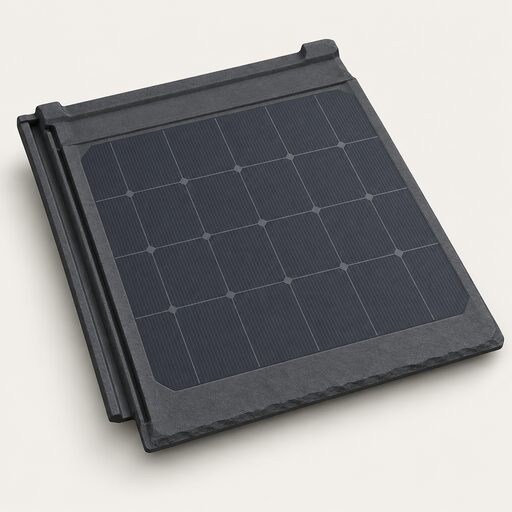
- Mounting and roof-integrated products. Pages cover Renusol, Schletter, the GSE in-roof system, Viridian Solar and Marley SolarTile.
- Diverters and solar thermal. Pages cover Solar iBoost+, the myenergi eddi and Grant solar thermal.
Accessories carry their own, often shorter, terms and their own availability. At the time of reading it was out of stock, with a notification option for its return62. A panel warranty of two decades therefore says nothing about the smaller components around the panels. It also does not remove dependence on each manufacturer continuing to trade and to supply parts.
How solar fits into household energy independence
Solar PV is the one generating technology that suits almost any UK home: the Energy Saving Trust calls it suitable for anywhere in the UK14. During daylight it displaces electricity that would otherwise be bought, which reduces exposure to retail prices for that share of demand. It is a measurable step towards self-supply, at a cost of around £6,100 for a typical system.1
Several dependencies remain.
- The grid. Without storage, the household still imports electricity in the evening, overnight and through much of winter. Uswitch's data gives a self-consumption rate of 70% for homes with solar and a 10 kWh battery, which shows both how much a battery helps and that some generation is still exported35. A standard grid-tied system also stops in an outage, as explained in whether solar panels work in a power cut.
- A supplier. Export income depends on a supplier's tariff, and export rates are much lower than import rates.1
- Manufacturers and software. The inverter will need replacing, and monitoring generally runs through a maker's app.
- Scale. A plug-in kit gives a more limited form of independence. UK-compliant devices are capped at around 800 W, which is enough for everyday appliances, but higher-use appliances still need grid electricity34. The government said in May 2026 that these kits would be available in shops within months.63
Full self-sufficiency requires storage, load management and, for most homes, acceptance of a continuing grid connection. The alternative is set out in off-grid solar. The combined picture is set out in solar panels and household energy independence. Solar panels without a battery covers the simpler starting point.
Sources63 cited
- Solar panels: energy improvement options, London Borough of Hammersmith and Fulham, 2025-10
- Could solar panels save you £500 a year?, Which?, 2026-06-17
- Solar power facts, Energy Saving Trust, 2026-08-13
- Solar Wizard calculator, Centre for Sustainable Energy, 2026-05-06
- Most common solar panel problems, Which?
- Report on the heat pump transition, GOV.UK, 2026-05
- Solar panels, Home Energy Scotland
- Solar photovoltaic (PV) panels, London Borough of Bromley
- Top energy saving ideas for your home improvement project, Energy Saving Trust, 2026-08-03
- Green energy guide, Uswitch, 2026-09-04
- Solar battery storage guide, The IAA
- Solar panels: green energy choices, Welsh Government, 2026-01-14
- Solar panel myths: five common concerns debunked, Which?, 2026-06-09
- UK solar panel hotspots, Energy Saving Trust, 2026-08-13
- Progress in reducing emissions: 2025 report to Parliament, Climate Change Committee, 2025
- Buying a house with solar panels, Energy Saving Trust, 2026-08-13
- Solar panel installation, Energy Saving Trust, 2026-09-07
- Solar PV technology, Flexi-Orb, 2025-04-22
- Research briefing on solar, House of Commons Library
- Solar panels: retrofitting your home, Oxfordshire County Council
- Solar photovoltaic (PV), MCS, 2026-07-30
- Generating your own energy: solar electricity, Welsh Government
- Are solar panels worth it?, Which?, 2026-05-15
- Solar panel installation, maintenance and repair, NICEIC
- Solar thermal panels, nidirect, 2024-10-22
- Plug-in solar consumer guide, Electrical Safety First, 2026-08
- UK Solar Roadmap, Department for Energy Security and Net Zero, 2025-06
- Buying advice for solar panels, Which?, 2026-08-12
- Solar panels advice, Energy Saving Trust, 2026-08-27
- How do solar panels work?, Smart Energy GB, 2026-03-16
- Plug-in solar panels vs rooftop systems, Which?, 2026-04-27
- Do solar panels increase home value?, The CPA, 2026-01-20
- Plug-in solar panels, Which?, 2026-09-15
- Plug-in solar panels advice, Energy Saving Trust
- Homes with solar panels during the heatwave, Uswitch, 2026-06-28
- Solar panels, Wirral Council
- Solar panels and permitted development, London Borough of Richmond upon Thames, 2026-07-06
- Do I need planning permission?, Cornwall Council, 2026-09-09
- Solar panels and planning permission, Cornwall Council
- Solar photovoltaics and planning in conservation areas, West Suffolk Council
- Planning and solar, Frome Town Council, 2025-09-02
- Renewable energy: solar panels and heat pumps, Rother District Council
- Solar panels guidance, Islington Council
- Planning permission: roof, Welsh Government
- Solar panels: building regulations, Planning Portal
- Building regulations: solar panels, Welsh Government
- Building regulations renewables guidance, Bedford Borough Council
- Barcud solar panel installation scheme specification, Sell2Wales, 2026-06-15
- ECO4 Flex and GBIS Flex information document, Ceredigion County Council, 2025-11
- Heat pumps explained: experts answer your questions, GOV.UK, 2024-03-28
- Boiler Upgrade Scheme guidance for installers v5.1, Ofgem, 2026-07-02
- Domestic RHI: who to contact, Ofgem
- Renewable Energy Consumer Code, Chartered Trading Standards Institute
- Small wind turbines: MCS consumer guidance, MCS, 2026-08-18
- Boiler Upgrade Scheme guidance for property owners v5, Ofgem, 2026-03-25
- Energy Company Obligation scheme: home energy efficiency, Leeds City Council
- Solar panels, East Herts Council
- Solar Together domestic planning guidance, Southampton City Council
- Consumer complaints, MCS, 2026-09-07
- Feed-in Tariffs: dispute resolution, Ofgem
- Plug-in solar, Electricity North West
- Power Line Filter 40 A single-phase, Enphase, 2026
- Britain continues to break clean power records, GOV.UK, 2026-05-28