In this guide
Enphase IQ8 microinverters are the maker's current module-level inverter line for UK home solar, sold as several models rather than one product. Each unit converts the DC output of a single panel to mains AC at the panel itself, which is what separates the range from a string inverter on a wall. Enphase states that each panel has its own microinverter, so the system keeps running even if one stops working1.
The headline figures are a CEC weighted efficiency of 97% on the IQ8+ and 97.5% on the IQ8M, a start voltage window of 22 to 58 V across the IQ8 Series, and a warranty described as up to 25 years2. UK trade prices for the microinverter alone sit in the region of £88 to £168 depending on model and whether VAT is shown, and the range is sold through distribution rather than direct4.
The IQ8 line is also the point at which Enphase's backup story becomes possible in a UK home, because the microinverters are grid-forming and can connect through an IQ System Controller. That capability is not automatic: it needs additional equipment, and in backup configurations it needs an installer with Enphase University certification6.
The IQ8 range at a glance
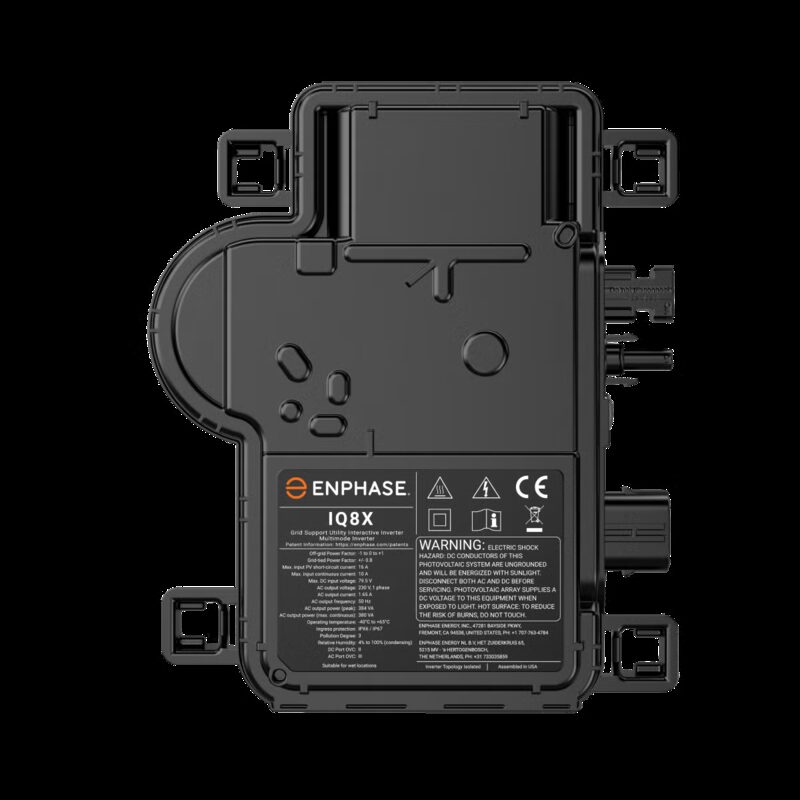
Enphase sells the IQ8 family as a set of models rather than a single part, and the differences between them are about which module they match and what the site needs. The IQ8HC is described by the maker as smart grid ready and designed for the latest generation of high efficiency PV modules, and it is CE-certified when installed according to the manufacturer's instructions1. The IQ8AC and IQ8MC are the other two single-phase options in the UK store, and the IQ8P and IQ8X sit above them7.
The IQ8 Series as a whole is described in the datasheet as the industry's first microgrid-forming, software defined microinverter with split-phase power conversion capability2. That is a technical claim about what the hardware can do when paired with the right system controller, not a statement that a bare IQ8 installation provides backup power.
| Model | Position in the range | Key stated feature |
|---|---|---|
| IQ8HC | Single-phase, high-current modules | Smart grid ready, CE-certified1 |
| IQ8AC | Single-phase | Rapid shutdown functionality7 |
| IQ8MC | Single-phase | Warranty of up to 25 years8 |
| IQ8P | Higher output | Rapid Shutdown functionality9 |
| IQ8X | Higher output | Warranty of up to 25 years10 |
The cabling and combiner side of the system matters as much as the microinverters. Enphase sells IQ Cable in a portrait single-phase form, and the IQ Combiner 5 HDK is described as providing a complete, grid-agnostic Enphase Energy System when used with IQ Series Microinverters, the IQ System Controller 3 or 3G, and the IQ Battery 5P11. A household buying IQ8 microinverters is buying into that wider ecosystem, not a standalone component.
What a microinverter is, and why one per panel matters
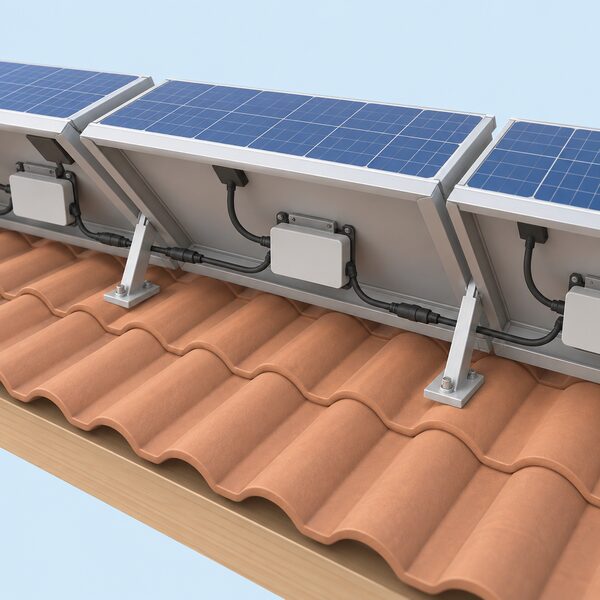
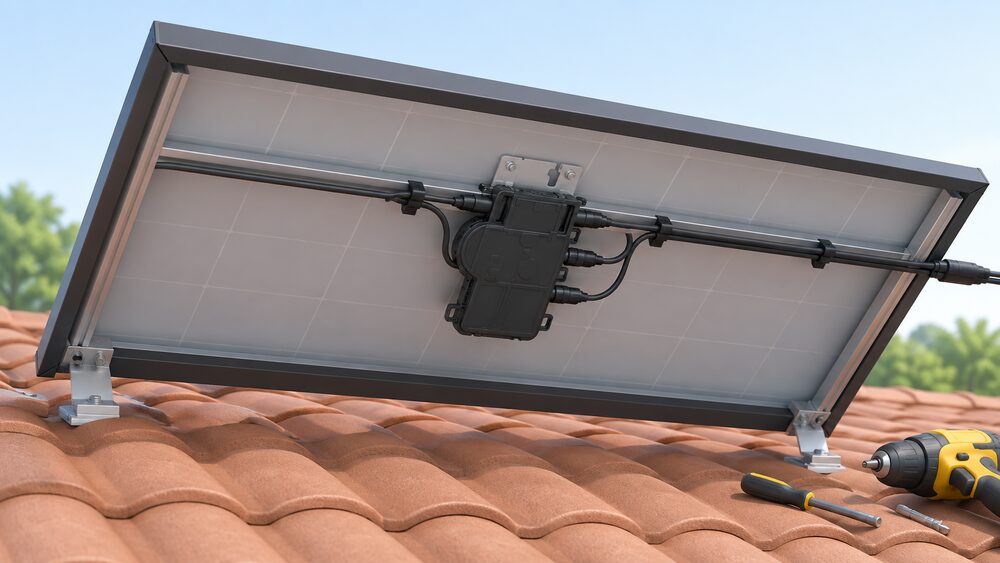
A microinverter is a small, independent inverter installed on each solar panel, or on a small group of panels13. That is the whole architectural difference from a string inverter, which handles multiple panels at once. Because the conversion happens at the panel, the system works on a panel-by-panel basis, so one panel's performance does not drag down the others13.
Enphase puts the same point in household terms: each panel has its own microinverter, so the system keeps running even if one stops working14. Independent guidance on microinverters describes the conversion point as per panel and independent, which is the property that makes the architecture attractive on a roof with shading, multiple orientations or a chimney casting a shadow across part of the array15.
The trade-off is the number of units. A 400W microinverter supports one panel, an 800W to 1200W model supports two, and a 1600W to 2000W microinverter supports four, according to guidance aimed at most homes3. Enphase's own approach is one unit per panel, which means a ten-panel array carries ten microinverters, each a potential point of failure but each independently replaceable. The maker's monitoring and analysis runs through the Enphase Installer App and the IQ Gateway, so the household sees performance at panel level rather than as a single array figure16.
For energy independence, the practical effect is that a single shaded or faulty panel does not take the array offline, and the system can be expanded panel by panel. Enphase states that a household can start small and grow the system with IQ Microinverters or IQ Batteries with no extra work required14. The dependence that remains is on the grid for export and import, on the IQ Gateway for monitoring, and on the maker's app for visibility. More on the architecture is at microinverters and the comparison with the alternative is at microinverters vs string inverters.
Efficiency and output: 97% CEC weighted on the IQ8+
The efficiency figures published for the IQ8 family sit in the high nineties. The IQ8M is listed at a CEC weighted efficiency of 97.5%, and the IQ8A at 97%2. Guidance on the IQ8+ gives 97% CEC weighted, with a continuous output of 290 VA and a peak of 300 VA3. For context within the same maker's range, the earlier IQ7X is listed at 97.5% CEC efficiency and the IQ7HS at 97.0% at 240 V and 96.5% at 208 V16.
Those numbers are close enough that efficiency alone is not a reason to choose between IQ8 models. What differs is module matching. Enphase states that the IQ8 Microinverters are compatible with high-wattage modules and provides a calculator to match PV modules to the right IQ8 Microinverter17. The IQ8HC is aimed at the latest generation of high efficiency modules, which is where the high-current designation comes from1.
The electrical envelope is worth knowing because it determines whether a given panel will start the unit on a dull morning. The IQ8 Series datasheet gives a minimum start voltage of 22 V and a maximum of 58 V, a nominal voltage range of 211 to 264 V, and an extended frequency range of 47 to 68 Hz2. The earlier IQ7HS lists a minimum and maximum start voltage of 30 and 59 V, so the IQ8 window opens lower16.
In practice, the efficiency figure a household sees on a monitoring app will be lower than the CEC weighted number, because it includes cable losses, conversion at the gateway and the panel's own temperature behaviour. The CEC weighted figure is a laboratory measure of the inverter, not a system performance guarantee. Panel-level specification reading is covered at solar panel specifications and efficiency.
Compatibility limits: IQ8 cannot be mixed with IQ7 or IQ6
This is the section that catches people out. Enphase states plainly that IQ8 Microinverters cannot be mixed together with previous generations of Enphase microinverters, including the IQ7 Series and IQ6 Series, in the same system2. A household with an existing IQ7 array cannot simply add IQ8 units onto the same branch.
The maker's installer guidance appears to soften that, saying that IQ8 Microinverters can now be used to expand systems with IQ7 Microinverters, using the same IQ Gateway and the same installation process17. Read together, the two statements describe a limit on mixing within a circuit rather than a blanket ban on expansion, and the exact arrangement is a matter for the installer and the maker's compatibility documentation.
There are software conditions attached. Commissioning IQ8 Microinverters requires the Enphase Installer App version 4.5.0 or higher and IQ Gateway software version 8.03.5052 or higher, and an IQ Gateway software update must be performed using that app version17. Earlier versions of the Enphase Installer App do not support the required IQ Gateway software for IQ8 compatibility17.
For a household, the practical consequence is that an IQ8 purchase is a decision about the whole system's generation, not a like-for-like swap for one failed unit. The IQ7HS datasheet shows the older generation integrating with the IQ Gateway, IQ Battery and the Enphase Installer App, so the ecosystem carries across even where the microinverters cannot16. The wider picture on adding storage later is at adding battery storage to solar.
Backup and smart grid capability: what IQ8 unlocks
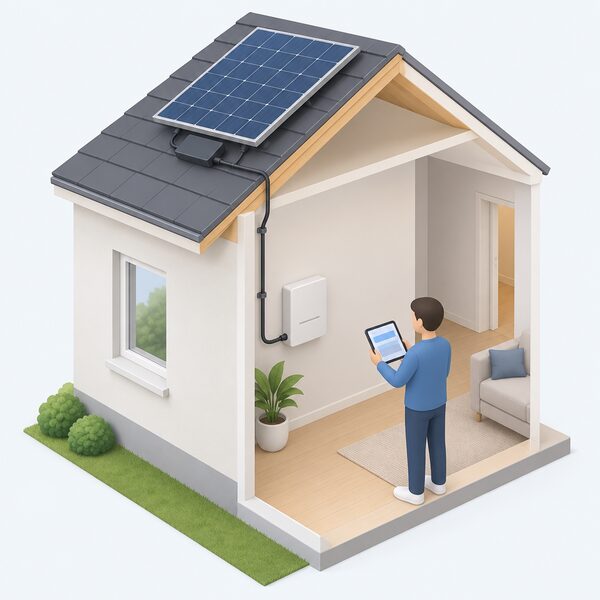
The IQ8 line is where Enphase's backup proposition starts, but the microinverters are only one part of it. Enphase states that the IQ8 Series Microinverters are grid-forming and can connect to the home through the IQ System Controller 2, which enables grid-forming IQ8 Microinverters, IQ Batteries and even third-party AC standby generators to be connected to the home6.
The Sunlight Backup system is the packaged version of that. It consists of IQ8 Series Microinverters, IQ System Controller 2, IQ Combiner 4C, up to two IQ Load Controllers and other accessories as needed6. Without the controller and combiner, a grid-tied IQ8 array behaves like any other grid-tied system and shuts down in a power cut.
Storage adds a second layer. Enphase IQ Batteries include an integrated load controller that can turn power-hungry appliances on and off from the Enphase App during an outage, with automatic or manual management19. The IQ Battery 5P is covered by a 15-year warranty up to 6,000 cycles, and the FlexPhase version is managed through the Enphase app for tracking energy used and saved20. The earlier IQ Battery 10 datasheet describes grid-forming capability for backup operation and a ten-year limited warranty with more than 70% capacity up to 10 years or 4,000 cycles22.
"The system consists of IQ8 Series Microinverters, IQ System Controller 2, IQ Combiner 4C, Up to 2 IQ Load Controller and"
The independence this buys is partial and conditional. A household with IQ8 microinverters, a system controller and a battery can run selected circuits during an outage, which is a real step away from total grid dependence. What remains is dependence on the battery's state of charge, on the load controller's limits, on the Enphase app for management, and on the maker for firmware and support. Independent guidance on solar battery storage notes that a 1.2 kWh Enphase AC Battery carried a 10-year warranty, which shows how much the storage side of the range has moved on23. More on outage behaviour is at solar panels in a power cut.
Warranty: up to 25 years
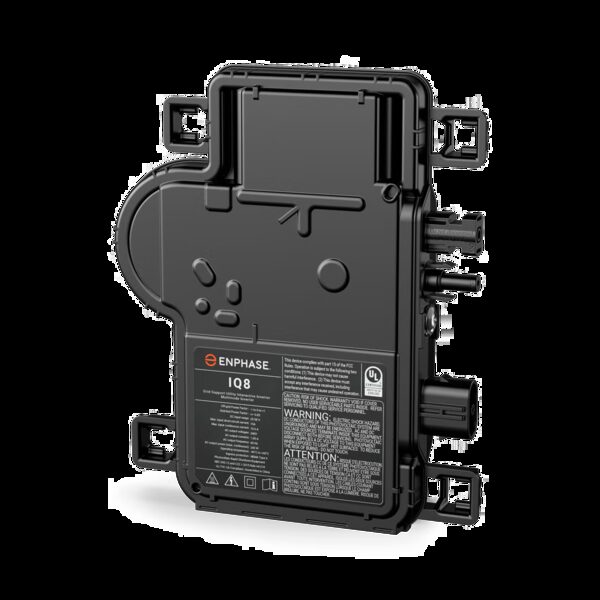
Enphase describes the IQ8 warranty as up to 25 years across the model pages, and the IQ8 Series datasheet calls it an industry-leading PV limited warranty of up to 25 years1. The maker's homeowner pages state that Enphase IQ Microinverters are covered by an industry-leading 25-year limited warranty14.
The phrase "up to" is doing work in those statements. It signals a maximum term rather than a flat promise, and the conditions sit in the maker's warranty documentation rather than on the product page. The same construction appears on the earlier IQ7HS datasheet, which says the design enables Enphase to provide an industry-leading warranty of up to 25 years16.
The storage side of the ecosystem carries different terms. Enphase IQ Batteries are covered by a 15-year limited warranty, and the IQ Battery 5P specifically by a 15-year warranty up to 6,000 cycles19. The older IQ Battery 10 carried a ten-year limited warranty with more than 70% capacity up to 10 years or 4,000 cycles22. A household comparing a 25-year microinverter term with a 15-year battery term is comparing two different products with two different replacement horizons.
Reliability testing is cited as the basis for the term. Enphase states that the IQ8HC has more than one million hours of cumulative inrush testing, and that the IQ8 range is proven to perform with over a million hours of reliability testing and backed by a 25-year limited warranty1. Those are maker figures about test hours, not field failure rates.
For independence, a long warranty on module-level electronics matters because replacement is a roof visit. The dependence it creates is on the maker's continued operation and on the warranty terms being met at installation. Warranty structures across the sector are covered at solar panel warranties and degradation.
Cost and UK availability
Enphase does not publish a supplied and fitted price for an IQ8 system, and the figures that exist are unit prices from UK trade listings. A distributor listing from September 2026 shows the IQ8HC at £110.00 plus VAT and the IQ8AC at £99.00 plus VAT, with a three-phase IQ8AC variant at £98.00 plus VAT4. A separate UK trade listing shows the IQ8HC at £105.32 excluding VAT and the IQ8MC at £88.40 excluding VAT5.
The two sets of figures do not agree, and the VAT position is inconsistent between listings. The same trade listing carries IQ8P at £168.00 including VAT and IQ8X at £109.30 excluding VAT, alongside IQ7 models at £120.00 and £128.39 including VAT5. Because the VAT position is inconsistent between listings, these should be read as quoted trade prices rather than confirmed consumer prices.
| Model | Listed price | VAT position | Source |
|---|---|---|---|
| IQ8HC | £110.00 | plus VAT | Distributor listing4 |
| IQ8AC | £99.00 | plus VAT | Distributor listing4 |
| IQ8AC (three-phase) | £98.00 | plus VAT | Distributor listing4 |
| IQ8HC | £105.32 | excluding VAT | Trade listing5 |
| IQ8MC | £88.40 | excluding VAT | Trade listing5 |
| IQ8P | £168.00 | including VAT | Trade listing5 |
Availability is a live question rather than a fixed one. One UK listing showed the IQ8MC as out of stock in September 20265. Distribution widened in March 2026 when Waxman Energy announced a partnership with Enphase giving installers access to Enphase microinverter technology and advanced battery storage solutions, with the products available through that wholesaler18.
A household should expect the microinverter to be a line item within an installer's quote rather than a retail purchase, and the total will include mounting, IQ Cable, the gateway or combiner, labour and any scaffolding. Cost context for whole systems is at solar panel cost, and the wider comparison at Enphase vs SolarEdge.
Commissioning: when Enphase University certification is needed
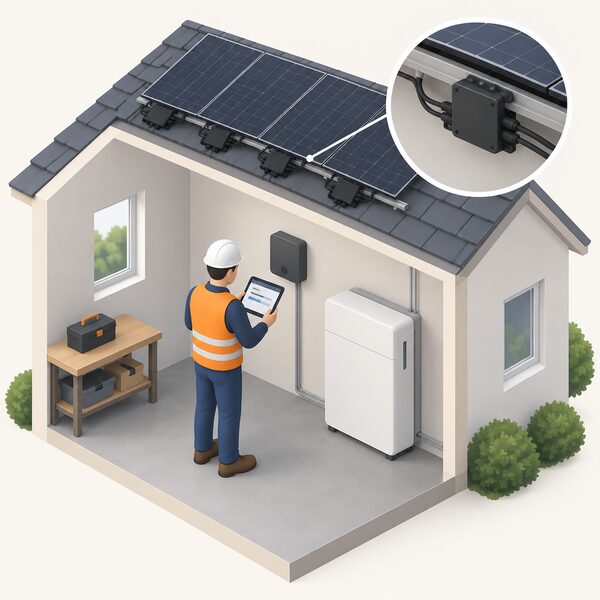
The certification rule splits cleanly by system type. Enphase states that Solar Only systems with IQ8 Microinverters do not require certification1. For systems with backup, covering Sunlight Backup, Home Essentials Backup and Full Energy Independence, Enphase University certification is required to commission the IQ8 Microinverters1.
The same requirement applies to the storage side: Enphase University certification is required to commission the IQ Battery 5P20. A household planning a battery-backed IQ8 system is therefore dependent on finding an installer who holds that certification, which narrows the pool of firms able to complete the work.
The software conditions run alongside the training requirement. Commissioning IQ8 Microinverters requires the Enphase Installer App version 4.5.0 or higher and IQ Gateway software version 8.03.5052 or higher, and the gateway update must be performed using that app version17. Earlier app versions do not support the required gateway software17.
For the household, this is a dependence on the installer's credentials rather than on the hardware. The microinverters themselves are CE-certified when installed according to the manufacturer's instructions, and the IQ8HC carries rapid shutdown functionality that Enphase says meets the strictest safety standards1. The IQ8P carries the same rapid shutdown description9. Safety and isolation requirements for roof-mounted DC equipment are covered at solar PV fire and electrical safety, and the installer certification landscape at MCS certification for solar PV installations.
Sources23 cited
- IQ8HC Microinverter, Enphase, 2026-09-17
- IQ8M and IQ8A Microinverter Data Sheet, Enphase, 2022-12-27
- Best Microinverters for Solar Panels, SolaX Power, 2026-08-11
- Microinverters, ITS Technologies, 2026-09-19
- Micro Inverters, Plug In Solar, 2026-09-19
- Sunlight Backup User Guide, Enphase, 2026
- IQ8AC Microinverter, Enphase, 2026-09-17
- IQ8MC Microinverter, Enphase, 2026-09-17
- IQ8P Microinverter, Enphase, 2026-09-17
- IQ8X Microinverter, Enphase, 2026-09-17
- IQ Cable Portrait Single Phase, Enphase, 2026
- IQ Combiner 5 HDK, Enphase, 2026-09-17
- Microinverter Complete Guide, Sungrow, 2025-04-23
- Home Solar Systems, Enphase, 2026
- Microinverters and Battery Storage, SolaX Power, 2026-07-24
- IQ7HS Microinverter Data Sheet, Enphase, 2024-08-02
- Expand IQ7 with IQ8, Enphase, 2026-09-17
- Enphase Launches IQ9N Microinverters, Enphase Newsroom, 2026-06-11
- Home Solar Batteries, Enphase, 2026-09-17
- IQ Battery 5P, Enphase, 2026-09-17
- Gen 3 FlexPhase, Enphase, 2026-09-17
- IQ Battery 10 Data Sheet, Enphase, 2021-10-27
- Solar Panel Battery Storage, Which?, 2026-05-14
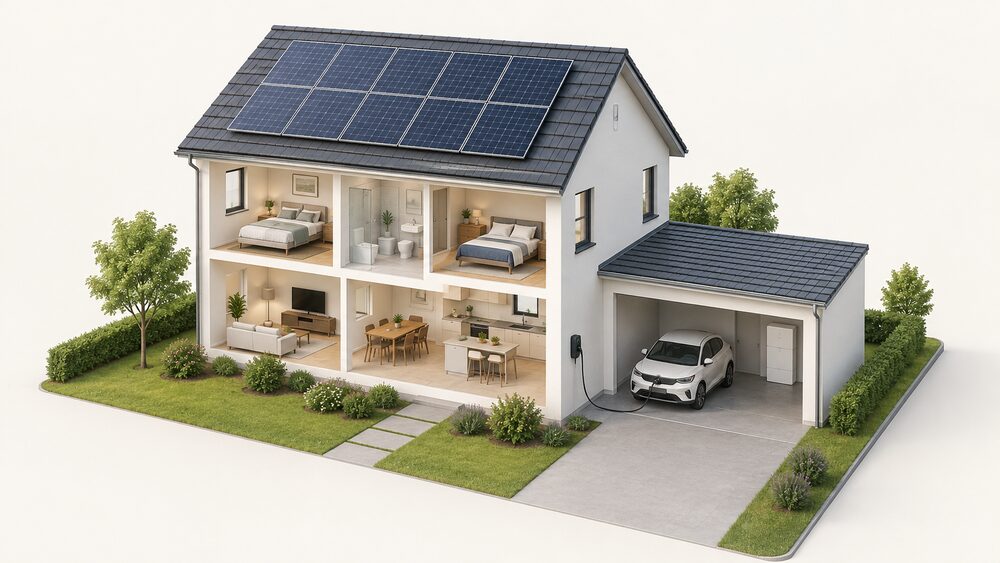 Enphase home EV chargersCan the Enphase charger use the solar power your roof is already making, even if your panels are not Enphase?
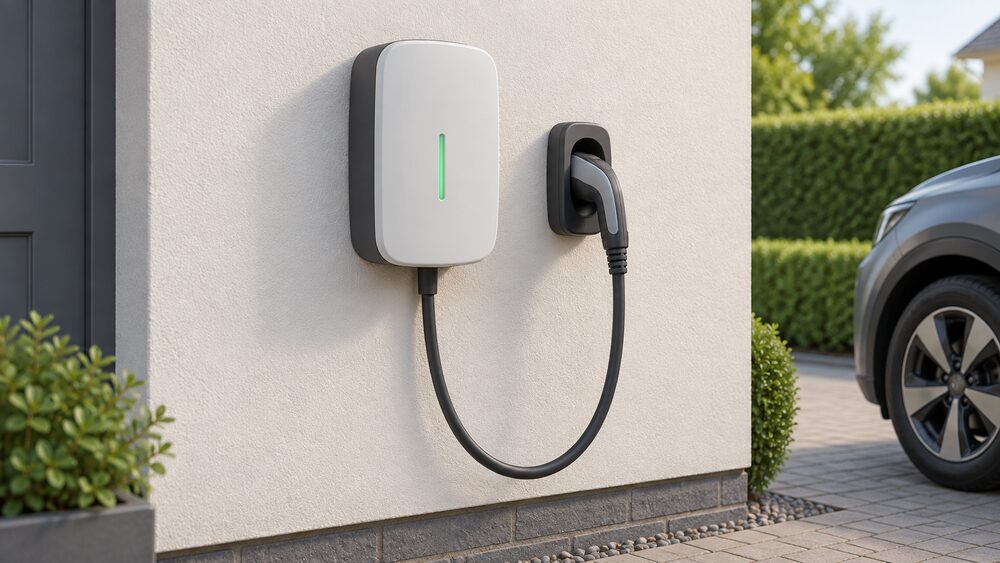 Enphase IQ EV Charger 2Can the Enphase IQ EV Charger 2 send spare solar power to your car instead of the grid?
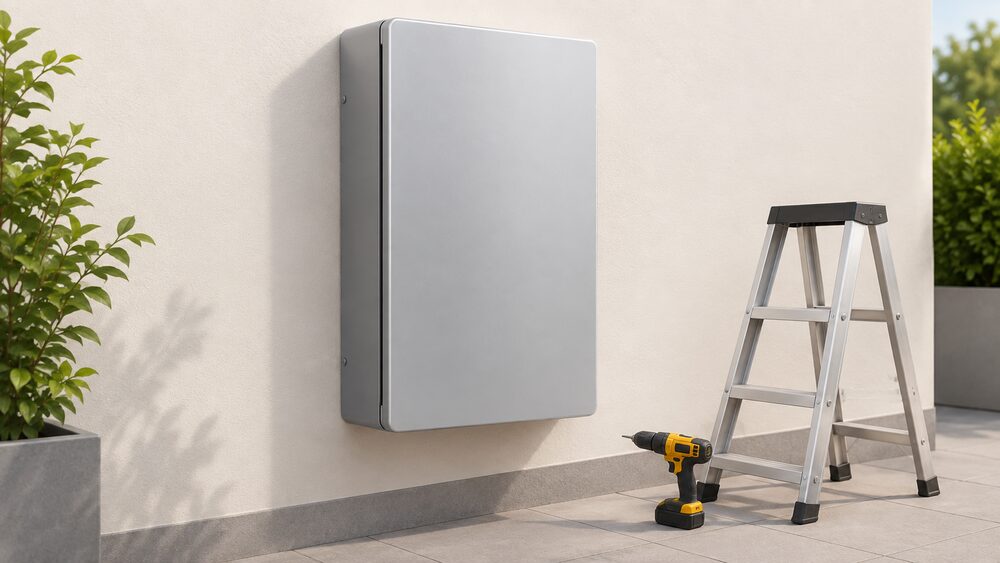 Enphase Home BatteriesEnphase makes the IQ Battery range for UK homes, and the current model is the IQ Battery 5P.
 Enphase IQ Battery 5PHow much power does the Enphase IQ Battery 5P actually store, and how long does the warranty last?
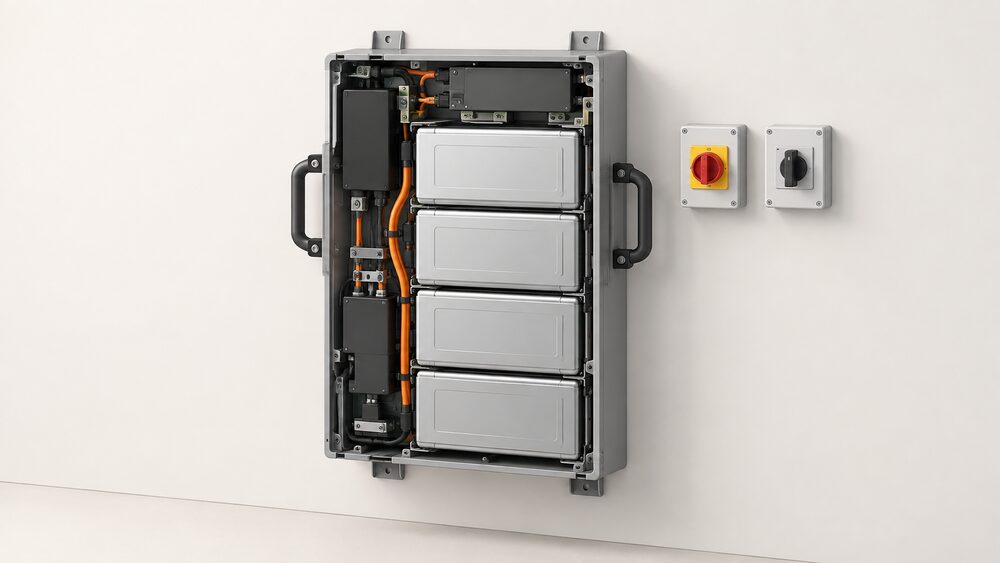 Enphase IQ Battery C80You may have seen the Enphase IQ Battery C80 mentioned and want to know whether it is a real battery you can buy in the UK, how it compares with the 5P and 10C, and what it would cost to run one at home.
 EnphaseEnphase puts a small converter on every panel instead of one big box on the wall, so you can see how each panel is doing and a fault on one does not stop the rest.
 EnphaseEnphase makes the kit that turns sunlight into power for your home, and its app lets you watch what your solar panels are doing all day.