
In this answer
Short answer
A 5 year warranty is the working baseline for fixed air conditioning in the UK. Most systems carry a minimum of five years, and several makers advertise exactly that figure on their own product pages1. The number matters because a cooling system is a long-lived appliance with a compressor, refrigerant circuit and electronics, and the warranty is the only part of the purchase that protects against a failure in year three or four.
The catch is that the headline figure is rarely unconditional. Cover is commonly tied to registration within a set window, to an annual service, and to a list of exclusions that removes damage caused by third-party components, misuse or tampering. A 5 year warranty is therefore best read as a 5 year contract with conditions, not a promise.
For a household, warranty length sits alongside efficiency and running cost as a measure of how much risk the maker is willing to carry. It does not make a home independent of the grid or of a supplier, and it does not remove the need for servicing. It does decide who pays when something fails.
Which air conditioning brands offer a 5 year warranty
The 5 year figure is not confined to one manufacturer or one product family. It appears across heating, ventilation and cooling equipment sold into UK homes, which is a useful signal that five years has become the sector's default rather than a premium add-on.
Herschel states a 5 Year Warranty on its Comfort range6. Johnson and Starley states a 5 Year Guarantee on its WarmCair range and a 5 Year guarantee on its Aquair Heat Interface Unit7. Ambiente describes a unified 5-year warranty covering all critical UFH components when installed with Ambiente products, repeated in its own case-study material9. Brookvent advertises direct manufacturer supply and 5 year's guarantee on its aircycle systems11. Panasonic heat pumps are listed with a 5 years warranty12.
The pattern is that the guarantee attaches to a system rather than to a single box. Ambiente's wording is explicit that the cover depends on the components being installed together with Ambiente products, which is a common structure: the warranty is a reward for buying the whole assembly from one maker rather than mixing brands.
For a household, this matters for independence in a narrow but real way. A system warranty keeps the maker financially exposed to the equipment for five years, which reduces the risk of an early failure landing on the householder. It does nothing about the electricity the unit draws, which still comes from the grid and a supplier.
Warranty lengths compared: 5, 7 and "up to" guarantees
Five years is the floor, not the ceiling. Worcester advertises up to 7 years guarantee on air conditioning2. Which? notes that gas boiler manufacturers can offer ones that last up to 10 years or more13, and Ideal combi boilers are listed with 5 standard and 5 extended years14. The word "up to" is doing work in all of these: it usually means the longest term is available only on certain models, or only when the installation meets the maker's conditions.
| Product type | Advertised warranty | Source |
|---|---|---|
| Air conditioning, most systems | Minimum 5 years | 1 |
| Air conditioning, one maker | Up to 7 years guarantee | 2 |
| Gas boilers | Up to 10 years or more | 13 |
| Ideal combi boilers | 5 standard, 5 extended | 14 |
| Panasonic heat pumps | 5 years | 12 |
| Midea Cooling & Heating UK | 10 Year | 15 |
| Titanium immersion heater | Five years (two years for the thermostat) | 16 |
The range across sources reflects different things being measured. A maker's "up to 7 years" is a marketing maximum. A regulator's or consumer body's figure is an observation about the market. Where a maker states a flat 5 years with no "up to", that is the more reliable number to plan around.
There is also a policy angle. In the government's response to the Boiler Upgrade Scheme consultation, a few respondents proposed shorter caps, such as 10 to 15 years, or suggested aligning contract terms with warranty periods of around 5 to 6 years17. That is a signal that five to six years is treated as a realistic equipment life assumption in official thinking, not just a sales figure.
Why warranties have grown as UK summers heat up
Cooling equipment has moved from a niche purchase to a mainstream one, and warranty terms have moved with it. Home Energy Scotland notes that heat pumps usually come with warranties lasting two to three years, which can often be extended for a fee18. That is the older model: short cover, paid extension. The newer model, seen across air conditioning and heat pumps, is a longer term included as standard.
Grant UK illustrates the middle position. The standard two year guarantee on Grant's renewable products and oil boiler ranges can be increased if the unit is installed by one of Grant UK's G1 Installers19. Here the longer warranty is a lever to steer installation through the maker's own accredited network, which is a common commercial structure.
Aira goes further, offering a 15-Year Aira Guarantee covering servicing, maintenance and repairs, free for the first year20. That is not a warranty in the traditional sense: it is a service contract bundled with the equipment, and it shows how far the market has moved from a parts-only guarantee.
"A 15-Year Aira Guarantee covering servicing, maintenance and repairs. Free for the first year."
The direction of travel is clear. As cooling becomes a fixture in more UK homes, makers compete on how long they will stand behind the equipment, and the 5 year warranty has become the entry point rather than the premium tier.
What a 5 year warranty typically covers, and what it excludes
Cover usually attaches to the equipment and its internal components. Rointe's storage heater warranty is a useful illustration of how a single "5 years" figure breaks down in practice: wiring is listed at 3 years and 5 years across different columns, with electronics, thermostat and safety, fan, air mixer and heating elements covered, subject to warranty registration21. The headline number hides a schedule.
Exclusions are where the detail matters most. Mirrorstone's 5-year warranty only applies to the Mirrorstone heaters and excludes all end-of-line or clearance items, excludes the Republic of Ireland, and is non-transferrable between products, persons or property22. Aira's guarantee is limited by terms and conditions and does not cover damage or malfunction caused by components not supplied by Aira, improper or negligent use, vandalism or violence to the heat pump, or unauthorised tampering with the heat pump23.
"The Aira Guarantee is limited by our terms and conditions and does not cover damage or malfunction caused by e.g. components not supplied by Aira, improper or negligent use, vandalism or violence to the heat pump, or unauthorised tampering with the heat pump."
Two themes run through the exclusions. First, third-party parts: if a component the maker did not supply causes the failure, the warranty does not respond. Second, misuse and interference: tampering, neglect and vandalism are outside cover. Both are standard, and both are avoidable by keeping the installation to the maker's specification and using qualified engineers.
Registration and servicing conditions that keep the warranty valid
Registration is the first condition and the easiest to miss. Ambiente's product page carries a "Register your 5-year warranty" prompt9. Ideal's Halo Air has a 2 year warranty available when registered within 30 days of installation and serviced annually, with terms and conditions applying3. The 30 day window is the kind of deadline that quietly voids cover if the installer does not hand over the paperwork promptly.
Servicing is the second condition. Independent guidance notes that some warranties only stay valid if services are carried out annually27. That is a stricter requirement than the law imposes. Under the Energy Performance of Buildings Regulations, air conditioning systems must be inspected by an energy assessor at regular intervals not exceeding five years4. The Scottish building standards technical handbook sets out a range from three years for poorly maintained and inefficient systems up to five years for those systems that are well maintained28.
For a household, this is the point where warranty and maintenance costs meet. The warranty is only as good as the service record behind it, and the service record is an ongoing cost that sits outside the purchase price.
How warranty length fits into the wider cost of ownership
Warranty length is one line in a longer calculation. The purchase price, the installation, the servicing and the electricity all sit alongside it, and the warranty only pays back if something fails within the covered period.
The VAT position is part of the picture. Energy saving materials installed in qualifying circumstances attracted a zero rate for five years from the Spring Statement announcement29. That reduces the upfront cost of some installations, which changes how much a warranty is worth relative to the total spend.
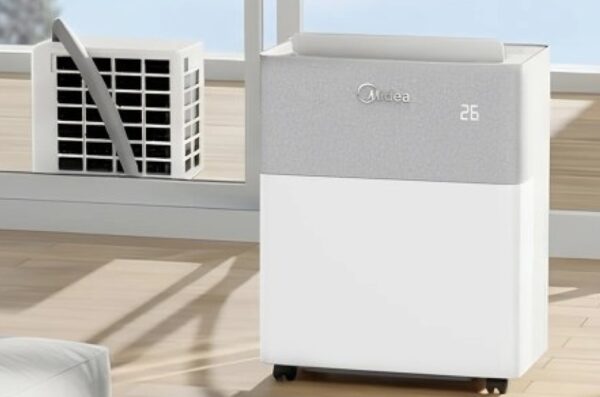
Portable units show the trade-off most clearly. The Meaco Cirro+ 16000 BTU Portable Air Conditioner comes with a two-year parts and labour warranty, as well as the option to extend to a total of five years5. A portable unit costs less to buy and less to install, but its standard cover is shorter, and the extension is what brings it level with a fixed system.
For energy independence, the warranty is a modest but genuine factor. It keeps the maker exposed to the equipment for five years, which lowers the risk of an early failure falling on the household. It does not change the fact that the unit runs on grid electricity from a supplier, and it does not remove the servicing obligation. A household weighing a 5 year warranty against a 7 year or 10 year guarantee should compare what is actually covered, and under what conditions, rather than the number alone.
Sources29 cited
- Air conditioning FAQs, Cooleasy, 2026
- Consumer Product Guarantee Matrix, Worcester Bosch, 2025
- Halo Air, Ideal Heating, 2026
- The Energy Performance of Buildings (England and Wales) Regulations 2012, Part 4, legislation.gov.uk, 2012
- Meaco Cirro 16000 BTU Portable Air Conditioner, Meaco, 2026
- Garage heating, Herschel Infrared, 2026
- Warm air heating, Johnson and Starley, 2026
- Aquair heat interface unit, Johnson and Starley, 2026
- Overplate UFH aluminium spreader plate, Ambiente UFH, 2026
- New build house, Bridgnorth, Ambiente UFH, 2026
- Selfbuild, Brookvent, 2024
- Warranty claim, Omnie, 2026
- Electric boilers: what you need to know, Which?, 2025
- Ideal boilers review, Which?, 2025
- Our products, Midea UK, 2026
- Titanium immersion heater, Heatrae Sadia, 2026
- Amendments to the Boiler Upgrade Scheme: government response, UK Government, 2025
- Living with a heat pump, Home Energy Scotland, 2024
- Guarantees, Grant UK, 2026
- Heat pump for a semi-detached home, Aira, 2026
- Warranty terms and conditions, Rointe, 2026
- 5 year warranty form, Surya Heating, 2026
- Installation, Aira, 2026
- Comfort guaranteed, Aira, 2026
- Aira all-inclusive, Aira, 2026
- Aira expert installers, Aira, 2026
- Is your boiler ready for winter, Plymouth Energy Community, 2026
- Building Standards Technical Handbook, Domestic (April 2026), Scottish Government, 2026
- Zero VAT on renewables announced in Spring Statement, MCS Certified, 2022
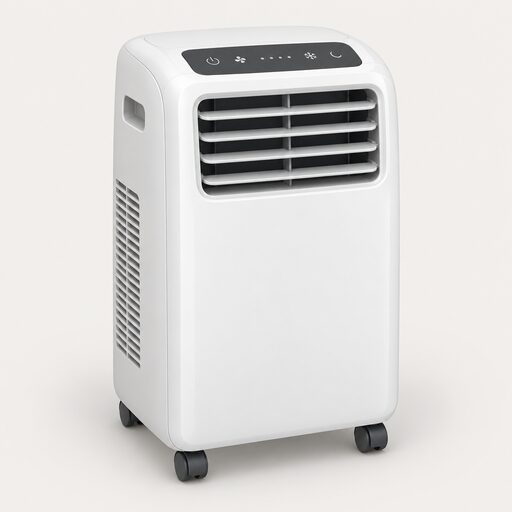 The Full Cooling and Air Conditioning GuideDo you really need air conditioning in a British summer, or would a fan and better shading do the job?
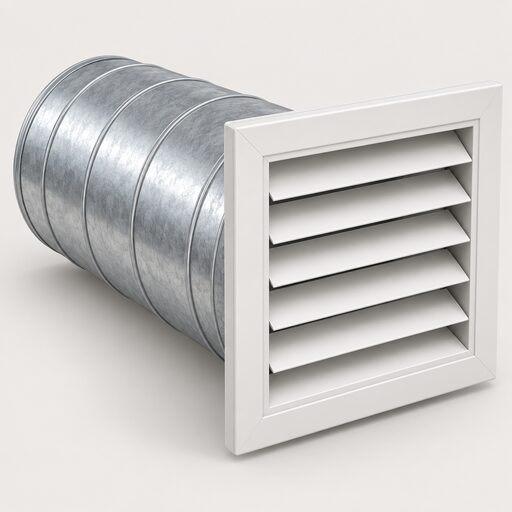 Types of Air ConditioningPortable, wall-mounted, multi-room or ducted: which air conditioning suits your home?
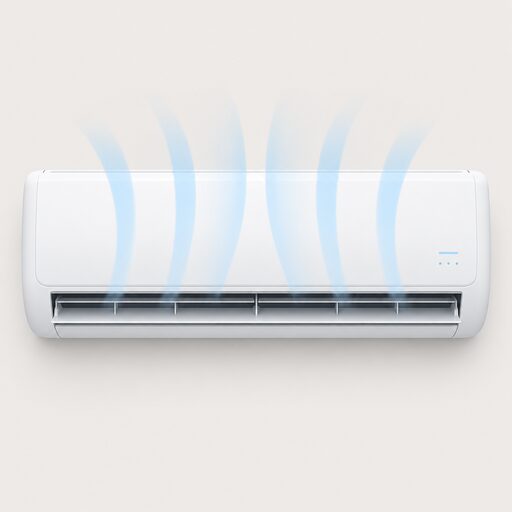 Air Conditioning BrandsWhich air conditioning brands can you actually buy in the UK, and who makes them?
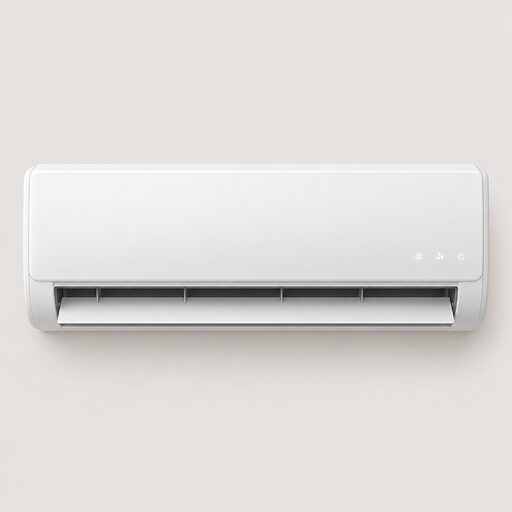 Air Conditioning CostPublished UK equipment prices and the parts of an installed price for portable, single split, multi-split and whole-house air conditioning.
 Warranties and DegradationHow long do solar panels actually last, and what do the warranties really cover?
 Manufacturer WarrantiesHow long does a boiler, heat pump or solar panel warranty actually last, and what do you have to do to keep it valid?