In this guide
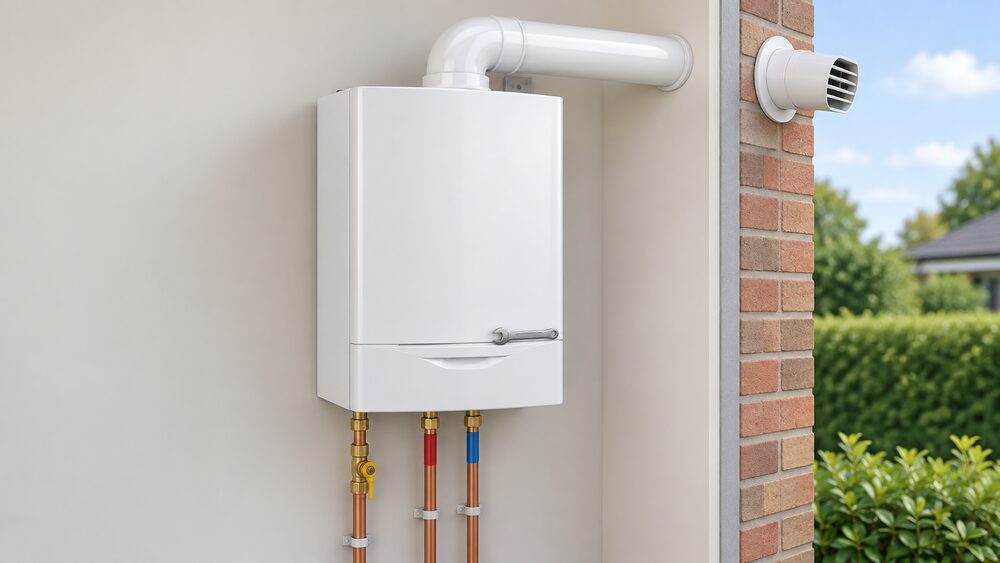
A gas boiler burns mains natural gas to heat water, which is then circulated through radiators or underfloor pipework and, in most systems, used for taps and showers as well. It is the default heating appliance in the United Kingdom: around 23 million homes have one for central heating and hot water1. Sales run at roughly 1.7 million gas boilers a year, and more than 80% of those sales are combination (combi) models2.
Under Building Regulations a new gas boiler must have a minimum efficiency of 86%, and a replacement will normally have to be a condensing model unless there is a sufficient reason why one cannot be fitted3. In practice, published estimates of what a new gas boiler actually achieves sit lower than the headline seasonal figures printed on labels: the Energy Saving Trust puts a typical new gas boiler at around 85% efficiency5, while the Boiler Plus standard in England sets a minimum performance standard of 92% for domestic gas boilers6.
Installation cost is usually quoted in the low thousands. Independent modelling gives an upfront cost of £2,500 for a small property, £3,000 for a medium one and £4,000 for a large one7, and comparison guidance puts system and heat-only gas boilers at £2,500 to £4,100 installed8. For a household, a gas boiler offers reliable, controllable heat at the lowest running cost of any common boiler fuel, but it leaves the home dependent on the gas network, a supplier, imported fuel, and on mains electricity: without power, most boilers will not run at all.
Why so many British homes run on mains gas
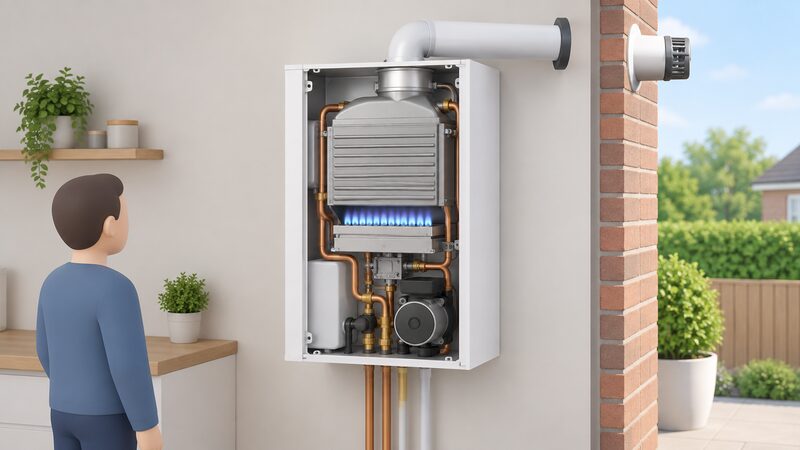
The scale of gas central heating in the UK is the single most important fact about domestic heat here. Around 23 million homes use a gas boiler for central heating and hot water1. That installed base is why gas boiler economics, gas network safety rules and gas policy dominate every other heating question in Britain, and it is why replacing a failed boiler with another gas boiler remains the cheapest and quickest route for most households on the grid.
The market is also strongly weighted to one product type. Monthly sales statistics from the Heating and Hotwater Industry Council show that more than 80% of the roughly 1.7 million gas boilers sold in the UK each year are combination models2. A home with no mains gas connection is in a different position entirely: oil boilers supply an estimated four million UK homes with no access to mains gas8, and those households face different costs and different phase-out dates. Heating a home off the gas grid covers that case.
From an independence point of view, a gas boiler is a grid appliance twice over. The fuel arrives continuously through a pipe controlled by a network operator and billed by a supplier, with no meaningful on-site storage, and the appliance itself needs a mains electricity supply to run its pump, fan and controls. What it does give a household is a very high heat output on demand in cold weather, and a fuel priced per kilowatt hour well below electricity.
Combi, system or heat only: which type fits which home
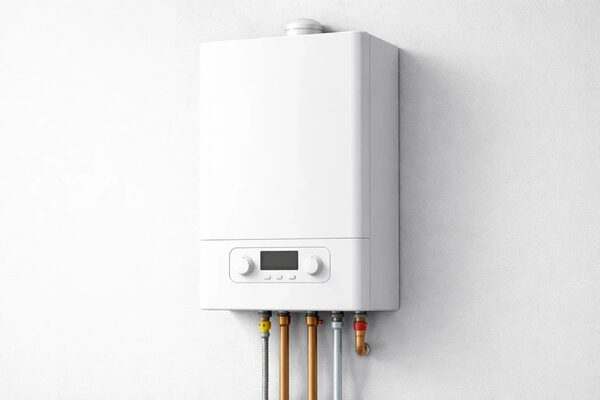
There are three main types of gas boiler for the home: combi, heat only and system11. The differences are about where hot water is made and stored, not about the burner.
| Type | Hot water | Storage needed | Suits |
|---|---|---|---|
| Combi | Heated on demand at the tap | None | Homes with one bathroom; only the water used is heated11 |
| System | Stored in a sealed cylinder, pump built in | Hot water cylinder | Larger homes with decent mains pressure, no cold tank space8 |
| Heat only (regular) | Stored, fed by a cold tank | Cylinder, cold water storage tank and a pump13 | Older systems, low mains pressure, high simultaneous demand8 |
A combi heats only the water the household actually uses, which is why combis are described as among the most efficient and most environmentally friendly arrangements12. The limit is simultaneous demand: a combi may not be powerful enough to serve several outlets at once, and larger households with multiple bathrooms and occupants are, as a rule, better served by a system or heat-only boiler12.
Changing type is not a like-for-like swap. Moving from a combi to a system boiler, or from either of those to a heat-only boiler, means extra pipework and tanks14, with the extra labour and disruption that implies. More detail sits on Combi Boilers Explained, System Boilers Explained and Regular, Heat-Only and Conventional Boilers.
Output in kilowatts
Published sizing guidance for regular boilers gives roughly 12 to 18 kW for a one or two bedroom home, roughly 28 to 34 kW for three or four bedrooms, and 35 kW or more for homes of five bedrooms or more15. A separate figure has a 24 to 30 kW boiler suiting any home up to three bedrooms, with larger houses needing 35 kW or more1. These are rules of thumb: a correctly designed system is sized on heat loss and hot water demand, which Boiler Sizing sets out.
Efficiency: 86% is the legal floor, and real performance varies
Building Regulations guidance for England and Wales sets a minimum efficiency of 86% for a new gas boiler and 85% for oil3. Replacement of a gas boiler will probably have to be a condensing boiler unless there is a sufficient reason why one cannot be installed4, which is why nearly all new gas boilers are condensing units that recover heat from the flue gases. Condensing Boilers: How They Work explains the mechanism.
Higher thresholds exist alongside that floor. In England, the Boiler Plus minimum performance standard for domestic gas boilers is set at 92%6. A Welsh consultation on Approved Document L proposes 86% for a wet heating combi boiler and 91% for a wet heating regular boiler4. Estimates of real performance are more modest: the Energy Saving Trust states a typical new gas boiler runs at around 85%5, and a Northern Ireland consultation used a deliberately low illustrative figure of 80% efficiency when comparing running costs16. These are not contradictions so much as different questions: a laboratory rating, a regulatory floor, and what an installed appliance achieves across a heating season with a high flow temperature and an oversized output.
The installed stock tells the sharpest story. In Scotland in 2024, around 84% of gas and oil boilers met the minimum efficiencies set under the previous 2007 standards, up from 79% in 2023, but only 4% met the minimum efficiencies specified by the current Building Standards17. Most working boilers in Scottish homes, in other words, would not be legal to install new today.
For a household, the practical lever is not the badge on the boiler but how it is run. Lowering the flow temperature keeps a condensing boiler condensing for more of the time, and Boiler Efficiency, ErP Ratings and SEDBUK sets out how the published ratings are derived.
What a gas boiler costs to buy, install and maintain
Costs quoted across independent and official sources cluster in the £1,500 to £4,100 band, with the spread driven by property size, boiler type and whether the system layout changes.
| Source and basis | Cost |
|---|---|
| Independent modelling, small property7 | £2,500 |
| Independent modelling, medium property7 | £3,000 |
| Independent modelling, large property7 | £4,000 |
| Heat-only or conventional gas boiler, installed, September 20268 | £2,500 to £4,100 |
| System gas boiler, installed, September 20268 | £2,500 to £4,100 |
Heat-only boilers are described as the cheapest type of boiler to buy8, though the cylinder and tank they need offset part of that. A straight swap of an existing boiler for the same type in the same position is at the lower end; relocating the boiler, changing type, or adding a cylinder pushes towards the upper end. These are installer-quoted jobs, and the figures above are reported averages rather than published list prices. New Boiler Cost in the UK goes into the breakdown.
Against the purchase price sits servicing. A gas boiler service is reported at roughly £80 to £120 including VAT, with an average of around £90 to £100, and Checkatrade's average as of March 2026 was £10010. Repairs and part replacements over a 10 to 15 year life are not budgeted by most households but are the main unplanned cost of gas heating; Boiler Cover and Service Plans covers the insurance-style alternative.
Running costs and fuel: why mains gas is usually the cheapest
Where a home has a mains gas connection, a modern condensing gas boiler is usually the cheapest to run compared with oil, electricity, LPG and house coal18. That is a statement about the delivered cost of a kilowatt hour of heat, not about carbon. A Northern Ireland consultation illustrated the point by noting that even at a very low 80% efficiency, heat from a gas boiler would still cost only 4.5p per kWh delivered16.
The gap against other liquid fuels is real but not enormous: an oil boiler usually costs hundreds of pounds a year more to run than its gas equivalent8. The gap against direct electric heating is much wider, because electricity carries a far higher unit price even though electric heaters convert essentially all of it to heat. Home Heating Running Costs by Fuel sets the fuels side by side, and Gas vs oil boiler running costs covers that specific comparison.
The independence reading is blunt. Cheap gas heat is cheap because of a wholesale market and a network the household does not control, and the price is reset periodically by the energy price cap and by supplier tariffs. A gas boiler gives no hedge: there is no store of fuel on the premises, no way to shift consumption to a cheaper period, and no self-generated input. What it does provide is a low and predictable unit cost while mains gas remains available.
Only a Gas Safe registered engineer may install a gas boiler
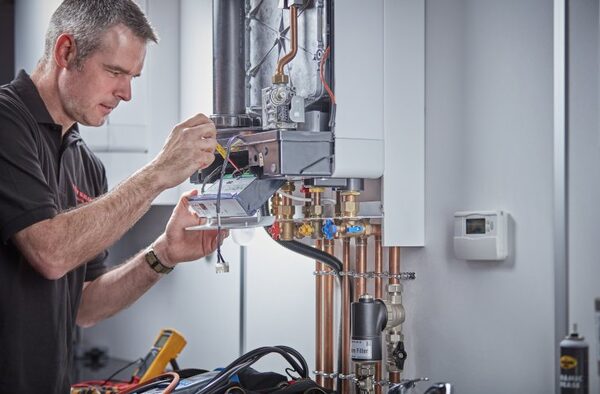
Gas work in the UK is restricted by law. Only Gas Safe registered engineers are legally allowed to install boilers19, and building control guidance notes that a gas boiler installer should be Gas Safe registered, a requirement in force from 1 April 20094. Registration also matters after the job: the engineer notifies the installation, which is how the work is recorded against Building Regulations.
A compliant installation is more than the appliance. The flue route and terminal position, ventilation, condensate discharge, controls and the pressure test are all part of it, and the paperwork the householder should end up with is the Building Regulations compliance certificate and the manufacturer's warranty registration. Boiler Installation: Process, Rules and Who Can Do It and Boiler Flues go further, and Building Regulations for Heating Systems covers the differences between the four nations.
Servicing and safety: the annual check and carbon monoxide
The Health and Safety Executive strongly advises that all gas appliances, flues and pipework are installed, regularly maintained and serviced at least annually by a Gas Safe registered engineer21. Network operators put the same point more directly: an annual service by a Gas Safe registered engineer can help prevent carbon monoxide poisoning22.
A service is an inspection, not a clean. Published descriptions of what it covers include a visual inspection of the boiler and flame, the flue inside and out, operating pressure and heat input, case seals and safety devices, removal of the case to inspect components including the heat exchanger, burner and main injector, and firing the boiler to spot faults23. Cleaning of parts happens where needed. Boiler Servicing and Maintenance sets out what a householder should expect on the day and in the report.
Carbon monoxide is the reason the rules are strict. Alongside booking an annual service for all gas appliances, safety guidance advises installing and regularly testing a carbon monoxide alarm, checking flues and sweeping chimneys every year, and watching for warning signs: yellow or orange flames, soot or staining around appliances, excess condensation, or pilot lights that keep blowing out24. Symptoms of exposure to look out for include headaches or dizziness, breathlessness, nausea, loss of consciousness, tiredness, pains in the chest or stomach, erratic behaviour and visual problems25. Symptoms that come and go with time spent at home, or that are seasonal, are a recognised warning sign.
Gas Safety in the Home, Carbon Monoxide and Home Heating Safety and Where should a carbon monoxide detector be fitted? cover the detail.
Lifespan, warranties and consumer rights
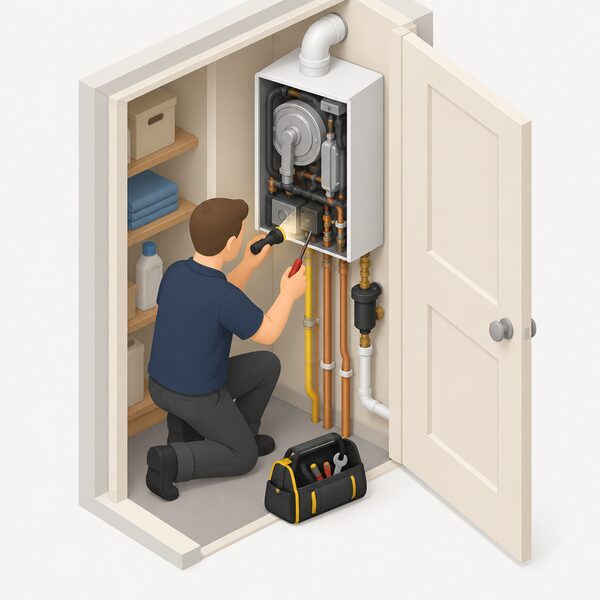
Published estimates of gas boiler life differ. One independent guide gives an average lifespan of 10 to 15 years, depending on how well the boiler has been maintained9; a manufacturer puts the average life of a boiler and its central heating system at around 15 years27. Both point to the same dependency: servicing, water quality and system design determine where in that range a particular boiler falls. How long do boilers last? sets out the evidence.
Manufacturer guarantees are separate from statutory rights, and their length and terms vary considerably. They are also frequently conditional on who installs the boiler and on what is installed with it.
| Product and condition | Guarantee stated by the maker |
|---|---|
| Worcester Bosch gas boilers, installed with a Greenstar System Filter, December 2025 | Up to 12 years28 |
| Worcester Bosch Greenstar Ri, installed by an accredited installer | Up to 10 years29 |
| Vaillant domestic boiler guarantee | Materials and labour to repair or replace components against manufacturing defects from the installation date, where repaired by Vaillant or an authorised Gas Safe registered engineer30 |
Those conditions matter. An "up to" term is the maximum available, and it is generally reached only where the accredited installer, the registration and any specified accessory are all in place. Boiler Warranties and Guarantee Registration explains registration deadlines and the conditions that void cover.
Statutory rights run alongside any guarantee. Citizens Advice states that where a boiler was bought within the last six years, the household should raise the problem with the person or company who sold or installed it31.
Pressure, flow temperature and everyday running
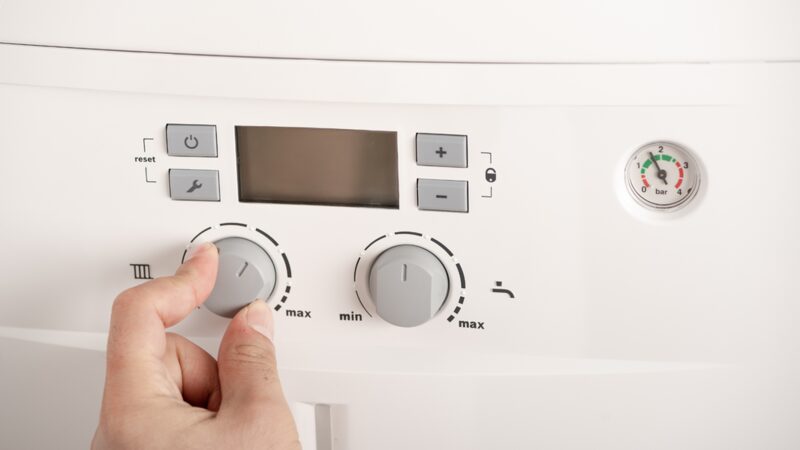
A sealed gas central heating system carries a small positive water pressure. Normal operating pressure on most boilers is between 1 and 1.5 bar32. If the gauge falls below 1 bar, the manufacturer's instructions set out how to repressurise, and the target after topping up is again between 1 and 1.5 bar31. Pressure that falls repeatedly points to a leak on the system or a failed expansion vessel, neither of which is a householder repair. Boiler Pressure covers the causes and the checks.
Flow temperature is the other everyday setting, and it is the one with the largest effect on efficiency. Boilers run hot, typically 70 to 80°C, and standard radiators were sized around that33. A condensing boiler recovers more heat from its flue gases at lower return temperatures, so reducing the flow temperature generally raises seasonal efficiency at the cost of slower warm-up.
Two conditions apply. The setting works for gas-powered combi boilers, and the hot water adjustment does not apply to homes with a hot water tank served by a system boiler34. And it is one of the few boiler adjustments a household may make itself: the casing stays on, and only the control is touched. Boiler Flow Temperature and Heating Controls, Thermostats and TRVs go further.
A gas boiler will not run in a power cut
Mains gas and gas meters usually continue to work normally when the electricity goes off, but the boiler generally does not. Gas boilers and heating, along with electrical appliances, will stop working in a power cut35. Even gas and oil boilers rely on electricity to start up and tend to have safety mechanisms that stop them functioning without power36. Boilers should begin working again once electricity is restored.
This is the most commonly missed point about gas heating and household resilience. A home with mains gas has no heat in a power cut unless it also has a non-electric heat source. Where a boiler fails for a reason unrelated to a power cut, the fault is work for a Gas Safe registered engineer. Home Heating and Energy Independence sets out what genuine resilience requires.
The phase-out: what is planned from 2035

The Heat and Buildings Strategy set the ambition of phasing out the installation of new natural gas boilers from 203537. That ambition has been repeated in subsequent policy documents, including proposals to exempt certain households from the phase-out of fossil fuel boilers in England in 2035. It is an ambition and a direction of travel rather than a completed legal ban, and the wording in the published strategy is careful.
Scotland has worked to different dates. The Bute House Agreement committed to phasing out the need to install new or replacement fossil fuel boilers in off-gas areas from 2025 and in on-gas areas from 203038. Households in Scotland should therefore read Scottish proposals rather than the UK-wide 2035 date, and Wales and Northern Ireland have their own building regulations routes.
Three points follow for a household with a working gas boiler. Nothing in the published phase-out requires an existing boiler to be removed. The restriction under discussion applies to installing new appliances, not to running or repairing ones already fitted. And from the mid-2030s the replacement options available on the market are intended to narrow towards low-carbon systems. Will Gas Boilers Be Banned in the UK?, Hydrogen-Ready Boilers and Heat Pumps Compared with Boilers examine the alternatives.
Off the gas grid, and grant eligibility
A gas boiler needs a mains gas connection. Where there is none, the household is choosing between oil, LPG, electric heating, a heat pump or biomass, and the grant landscape differs accordingly. Under the Boiler Upgrade Scheme in England and Wales, a biomass boiler grant is available only where the property is off the gas grid, is in a rural location and the boiler carries an emissions certificate showing that polluting emissions are kept to a minimum39. The scheme rules are firm that biomass boilers can only be installed in properties that are not, and have never been, connected to the gas grid.
Grants elsewhere in the UK run on different schemes: see Boiler and Heating Grants in Scotland, Wales and Northern Ireland. The full picture of appliances, fuels and controls sits on the boilers and home heating pillar.
Sources39 cited
- UK boiler statistics, Uswitch, 2024-01-04
- HHIC industry briefing on gas boiler sales, HHIC
- Building regulations: boilers and heating, Planning Portal, 2026
- Building regulations: boilers and heating, Welsh Government, 2026
- Heat pump questions answered, Energy Saving Trust, 2026-05-27
- Boiler Plus, IEA, 2026-02-23
- Gas boiler counterfactual, Nesta, 2025-02-03
- Different boiler types, Uswitch, 2026-09-18
- How long does a boiler last?, Uswitch, 2024-11-13
- How much does a boiler service cost?, Uswitch, 2026-09-03
- How long does it take to fit a boiler, Ideal Heating, 2026
- Combi boiler vs condensing boiler, Ideal Heating, 2026
- What is a heat only boiler, Intergas, 2025-11-11
- Back boiler replacement guide, Ideal Heating, 2026
- Regular boilers, E.ON Next, 2026
- Building regulations discussion document, Department of Finance NI, 2023-10-11
- Scottish House Condition Survey 2024 key findings, Scottish Government, 2024
- Boilers advice, Energy Saving Trust, 2026-05-20
- How long does it take to fit a boiler, Uswitch, 2026-09-16
- What is an expansion vessel, Vaillant, 2026
- Domestic gas safety FAQs, Health and Safety Executive, 2026
- Gas safety advice, Cadent Gas, 2026
- Boiler maintenance, Uswitch, 2026-09-03
- Cooking and heating safely, Cadent Gas, 2025-11-12
- Carbon monoxide, Health and Safety Executive, 2026
- What to do if you smell gas, Cadent Gas, 2026
- How long does a boiler last, Ideal Heating, 2026
- Consumer product guarantee matrix, Worcester Bosch, 2025-12
- Greenstar Ri, Worcester Bosch, 2026
- Domestic boiler guarantee, Vaillant, 2026
- Getting your broken boiler repaired or replaced, Citizens Advice, 2024-08-16
- Top tips for a healthy heating system, Ideal Heating, 2026
- Wet underfloor heating in UK new builds, Ambiente, 2026-09-20
- Boiler flow temperature, Smart Energy GB, 2026-04-22
- Storms and bad weather, Energy Networks Association, 2026-09-17
- Preparing for a power cut, Centre for Sustainable Energy, 2026-08
- Heat and Buildings Strategy, UK Government
- Heat in Buildings Bill consultation, partial business and regulatory impact assessment, Scottish Government, 2023-11-28
- Boiler Upgrade Scheme: check if you're eligible, UK Government, 2026
 Will Gas Boilers Be Banned?What has actually been legislated, proposed or dropped on gas and oil boiler phase-out across the four UK nations, and the difference between new build rules and replacement in existing homes.
 Heating Off the Gas GridThe options for the four million UK households with no mains gas connection: oil, LPG, electric, heat pump, biomass and solid fuel, and how their costs, storage and supply security compare.
 The Full Boilers and Heating GuideWhich boiler suits your home, and when is it worth swapping the old one?
 Boiler Manufacturers in the UKCovers the manufacturers supplying gas, oil, LPG and electric boilers to UK homes, their main ranges and where they are made.
 New Boiler Cost in the UKWhat a replacement boiler costs in the UK by type and fuel, and what drives the installation element: conversions, relocations, flue work and system upgrades.
 Electric BoilersHow electric flow boilers heat a conventional wet system, what they cost to buy and run, where they suit UK homes, and why point-of-use efficiency near 99% does not translate into cheap heating at the meter.