

In this guide
Northern Ireland runs its own heating support system, separate from the schemes that operate in England, Scotland and Wales. The main live measure is the Home Heating Oil Support Scheme, which provides a one-off £100 voucher for eligible households that use oil as their primary source of home heating1. It is aimed at a housing stock where oil is the dominant fuel, and the Department for Communities expects around 340,000 eligible households across Northern Ireland2.
The other strand is the Affordable Warmth Scheme, funded by the Department for Communities and delivered by the Northern Ireland Housing Executive, which offers up to £7,500 for energy-efficiency upgrades including boiler replacement for owner occupiers and private renters3. The Boiler Replacement Scheme, which offered grants of up to £1,000, has closed: between 2012-13 and 2023-24 it approved 49,045 grants totalling £28.5 million, an average of £581.10 per household5.
The Boiler Upgrade Scheme, the £9,000 heat pump grant that dominates discussion elsewhere in the UK, does not extend to Northern Ireland. It provides grants for heat pump installations across England and Wales only7. Households here are therefore working with a different set of numbers, a different administrator and a different set of building rules.
What boiler and heating grants exist in Northern Ireland
Three names come up repeatedly, and only two of them are live. The Home Heating Oil Support Scheme is the current revenue measure, a £100 voucher created to help households in Northern Ireland with the cost of home heating oil1. The Affordable Warmth Scheme is the current capital measure, funding energy-efficiency work including boiler replacement8. The Boiler Replacement Scheme is the closed predecessor, and its closure matters because households searching for a "boiler grant Northern Ireland" will often land on references to it6.
There is also the Northern Ireland Sustainable Energy Programme, which funds various energy saving schemes such as boiler upgrades, LED light bulbs and draught proofing9. It is administered through the regulated energy market rather than as a direct household grant, and it sits alongside the Department for Communities schemes rather than replacing them.
What is absent is the main GB capital grant. The Boiler Upgrade Scheme provides upfront capital grants to support the installation of heat pumps and biomass boilers in homes and non-domestic buildings, and it operates in England and Wales10. A Northern Ireland household cannot apply to it, and no equivalent NI-wide heat pump capital grant appears in the current scheme landscape.
For a household, the practical consequence is that the funding available here is weighted towards running costs and fabric improvements rather than towards a wholesale change of heating technology. The £100 voucher offsets part of a fill of oil. The Affordable Warmth Scheme can replace a boiler and improve insulation. Neither is designed to move a home off oil. That is the central fact of the Northern Ireland position: support is real, but it is maintenance-and-efficiency support, not transition support.
Home Heating Oil Support Scheme: a £100 voucher towards heating oil
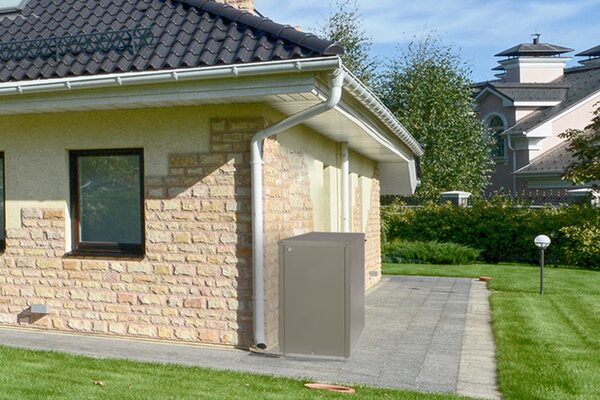
The scheme provides a one-off £100 voucher for eligible households that use oil as their primary source of home heating2. It was created to help households in Northern Ireland with the cost of home heating oil, and eligible households can apply for a £100 voucher for use with oil suppliers in Northern Ireland1.
The mechanics are straightforward. Once activated, the voucher can then be used to purchase home heating oil with any Northern Ireland oil supplier1. Successful applicants must activate their voucher before redeeming it with participating oil suppliers2. Only one voucher will be issued per eligible residential address1, so two households sharing a address, or a house with more than one oil tank, do not generate two vouchers.
The scale is significant relative to the population. The Executive agreement secured a £36.4million support package, and the measure was described as delivering targeted support to more than 300,000 households11. By the time the opening date was announced, the figure given was around 340,000 eligible households across Northern Ireland2. The two figures are not in conflict so much as sequential: the earlier announcement set out the target, the later one the eligible population.
For energy independence, the voucher is a modest but real intervention. It reduces the cash cost of a fuel that a household buys directly, in a market where the household already controls its own tank and its own supplier choice. It does not reduce the volume of oil burned, does not change the carbon intensity of the heat, and does not remove the dependence on delivered fuel and the price volatility that comes with it. It is a cost-of-living measure, not a decarbonisation measure, and it should be read as such.
Who qualifies for the oil support voucher
Eligibility has two limbs, and a household needs to satisfy the residence and fuel test plus one of the financial tests. The scheme is open to households who use oil as their primary source of heating, are resident in Northern Ireland, and, in either of the qualifying months, are in receipt of a qualifying benefit, or a single person or couple, including pensioners, with an annual income of less than £30,000 (net of allowable deductions)1.
That structure is worth reading carefully. The benefit route is one path; the income route is another. A pensioner couple with no benefit award but income below the threshold can qualify on the income limb. A household on a qualifying benefit qualifies without the income test being applied in the same way. The phrase "in either of the qualifying months" means the test is applied to a defined window rather than to a single snapshot date, which matters for households whose circumstances change.
The fuel test is the one that catches people out. The scheme is for households using oil as their primary source of heating1. A home with an oil boiler as a backup, or a home heating mainly with gas or electricity and using oil occasionally, does not meet the primary-source condition. The voucher is also limited to one per eligible residential address1.
"The scheme is open to households who use oil as their primary source of heating, are resident in Northern Ireland, and, in either of the qualifying months, are in receipt of a qualifying benefit, or a single person or couple, including pensioners, with an annual income of less than £30,000 (net of allowable deductions)"
There is a separate and much narrower scheme in the regulated energy programme: the Priority PV Scheme is for Northern Ireland Housing Executive tenants only, outside the natural gas area, in a single storey Housing Executive property with oil or electric heating, and for a couple or single parent family with an income or pension less than £35,000 gross12. That is a distinct scheme with a distinct threshold, and it should not be confused with the oil support voucher.
How to apply through nidirect and what information you need

Applications run through nidirect. The Department for Communities directs applicants to nidirect for more information and to apply1, and the nidirect service page confirms that if you live in Northern Ireland, you may be eligible to apply online13.
The information required is set out by the Department. To apply online you will need a National Insurance number, your own or joint household income if you are not getting a qualifying benefit, and a contact email address or smartphone number13. Those three items cover identity, the financial test and the channel for the voucher itself, which is why the contact detail matters: the voucher is issued electronically and must be activated before use2.
A short checklist is the clearest way to present it:
- Confirm the home uses oil as its primary source of heating.
- Confirm residence in Northern Ireland.
- Check the qualifying benefit position, or the household income against the £30,000 net threshold.
- Have the National Insurance number to hand.
- Have income details ready if not on a qualifying benefit.
- Provide an email address or smartphone number for the voucher.
- Apply through nidirect, then activate the voucher before redeeming it with a supplier.
The application is household-facing rather than installer-led, which distinguishes it from the capital grant model used elsewhere. Under the Boiler Upgrade Scheme, by contrast, the application is installer-led, with the installer applying for the grant on the property owner's behalf, applying to Ofgem for a grant voucher, and redeeming it after installation and commissioning14. Northern Ireland's oil voucher puts the administrative burden on the household, but it also means the household does not need to commission a contractor before accessing support.
Boiler Replacement Scheme: grants of up to £1,000
The Boiler Replacement Scheme is closed, and any page presenting it as an open route to funding is out of date. It offered a grant of up to £1,000 to homeowners to replace boilers that were over 15 years old6. It was delivered across Northern Ireland on behalf of the Department by the Northern Ireland Housing Executive6.
The record is substantial. Between 2012-13 and 2023-24, 49,045 grants were approved totalling £28.5 million, which equates to an average of £581.10 per household5. The gap between the £1,000 headline and the £581.10 average is the normal pattern for a capped grant: the maximum is available in some cases, and most awards fall below it.
The closure announcement also set out the transition. The Housing Executive will continue to replace boilers for those customers who have already received formal approval6. That is the key practical point for anyone mid-process: approval already granted is honoured, but new applications are not being taken.
For a household reading this in 2026, the relevance of the closed scheme is twofold. First, it explains why search results and older advice pages still reference a £1,000 NI boiler grant. Second, it shows where the money went: nearly half a century of grant funding, in effect, went into replacing old oil boilers with newer ones, which improved efficiency but kept the homes on oil. The Affordable Warmth Scheme is the successor in practice, and it is broader in scope.
Northern Ireland Affordable Warmth Scheme and who delivers it
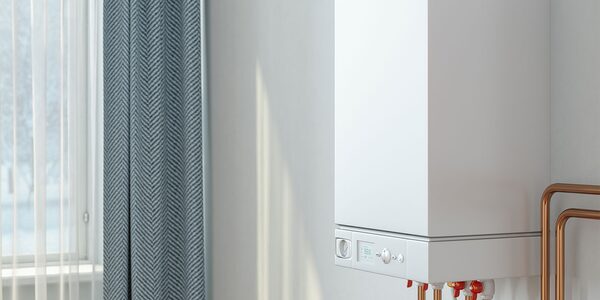
The Affordable Warmth Scheme is funded by the Department for Communities and delivered by the Northern Ireland Housing Executive3. It is open to owner occupiers and private renters in Northern Ireland, who may be able to get up to £7,500 for energy-efficiency upgrades3. Boiler replacement is one of the measures funded8.
Eligibility is set by income. Households with a total annual gross income of less than £23,000 may be able to get funding3. Note that this threshold is gross income, whereas the oil support voucher uses a £30,000 figure net of allowable deductions1. The two schemes use different tests, and a household can fall inside one and outside the other.
The application route runs through the Northern Ireland Energy Advice Service. Individuals can apply to the scheme through the Northern Ireland Energy Advice Service8. The process is: contact the NI Energy Advice Service; if the household meets the entry requirements an application form will be sent; the applicant completes and returns it with supporting documents to the local Grant Office4. Applicants must live in Northern Ireland4.
| Scheme | Status | Support | Income test | Delivered by |
|---|---|---|---|---|
| Home Heating Oil Support Scheme | Open | One-off £100 oil voucher | Qualifying benefit, or under £30,000 net | Department for Communities via nidirect1 |
| Affordable Warmth Scheme | Open | Up to £7,500 for energy-efficiency upgrades | Under £23,000 gross | NI Housing Executive3 |
| Boiler Replacement Scheme | Closed | Up to £1,000 for boilers over 15 years old | Scheme-specific | NI Housing Executive6 |
| Boiler Upgrade Scheme | Not available in NI | £9,000 for oil and LPG homes | n/a | Ofgem, England and Wales only7 |
The distinction between the two live schemes is the one households most often need clarified. The oil voucher is revenue support for a fuel bill. Affordable Warmth is capital support for the fabric and the appliance. A household can, in principle, benefit from both, because they address different costs.
The scheme budget and how many households are covered
The oil support package was agreed at £36.4million, described as a support package secured through Executive agreement11. The target was more than 300,000 households11, and the eligible population was later given as around 340,000 households across Northern Ireland2. Against a £100 voucher, those figures are consistent in order of magnitude: 340,000 vouchers at £100 is £34 million, close to the £36.4 million package once administration is allowed for.
The Affordable Warmth Scheme's £7,500 maximum sits in a different funding order. It is a capital grant per household, and the number of households it can reach in any year is correspondingly smaller than a £100 voucher scheme. The Department has not published a comparable household count in the material available here, so the reach of Affordable Warmth should be treated as demand-led and budget-constrained rather than as a fixed entitlement.
For context on how Northern Ireland's energy support compares with the rest of the UK, the earlier Energy Bills Support Scheme provided a £400 discount on energy bills for households in Northern Ireland, at an estimated cost of approximately £332 million based on estimates of eligible households16. The alternative fuel payment provided £100 to support households who do not use mains gas for heating17. Those were temporary measures in the 2022 energy crisis, and they show the scale at which UK-wide support has operated when it has been applied to Northern Ireland.
The honest reading is that the £100 oil voucher is a small fraction of a household's annual heating oil spend, whatever the price of oil. It is a contribution, not a solution. The £7,500 Affordable Warmth maximum is a more substantial intervention, but it is targeted at lower-income households and is not an entitlement available to all.
Building Rules for new and replacement boilers: Technical Booklet L
Heating installation in Northern Ireland is governed by the Building Regulations (Northern Ireland) 2012, and the practical guidance sits in Technical Booklet L. That booklet takes effect on 31st October 2012 and was prepared by the Department of Finance and Personnel for the purpose of providing practical guidance18. The guidance contained in it relates only to the requirements of regulations 70, 71, 72, 73, 74, 75, and 7618.
The scope is defined by appliance type and output. Section 3 covers solid fuel burning appliances (including solid biofuel) with a rated heat output up to 50 kW18. Section 4 covers gas burning appliances with a rated heat input up to 70 kW (net)18. A domestic oil or gas boiler replacement falls within this framework, which is why the installer's competence and the notification route matter as much as the appliance itself.
There is a companion document for combustion and fuel storage. Technical Booklet P relates to the Building Regulations (Northern Ireland) 2012, regulations 84, 88 and 89, and its territorial extent is Northern Ireland19. Between them, Booklets L and P cover the appliance and the fuel storage arrangement, which for an oil-heated home means the tank as well as the boiler.
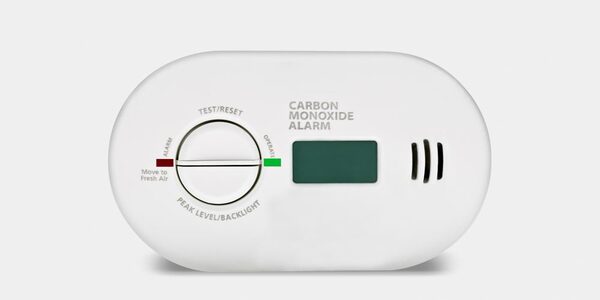
Carbon monoxide provision is part of the picture. Guidance states that a carbon monoxide (CO) alarm, which meets European Standards EN 5029, should be fitted in any room that contains a gas fuel burning appliance, like a boiler and gas fire, and a solid fuel burning appliance20. The same guidance states the alarm should include an integral sounder21. For Wales specifically, Approved Document J has been amended to include guidance that where a new or replacement fixed flued combustion appliance of any fuel (oil, gas including LPG, and solid fuel) type is installed in a dwelling, including fixed flued cookers, a carbon monoxide alarm should be provided22. In Wales, the Fitness for Human Habitation Regulations require a landlord to ensure that a carbon monoxide alarm is present in any room which has a gas, oil or solid fuel burning appliance installed21.
For a household, the building rules are the part of the process that is not optional and not grant-dependent. A replacement boiler must be installed to the applicable standard regardless of whether any grant is claimed, and the carbon monoxide provision applies to the room, not to the funding.
Where heating grants fit as low-carbon heating rules approach
The direction of travel across the UK is towards phasing out fossil fuel heating, and Northern Ireland's grant landscape currently sits outside the main mechanism for paying for that transition. The Boiler Upgrade Scheme provides upfront grants to help reduce the cost of installing a low-carbon heating system, such as a heat pump or, in limited circumstances, a biomass boiler, in properties in England and Wales23. Its purpose is to support the decarbonisation of heat in buildings24. Northern Ireland households cannot access it.
The grant levels under that scheme illustrate the scale of support available elsewhere. It offers £2,500 grants for air-to-air heat pumps and £5,000 off the cost and installation of a biomass boiler25. For properties heated by oil and liquid petroleum gas, the figure is £9,0003. What is clear is that the uplifted grant is aimed precisely at the households Northern Ireland has most of, and it is not available to them.
The scheme is administered by Ofgem, and the grant is applied upfront as a discount to the cost of the installation, paid to the installer rather than to the household23. Applications are installer-led14. The scheme has run at scale: 9,983 grant payments worth almost £50.2 million were made in Scheme Year 1 to 31 March 202326, and 4,417 grants were paid in November 2023 to January 202427. Since the £9,000 off-gas grid change, 3,037 applications for the £9,000 grant were received up to the end of July 2026, 37% of the 8,150 total applications in July28.
For Northern Ireland, the practical position is that a household replacing a boiler today is choosing between an oil boiler under the building rules, with the £100 oil voucher as revenue support and possibly Affordable Warmth capital support, and a self-funded low-carbon system with no equivalent capital grant. That is a materially different choice from the one facing a household in England or Wales, and it is the gap that any future NI scheme would need to close.
Sources28 cited
- Home Heating Oil Support Scheme, Department for Communities, 2026-09-17
- Lyons announces opening date for Home Heating Oil Support Scheme, Department for Communities, 2026-08-26
- Research briefing CBP-9585, House of Commons Library, 2026-05-13
- Affordable Warmth Scheme, Northern Ireland Housing Executive, 2026-09-17
- Northern Ireland Housing Statistics 2023-24, Northern Ireland Statistics and Research Agency, 2023-24
- Closure of Boiler Replacement Scheme, Department for Communities, 2023-09-21
- Boiler Upgrade Scheme quarterly report, issue 6, Ofgem, 2023-11-30
- Changes to the Affordable Warmth Scheme, Department for Communities, 2023-09-08
- Cost of living and winter support, Belfast City Council, 2026-09-20
- Boiler Upgrade Scheme quarterly report, issue 12, Ofgem, 2025-05-30
- Lyons announces agreement on Home Heating Oil Support, Department for Communities, 2026-04-16
- NISEP List of Schemes 2026-27, Utility Regulator, 2026-04
- Home Heating Oil Support, nidirect, 2026-09-17
- Apply for the Boiler Upgrade Scheme, UK Government, 2026-09-17
- Boiler Upgrade Scheme statistics, July 2026, UK Government, 2026-07
- £5 million to help Welsh households invest in greener homes, Welsh Government, 2026-03-05
- Energy Bills Support Scheme (Northern Ireland), UK Parliament, 2022-10-18
- Technical Booklet L: 2012, Department of Finance and Personnel, 2012-10
- Technical Booklet P: 2012, Department of Finance and Personnel, 2012-10
- Keeping your home warm in winter, Met Office, 2026-09-20
- Fitness for Human Habitation guidance for landlords, Welsh Government, 2022-01-13
- Approved Document J: Combustion appliances and fuel storage systems, Welsh Government, 2024-10-04
- Boiler Upgrade Scheme guidance for property owners V5, Ofgem, 2026-04-28
- Boiler Upgrade Scheme annual report 2022-23, Ofgem, 2023-07-31
- Carbon Budget and Growth Delivery Plan: heat and buildings factsheet, UK Government, 2026-06-23
- Boiler Upgrade Scheme leaflet, UK Government, 2022-05
- Boiler Upgrade Scheme quarterly report, issue 7, Ofgem, 2024-02-29
- Boiler Upgrade Scheme quarterly report, issue 5, Ofgem, 2023-08-31
 Home HeatingWhy do so many homes in Northern Ireland run on heating oil, and will that ever change?
 Housing Stock Data for NIMost homes in Northern Ireland heat with oil, so why are the grants and help different from the rest of the UK?
 Fuel PovertyWhy does Northern Ireland have such a high rate of fuel poverty, and how many households are affected?
 Utility Regulator NIWho sets your energy prices in Northern Ireland and who can you complain to?
 Check Which Energy Grants ApplyWhich energy grants can you actually get right now, and which have closed?
 Community Energy in NICan a community group in Northern Ireland sell power to its neighbours, and is there funding to get a project off the ground?