In this guide
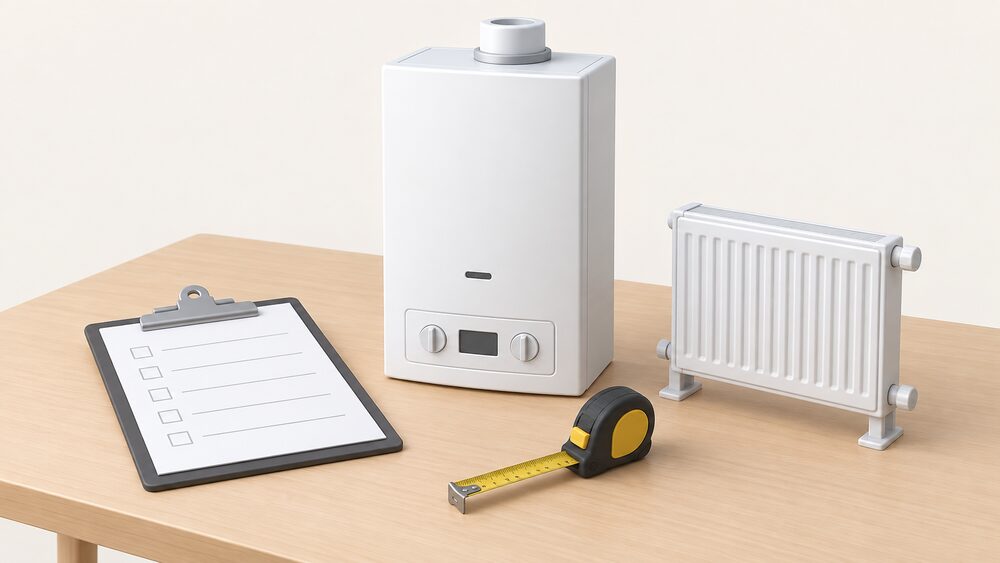
Boiler output is measured in kilowatts, and the number that matters is the heat loss of the individual home, not its floor area or bedroom count. Independent sizing guidance puts the smallest boilers, at 24 to 27kW, as powerful enough for a flat or small house1, while a separate set of statistics describes a 24 to 30kW boiler as suitable for any home with up to three bedrooms and 35kW or more for larger houses2. Those two bands overlap but do not agree, and neither is a substitute for a calculation.
Manufacturer guidance is blunt about what sizing is based on: the number of radiators, the number of bathrooms and the number of bedrooms3. Boilers are sized in kilowatts rather than physical dimensions3, so a "size" question is really a question about heat output and, for a combi, hot water flow. Consumer law adds a plain requirement that a boiler be fit for its intended purpose, which includes being the right size for the home4.
The practical consequence is that oversizing is not a safety margin. A boiler rated well above the heat loss of the property reaches its setpoint quickly, then cycles, and a combi oversized for hot water can still disappoint if the incoming mains pressure is poor. This page sets out the figures, what drives them, how the rules differ across the four nations, and what sizing means for a household's energy independence.
The short answer
For a flat or small house, the smallest boilers at 24 to 27kW are described as powerful enough1. For a home of up to three bedrooms, a 24 to 30kW boiler is given as suitable, with larger houses needing 35kW or more2. Those are the two headline bands, and they are broad because they are rules of thumb rather than calculations.
The honest short answer is that output should be matched to the heat loss of the building and, where a combi is used, to the hot water demand of the household. Sizing guidance from a manufacturer frames the decision around the number of radiators, bathrooms and bedrooms3, which are proxies for those two things. A well insulated three bedroom house with one bathroom and a modern radiator system may sit comfortably at the bottom of the band; a poorly insulated house of the same bedroom count with a large extension and two bathrooms may not.
Two further figures shape the answer. A boiler is expected to last around 15 years5, and one consumer body suggests upgrading a boiler older than 15 years to a condensing model7. Because a replacement is a rare event, the sizing decision made at that point tends to set the household's heating and hot water arrangement for well over a decade, including whether there is stored hot water to work with later.
"fit for the intended purpose - for example, it should be the right size for your home"
The published figures
The figures below are the ones that appear in published guidance. They are starting bands, and the range across them reflects the different methods behind each: one set is written for householders choosing a boiler type, the other for a broader audience looking at statistics.
| Situation | Output given | Source type |
|---|---|---|
| Flat or small house | 24 to 27kW | Independent guidance1 |
| Home up to three bedrooms | 24 to 30kW | Independent statistics2 |
| Larger houses | 35kW or more | Independent statistics2 |
The two bands disagree at the edges, and the documents do not resolve it. A household comparing them should read the overlap, 24 to 27kW, as the range both sources accept for a small home, and treat anything above 30kW as a figure that needs a specific reason behind it rather than a default for a bigger house.
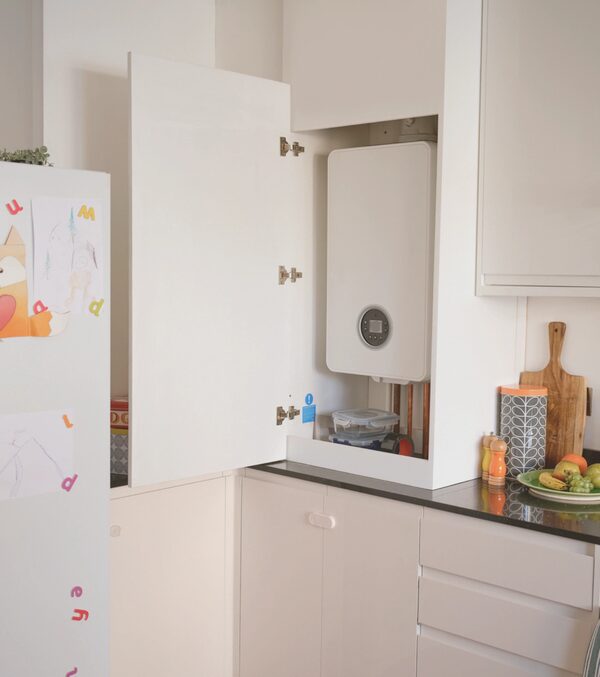
Other figures bear on the decision without being output ratings. A boiler should be fitted with at least 60mm clearance if housed in a cupboard8, which constrains where a larger appliance can go. System pressure should sit between 1 and 2 bar8. Servicing is recommended every year9, and an annual service is described as something that can keep a boiler running smoothly and extend its life, delaying an expensive replacement by years10. For rented homes, the landlord should arrange and pay for the service9.
What drives the number
Three things drive the number: the heat the building loses, the heat the emitters can deliver, and the hot water the household draws.
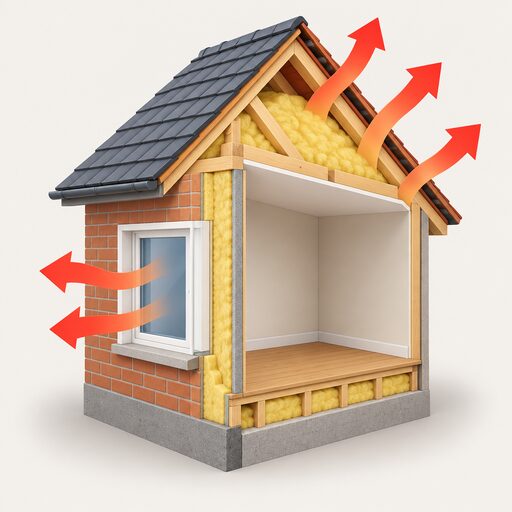
On the building side, boilers are usually fuelled by gas or oil, and sometimes by liquid petroleum gas or biomass11. They heat water that is sent to radiators, underfloor heating pipes, or a combination of both11. The rate at which that water must be heated depends on how quickly the property loses heat, which is a function of insulation, glazing, draughts and ventilation rather than bedroom count. This is why two houses of the same size can need different outputs.
On the emitter side, the number of radiators is one of the three factors manufacturer guidance names3. A system with undersized radiators cannot deliver the heat a boiler produces at a low flow temperature, so the boiler has to run hotter to compensate, which reduces condensing efficiency. Independent guidance suggests 60°C as a good flow temperature for combi boilers6. That figure points in one direction: a system designed around a lower flow temperature needs emitters sized to match.
On the hot water side, the number of bathrooms is the second factor named in sizing guidance3. A combi heats water on demand and is described as a more efficient choice for smaller households6. Conventional boilers are described as suited to larger properties because they distribute hot water to multiple outlets simultaneously7. The dividing line is not the size of the house but how many hot water outlets are likely to run at once.
Combi, system or regular: which fits which home
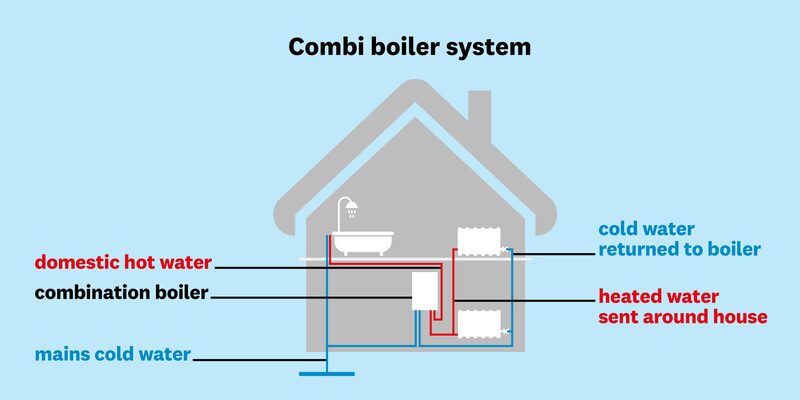
The choice of boiler type and the choice of output are the same decision made twice, because each type has a different relationship with hot water.
A combi gives heat and hot water on demand, which is described as making it a more efficient choice for smaller households6. It has no cylinder, so there is no stored hot water and no immersion backup. Its hot water output has to cover every outlet at once, which is why the number of bathrooms appears in sizing guidance3. For a one bathroom home with moderate demand, a combi in the 24 to 30kW band is the arrangement the published figures describe1.
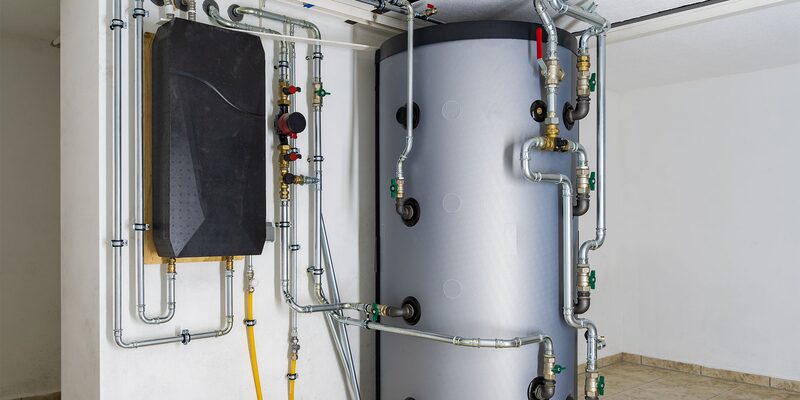
A conventional or regular boiler is described as suited to larger properties because it distributes hot water to multiple outlets simultaneously7. Regular boilers are designed to heat water within a heat exchanger by absorbing the heat contained in the flue gases created by the burner12. The stored cylinder that comes with this arrangement decouples hot water output from boiler output: the boiler reheats the cylinder over time rather than serving taps directly, so simultaneous demand is met from storage.
A system boiler sits between the two, using a cylinder but taking its water from the mains rather than a tank. The relevant point for sizing is that any cylinder-based arrangement changes what the kW figure has to do. The boiler's output is matched to the heat loss of the property and the recovery time of the cylinder, not to the flow rate of a shower.
How the rules differ across the UK nations
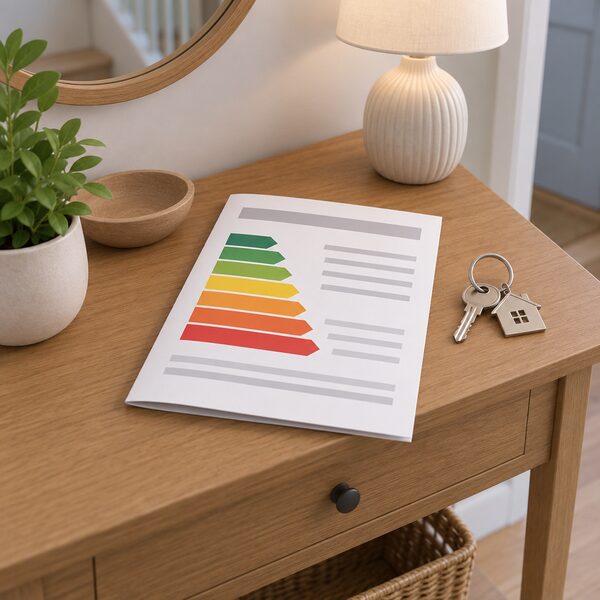
The sizing calculation itself does not change at the border, but the regulatory framework around it does, and that framework is what determines how a system is designed and what evidence is required.
The Standard Assessment Procedure produces the content of the domestic EPC13, and it has been the recognised method of calculating data for an EPC since 200214. Its legal basis differs by nation: Part L in England and Wales, Section 6 in Scotland, and Part F1 in Northern Ireland, under the building regulations covering the conservation of fuel and power14. SAP calculations must be carried out using approved software built on an engine approved by the BRE, and by a certified SAP Assessor subject to quality assurance through the government-approved certification process14. They are only necessary for residential properties and are primarily used to generate a new or updated EPC before selling or letting14.
Boiler Plus is the clearest example of a standard that does not apply uniformly. The additional minimum standards came into force from April 2018 in England only15, and the regulations apply to installations in England from 6 April 201816. They apply only to new installations, or when a boiler is being replaced at the end of its working life, and no one is expected to change a boiler just because the regulations came in16. For the rest of Great Britain, the Energy Company Obligation consultation records that the proposal to make the English Boiler Plus standard a specific ECO requirement was not taken forward, and installations follow the building regulations for each nation17.
Grant funding follows the same pattern. The Boiler Upgrade Scheme is open to domestic and small non-domestic properties in England and Wales up to 45kWth18, and requires the property to be located in England or Wales with an installation capacity up to 45kWth19. All installations under the scheme must be MCS certified, delivered by an MCS installer using MCS certified products20. Scotland and Northern Ireland sit outside that scheme, and separate arrangements apply.
For solid fuel and biomass appliances, the technical requirements are set out nationally. In Wales, a pellet burner or pellet boiler meeting the Clean Air Act requirements must have a minimum flue size of 125mm diameter, reducible to no less than 100mm when permitted by the appliance manufacturer and supported by calculation to BS EN13384-1:200221. Northern Ireland's Technical Booklet L sets the same 125mm figure, reducible to no less than 100mm on the same conditions, for a pellet burner or pellet boiler meeting the Clean Air (Northern Ireland) Order22.
The rules that bear on sizing
The rules that bear on sizing fall into three groups: what the installation must achieve, who may do the work, and what standards apply to particular technologies.
On fitness, a gas boiler must be installed with reasonable skill and care and be fit for the intended purpose, which explicitly includes being the right size for the home4. That is a consumer protection standard rather than a technical one, but it gives a household a clear basis for questioning an oversized proposal.
On efficiency, the Ecodesign Regulations define independent boilers as those classified as not providing heat into the room in which they are installed, linking to an existing or new hot water heating system23. For an independent boiler burning wood logs in manual operation at 20kW output or less, the limit for organic gaseous compounds is 350mg/m323. Minimum efficiency requirements for solid fuel appliances are set out in building guidance: an independent boiler burning wood logs only, batch feed, must reach 75% gross calorific value24, and an independent boiler burning wood, pellets or chips with automatic feed must reach 75% at nominal load and 70% at part load25. The same figures appear in the Welsh approved document26 and in the Scottish compliance guidance25.
For standard boilers, the legislation sets an efficiency at part load of at least 80 + 3 log Pn per cent, for power outputs from 4 to 400kW with part load at an average boiler water temperature of 50°C or above27.
On who may work, gas work must be carried out by a Gas Safe registered engineer, and where a boiler has issues beyond a simple reset, a Gas Safe registered engineer should be contacted to check it28. Servicing is recommended every year for a boiler or heat pump9, and an annual service is described as extending a boiler's life10.
What sizing means for energy independence
Sizing is one of the few heating decisions a household controls entirely, and it has a direct bearing on how much of its comfort it can supply from its own resources.
An accurately sized boiler runs steadily rather than cycling, which means it burns closer to the amount of fuel the home actually needs. That matters most for households off the gas grid, where fuel is delivered and stored on site. Over 80% of UK households have a gas boiler29, but the remainder depend on delivered fuels or electricity, and for them every unnecessary kilowatt of output is fuel that had to be bought, stored and paid for in advance. Oil and biomass systems in particular reward accurate sizing because the fuel is a physical stock rather than a metered supply.
The dependence that remains is structural. A gas boiler depends on the gas grid and a supplier. An oil or biomass boiler depends on deliveries and on storage that meets the rules for the appliance and the nation. A combi depends on mains water pressure as well as fuel, because it takes hot water directly from the mains. None of these arrangements makes a household self-sufficient, and sizing does not change that.
What sizing does change is the cost of the transition. A household that fits a combi now may need to put a cylinder back in later if a heat pump is wanted6. Government policy signals an ambition to phase out installation of new natural gas boilers beyond 2035, with no legally binding regulatory decision made30. A system designed with the right heat loss figure and the right emitters is easier to convert than one built around an oversized boiler and undersized radiators.
Getting the calculation right in practice
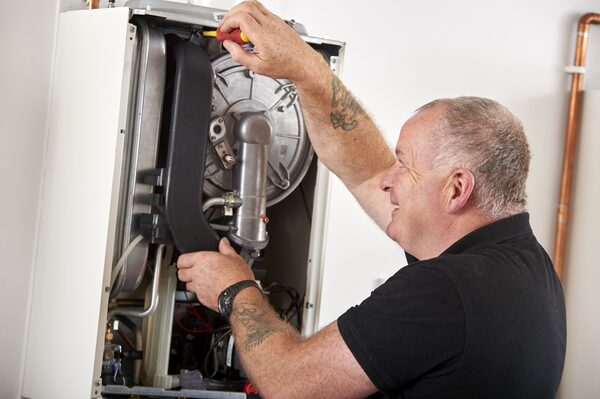
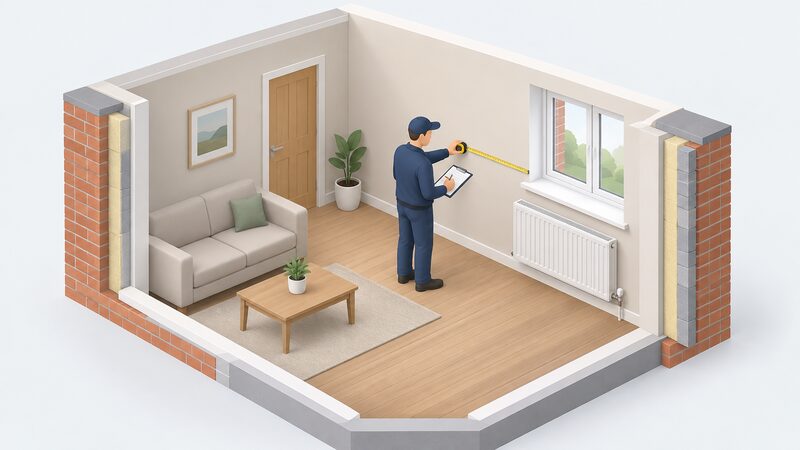
The calculation a household should expect is a room by room heat loss assessment, followed by a check that the emitters can deliver that heat at a sensible flow temperature. Manufacturer guidance names radiators, bathrooms and bedrooms as the factors behind boiler size3, and independent guidance gives 60°C as a good flow temperature for combis6. Those figures only work together if the radiators are sized for the lower temperature.
Practical checks around the installation matter too. A boiler housed in a cupboard needs at least 60mm clearance8, and system pressure should sit between 1 and 2 bar8. Servicing should be annual9, and for rented homes the landlord should arrange and pay for it9. Where a boiler has stopped and the condensate pipe has frozen, resetting it after the pipe defrosts should get it working again, and any other issue should go to a Gas Safe registered engineer28.
A household replacing a boiler at the end of its life, around 15 years5, is making a decision that will stand for a similar period. The figures in this page are the published bands; the number for a specific home comes from a survey of that home.
Sources30 cited
- Best boilers guide, Confused.com, 2025-11-03
- Boiler statistics, Uswitch, 2024-01-04
- What size of boiler do I need?, Viessmann, 2022-03-22
- Getting your broken boiler repaired or replaced, Citizens Advice, 2024-08-16
- Heating and hot water, Planning Portal, 2026
- Boilers advice, Energy Saving Trust, 2026-05-20
- Different boiler types, Uswitch, 2024-11-06
- Boiler maintenance, Uswitch, 2026-09-03
- Take control of your heating at home, Energy Saving Trust, 2026-09-11
- Keeping warm in winter, CIPHE, 2022-12-19
- Heating your home, Energy Saving Trust, 2026-05-19
- Your home guide to liquid fuel heating, OFTEC, 2026-09-20
- Technical annex for chapter 2: what EPCs measure, GOV.UK, 2026-03-09
- SAP calculations vs the Home Energy Model, Stroma, 2024-07-15
- Building regulations Part L and F review stage 2a consultation, Welsh Government, 2020-11
- What's the deal with Boiler Plus?, CIPHE, 2018-04-30
- ECO4 consultation: scoring methodology decision, Ofgem, 2022-04-12
- Grants and incentives, Electricity North West, 2023-04-25
- Boiler Upgrade Scheme guide, Uswitch, 2026-06-05
- MCS outreach on Boiler Upgrade Scheme installations, MCS Certified, 2026-02-02
- Building regulations guidance Part J: heat producing appliances, Welsh Government, 2010
- Technical Booklet L: 2012, Building Control Northern Ireland, 2012
- Ecodesign explained, HETAS, 2026
- Building regulations Part L and F review stage 2a approved document L, Welsh Government, 2020-11
- Draft guidance: domestic building services compliance guide, Scottish Government, 2021-07
- Approved document L draft consultation version, Welsh Government, 2019-12
- The Boiler (Efficiency) Regulations 1993, legislation.gov.uk, 1993-12-09
- My boiler isn't working, SGN, 2026
- Research brief: heat pumps, five key policy areas, CREDS, 2023-10-12
- Energy saving tips for UK households, British Gas Energy Trust, 2026-04-21
 The Full Boilers and Heating GuideWhich boiler suits your home, and when is it worth swapping the old one?
 Radiators and EmittersWill your radiators still heat the house properly with a heat pump?
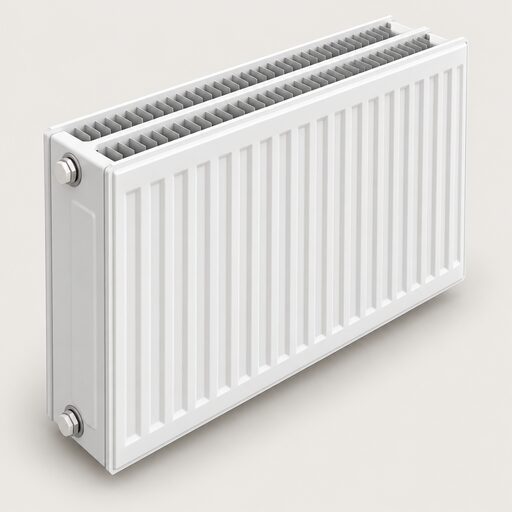 Radiators and Heat EmittersA radiator's real heat output depends on how hot the water inside it is compared with the room, so the figure in a catalogue often overstates what you will actually get.
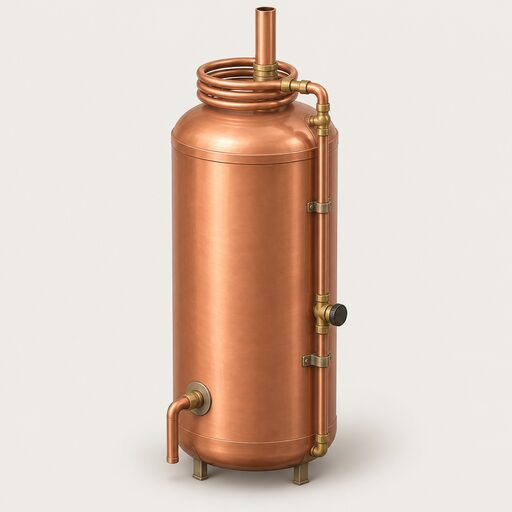 Regular and Heat-Only BoilersGot tanks in the loft and a hot water cylinder in the airing cupboard?
 System Boilers ExplainedA system boiler heats your radiators and stores hot water in a separate cylinder, so several taps and showers can run at once.
 Sizing and Heat LossHow do installers work out what size heat pump your home needs, and why can a unit that is too big cost more to run than one that is slightly small?