

In this guide
Wales runs its own domestic energy efficiency scheme rather than relying on the England-only programmes. The Welsh Government Warm Homes Nest scheme offers free energy efficiency advice and improvements to low-income Welsh households, and it is open to people who own or privately rent their home, provided the property has a poor energy rating and the household meets an income or benefit test1.
The headline eligibility rule is an Energy Performance Certificate (EPC) of 54 (E) or less. Where someone in the household has an eligible health condition, the threshold relaxes to 68 (D) or less2. Income thresholds run from £15,521 a year for a single adult with no children to £38,456 a year for a couple with two children aged 14 or over, assessed on total household income after mortgage or rental payments2.
Nest is not the only route. The Boiler Upgrade Scheme provides grants for heat pump installations across England and Wales, and Green Homes Wales can be used alongside it3. For social housing, the Welsh Housing Quality Standard sets a legally binding requirement that all existing social homes meet the standard, and Welsh Government reporting records 100% compliance as of 31 March 20224.
Nest: Wales's free home energy improvement scheme
Nest is the Welsh Government's Warm Homes programme for private housing. It offers free energy efficiency advice and improvements to low-income Welsh households, and it is described in parliamentary briefing material as the Welsh Government's equivalent free energy upgrade route for houses with a poor EPC rating1. The scheme is delivered under the Welsh Government Warm Homes banner, which the scheme itself describes as making Welsh homes warmer and more energy efficient places to live8.
The scale is substantial. Since 2011, Welsh Government has invested more than £251 million to improve home energy efficiency through the Warm Homes Nest scheme5. Alongside the Optimised Retrofit Programme, the two collectively provide more than £130 million a year for free energy efficiency improvements to low-income households in Wales3. Over £30 million has been allocated for the following year to fund energy efficiency, renewables and clean heat measures9.
Delivery is through a network of Wales-based installers working under the management of the Nest team10. Historically the scheme was operated under contract, with British Gas having managed the Welsh Government's Nest scheme for over three years as of 201511. The scheme has also leveraged external funding: an evaluation recorded £4.2m of ECO funding leveraged into Wales12.
For a household's energy independence, Nest's contribution is direct: it removes the capital cost barrier to insulation, heating replacement and in some cases renewable generation, which reduces the amount of purchased energy a home needs. What it does not do is remove dependence on the grid or on a supplier. A home improved through Nest still buys electricity and, where a gas connection remains, gas. The independence gained is in lower demand, not in self-sufficiency.
Who qualifies: income, benefits and tenure rules

Three conditions must be met together. A household must own or privately rent the home, must receive a means tested benefit or live in a low-income household, and must live in a home with an EPC rating of 54 (E) or less, or 68 (D) or less where a household member has an eligible health condition2.
Tenure is the first filter. Local authority and housing association tenants are excluded, because their homes fall under the Welsh Housing Quality Standard instead8. Private renters are eligible, but must provide the landlord's details so that Nest can request permission for any work2. Private landlords cannot apply to the scheme in their own right14.
The benefit test accepts Council Tax Reduction related to income, Pension Credit and Universal Credit2. Several legacy benefits moved to Universal Credit in March 2026, with a possible extension until July 2026: Housing Benefit, Income-based Jobseeker's Allowance, Income-related Employment and Support Allowance, Income Support and Working Tax Credit2. Households whose benefit has migrated should check which award they now hold.
Income is assessed on total household income after mortgage or rental payments, and disability related payments or benefits are not counted as income2. That exclusion matters for households where a disability benefit makes up a large share of receipts.
Evidence requirements are specific. A benefit award letter or Council Tax statement proves the benefit position2. Owner occupiers must also supply one of a mortgage statement, buildings insurance policy or property deeds2.
Income thresholds: £15,521 to £38,456 depending on household
The income table is banded by household composition, with weekly, monthly and annual figures published for each. The lowest threshold is £15,521 a year for a single adult householder with no children, equivalent to £298 a week or £1,293 a month2. The highest is £38,456 a year for a couple with two children aged 14 or over, equivalent to £740 a week or £3,205 a month2.
| Household type | Weekly | Monthly | Annual |
|---|---|---|---|
| Single adult, no children | £298 | £1,293 | £15,521 |
| Couple, no children | £446 | £1,931 | £23,166 |
| Couple, one child under 14 | £535 | £2,317 | £27,799 |
| Couple, one child 14 or over | £593 | £2,568 | £30,811 |
| Couple, two children under 14 | £624 | £2,703 | £32,433 |
| Couple, two children 14 or over | £740 | £3,205 | £38,456 |
All figures from Nest eligibility guidance2.
Two features of the table are worth noting. First, the thresholds rise with the number of children and with their age, reflecting higher assumed living costs. Second, the assessment is made after housing costs, so a household with a large mortgage or rent payment may fall inside a band that its gross income would appear to exclude.
The range across the table is wide: £15,521 to £38,456, a spread of £22,935. That spread is the reason a household should not assume it is outside the scheme on the basis of a single headline number. The relevant figure is the one for the household's own composition, measured after housing costs and excluding disability payments.
EPC rules: E or below, or D with an eligible health condition

The energy rating test has two routes. The standard route requires an EPC of 54 (E) or less2. The health route allows a home rated 68 (D) or less where someone in the household has an eligible health condition2.
The health route was a deliberate widening. A Welsh Government consultation recorded the extension of eligibility criteria for free Nest home energy improvements to include E-rated properties, in addition to F and G rated properties, from 2015-1615. The D route with a health condition extends that principle further.
Eligible conditions are listed by category: respiratory disease including respiratory infections, broncho-constriction in asthma and chronic obstructive pulmonary disease; circulatory disease including cardio-vascular disease, strokes and heart attacks; mental health conditions including depression, anxiety, psychosis and bipolar disorders; dementia; and intellectual and development disorders2.
Evidence of the condition can take several forms: a prescription, medication package, treatment plan, or a GP or hospital appointment or referral letter2.
Where a home is rated 68 (D) or less but no-one in the household has an eligible condition, the health route does not open. Nest states that the details are placed on a reserve list2. That is not a refusal, but it is not an offer either, and it means a D rated home without a qualifying health condition sits outside the main criteria.
"If your home has an EPC rating of 68 (D) or less but no-one in your household has an eligible condition, your details will be placed on a reserve list."
What Nest funds: heating, insulation, solar panels and advice
The improvement package is broad. Nest has delivered home energy efficiency improvements including central heating systems, boilers, insulation, solar panels and air source heat pumps10. The scheme's own description of a tailored package lists a boiler repair or replacement, heat pump, insulation and solar panels1. The Welsh Government's heat pump guidance confirms that eligible households can get free energy advice and a suite of home energy efficiency improvements6.
There is also an emergency element. Welsh Government guidance describes repairs to boilers or electric storage heaters to restore heating or hot water as quickly as possible, aimed at households facing an immediate risk to their health and wellbeing due to a lack of essential heating or hot water16.
Advice is separate from measures and is not restricted by eligibility. Nest provides advice on saving energy, money management, fuel tariffs, benefit entitlement checks and referral to alternative schemes to all householders in Wales12. Free energy savings advice is available to all householders in Wales17. The scheme describes itself as providing all householders in Wales with access to advice and support to help them reduce their energy bills15.
For energy independence, the mix matters. Insulation reduces the heat a home must buy. Solar panels generate electricity on site, which is the only element of the package that produces energy rather than conserving it. A heat pump changes the fuel a home depends on, moving it from gas to electricity, which shifts rather than removes dependence on an external network. None of these measures takes a household off the grid.

How to apply: assessment, whole house survey and the tailored package
The route in is a phone call or a website visit. Nest advises calling Freephone 0808 808 2244 or visiting nest.gov.wales18. Welsh Government guidance repeats the number for checking eligibility16. The line is open Monday to Friday from 9am to 6pm, excluding bank holidays2.
Welsh language contact is available. Calls and emails are welcomed in Welsh19. For people who are hard of hearing, neurodivergent, or who have difficulties communicating by telephone, Nest offers an email route at advicewales@est.org.uk19.
The process runs in stages:
- Initial contact by phone or through the Nest website, to check eligibility18.
- If eligible, Nest arranges for an assessor to visit the home and gather more information19.
- The information gathered is used to develop a tailored package of support specific to the household and home19.
- Installation is carried out by a network of Wales-based installers under the management of the Nest team10.
The assessment is whole house rather than single measure, which is why two similar homes can receive different packages. A property with poor insulation and an old boiler may receive both; a property with adequate insulation and a failing boiler may receive the boiler alone.
Advice is available even where improvements are not. Nest states that people who do not think they are eligible, or are not sure, can still make contact for energy efficiency advice, help with other grants, energy tariffs and benefits entitlement checks19. Nest can confirm whether a household is eligible for a package of free home energy efficiency improvements20.
Heat pumps beyond Nest: the Boiler Upgrade Scheme's £7,500 grant

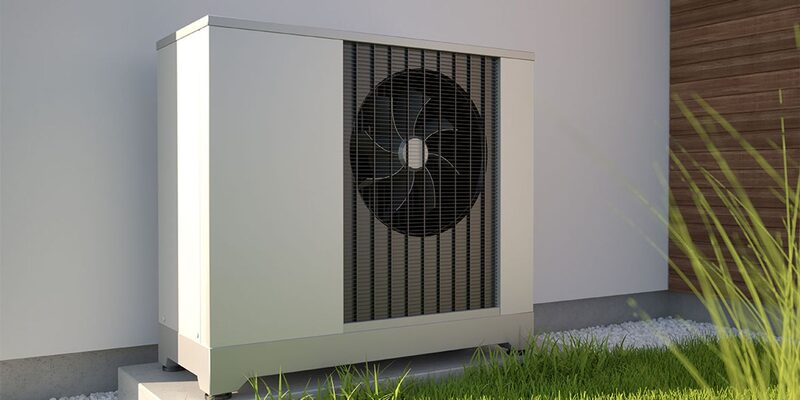
Where Nest does not apply, the Boiler Upgrade Scheme is the main grant route for heat pumps in Wales. It provides grants for heat pump installations across England and Wales, and only properties in England and Wales are eligible3. The published figure is £7,500 off a heat pump6.
Take-up in Wales is recorded in the scheme's quarterly reporting. Wales accounted for 3,372 grants, or 5.0% of the total22. In the quarter from August 2025 to October 2025, 8,075 grants were paid across the scheme, with £60,517,500 paid out22.
The scheme is administered by Ofgem and carries audit requirements. Evidence that may be requested includes valid ID, proof of address, proof of property ownership, MCS certificates, evidence of supplementary heating, EPCs and EPC site notes, utility bills or fuel delivery receipts, photos of previous and installed heating systems, purchase receipts or quotes, and total building heat loss calculations21. For eligible self-build properties, additional evidence may include planning permission, a building completion certificate, an HMRC VAT exemption letter, a self-build mortgage or loan, and official invoices for building materials or works21.
A change to the EPC requirement is planned. The Government intends to amend Boiler Upgrade Scheme eligibility criteria to relax the requirement for a valid EPC from 2026/27 onwards, adopting a hybrid model21.
Where Wales's heat strategy is heading
The Heat Strategy for Wales sets the direction. It is based on the Climate Change Committee's Balance Pathway, and its policies are broken down into 17 objectives within six groups23. The strategy signals an ambition to phase out the installation of new natural gas boilers beyond 203523.
One position is distinctive. Welsh Government statistics state that off-gas areas will not use hydrogen24. That rules out the hydrogen conversion route for rural Welsh homes not connected to the gas grid, and points those properties towards heat pumps, biomass or electric heating instead.
Progress on renewable heat is measurable. Wales installed 67 MW of new heat technologies during 202324. That figure covers renewable heat capacity added in the year, and it sits alongside the grant-funded domestic installations delivered through Nest and the Boiler Upgrade Scheme.
For a household, the strategy matters in two ways. It sets an expectation that fossil fuel heating has a finite life, and it narrows the technology options for homes off the gas grid by excluding hydrogen. A home considering a replacement boiler in Wales is therefore choosing within a policy environment that assumes a move away from natural gas, even though no binding date has been set for existing installations.
Social housing: the Welsh Housing Quality Standard
Social housing in Wales is covered by a different mechanism. The Welsh Housing Quality Standard was introduced by Welsh Government in 2002 and applies to Registered Social Landlords and local authorities with social rented housing stock25. It is a legally binding standard, and local authorities must comply with it pursuant to section 111 of the Housing (Wales) Act 20144.
The purpose is to improve the quality of social homes in Wales, and the standard includes mandatory provision of flooring and affordable heating, while ensuring households can afford to heat their homes and be lifted out of fuel poverty4. All existing social homes must meet the standard4.
Compliance has been achieved on the headline measure. Welsh Government reporting records that 100% of social homes met the standard as of 31 March 20224. A summative evaluation of the standard was published as social research number 43/202125.
The standard is not static. A pathway deadline has been established requiring existing social housing to have a Target Energy Pathway to achieve EPC A by 2034, or a later date authorised by Welsh Government.
For tenants, the practical effect is that heating improvements are the landlord's responsibility rather than something to apply for individually. That is why local authority and housing association tenants are excluded from Nest: their route to a warmer home runs through the standard, not through the grant scheme8.
What Nest has delivered so far
Delivery figures give a sense of scale and of recent pace. Welsh Government reporting records 4,364 homes improved in 2022 to 2023 and 4,816 homes improved in 2023 to 20245. In the six months from 1 October 2024 to 31 March 2025, the scheme delivered home energy efficiency improvements, including central heating systems, boilers, insulation, solar panels and air source heat pumps, to 348 households10.
The gap between the annual figures and the six-month figure reflects the reporting period rather than a collapse in delivery, but it does show how much the numbers move between reporting windows. Historical funding gives further context: in 2016/17 the Welsh Government provided £19.5m for Nest15.
The scheme's reach extends beyond installations. Nest provides all householders in Wales with access to advice and support to help them reduce their energy bills, whether or not they qualify for physical measures15. An early evaluation recorded that Nest also provides advice on saving energy, money management, fuel tariffs, benefit entitlement checks and referral to alternative schemes12.
For a household weighing up whether to apply, the delivery record is the practical evidence that the scheme installs real measures rather than only offering advice. The advice function is universal; the improvement packages are means tested and rating tested, and the numbers show they are delivered in the low thousands each year rather than the tens of thousands.
Sources25 cited
- Nest Warm Homes Programme, Welsh Government, 2026
- Nest eligibility guidance, Welsh Government, 2026
- £5 million to help Welsh households invest in greener homes, Welsh Government, 2026
- Welsh Housing Quality Standard 2023 integrated impact assessment, Welsh Government, 2024
- Tackling fuel poverty: priority actions, Welsh Government, 2025
- Your essential guide to heat pumps, Climate Action Wales, 2026
- POST note 771: energy efficiency of UK homes, Parliamentary Office of Science and Technology, 2026
- Home energy efficiency, Bridgend County Borough Council, 2026
- Written statement: support available to help with the cost of living, Welsh Government, 2026
- Warm Homes Nest Scheme annual report 2024 to 2025, Welsh Government, 2026
- Summary of responses to the Nest consultation, Welsh Government, 2015
- Evaluation of the Nest energy efficiency scheme: summary, Welsh Government, 2015
- Written statement: support for householders impacted by the closure of the Energy Company Obligation scheme, Welsh Government, 2026
- Green Homes Wales, Development Bank of Wales, 2026
- Warm Homes Nest report reveals benefits for homes and businesses, Welsh Government, 2017
- Get help with unexpected costs such as food and heating, Welsh Government, 2026
- Written statement: tackling fuel poverty, Welsh Government, 2025
- Nest: a scheme to make your home warmer and more energy efficient, Isle of Anglesey County Council, 2026
- Apply to Nest, Welsh Government, 2026
- Get free home energy efficiency improvements from Nest, Welsh Government, 2026
- Boiler Upgrade Scheme guidance for property owners, Ofgem, 2026
- Boiler Upgrade Scheme quarterly report, issue 14, Ofgem, 2025
- Draft Heat Strategy for Wales, Welsh Government, 2023
- Energy generation in Wales 2023, Welsh Government, 2025
- Summative evaluation of the Welsh Housing Quality Standard, Welsh Government, 2021
 Energy Policy in WalesWhat help can you get in Wales to make your home warmer and cheaper to run?
 The Full Boilers and Heating GuideWhich boiler suits your home, and when is it worth swapping the old one?
 Welsh Building Regs InsulationDo insulation or glazing rules in Wales differ from England?
 Check Which Energy Grants ApplyWhich energy grants can you actually get right now, and which have closed?
 Home Energy Planning WalesSolar panels and heat pumps often need no planning permission in Wales, but the rules differ from England.
 Housing Stock Data for WalesHow energy efficient are Welsh homes, and how many have a rating?