

In this answer
Short answer
The Warm Homes: Local Grant is a government grant scheme that provides energy performance upgrades and low carbon heating through local authorities in England1. It started in 2025 and awards funding to councils to help them upgrade energy inefficient homes of low-income households in their area2. Up to £30,000 of measures is available per property4.
Eligibility turns on three things at once: where the home is, who lives in it, and what the household earns or receives. The household must live in a local authority that has Warm Homes: Local Grant funding, and in England5. The property needs an Energy Performance Certificate rating of D to G, or the equivalent for a park home6. On income, households earning more than £36,000 may still be eligible if they live in a certain postcode area, or someone in the household is getting certain benefits6.
The scheme is free to eligible applicants, with no application fee or other costs at any stage6. Landlords must contribute towards costs, and tenants should not pay for upgrade costs6. The scheme runs for three years, ending on 31 March 20288.
What Warm Homes: Local Grant is and who runs it
The scheme is administered through local authorities rather than a national application portal, and it provides grants to low-income households living in privately owned properties9. Councils receive an allocation and then run their own queue, assessment and installation process within it. That structure explains most of the variation a household will see: two neighbouring councils can be at different stages, with different contractors and different waiting times, under the same national rules.
The scheme sits inside the wider Warm Homes Plan, and it is one of two low-income programmes alongside the Warm Homes: Social Housing Fund, which funds energy efficiency upgrades and low-carbon heating measures in English social housing10. The government plans to integrate the two into a single scheme with area-based delivery in 2027/28.
It is open to private renters as well as owners, with landlord consent11. Private homes, whether owned or rented, may be eligible where the criteria are met12. The scheme is not the same as the supplier-funded Energy Company Obligation, which is delivered by energy suppliers rather than councils, and it is not the Boiler Upgrade Scheme, which is a national voucher for heat pumps. Households comparing routes can read the Warm Homes: Local Grant vs Great British Insulation Scheme comparison.
For a household, the independence question is straightforward. A grant-funded retrofit reduces the amount of bought energy needed to keep a home warm, and where low carbon heating is installed it can reduce exposure to gas. It does not remove dependence on the grid or on a supplier, and the work is delivered by a council-appointed contractor rather than chosen by the household.
Who qualifies: income, savings and income exceptions

Eligibility is built around pathways, and a household must meet at least one of them13. The first is area-based: the household lives in selected areas chosen based on their inclusion in Income Deciles 1 or 2 of the Indices of Multiple Deprivation 2025 and high numbers of privately owned homes with an EPC rating of Band D, E, F, or G9. That means a postcode can qualify a household on its own, regardless of earnings.
The benefit route covers households receiving Housing Benefit, Income-based Jobseeker's Allowance, Income-related Employment and Support Allowance, Income Support, Pension Credit (guarantee or savings) or Universal Credit. The person receiving the benefit must be a permanent resident of the household14. Where income is assessed instead, household income includes any benefits received except Personal Independence Payment, Disability Living Allowance and Attendance Allowance14. Those three disability benefits are excluded from the income calculation, which matters for households whose only income above the threshold comes from them.
The £36,000 figure appears in the scheme's own example parameter, and Energy UK describes the Warm Homes: Energy Upgrade Grant as using an annual household income of £36,000 or less in line with the Warm Homes: Local Grant example15. Above that level, the postcode and benefit exceptions still apply6.
"you live in a certain postcode area, or"
The practical effect is that income alone does not settle eligibility. A household on £40,000 in a priority postcode can qualify; a household on £30,000 outside one may still qualify through benefits. The benefits that qualify for energy grants page sets out how the benefit routes work across schemes.
Property rules: location, ownership, tenure and EPC band
The property rules differ by tenure, and the EPC band required is not the same for owners and renters. Owner occupied properties need an EPC rating of Band D, E, F, or G9. Privately rented properties need an EPC rating of Band D or E9. The aim of the work is to increase the property's EPC rating to Band C9.
| Tenure | EPC band required | Notes |
|---|---|---|
| Owner occupied | D, E, F or G | Target is Band C after works9 |
| Privately rented | D or E | Landlord consent needed9 |
| Park home | D to G or equivalent | Equivalent rating accepted6 |
Location is a hard gate. In Liverpool, for example, the rule is that the applicant owns or lives in a property within the Liverpool boundary and holds an EPC rating of D to G13. Other councils publish their own priority postcodes. A household outside a participating area cannot apply, however low its income.
For landlords, the tenant or tenants must meet the household eligibility and provide evidence of income. Properties must be at least EPC Band E unless they are Band F or G with a registered exemption, and the landlord must not have exceeded £315,000 in minimum financial assistance under government rules14. There is no eligibility restriction against landlords based on the number of properties they own16.
Where a property has been treated before under the Home Upgrade Grant or the Local Authority Delivery element, re-treatment is eligible only on the condition that as a result of the re-treatment the property either reaches EPC C or low carbon heating is installed16. That condition is what stops repeat funding for measures that leave the home where it started.
What is funded: measures, low-carbon heating and the £30,000 cap

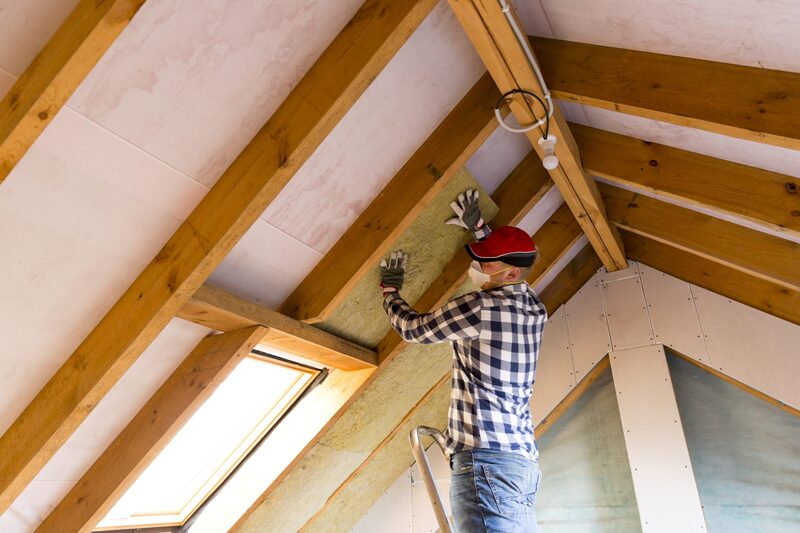
The scheme funds energy performance upgrades and low carbon heating1. In practice that has covered solar panel installation, home insulation, and heating system upgrades in council announcements17, and solar thermal insulation appears among eligible measures13. The £30,000 figure is a cap on measures per property, not a cash payment4.
For the private rented sector the cap is split. It is £30,000 for the first property a landlord upgrades, made up of £15,000 for energy-efficiency measures and £15,000 for low-carbon heating measures18. For any other properties a landlord upgrades it is £15,000 per property, split £7,500 for energy-efficiency measures and £7,500 for low-carbon heating measures18. The low carbon heat cost cap is £16,60016.
Official guidance states up to £30,000 of measures is available per property4, while separate official guidance gives up to £12,400 per household as a whole project average estimate. Both figures are published; the £30,000 is the per-property cap and the £12,400 is an average, and the two are not directly comparable.
Fuel type is not a barrier. All primary heating fuel types are eligible for Warm Homes: Local Grant funding, including gas boilers, oil, LPG, coal, solid fuels and electricity16. The upgrades are open to all fuel types, including on-gas-grid households heated by mains gas and off-gas-grid households heated by electricity, oil, coal, or liquid petroleum gas19. That is a wider fuel scope than the closed Home Upgrade Grant, which was aimed at off-gas homes.
Where a household has received a grant from public funds covering the entire cost of a renewable heating installation, that installation is not eligible for the Domestic Renewable Heat Incentive, and partial grants are deducted from payments spread evenly over the seven years of accreditation21. Households weighing a grant-funded heat pump against the Boiler Upgrade Scheme should note that the two routes interact with the RHI differently.
How to apply and how the local authority queue works
Applications start with an eligibility check on the GOV.UK website, and eligible applications are sent to the local authority or its official contractor22. The form may ask about benefits received, household income in one year, tax and deduction costs in one year, council tax costs in one year, and mortgage or rent costs in one year6. Councils then run a four-step process: apply, upload documents, get your home assessed, approve the work23. Where documents are needed to check eligibility, the council's system will say what to upload23.
The queue is the part households most often misread. In Years Two and Three, applications are managed on a first come, first served basis within each local authority, rather than across London as a whole6. The queue limit is set at up to 250% of the funding allocated to that local authority, to allow for applications that do not go ahead or are found to be ineligible6. Once a local authority's queue is full, any further applications from that area are placed on a waiting list, and if space becomes available, applications are invited from the waiting list in the order they were received6.
Some councils have already exhausted their allocation. All available funding for the scheme in Somerset has been allocated until the scheme ends in March 2028, with new applicants placed on a waiting list. Contacting the council directly is the recommended first step to confirm whether it is part of the scheme and how to apply5.

Costs, installers and avoiding fee scams
The scheme is free to eligible applicants, and no application fee or other costs should be requested at any stage6. Upgrades are free for eligible residents, though landlords must contribute towards costs3. Tenants should not pay for upgrade costs6.
That makes any request for money a warning sign. Reported scam approaches in London asked residents for a fee of £300 to £1,500 claiming to ensure application success or organise solar panel installation, and neither the Greater London Authority nor its delivery partner will ever ask for such a fee6.
"We have become aware of individuals operating in London who are approaching residents and asking for a fee of £300-£1500"
Installers are appointed through the council's delivery arrangements rather than chosen by the household, and residents of homes within selected areas are contacted by officers working for named organisations9. In some areas the delivery partner is still to be appointed, with contact details to be confirmed9. Postal applications must be returned within 14 days8. Households wanting to check a scheme's legitimacy can read the energy grant scams page.
What happens after the scheme closes in March 2028
The Warm Homes: Local Grant plans to run for three years, ending on 31 March 20288, which is also the date the delivery window closes16. Once a local authority has spent its allocated share, no further applications are possible until the next phase of funding.
Further funding has been announced. Additional Warm Homes funding for 2028 to 2030 will allow new priority areas to be identified in the future7. The government also plans to integrate the Warm Homes: Local Grant and the Warm Homes: Social Housing Fund into a single scheme with area-based delivery in 2027/28.
Households should not confuse the end date with the wider Warm Homes Plan targets, which are set to 2030: upgrading up to 5 million homes, lifting up to a million families out of fuel poverty and tripling the number of homes with rooftop solar panels by 2030, alongside an objective of 180,000 additional jobs in energy efficiency and clean heating by 2030. Those are plan-level objectives, not entitlements under this grant.
For households that miss this scheme, the alternatives are the supplier-funded ECO4 route, the Great British Insulation Scheme, and the Boiler Upgrade Scheme for heat pumps. The Home Energy Grants and Schemes in the UK guide sets out how they fit together, and the council and local authority energy grants page covers area-based delivery more broadly.
Sources23 cited
- Warm Homes: Local Grant briefing, House of Commons Library, 2026-09-17
- Warm Homes: Local Grant research briefing CBP-9889, House of Commons Library, 2026-09-17
- Wolverhampton Warm Homes Local Grant, Act on Energy, 2026-09-16
- Home and business grants, schemes and advice, East Hertfordshire District Council, 2026-09-17
- Funding and grants for energy, Centre for Sustainable Energy, 2026-07-28
- Warmer Homes, Greater London Authority, 2026-09-17
- Warm Homes Local Grant 2025 to 2028, Birmingham City Council, 2026-06-24
- Warm Homes Local Grant, Surrey County Council, 2026-09-17
- Warm Homes: Local Grant (WH:LG), Greater Manchester Combined Authority, 2026-09-17
- Warm Homes: Social Housing Fund statistics, August 2026, Department for Energy Security and Net Zero, 2026-08
- Retrofit support, National Energy Action, 2026-05-19
- Insulation guide, Uswitch, 2026-09-16
- Apply for a Warm Homes Local Grant, Liverpool City Council, 2026-09-17
- Warm Homes Local Grant 2025 to 2028, Birmingham City Council, 2026-09-20
- Clean heat: supporting low-income households, Energy UK, 2026-06-11
- Warm Homes: Local Grant policy guidance, Department for Energy Security and Net Zero, 2026-07
- More households benefitting from free energy saving home improvements in Cumberland, Cumberland Council, 2025-12-08
- Warm Homes: Local Grant research briefing CBP-9585, House of Commons Library, 2026-05-13
- Warm Homes: Local Grant statistics, August 2026, Department for Energy Security and Net Zero, 2026-08
- Heat pump deployment quarterly statistics, UK 2026 Q1, Department for Energy Security and Net Zero, 2026-06-11
- Domestic Renewable Heat Incentive: applicants, Ofgem, 2026
- Warm Homes: Local Grant: a guide for local authorities, Energy Saving Trust, 2026-05-20
- Getting help with your energy bills, Birmingham City Council, 2026-04-15
 Grants and Energy IndependenceCan you get a grant for solar panels or a battery?
 The Full Grants and Schemes GuideWhich grants can you actually get right now, and how do you apply for them?
 The Full Heat Pumps GuideWill a heat pump keep my house warm in winter, and what does one cost to buy and run?
 Insulation a Heat Pump NeedsWill a heat pump still work if your home is not well insulated, and would you need to add loft, wall or floor insulation first?
 The Full Your Type of Home GuideLiving in a flat, an old listed house or somewhere off the gas grid changes what energy help you can get and what you are allowed to install.
 Energy in Social HousingWhat must your landlord do if your home is cold, damp or mouldy?