

In this answer
Short answer
Warmer Homes Scotland is the Scottish Government's national fuel poverty scheme, funded by the Scottish Government and delivered by Warmworks. It offers funding and support to eligible households struggling to stay warm and keep on top of energy bills, and it is aimed at households living in or at risk of fuel poverty who meet the qualifying eligibility criteria1.
The scheme is open to owner-occupiers and to some private rented sector tenants. Support is worth £10,000 or more per eligible household for energy-saving home improvements such as heating and insulation3. It has been running since September 2015 and was relaunched in 2023 with increased funding for clean heating systems1.
The Scottish Government reports that the scheme has helped over 47,000 households across Scotland, with around £399 million invested since launch5. An earlier progress report put the cumulative figure at more than 46,000 households6, and a 2024 report at more than 39,0007. The figures are cumulative and rise as the scheme continues.
What Warmer Homes Scotland is and who funds it
Warmer Homes Scotland is the Scottish Government's national fuel poverty scheme, funded by the Scottish Government and offering funding and support to eligible households struggling to stay warm and keep on top of energy bills2. It has been operating since September 2015, when it launched on 1 September 201510.
The scheme's purpose is to help households in, or at risk of, fuel poverty improve their heating and energy efficiency1. It sits within a wider Scottish policy landscape: the Heat in Buildings Strategy sets out the statutory framework for reducing emissions from buildings, and the Scottish Government has consulted on regulating zero emissions heating in new buildings12.
Funding comes from the Scottish Government rather than from energy suppliers or a levy on bills, which distinguishes it from the supplier-funded obligations that operate across Great Britain. The Scottish Government's own headline data records the scheme as having been relaunched in 2023 with increased funding for clean heating systems, having originally launched in 20151.
For a household, the significance is that the grant is capital funding for physical measures, not a bill discount. It reduces the cost of a heating system or insulation rather than the monthly bill directly, though the installed measures are intended to lower running costs over time. The scheme does not remove a household's dependence on an energy supplier or on the grid: a heat pump or a new boiler still runs on electricity or gas bought from a supplier, and the household remains exposed to wholesale prices and to the price cap.
Who the scheme is aimed at: owner-occupiers and private tenants
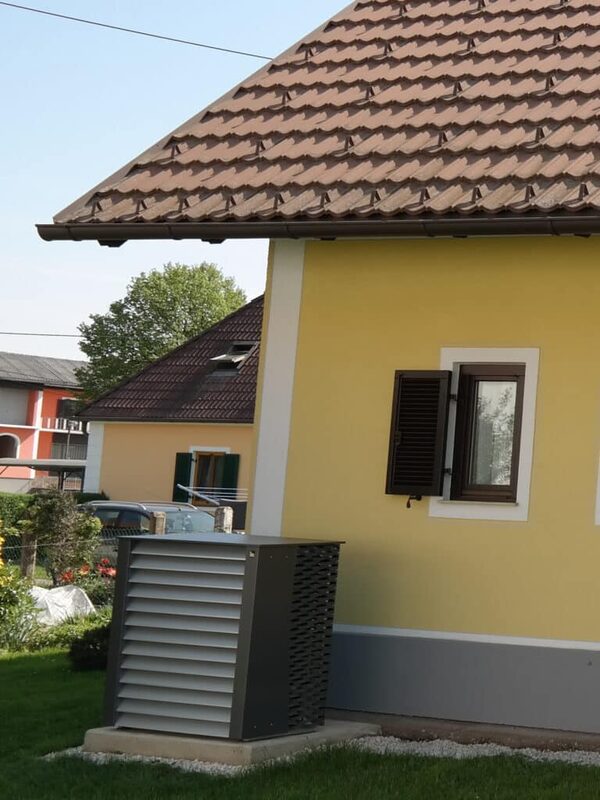
The scheme is available to households, specifically owner-occupiers and some private rented sector tenants, who are living in or at risk of fuel poverty and who meet the qualifying eligibility criteria2. The Scottish Government's own statistics describe it as mainly supporting owner occupiers, while also covering tenants in private rented homes7.
For private rented sector tenants, there is a condition attached. Warmworks needs the landlord's permission before improvements can be installed3. That permission requirement is the practical gate: a tenant who meets the fuel poverty criteria can still be blocked if the landlord declines.
Eligibility for the scheme has a focus on those with a long term health condition, as well as carers, older people and families with children under 16 years of age8. That focus shapes who the scheme prioritises, though it does not replace the qualifying criteria that Home Energy Scotland assesses.
It is worth separating Warmer Homes Scotland from the other Scottish routes, because the tenure rules differ. The Home Energy Scotland Grant and Loan Scheme is open to all domestic owner-occupiers in Scotland and provides grants and loans to install clean heat and energy efficiency measures6. Area Based Schemes are for private homeowners and landlords in Scotland to help with the cost of certain energy efficiency measures14. The Home Energy Scotland Grant and Loan Scheme and the Private Rented Sector Landlord Loan Scheme provide grant and loan funding directly to owner occupiers, as well as private registered landlords for their rented properties15.
For a household's energy independence, the tenure position matters. An owner-occupier who receives a funded heat pump or insulation keeps the asset and the benefit. A private tenant receives the improvement but not the asset, and the landlord's consent sits between the tenant and the work.
What the scheme funds: heating and energy efficiency improvements
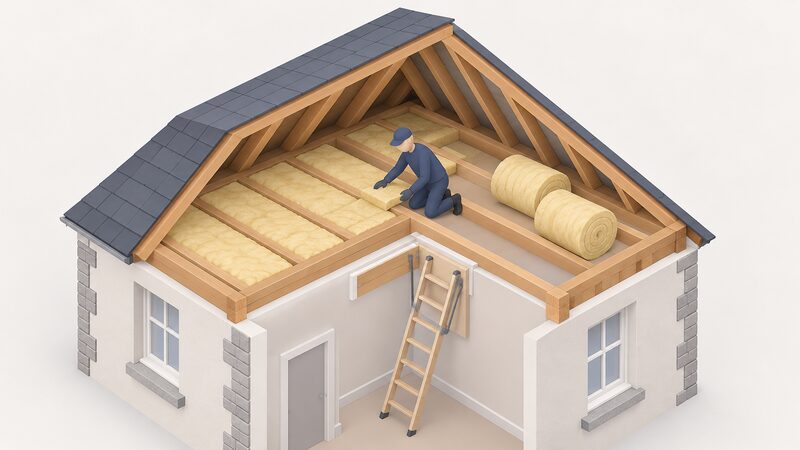
Warmer Homes Scotland funds energy-saving home improvements such as heating and insulation4. The Scottish Government describes the purpose as helping households in, or at risk of, fuel poverty improve their heating and energy efficiency1.
Support is worth £10,000 or more per eligible household for energy-saving home improvements such as heating and insulation3. Independent guidance for households describes the programme as offering support worth £10,000 or more for eligible households for energy-saving home improvements such as heating and insulation17. The scheme is funded by the Scottish Government to help alleviate fuel poverty by installing heating and energy efficiency measures for qualifying low income home owners and private tenants18.
The 2023 relaunch brought increased funding for clean heating systems1. That places the scheme alongside the Home Energy Scotland Grant and Loan Scheme, which supports the installation of clean heating systems and energy efficiency measures2.
| Element | What the scheme provides | Source |
|---|---|---|
| Heating improvements | Funded heating measures for eligible households | 4 |
| Insulation | Energy efficiency measures such as insulation | 4 |
| Support value | £10,000 or more per eligible household | 3 |
| Clean heating | Increased funding from the 2023 relaunch | 1 |
| Delivery | Warmworks-approved installers only | 3 |
The limits are as important as the offer. The grant is capped in practice by what the assessment identifies and by the funding available, and it is not a cash payment to the household. Measures are installed by approved contractors rather than chosen freely by the occupant. And the scheme addresses the fabric and the heating system, not the price of the fuel that runs them: a household that moves from oil to a heat pump changes its fuel dependence, but it does not become independent of the electricity grid or of a supplier.
How to apply: through Home Energy Scotland and Warmworks
Applications run through Home Energy Scotland. Households apply for the scheme via Home Energy Scotland18, and the process is to contact Home Energy Scotland, use the online self-assessment tool, and then be referred to Warmworks for a home survey and assessment3. If the household is eligible, Home Energy Scotland makes a referral to Warmworks, the organisation that delivers the programme4.
The steps in order:
- Contact Home Energy Scotland and speak to an advisor, or use the online self-assessment tool3.
- Home Energy Scotland works through the eligibility criteria with the household3.
- If eligible, Home Energy Scotland refers the case to Warmworks4.
- Warmworks carries out a home survey and assessment3.
- Approved installers deliver the agreed measures3.
Home Energy Scotland is also the entry point for other Scottish support. The Home Energy Scotland Grant and Loan Scheme offers homeowners in Scotland a grant, interest free loan or a combination2, and provides financial support to eligible homeowners in Scotland for energy efficiency improvements and clean heating systems19. Households that do not qualify for Warmer Homes Scotland may still find a route through that scheme, and the two are compared on our page on Home Energy Scotland Grant and Loan vs Warmer Homes Scotland.
The practical expectation is a two-stage process: an advice and eligibility conversation first, then a technical assessment. Nothing is installed before the survey, and the measures offered follow what the assessment finds rather than what the household requests.
How the scheme is delivered: Warmworks and its Scottish supply chain
Warmworks is the managing agent for the scheme. It assesses householder eligibility and procures contractors to deliver appropriate measures18, and the scheme is delivered by Warmworks12. All home improvements funded by Warmer Homes Scotland must be delivered by Warmworks-approved installers3.
The supply chain is deliberately Scottish and weighted towards smaller firms. Warmworks has procured a supply chain of 24 installers, with 6 based in the islands, to deliver the scheme, 23 of which are SMEs and all of which are based in Scotland8. Earlier annual reviews recorded different supply chain sizes as the contracts changed: 29 companies, the majority SMEs, subcontracted by Warmworks in 2017/1820, and 30 companies in 2016/1721. Those earlier figures are historical and the current supply chain is the 24-installer figure.
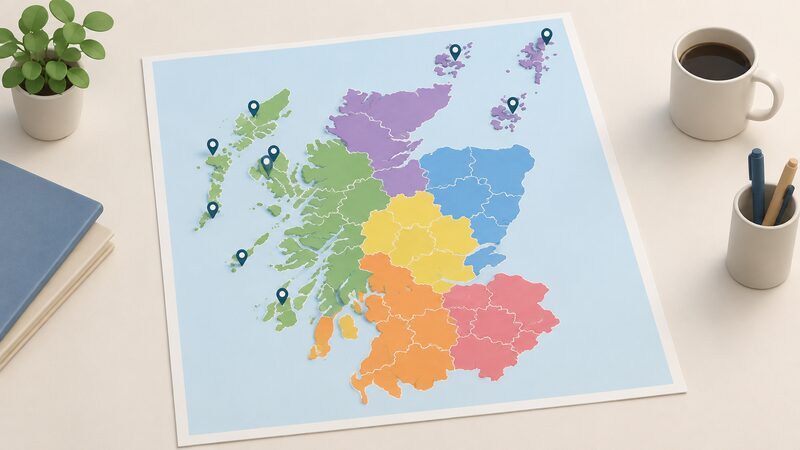
Coverage is Scotland-wide. The original delivery model divided the country into 6 delivery regions, and Warmworks further sub-divided these regions into 16 delivery zones and sought to procure two contractors per zone22. That structure is what allows island and rural households to be served by installers based in Scotland rather than by a single national contractor.
For a household, the delivery model has two consequences. First, the installer is assigned through Warmworks rather than chosen by the occupant, which limits shopping around but also means the contractor has been through the scheme's procurement. Second, the local supply chain means work in the islands and remote areas is handled by firms based there, which matters for response times and for the local economy.
Where the scheme sits alongside other Scottish support
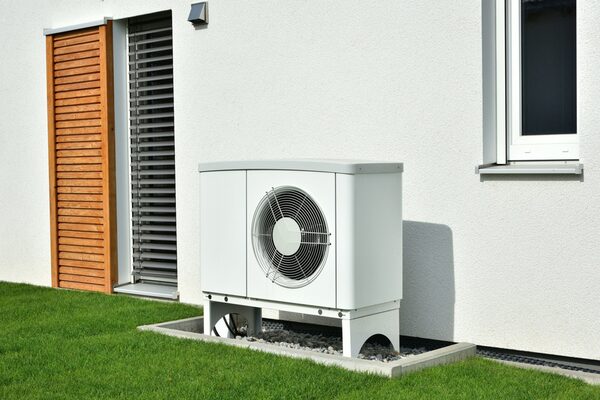
Warmer Homes Scotland is one of several Scottish routes, and the eligibility rules differ between them. The Home Energy Scotland Grant and Loan Scheme is open to all domestic owner-occupiers in Scotland6. Area Based Schemes are for private homeowners and landlords in Scotland14, and take an area-based approach to deliver insulation measures to owner-occupied and private landlord-owned properties23. The Home Energy Scotland Grant and Loan Scheme and the Private Rented Sector Landlord Loan Scheme provide grant and loan funding directly to owner occupiers, as well as private registered landlords for their rented properties15.
Outside Scotland, the equivalent schemes differ. The Warm Homes Programme in Wales is a separate policy with its own statement24. In Northern Ireland, the home heating oil support scheme has its own eligibility rules, and you may not be eligible if for the whole of the qualifying period you are a nursing home resident, care home resident, living in supported housing, a hospital in-patient, a prisoner or outside of Northern Ireland25. The Scottish Government's Emergency Heating Oil Scheme is aimed at households whose home is heated by oil or LPG, who pay the fuel bill, for whom the home is the main or only home, and who have placed an order for fuel after 1 April but not paid for it, or are planning to place an order shortly, with no award at the address in the last 3 months26.
On heating standards, new homes in Scotland cannot have oil or gas boilers and must have a low-carbon heating system such as a heat pump, as of April 202427. That affects what a household moving into a new build will find installed, and it shapes the direction of the retrofit schemes for existing homes.
For a household's energy independence, the Scottish schemes reduce the capital cost of moving away from oil or older heating, but they do not remove the running cost or the supplier relationship. A heat pump still draws electricity from the grid, and the household still buys that electricity from a supplier. What changes is the fuel and the efficiency of the system, not the underlying dependence.
Warmer Homes Scotland and the Warm Home Discount are different schemes
The two are frequently confused, and they work in completely different ways. Warmer Homes Scotland is a capital grant scheme for heating and insulation, funded by the Scottish Government and delivered by Warmworks2. The Warm Home Discount is an energy bill rebate with its own eligibility rules.
The Warm Home Discount's eligibility is based on receipt of income-related employment and support allowance and similar benefits28. In Scotland, the Broader Group requires applicants to meet a low-income requirement tested through specific qualifying benefits and a vulnerability requirement, and the vulnerability criteria are a child under 5, an income related qualifying component, limited capacity for work element, a disabled child element, or a disabled element29. In Scotland the core group, industry initiatives and broader group apply to the scheme30.
The Scottish Government determined the approach to eligibility for the Warm Home Discount in Scotland for the next scheme period31, and eligibility for the Core Group will be expanded to align with the same qualifying benefits list as for the Scottish Winter Heating Payment as of December 2025, from 2026/2731.
The practical difference for a household is that one scheme pays for physical work on the home and the other reduces a bill. A household can in principle be eligible for one and not the other, and the application routes are entirely separate: Warmer Homes Scotland through Home Energy Scotland, the Warm Home Discount through the supplier and the scheme's own data matching. Our page on the Warm Home Discount covers that scheme's rules.
Sources31 cited
- Warmer Homes Scotland scheme headline data, Scottish Government, 2025-10-29
- Energy saving home improvements, Scottish Government, 2026-09-17
- Warmer Homes Scotland, Home Energy Scotland, 2026-09-20
- Find funding, Home Energy Scotland, 2026-09-20
- Heat in Buildings progress report 2025, Scottish Government, 2025-10-02
- Scotland's Climate Change Plan 2026-2040, Scottish Government, 2025-11-06
- Heat in Buildings progress report 2024, Scottish Government, 2024-10-10
- Tackling fuel poverty: strategic approach, Scottish Government, 2021-12-23
- Argyll and Bute home energy efficiency, Argyll and Bute Council, 2026-09-17
- Heat in Buildings Strategy 2022 update, Scottish Government, 2022-10-31
- Warmer Homes Scotland first annual review, Scottish Government, 2015-09-01
- Heat in Buildings Strategy, Scottish Government, 2021-10-07
- Decarbonising heating in homes and buildings, Scottish Government, 2026-09-17
- Warmer Homes Scotland programme annual review 2018-19, Scottish Government, 2018-19
- FOI 202500448310, Scottish Government, 2025-02-20
- Funding schemes, OFTEC, 2026-09-20
- A simple guide to retrofit services, Home Energy Scotland, 2026-08
- Government funded schemes and ECO4, Energy Saving Trust, 2025-04-02
- Funding for homeowners, Elmhurst Energy, 2026-07
- Warmer Homes Scotland annual review 2017-2018, Scottish Government, 2017
- Warmer Homes Scotland 2016-17, Scottish Government, 2016
- Warmer Homes Scotland business case, Scottish Government, 2015-07
- Energy Efficient Scotland Area Based Schemes, West Lothian Council, 2026-09-20
- New Warm Homes Programme policy statement, Welsh Government, 2023-06-15
- Home heating oil support, nidirect, 2026-09-17
- Home heating advice FAQs, Home Heating Advice Scotland, 2026-09-17
- Research briefing CBP-8830, House of Commons Library, 2024-04
- The Warm Home Discount Scheme Regulations 2026, legislation.gov.uk, 2026
- Warm Home Discount research briefing SN06163, House of Commons Library, 2026-02-26
- Warm Home Discount, Ofgem, 2026-09-17
- Continuing the Warm Home Discount Scheme: government response, UK Government, 2026-01-30
 Community Energy in ScotlandCommunity energy in Scotland lets you join a local scheme for cheaper, greener heat and power, or get advice and funding to make your own home warmer and cheaper to run.
 The Full Grants and Schemes GuideWhich grants can you actually get right now, and how do you apply for them?
 Energy Policy in ScotlandWho decides how your home in Scotland is heated and improved?
 Which Homes Suit a Heat PumpMost UK homes can have a heat pump fitted, so the real question is whether yours makes it easy or expensive.
 Home HeatingMost Scottish homes are heated by mains gas, so what happens to the rest?
 The Full Heat Pumps GuideWill a heat pump keep my house warm in winter, and what does one cost to buy and run?