In this guide
Scotland has an estimated 908 MW of community and locally owned renewable energy capacity from 26,290 installations, with a further 1,505 MW in various stages of development1. The Scottish Government has set a target of 2 GW of renewable energy to be community or locally owned by 20301. That capacity is spread across wind, hydro, heat pumps and other technologies, owned by housing associations, farms and estates, local authorities, local businesses and community groups.
For a household, community energy in Scotland means two distinct things. The first is a route to cheaper, lower-carbon heat and power through a scheme the household can join or buy into. The second is a source of advice and funding: the Home Energy Scotland Grant and Loan Scheme offers homeowners in Scotland a grant, interest free loan or a combination of both2, with an additional £7,500 available as an optional interest free loan for energy efficiency measures such as insulation3.
The Community and Renewable Energy Scheme, known as CARES, is the main support mechanism for community-scale projects. It is delivered by Local Energy Scotland and provides advice and funding to communities across Scotland looking to develop renewable energy, heat decarbonisation and energy efficiency projects, including shared ownership projects2.
What community energy in Scotland means for a household
Community energy in Scotland operates at a scale that individual households cannot match. A single domestic solar array might produce a few kilowatts; a community hydro scheme or shared ownership wind project can produce megawatts, with the revenue returning to the community that hosts it. The Energy Saving Trust's 2022 report on community and locally owned energy in Scotland records 908 MW of operational capacity from 26,290 installations, and 1,505 MW more in development1.
The household benefit is indirect but real. Community schemes can reduce local fuel costs, fund energy efficiency work in community buildings, and give residents a stake in generation that would otherwise be owned by a commercial developer. The Scottish Government's own framing is that community ownership helps maximise the benefits of renewable energy systems and ensures that delivery of community energy comes with benefits for people in Scotland2.
There is also a direct household route. Home Energy Scotland provides tailored advice to households in Scotland on how they can improve the energy efficiency of their home and is the gateway to the Warmer Homes Scotland scheme5. That advice is free and impartial, funded by the Scottish Government5. For a household weighing up whether to join a community scheme, install its own generation, or do neither, the advice service is the starting point.
The limits are worth stating plainly. Community energy does not disconnect a household from the grid or from a supplier. A household that buys a share in a community wind project still buys its electricity from a supplier and still depends on the national network. What community ownership changes is where the generation sits, who owns it, and where the revenue goes. That is a meaningful shift in local control, but it is not self-sufficiency.
Scotland's homes account for around 30% of Scotland's total energy consumption, some 44 TWh6. Against that figure, community and locally owned generation is a small share of the whole, which is why the 2 GW target matters: it is a measure of how far the sector still has to travel.
CARES: the Community and Renewable Energy Scheme and its 2 GW target
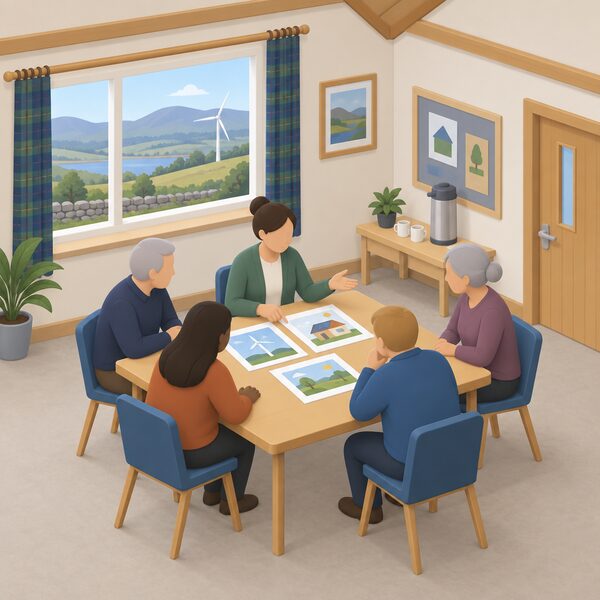
CARES was established in 2010 as a successor to the Scottish and Community Household Renewable Initiative7. It encourages community ownership of renewable energy projects across Scotland, helping to maximise the benefits of renewable energy systems, and ensuring that the delivery of community energy comes with benefits for people in Scotland2. It is delivered by Local Energy Scotland, which maintains a network of development officers across Scotland to provide free, expert and impartial advice and support to community groups, charities and other eligible organisations seeking to explore their renewable energy options2.
The scheme's purpose is tied directly to the Scottish Government's capacity target. CARES helps to support progress towards the target of two GW of community and locally owned energy in Scotland2. That target is the same 2 GW figure recorded in the Energy Saving Trust's 2022 report, which states that the Scottish Government has set a target of 2 GW of renewable energy to be community or locally owned by 20301.
CARES also runs targeted rounds. Its first community buildings funding round awarded over £2.6 million to 74 organisations to install renewable technologies in Scotland's community buildings8. A separate £3 million was made available to support decarbonisation of Scotland's most remote and rural off-grid communities6.
"This helps to support progress towards our target of two GW of community and locally owned energy in Scotland."
The scheme's reach extends beyond electricity generation. CARES provides advice and funding to communities across Scotland looking to develop renewable energy, heat decarbonisation and energy efficiency projects, including shared ownership projects2. Shared ownership is the model in which a community takes a stake in a commercial development, typically a wind farm, rather than owning the asset outright. It is one of the routes by which the 2 GW target can be met without every project being wholly community-owned.
Home Energy Scotland: free, impartial advice funded by the Scottish Government
Home Energy Scotland is the Scottish Government's national advice service for households. It provides free, impartial advice on home energy improvements, low-carbon heating, renewables and funding9. It is funded by the Scottish Government and provides free and impartial advice and support to help households stay warm and reduce bills5. Glasgow City Council describes it as providing free, independent and impartial energy advice to householders, community groups and businesses throughout Scotland10.
The service is delivered by the Energy Saving Trust, which manages the relevant schemes on behalf of the Scottish Government, in partnership with advice providers and energy companies3. It supports around 90,000 households a year11. It is also the gateway to Warmer Homes Scotland, the national fuel poverty scheme5.
The contact details are straightforward. Home Energy Scotland can be reached free on 0808 808 22825. Phone lines are open Monday to Friday 8am to 8pm, and 9am to 5pm on Saturdays12. Calls are free from landlines and most mobile networks4. The service also offers a Funding Finder tool to search for funding and support on improving a home's energy efficiency, reducing energy bills and making a home warmer13.
That distinction matters for a household trying to work out what the service can and cannot do. It can explain what funding exists, what measures are eligible, and how the application process works. It cannot tell a household which installer to use, and it cannot carry out the work. The impartiality is the point: because the service does not sell anything, its advice is not tied to a product or a contractor.
For households in or at risk of fuel poverty, the advice service connects to Area Based Schemes, which provide energy efficiency improvements to households in or at risk of fuel poverty living in their own home or a private rented property7. Area Based Schemes are for private homeowners and landlords in Scotland to help with the cost of certain energy efficiency improvements12. Home Energy Scotland acts as the referral partner for Area Based Scheme eligibility enquiries5.
Grants and interest-free loans: up to £7,500, or £9,000 for rural and island homes
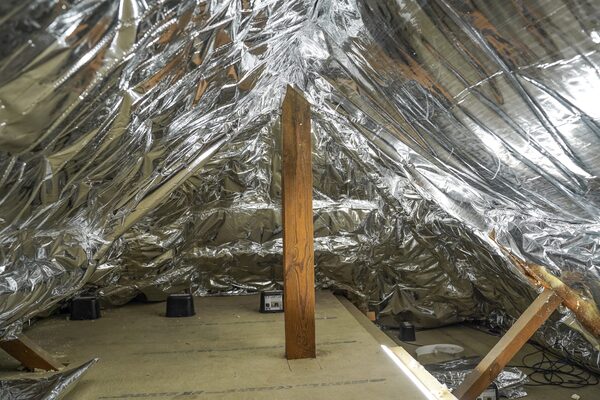
The Home Energy Scotland Grant and Loan Scheme is the main household funding route. It provides homeowners in Scotland a grant, interest free loan or a combination of both2. An additional £7,500 of funding is available as an optional interest free loan for energy efficiency measures such as insulation3.
For rural and island homes, the figures are higher. An uplift of £1,500 is available for rural and island homes to both the clean heating and energy efficiency grants3. The same £1,500 uplift to both the energy efficiency and clean heating grants is recorded for remote rural and island homes14. Taken together with the standard grant, that produces the headline figure of up to £9,000 for households in island and remote rural areas, together with loans, to connect to local district heat networks15.
| Support | Amount | Applies to |
|---|---|---|
| Energy efficiency grant | Standard grant | Homeowners in Scotland2 |
| Optional interest free loan | £7,500 | Energy efficiency measures such as insulation3 |
| Rural and island uplift | £1,500 | Both clean heating and energy efficiency grants3 |
| Island and remote rural heat network connection | Up to £9,000 grant, together with loans | Households connecting to local district heat networks15 |
The £9,000 figure is specific to district heat network connections in island and remote rural areas, not a general grant ceiling for all rural homes. A rural household not connecting to a heat network would be looking at the standard grant plus the £1,500 uplift. The distinction matters because the two figures are often quoted interchangeably.
Funding is blended with other sources. The Home Energy Efficiency Programmes for Scotland blend Scottish Government funding with Energy Company Obligation funding, owners' contributions and funding from registered social landlords3. That means the grant a household receives is not necessarily the whole cost of the work; owner contributions are part of the model.
Who is eligible and how to apply
The Home Energy Scotland Grant and Loan Scheme is open to all domestic owner-occupiers in Scotland14. That is a broad eligibility base: the scheme is not means-tested in the way that fuel poverty schemes are. A household that owns and occupies its home can apply.
Other schemes have narrower criteria. Warmer Homes Scotland is available to households, both owner-occupiers and some private rented sector tenants, who are living in or at risk of fuel poverty and who meet the qualifying eligibility criteria3. Area Based Schemes are for private homeowners and landlords in Scotland12. The Scottish Central Government Energy Efficiency Grant scheme is targeted at public bodies with no borrowing powers16. Scotland's Heat Network Fund is open to public and private sector organisations, including support for new heat networks and the decarbonisation and expansion of existing heat networks16.
The National Heat in Buildings Scheme will be accessible to all households in Scotland, which will include island households where they meet the eligibility requirements for the scheme criteria17. That is a future scheme rather than a current funding route, but it indicates the direction of travel: a single national scheme replacing the current patchwork.
The application route for the main grant and loan scheme runs through Home Energy Scotland. The published scheme rules describe the offer as being made to homeowners in Scotland, and the service is the gateway to the application process2. The Energy Saving Trust manages the schemes on behalf of the Scottish Government, in partnership with advice providers and energy companies3.
What the advice service covers, and what it does not do

Home Energy Scotland's advice covers energy efficiency, low-carbon heating, renewables and funding9. It provides free, independent and impartial energy advice to householders, community groups and businesses throughout Scotland10. It can give free impartial advice on energy efficiency and renewable energy in Scotland4. It offers free advice on improving the energy efficiency of a home13.
The service also connects households to other support. It is the gateway to Warmer Homes Scotland5, and the referral partner for Area Based Scheme eligibility enquiries5. It provides a Funding Finder to search for funding and support13.
What it does not do is equally clear. It does not recommend, endorse or select individual retrofit service providers9. It does not sell products, manage projects or carry out installations9. Funding is only available for eligible improvements, such as insulation or heating technologies, and does not cover separate fees charged by a retrofit service for advice, planning, design or project management9.
For suspected scams, the guidance is specific. Do not complete any forms or provide personal information. Report the email to the National Cyber Security Centre by forwarding it to report@phishing.gov.uk. Contact the Energy Ombudsman directly using the details on its official website, or a named Dispute Resolution Executive if there is already an open case. Then delete the email18.
Community and locally owned capacity: 1,505 MW and where it sits
The Energy Saving Trust's 2022 report gives the most detailed published breakdown of Scotland's community and locally owned renewable energy. An estimated 908 MW of capacity from 26,290 installations was operational in Scotland at 31 December 2022, with a further 1,505 MW in various stages of development1.
The operational capacity is not evenly distributed by ownership type. Farms and estates hold 41% of operational capacity, some 370 MW1. Local authorities hold 17%, or 157 MW1. Local businesses hold 13%, or 117 MW1. Housing associations dominate by number of installations rather than capacity: 46% of operational installations, some 12,0501.
| Ownership category | Share of operational capacity | Capacity |
|---|---|---|
| Farm and estate | 41% | 370 MW1 |
| Local authority | 17% | 157 MW1 |
| Local business | 13% | 117 MW1 |
| Housing association | 46% of installations | 12,050 installations1 |
By technology, wind accounts for 37% of operational capacity, some 338 MW1. Heat pumps account for 34% of operational installations, some 8,8701. The pattern is that wind delivers the megawatts while heat pumps deliver the numbers: a single wind turbine or small wind farm produces far more capacity than a domestic heat pump, but heat pumps are installed in far greater quantity.
Geographically, the capacity concentrates in the north and east. Aberdeenshire holds 25% of operational capacity by local authority area, some 226 MW1. Highland holds 12%, some 110 MW1. By installation numbers, Stirling has 2,420 and South Lanarkshire has 2,250, each 9% of the operational total1.
The historical trajectory is steep. In 2015 local and community energy generation capacity in Scotland was 508 MW, only a small proportion of the overall generation capacity19. Local authorities owned 17% of that capacity, with housing associations owning a further 7%19. The 2022 figure of 908 MW operational is therefore a substantial increase on the 2015 position, though the ownership mix has shifted.
Micro-hydro and other community-scale renewables
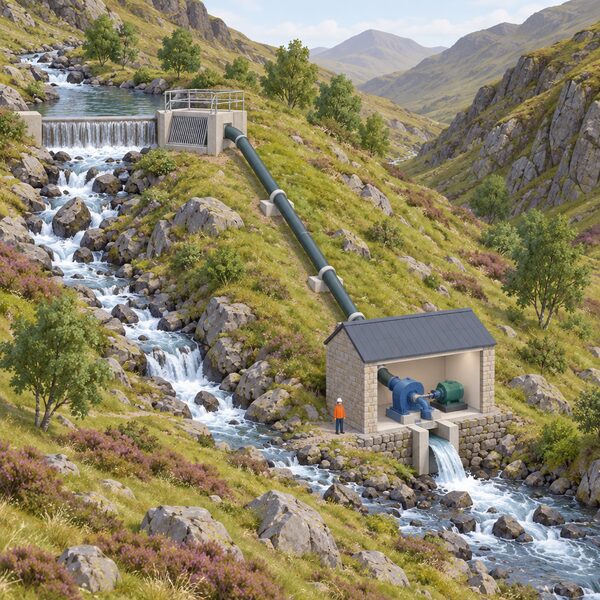
Community-scale renewables in Scotland span a wider range than the headline wind figures suggest. The Energy Saving Trust's 2022 report records heat pumps as 34% of operational installations, some 8,8701. That makes heat pumps the most numerous technology in the community and locally owned category, even though they contribute a small share of capacity.
The historical record shows how the sector began. In 2012, 283 community microgeneration installations had been supported by the Scottish Government's Community and Renewable Energy Scheme, managed at that time by Community Energy Scotland20. That figure captures the early phase, when the emphasis was on small installations in community buildings and on micro-hydro schemes in suitable locations.
Renewable heat has grown more slowly than renewable electricity. Renewable heat capacity increased by 1% compared with 2018 figures, and renewable heat accounted for 6.2% of Scotland's heat in 201821. Those figures are older than the capacity statistics, but they show the scale of the challenge: heat is harder to decarbonise than electricity, and community-scale heat projects face the same economics as domestic ones.
The concentration of installations in certain local authority areas reflects both resource and organisational capacity. Stirling's 2,420 installations and South Lanarkshire's 2,250, each 9% of the operational total, put them ahead of other areas by number1. Highland and Aberdeenshire lead by capacity, with 110 MW and 226 MW respectively1. The pattern suggests that community energy clusters where there is both a renewable resource and a local organisation capable of developing a project.
For a household in an area with an active community energy group, the practical options include buying a share in a scheme, joining a heat network where one exists, or using the group as a route to advice and funding. For a household in an area without one, the Home Energy Scotland advice service and the grant and loan scheme remain available regardless.
How community ownership fits into household energy independence
Community ownership changes the ownership of generation, not the physical dependence of a household. A household that holds a share in a community wind project still draws power from the grid and still buys from a supplier. What changes is that some of the generation serving the local area is owned locally, and the revenue stays in the community rather than going to a commercial operator.
The scale of the shift should be kept in perspective. Scotland's homes account for around 30% of Scotland's total energy consumption, some 44 TWh6. Community and locally owned capacity of 908 MW operational is a meaningful contribution to generation, but it is not a substitute for the grid. The 2 GW target, if met, would still be a fraction of Scotland's total generation capacity.
There is a household-level version of the same question. A household can reduce its imports through its own generation, storage and efficiency measures, and the site's guide to household energy independence sets out how those pieces fit together. Community energy sits alongside that: it is a collective route to local ownership rather than an individual route to self-sufficiency. The two are complementary, and the site's comparison of joining a community energy scheme against installing your own solar works through the trade-offs.
The dependence that remains is specific. A household in a community energy area still depends on the grid for supply, on a supplier for billing, and on the national network for balancing. Community ownership does not change any of those relationships. It changes who owns the generation and where the money goes, which is a different kind of independence: local control rather than household self-sufficiency.
The historical example of Our Power shows both the ambition and the risk. Our Power was an energy supply company established by housing associations and local authorities in Scotland with the aim of reducing heat and fuel costs to the tenants in their communities19. The model was community-owned supply, and it did not survive. That is a reminder that community ownership of generation is a more durable proposition than community ownership of supply, which depends on the same wholesale market as any other supplier.
For a household weighing up involvement, the practical questions are what the scheme offers, what it costs to join, what the returns are, and what happens if the scheme fails. The published figures on capacity and ownership give the scale; the advice service gives the eligibility and funding position; and the scheme documents give the terms. Community energy in Scotland is a real and growing sector, but it is not a route off the grid.
Sources21 cited
- Community and locally owned energy in Scotland 2022 report, Energy Saving Trust, 2022-12-31
- Local and small scale renewables, Scottish Government, 2026-09-17
- Energy saving home improvements, Scottish Government, 2026-09-17
- Who to contact, Ofgem, 2026-09-17
- Home energy efficiency, Argyll and Bute Council, 2026-09-17
- Heat in Buildings Strategy: achieving net zero emissions, Scottish Government, 2021-10
- Heat in Buildings Strategy: achieving net zero emissions, Scottish Government, 2021-10-07
- Heat in Buildings Strategy 2022 update, Scottish Government, 2022-10-31
- A simple guide to retrofit services, Home Energy Scotland, 2026-08
- Area Based Schemes, Glasgow City Council, 2026-06-08
- Written evidence to the Scottish Affairs Committee, UK Parliament, 2019-01
- Energy Efficient Scotland: Area Based Schemes, West Lothian Council, 2026-09-17
- Financial help for energy efficiency and low carbon heating improvements, City of Edinburgh Council, 2026-09-20
- Heat in Buildings progress report 2025, Scottish Government, 2025-10-02
- Heat in Buildings progress report 2025, Scottish Government, 2025-11-18
- Heat in Buildings progress report 2024, Scottish Government, 2024-10-10
- Heat in Buildings national scheme: island communities impact assessment screening, Scottish Government, 2022-09-29
- Guidance on scam emails claiming to be from Energy Ombudsman, Energy Ombudsman, 2026-02-09
- Scotland without fuel poverty: a fairer Scotland, Scottish Government, 2015
- Microgeneration strategy for Scotland, Scottish Government, 2012-06-22
- Update to the renewable heat target and action, Scottish Government, 2019
 Community Energy in EnglandCommunity energy lets neighbours own their own power together, often through solar panels, and share the money it makes.
 Community Energy in the UKWhat community energy means in practice, the legal structures used, and the types of project householders can join or benefit from.
 Energy Policy in ScotlandWho decides how your home in Scotland is heated and improved?
 Community Energy in NICan a community group in Northern Ireland sell power to its neighbours, and is there funding to get a project off the ground?
 Energy Consumer BodiesWho do you call about an energy problem where you live?
 Community Energy StatisticsHow much of the UK's energy comes from projects owned by local people, and is that number growing?