
In this guide
Moving a UK home away from imported gas and bought electricity is bought in stages, and each stage has a price. The most widely quoted official figure for the core of the job is from Edinburgh's local heat and energy efficiency strategy: the typical cost of decarbonising a home will be £10,000 to £12,000, made up of a typical cost of £10,000 for a heat pump plus costs of up to £2,000 for energy efficiency measures1. That is the heating half of independence. Generation, storage and fabric work sit on top of it, and the last few percent of independence costs more per unit than the first.
What the money buys, at the far end, is a small bill rather than no bill. The Energy Saving Trust's modelled energy efficient house of the future would have total energy bills of just £430 a year, or £36 a month2. Against that, a single person in a small house or flat is reported to face an average annual cost of £1,178.16, at £98.18 a month3. Even a deeply upgraded home keeps a standing charge: under the price cap for 1 July to 30 September 2026, the electricity standing charge alone was £207.57 a year in the Midlands and £223.48 in the Northern region on single-rate benchmarks4.
So the honest framing is not "what does it cost to leave the grid" but "what does each measure cost, what does it displace, and what dependence is left". After a heat pump and solar, a household still depends on the electricity network, a supplier, an installer's workmanship, and in most cases a manufacturer's warranty and controls.
The heat pump is the biggest single line item
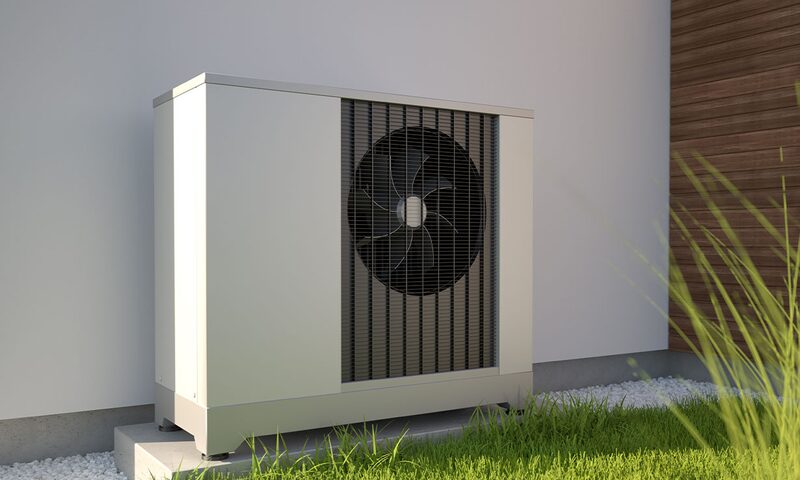
Heat is where most household energy goes, and the heat pump is where most of the capital goes. A parliamentary briefing puts the position plainly: heat pump installation costs are higher than gas boilers, in part due to the need for additional retrofitting10. That retrofitting, not the appliance, is what makes quotes diverge.
Nesta's modelling of a large home (detached, 150 to 200 square metres) gives a total upfront cost of £13,100 for a heat pump11. Ground source is a different order of expense: £15,200 for a small property and £28,700 for a large one, or £7,700 and £21,200 respectively once £7,500 from the Boiler Upgrade Scheme is counted12. Nesta lists "very high upfront cost" as the disadvantage of individual ground source systems and "extremely energy efficient" as the advantage, and attributes the largest share of the cost to the required groundworks, with a significant proportion also resulting from upgrading radiators, installing a hot water tank and replacing pipework12.
Air-to-air sits lower, because it skips the wet system entirely: Nesta models £5,250 for a medium property and £8,800 for a large one13, while the Energy Saving Trust cites about £1,900 to heat a single room14. The trade-off is that air-to-air does not make hot water, and it is treated differently in funding: Ofgem's ECO4 guidance states that an air-to-air system "is not considered to be a renewable system in ECO4"15.
| Heat pump type and property | Upfront cost | After £7,500 BUS grant |
|---|---|---|
| Ground source, small property12 | £15,200 | £7,700 |
| Ground source, large property12 | £28,700 | £21,200 |
| Heat pump, large home 150 to 200m²11 | £13,100 | not stated |
| Air-to-air, medium property13 | £5,250 | not applicable at £7,500 |
| Air-to-air, large property13 | £8,800 | not applicable at £7,500 |
| Air-to-air, single room14 | about £1,900 | not applicable at £7,500 |
Read over a whole life rather than a single invoice, the subsidy dominates. Nesta annualises an air source heat pump at £960 with subsidy (upfront £300, maintenance £80, running £580) and £1,460 without subsidy (upfront £800, maintenance £80, running £580)16. The difference between those two totals, £500 a year, is almost entirely the grant working through the capital line.
Solar PV: the second pillar, and what it adds to the bill
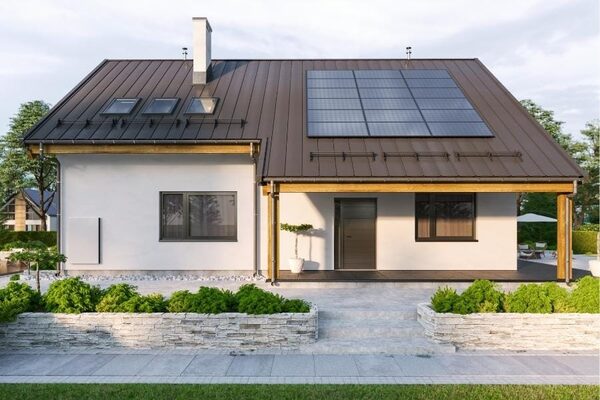
Solar is the generation half of the equation. A local authority guidance page puts the household case simply: photovoltaic panels "could power your home, reduce your bills and may earn you money"17. In independence terms it is the measure that most directly reduces bought kilowatt hours during daylight, and the one whose value depends on how much of the output is used at home rather than exported. The related pages on self-consumption and the self-sufficiency ratio set out how that is measured.
On payback, the Centre for Alternative Technology reports a financial payback of between 10 and 15 years for a domestic PV system, and notes that using an import price of 20p per kWh and an export price of 10p per kWh, the payback time may only increase to just over 15 years8. The Energy Saving Trust's location tables give a similar range with export payments included: 10 to 11 years in Manchester and 11 to 12 years in Stirling18. The Scottish figures are the longer of the two, which is what a lower annual yield does to a payback calculation.
On the cost side, a POST briefing notes that for solar PV modules the second-largest cost component is usually either cell manufacturing or raw materials19. That matters because it means a large share of the installed price is not module cost at all but labour, scaffolding, electrical work and inverter.
Householders offered a system at no upfront cost should note what the consumer code expects to be disclosed. RECC's guidance on free solar PV systems lists the up-front cost of the system if purchased with a loan, and the implications for the consumer's existing or future mortgage or other loans20. A rent-a-roof or financed system changes who owns the generation and therefore how much independence the household actually gains, a point developed on the page about financing and insuring an independent home.
Grants and funding: how much of the cost can be offset
Grant availability is the single biggest variable in the net price, and it differs by nation and by tenure.
In England and Wales, the Boiler Upgrade Scheme sets fixed amounts by technology. Ofgem's installer guidance lists £7,500 for an air-to-water heat pump, £9,000 for an air-to-water heat pump in an off gas grid property replacing an oil or liquefied petroleum gas heating system, and £5,000 for a biomass boiler7; Ofgem separately confirms £2,500 off the cost and installation of air-to-air heat pumps for residential properties only6. Vouchers were issued from 23 May 2022 on eligible technologies installed from 1 April 202221.
| Technology | Grant | Voucher validity |
|---|---|---|
| Air-to-water heat pump7 | £7,500 | 3 months |
| Air-to-water, off gas grid replacing oil or LPG7 | £9,000 | 3 months |
| Air-to-air heat pump6 | £2,500 | 3 months |
| Biomass boiler7 | £5,000 | 3 months |
| Ground source heat pump22 | not stated here | 6 months |
Where a system was commissioned before the application, installers must ensure that the voucher application has been, or will be, properly made within 120 days of the commissioning date stated on the MCS certificate21.
Scotland runs a different model. Under the Home Energy Scotland Grant and Loan Scheme, grant funding for energy efficiency measures such as insulation is available up to 75% of the combined cost of measures, to a maximum grant of £7,500, with an additional £7,500 available as an optional interest free loan23. The scheme's terms state that grant and loan funding covers up to 100% of the quoted installation cost of an improvement, but cannot be more than the maximum for an individual improvement24. Rural and island homes receive an uplift of £1,500 on both the clean heating and the energy efficiency grants25, and Which? reports that this means rural households can claim up to £18,000 in grant funding26.
Other routes are narrower:
- Warm Homes: Local Grant pays a private landlord's second and subsequent properties in England 50% of the cost up to £7,500 for energy performance improvements27.
- Warm Homes: Social Housing Fund Wave 3 caps total grant funding at £15,000 per off gas grid home with the uplift, and at £20,000 per home under the on gas grid low carbon heating incentive offer, where those homes cannot access the base £7,500 cost cap or any other cost caps28.
- Home Upgrade Grant Phase 1 allocated £218 million to improve energy efficiency in low-income homes off the gas grid, with latest funding totalling £220 million29.
- The Energy Company Obligation, which is closing to new applications, has been extended to 31 December 202630.
Running costs after installation: heat pump against gas boiler
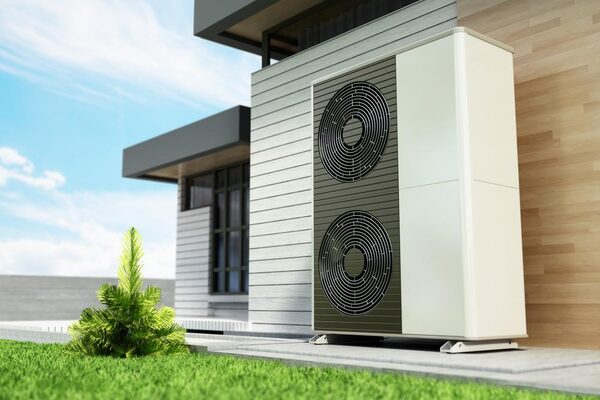
Capital cost is only half the arithmetic. The running-cost comparison is genuinely contested, and the reason is that it depends on installation quality, efficiency and tariff rather than on the technology alone. Which? quotes Dr Jan Rosenow:
"A household could save more than 50% on running costs with a heat pump compared to a gas boiler."
The condition attached to that statement matters as much as the figure: it requires a high quality installation, high efficiency and a heat pump tariff5. Where those are absent, the result can go the other way. A Northern Ireland building regulations discussion document modelled running costs increasing by as much as 20% compared with the illustrative gas boiler example34.
Maintenance is the smaller but steadier line. Servicing should follow the manufacturer's advice, usually once a year, and typically costs around £1509. Modelling uses lower assumptions: Nesta has assumed annual maintenance of £120 for heat pumps (for five years while under warranty, otherwise £0) and £80 for gas boilers over their lifetime35, and in later work total maintenance over 15 years of £750 for a heat pump against £1,200 for a gas boiler11. On that second basis the heat pump is the cheaper machine to keep, by £450 over 15 years.
Nesta's modelled running cost for an individual ground source heat pump in a large property is £1,22512, which is a useful reminder that a very efficient system in a large house still has a substantial bill behind it.
The lever the household controls is demand. The Energy Saving Trust states that topping up a home's wall, floor and loft insulation before installing a heat pump will help reduce its running costs36. That sequencing point is the difference between buying a smaller heat pump that runs cheaply and a larger one that does not.
Where the cost varies by home: fabric, emitters and property type
Two houses given the same specification can receive quotes thousands of pounds apart. UKIFDA lists the factors that drive how much heat a property needs: property size, number of external walls, wall thickness, insulation levels, type of glazing, number of people in the home and daily habits31.
Fabric work scales with the building in a way that is visible in cavity wall insulation prices for gas-heated homes, unsubsidised, as at July 2025:
| Property type | Installation cost | Bill saving |
|---|---|---|
| Detached house37 | £4,300 | £420 a year |
| Semi detached house37 | £2,700 | £240 a year |
| Detached bungalow37 | £2,000 | £180 a year |
Those pairs give simple payback of roughly a decade in each case, and they scale together: the bigger house costs more to insulate and saves more.
Emitters are the other variable. Nesta attributes a significant proportion of ground source heat pump cost to upgrading radiators, installing a hot water tank and replacing pipework12, and the same applies to air-to-water retrofits. Where underfloor heating is considered, the electric variety has a running cost that rises steeply with area: Which? reports £137.26 a month for a semi-detached 41.5 square metre installation across 4 rooms, and £219.38 a month for a detached 65 square metre installation across 5 rooms38.
Space imposes its own constraint on which option is even available. The Energy Saving Trust states that air source heat pumps need less outdoor space than two wheelie bins stood side by side, around 1.5 metres wide36, and that most air-to-air types need an area outside for a unit on a wall or on the ground with space around it for air flow14. Ground source needs outside space for trenches or boreholes and enough room inside for a heat unit39, which rules it out for many urban plots regardless of budget.
Planning, noise and the rules that can add cost
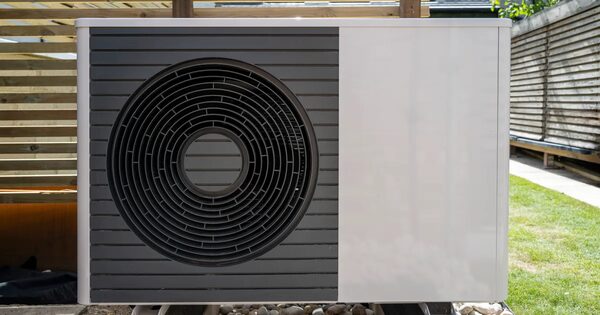
Permission is usually not a cost, but where it is required it adds time and fees. The Planning Portal sets out that permitted development rights apply to the installation, alteration or replacement of an air source heat pump on a house or block of flats, or within the curtilage of a house or block of flats, subject to conditions40:
- Compliance with the Microgeneration Certification Scheme Planning Standards (MCS 020a).
- Outdoor compressor unit volume, including housing, not exceeding 1.5 cubic metres on a house or 0.6 cubic metres on a block of flats.
- Only the first installation on a non-detached house or block of flats; the first two on a detached house.
- No existing wind turbine on the building or within the curtilage.
- Not on a pitched roof; on a flat roof, at least one metre from the external edge.
- Not used solely for cooling, sited to minimise its effect on appearance and amenity, and removed when no longer needed for microgeneration.
Local guidance adds that all parts must be at least one metre from the property boundary, that Building Regulations parts A to T apply plus Regulation 7, and that noise levels for the heat pump on its own must stay at or below 42 decibels a metre away from any habitable room, with planning permission approval needed if that is exceeded41. Which? reports that in practice air source heat pumps create between 40 and 60 decibels on average, a similar noise level to a dishwasher or microwave33; ground source units are quieter. Permitted development rights do not apply within the curtilage of a listed building or a site designated as a scheduled monument, so those properties fall outside the simplified route entirely40. In Wales, installation of either a ground source or air source heat pump must comply with the Building Regulations. Ground source and water source heat pumps on domestic premises are usually considered permitted development42.
Payback and the lifetime view
Payback is reported differently for each measure, and the periods are long enough that replacement cycles start to matter. Solar PV is the best documented: 10 to 15 years on CAT's figures, extending to just over 15 years at 20p import and 10p export8, and 10 to 12 years in the Energy Saving Trust's Manchester and Stirling examples with export payments18. Cavity wall insulation, on the July 2025 figures above, returns £420 a year on £4,300 in a detached house and £180 a year on £2,000 in a detached bungalow37.
Heat pump payback is harder to state as a single number because it depends on what is displaced and on tariff. The clearer lifetime framing is the annualised one: £960 a year all-in with subsidy against £1,460 without16. The gap between the two is the public contribution to a private asset, and it is not guaranteed to persist for the life of the machine.
Two cautions belong in any lifetime view. The first is that grant amounts and scheme deadlines change: ECO has been extended to 31 December 2026 and is closing to new applications30. The second is the diminishing return at the top end. The step from a typical bill to the modelled efficient home at £430 a year is large2, but standing charges of £207.57 to £223.48 a year on electricity alone under the summer 2026 cap4 mean the final increment of independence is bought against a fixed charge that no amount of generation removes. Whether that charge can be escaped at all is covered on disconnecting from the electricity grid and can a UK home be completely energy self-sufficient.
Community energy and shared ownership: a lower entry cost

Not every route to lower imports runs through the householder's own roof. Community energy refers to local and community-led projects or initiatives to reduce, manage, generate or purchase energy, and provides clean, efficient and affordable ways to power schools, hospitals, local government buildings, high streets and so on43. The Energy Saving Trust notes that community energy has the potential to reduce energy costs for those who have a stake in the project, and that groups use wind energy to support and reduce energy costs in the local community44.
For a household unable to fund a £13,100 heat pump11 or a PV array with a 15-year payback8, a share in a shared asset is a materially different proposition: the capital requirement is whatever the share offer sets, and the benefit arrives as a return or a local supply arrangement rather than as reduced metered import. The trade-off is that the dependence changes shape rather than disappearing: the household still buys electricity through a supplier and a network. The pages on community energy, community energy share offers and community energy funding set out how the ownership and the money work.
Advice support exists alongside the finance. Action on Energy provides communities with advice and support for improving home energy efficiency45. Flexibility is a further, cheaper lever: a POST briefing notes that demand side response could make household energy bills cheaper46, which costs a household little beyond a suitable tariff and controls.
The distributional argument for all of this is set out by the Lords Library: domestic energy costs form 6% of total household expenditure on average, but 10% for the lowest income decile47. The households with the most to gain from lower imports are the least able to fund a £10,000 to £12,000 decarbonisation package1 out of savings, which is why the grant and shared-ownership routes carry the weight they do.
Sources47 cited
- Edinburgh Local Heat and Energy Efficiency Strategy, City of Edinburgh Council, December 2023
- The energy efficient house of the future, Energy Saving Trust, 15 July 2026
- Average gas and electric bills in the UK, energyhelpline, 20 September 2026
- Energy price cap levels, 1 July to 30 September 2026, Ofgem, 2026
- Air source heat pump costs and savings, Which?, 14 April 2026
- Boiler Upgrade Scheme, Ofgem, 2026
- Boiler Upgrade Scheme guidance for installers v5.1, Ofgem, 21 July 2026
- Solar photovoltaic information, Centre for Alternative Technology, 10 March 2026
- Heat pump questions answered, Energy Saving Trust, 27 May 2026
- Heat pumps briefing, Parliamentary Office of Science and Technology, 2026
- How to make heat pumps more affordable: assumptions and methods, Nesta, 2 March 2022
- Domestic heating technology options: ground source heat pumps, Nesta, 3 February 2025
- Domestic heating technology options: air-to-air heat pumps, Nesta, 3 February 2025
- Air to air heat pumps, Energy Saving Trust, 11 September 2026
- ECO4 new measures and products guidance v3.0, Ofgem, 26 March 2026
- Seven reasons we still need heat pump subsidies, Nesta, 20 November 2025
- Solar photovoltaic (PV) panels, London Borough of Bromley, 2026
- Solar panels advice, Energy Saving Trust, July 2026
- Solar photovoltaics briefing POST-PN-0771, Parliamentary Office of Science and Technology, 25 June 2026
- Information regarding free solar PV systems, Renewable Energy Consumer Code, 2026
- Heat pump deployment quarterly statistics, UK 2025 Q2, Find a grant, 18 September 2026
- Boiler Upgrade Scheme guidance for property owners v5, Ofgem, 25 March 2026
- Energy saving home improvements, Scottish Government, 2026
- Home Energy Scotland grant and loan terms and conditions, Home Energy Scotland, 2026
- Scottish Government response to the Green Heat Finance Taskforce, Scottish Government, 17 December 2025
- What is the Boiler Upgrade Scheme?, Which?, 22 October 2025
- Warm Homes: Local Grant, Greater Manchester Combined Authority, 2026
- Warm Homes: Social Housing Fund Wave 3 scheme guidance addendum, Department for Energy Security and Net Zero, June 2026
- Home Upgrade Grant briefing CBP-9889, House of Commons Library, 2026
- Energy Company Obligation briefing CBP-9585, House of Commons Library, 13 May 2026
- Energy efficiency tips, UKIFDA, 18 February 2026
- Grants and funding, Tameside Council, 2026
- Heat pumps vs boilers, Which?, 22 September 2025
- Building regulations discussion document and pre-consultation, Department of Finance, Northern Ireland, 11 October 2023
- Reduce the cost of heat pumps, Nesta, 2 March 2022
- Is now a good time to get a heat pump?, Energy Saving Trust, 12 December 2025
- Cavity wall insulation, Centre for Sustainable Energy, July 2025
- Underfloor heating costs, Which?, 27 May 2026
- Air and ground source heat pumps, London Borough of Croydon, 2026
- Planning permission for an air source heat pump, Planning Portal, 2026
- Building regulations renewables guidance, Bedford Borough Council, 2026
- Heat pumps: planning permission, Planning Portal, 2026
- What is community and local energy?, Electricity North West, 19 September 2026
- Benefits of community owned wind power, Energy Saving Trust, 17 September 2026
- Energy incentives and schemes, South Cambridgeshire District Council, 17 September 2026
- Demand side response briefing POST-PN-0715, Parliamentary Office of Science and Technology, 7 June 2026
- Electricity prices in Great Britain, House of Lords Library, June 2026
 The Full Where to Start GuideWhich home improvements actually cut your bills, and which should you do first?
 Energy IndependenceA heat pump runs your heating on electricity instead of gas or oil, so how much does that really cut what you pay and how exposed you are when fuel prices jump?
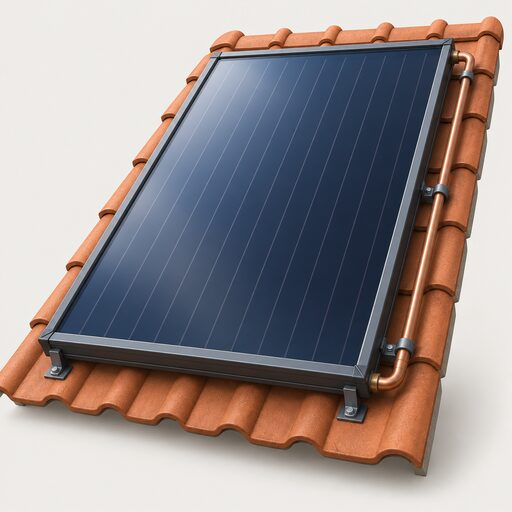 Heating and Energy IndependenceCan you heat your home without relying on gas or oil, and what would that take?
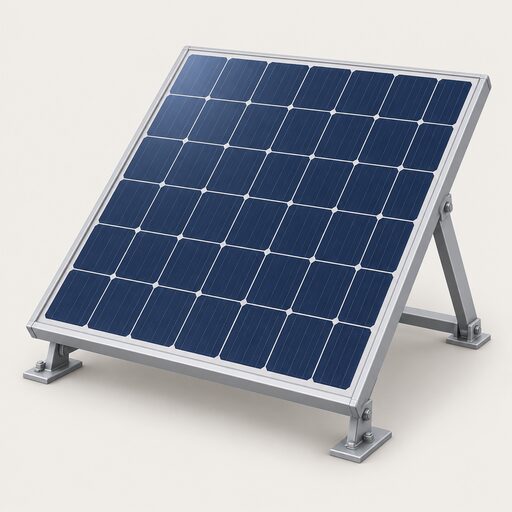 Planning Energy IndependenceCutting what you use, moving heating off gas, putting solar on the roof and adding a battery all help, but none of them takes you off the grid completely.
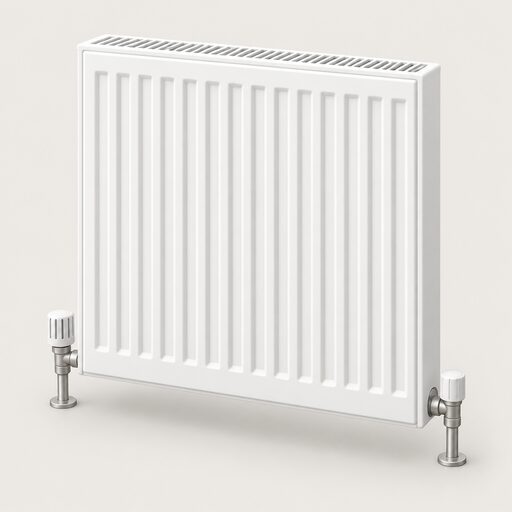 How Much Does a Heat Pump CostA heat pump usually costs around eleven thousand pounds installed, though quotes vary a lot depending on your home.
 The Full Statistics GuideHow many homes in the UK have solar panels, heat pumps or batteries?