

In this guide
A heat pump costs around £800 to £1,050 a year to run, which places it among the cheapest electric heating options available to a UK household1. That figure is for space heating on a single-rate tariff, and it is an average rather than a promise: the actual number for any one home is the product of three things only, the annual heat demand of the building, the seasonal efficiency of the installed system, and the price paid for a unit of electricity.
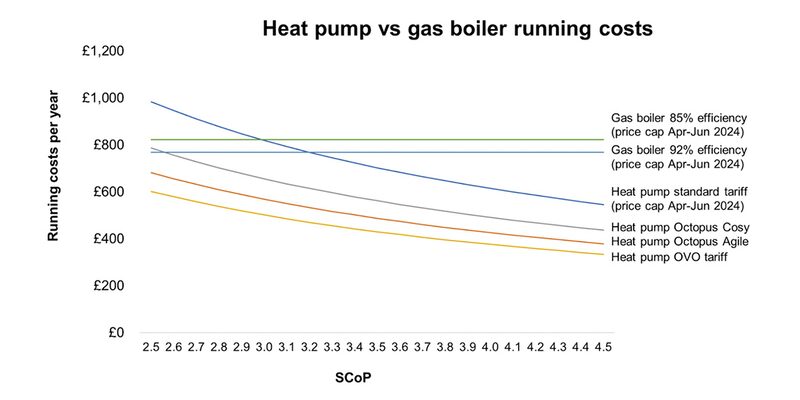
Set against gas, the picture is close to level. Official guidance states plainly that heat pumps "currently have similar running costs to gas boilers"2. The reason is the ratio between the two fuels: electricity is priced at nearly four times gas per unit, so a heat pump delivering three to four units of heat per unit of electricity roughly cancels the price gap out3. Move the efficiency or the tariff and the balance tips. On a standard flat-rate tariff many heat pumps cost the same or even more to run than an efficient gas boiler4. On a heat pump time of use tariff, running costs fall significantly, and a heat pump can cost less to run than a gas boiler3.
That is the single most important thing to understand about heat pump running costs in 2026. The technology is not the variable that decides the bill. The building fabric, the quality of the installation and the electricity tariff are.
Running costs: £800 to £1,050 a year for a typical home
The £800 to £1,050 range is quoted for a heat pump on a single-rate electricity tariff and sits alongside an installation cost of £6,000 to £18,0001. Comparable installed-cost estimates elsewhere put the typical figure at around £11,700 on average, around £13,000, and about £10,500 with a range of £8,000 to £15,000, which gives a sense of how wide the spread is once building type and system size are taken into account4.
Running cost is not only electricity. Servicing typically costs around £150, and Home Energy Scotland gives a wider range of around £150 to £300 per service depending on the type of heat pump5. One modelling exercise assumed annual maintenance of £120 for heat pumps for five years while under warranty, and £80 a year for gas boilers across their life, which is a reminder that maintenance is a small but real part of the comparison10.
Location changes the answer. In Scotland, and particularly the north, running costs and whole-life costs per year are expected to be higher by 7 to 12 per cent, worth £110 to £280 a year, because the climate demands more heat and depresses seasonal efficiency10. That difference is not a policy difference between the nations but a physical one, and it applies before any devolved grant or loan is considered. Households in Scotland can read more about the regional picture on heat pump bills in Scotland.
The independence question sits behind all of these numbers. A heat pump removes the gas meter, the gas standing charge and exposure to the gas market, but it does not remove dependence: it concentrates it on the electricity grid, a supplier and, where a time of use tariff is used, on a supplier's tariff design and often an app or cloud service. The dependence changes shape rather than disappearing.
How heat pumps compare with a gas boiler at current prices
The evidence is not unanimous, and the disagreement is genuine rather than a matter of old data. For a typical-sized home, a heat pump currently costs about the same to run as a gas boiler, with the unit price of electricity almost four times higher than gas11. The Public Accounts Committee has put it more sharply: electricity prices mean that heat pumps can be more expensive to run12. A Northern Ireland consultation modelled running costs increasing by as much as 20% compared with an illustrative gas boiler example13. Against that, official guidance from 2023 stated that running costs for heat pumps are typically lower when compared with traditional gas boilers [3 alternative reading is not used here].
Which finds the decisive variables are efficiency and tariff together. The owner of a heat pump with a seasonal coefficient of performance of 4.5 on a heat pump tariff could be paying as little as £379 for the same amount of heat that would cost £823 a year from a gas boiler9.
"A household could save more than 50% on running costs with a heat pump compared to a gas boiler."
That saving is conditional on a high quality installation, high efficiency and a heat pump tariff, all three9. Which? has separately set a threshold: a heat pump operating at an average annual efficiency of 3.0 or higher will cost the same, or possibly less, to run as a gas boiler, in a well-insulated home with an MCS-certified installer14. Below that threshold the arithmetic turns against the heat pump.
One modelled experiment put a baseline of £80 a month for a heat pump against £75 for a gas boiler, a difference of £5 a month [8 not applicable]. The fuller side-by-side is set out on heat pump vs gas boiler running costs.
Why the energy price cap shapes what you pay
The cap set by Ofgem is the reference point for most households, because it governs standard variable and default tariffs, where the unit rate can move with the energy market15. It sets the maximum a supplier can charge for each unit of gas and electricity and a maximum daily standing charge, and it is reviewed every three months15. It applies to customers who have not signed up to a fixed-term contract, with a separate cap for each of the 14 regions of Great Britain16.
The most widely misunderstood point is the limit of its reach. Ofgem states it directly:
"It does not limit the cost of your total bill. The more energy you use, the higher your bill will be."
For heat pump owners this matters twice over. First, a heat pump raises electricity consumption substantially, and the cap does nothing to contain the total. Second, the specialist tariffs that make heat pumps cheap to run sit outside the cap altogether: fixed tariffs, green tariffs and time of use tariffs are not covered, nor are business contracts, heat networks or heating oil15.
| Price cap reference figures | Value |
|---|---|
| Electricity unit rate, January to March 2026 | 27.69p per kWh17 |
| Electricity standing charge, January to March 2026 | 54.75p per day17 |
| Electricity unit rate, April to June 2026 | 24.67p per kWh7 |
| Electricity standing charge, April to June 2026 | 57.21p per day7 |
| Typical dual-fuel bill, January to March 2026, direct debit | around £1,75817 |
| Typical dual-fuel bill, April to June 2026, average 2 to 3 bedroom home, direct debit | £1,6417 |
Ofgem confirmed the price cap for 1 April to June 2026 would fall by 7%, and after that it is expected to stay roughly the same until the end of the year17. Cap levels assume typical consumption of 2,500 kWh of electricity and 9,500 kWh of gas, which is a gas-heated household's shape and not a heat pump household's18. Network costs make up almost 30% of the cap total, and the government cut policy costs in April 2026 by ending a levy-funded energy efficiency scheme and shifting the largest renewable generation support scheme to general taxation16. Those structural components are the lever that would close the electricity-to-gas price gap, and they sit entirely outside a household's control.
Seasonal performance factor: the number that predicts your bill
Manufacturers quote a coefficient of performance at a single test condition. The figure that predicts a bill is the seasonal one: a seasonal coefficient of performance or seasonal performance factor, showing efficiency averaged across the whole year19. It is defined as a measure of how efficient a heat pump is, taking seasonal temperature changes into account20. Judging a real system needs a full year's worth of data, because efficiency fluctuates seasonally8.
The arithmetic is simple. An SPF of 4.0 means that for every 1 kWh of electricity consumed, the heat pump delivers 4 kWh of heat6. Divide annual heat demand by the SPF to get annual electricity, then multiply by the unit rate.
Worked examples make the sensitivity visible. With an SPF of 3.5 and a variable tariff averaging about 20p per kWh, running costs could be about 5.7p per kWh of heat; a heat pump with an SPF of 3.5 costs about 6.5p per kWh of delivered heat, and if an SPF of 4 can be achieved that falls to about 5.5p per kWh of heat21. Those figures date from July 2024 and move with the unit rate.
Heat pumps tend to run with a seasonal performance factor of 3.1, but a good quality installation that is managed well and controlled appropriately can get an SPF significantly higher than 3.1, sometimes more than 45. Monitoring during home visits recorded indicative SPF values from installed systems' own monitoring ranging from 1.3 to 5.86. That spread, from barely better than a direct electric heater to better than four to one, is the entire running cost argument in one line.
Minimum standards set a floor rather than an expectation. Heat pumps under the Boiler Upgrade Scheme must have a seasonal coefficient of performance of at least 2.822. Under the domestic RHI, air source heat pumps needed a minimum SPF of 2.523. Boiler Upgrade Scheme product eligibility does not consider SCOP, and installers need to calculate it separately22. Installers must calculate the SPF based on the system design for a specific home and share the calculation before starting any work, using inputs including the average temperatures at the location and the size of the radiators19. The definitions are set out in full on heat pump efficiency: COP, SCOP and SPF explained.
What makes running costs vary between homes

Three factors determine the effect on a bill: what fuel is being replaced, the efficiency of the heat pump, and the design of the central heating system24. The third is the one households tend to overlook, because it is the emitter and control design that decides the flow temperature, and flow temperature decides efficiency.
Fabric comes first in practice. Where a home is not well insulated, installing a heat pump may increase energy bills instead of reducing them, because electricity is more expensive than gas25. Not everyone who installs a heat pump will see savings straight away for the same reason26. The gap between design efficiency and delivered efficiency is worth money: it is equivalent to several hundred pounds a year in running costs for a typical fuel poor home6. And the sensitivity runs the other way too. Increasing heat pump efficiency by 10 per cent typically reduces running costs by around 8 per cent, equivalent to between £65 and £150 per year10.
Practical levers behind that efficiency figure include radiator sizing, which feeds directly into the installer's SPF calculation19, and controls. Related pages cover radiators and emitters for a heat pump, heat pump controls and how heat pumps actually perform in UK homes.
Tariffs: where the biggest single saving sits
Some suppliers offer specific electricity tariffs designed to minimise heat pump running costs26. Switching to a heat pump time of use tariff should reduce the cost of running the heat pump, making it more likely that a household saves money19. Energy Saving Trust research finds that switching to a heat pump time of use tariff can reduce running costs significantly, and that on such a tariff a heat pump can cost less to run than a gas boiler3. On standard electricity tariffs, where electricity is nearly four times more expensive than gas, heat pumps can cost slightly more to run than new gas or oil boilers3.
Where the heat pump is the only low-carbon asset, the categories to compare are a dynamic tariff or a heat pump tariff27. Where a battery is installed, with or without solar panels, a heat pump tariff that includes a peak rate is likely to work better, because the battery can power the heat pump through the expensive period27. That combination is the closest a household comes to insulating itself from unit-rate movements, though it substitutes a dependence on the supplier's tariff structure and on the control software that shifts the load. See how much a time of use tariff could save on heat pump bills and solar panels and a battery with a heat pump.
Because these tariffs sit outside the price cap, their protection is contractual rather than regulatory15. A household that builds its heating economics on a heat pump tariff is accepting that the terms can change at renewal.
Hybrid systems and other alternatives: how their costs differ
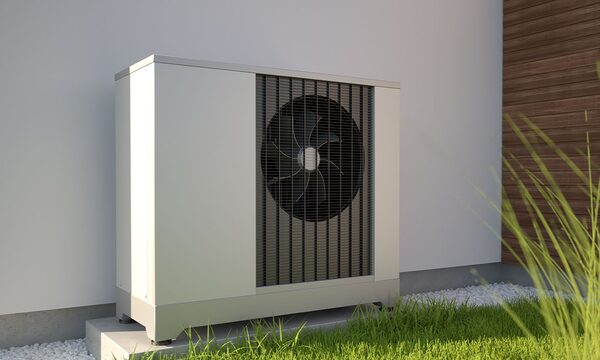
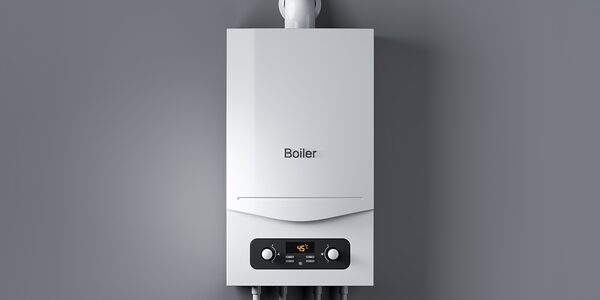
A hybrid pairs a heat pump with a boiler. Where the controls react to fuel prices, the boiler only turns on when it is cheaper to run than the heat pump, which lowers overall operating costs compared with running either on its own28. Some hybrid systems automate that decision using electricity costs, fossil fuel supply costs, time of day, and whether solar panels are generating or exporting electricity28.
The size of the benefit is contested and small. Analysis for Cadent found that at the current spark gap and typical energy consumption, the cost to run a hybrid heating system could be around 10% more than a standalone heat pump, while excluding standing charges the same analysis puts hybrid heating at marginal running cost savings of around 2% over a full heat pump29. The capital picture is clearer: DESNZ analysis cited in the same report found hybrid installations typically cost 30 to 40% less than standalone air-source heat pumps29.
A hybrid also keeps the gas connection, the gas standing charge and the gas supply chain in place. For energy independence that is a step backwards from a full heat pump, whatever it does for the monthly bill. The trade-off is set out on hybrid heat pumps and is a hybrid heating system cheaper than a full heat pump.
For air-to-air systems, at current energy pricing the costs are likely to be lower than using an oil boiler and similar to a gas boiler or an air-to-water heat pump on a standard electricity tariff30. A worked ground source example illustrates the low-cost end: a typical ground source heat pump generates 3.5 to 4.5 units of heat per unit of electricity, and assuming a coefficient of performance of 4.0, the annual cost of electricity for heating and hot water works out at 2,382.75 kWh multiplied by £0.2467, or £587.8231.
| System | Running cost position |
|---|---|
| Air-to-water heat pump, standard tariff | Same or slightly more than an efficient gas boiler4 |
| Air-to-water heat pump, heat pump time of use tariff | Can cost less to run than a gas boiler3 |
| Air-to-air heat pump | Lower than an oil boiler, similar to a gas boiler30 |
| Ground source heat pump, COP 4.0 example | £587.82 a year for heating and hot water31 |
| Hybrid heat pump and boiler | Around 10% more than a standalone heat pump at the current spark gap29 |
Running costs over a heat pump's lifetime
Running cost dominates the lifetime total. Under current policy and market conditions, upfront, running and installation cost make up approximately 15 to 20%, 55 to 65% and 20% respectively of the total cost of a heat pump over its lifetime32. In other words, roughly three fifths of what a household will ever spend on a heat pump is electricity, and the design and tariff decisions that govern that spend are made once, at installation.
Financing changes the total sharply. Modelling of purchase and subscription routes gives a lifetime figure of £11,950 for upfront purchase plus routine maintenance, £12,750 with a five year loan, £14,550 with a fifteen year loan, and £16,200 for a fifteen year lease33. The differences are finance costs, not energy costs.
A separate annualised illustration of an air source heat pump with subsidy gives a total of £960, split as £300 upfront costs, £80 maintenance costs and £580 running costs34. The proportions again show running cost as the largest single element.
Historic subsidy figures give a sense of what support was worth per year rather than what fuel costs. Under the domestic RHI, an air source heat pump with a deemed heat demand of 10,000 kWh and an SPF of 2.5 attracted £445.20 a year, or £3,116.40 over the seven year lifetime of the scheme; a ground source heat pump at 10,000 kWh and an SPF of 3.4 attracted £9,492.70 over the same seven years35. Current support is covered on heat pump grants and funding across the UK.
Parity with gas heating: 2035 without policy change
The gap between electricity and gas prices is not a fact of physics, it is a fact of levies, network charges and market structure. Energy Saving Trust's assessment is that without policy intervention, the running cost of heat pumps will not reach parity with a gas boiler until 2035 [33 corrected to warm homes plan source].
That date is the most important single number on this page for anyone weighing a switch on cost alone. It means the running cost case today rests on the two things a household can change, the seasonal efficiency it achieves and the tariff it buys, rather than on waiting for the price ratio to move. It also means the calculation could shift earlier: the April 2026 reduction in policy costs, achieved by ending a levy-funded energy efficiency scheme and moving renewable generation support to general taxation, is exactly the kind of intervention that narrows the ratio16.
For a household pursuing energy independence, the honest summary is this. A heat pump ends reliance on gas and on a gas supplier, and pairs well with on-site generation and storage. It does not end reliance on the grid, on a supplier, or on the regulated and unregulated price structures described above. At around 3.1 SPF on a capped standard tariff, running costs land near a gas boiler's. Above 4 on a heat pump tariff, they fall well below. The difference between those two outcomes is installation quality, fabric and tariff, and those are the decisions worth spending time on.
Sources35 cited
- Electric heating running costs, Centre for Sustainable Energy, June 2026
- Heat pumps research briefing, Parliamentary Office of Science and Technology, 19 September 2026
- Air source heat pumps, Energy Saving Trust, 16 July 2026
- Renewable technologies: what really cuts energy bills, Energy Saving Trust, 12 August 2026
- Heat pump questions answered, Energy Saving Trust, 27 May 2026
- Consumer facing perspectives on the heat pump transition, Department for Energy Security and Net Zero, May 2026
- Grants and schemes, Smart Energy GB, 28 May 2026
- Living with a heat pump, Home Energy Scotland, February 2024
- Heat pumps vs boilers, Which?, 22 September 2025
- Reduce the cost of heat pumps, Nesta, 2 March 2022
- Domestic heating technology options, Nesta, 3 February 2025
- Decarbonising home heating, summary, Public Accounts Committee, 26 May 2024
- Building regulations discussion document, Department of Finance Northern Ireland, 11 October 2023
- What type of boiler should your next one be, Which?, 17 February 2022
- Energy price cap, Ofgem, 17 September 2026
- Domestic energy prices, House of Commons Library, 20 September 2026
- Energy price cap explained, Welsh Government Climate Action Wales, 4 March 2026
- Domestic energy price briefing, House of Commons Library, 28 August 2026
- In-depth guide to heat pumps, Energy Saving Trust, 16 July 2026
- Energy jargon buster, Energy Saving Trust, 20 March 2026
- Heat pumps information service, Centre for Alternative Technology, July 2024
- Boiler Upgrade Scheme guidance for installers, Ofgem, 25 September 2023
- Domestic RHI eligible heating systems, Ofgem, 17 September 2026
- Top energy saving ideas for your home improvement project, Energy Saving Trust, 3 August 2026
- Air and ground source heat pumps guidance, Croydon Council, 17 September 2026
- Is now a good time to get a heat pump, Energy Saving Trust, 12 December 2025
- Tariffs for renewable technology, Energy Saving Trust, 12 August 2026
- Hybrid heat pumps, Energy Saving Trust, 16 July 2026
- The future of the gas network: recommendations for hybrid heating, Cadent Gas, April 2025
- Air-to-air heat pumps: common questions, Nesta, 24 June 2026
- Ground source heat pump costs and savings, Which?, 8 May 2026
- Energy innovation needs assessment: heat and buildings, Department for Energy Security and Net Zero, June 2025
- Heat pumps on subscription, ClimateXchange, 21 February 2024
- Seven reasons we still need heat pump subsidies, Nesta, 20 November 2025
- RHI guidance for consumers, RECC, 17 September 2026
 Heat Pump Electricity TariffsA heat pump tariff gives you cheaper electricity for part of the day, so running your heating costs less than on a standard rate.
 Heat Pumps vs BoilersWill a heat pump actually cost less to run than my boiler, and does it heat the house as well?
 Heating Schedules and SetbackIs it cheaper to leave the heating on low all day, or set it to come on only when you need it?
 Energy IndependenceA heat pump runs your heating on electricity instead of gas or oil, so how much does that really cut what you pay and how exposed you are when fuel prices jump?
 The Full Heat Pumps GuideWill a heat pump keep my house warm in winter, and what does one cost to buy and run?
 How Much Does a Heat Pump CostA heat pump usually costs around eleven thousand pounds installed, though quotes vary a lot depending on your home.