
In this answer
Short answer
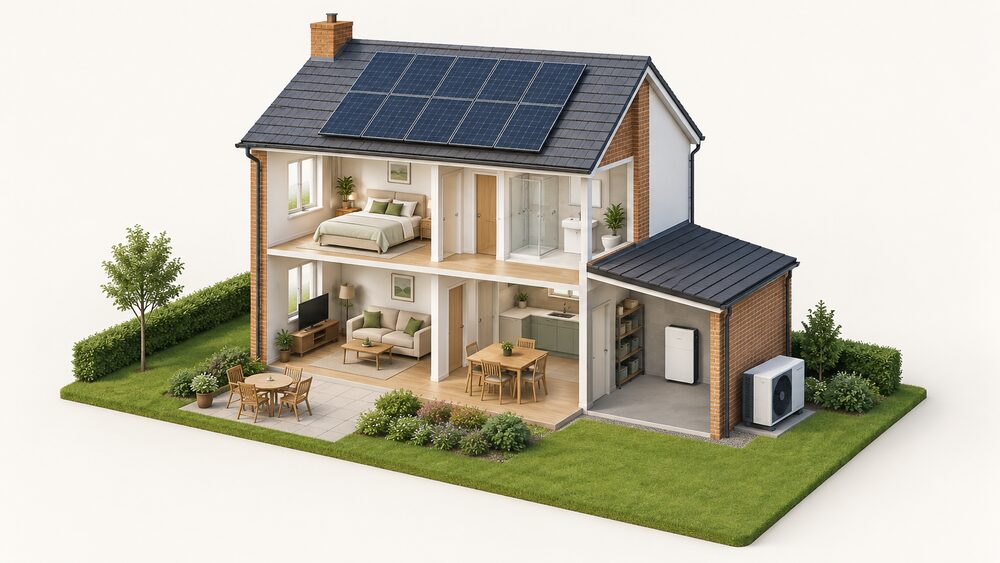
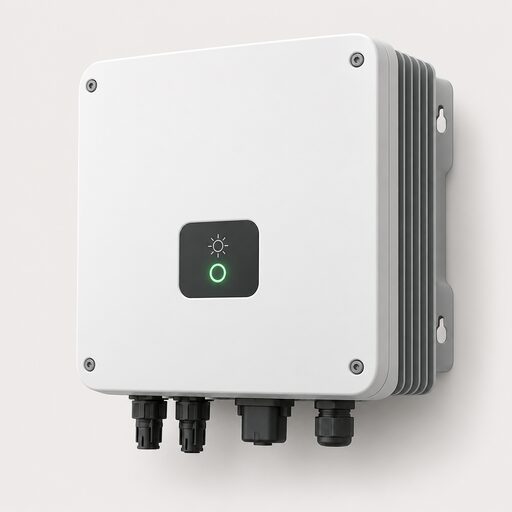
Solar panels and a heat pump work together, and a battery makes the pairing more useful. A heat pump transfers heat from outside a home into it using electricity, and solar panels can generate electricity to help power it, lowering both electricity and heating bills1. Independent guidance is direct on the point: solar panels can generate electricity that can help power a heat pump, reducing the amount drawn from the grid2.
The combination is not a way to leave the grid. Solar generation peaks in summer, while a heat pump is needed most in winter, so in winter the heat pump is likely to be mostly powered by imported electricity3. What solar and storage change is the share of that electricity a household buys, and when it buys it.
What each part contributes: panels, battery and heat pump together
Each element does a different job, and the value comes from how they overlap. Solar panels generate electricity that can help power a heat pump7, and where a household already has them, using the free energy they generate to power the heat pump saves more8. The Energy Saving Trust estimate cited in consumer guidance is that solar cells can provide 40% of a home's energy, especially when used alongside a solar battery4.
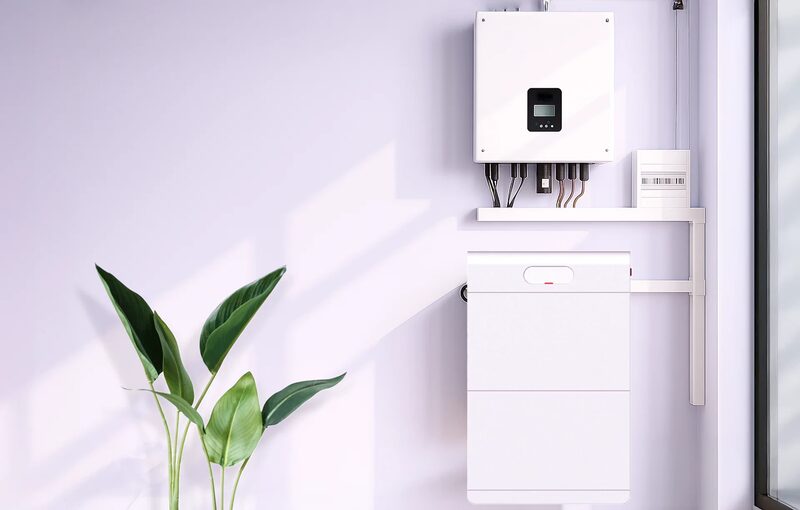
The battery's role is timing. Combining solar panels with a home battery lets a household store free, renewable electricity to power the heat pump, making it less reliant on grid electricity9. A solar battery can increase savings further by storing the sun's energy to power the heat pump later in the day8. Official guidance goes further: installing solar PV and battery storage alongside a heat pump can significantly lower bills in all cases6.
The heat pump itself is the largest new electrical load in most of these homes, and it is a steady one. A heat pump uses roughly the same amount of electricity every hour of the day if it is set up to deliver steady warmth10. That steadiness is what makes a battery useful: there is a predictable demand to cover, rather than a spiky one.
There is a second, separate option in the same family. A solar assisted heat pump heats water by absorbing heat from direct sunlight and from the air, and can work without direct sunlight11. The amount it saves on fuel bills depends on how much hot water is used and what system currently heats it11. That is a different product from a standard air source or ground source heat pump with solar PV, and it is covered further below.
Running the heat pump at night and during peak rates from a battery
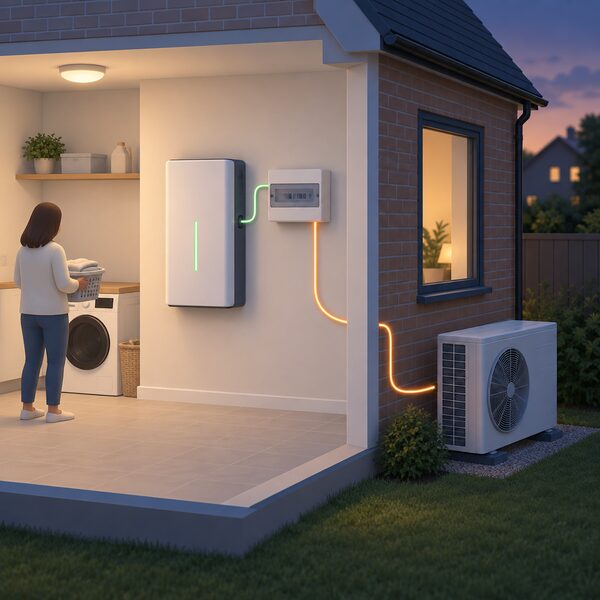
The mismatch between when solar generates and when heating is needed is the central practical problem. Solar PV produces most in summer while the heat pump is needed most in winter, so the heat pump is likely to be mostly powered by imported electricity in winter3. A battery cannot close a seasonal gap; it closes an hourly one.
That hourly role is real. A heat pump uses roughly the same amount of electricity every hour of the day when set up for steady warmth10, so a battery charged during the day or on a cheap overnight rate can cover the expensive evening period. Independent guidance on tariffs points to a heat pump tariff that includes a peak rate, using the battery to power the heat pump during expensive periods12. The same guidance notes that where a good export tariff is not available from a supplier with a good import tariff, a solar panel and battery tariff may suit, especially with a larger than average solar system or a smaller than average heat pump12.
Standard operating advice cuts across this. Guidance on running a heat pump efficiently is to avoid heating hot water or the house overnight when outside air temperatures are significantly lower, unless the household is on a time of use tariff9. A battery changes the economics of overnight running without changing the physics: the heat pump still works harder in colder air.
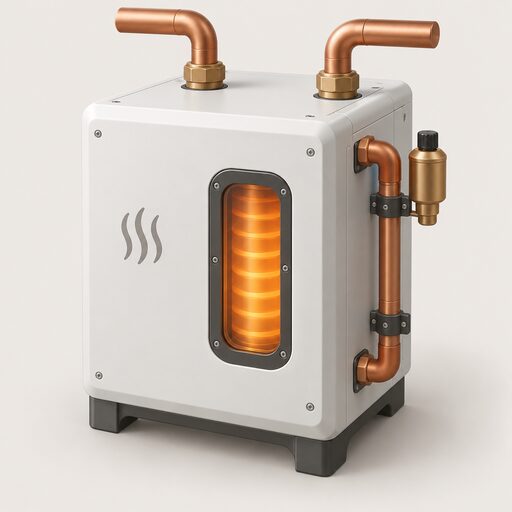
Some hybrid systems automate the decision. Controls on some hybrid heat pumps choose when and how the heat pump runs based on electricity costs, fossil fuel supply costs, time of day, and whether solar panels are generating or exporting13. A heat battery trial took a different route, charging renewable heat into large capacity time-shifting thermal storage that delivers space heating and hot water on demand14.
Solar thermal panels alongside a heat pump: a different option
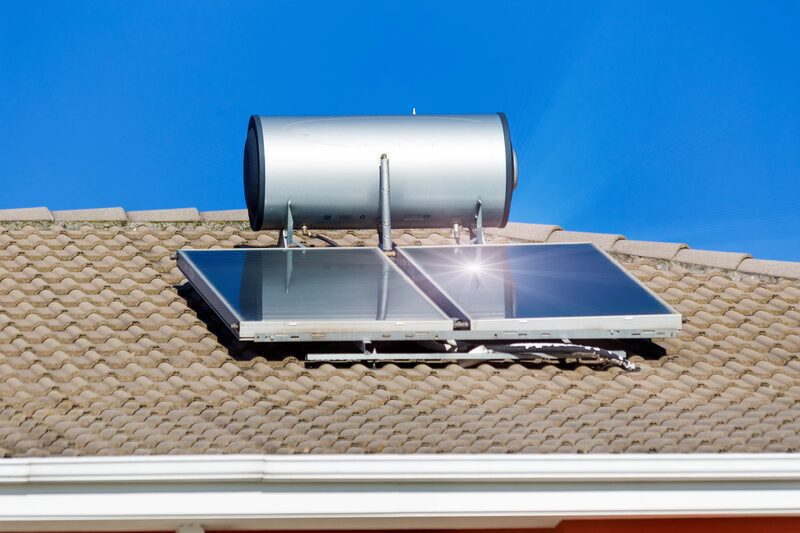
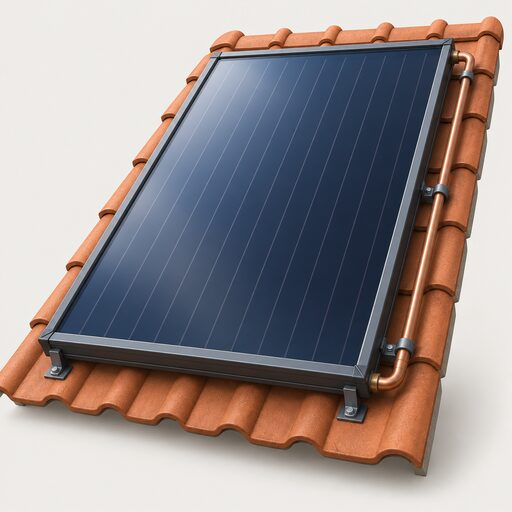
Solar thermal collectors are not the same product as solar PV, and they interact with a heat pump differently. Solar thermal panels can be installed alongside other renewable or traditional heating systems, though they are not so easy to combine with a combi boiler16. Coupling a solar collector with a heat pump is an established system design17.
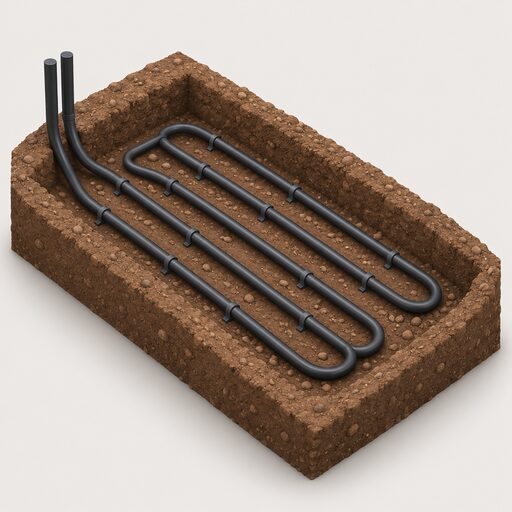
The official position on the heat pump side is permissive. Guidance states that ground source heat pumps can be used to augment existing heating systems in the same way as solar panels18, and the same wording applies to water source heat pumps19. That describes heat pumps augmenting a system, not solar thermal feeding a heat pump, and the two should not be conflated.
A third route combines both functions in one panel. Hybrid PV-T panels combine photovoltaic cells with solar thermal panels, so that the same panel can generate heat and electricity5. For a household with limited roof area, that is the only way to get both outputs from one mounting.
On the electrical side, solar panels can also power a dry electric underfloor heating system, and a battery to store excess solar electricity would make this more efficient20. Heat pumps themselves can work with radiators or underfloor heating, though some types can work without either7.
Sizing and compatibility: what your system needs to support
Sizing rules for the heat pump are set by building regulations, and they are strict. A primary heating system containing heat pumps should be selected to meet the full space heating requirement at the design condition chosen for heat loss calculations, and it should not be assumed that any heat will be supplied by additional secondary heaters21. The earlier English approved document uses the same principle: heat pumps should be selected to meet the full space heating requirement at the design condition chosen for heat loss calculations22. Approved Document L also states that heat pump systems have been sized appropriately23.
Grant schemes apply their own tests. Heat pumps that integrate with solar photovoltaic systems are eligible under the Boiler Upgrade Scheme24. Under the Warm Homes: Local Grant, the heat pump is sized to provide a minimum of 55% of the calculated heat load for retrofit and packaged hybrids25. Older scheme guidance required the heat pump or biomass boiler to provide both space and hot water heating and to be capable of meeting the full space heating and hot water heating demands of the property26.
On the solar side, there is no agreed minimum array for a heat pump. Powering a 7kW heat pump in addition to a home's other demand needs a large array3. An average domestic system is around 4kWp, which requires at least 20 square metres of roof space5. Guidance on the minimum system size for a heat pump is not settled: figures of at least 5kW and at least 5.6kW are both in circulation.
| Item | Figure | Source |
|---|---|---|
| Example heat pump rating | 7kW | 3 |
| Typical domestic solar array | around 4kWp | 5 |
| Roof space for a 4kWp system | at least 20 square metres | 5 |
| Warm Homes: Local Grant minimum heat pump sizing | 55% of the calculated heat load | 25 |
| Solar thermal primary pump maximum electrical input | less than the higher of 50W or 2% of the collector's peak thermal power | 22 |
In Northern Ireland the connection process is separate. Installing solar panels or wind turbines, or adding a new battery, is a different process from the heat pump and EV charger connection route27.
What the combination means for household energy independence

The combination moves a home part of the way towards self-sufficiency, and the remaining dependence is worth stating plainly. A heat pump uses electricity, and in winter most of that electricity is likely to be imported3. The grid connection, and a supplier, remain. What solar and a battery change is the volume and timing of imports, not their existence.
The direction of travel in UK housing is towards this combination. A documented case study household installed an air source heat pump with radiators, a 3kWp solar PV array and a 10kWh battery28. A monitored integrated electric home runs an air source heat pump, solar panels and a battery together29. Guidance on the energy efficient house of the future lists solar panels, a heat pump, battery storage, underfloor heating and larger radiators, an EV charger, full insulation, double or triple glazing, a high standard of draught-proofing, a ventilation system and smart heating controls30.
There is a tax treatment point that reflects how these parts are treated as one installation. Official guidance describes solar panels and batteries that stored power produced by the solar panels forming a single supply of the installation of energy-saving materials in residential accommodation31.
The dependence that remains is not only the grid. It is also the tariff, the supplier and the control system. A battery only earns its keep against a tariff structure that rewards shifting load, and the guidance on which tariff suits depends on the relative size of the array and the heat pump12. For a household weighing the decision, the honest summary is that solar and a battery reduce how much energy is bought and when it is bought, while the heat pump keeps the home on the electricity system.
Sources31 cited
- Solar Photovoltaic (PV), MCS Certified, 2026
- Renewable heat: right for your home, Energy Saving Trust, 2026
- Making the most of your solar PV panels, Centre for Sustainable Energy, 2026
- Make your home more energy efficient, Confused.com, 2026
- Buying advice for solar panels, Which?, 2026
- Clean heat financing report, HM Government, 2026
- Heating your home, Energy Saving Trust, 2026
- Is now a good time to get a heat pump, Energy Saving Trust, 2025
- How to ensure a heat pump runs efficiently, Energy Saving Trust, 2026
- Time of use tariffs explained, Which?, 2026
- Solar assisted heat pumps, Energy Saving Trust, 2025
- Tariffs for renewable technology, Energy Saving Trust, 2026
- Hybrid heat pumps, Energy Saving Trust, 2026
- Our Homes Net Zero Toolkit, Energy Systems Catapult, 2025
- Powercut 105, Energy Networks Association, 2026
- Heating your home with renewable energy, Which?, 2025
- Coupling a solar collector with a heat pump, Solar Heat Europe, 2019
- VAT energy saving materials: ground source heat pumps, HM Revenue and Customs, 2026
- VAT energy saving materials: water source heat pumps, HM Revenue and Customs, 2026
- Underfloor heating, Centre for Sustainable Energy, 2025
- Building Regulations Approved Document L Volume 1, 2026, Welsh Government, 2026
- Approved Document L Volume 1, 2021 edition incorporating 2023 amendments, HM Government, 2023
- Approved Document L Volume 1, Dwellings, HM Government, 2026
- Boiler Upgrade Scheme guidance for installers, Ofgem, 2026
- Warm Homes: Local Grant policy guidance, HM Government, 2026
- Boiler Upgrade Scheme guidance, Ofgem, 2023
- EV charger and heat pump connections, NIE Networks, 2026
- Clean heat: financing the transition, Energy UK, 2025
- Integrated electric home case study, Energy Saving Trust, 2026
- House of the future, Energy Saving Trust, 2026
- VAT energy saving materials: solar panels and batteries, HM Revenue and Customs, 2026
 Energy IndependenceA heat pump runs your heating on electricity instead of gas or oil, so how much does that really cut what you pay and how exposed you are when fuel prices jump?
 Heating and Energy IndependenceCan you heat your home without relying on gas or oil, and what would that take?
 Heat Pumps vs BoilersWill a heat pump actually cost less to run than my boiler, and does it heat the house as well?
 Energy Bills and IndependenceSolar panels can cut the part of your bill that goes up with every unit you use, but you still pay a daily standing charge just for being connected to the grid.
 Cooling with Solar PanelsCan solar panels run an air conditioner, and will they cover the whole bill?
 Heat Batteries and Zero EmissionA heat battery stores cheap overnight electricity as heat, then releases it to warm your home or your hot water.