
In this answer
Short answer
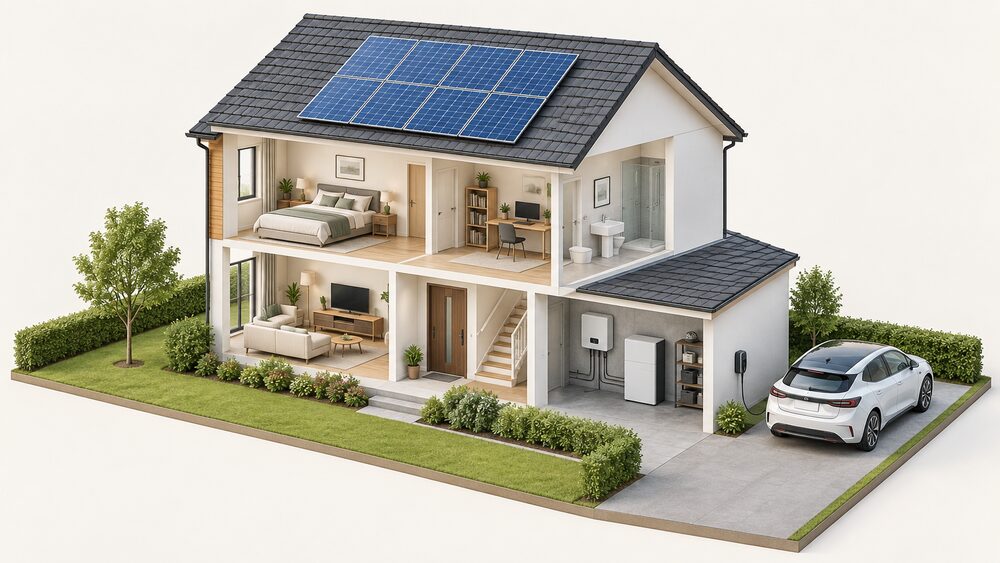
A battery is not required to charge an electric car from solar panels. Solar generation can charge an EV directly where the equipment is compatible, and some charge points are set up to divert only the surplus solar a house is not using, sending it to the car instead of exporting it to the grid1. What a battery changes is timing, not possibility.
The limitation of a battery-free setup is stated plainly by Which?: without an accompanying battery you can only use solar electricity as it is being generated3. That means the car has to be plugged in while the panels are producing. A battery captures the surplus and holds it for when it is actually needed, including overnight EV charging, rather than exporting it at a relatively low rate4.
So the honest answer is conditional. A battery adds value where a household wants to shift solar into the evening and night, wants backup power, does not have full-retail export rates, or can access cheap overnight charging tariffs5. It adds less where the car is almost always charged overnight on a cheap tariff and the solar surplus is already well paid for. This page sets out what a battery does, what it cannot do, and how chargers, inverters and batteries are matched.
Does an EV need a battery with solar panels?
No. The equipment list for a solar EV setup is solar panels, an inverter, often a battery storage system, and a smart EV charger7. The word that matters is "often". A battery is a common component, not a mandatory one, and the system works without it as long as generation and charging overlap.
What the panels do is capture sunlight and convert it to electricity8. What the charger does is decide where that electricity goes. A solar-compatible charge point can divert unused panel output to the car rather than exporting it, charging at a lower power rate when solar is generating and a higher rate at other times2. That is the whole mechanism of battery-free solar charging, and it is why the timing of the charge matters so much.
The constraint is real, though. Without storage, the household is using a variable generator to fill a large battery on wheels, and the two only meet when the sun is up and the car is home. For a household where the car sits on the drive during the day, that is workable. For one where the car leaves at dawn and returns after dark, the panels and the vehicle rarely coincide, and the solar output goes to the grid or to the house instead.
There is also a regulatory signal that battery-free solar is a recognised configuration. The government's plug-in solar consultation describes connecting plug-in solar systems without batteries directly to a standard mains socket9. That is a different product category from a full rooftop array, but it confirms that solar without storage is treated as a legitimate setup rather than an incomplete one.
For energy independence, the picture is mixed. A battery-free solar EV setup reduces the amount of grid electricity the car consumes, but it does not reduce dependence on the grid for the timing of that charging. The household still draws from the network whenever the sun is not shining, and it has no stored reserve of its own.
What a battery adds: charging when the sun isn't shining
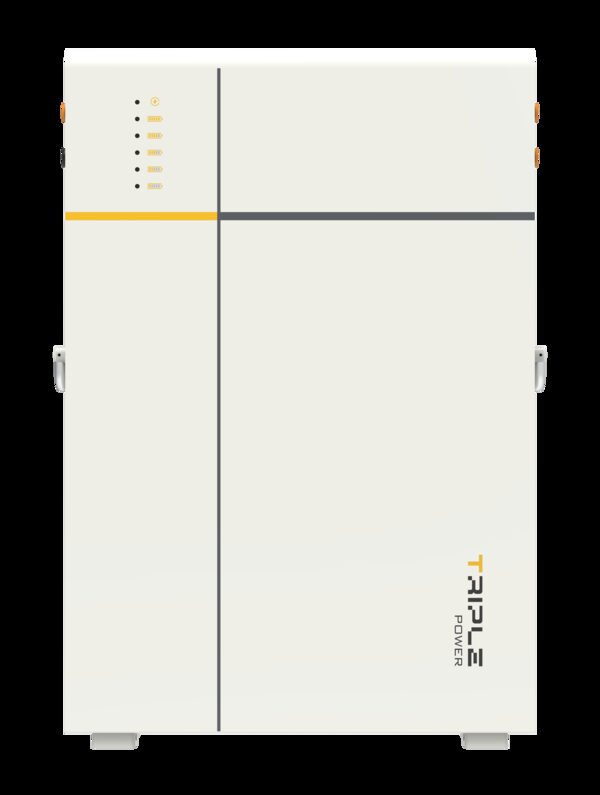
A solar battery helps store excess energy, ensuring more consistent charging even when the sun is not shining2. That single sentence is the core of the case. The battery converts an intermittent supply into a dispatchable one, and the car no longer has to be present at the moment of generation.
The mechanism is straightforward. With a home battery, the system can store surplus solar for later use, including EV charging6. Some systems go further and buy energy from the grid when it is cheap, so the household keeps saving even when the sun is not shining10. That second function matters for a household that charges overnight: the battery can be filled on a cheap tariff and discharged into the car, which is a different economic proposition from storing solar alone.
A battery also opens up tariff options. Storing daytime generation for evening use, combined with special export tariffs and an overnight EV tariff, lowers EV charging costs11. The export tariff point is easy to miss. A household with a battery can export at times of high value rather than exporting whatever happens to be surplus at midday, and it can hold energy back when export prices are low.
"With a home battery, that surplus energy is captured and held for when you actually need it, including overnight EV charging"
What a battery does not do is generate anything. It moves energy through time, and every conversion loses some. It also adds a component that can fail, needs space, and ties the household to a manufacturer's system and, in most cases, an app. The independence it buys is temporal, not absolute: the household still depends on the grid for anything beyond the battery's capacity, and on the maker for firmware, monitoring and warranty support.
Compatibility: chargers and solar inverters that work together
Compatibility is the part of this decision that most often goes wrong, because it is not automatic. EV chargers should be installed by a qualified electrician with relevant experience, and compatibility between the charger, the solar system and any battery storage should be considered from the outset4. Treating the three as separate purchases is where households run into trouble.
The good news is that solar awareness is now a common feature rather than a specialist one. A truly intelligent smart EV charger will have the ability to integrate with other renewable energy sources such as solar panels, domestic wind turbines, battery storage and air source heat pumps12. Several mainstream ranges state solar charging compatibility as a standard attribute13. Project EV states that its chargers work in harmony with solar panel technology, allowing the vehicle to be charged using the energy generated by the solar system, for single gun AC charger models15.
On the inverter side, the pairing is more specific. waEV-charge states that its EV chargers are designed to work with a range of compatible solar inverters, enabling solar energy to be optimised for charging16. Simpson & Partners states that its chargers work with battery integration if installed17. Sync Energy's Dynamic Load Balancer can be used alongside solar PV or other renewable sources when paired with compatible EV chargers, and its app is compatible with existing solar panels, inverter and battery systems18. Duracharger EV states that the charger can be integrated with a solar and battery system to create a home energy ecosystem20.
| Component | What it does | Compatibility note |
|---|---|---|
| Solar panels | Capture sunlight, convert to electricity8 | Any PV array |
| Inverter | Converts DC to usable AC | Charger must be matched to a compatible inverter16 |
| Battery (optional) | Stores surplus for later use6 | Works with battery integration if installed17 |
| Smart EV charger | Diverts surplus solar to the car2 | Solar charging compatibility stated by several ranges13 |
The practical implication is that the charger should be chosen with the inverter and any battery in view, not before them. A charger bought on price alone may still charge the car perfectly well, but it may not be able to follow the solar output, which is the entire point of the exercise.
Is it worth adding a battery to your setup?

The evidence points to a set of conditions rather than a universal yes. Home solar batteries are most worthwhile if a household wants backup power, does not have full-retail export rates, or can access cheap overnight charging tariffs5. Where none of those apply, the case is weaker, and the money may do more elsewhere.
The overnight charging question is the one most households ask, and the answer is not simply no. An EV charger can get an attractive rate for charging overnight, which will often be the best option21. If that is already the household's pattern, a battery does not replace it; it can complement it, by buying cheap overnight power and holding it, or by storing solar for the evening peak. Guidance on EV batteries is to charge overnight so that each day starts with a full battery22, and a home battery does not change that habit, it changes what supplies it.
There is a VAT angle that affects the timing of the purchase. EV chargers are not typically included in the 0% VAT scheme for home solar and battery installations, but installing one at the same time as solar panels or a battery, as part of a single integrated install, unlocks the same discount23. That is a reason to sequence the work rather than buy the charger separately, and it applies whether or not the battery is added at the same moment.
Scalability is worth building in. PURASystem states that a household can start with battery storage and add an EV charger or solar as and when it makes sense26. Power NI offers solar panel installation and EV home charger fitting as services27. For a household not ready to commit to everything at once, that staged approach keeps the option open without forcing the decision.
Where a battery falls short
A battery does not remove the grid, and it does not remove the seasons. In summer, a reasonably sized system can cover a significant portion of a typical household's EV charging needs; in winter, output drops considerably and grid top-ups become more necessary4. A battery sized for summer surplus will be empty more often in December, and a battery sized for winter will be oversized for most of the year.
Cloud cover is less of a problem than many households assume. Solar panels work during daylight, even when it is cloudy or overcast, because they use light, not heat, to generate energy28. The cells can still generate some electricity on a cloudy day29, and panels still generate electricity on cloudy days30. The reduction is in output, not in function, so a cloudy day is a low-yield day rather than a dead one.
Night is different. Charging at night is possible if the setup includes an energy storage system to store excess solar energy generated during daylight hours8. In a system with storage, the priority order at night is stored battery energy first for the home and the car, then a seamless switch to grid power once the battery is depleted8. During daylight, the order runs the other way: solar panels first power the home, then supply the car, and finally store any excess in the battery or export it for credit8.
The honest summary for independence is this. A battery with solar and an EV charger reduces the amount of grid electricity the household buys and shifts when it buys it. It does not make the home self-sufficient, because winter output, battery capacity and the car's own demand all exceed what a typical array and battery can supply. What it does is convert a variable daytime resource into a usable evening one, and that is a real gain, provided the household understands it is a gain in timing rather than in total supply.
Sources30 cited
- Charging an electric vehicle with solar panels, ev.energy, 2021
- EV chargers for solar panel charging, E.ON Next, 2026
- Solar panels: how much of your electricity can they produce, Which?, 2024
- Can solar panels charge electric cars, The CPA, 2026
- Is a home battery worth it, IAA, 2026
- Electric car charging at home, myenergi, 2026
- Solar panels for EV charging, Fuse Energy, 2026
- The complete guide to solar EV charging at home, SolaX Power, 2025
- Plug-in solar consultation, GOV.UK, 2026
- Sero home energy upgrade programme, Sero, 2025
- How to decide if solar panels are right for your home, ivie, 2026
- What is a smart EV charger, myenergi, 2026
- Public chargers, E.ON Next, 2026
- Running costs of electric cars, E.ON Next, 2026
- Project EV, Project EV, 2026
- Solar integration, waEV-charge, 2026
- Solar integration, Simpson & Partners, 2026
- Sync Energy range, Sync Energy, 2026
- Sync Energy app, Sync Energy, 2026
- Maximise energy savings with solar battery storage, Duracell Energy, 2026
- Tariffs for renewable technology, Energy Saving Trust, 2026
- Electric vehicle battery basics, Energy Saving Trust, 2025
- How to afford solar panels, Good Energy, 2026
- Solar photovoltaic PV, MCS Certified, 2026
- Group buying, Switch Together, 2026
- Home battery, Puredrive Energy, 2026
- Moving house checklist, Power NI, 2025
- Solar panel myths debunked, Which?, 2026
- Solar power, Electricity North West, 2026
- Solar power facts, Energy Saving Trust, 2026
 Charging an EV from Solar PanelsCharging your car from solar panels means using the power your roof makes instead of sending it to the grid.
 AC-Coupled vs DC-CoupledCan you add a battery to your existing solar panels without swapping the inverter, and does one kind waste more of your solar power than the other?
 Charging With a Home BatteryHow a home battery and an EV charger share one supply, whether a battery can usefully charge a car, and how combined systems are controlled so the battery is not discharged into the vehicle at a loss.
 Adding Battery StorageCan you add a battery to solar panels you already have, or does the whole system need replacing?
 Charging and Energy IndependenceCharging an electric car at home can cut your fuel costs, but how much does it really free you from the grid?
 Solar and Battery Import TariffsWhat does a special import tariff actually get you when you have solar panels or a home battery?