
In this answer
Short answer
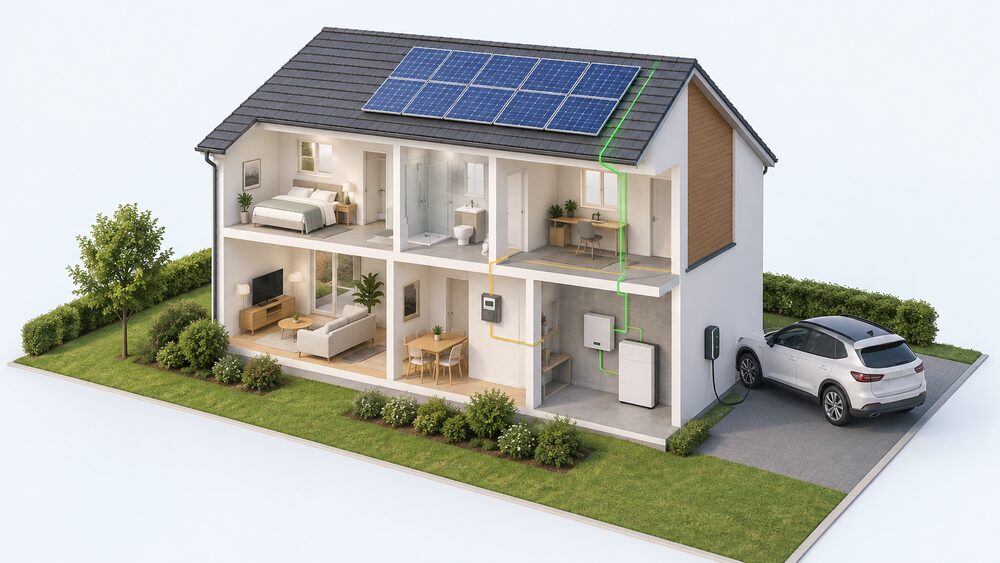
Yes. An EV tariff can be combined with solar panels and a home battery, and the three technologies are designed to work as one system. Home battery storage is usually used in combination with solar panels or a smart time of use tariff, or both1. Independent guidance lists smart time of use tariffs for storage heaters, heat pumps, solar PV and batteries, and electric vehicles as a single family of products, so a household is not choosing between an EV tariff and a solar tariff so much as choosing which combination of import and export rates suits its equipment2.
The practical arrangement is an import tariff with a cheap overnight window for the car and the battery, plus an export tariff that pays for what the solar sends to the grid. Independent guidance recommends a good Smart Export Guarantee tariff for exported electricity matched with either a dynamic tariff or a heat pump tariff for import, from the same company3. Where a household has a heat pump, solar panels and a battery, the same pairing is suggested, with a dedicated solar and battery tariff as the fallback if no good export rate is available from a supplier with a good import rate3.
What the combination does not remove is dependence. The home still relies on a supplier for import, on the grid for export payments, and on a smart meter for the tariff itself. For many EV specific tariffs, particularly smart or time of use tariffs, a working smart meter is required4.
Tariffs that work with solar and battery: which options fit which home
The right pairing depends on which technologies a household actually has, and independent guidance sets out the combinations explicitly. For a home with solar panels and a battery, the recommended options are a dedicated solar and battery tariff, which is designed for that combination, or a good SEG tariff matched with a dynamic import tariff or an Economy 7 tariff3. For a home with a heat pump and a battery, the advice is a good SEG for export and then either a dynamic tariff or a heat pump tariff for import3. For a heat pump with solar panels, the same export first approach applies3.
Where a household has all three, a heat pump, solar panels and a battery, the optimum is a good SEG for exported electricity and then either a dynamic tariff or a heat pump tariff for import, from the same company3. A solar and battery tariff is worth considering instead if a good SEG cannot be obtained from a company with a good import tariff, and this is described as especially useful where the solar system is bigger than average or the heat pump smaller than average3.
Some suppliers bundle the tariff to the installation. Customers who buy solar panels and a battery from Ovo and take their energy supply from Ovo are eligible for its SEG Install Exclusive tariff, and customers installing solar panels or a battery through EDF can use its Empower Exclusive tariff8. These are supplier specific arrangements rather than open tariffs, and eligibility turns on buying the equipment from that company.
| Home setup | Recommended tariff approach |
|---|---|
| Solar panels and battery | Dedicated solar and battery tariff, or a good SEG with a dynamic or Economy 7 import tariff3 |
| Heat pump and battery | Good SEG for export, plus a dynamic or heat pump tariff for import3 |
| Heat pump and solar panels | Good SEG for export, plus a dynamic or heat pump tariff for import3 |
| Heat pump, solar and battery | Good SEG for export, plus a dynamic or heat pump tariff for import, from the same company3 |
Eligibility: why some smart tariffs require an EV or battery to qualify

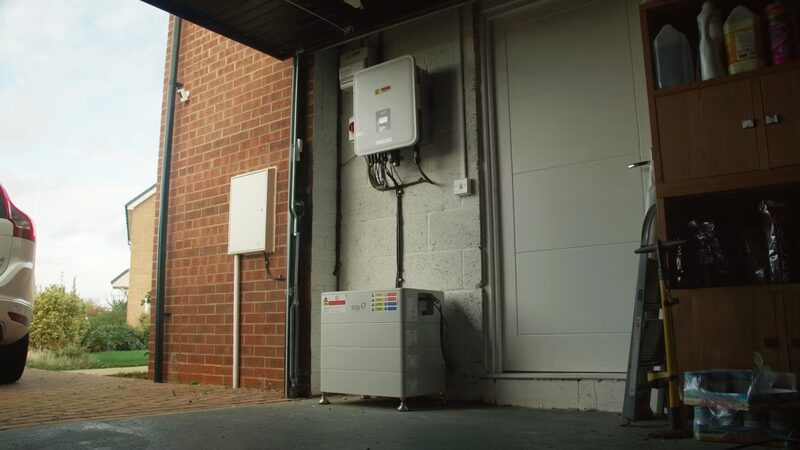
Smart tariffs are not open to every household. Some are only available if certain equipment is installed, such as an EV charger or solar panels4. Solar specific energy tariffs usually require battery storage as well as solar panels, and require the household to get its energy from that supplier9. A dedicated solar and battery tariff states its condition plainly: you need solar panels and a battery to get it3.
EV tariffs carry their own conditions. One published eligibility rule is that the customer must own or lease an EV vehicle10. The Energy Ombudsman's guidance is that a smart meter is not needed simply to charge an EV, but that without one some EV specific tariffs may be inaccessible, and that many EV specific tariffs, particularly smart or time of use tariffs, require a working smart meter4. Independent guidance on Octopus EV tariffs states that a smart meter is needed to sign up to most, if not all, EV tariffs, because suppliers need certainty about when charging happens11. Heat pump tariffs carry the same requirement: a smart meter is needed to get one12.
The reason for these conditions is that the tariff depends on the supplier being able to see and shape consumption. To benefit properly from smart appliances, electric vehicles and home batteries, a household needs to be on a smart tariff13. In most cases a smart meter is required to access EV tariffs14.
What the combination means for energy independence
The combination changes what a household buys and when, but it does not remove the grid. A battery stores daytime generation for evening use, opens special export tariffs and lowers EV charging costs with an overnight EV tariff15. That is the mechanism: the household shifts the moment it draws power rather than the fact of drawing it.
The scale of the effect is modelled rather than guaranteed. Adding battery storage alongside solar PV produces a saving of £773 a year on average compared with a pass-through tariff with a standard heat pump profile6. Rooftop solar paired with battery storage is reported to cut energy bills by up to 80% when smart tariffs and exporting excess energy back to the grid are factored in16. One case study household reports that the combination of the Feed-in Tariff and energy savings covers its whole electricity cost17. These are different households under different assumptions, and the range reflects that.
Independence remains partial in three ways. The household still imports from a supplier, still depends on the grid to take exported power, and still depends on a smart meter and the supplier's systems for the tariff to function. The Feed-in Tariff, which underpins the case study above, is a closed scheme: solar PV installations with a total installed capacity up to and including 250kW had three possible tariff rates, and some installations such as community energy and standalone schemes are exempt from the Energy Efficiency Requirement or meet reduced criteria for the higher rate18. New installations cannot join it.

Costs and savings: installation prices, VAT and the price cap context
VAT is the clearest figure in the cost picture. Battery storage installed with solar PV carries 0% VAT20, and solar panels and batteries remain at 0% VAT until March 2027 across the UK5. Eligible installations are those included on the Government's list of Energy Saving Measures21. Where solar panels and a battery are installed together under the same contract, this falls to be a single supply of an installation of solar panels with an ancillary battery, which qualifies for the relief20.
The VAT treatment is not uniform across every installation type. In Northern Ireland, where materials are more than 60% of the total cost, an installer charging £5,385 excluding VAT, made up of £3,500 for materials and £1,885 for labour, is treated with standard 20% VAT on the materials and 5% VAT on the labour, because materials are 65% of the total22. That is a worked example of the boundary rather than a typical price.
Running costs depend on how the battery is charged. A time of use charged battery with no solar PV is modelled at £420 a year in electricity cost, assuming charging at 12p/kWh7. Adding solar and a smart tariff changes the arithmetic: plug-in solar with a battery and a smart tariff is put at potentially £300 to £400 a year in combined savings23. Battery only systems are reported to save £1.5k to £2k a year or earn up to £3 a day through exports, though that figure comes from a commercial guide rather than an official source.
Installation prices for solar and battery systems are installer quoted, and no published price is given here. The price cap context matters for the import side: the cap for 1 July to 30 September 2026 rose 13% because of wholesale gas price spikes, which is the kind of movement that makes a cheap overnight window more valuable relative to a standard variable rate.
Charging the car from the roof, and the export side

Charging an EV with renewable energy such as solar panels significantly reduces a household's carbon footprint, and the equipment is designed for it24. The battery is what makes the timing work: it holds daytime generation until the evening, when the car is usually plugged in15.
Export is the other half of the arrangement. A good SEG tariff is the recommended export product for every combination of heat pump, solar and battery3. The Smart Export Guarantee is the mechanism by which households are paid for exported electricity, and it is the successor arrangement to the Feed-in Tariff export payments25. A solar and battery tariff may bundle import and export terms, which is why it is described as designed for the combination3.
The Feed-in Tariff still matters for households that hold it. Solar PV installations with a total installed capacity up to and including 250kW had three possible tariff rates, a higher rate, a middle rate and a lower rate, with the exception of stand-alone installations19. Some installations, including community energy and standalone schemes, are exempt from the Energy Efficiency Requirement or meet reduced criteria for the higher rate18. For a household on the Feed-in Tariff, the export side is already fixed by that scheme rather than by a current SEG rate.
Heat pump and EV households, and the direction of policy
Tariffs aimed at households with both a heat pump and an EV exist. One supplier offered compatible households with heat pumps and EVs a set priced energy tariff26, and other tariffs are available for heat pumps and electric vehicles27. Independent guidance lists heat pump tariffs as an import option to pair with a good export tariff, and notes that a smart meter is needed for these tariffs12.
Policy is moving in the same direction. The Climate Change Committee's advice is that solar PV and battery storage should be included by default in Warm Homes Plan packages targeting low income households, where feasible, until heat pumps routinely reduce fuel bills for those households28. That is a recommendation about future packages rather than a current scheme, and it signals that the solar, battery and heat pump combination is being treated as a standard package rather than a niche one.
For a household weighing the combination, the honest summary is that the tariffs exist, the eligibility conditions are equipment and meter based rather than brand based, and the savings figures are modelled across a wide range. The independence gained is real but bounded: control over when power is bought and sold, not freedom from buying and selling it.
Sources28 cited
- Battery storage, Energy Saving Trust
- Evaluating solar PV with electric heating with North Devon homes electricity tariffs, National Energy Action, 2025-07-03
- Tariffs for renewable technology, Energy Saving Trust, 2026-08-12
- EV tariffs and home charging: what consumers need to know, Energy Ombudsman, 2026-09-11
- Is there really such a thing as free solar panels?, Low Carbon Hub
- Domestic heat pump flexibility modelling, Nesta, 2024-11-19
- Battery storage, Centre for Sustainable Energy, 2025-10
- Solar panel costs, Which?, 2026-08-03
- Solar panel installation, Energy Saving Trust, 2026-09-07
- Electric cars and energy bills, Uswitch, 2026-04-27
- Octopus EV energy tariffs, Uswitch, 2025-10-09
- Deciding if a heat pump is right for you, Citizens Advice, 2025-12-08
- Smart homes and lower carbon footprint, Energy Saving Trust, 2026-01-21
- Smart meter benefits for Britain, Smart Energy GB, 2026-04-24
- How to decide if solar panels are right for your home, ivie, 2026-09-20
- Dear Prime Minister, the sunlit uplands are this way, Solar Energy UK, 2026-07-16
- Installing solar panels to help reduce your carbon footprint, Energy Saving Trust, 2025-09-24
- Key terms explained: Feed-in Tariffs, Ofgem, 2026-09-17
- Feed-in Tariff guidance for licensed electricity suppliers, Ofgem, 2024-09-06
- VAT energy saving materials and grant funded heating supplies, HM Revenue and Customs, 2026-09-17
- VAT on solar and battery storage, Solar Energy UK, 2026-09-17
- VAT on energy saving materials for consumers, HM Revenue and Customs, 2026-09-20
- Plug-in solar explained, Low Carbon Hub, 2026-07-09
- Everything you need to know about EV charging points, NICEIC, 2024-09-27
- Smart Export Guarantee, Solar Energy UK, 2026-05-12
- ivie Energy Sure: how we helped with home heating over winter, ivie, 2026-09-20
- EDF Energy, Energy Helpline, 2026-09-20
- Climate Change Committee report on the heat pump transition, Climate Change Committee, 2026-05
 Charging and Energy IndependenceCharging an electric car at home can cut your fuel costs, but how much does it really free you from the grid?
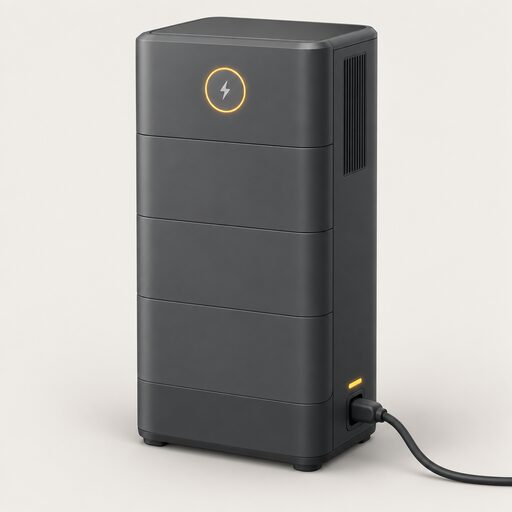 Solar and Battery Import TariffsWhat does a special import tariff actually get you when you have solar panels or a home battery?
 Batteries and Smart TariffsA home battery can earn its keep if your electricity prices change through the day.
 Charging With a Home BatteryHow a home battery and an EV charger share one supply, whether a battery can usefully charge a car, and how combined systems are controlled so the battery is not discharged into the vehicle at a loss.
 Types of Home EV ChargerWhich home charger suits your car and your driveway?
 Solar and Energy IndependenceHow far domestic solar cuts dependence on suppliers and the grid, what self-consumption really looks like across the year, what a battery, diverter or EV adds, and the grid-outage limit of ordinary inverters.