
In this guide
The Feed-in Tariff (FIT) is closed. It shut to new applicants on 1 April 2019, and all pathways for accreditation are now closed1. What remains is a payment scheme for roughly 869,394 installations holding 6,491 MW of total installed capacity, which continue to receive generation and export payments for the length of their eligibility period2.
For a household already on FIT, the scheme is a fixed, index-linked income stream: payments for every unit generated, plus a separate payment for units exported, adjusted annually with inflation and paid at least quarterly by a licensed supplier3. For a household that missed it, there is no route in. The replacement for export payments is the Smart Export Guarantee, which pays for export only and requires opting out of FIT export payments first4.
This page covers what the scheme paid, who still receives it, how an existing account is administered, and the rules that govern moving export payments from FIT to SEG.
What the Feed-in Tariff was and why it closed
The FIT scheme was introduced on 1 April 2010 by the Department for Energy and Climate Change, and it required participating licensed electricity suppliers to make payments on electricity generated and exported by accredited installations3. Its purpose was to promote the uptake of small-scale renewable and low-carbon electricity generation6. It applied in England, Wales and Scotland1.
The scheme closed to new applicants on 1 April 2019, barring a few exceptions1. The closure was made by the Feed-in Tariffs (Closure, etc) Order 2018, laid in Great Britain on 18 December 20187. One official document gives the closure date as 31 March 2019, subject to several time-limited extensions and grace periods, while others give 1 April 2019; the two figures differ, and the difference reflects the boundary between the last day for applications and the first day of closure8.
The reason given for closure was cost: the government closed FIT to new applicants to reduce costs and focus the budget on other sustainable initiatives8. Closure did not affect installations already accredited, which continue to receive payments9. A small tail of applications was still being processed after the closure date, a combination of licensees working through pre-closure applications and Ofgem closing down its queue of ROO-FIT applications10. Since closure, 21,258 domestic installations have been confirmed onto the Central FIT Register, which shows that accreditation can still be completed for applications made in time11.
For a household, the significance is straightforward. FIT was a subsidy paid by electricity suppliers under a government order, not a market price for exported power. Its closure moved household generation support onto a different footing, where export is bought by a supplier at a rate the supplier sets, and generation is no longer paid for at all.
Generation and export: the two payments that made up the scheme

FIT paid two separate streams. Accredited installations that meet their ongoing obligations receive tariff payments for both the amount of renewable electricity generated and the amount exported to the national grid10. The generation payment is made on everything the installation produces, whether or not it is used in the home. The export payment is made on what leaves the property.
That structure is why FIT was more valuable than an export-only tariff. A household that consumed most of its own solar output still collected the generation tariff on every unit, and the export tariff on the remainder. In Scheme Year 14, the scheme paid £1.76 billion in generation payments and £78 million in export payments1. In Scheme Year 13, the figures were £1.63 billion in generation payments and £80.7 million in export payments, with one document giving export payments as £81 million for the same year; the two figures differ by rounding10.
Export under FIT can be paid on a deemed basis. Deemed export is paid according to a percentage of generation meter readings, rather than a measured export figure10. That matters because it means a household without export metering still receives an export payment, calculated from what the panels generated. The alternative is metered export, where the actual exported units are recorded.
The value of net export payments is calculated to account for the difference between the export tariff paid by a licensee and the value of that electricity to the licensee10. The total levelisation fund adds up generation payments, net export payments, and licensees' qualifying FIT administration costs, and the scheme value is calculated by adding FIT generation payments, FIT export payments and qualifying FIT costs10.
"accredited installations that meet their ongoing obligations receive tariff payments for both the amount of renewable electricity generated and the amount exported to the national grid"
Eligible technologies and the 5MW capacity limit
FIT was open to solar photovoltaic, wind, hydro, anaerobic digestion, and fossil fuel-derived combined heat and power (micro-CHP)1. The capacity ceiling was 5MW of total installed capacity for all technologies except CHP, where the maximum limit was 2kW12. Installations could have a total installed capacity up to 5MW, or 2kW for micro-CHP1.
The limit applied to the total installed capacity of the installation, not to its output. If the TIC exceeded 5MW, all eligible installations of the same technology that constituted the TIC would become ineligible under the scheme13. That rule mattered for sites with more than one generating unit: exceeding the ceiling could remove accreditation from the group, not just the unit that tipped it over.
| Technology | Capacity limit |
|---|---|
| Solar PV | 5MW TIC |
| Wind | 5MW TIC |
| Hydro | 5MW TIC |
| Anaerobic digestion | 5MW TIC |
| Micro-CHP | 2kW |
The scheme also operated deployment caps, which place limits on the total capacity that can receive a particular tariff rate in a particular tariff period14. Caps were a control on cost: once a tariff period's capacity was filled, later applicants received a lower rate. They are part of why the scheme's rates fell over its life, and why the tariff a household receives depends on when its installation was accredited rather than on any current market rate.
The same 5MW ceiling now appears in the Smart Export Guarantee, which is open to anyone with an installation of an eligible technology up to a capacity of 5MW, or up to 50kW for micro-CHP15. The capacity boundary carried over; the payment structure did not.
Tariff rates, indexation and how payments were set
FIT rates were fixed at accreditation and then adjusted for inflation. Generation and export tariffs are index-linked, meaning they increase and decrease with inflation12. The index used has changed. Formerly, tariff rates were adjusted each financial year in line with the Retail Price Index5. From FIT Year 17, tariff rates are adjusted each financial year in line with the Consumer Price Index5. One supplier-facing document describes the transition from RPI to CPI inflation indexation as a revision to FIT tariff adjustments16.
The adjustment is annual, based on the 12-month period ending on 31 December of the previous year4. Tariffs are adjusted annually across the eligibility period, which is typically 20 years9. For a household, this means the payment rate is not renegotiated and does not follow wholesale prices: it moves with the published inflation index once a year, in the same direction as that index.
The policy and the tariff rates themselves are set by the Department for Energy Security and Net Zero, not by the supplier that administers the account4. Suppliers make the payments and recover them through the levelisation process, but they do not set the rate. That separation is why switching supplier does not change the rate a generator receives.
The scheme's cost is met through levelisation across licensed suppliers. The total levelisation fund is determined by adding up generation payments, net export payments, and licensees' qualifying FIT administration costs10. Administration costs allocated to FIT licensees are determined annually by the Secretary of State10. The practical effect for a household is that FIT is a regulated payment obligation on suppliers, which is a stronger position than a commercial export contract, though it depends on the supplier remaining active.
Eligibility periods: 20 years, 25 years for early solar, 10 for micro-CHP
Most generators accredited on FIT are eligible to receive payments for a maximum period of 20 years following their eligibility date1. Two groups differ. Solar installations accredited before 1 August 2012 have a maximum eligibility period of 25 years, and all micro-CHP installations have a maximum eligibility period of 10 years1. Other eligible technology types have a comparatively longer eligibility period, from 17 to 25 years10.
The eligibility period runs from the eligibility date, not from the date the scheme opened or the date a household moved in. A property bought with an accredited installation inherits the remaining period, not a fresh one. That is the single most important thing to establish when buying a home with panels: how much of the period is left, and at what rate.
Micro-CHP installations are already reaching the end of their support. The expired installations reported in one quarterly return are all micro-CHP technology types, which are eligible to receive support for 10 years2. That is the first cohort to leave the scheme, and it shows how the register will shrink over time as eligibility periods expire.
Tariff periods, which govern when rates change and when deployment caps reset, run quarterly for solar PV, wind, hydro and anaerobic digestion, and six monthly for micro-CHP17. The distinction matters for anyone checking which rate applied at a given accreditation date.
| Technology | Eligibility period | Tariff period |
|---|---|---|
| Solar PV accredited before 1 August 2012 | 25 years | Quarterly |
| Solar PV accredited from 1 August 2012 | 20 years | Quarterly |
| Wind | 20 years | Quarterly |
| Hydro | 20 years | Quarterly |
| Anaerobic digestion | 20 years | Quarterly |
| Micro-CHP | 10 years | Six monthly |
The scheme in numbers: 869,394 installations and 6,491 MW
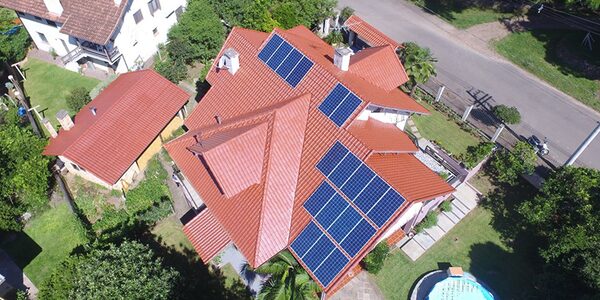
At the end of the first quarter of 2026, the scheme stood at 869,394 installations and 6,491 MW of total installed capacity2. The installations supported through FIT hold 6.5 GW of generating capacity, a small increase of just under 5.01 MW on the previous year's total of 6.48 GW1. Earlier snapshots show the same plateau: 6,492.7 MW at 31 March 2025 and 6,490 MW at 30 September 202418.
Domestic installations account for the largest proportion of scheme accreditations, 95.38%, and 45.53% of capacity, at 2,955 MW1. Installations above 50kW account for 46.22% of capacity, at 2,999.6 MW, from only 0.79% of installations1. The scheme is therefore two schemes in one: a very large number of small domestic arrays, and a small number of larger installations holding almost the same capacity between them.
Regionally, the South West has the greatest number of installations, 123,256, and the highest proportion of installed capacity1. An earlier annual report gives the South West figure as 123,307 installations and 17.90% of installed capacity10. Solar dominates the capacity mix: 79.42%, or 5.15 GW, of installed capacity in Scheme Year 1310.
Generation and export volumes are modest relative to capacity. A total of 8.3 TWh of renewable electricity was generated on the FIT scheme in Scheme Year 14, a decrease of around 0.56 TWh on the previous year, and approximately 1.3 TWh was exported to the grid, 0.04 TWh higher than the year before1. Over the scheme's lifetime, more than 82 TWh of electricity has been generated, a cumulative figure that sits alongside the 8.3 TWh recorded for the single year1.
The total number of active accreditations in Scheme Year 14 fell by 206, to 869,8571. That slow decline is the shape of a closed scheme: no new entrants, a steady trickle of expiries.
Administering an existing FIT account: licensees, meter readings and notifications
Administration of the FIT scheme is split between Ofgem and FIT licensees3. Much of the day-to-day administration is handled by FIT licensees, which make FIT payments, take and verify meter readings, handle complaints, and update generator details3. Ofgem maintains the Central FIT Register, on which accredited installations are recorded20.
A generator must be able to measure the electricity generated, and exported where applicable, separately from all other sources to receive generation payments and, if metered, export payments9. That is the metering condition behind the whole payment structure. Where export is deemed rather than metered, the export payment is calculated from generation readings.
Certain changes must be reported to the licensee. These include replacing generating equipment, or adding capacity; replacing or moving of metering; and installation of battery storage with your FIT installation9. Any modification to an accredited installation that increases or decreases its total installed capacity from the same type of eligible technology must also be notified9. For ROO-FIT installations, the generator must inform Ofgem in addition to the licensee of any changes to the installation or its ownership, by updating the Renewable Electricity Register9.
Payments are made at least quarterly to generators registered with their choice of FIT licensee3. The quarterly payment reports record the totals paid by licensees; the report covering April to June 2026 details the total FIT payments made by FIT licensees for that quarter21. In the quarter from 1 April to 30 June 2024, a total of £470,575,744.17 in FIT export and generation payments was made19.
Switching supplier without losing your payments
Switching energy suppliers does not change the Feed-in Tariff payment rate8. The rate is set by the Department for Energy Security and Net Zero and adjusted by the inflation index, so it travels with the installation rather than with the supply contract4. A household can change its electricity supplier for its import supply and keep its FIT payments, provided it registers with a FIT licensee for the payments.
The mechanics of a change of licensee are more involved than a supply switch. A generator must agree to a new statement of FIT terms with the new licensee and provide up-to-date meter readings before they will start making payments9. FIT payments can only be made by an active FIT licensee, and if terms are not agreed with a new licensee, payments are paused until they are9. If a FIT licensee fails, payments will not transfer automatically9.
That last point is the main risk in the arrangement. FIT payments depend on there being an active licensed supplier willing to take on the account. The scheme's own history shows supplier failure is not hypothetical, and the rule is explicit that a failed licensee's payments do not move across on their own.
Where a household switches its import supply, the ordinary consumer protections apply to the supply contract: the old supplier will refund any credit in the final bill, and compensation may be available if it does not22. Those protections concern the import account, not the FIT payments, which sit on a separate statement of terms.
Export payments after FIT: the Smart Export Guarantee and switching from FIT export
The Smart Export Guarantee pays export payments only8. It is open to anyone with an installation of an eligible technology up to a capacity of 5MW, or up to 50kW for micro-CHP15. A generator intending to claim SEG payments must not be in receipt of an FIT export tariff for the same installation and generation capacity, and must first opt out of FIT export payments by contacting their FIT licensee4.
The two schemes cannot both pay for the same exported electricity. You must choose one scheme for your export payments, and cannot be paid by both SEG and the Feed-in Tariff for the same energy sent to the grid8. Opting in or out of FIT export payments is possible only once a year8.
Generation payments are treated differently. Generators do not have to opt out of FIT generation payments to receive SEG export payments12. A household on FIT can therefore keep its generation tariff and move its export payments to a SEG tariff, provided it opts out of the FIT export element. That is the arrangement most existing generators considering a move will be weighing.
There is a condition on separate installations. SEG payments may be received where FIT export payments are received for a different installation, as long as the installations are completely separate with distinct import and export meters and different import and export MPANs12. Two arrays on one meter do not qualify.
The comparison between the two schemes is set out in more detail on Feed-in Tariff vs Smart Export Guarantee, and the rates suppliers pay are covered under Smart Export Guarantee rates.
What closure means for existing generators
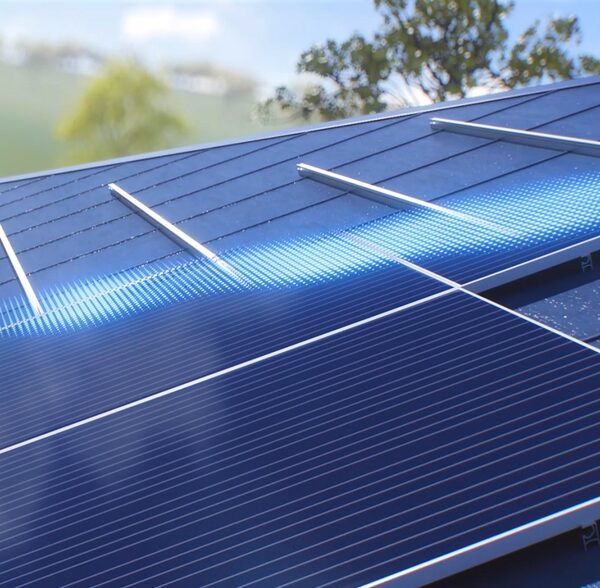
Closure does not affect installations which are already accredited9. The FIT scheme is closed to new applications, and installations already accredited under the scheme will continue to receive payments4. Owners of installations accredited to the scheme are called FIT Generators10.
The practical consequences run in three directions. First, the income is fixed and index-linked for the rest of the eligibility period, so it does not follow wholesale prices or the export market. Second, the account has to be actively maintained: readings submitted, changes notified, terms agreed with a licensee. Third, the exit from the scheme is gradual and one way, as eligibility periods expire technology by technology, starting with micro-CHP2.
For a household's energy independence, FIT is a partial and time-limited arrangement. It pays for generation and export, which reduces the cost of the electricity a home uses and pays for what it sends out, but it does not remove the connection to a licensed supplier, and it does not remove dependence on the grid for the hours when the installation is not generating. The payments come from a supplier, under a scheme administered by Ofgem and set by government, so the household remains inside the regulated supply market rather than outside it.
The scheme's own figures show the scale of what it built: 6.5 GW of generating capacity, 95.38% of accreditations domestic, and 8.3 TWh generated in a single scheme year1. What it did not build was a route for new households to join. That route now runs through the Smart Export Guarantee for export, and through import tariffs designed for solar and battery homes for the rest of the bill, covered under import tariffs for solar and battery homes.
Sources22 cited
- Feed-in Tariffs Annual Report Scheme Year 14, Ofgem, 2026-09-17
- Feed-in Tariffs Quarterly Report Issue 64, Ofgem, 2026
- Feed-in Tariffs (FIT), Ofgem, 2026-09-17
- Guidance for FIT Generators V18, Ofgem, 2026-04-01
- Feed-in Tariffs: Tariffs and Payments, Ofgem, 2026-09-17
- Feed-in Tariffs Quarterly Report Issue 63, Ofgem, 2026-03-30
- Guide to Closure, Ofgem, 2020-09
- Feed-in Tariff guide, Uswitch, 2026-07-13
- Feed-in Tariffs: Scheme Closure, Ofgem, 2026-09-17
- Feed-in Tariffs Annual Report Scheme Year 13, Ofgem, 2023-12
- Heat in Buildings Energy Efficiency Statistics, March 2023, Department for Energy Security and Net Zero, 2023-03-30
- FIT Guidance for Licensed Electricity Suppliers V17.1, Ofgem, 2024-09-06
- Feed-in Tariffs Guidance for Renewable Installations V16, Ofgem, 2021-12-13
- Feed-in Tariffs Deployment Caps Reports, Ofgem, 2026-09-17
- Smart Export Guarantee (SEG), Ofgem, 2026-09-17
- Feed-in Tariffs Guidance for Suppliers, Ofgem, 2025-05-23
- Key Terms Explained: Feed-in Tariffs, Ofgem, 2026-09-17
- Feed-in Tariffs Quarterly Report Issue 58, Ofgem, 2024-12
- Feed-in Tariffs Quarterly Report Issue 57, Ofgem, 2024-09
- Feed-in Tariff Installation Report 30 June 2026, Ofgem, 2026-07-17
- Feed-in Tariff Levelisation Report April to June 2026, Ofgem, 2026-08-31
- How Your Electricity or Gas Bill Is Calculated, Ofgem, 2026
 Export Tariff ApplicationsHow the Smart Export Guarantee application works, how export readings are collected, and how often payments are made.
 Solar Export PaymentsIf you have solar panels, how do you actually get paid for the electricity you send back to the grid?
 Exporting From a Home BatteryCan you actually get paid for electricity your home battery sends to the grid?
 Fixed-Rate Energy TariffsWhat a fixed energy tariff fixes and what it does not, the contract lengths sold in the UK, exit fees and the 49-day window, how fixed rates compare with the price cap, and what happens when the term ends.
 The Full Tariffs GuideWhich energy tariff suits how you live, and will switching really save you money?
 Solar and Battery Import TariffsWhat does a special import tariff actually get you when you have solar panels or a home battery?