

In this answer
Short answer
An exit fee is the amount a supplier charges when a household leaves a contract early, and it applies to most fixed tariffs rather than to variable ones1. The rule that decides whether a switch is free is the 49-day window: a supplier cannot charge an exit fee in the last 49 days of a fixed-term contract, and the household has the right to switch freely in that period2.
Outside that window, a fixed deal usually carries a fee. Guidance for consumers puts the common figure at around £100 per fuel for leaving before the end of the contract, and notes that fees are sometimes quoted per fuel, so a dual fuel household can face double the single-fuel amount3. Exit fees have also risen sharply: one fuel poverty charity reports that exit fees have increased by 345% in the last three years5.
The practical answer is therefore a date, not a principle. A household on a fixed tariff can switch free once it is inside the final 49 days, and can switch free at any time on a variable tariff. Everything else depends on the contract terms.
What an exit fee is and when it applies
An exit fee is the amount charged by an energy supplier if a household wants to leave its contract early1. It is a contract term rather than a regulatory charge, so its size and its trigger are set by the tariff the household signed up to. Ofgem's guidance is clear that a household that pays a supplier directly for the gas or electricity it uses can choose to switch supplier or tariff at any time, but that a previous supplier may charge an exit fee where the household was on a fixed rate tariff and left before it ended8.
The fee is normally expressed per fuel. Most fixed tariffs include exit fees for each fuel, payable if a customer switches before the end of the contract, and the common figure quoted to consumers is around £100 per fuel3. Because gas and electricity are billed separately, a dual fuel household leaving early can face two fees rather than one, and consumer reporting notes that a fee quoted as £25 per gas or per electricity becomes £50 for dual fuel4.
The scale of the charge has moved. One fuel poverty charity reports that exit fees have increased by 345% in the last three years, which changes the arithmetic of an early switch: a fee that once barely registered against a year's saving can now outweigh it5. That is why the timing of a switch matters more than it used to.
For a household's energy independence, the exit fee is a lock on the tariff rather than on the supply. It does not affect who physically delivers the gas or electricity, and it does not stop a switch, it prices one. The dependence it creates is contractual: the household stays with a supplier and a price it may no longer want until the window opens.
The 49-day fee-free window: the rule that decides when you can switch free

The 49-day window is the single rule that answers most exit fee questions. Ofgem has ruled that a supplier cannot charge any exit fees if a household switches within the last 49 days of the contract, a period of seven weeks1. Consumer guidance states the same rule from the household's side: if there is an exit fee attached but the household is within the last 49 days of the contract, it can switch for free10.
The window applies to fixed-term deals, including some tracker tariffs, and cannot be overridden by the supplier3. It also applies to the tariff rather than the meter, so it works the same way for a household on a smart meter as for one on an older meter. A worked example on a bill shows the position plainly: from 49 days before the plan end date, suppliers should not charge any exit fees, and the exit fee listed for that account was £100 in total for switching before the final 49 days11.
The window is not a deadline to switch, it is the point at which switching becomes free. A household can wait until the contract ends and move then, or move inside the window and avoid the fee. What it cannot do is move earlier without paying, unless the tariff has no fee at all.
"if you are in the last 49 days of your fixed-term contract, you don't have to pay an exit fee and have the right to switch freely"
For independence, the window is the moment of leverage. It is the point in the contract cycle at which the household can take its custom elsewhere at no cost, which is why the contract end date, not the current price, is the date worth diarising.
Fixed vs variable tariffs: which ones charge exit fees
Exit fees sit almost entirely on fixed tariffs. Fixed tariffs often come with exit fees, meaning a fee is payable if the household leaves earlier than the contract end date, and most fixed tariffs include a fee for each fuel9. Suppliers that publish their terms confirm the split: one states that exit fees apply to its fixed rate plans but not to its variable rate plan, and another states that exit fees can apply on its fixed tariffs while its variable tariffs carry no exit fee13.
Variable tariffs are the other side of the trade. Standard variable energy tariffs do not often come with exit fees, so a household on one can move at any time without a charge6. The cost of that freedom is exposure to price changes, since a variable tariff can be repriced by the supplier. A fixed tariff buys certainty of price for a set term, usually 12 to 24 months, and the exit fee is the price of leaving that certainty early3.
| Tariff type | Exit fee position | What it means for switching |
|---|---|---|
| Fixed, 12 to 24 months | Fee usually applies, often £100 per fuel3 | Free only in the final 49 days2 |
| Tracker | Fee can apply, treated as fixed-term3 | Free only in the final 49 days2 |
| Standard variable | Fee does not often apply6 | Free at any time6 |
| Supplier's own variable plan | No exit fee stated14 | Free at any time14 |
The choice between them is a choice about how much freedom the household wants to keep. A fixed tariff with a fee trades flexibility for a known rate; a variable tariff keeps flexibility and gives up the known rate. Neither is free in both directions.
What happens if you switch more than 49 days before your deal ends
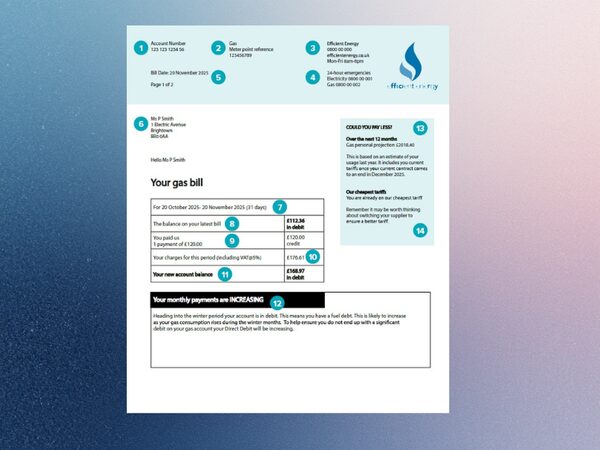
Leaving a fixed deal before the final 49 days of the contract will probably mean paying an exit fee15. The fee is set by the contract, so the household knows the figure in advance, and it is charged per fuel where the tariff says so. The Great Energy Savings Switch scheme rules restate the same condition for participants: a customer on a fixed deal may have to pay exit fees if not inside the final 49 days of the contract16.
The decision is then arithmetic rather than principle. Guidance for households suggests comparing the exit fee with the savings a switch could make, since moving to a cheaper tariff could still save money overall even after the fee is paid17. That comparison needs the actual fee figure from the contract, not an assumed one, because the range across tariffs is wide.
There is also a cooling-off route. A household cannot be charged an exit fee if it switches tariff during the 14-day cooling-off period at the start of the contract, which covers a change of mind immediately after signing up3. That is a narrow window, but it is a genuine one, and it sits alongside the 49-day rule rather than replacing it.
For independence, an early switch with a fee is a purchase of freedom rather than a free move. The household pays to leave, and the question is whether the new tariff's terms are worth the price of the exit.
Switching after a supplier failure or a tariff you are unhappy with
A supplier failure changes the rules in the household's favour. When a supplier goes out of business, Ofgem moves its customers to a new supplier, and under an Energy Supply Administration Order customers can switch to another supplier if they want to without any exit fees7. The transfer itself is free, and the first move afterwards is free too.
That second point matters because the replacement tariff is not chosen by the household. Guidance for households in difficulty states that if a household is not happy with its new supplier or tariff after a transfer, it can switch without paying an exit fee18. The protection exists precisely because the household did not choose the new arrangement.
The same logic applies to a tariff the household has simply outgrown. A supplier that raises prices, or a deal that no longer suits, does not create a right to leave free outside the 49-day window, but the fee-free routes above still apply: wait for the window, or move during the cooling-off period at the start of a contract3. Guidance for households checking their tariff notes that some fixed-rate tariffs charge a fee for leaving before the contract ends, and that the fee should be weighed against the saving17.
For independence, a supplier failure is the clearest case where the household's freedom is protected by rule rather than by contract. The dependence on a single supplier is broken by the transfer, and the fee-free switch afterwards means the household is not locked into the replacement it did not pick.
Tariffs that never charge an exit fee

Some tariffs carry no exit fee at all, and they fall into two groups. The first is variable tariffs: standard variable energy tariffs do not often come with exit fees, and suppliers that publish their terms state that no exit fee applies on their variable plans6. The second is fixed tariffs that are sold without a fee, which exist but are the exception rather than the rule.
One named example is a tracker tariff from ScottishPower, the Cap Tracker tariff, which has no exit fees21. That matters because tracker tariffs are otherwise treated as fixed-term deals for exit fee purposes, so a tracker without a fee combines a variable-style pricing mechanism with free movement3.
| Tariff | Exit fee | Source type |
|---|---|---|
| EDF variable energy tariffs | No exit fee14 | Supplier's own terms |
| OVO variable rate plan | No exit fee13 | Supplier's own terms |
| ScottishPower Cap Tracker | No exit fees21 | Consumer guidance |
| EDF Simply Fixed | Exit fees apply22 | Supplier's own terms |
The Welsh Government's consumer advice, drawing on Which? tips, suggests choosing a tariff with low or no exit fees in case circumstances change and the household wants to cancel early23. That is a statement about risk rather than price: a fee-free tariff costs nothing to leave, so it preserves the household's option to move if prices, income or circumstances shift.
For independence, a tariff with no exit fee is the most flexible position available. The household keeps the ability to move at any time, which is the practical form that energy independence takes in a market where the supply itself is shared.
How to check your contract end date before you switch
The contract end date is the fact that decides everything else, and it is on the bill. A worked example from a bill shows the plan end date stated plainly, with the exit fee position set out beside it, and notes that the household should switch again to a fixed plan at that point, or any time in the 49 days before the stated contract end date11. The same information sits in the online account for most suppliers.
The steps are straightforward:
- Find the plan end date on the bill or in the online account11.
- Count back 49 days from that date to find the first day a switch is free1.
- Check whether the tariff carries an exit fee and whether it is quoted per fuel3.
- If switching earlier, compare the fee with the saving the new tariff offers17.
- If the supplier has failed, check the terms of the transfer before assuming a fee applies7.
A household that cannot find the date should ask the supplier in writing, so the answer is on record before a switch begins. The date is also the point at which the household regains its leverage: inside the final 49 days, the supplier cannot charge for the move, and the household can take the best available offer without a penalty2.
For independence, knowing the end date converts a passive contract into a planned one. The household is not waiting to be told when it can move; it knows the date, and it can act on it.
Sources23 cited
- How do I avoid exit fees when switching energy, Energy Helpline
- How to switch energy supplier, Which?
- How to switch energy supplier, Confused.com, 2025-12-15
- What the Middle East conflict means for your energy bills, Which?, 2026-04-10
- Tariff Watch, End Fuel Poverty Coalition, 2026-09-20
- Fixed and variable tariffs: what's the difference, Energy Helpline, 2026-09-20
- What happens if your energy supplier goes out of business, Ofgem, 2026
- Switch your home energy supplier, Ofgem, 2026
- Energy tariffs explained, Uswitch, 2026-02-17
- Gas only, Confused.com, 2026
- How do I read my OVO Energy bill, Uswitch, 2025-09-10
- Choosing the best energy tariff, EDF, 2026-08-26
- Pricing, OVO Energy, 2026-09-17
- Switch energy supplier, EDF, 2026
- Fixed energy, Uswitch, 2026-09-07
- The Great Energy Savings Switch, Uswitch, 2026-09-19
- How to check your energy tariff and switch if you find a better deal, British Gas Energy Trust, 2026-07-30
- Struggling with energy bills, National Energy Action, 2026-05-06
- Your home energy checklist, National Energy Action, 2026-09-10
- Your gas or electricity supplier has put up its prices, Citizens Advice, 2026-09-17
- ScottishPower, Energy Helpline, 2026-03
- Fixed price energy, EDF, 2026
- Five top tips from Which? to cut your energy bills, Welsh Government, 2026-03-18
 Exit Fees and Contract TermsExplains exit fees on fixed energy contracts, how they are charged per fuel, and the Ofgem switching window in which a supplier cannot apply them.
 Fixed-Rate Energy TariffsWhat a fixed energy tariff fixes and what it does not, the contract lengths sold in the UK, exit fees and the 49-day window, how fixed rates compare with the price cap, and what happens when the term ends.
 The Full Tariffs GuideWhich energy tariff suits how you live, and will switching really save you money?
 Time-of-Use Tariffs ExplainedCan you pay less for electricity by using it at different times of day?
 Switching SupplierHow long does switching energy supplier actually take, and what happens if you owe money?
 Final Bills and Credit RefundsHow final bills and credit refunds work when you leave an energy supplier: the six-week deadline for the final bill, the ten-working-day deadline for refunding credit, the twelve-month back billing limit, and the automatic compensation that applies when suppliers miss these standards.