

In this answer
Short answer
A standard variable tariff carries no exit fee. A household on one is free to switch provider at any time without penalty, and that has been the consistent position across independent and official guidance for years1. Exit fees belong to fixed rate deals, where leaving before the contract term ends can trigger a charge4.
The distinction matters because the two tariff types look similar on a bill. The standard variable tariff is the supplier's default rate, the one a household lands on when a fixed deal ends or when moving into a property whose supply is already connected. Its unit rates move with the price cap, which Ofgem sets every quarter5. The cap level running from 1 October to 31 December 2026 is £1,723 a year for a typical dual fuel household paying by Direct Debit4.
So the answer to the switching question is straightforward, and the cost question is where the detail sits. A household on the SVT can leave whenever it likes, but the rates it is leaving are capped, and the alternative on offer may carry its own exit fee.
Standard variable tariffs have no exit fee
The rule is stated plainly across the consumer guidance. A household on a standard variable tariff will not have to pay any exit fees, and is free to switch provider1. Standard variable rate plans do not have an exit fee2. There is no exit fee and the household is free to switch provider3. Standard variable energy tariffs do not often come with exit fees9. A household on a standard variable tariff can switch at any time without incurring any fees10.
The reason is structural rather than generous. An SVT is not a contract with a term. It is a default rate that applies until the household chooses something else, and its price can change with notice. Because there is no fixed period to break, there is nothing for an exit fee to compensate. The same logic applies to tracker tariffs, where the price can change but the household is also free to leave at any point11.
That freedom is one of the recognised benefits of a variable deal, though it is not widely understood. Ofgem research found that only half of consumers correctly identify that switching deals without being charged an exit fee is a benefit of a variable tariff, with 54% identifying it correctly12. The gap matters: a household that believes it is locked in may stay on a tariff it could leave at no cost.
What the price cap means for SVT bills: £1,723 from October
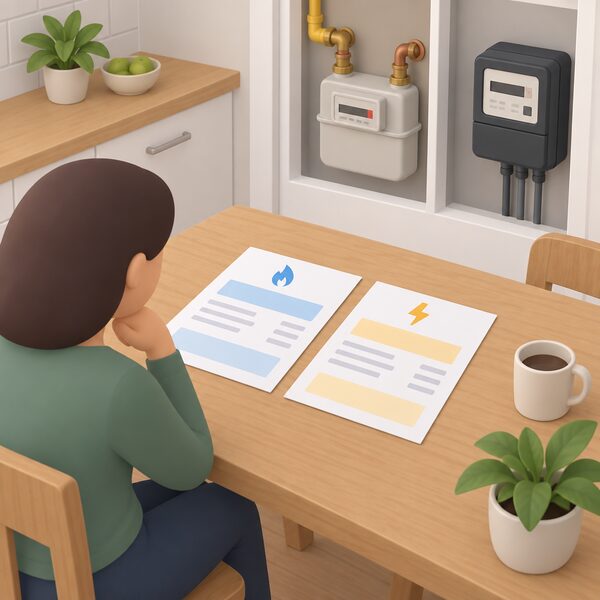
The price cap is a limit on the unit rates and standing charges that energy suppliers can charge for standard variable tariffs13. It does not cap the bill itself. A household using more than the typical consumption figures behind the headline number will pay more than £1,723, and one using less will pay less.
The headline figure for the period from 1 October to 31 December 2026 is £1,723 a year for a typical dual fuel household4. That is a rise of £60 from the previous level of £1,663, and a 4% increase4. The cap has moved a long way since its introduction. The first cap for default energy tariffs, or standard variable tariffs as they are often called, was established on 1 January 2019, when the average annual price of an SVT was set at £1,137, or £94.75 a month on average14. By August 2019 the annual SVT average had dropped to £1,179, with a monthly average cost of £98.2514.
The average gas and electricity bill for those on standard variable tariffs is affected almost entirely by the level of the energy price cap, which is set by Ofgem according to wholesale market prices4. That is the mechanism a household is exposed to on an SVT: not a supplier's commercial decision, but a quarterly administrative reset.
| Period | Cap level, typical dual fuel household | Source |
|---|---|---|
| January 2019, first default tariff cap | £1,137 a year (£94.75 a month) | 14 |
| August 2019 | £1,179 a year (£98.25 a month) | 14 |
| 1 October to 31 December 2026 | £1,723 a year | 4 |
Why suppliers can raise SVT rates: the deemed contract rule
A standard variable tariff is where households land by default. When a fixed price energy tariff ends, the household is probably rolled onto the supplier's SVT11. A new occupier starts on the property's current supplier's SVT, because the supply continues and a deemed contract arises. The tariff is defined by movement: the price paid can go up or down based on things such as the cost of buying energy on the open market15.
That movement is the trade-off. On the plus side, standard variable rate plans do not have an exit fee2. On the other side, the tariff tends to be the most expensive a supplier offers16. A household on an SVT is protected by the energy price cap17, but the protection is a ceiling on rates, not a guarantee of the lowest price available.
The contrast with a fixed tariff is sharp. A supplier cannot increase the price a fixed tariff customer pays unless the government has raised VAT18. That certainty is what the exit fee buys the supplier: a commitment in both directions. The household gets a known rate for a known period, and the supplier gets a charge if the household leaves early.
Fixed tariffs versus staying on the cap

Exit fees are the price of leaving a fixed deal early, and they vary widely. Most fixed tariffs include exit fees for each fuel, payable if a household switches to a different deal before the term ends11. The typical amount sits at £30 to £60 on a fixed rate tariff19, though other guidance puts exit fees at typically £100 or more8, and one analysis reports an average exit fee of £138 across the market7. A further figure puts the common charge at often £100 on a 12 month fixed tariff6.
There is a waiver window. A household does not pay the fee if it has entered the final 49 days of the tariff10. That window is the point at which switching away from a fixed deal costs nothing, and it is the natural moment to compare the next deal against the cap.
| Tariff type | Exit fee position | Typical amount |
|---|---|---|
| Standard variable | None, free to leave at any time | £01 |
| Tracker | Price can change, free to leave at any point | £011 |
| Fixed rate | Payable if leaving before the term ends | £30 to £6019; £100 or more8; £138 average7 |
| Fixed rate, final 49 days | Waived | £010 |
The choice between a fixed deal and the cap is a choice about who carries the risk. A fixed tariff transfers wholesale price risk to the supplier for the term, at the cost of an exit fee if circumstances change. Staying on the cap keeps the household free to move at any time, but exposes it to each quarterly reset. Choosing a tariff with low or no exit fees, in case circumstances change and the household wants to cancel early, is one approach the guidance notes20.
What Ofgem does and does not regulate here
Ofgem sets the cap and licenses suppliers. It does not set exit fees on fixed tariffs, and it does not require a supplier to offer a tariff without one. Exit fees on fixed deals are a commercial term, disclosed in the tariff information, and they can range from £0 to £50 per type of fuel21. The regulator's role on the SVT is different: it caps the rates, and it requires notice of changes.
The cap itself has changed shape over time. In summer 2022, Ofgem moved from setting the cap every six months to every quarter in response to high and volatile wholesale prices5. The cap applies to standard and default tariffs and is reviewed and updated every three months22. The next review is due on 25 November 2026, covering the period from 1 January 2027, with a further review due on 23 February 2027 for April to June 2027.
The cap does not apply to fixed rate tariffs, which are set by the supplier for the term23. That is the boundary of the regime: the cap protects households that have not chosen a fixed deal, and fixed deals are left to competition.
Switching away: what a supplier must do
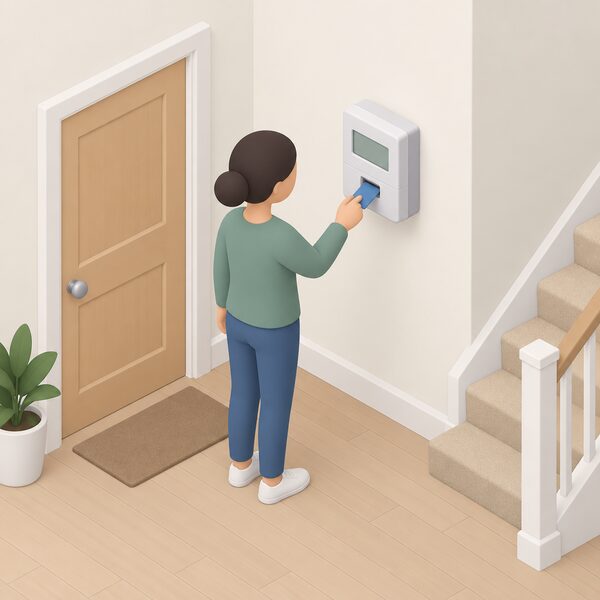
A supplier cannot charge an exit fee to a household leaving a standard variable tariff, because none applies. The switch itself is a process the supplier must support: the new supplier runs it, and the old one releases the supply on the agreed date. The main practical limit is debt rather than tariff type.
Prepayment meter customers can switch if they pay by topping up a prepayment meter and have less than £500 debt for each meter, repaying that debt to the new supplier8. Above that threshold, or on a credit meter with arrears, a supplier may block the switch until a repayment arrangement is agreed. That is the condition that most often stops a move, and it applies regardless of whether the household is on an SVT or a fixed deal.
The price cap covers prepayment customers too. There is a price cap on most standard variable prepayment tariffs25, and prepayment tariffs are subject to the price cap in the same way standard variable credit tariffs are26. Prepayment customers came under a tariff cap earlier than credit customers: caps for prepayment meter customers were introduced in April 2017, ahead of the default tariff cap for other customers27.
For a household thinking about energy independence, the SVT is the least independent position available. The rate is set quarterly by a regulator responding to wholesale markets, the supplier is a billing intermediary, and the household's only lever is the freedom to leave. That freedom is real and costs nothing, but it is a lever on the supplier, not on the price of gas. The cap limits what can be charged; it does not change what the energy costs to buy. Households wanting to reduce exposure to the quarterly reset can look at fixed and standard variable tariffs and the switching process, while those wanting the wider picture can start from energy bills and the price cap.
Sources27 cited
- Exit fees, Uswitch, 2026-07-17
- Standard rate tariffs, Uswitch, 2026-08-26
- The great energy savings switch: FAQs, Uswitch, 2026-09-19
- Average gas and electricity bills in the UK, Uswitch, 2026-10-01
- Energy price cap methodology: backwardation deadband decision, Ofgem, 2025-11-21
- One thing you need to do now to control your energy bills this winter, Which?, 2026-09-17
- Tariff watch, End Fuel Poverty Coalition, 2026-09-20
- How to switch energy supplier, Which?, 2026-05-15
- Fixed and variable tariffs: what's the difference, Energy Helpline, 2026-09-20
- How to switch energy supplier, Confused.com, 2025-12-15
- Energy tariffs explained, Uswitch, 2026-02-17
- Understanding consumers' energy tariff choices, Ofgem, 2025-07
- Heating fuel, Uswitch, 2026-01-27
- The history of Ofgem's energy price cap, Energy Helpline, 2026-09-20
- Check if you are owed money on your energy bill, Ofgem, 2026
- When is the best time to switch my energy deal, Uswitch, 2026-08-26
- How your electricity or gas bill is calculated, Ofgem, 2026
- Your gas or electricity supplier has put up its prices, Citizens Advice, 2026-09-17
- Gas only, Confused.com, 2026
- Five top tips from Which? to cut your energy bills, Welsh Government Climate Action, 2026-03-18
- Dealing with your energy supplier, Centre for Sustainable Energy, 2026-01
- Grants and schemes, Smart Energy GB, 2026-05-28
- British Gas, Energy Helpline, 2026-09-20
- What happens if your energy supplier goes out of business, Ofgem, 2026
- Meters, Age UK, 2026-09-10
- Prepayment meters, Uswitch, 2026-08-26
- Research briefing CBP-10958, House of Commons Library, 2026-09-20
 Fixed and Variable TariffsCompares capped standard variable tariffs with fixed deals, including exit fees, contract end and rollover.
 Exit Fees and Contract TermsExplains exit fees on fixed energy contracts, how they are charged per fuel, and the Ofgem switching window in which a supplier cannot apply them.
 Fixed-Rate Energy TariffsWhat a fixed energy tariff fixes and what it does not, the contract lengths sold in the UK, exit fees and the 49-day window, how fixed rates compare with the price cap, and what happens when the term ends.
 The Full Tariffs GuideWhich energy tariff suits how you live, and will switching really save you money?
 Energy Price CapThe price cap sets the most you pay for each unit of gas and electricity, plus the daily standing charge, but not your total bill.
 Standing Charge ReformPeople on low usage ask why they pay a daily charge at all, and whether a zero standing charge tariff is really coming.