

In this comparison
The price cap is not a cap on your bill. It sets a maximum amount that suppliers can charge per unit of energy for customers on default tariffs, as well as a limit on the daily standing charge1. A fixed tariff works the other way round: the price you pay is set for a period of time, so the cap's quarterly movements pass you by2.
The cap now stands at £1,723 a year for a typical dual fuel household paying by Direct Debit, from 1 October 2026, a rise of 4% from £1,6633. That figure is an illustration for a household with typical usage, not a ceiling on what any individual home pays. Around 11 million people were on a fixed deal in January 2025 and so were not affected by the change in the cap level at all3.
The choice between the two is a choice about who carries the risk of wholesale prices moving. Staying on the cap means the risk sits with the supplier for the length of a cap period, and the level is reset every quarter. Fixing means the household takes on that risk for the length of the contract, in exchange for certainty about the rate.
What the price cap is and who sets it
Ofgem designs and sets the cap. The regulator describes the methodology for the default tariff price cap as one it considers most appropriate for a market-wide cap8. The cap protects people who are on tariffs where the unit rate can go up or down depending on the energy market2. In practice that means standard variable and default tariffs, not fixed ones.
The cap is a maximum on the unit rate and the standing charge, not on the total bill. Ofgem has been explicit about this since the cap began: the price caps are a cap on a unit of gas and electricity, with standing charges taken into account, and they are not a cap on customers' overall energy bills8. A household that uses more than the typical consumption values will pay more than the headline figure, and one that uses less will pay less.
There is one cap level for all suppliers. Ofgem has stated that it must set one cap level for all suppliers, with no different provisions for different holders of supply licences9. The cap is set to cover a notional efficient supplier rather than each company's own costs10. That is why the same headline figure applies whether a household is with a large legacy supplier or a smaller one.
The cap's legal basis sits in the licence conditions. The licence requirements that set out the obligations on suppliers for adhering to the default tariff cap specify the benchmark annual consumption level that should be used to set the level of default tariffs7. The cap itself will cease to have effect upon notice given by the Secretary of State11. It is a regulatory instrument, not a permanent feature of the market.
The cap applies to default tariffs regardless of how you pay, whether by direct debit, standard credit or prepayment meter1. Prepayment customers had their own tariff cap from April 2017, before the default tariff cap was introduced on 1 January 20196.
The cap now stands at £1,723 a year for a typical dual fuel home
The level that took effect on 1 October 2026 is £1,723 a year for a typical dual fuel household paying by Direct Debit, up 4% from £1,6633. The period runs to 31 December 2026. The rise reflects higher wholesale costs feeding into the cap calculation.
The headline figure is built from unit rates and standing charges, and both vary by how you pay and where you live. Ofgem's own guidance notes that your capped tariff will depend on many things, including how you pay, where you live and what type of meter you have12. The regional spread is real: for the period from 1 April to 30 June 2024, the gas cap at 12,000 kWh a year on standard credit was £847.41 in the Northern region and £839.73 in the Eastern region, while on other payment methods it was £791.18 in the North West and £782.27 in the East Midlands13. 38 for the same region and period; both are official statistics and the discrepancy is unresolved.
The cap level has moved a great deal in recent years. It increased to £1,849 in April 2025 for average households on dual fuel Direct Debit, driven by higher wholesale costs14. That is the figure to hold alongside the current £1,723, because it shows how far the level can travel in a single year.

Fixed or capped: what each one actually fixes

A fixed rate tariff is one where the price you pay is set for a period of time2. Both the unit rate and the standing charge are held for the length of the contract, normally a minimum of 12 months3. The cap, by contrast, is a moving maximum that is reset every quarter.
What the cap fixes is the method, not the number. Ofgem sets one cap across the market, calculated to cover a notional efficient supplier10. The level is then applied to every default tariff. A household on a default tariff sees its rates change when the cap changes, and not before.
What a fixed tariff fixes is the number, not the method. The rate a household agrees to is the rate it pays until the contract ends, whatever happens to the cap in the meantime. That is the whole of the difference, and it is a difference about risk rather than about price.
| Price cap (default tariff) | Fixed tariff | |
|---|---|---|
| What is set | Maximum unit rate and standing charge | The rate you pay, for the contract length |
| Who sets it | Ofgem, for the whole market9 | The supplier, for that tariff |
| How often it changes | Every three months5 | Not during the contract |
| Who carries wholesale risk | The supplier, within the cap period | The household, for the contract length |
| Exit fees | None to leave a default tariff | Not stated in the sources reviewed |
Fixed tariffs are not affected when the cap moves
This is the central fact of the comparison. Fixed tariffs will not be impacted by a change in the cap level15. When Ofgem announced the April 2025 rise, it noted that 11 million people were on a fixed deal and would not be affected by the change in the price cap3.
That protection runs both ways. A household that fixed before a cap rise pays less than the new cap level for the remainder of its contract. A household that fixed before a cap fall pays more. The fixed rate does not track the cap down any more than it tracks it up.
The cap does not apply to fixed tariffs at all. Ofgem lists fixed tariffs, business energy contracts, heat networks and heating oil among the things the cap does not cover2. A fixed tariff is a private agreement between household and supplier, and the cap's protection is left behind when a household signs one.
For a household thinking about energy independence, this is the trade. A fixed tariff buys certainty about the price of each unit for a set period, which makes budgeting possible and removes the quarterly announcement from the household's financial planning. What it does not buy is any independence from the grid, from the supplier or from the wholesale market that sets the price in the first place. The gas still arrives through the same pipe, and the supplier still sets the direct debit.
Where a fixed deal can cost you more

A fixed tariff is not automatically cheaper than the cap. The average fixed tariff offered in May 2026 was above the price cap, reflecting supplier expectations that the cap would increase in the future6. Suppliers price fixed deals on where they expect wholesale costs to go, and when they expect the cap to rise, they price above it.
There have been periods when the reverse was true. In February 2025 there were a number of fixed, Direct Debit tariffs tracking below the April price cap level, with savings of around £50 a year3. Those are historical positions, not the current one.
The other cost of fixing is the exit fee. Ofgem's consumer guidance suggests choosing a tariff with low or no exit fees, in case circumstances change and you want to cancel your contract early16. A household that fixes and then moves home, changes its circumstances or simply wants to switch again can face a charge for leaving.
How the cap is reviewed each quarter
Ofgem revises the cap each quarter6. The regulator moved from setting the cap every six months to every quarter in summer 2022, in response to the high and volatile wholesale market5. Before that, updates occurred in February and August and applied to cap periods starting in April and October17.
The quarterly cycle means four announcements a year, each covering a three-month period. Ofgem reviews and sets a level for how much an energy supplier can charge for each unit of energy and daily standing charge every three months18. The level for a period is announced in advance of that period starting.
The next review after the October 2026 level is due on 25 November 2026, for the period starting 1 January 20277. Further reviews are due on 23 February 2027 for April to June 2027, and on 26 May 2027 for July to September 20277. Those dates give a household a predictable calendar for when the cap may move.
There is a mechanism for adjusting the cap within a period, but it is forward looking only. Ofgem has decided that in-period adjustments would be forward looking only when setting the cap level, so an adjusted level implemented partway through a period applies only for the remainder of that period and is not applied retrospectively17. In practice, a household on a default tariff gets the benefit or the cost of a change from the date it takes effect, not before.
What happens to your tariff if your supplier fails
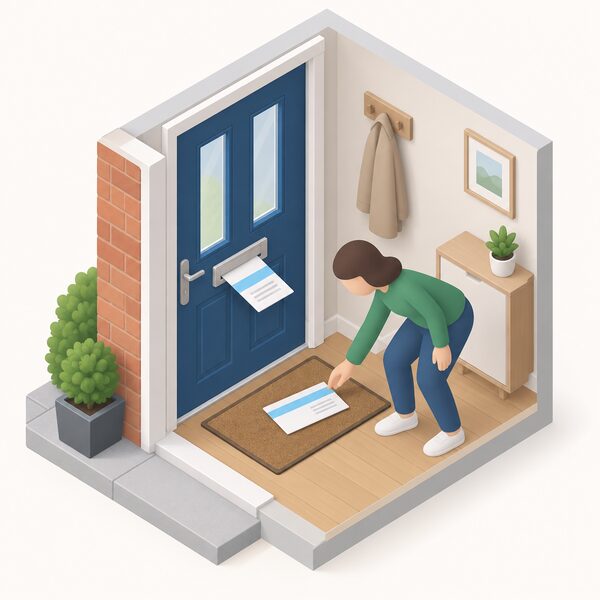
When a fixed rate tariff expires, the supplier moves the household to the standard variable tariff, which is typically higher than fixed rates19. The supplier will automatically move you onto this tariff when the fixed deal has ended, and should remind you when the contract is about to end20. Customers can be put on a default tariff if their fixed-term contract ends and they have not shopped around to choose a new one21.
That automatic move is the point at which the cap becomes relevant again. A household coming off a fixed deal lands on a default tariff, and the cap then applies to it. If the fixed tariff has already ended, the household can still switch supplier or tariff20. There is no lock-in once the contract has run its course.
If a supplier fails, the household's supply continues and the account is moved to a new supplier under Ofgem's safety net arrangements. The tariff the household ends up on is a default tariff, and the cap applies to it. Ofgem's supplier performance reporting covers how companies handle customers, and the regulator has formal enforcement powers including opening investigations, making orders and imposing penalties in response to non-compliance and suspected non-compliance22.
For a household, the practical point is that the cap is the backstop. Whatever happens to a supplier, a fixed contract or a switch, a household that ends up on a default tariff is covered by the cap. That is the protection the cap was built to provide, and it is why the choice between fixing and staying on the cap is a choice about price certainty rather than about safety.
Sources22 cited
- Energy price cap explained, Welsh Government, 2026
- Energy price cap, Ofgem, 2026
- Energy price cap will rise 4%, Ofgem, 2026
- Energy price cap operating cost and debt allowances decision, Ofgem, 2025
- Energy price cap methodology backwardation deadband decision, Ofgem, 2025
- Energy price cap statistics, House of Commons Library, 2026
- Energy price cap review dates, Ofgem, 2025
- Higher wholesale costs push default and pre-payment price caps, Ofgem, 2019
- Price cap decision on changes to Annex 4, Ofgem, 2022
- Review of additional wholesale costs in the default tariff cap, Ofgem, 2023
- Energy price cap legislation, Ofgem, 2018
- Energy price caps explained, Ofgem, 2020
- Default tariff cap level 1 April 2024 to 30 June 2024, Ofgem, 2024
- State of the energy market report, Ofgem, 2025
- Energy UK explains typical domestic consumption values, Energy UK, 2026
- Five top tips to cut your energy bills, Welsh Government, 2026
- Price cap decision on the process for updating the methodology, Ofgem, 2022
- Changes to the energy price cap between 1 October and 31 December 2025, Ofgem, 2025
- How to understand your electricity and gas bills, Energy Ombudsman, 2025
- Your gas or electricity supplier has put up its prices, Citizens Advice, 2026
- Default tariff cap policy consultation overview, Ofgem, 2018
- Supplier performance report July to December 2023, Ofgem, 2024
 Energy Price CapThe price cap sets the most you pay for each unit of gas and electricity, plus the daily standing charge, but not your total bill.
 Fixed-Rate Energy TariffsWhat a fixed energy tariff fixes and what it does not, the contract lengths sold in the UK, exit fees and the 49-day window, how fixed rates compare with the price cap, and what happens when the term ends.
 Fixed and Variable TariffsCompares capped standard variable tariffs with fixed deals, including exit fees, contract end and rollover.
 The Full Energy Bills and the Price Cap GuideWondering why your bill went up even when you used less power?
 How Tracker Tariffs WorkTracker tariffs move your unit rate with wholesale prices or the Ofgem price cap, so what you pay can change daily.
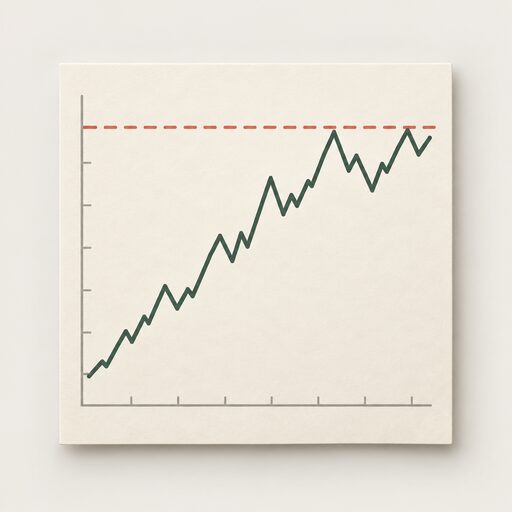 Tracker vs Price CapTracker tariffs can cost more than the price cap, so how do they compare?