
In this guide
A household's energy independence is decided less by the panels on its roof than by the contract it signs. The tariff determines what the home pays for every unit it draws from the grid, what it is paid for every unit it sends back, and how far a single supplier sits between the household and both of those flows. A home with solar and a battery can still be almost entirely dependent on the grid for winter evenings; a home with no generation at all can still cut its exposure by moving load into cheap hours.
The price cap for 1 October to 31 December 2026 is £1,723 a year for a typical dual-fuel household paying by direct debit, up from £1,663, a rise of about £601. That figure is a cap on unit rates and standing charges, not on the bill itself, and it protects only standard variable tariffs. Everything a household does to reduce its dependence, from a battery to a time-of-use tariff to an export contract, sits outside it.
The trade-off at the centre of the subject is simple to state and hard to escape. Rates for selling electricity to the grid are much lower than tariffs for using electricity from the grid, so using solar electricity in the home is much more cost-effective than exporting it2. Every tariff decision for a generating household is a decision about which side of that gap it wants to be on.

What tariffs have to do with household energy independence
Independence in this context is not a single condition. It is a set of dependencies that a tariff either widens or narrows: the grid as a physical network, a supplier as a commercial counterparty, gas as a heating fuel, and imported energy as the underlying price setter. A tariff can reduce exposure to one of these while increasing exposure to another.
The clearest example is a solar and battery tariff. It cuts the volume of electricity bought at peak rates and pays for exports, which reduces dependence on grid supply at the expensive hours. It also usually requires the household to take its import supply from the same company that pays for the export, which increases dependence on that one supplier. Energy Saving Trust notes that solar-specific tariffs usually require battery storage as well as solar panels, and that the household gets its energy from that supplier8.
Tariffs also shape how much of a household's own flexibility is worth. Demand side response could make household energy bills cheaper, according to parliamentary research9. That value only reaches the household through a tariff or a scheme that pays for it, which is why the contract matters as much as the hardware.
The range of tariffs a supplier may offer is broad:
- standard variable
- renewable
- electric vehicle
- fixed price
- prepayment10
Each carries a different relationship with the grid. A standard variable tariff tracks the market and is capped. A fixed tariff protects the household from changes in energy prices during the fixed term, which is a form of price independence but not supply independence11. A time-of-use tariff ties the household more tightly to the grid's half-hourly rhythm, but pays for doing so.
VAT on domestic energy is part of the arithmetic. Ofgem's bill breakdown includes VAT at 5%12. From 1 October 2026, VAT on domestic electricity in Great Britain falls to 0% under a UK Government decision, applied automatically by suppliers. That change does not alter the structure of any tariff, but it changes what each unit costs.
The energy price cap: what it limits and what it doesn't

The cap is widely misunderstood as a ceiling on bills. It is not. It sets the maximum amount that suppliers can charge for each unit of gas and electricity, and a maximum daily standing charge11. There are separate caps for gas and electricity, and the cap does not limit annual bills, which depend on how much energy a household uses13.
What it protects is narrower than the name suggests. The price cap protects people who are on tariffs where the unit rate can go up or down depending on the energy market, which in practice means standard variable tariffs1. Ofgem states plainly that people on this type of tariff are protected by the energy price cap14. The default tariff cap was introduced on 1 January 2019 and protects 22 million default tariff and standard variable tariff customers4. Its legal basis is the Domestic Gas and Electricity (Tariff Cap) Act 20189.
The cap does not cover fixed tariffs, business energy contracts, heat networks or heating oil1. It also does not cover green tariffs or time-of-use tariffs3. That exclusion is the hinge of the whole subject: the tariffs that do most to change a household's relationship with the grid are precisely the ones the cap leaves alone.
The cap is reviewed every three months3. Each review resets unit rates and standing charges, so a household on a standard variable tariff has its exposure repriced four times a year whether it acts or not.
The price cap level: £1,723 for a typical dual-fuel household from 1 October
The headline figure for 1 October to 31 December 2026 is £1,723 a year for a typical dual-fuel household paying by direct debit, up from £1,663 in the previous quarter, a rise of about £601. The increase is driven mainly by higher wholesale gas prices.
That figure is a modelled annual cost for a household with typical usage, not a limit any individual household will see. It is built from unit rates and standing charges, and a household that uses more or less than the typical profile will pay more or less. The cap does not limit annual bills, which depend on how much energy a household uses13.
The level has moved sharply over the cap's life. For 1 April to 30 June 2025 the cap was £1,849 for a dual-fuel direct debit typical customer, £129 or 7% lower than the preceding period10. The direction of travel between periods is set by wholesale prices, network costs and scheme costs, not by anything a household does.
For a household weighing independence, the cap level is a baseline rather than a target. It is what a passive household pays. Every tariff decision below is a decision about whether to accept that baseline or to trade some of its simplicity for a different exposure.
Unit rates and standing charges: how the cap is built up
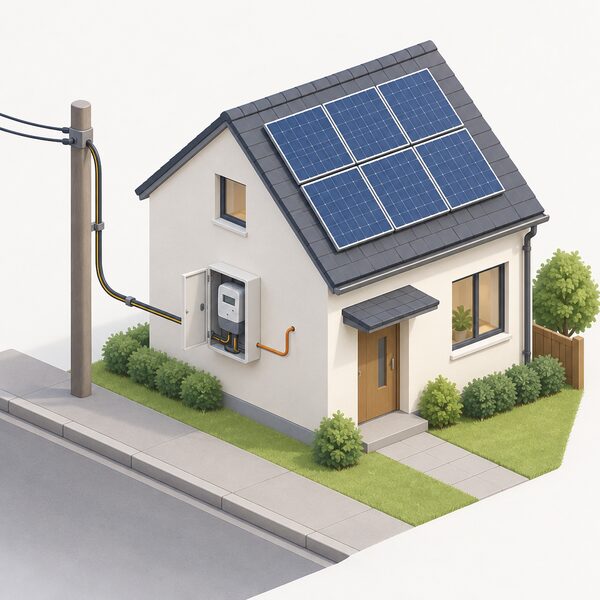
The cap is not one number. It is a maximum unit rate for gas, a maximum unit rate for electricity, and a maximum daily standing charge for each fuel. The standing charge is covered by the energy price cap, which sets a ceiling on how much suppliers can charge for it18.
Standing charges have been rising faster than unit rates in recent periods. Standing charges were set to rise by 4% for electricity and 14% for gas from October to December 202519. Part of that increase came from the expansion of the Warm Home Discount, adding a total of 7p per day to standing charges19. Ofgem attributed the wider increase to parts of the costs of transporting energy in Great Britain and costs towards government schemes and essential support20.
The composition matters for independence because standing charges are unavoidable. A household that generates all its own electricity still pays a daily charge for the connection, and a household that uses no gas at all still pays a gas standing charge if it remains on a dual-fuel supply. The unit rate is the part a household can influence through generation, storage and load shifting. The standing charge is the part it cannot.
| Component | What the cap sets | Can a household change it? |
|---|---|---|
| Gas unit rate | Maximum price per kWh11 | Yes, by using less gas |
| Electricity unit rate | Maximum price per kWh11 | Yes, by generating, storing or shifting load |
| Gas standing charge | Maximum daily charge18 | No, while the supply remains |
| Electricity standing charge | Maximum daily charge18 | No, while the connection remains |
| VAT | Applied on top at the rate in force12 | No |
Fixed, variable and time-of-use tariffs: which ones the cap protects
The cap protects standard variable tariffs and nothing else. Ofgem's guidance is explicit that the cap applies to default tariffs regardless of payment method, and does not apply to fixed, green or time-of-use tariffs3. A fixed-rate tariff protects the household from changes in energy prices during the fixed term, which is a different kind of protection: it is a private contract, not a regulatory ceiling11.
That distinction decides where the risk sits. On a standard variable tariff the household is exposed to every quarterly cap reset, but the ceiling moves with the market and the household can leave at any time. On a fixed tariff the household is protected for the term, but pays an exit fee if it leaves early, and gains nothing if the market falls. On a time-of-use tariff the household accepts full exposure to wholesale movement in exchange for the ability to buy at cheap hours.
The tariffs a supplier may offer include standard variable, renewable, electric vehicle, fixed price and prepayment10. Of these, only the standard variable tariff is capped. A renewable tariff is not capped merely because it is green, and an electric vehicle tariff is not capped merely because it is domestic.
For a household with solar and a battery, the choice is rarely between capped and uncapped in the abstract. It is between a capped default that pays nothing for exports and an uncapped specialist tariff that pays for them. The relevant comparison is the whole bill, not the unit rate.
Smart Export Guarantee: getting paid for electricity you export
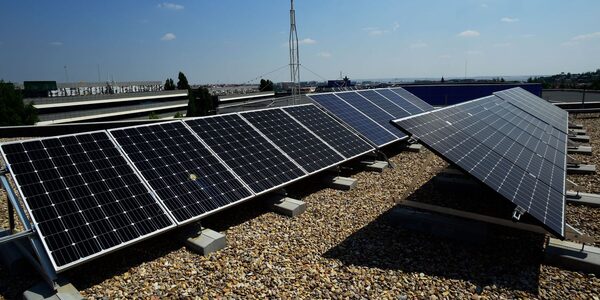
The Smart Export Guarantee requires electricity suppliers to pay small-scale generators for low-carbon electricity which they export back to the National Grid21. It enables small-scale generators to receive payments from electricity suppliers for electricity which they export back to the National Grid, providing certain criteria are met14. The scheme has required electricity suppliers to offer a tariff for power that solar and other technology generators export to the electricity grid22.
Eligible technologies and conditions:
- Solar photovoltaics, wind, micro-combined heat and power, hydropower and anaerobic digestion
- Capacity up to 5 megawatts, or up to 50 kW for micro-CHP
- Installations must be located in Great Britain23
- A household may be eligible with solar PV panels, a wind turbine, hydro, anaerobic digestion or micro-CHP24
Two conditions do most of the work in practice. The installation must have an export MPAN to manage exported electricity volumes to the SEG licensee25. And the household must be able to measure the electricity generated, and exported if applicable, separately from all other sources to receive generation payments and, if metered, export payments26.
SEG tariffs typically offer a fixed rate for every unit of electricity that you sell back to the grid8. That simplicity is the point: the household knows what each exported unit is worth. The limitation is equally simple. Rates for selling electricity to the grid are much lower than tariffs for using electricity from the grid, so using solar electricity yourself is much more cost-effective2.
Octopus Flux: a three-rate tariff for solar and battery owners
Octopus Flux is a solar and battery tariff supplied by Octopus5. It is one of a small group of tariffs that combine an export rate with a time-of-use import rate, and it is the clearest illustration of how a tariff can tie a household's equipment, export payments and import supply to one company.
The related Intelligent Octopus Flux is a two-rate tariff with matching import and export prices, with automated battery management charging when power is cheapest and exporting between 4pm and 7pm6. The Intelligent Octopus Flux Export tariff was available to customers on the Intelligent Flux import tariff, who had solar PV and battery storage but also allowed Octopus to control their battery exports22.
The export rates are the headline. Intelligent Octopus Flux paid 23p per kWh to Octopus customers who have solar panels and a battery6. In the Smart Export Guarantee annual report for Year 5, Octopus Energy's Intelligent Octopus Flux Export tariff offered the second highest rate available, averaging 27p/kWh22. The two figures are from different periods and different measurement bases, and they do not reconcile to a single rate.
For comparison, Outgoing Octopus pays a typical 12p per kWh with no fixed end date, and requires the household to take its import supply from Octopus5. A separate Octopus SEG tariff pays a typical 4.1p per kWh5. Outgoing Octopus Agile paid an average of 9.09p, based on real-time energy pricing varying every half hour, to Octopus Energy customers with solar panels6.
| Tariff | Export rate | Structure | Import requirement |
|---|---|---|---|
| Intelligent Octopus Flux | 23p per kWh6 | Two-rate, automated battery management, export 4pm to 7pm6 | Intelligent Flux import tariff22 |
| Intelligent Octopus Flux Export (SEG Year 5 average) | 27p per kWh average22 | Export tariff for Intelligent Flux customers22 | Intelligent Flux import tariff22 |
| Outgoing Octopus | 12p per kWh typical5 | Fixed, no fixed end date5 | Octopus import supply required5 |
| Outgoing Octopus Agile | 9.09p average6 | Half-hourly real-time pricing6 | Octopus Energy customer6 |
| Octopus SEG tariff | 4.1p per kWh typical5 | Fixed, no fixed end date5 | Octopus import supply required5 |
Flux eligibility: solar, battery, smart meter and Export MPAN requirements
Flux is not open to every household. The eligibility conditions stack, and each one narrows the pool.
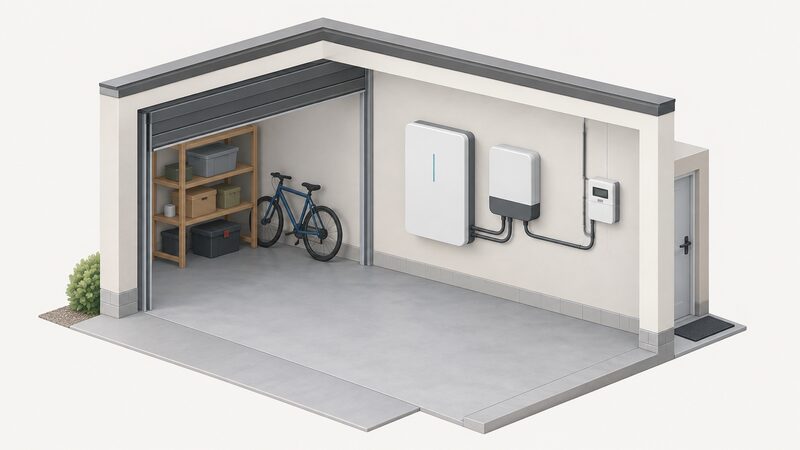
- Generation and storage. You need solar panels and a battery to get this8. Solar-specific tariffs usually require battery storage as well as solar panels, and the household to get its energy from that supplier27. A household with panels but no battery does not qualify.
- Smart metering. A smart meter is needed to sign up to most, if not all, electric vehicle tariffs, because suppliers need to be certain when electricity is being used28. The same logic applies to any tariff that prices by time of day. Suppliers are required to offer smart meters to all households and small businesses by the end of 2030.
- Export metering. An eligible installation must have an export MPAN to manage exported electricity volumes to the SEG licensee25. Without it, exported volumes cannot be settled and the export side of the tariff cannot be paid.
- The import relationship. Flux requires the household to take its import supply from Octopus5. That is the lock-in: the export rate is only available alongside the import contract.
Charging and discharging around Flux's rate periods
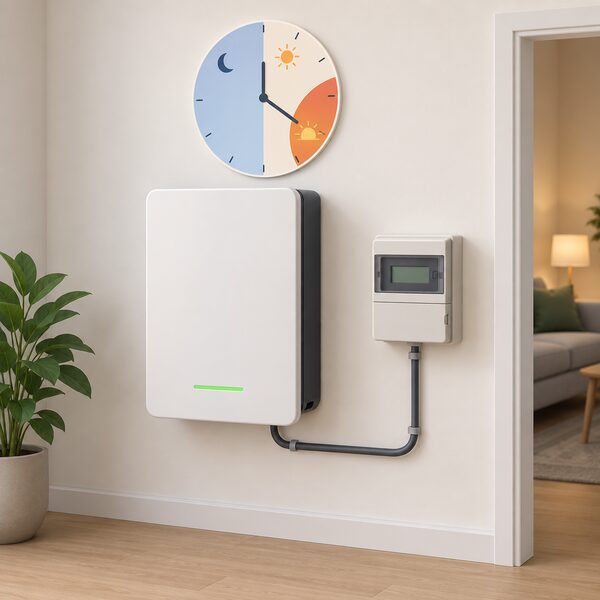
Time-of-use tariffs offer different electricity prices based on peak and off-peak times29. Dynamic tariffs go further and charge a different amount every half-hour based on what it costs to generate electricity at that time8. Flux sits in the first category, with defined periods rather than half-hourly wholesale pricing.
The economics of a battery on such a tariff come from the spread between the cheap charging period and the expensive discharging period. Intelligent Octopus Flux automates this, charging the battery when power is cheapest and exporting between 4pm and 7pm6. The household does not have to act; the supplier controls the battery.
That automation is the trade. The household gains a wider spread than it could capture manually, and gives up control of when its battery charges and discharges. For a household whose independence is measured in control over its own equipment, that is a real cost, not a technicality.
For a battery without solar, Energy Saving Trust's guidance is that the household is best off with either a dynamic tariff or Economy 78. For solar and battery together, the recommended options are a dedicated solar and battery tariff, or a good SEG tariff matched with a dynamic import tariff or an Economy 7 tariff8. Those are the three shapes the market offers, and they differ mainly in how much of the optimisation is done by the supplier.
How tariffs shape the economics of solar, batteries and flexibility
The governing fact is the gap between import and export prices. Rates for selling electricity to the grid are much lower than tariffs for using electricity from the grid, so using solar electricity yourself is much more cost-effective2. Every unit a household consumes from its own roof avoids an import at the full unit rate. Every unit it exports earns the export rate, which is a fraction of that.
That gap is why self-consumption beats export, and why a battery changes the arithmetic. A battery lets a household store midday generation and use it in the evening, converting an export-rate unit into an avoided import-rate unit. It also lets the household buy at cheap hours and avoid peak hours, which is a separate gain available even without generation.
Solar-specific tariffs usually combine an export tariff with a smart time-of-use tariff, with different electricity prices based on peak and off-peak times27. Solar and battery tariffs offer different rates at different times of day, both for buying electricity and for selling it back to the grid8. The household is therefore exposed to two price signals at once, and the value of its battery depends on both.
The dependence that remains is worth stating plainly. A household on any of these tariffs still relies on the grid for every unit it does not generate or store, on a supplier for the contract and the settlement, and on the wholesale market for the price of both import and export. A battery shifts when electricity is bought, not whether the household is connected. And a tariff that ties export to import supply concentrates the commercial relationship in one company.
VAT is the one part of the picture with a dated change. Electrical batteries installed as part of the installation of a qualifying energy-saving material are reduced rated after 31 March 20277. In practice, qualifying standalone battery installations revert to 5% VAT from 1 April 2027 under current rules. The temporary zero rate applies to the qualifying installation, not to every battery sold on its own.
Sources29 cited
- Energy price cap, Ofgem
- Solar panel installation, Energy Saving Trust
- Energy price cap explained, Welsh Government Climate Action
- Energy price cap operating cost and debt allowances decision overview, Ofgem, 2025
- Smart Export Guarantee rates: the best and worst SEG tariffs, Which?, 2026
- Smart Export Guarantee Annual Report Year 5, Ofgem, 2025
- VAT energy saving materials and grant funded heating supplies, HM Revenue and Customs
- Tariffs for renewable technology, Energy Saving Trust
- Energy price cap methodology: backwardation deadband decision, Ofgem, 2025
- Summary of changes to energy price cap 1 July to 30 September 2025, Ofgem, 2025
- Best deal energy, Home Energy Scotland
- How your electricity or gas bill is calculated, Ofgem
- Energy price cap research briefing, House of Commons Library
- Smart Export Guarantee: generators, Ofgem
- Feed-in Tariffs scheme closure, Ofgem
- How your electricity or gas bill is calculated, Ofgem
- Understand your electricity and gas bills, Ofgem
- Energy Price Guarantee up until 30 June 2023, UK Government
- Current gas and electricity prices, Centre for Sustainable Energy
- Energy price cap will rise 2 percent in October, Ofgem, 2025
- Changes to energy price cap between 1 October and 31 December 2025, Ofgem, 2025
- Feed-in Tariffs: generators, Ofgem
- Smart Export Guarantee research briefing, House of Commons Library
- Smart Export Guarantee eligibility research briefing, House of Commons Library
- Energy incentives and schemes, South Cambridgeshire District Council
- Draft licence conditions, Department for Business, Energy and Industrial Strategy
- Solar panels, London Borough of Hammersmith and Fulham
- Octopus EV energy tariffs, Uswitch, 2025
- Energy price cap will rise 64 percent in April, Ofgem
 Solar and Battery Import TariffsWhat does a special import tariff actually get you when you have solar panels or a home battery?
 The Full Tariffs GuideWhich energy tariff suits how you live, and will switching really save you money?
 Export Rates Per kWhHow much will your supplier pay you for the solar power you send to the grid, and why do rates vary so much from one company to another?
 Batteries and Smart TariffsA home battery can earn its keep if your electricity prices change through the day.
 Supplier-Controlled ChargingSmart charging tariffs let your energy supplier decide when your car charges, usually overnight when electricity is cheaper.
 Energy Bills and IndependenceSolar panels can cut the part of your bill that goes up with every unit you use, but you still pay a daily standing charge just for being connected to the grid.