
In this answer
Short answer
A home battery is the piece of equipment that turns a time-of-use tariff from a modest saving into a substantial one. The pairing works because the battery can be charged during the cheap windows and discharged during the expensive ones, so the household buys most of its electricity at the lowest rate on offer and avoids the peak rate almost entirely. Independent guidance puts it plainly: a battery can be charged during off-peak hours at the lowest rate and the energy used during the peak-rate period to minimise the electricity bill1.
The scale of the gain depends on how much load the battery can shift. Energy UK's analysis of clean heat support puts the annual saving from a battery on a time-of-use tariff at £130, and finds that a combination of a heat pump, solar and a battery can save households £810 more per year when operated flexibly than the same assets on a single-rate tariff2. Households installing packages of measures including a battery, a heat pump and rooftop solar with a time-of-use tariff can save up to 64% on their energy bills2.
The conditions matter as much as the arithmetic. A smart meter is required, some tariffs are restricted to homes with particular equipment, and a household that cannot move its usage away from peak hours may pay more rather than less. What follows sets out how the pairing works, what it saves, how charging is scheduled, and where the gains fall short.
What a time-of-use tariff is and who qualifies
A time-of-use tariff is a pricing scheme where the cost of electricity varies at different times of the day, encouraging consumers to shift their usage to periods of lower demand and lower prices6. The parliamentary briefing note defines it more tightly as a plan where the price of a unit of energy varies during a 24 hour period7. In practice the structure is a cheaper overnight charging window and one or more dearer daytime windows, with the exact hours set by the supplier8.
Qualification is mostly about metering. A smart meter is needed to sign up to a time-of-use tariff, and to get all the benefits from new flexible energy tariffs9. For the newest flexible products the meter must be set to send readings every half an hour, because the supplier has to bill a different rate for each half-hourly window9. These tariffs use the smart meter to log electricity use and charge different rates during different time windows10. Access to time-of-use tariffs means cheaper rates during off-peak hours and incentives for energy usage on high-supply days11.
Beyond metering, eligibility is product-specific. Some tariffs are only available if certain equipment is installed, such as an EV charger or solar panels12. EV tariffs commonly require the household to own or lease an electric vehicle13. Others are open to any home with a suitable meter. Households with an EV, heat pump or home battery are the ones for whom smart tariffs are much more valuable, because those are the loads that can be moved14.
The practical test is whether the household can shift load at all. If most energy is used during peak times and cannot be moved, a time-of-use tariff could cost a little more14. Time-of-use tariffs will not be appropriate for all consumers, and there will always be some people who need to use energy at peak times15.
A battery charges off-peak and powers the house at peak
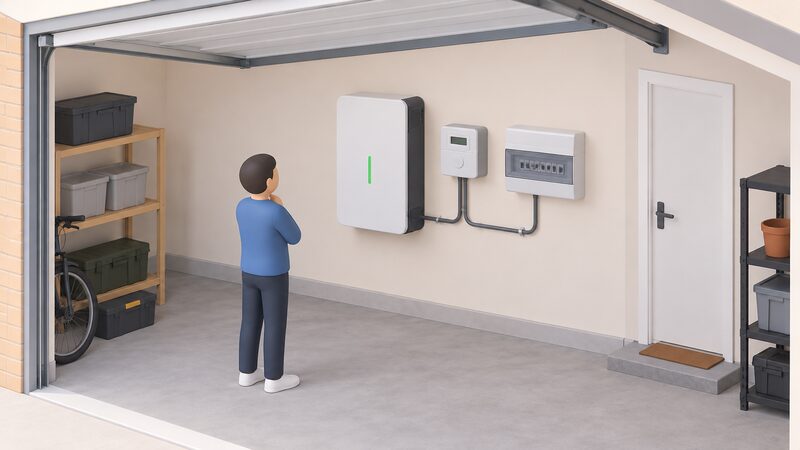
The pairing is a straightforward arbitrage. The battery stores excess solar electricity or charges when the tariff is cheap, and the stored energy is then used at night or when prices are high16. Dedicated smart storage battery tariffs typically have cheaper rates overnight so the battery can be charged and the power used during the day when it would be dearer to buy17. The household is buying the same units of electricity, but buying them in the cheap window and holding them until the expensive one.
The behaviour shows up in measured data. Battery-equipped homes in the Living Lab study show strong overnight charging peaks across autumn, winter and spring, consistent with energy arbitrage behaviour on time-of-use tariffs18. Electric vehicles in the same homes show peak charging between midnight and 6am, consistent with behaviour optimising for current time-of-use tariffs18. The pattern is not theoretical: households with the equipment and the tariff do shift their consumption into the cheap window.
Discharge is automatic on a well-set system. With a battery and no solar panels, charging stops when the battery is full and the battery discharges when the next cheap tariff period ends16. Battery storage can charge at lower electricity prices overnight or during certain times during the day and discharge at peak hours during the day19. The peak hours in question are typically 4pm to 8pm3.
Savings potential: why the battery unlocks the cheapest rates
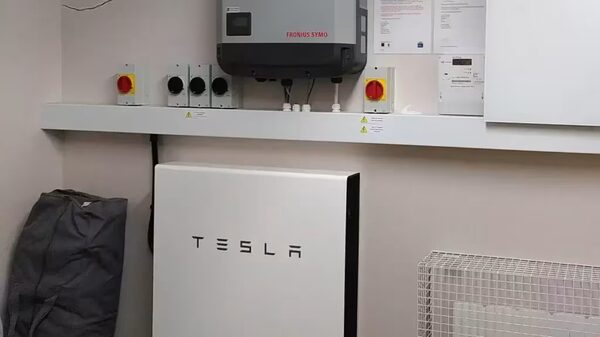
The battery is what makes the cheapest rates usable. Without storage, a household can only consume cheap electricity at the moment it is cheap, which means running appliances overnight. With storage, cheap electricity can be bought in bulk and used later, even during peak times, which can significantly increase savings14. That is the mechanism behind every figure in this section.
Energy UK's clean heat analysis gives the headline numbers. A battery on a time-of-use tariff saves £130 a year2. A combination of a heat pump, solar and a battery saves households £810 more per year when operated flexibly than the same assets not operating flexibly on a single-rate tariff2. Households installing packages of measures such as a battery, a heat pump and rooftop solar with a time-of-use tariff can save up to 64% on their energy bills2. These are modelled package figures rather than a guaranteed return on a single product, and the £810 figure is explicitly a comparison against the same equipment run inflexibly.
The solar case adds a second saving. A home battery captures surplus solar energy for later use, including overnight EV charging, whereas without it unused solar electricity is wasted or exported to the grid, often at a relatively low rate20. The battery therefore avoids buying peak-rate electricity and avoids exporting generation at a low export rate at the same time.
The tax position favours home charging. Off-peak home electricity is taxed at 5% VAT, compared to 20% VAT on public chargers5. On Economy 10, the price of electricity during off-peak hours could fall by up to half of the average rate4. The size of the discount varies by product, so the rate card for the specific tariff is the figure that determines the return.
"You can store cheap electricity when prices are low and use it later, even during peak times. This can significantly increase your savings"
Setting up scheduled charging on the cheapest windows
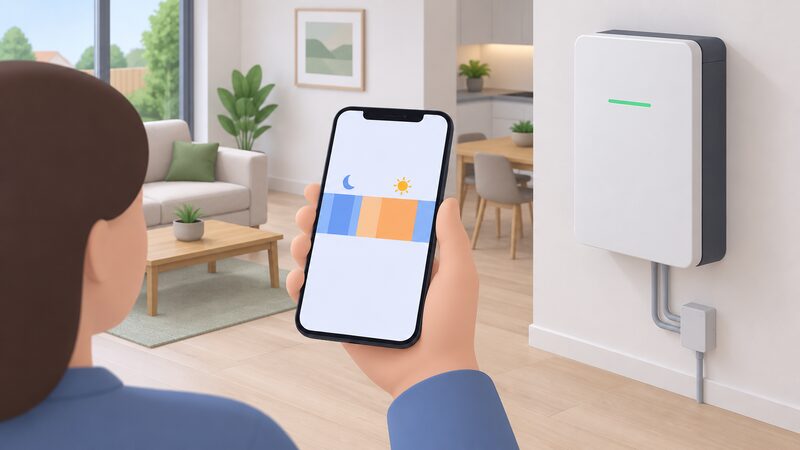
Scheduling is a matter of telling the battery or its control software which windows are cheap. Some energy providers offer smart charging tariffs that make it cheaper to use electricity at night, or at times of low electricity demand21. A battery can be charged with cheap electricity from the supplier, typically on certain tariffs at night or in the middle of the day22. The windows are set by the tariff, not by the household, so the schedule has to follow the rate card.
Where a charger or battery is controlled by an app, the optimisation is usually automatic. Zapmap's smart charging product charges an EV at the cheapest time based on the existing tariff and preferences23. The same logic applies to a battery: the control system reads the tariff windows and moves the charge into them. For a battery with no solar, the sequence is charge when cheap, stop when full, discharge when the cheap period ends16.
A practical order of work looks like this:
- Confirm the meter is a smart meter sending half-hourly readings, which the newest flexible tariffs require9.
- Check whether the chosen tariff is compatible with the battery, since some only work with specific systems17.
- Enter the tariff's cheap windows into the battery or inverter settings, or enable the supplier's or maker's optimisation if one is offered23.
- Check the discharge behaviour, so the battery empties into the peak window rather than sitting full16.
- Review the first full bill against the previous one, since the saving depends on how much load actually moved14.
Where the gains fall short
The limits are real and worth stating as firmly as the benefits. The comparison tools needed to assess tariffs, particularly where households combine multiple technologies such as heat pumps, solar panels and battery storage, are not yet available24. A household running all three has to work out the best combination without a like-for-like comparison.
Eligibility narrows the field further. Some tariffs are only available with certain equipment such as an EV charger or solar panels12, and EV tariffs require the household to own or lease an electric vehicle13. Compatibility runs the other way too: some smart storage battery tariffs only work with specific systems, so the tariff and the battery have to be checked against each other before signing up17.
The bill effect can be negative. Where heating patterns are not well aligned to the tariff, time-of-use tariffs can increase fuel bills25. If most energy is used during peak times and cannot be shifted, a time-of-use tariff could cost a little more14. Time-of-use tariffs will not be appropriate for all consumers15. Some homeowners may need the reassurance of risk-free trial periods with mechanisms to prevent accidentally incurring much higher bills26.
Two consumer protections are worth knowing. Time-of-use tariffs are not compulsory and a supplier cannot switch a household's tariff without the household knowing27. Tariffs with no standing charges are best suited to households that use little gas or electricity, and to properties left empty for long periods such as holiday homes28, which is a different proposition from a battery-led tariff.
On cost, the battery itself is the main outlay and prices are installer-quoted rather than published, so no range is given here. The VAT treatment of a combined installation is settled: where solar panels and a battery are installed together under the same contract, this falls to be a single supply of an installation of solar panels with ancillary battery, which qualifies for the relief29. For households weighing the tariff side alone, the options are set out in the guide to time-of-use electricity tariffs and the wider energy tariffs reference.
Solar, batteries and tariff choice together

Home battery storage is usually used in combination with solar panels or a smart time-of-use tariff, or both16. Where solar is present, the tariff options widen. A dedicated solar and battery tariff, designed for the combination, is one route; a good Smart Export Guarantee tariff matched with a dynamic import tariff or an Economy 7 tariff is another30. The choice between them turns on how much of the generation is used on site and how much is exported.
The VAT position supports installing the two together rather than separately. A single supply of an installation of solar panels with ancillary battery under the same contract qualifies for the relief29. That is a treatment of the contract, not a recommendation about the equipment.
The independence question is worth being precise about. A battery and a time-of-use tariff reduce the amount of electricity bought at the most expensive hours and increase the share bought at the cheapest, but the household remains connected to the grid and dependent on a supplier for the cheap-rate units. The battery does not generate anything on its own. What it does is move the household's demand into windows when the system is under least strain, which is why the same equipment is described as flexibility: the household is paid or rewarded for shifting load rather than for generating31. Where solar is also installed, part of the supply becomes self-generated, and the battery extends how much of that generation is used on site rather than exported20.
Brands and compatibility
Compatibility between tariff and battery is the practical constraint, and it is set by the supplier and the manufacturer rather than by any standard. Some smart storage battery tariffs only work with specific systems17. The check is therefore two-way: whether the tariff accepts the battery, and whether the battery's control software can be scheduled against the tariff's windows.
The Moixa Smart Battery (AC) is one product with a documented arrangement. Moixa will pay £50 per year to trade excess power stored in the battery using web-connected GridShare32. That is the only scheduling and trading detail available here. Moixa's current trading status is not established by the material on this page, so the arrangement should be verified with the company before it is relied on, and no warranty should be treated as dependable without that check.
For other makes, the position is the same in principle: the battery needs a control system that can be told when to charge and when to discharge, and the tariff needs to accept that battery. Households comparing products should ask both questions before committing, and should treat any claim that a battery works with every tariff as unverified.
Sources32 cited
- Energy glossary, Low Carbon Hub
- Clean heat: supporting low-income households, Energy UK, 2026-06-11
- Battery storage, Centre for Sustainable Energy, 2025-10
- What is Economy 10, Energy Helpline, 2026-09-20
- How to charge an electric car with no driveway, Carwow, 2025-07-18
- Time-of-use tariffs explained, Which?, 2026-08-05
- POST note on energy pricing, UK Parliament, 2026-09-17
- EV tariffs and home charging: what consumers need to know, Energy Ombudsman, 2026-09-11
- Energy flexibility, Smart Energy GB, 2026-08-17
- Five top tips from Which? to cut your energy bills, Welsh Government Climate Action, 2026-03-18
- Smart meters, Welsh Government Climate Action, 2026
- Time of use tariffs: all you need to know, Energy Saving Trust, 2026-05-20
- Electric cars and energy bills, Uswitch, 2026-04-27
- Should I switch to a time-of-use tariff, Energy Saving Trust, 2026-01-23
- Time-of-use tariffs: the benefits, Smart Energy GB, 2026-04-24
- Battery storage, Energy Saving Trust, 2026-08-19
- Solar panel battery storage, Which?, 2026-04-23
- Grid impacts of heat pumps, EVs and solar revealed, Energy Systems Catapult, 2025-08-18
- Smart meters, MCS Certified, 2026-07-24
- Can solar panels charge electric cars?, The CPA, 2026-04-15
- EV charger installation and maintenance, NICEIC, 2025-08
- Battery storage, Home Energy Scotland, 2026-09-20
- Smart charging, Zapmap, 2026
- Supporting households with low carbon technology combinations, Energy Saving Trust, 2026-07-15
- Heat pump transition report, UK Government, 2026-05
- Beyond affordability: why heat pumps feel like a gamble, Which?, 2026-06-16
- Do smart meters cost more, Smart Energy GB, 2026-03-16
- Gas and electricity standing charges, Confused.com, 2026-07-06
- VAT on energy saving materials and grant funded heating supplies, HM Revenue and Customs, 2026-09-17
- Tariffs for renewable technology, Energy Saving Trust, 2026-08-12
- Smart homes, lower carbon footprint, Energy Saving Trust, 2026-01-21
- Types of energy tariff, Confused.com, 2025-11-03
 Batteries and Smart TariffsA home battery can earn its keep if your electricity prices change through the day.
 Time-of-Use Tariffs ExplainedCan you pay less for electricity by using it at different times of day?
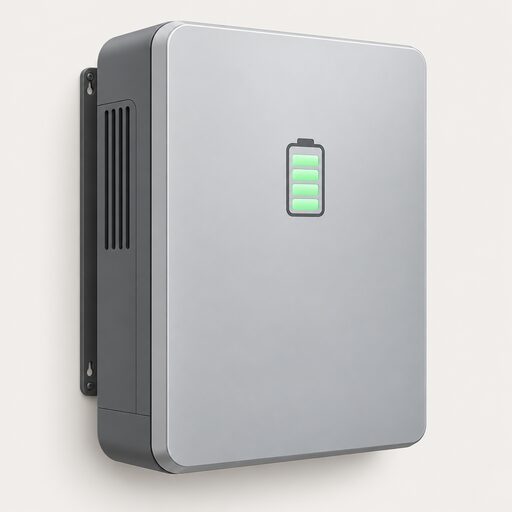 The Full Home Batteries GuideA home battery stores cheap or solar power for later, but will it really cut your bills enough to be worth it?
 Payback and SavingsHow long until a home battery pays for itself, and why do quoted payback times vary so much?
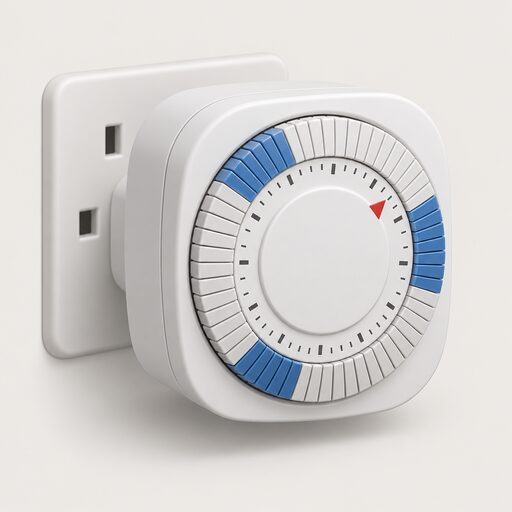 Controls and Time-of-Use TariffsCheaper electricity at night only saves money if your heating actually uses it then.
 What Size Battery?How much electricity does your home use in a day, and how much of that falls in the hours when power is cheap or your solar panels are generating?