In this guide
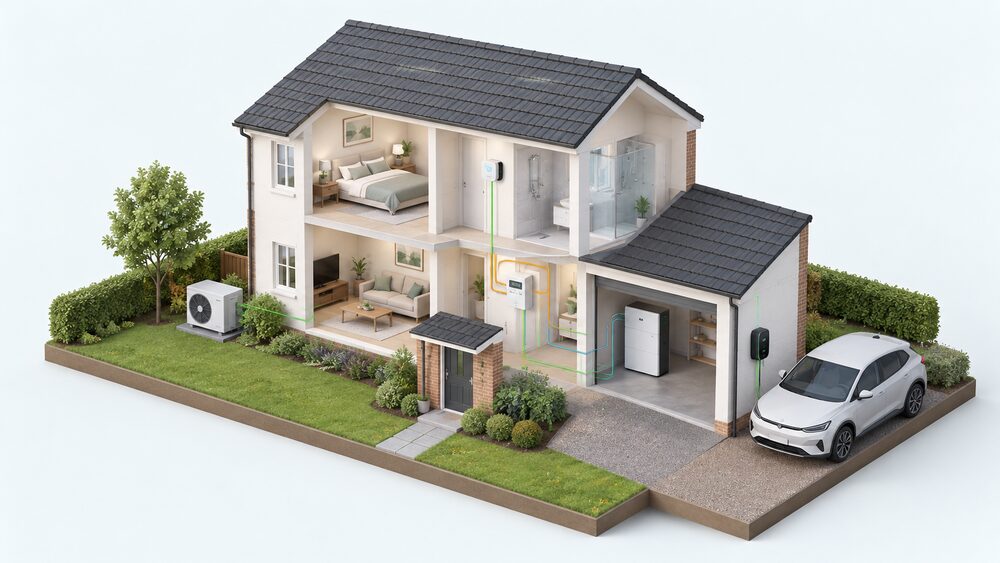
An energy smart appliance is an appliance, such as an electric vehicle charging point or a heat pump, that is capable of increasing or reducing its electricity demand in response to signals received remotely from a third party1. That definition, used across government and parliamentary briefing material, is the whole idea in one sentence: the appliance is not just efficient, it is responsive. It can be told, by a signal rather than by a person, to use more power, less power, or the same power at a different time2.
The distinction that matters for a household is between supplier-led control and local automation. A supplier, an aggregator or a network operator adjusting your appliance is remote load control, and it can only happen with your consent1. A smart thermostat running a schedule you set, or a battery charging itself when your own solar panels are generating, is local automation, and it needs nobody's permission but yours. Both count as flexibility, and both depend on the same underlying plumbing: a smart meter, a communications network, and an appliance that can be addressed.
The regulatory framework is still being built. The Energy Bill would allow regulations to be created for energy smart appliances and require load controllers to have a licence1, and those regulations would cover cyber security, data privacy, interoperability and grid stability3. Ofgem has already published load control consumer protection guidance setting out what flexibility service providers must do, including obtaining explicit permission from customers to use their appliance for load control4. For a household, the practical position today is that remote control is opt-in, and the protections around it are being written now.
What an energy smart appliance is
The parliamentary definition is deliberately broad. An energy smart appliance is an internet-connected appliance that can adjust its electricity usage automatically based on signals received remotely3. The earlier formulation, used in the Energy Bill material, describes an appliance capable of increasing or reducing its electricity demand in response to signals received remotely from a third party1. Both point at the same three ingredients: a network connection, an ability to modulate demand, and a signal from outside the home.
That third ingredient is what separates an energy smart appliance from an efficient one. A well-insulated cylinder or an A-rated fridge reduces consumption; an energy smart appliance shifts or shapes it. Ofgem's ECO4 guidance describes smart technologies as those that can communicate in real time to respond to price signals and provide flexibility to the energy system by increasing, decreasing or shifting the timing of energy consumption or generation9. The value to the system is timing, not just volume.
A related but distinct category is the smart diverter, which automatically diverts electricity generated by one or more energy-saving materials to electrical appliances in the accommodation or building10. A diverter is not responding to a third-party signal; it is responding to your own generation. It sits at the local-automation end of the spectrum, and it is treated separately in scheme rules.
The cost of building this capability is not expected to land on households. Government analysis of the secondary legislation stage concluded that the burden is expected to fall mostly on manufacturers, which are typically large businesses11. That matters for how the rules are likely to be shaped: the compliance obligation sits with the companies placing appliances on the market, not with the person who buys one.
Which appliances count: EV charge points, heat pumps, batteries and smart thermostats
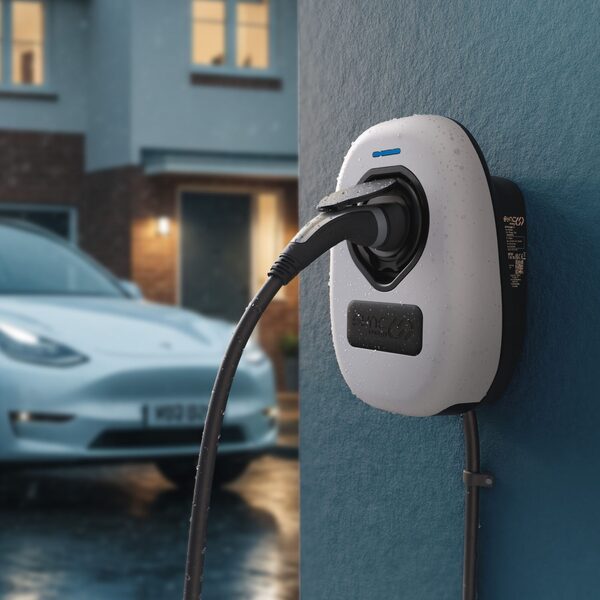
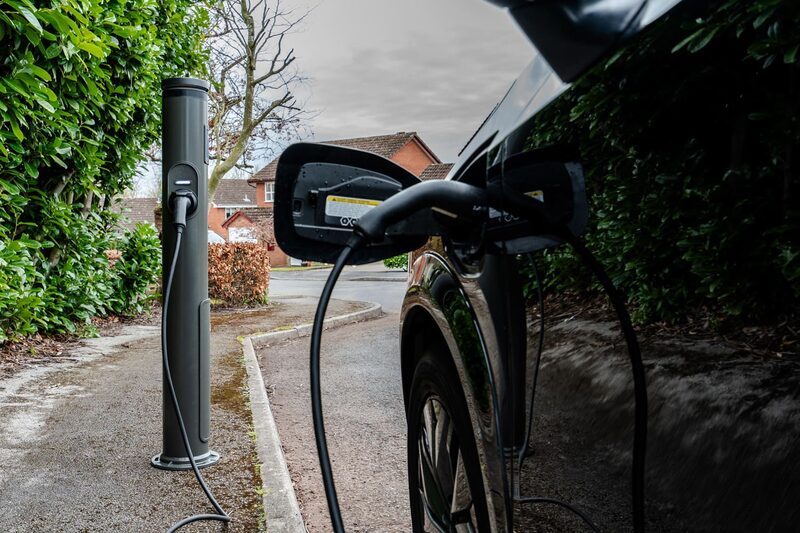
The scope of the load control regime is set out in Ofgem's guidance and in the government consultation on draft licence regulations. Domestic-scale flexibility is described as covering domestic electric vehicle charge points, heat pumps and battery energy storage systems5. The licence conditions go further and list the appliances in scope: privately owned EVs; Electric Vehicle Smart Charge Points, excluding public and rapid charge points; relevant heat pumps, storage heaters, relevant heat batteries, hot water heat pumps, standalone direct electric hot water cylinders and hybrid heat pumps; smart battery energy storage systems; and, where appropriate, ancillary devices such as smart switches4.
That list is worth reading carefully, because it shows where the regulatory attention is concentrated. The appliances in scope are the large, flexible electrical loads: the ones that can draw several kilowatts and can be moved in time without anyone noticing. A hot water cylinder heated at 2am instead of 6pm is functionally identical to the householder. A car charged overnight is ready either way.
| Appliance | In scope for load control | Why it is flexible |
|---|---|---|
| EV charge point | Yes, private and smart charge points, not public or rapid4 | Charging can shift by hours |
| Heat pump | Yes, including hybrid and hot water heat pumps4 | Thermal storage in the fabric and cylinder |
| Battery storage | Yes, smart battery energy storage systems4 | Charge and discharge can be timed |
| Storage heater | Yes4 | Heat stored in the unit itself |
| Smart switch | Where appropriate, as an ancillary device4 | Switches smaller loads on and off |
| Smart thermostat | Listed as a smart technology in ECO49 | Shifts heating demand by schedule |
Smart thermostats sit slightly differently. They are not named in the load control licence list, but they are recognised as smart technology in the ECO4 guidance9, and the ECO4 measures table lists a smart thermostat as a measure type under the name Smarttherm12. In practice the thermostat is the control layer for the heat pump or boiler rather than the flexible load itself.
How automated load control works, and why consent matters
Automated load control works by putting a signal in front of an appliance that has been designed to act on it. The appliance receives the signal remotely, and adjusts its demand up or down1. The signal might come from a supplier running a time-of-use tariff, from an aggregator bundling many homes into a single block of flexible capacity, or from a network operator managing local constraints. The appliance does not need a person present; that is the point of it.
Consent is the hinge on which the whole arrangement turns. Energy smart appliances can be switched on or off remotely but only if the consumer gives consent1. Ofgem's guidance is explicit that flexibility service providers must obtain explicit permission from customers to use their ESA for load control4. Consent is not a formality buried in terms and conditions; it is the condition that makes the remote action lawful.
"FSPs must obtain explicit permission from customers to use their ESA for load control"
Data access is governed by the same principle. A household has control over who can access the energy use data from its smart meter, including how often and for what purpose, except where the data is required for regulated purposes such as billing7. So the same meter that enables a flexibility signal also carries the household's control over what is done with the resulting information.
It is worth separating this from a different power that suppliers hold. Suppliers can switch off energy supply remotely through a smart meter, but they cannot disconnect any customers without first taking all reasonable steps to help them repay their debts, and cannot cut off supply for certain vulnerable consumers1. That is a debt and safety regime, not a flexibility regime, and it operates under its own rules. A supplier can also get a warrant to enter a property and install a prepayment meter, or remotely switch an existing smart meter to prepayment mode13. These are the powers that households most often confuse with load control, and they are distinct.
Smart thermostats: the entry point to household flexibility
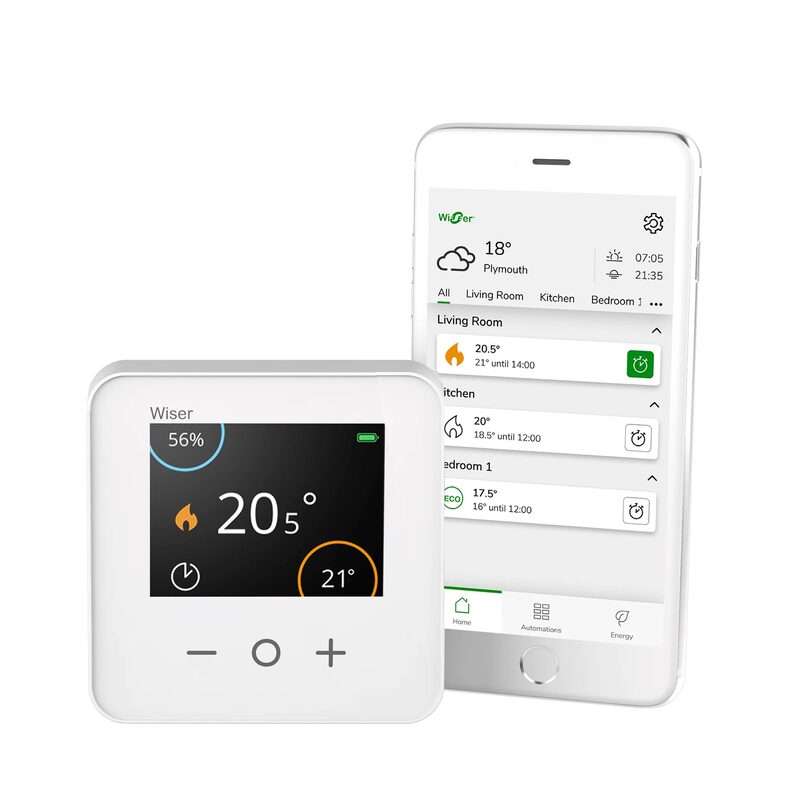
A smart thermostat is an internet-connected thermostat that gives you digital control over your home's central heating14. It connects to Wi-Fi, which allows it to form part of a more connected home heating system14. For most households it is the first piece of genuinely responsive kit in the home, because it is cheap relative to a battery or a heat pump, it needs no structural work, and it produces an immediate, visible effect on when the heating runs.
The feature set varies by model. Depending on the model, a smart thermostat may allow app control, voice control, hot water settings, location-based heating, reminders or alerts, open window detection, routine learning and heating-use tracking14. Not every unit does all of these, and the differences matter more than the marketing suggests: open window detection and location-based heating change how the boiler behaves, while heating-use tracking is a monitoring function rather than a control one.
Smart meters and smart thermostats are complementary but not the same. Smart meters integrate with smart home systems, enabling automated adjustments in response to usage patterns15. The thermostat is the device that acts on the heating; the meter is the device that measures and reports. A household can have either without the other, but the combination is what makes automated adjustment possible at the level of the whole home rather than a single room.
What a smart thermostat costs and saves: £100 to £200 to buy, around £75 a year
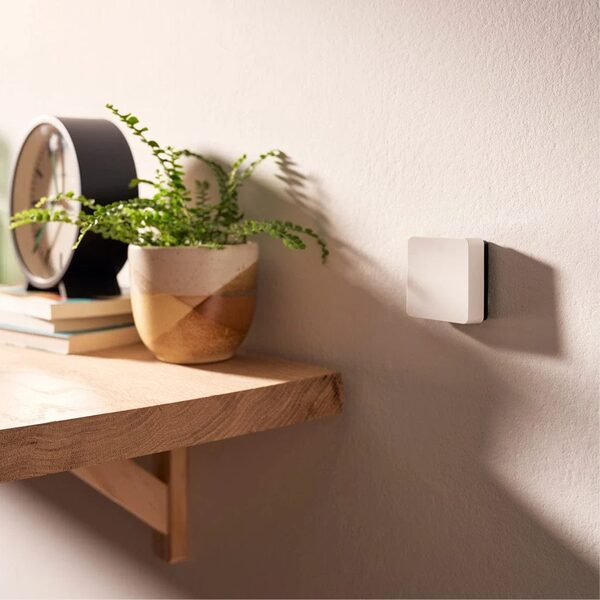
Most smart thermostats cost between £100 and £200, but some will have add-ons such as installation which push the total higher6. That is the purchase price band, and it is the figure a household should hold on to when comparing quotes. Installation is quoted separately by the installer, and no published installation price exists.
The savings picture is less settled. Sources disagree on the size of the reduction, and the disagreement is unresolved. One set of guidance puts the bill reduction at up to 23 per cent, while another gives a range of 13 to 23 per cent6. A maker's guidance gives approximately 10 to 12 per cent on heating bills, against a figure of up to 25 per cent from the same maker6.
What can be said with confidence is the mechanism. A smart thermostat reduces heating demand by not heating an empty house and by not overheating an occupied one. Location-based heating and routine learning are the features that do this work14. The saving is therefore a function of how much the previous schedule wasted, which is why the range is wide and why a well-run conventional programmer may show little difference.
Compatibility: boilers, heat pumps and voice assistants
Compatibility is the practical question that decides whether a smart thermostat is worth buying. Before buying a smart thermostat, check that it is compatible with your boiler and heating system, usually in the product description or on the thermostat manufacturer's website14. That check covers the boiler's control interface, the type of system (combi, system or regular), and whether the existing wiring supports the unit.
For specific makes, the maker's own documentation is the place to look. The Vaillant ecoTEC pro boiler range is compatible with Vaillant's complete range of intelligent controls including the new vSMART16. That is a maker's statement about its own products, and it illustrates the general pattern: manufacturers build control ecosystems around their own boilers, and a thermostat from one ecosystem may not drive another maker's boiler without additional wiring or a different control unit.
Heat pumps add a further layer. A heat pump responds to flow temperature and weather compensation rather than to a simple on/off call for heat, so the thermostat has to speak the right language to the heat pump's own controller. The load control scope includes relevant heat pumps, hybrid heat pumps and hot water heat pumps4, which means the control question is being addressed at the appliance level as well as the thermostat level.
Voice assistants are a convenience layer rather than a control layer. Voice control is one of the features a smart thermostat may offer, depending on the model14. It changes how the setpoint is adjusted, not how the heating system is wired, and it does not affect compatibility with the boiler.
Why the smart meter rollout underpins it all
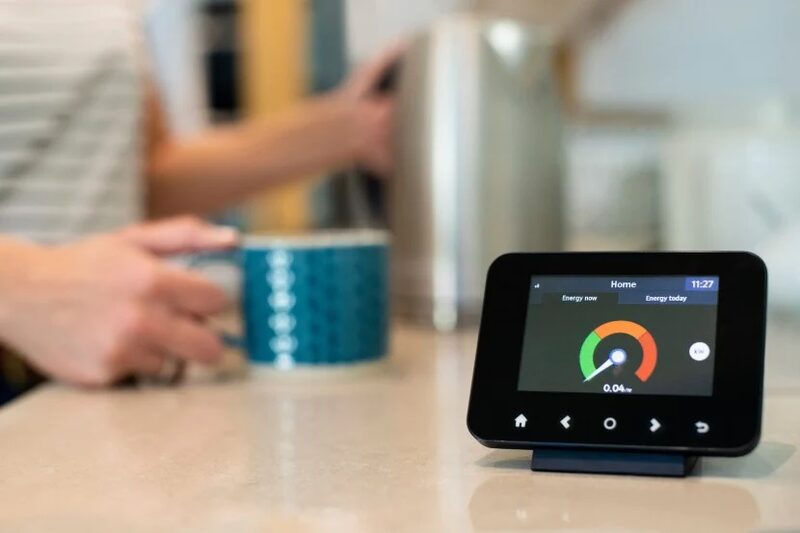
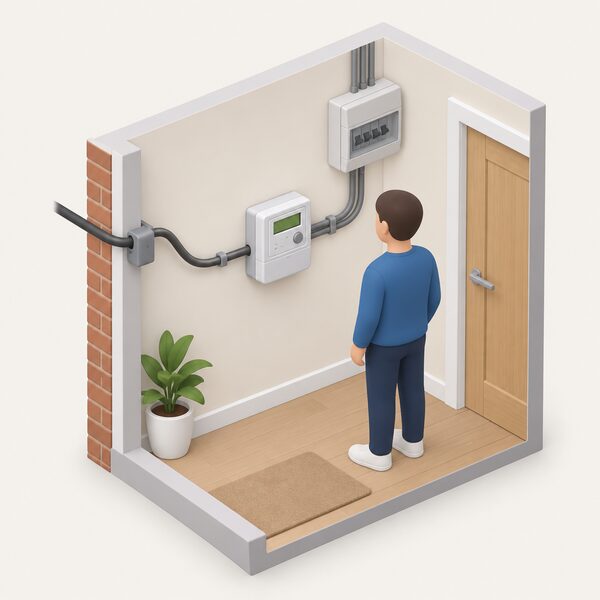
None of this works at scale without the meter. Smart meters are replacing analogue gas and electricity meters as part of the national infrastructure upgrade to improve and modernise Great Britain's energy system7. The rollout is being implemented by energy suppliers across the country, who are installing millions each year17. The meter is what gives the system a half-hourly view of what a home is using, and it is what makes a flexibility signal meaningful rather than a guess.
The rollout has a deadline attached. Under the post-2025 policy framework, suppliers are required to take all reasonable steps to install smart meters in all remaining domestic premises by the end of 20307. That target is what turns flexibility from a niche arrangement for early adopters into something a supplier can assume across its whole customer base.
The communications network underneath is also being upgraded. Smart meters will continue to operate as normal following the 3G switch-off, as smart meters will switch seamlessly to the 2G network18. The longer transition is to 4G: communications hubs using 2G or 3G, and associated metering devices as relevant, will need replacement with 4G-capable devices by the end of 20338. Government analysis has maintained a distinction between the original rollout and the technological upgrade from 2G and 3G networks to 4G, and has excluded the transition costs from the original rollout while reducing the benefits for 2034 to reflect the switch-off8.
For a household, the practical implication is that a smart meter installed today is not the end of the story. Older communications equipment will need replacing, and the meter may need attention if it stops recording energy use or stops sending readings to the supplier19. That is a maintenance question rather than a reason to avoid the technology, but it is a real one.
The flexibility market: HOMEflex and the code of conduct
The market that pays households for flexibility is still forming, and its shape is set by licence conditions and codes rather than by a single national scheme. The draft load control licence regulations and conditions are the mechanism through which the government intends to bring load controllers into the licensing regime5. Ofgem's consumer protection guidance sits alongside them, setting out what a flexibility service provider must do for the household whose appliance it controls4.
The protections that matter to a household fall into a few groups. Consent must be explicit4. Data access must be under the household's control, including how often and for what purpose, except where regulated purposes such as billing require it7. And the appliance itself must meet requirements on cyber security, data privacy, interoperability and grid stability once the regulations are made3. Interoperability is the one that determines whether an appliance bought today can participate in a scheme run by a different provider tomorrow.
Access to the tariffs that make flexibility worthwhile depends on the meter. A smart meter allows a household to access more flexible tariffs, including dual-rate tariffs19. Without one, the household can still automate locally, but it cannot be paid for shifting load in a way the supplier can see and settle.
Where it fits in household energy independence
Automated load control does something specific for a household's energy independence, and it does not do everything. What it adds is the ability to buy electricity at the times it is cheapest and to use your own generation when it is available, without being present to make the decision. A battery that charges on a cheap overnight rate, a diverter that sends surplus solar to the hot water cylinder10, a thermostat that lowers the setpoint when nobody is home14: each of these reduces the amount of energy bought at the worst moment.
Official guidance for self-build homes points in the same direction, recommending smart systems that control lighting, heating and cooling based on occupancy and time of day, alongside energy-efficient appliances and lighting such as LED bulbs21. The logic is that control and efficiency compound: a well-controlled system gets more out of the same equipment.
What remains is dependence. The appliance still needs a network connection to receive a remote signal, and that connection runs through the smart meter communications infrastructure18. A cloud app is a dependency on a manufacturer's servers, and a flexibility payment is a dependency on a supplier or aggregator continuing to run the scheme. A household that automates locally, with a diverter or a schedule held on the device, keeps more of the control in the home than one that relies entirely on remote signals. The grid connection itself does not go away; what changes is when and how much the household draws from it.
Where to get free advice: Citizens Advice

Citizens Advice offers information and support on a range of topics, including struggling to pay bills, problems with your energy supplier or energy supply, saving energy at home and getting a better energy deal22. Its free consumer service can help people in England or Wales with problems with their energy bills or supply23. The service may refer a household to the Extra Help Unit if it needs support with a difficult or urgent complaint, cannot deal with its supplier alone due to personal circumstances, is considered vulnerable, or is at risk of being disconnected from an energy supply24.
| Nation | Service and contact |
|---|---|
| England and Wales | Citizens Advice consumer service, 0808 223 1133, Monday to Friday 9am to 5pm25 |
| England and Wales | Welsh language line, 0808 223 114425 |
| England | Additional line, 0808 144 884422 |
| Northern Ireland | NI Energy Advice, free advice on saving energy, energy efficiency grants and oil buying clubs26 |
| Northern Ireland | Independent advice on solar panels, heat pumps and other energy efficiency measures27 |
| Local | Local Energy Advice Programme, free telephone advice on benefits, money and bill problems20 |
Northern Ireland sits outside the Great Britain smart metering and flexibility arrangements in several respects, and its advice landscape is separate. NI Energy Advice provides free advice on saving energy in the home, energy efficiency grants and oil buying clubs26, and homeowners are directed to seek independent advice on solar panels, heat pumps and other energy efficiency measures from organisations rather than from installers27. Consumer protection rights apply across the UK13, and where a supplier fails, Ofgem's process for customers of a failed supplier applies to those it regulates20.
Sources27 cited
- Energy smart appliances and load control, House of Commons Library, 2026-09-20
- [Energy Bill [HL] 2022-23 research briefing](https://researchbriefings.files.parliament.uk/documents/CBP-9865/CBP-9865.pdf), House of Commons Library, 2023-09-26
- Part 8 energy smart appliances and load control, House of Commons Library, 2026-09-20
- Load control consumer protection guidance, Ofgem, 2026-08-07
- Smart Secure Electricity Systems programme consultation, Department for Energy Security and Net Zero, 2025-12-10
- What are smart thermostats, Uswitch, 2026-02-05
- Smart meters: your rights and expectations, Department for Energy Security and Net Zero, 2025-08-08
- Smart Metering 2025 Costs and Benefits Report, Department for Energy Security and Net Zero, 2025
- ECO4 guidance: new measures and products, Ofgem, 2022-07-04
- VAT on energy saving materials and grant funded heating supplies, HM Revenue and Customs, 2026-09-17
- Energy Bill impact assessment, UK Parliament, 2022-07
- ECO4 measures table, Ofgem, 2025-07-29
- What happens if your energy supplier goes out of business, Ofgem, 2026
- What is a smart thermostat, Smart Energy GB, 2026-08-19
- How do smart meters reduce my bills, Smart DCC, 2025
- Vaillant ecoTEC pro, Quiet Mark, 2026-09-17
- Do you have to have a smart meter by law, Smart DCC, 2026
- Do smart meters use 3G, Smart DCC, 2024
- Get help with your smart meter, Ofgem, 2026-09-17
- Energy saving grants and funding, Tameside Council, 2026-09-17
- Self-build homes: sustainability, Planning Portal, 2026
- Getting help if you cannot afford your energy bills, Ofgem, 2026-09-17
- Complain about your energy supplier or network operator, Ofgem, 2026
- Get help with your energy bills, Ofgem, 2026-09-17
- Consumer protection rights, GOV.UK, 2026
- Cost of living and winter support, Belfast City Council, 2026-09-20
- Support to generate your own electricity, nidirect, 2025-09-22
 Meters and Energy IndependenceDo smart meters really save you money, and can you still get one fitted for free?
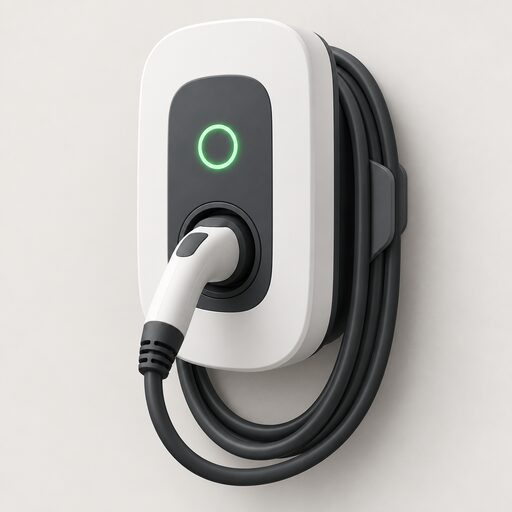 Supplier-Controlled ChargingSmart charging tariffs let your energy supplier decide when your car charges, usually overnight when electricity is cheaper.
 Local Control vs the CloudCan your solar, battery or charger still work if the maker's app or servers disappear?
 Smart Heating Security and DataHow safe is your smart thermostat from hackers, and who sees the data it collects about your heating?
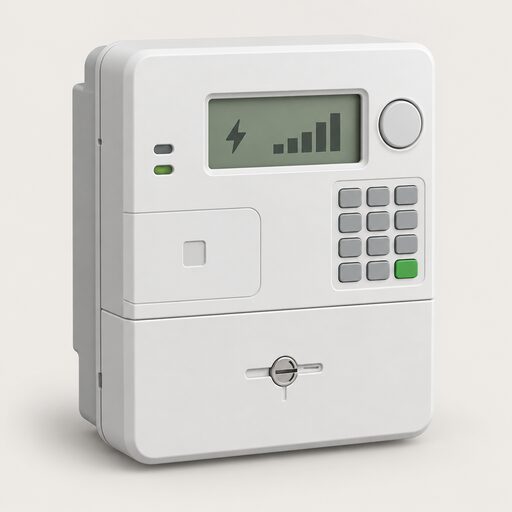 Who Owns Your Home Energy DataYour smart meter records how much gas and electricity you use, and that information belongs to you, not your supplier.
 Energy Independence and MakersWhich brands let you keep control of your heating, solar or car charging, and which tie you to their app and their cloud?