In this guide
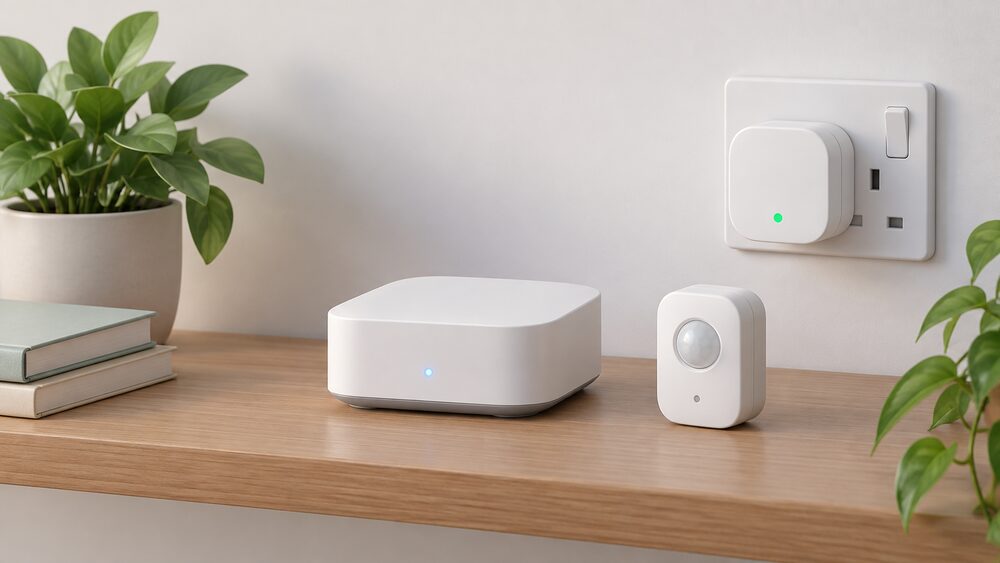
A smart home hub is the box that lets your heating, plugs, sensors and appliances talk to each other and follow a schedule, rather than each one needing its own app. For energy use, that matters because the hub is where a household turns a set of separate gadgets into something that responds to when power is cheap, when the sun is out, or when nobody is home. Home energy management can be delivered through a central hub device in the home, software in the cloud, or by smart devices coordinating directly with each other1.
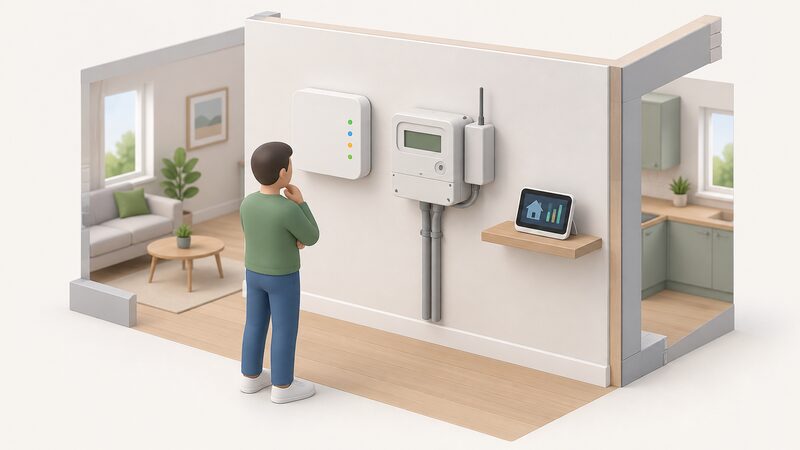
The hub is not the same thing as a smart meter. A smart meter measures the energy you use, records how much gas or electricity your home uses and sends readings to your energy supplier2. It does that without home Wi-Fi, broadband, a router or an internet package3. A hub sits alongside it, adding control: smart plugs connect to your home Wi-Fi or a smart home hub, receive commands from an app or voice assistant, and open or close an internal switch that controls whether electricity flows to the plugged-in device4.
The choice that shapes everything else is whether the hub keeps working when the internet does not. Zigbee, the mesh standard the UK Government selected for connecting devices in the home to the utility network, still works if the internet is down and does not require communication with the cloud5. Some controllers, including the Homematic IP Home Control Unit, run an offline mode in which all control commands and automation routines are stored and executed locally6. Others depend on Wi-Fi and a smartphone to function at all7.
What a smart home hub does for household energy use
A hub's energy value comes from timing and grouping. Smart meters provide real-time information about the energy use in a household, helping customers avoid wasting energy and getting estimated readings and bills11, and they let suppliers offer incentives for households who can reduce their energy use during peak hours, helping to balance supply and demand and reduce pressure on the grid12. A hub is what lets a household act on that information automatically, rather than reading a display and then walking round the house switching things off.
The distinction between the meter's own communications and a hub is worth holding on to. The communications hub fitted with a smart meter allows your smart electricity and gas meters and your in-home display to connect to each other and the DCC's smart meter home area network13, and it transmits the data to an in-home display which shows how much energy is being used or sold back to the grid14. That is a closed, regulated network. A consumer smart home hub is a separate purchase, on a separate network, doing a different job.
Where the two meet is in automation. A smart thermostat lets a household track heating, but these only allow you to track your heating, so you cannot keep an eye on your electricity and gas usage15. A hub that can read both the heating system and the meter data closes that gap. In Wales, official guidance notes that while smart meters are independent of smart heating controls, combining the two can enhance your ability to manage your home's heating and energy use remotely16. The same logic applies across the UK.
What a hub cannot do is change the fundamentals. Except by switching, you do not control the tariff your energy supplier sets, though you can change how much energy you use17. Smart meters do not alter the gas or electricity coming into the home, only how usage is measured and shared3. A hub is a control layer over consumption, not a source of energy and not a substitute for the grid.
Matter, Zigbee and other standards: which hub speaks which language
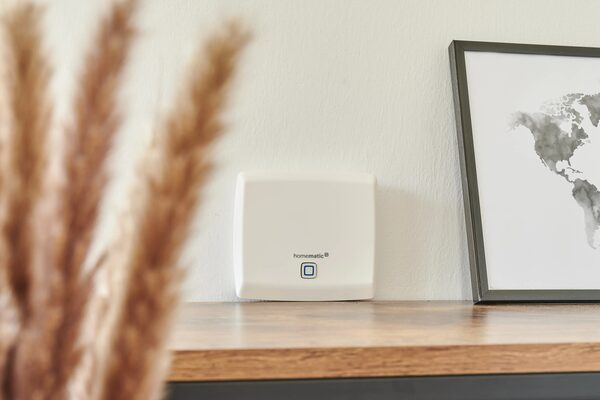
Standards decide what a hub can talk to, and the UK market runs on more than one. Matter is a universal, open-source, and secure connectivity standard for smart home devices, and it ensures interoperability using Wi-Fi, Ethernet, and Thread, rather than relying on lots of separate control hubs1. That is the newer, cross-brand route.
Zigbee is the older and more deeply embedded one. It is the full-stack, secure, reliable, and market-proven solution used by a majority of large smart home ecosystem providers, such as Amazon's Echo Plus, Samsung SmartThings and Signify (Philips Hue)18. Zigbee Smart Energy delivers solutions for smart meters and the home area network that allow consumers to keep track of their energy use, and the UK Government has selected Zigbee Smart Energy as the mesh network for connected devices in the home to the utility network18.
The two are not rivals in the way the marketing suggests. Zigbee PRO 2023 introduces the coexistence of Zigbee and Zigbee Smart Energy devices, adds SubGHz support to North American and EU markets, and adds device onboarding and control via Bluetooth Low Energy5. A household can run Matter over Thread for new purchases and keep Zigbee devices for the ones already installed.
| Standard | What it runs over | Where it fits |
|---|---|---|
| Matter | Wi-Fi, Ethernet and Thread1 | Cross-brand devices, newer purchases |
| Zigbee | 2.4GHz globally, 915MHz Americas, 868MHz Europe5 | Large ecosystems, smart meter home area network18 |
| Zigbee Smart Energy | Mesh network selected by UK Government5 | Connecting home devices to the utility network |
Radio behaviour differs by band. Zigbee products have access to 16 separate 5MHz channels in the 2.4GHz band, with raw data throughput of 250Kbs at 2.4GHz, 100kbs at 868MHz across 63 channels, and 500kbs at 915 to 921MHz across 27 channels5. Transmission distances range from 10 to 100 metres depending on power output and environmental characteristics, and 1 km or more can be attained with North American or European and UK Sub-GHz radios5. Security uses over-the-air AES-128-CCM encryption5.
For a household, the practical rule is that the hub must speak the language of the devices already owned. Buying a Matter hub does not make an existing Zigbee sensor work unless the hub also carries a Zigbee radio, and the reverse is equally true. The Zigbee, Matter, Thread and KNX in home energy devices page sets out the protocol differences in more detail.
Local control: why a hub that works without the cloud matters for energy independence
Local control is the difference between a system that keeps running and one that stops when the broadband does. Zigbee's consistent and responsive local connectivity still works if the internet is down and does not require connection with or communication to the cloud5. That is a property of the protocol, not a feature a manufacturer can withdraw.
Not every device shares it. Smart plugs require a smartphone and Wi-Fi connection to function and are primarily used to turn things on and off remotely, and they usually have no built-in LCD screen7. If the router is down, a Wi-Fi-only plug is unreachable. A Zigbee plug on a local hub is not.
The Homematic IP Home Control Unit is the clearest example in the UK market of a controller built around this. In offline mode it works independently of the Homematic IP Cloud and does not require an internet connection, with all control commands and automation routines stored and executed locally6. It only needs to be briefly connected to the internet during initial commissioning, after which it can be permanently disconnected and used in offline mode6. A web interface, HCUweb, handles local network settings, backup and USB management, plugin management, update management and switching between online and offline mode6.
The Drayton Wiser Non-relay 2nd Generation Hub takes a narrower version of the same position, offering local app access even without internet connectivity8. That is a meaningful distinction from hubs that present an app but route every command through a server.
For a household thinking about energy independence, the sequence is worth stating plainly. A hub that runs locally keeps schedules and automations alive through an internet outage, keeps heating and hot water control in the home, and keeps energy data on the premises rather than in a vendor's account. What remains is the grid connection, the supplier relationship, and the manufacturer's ongoing support for the product. The app subscriptions and cloud dependence page covers what happens when that support ends.
Homematic IP Home Control Unit: specifications at a glance
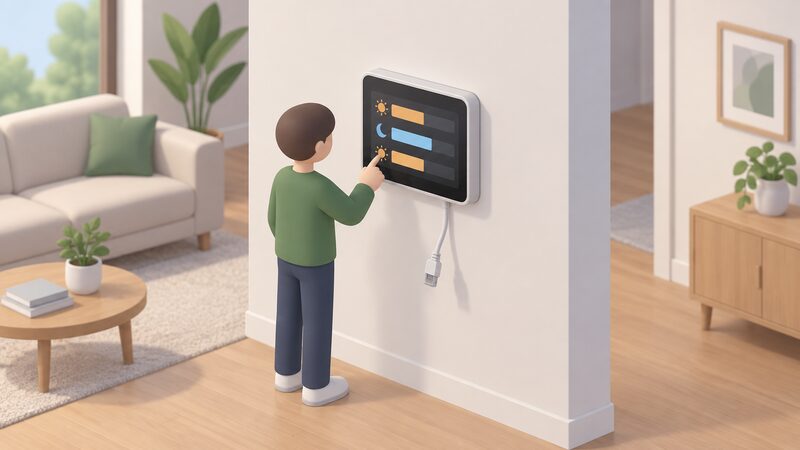
The Home Control Unit is a mains-powered controller with a wired and wireless mix. The figures below are the maker's own published specifications.
| Specification | Value |
|---|---|
| Mains input | 100-240 VAC, 50 Hz6 |
| Power supply | Plug-in power supply unit 5.1 VDC (SELV)6 |
| Current consumption | Max. 2,600 mA6 |
| Standby power consumption | 2,0 W6 |
| Network connections | LAN; WLAN 2,4 GHz (802.11b, g, n); 5,0 GHz (802.11n, ac)6 |
| USB ports | 2x USB host ports6 |
| Radio frequency | 868,0-868,6 MHz and 869,4-869,65 MHz6 |
| RF range, typical open area | 400 m6 |
| Dimensions | 96 x 173 x 96 mm6 |
| Weight | 510 g6 |
| Operating temperature | 5 to 40 °C6 |
| IP rating | IP206 |
| Colour variants | White; anthracite6 |
| Device capacity | Up to 350 devices, including a maximum of 120 wireless products6 |
Installation is either a supplied network cable to a router or a Wi-Fi setup, and the unit can stand on a solid surface or be wall-mounted using the supplied wall bracket6. The IP20 rating means it is for indoor, dry locations only, which is normal for this class of controller but rules out a garage or an outbuilding unless the environment is controlled.
Two points stand out for a UK household. The first is the 400 m typical open-area radio range, which is a line-of-sight figure and will be far shorter through the walls of a typical British house; the mesh behaviour of the devices around it is what extends coverage in practice. The second is the 2,0 W standby draw, which is small but continuous, and worth knowing for anyone counting baseload.
The unit is certified by the VDE in the areas of protocol, IT and data security, and the maker states the smart home system has been certified for the seventh time in a row6. It also fulfils the requirements of §14a EnWG, a German grid-connection rule for controllable consumption devices6. That is a German regulatory standard rather than a UK one, and it is included here because it is what the maker publishes; it has no direct standing in the British market.
Homematic IP Home Control Unit: local mode, EEBUS and smart meter integration
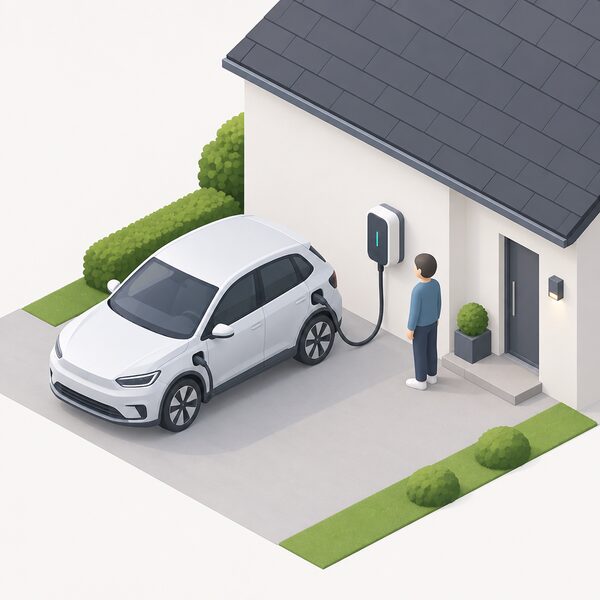
The Home Control Unit's energy role rests on an EEBUS interface for integrating energy devices such as a heat pump, air conditioning and wallbox, which the maker describes as consumers that can be easily integrated into the smart home6. EEBUS is an interface standard for coordinating energy devices, and it is the mechanism by which a controller of this kind can talk to large loads rather than only to switches and sensors.
Compatibility runs in two directions. The unit can be used together with the CCU3 to integrate Homematic devices, and with the CCU3 and the Homematic IP Wired Access Point, Homematic and Homematic IP Wired devices can also be integrated6. It also allows gateways from other manufacturers, such as Alexa, Google Assistant or Philips Hue, to be integrated, and available plugins include support for Philips Hue and the CCU36. Voice control runs through Amazon Alexa and Google Assistant in online mode6.
The app side is free. With the free Homematic IP app, version 3.4.7 or later, a system transfer assistant transfers all devices, groups, automations and measurement data from the last 12 months from an Access Point within minutes6. That matters for anyone moving from the older Access Point to the Home Control Unit, because it avoids rebuilding automations by hand.
For energy independence, the significance is that a controller with a local mode and an energy-device interface can keep running the household's own logic when the cloud is unavailable, and can coordinate a heat pump or a car charger on the premises rather than through a supplier's platform. What it does not do is remove the need for a grid connection, a metering arrangement, or the manufacturer's continued firmware support. The Homematic IP CCU3 central control unit page covers the companion unit, and Homematic IP covers the wider range.
Zigbee in practice: range, mesh networking and device limits
Zigbee's practical behaviour is set by its radios and its mesh. Mains-powered devices act as repeaters, so a house with several smart plugs and a couple of powered sensors will carry a signal further than the headline range suggests. The headline figures are 10 to 100 metres depending on power output and environmental characteristics, with 1 km or more attainable on Sub-GHz radios5.
The 2.4GHz band is the global one and the most congested, sharing space with Wi-Fi and microwave ovens. Zigbee products have access to 16 separate 5MHz channels in the 2.4GHz band, which gives some room to move away from a busy Wi-Fi channel, and raw data throughput of 250Kbs at 2.4GHz5. The 868MHz band used in Europe offers 100kbs across 63 channels, and the 915 to 921MHz band offers 500kbs across 27 channels5.
Device ceilings are set by the hub, not the protocol. The Homematic IP Home Control Unit supports up to 350 devices, including a maximum of 120 wireless products6. The Drayton Wiser Non-relay 2nd Generation Hub supports up to 63 smart devices across up to 16 rooms8. Those are very different ceilings, and the wireless limit on the Homematic unit is the one that bites first in a house full of battery sensors.
The mesh also has a failure mode worth knowing. If a repeater is unplugged, devices that routed through it can drop off until the mesh re-forms. That is why the placement of mains-powered Zigbee devices matters more than the placement of the hub itself. The SONOFF iHost smart home hub and Aqara Hub M3 smart home controller pages cover two other controllers in this class.
What a hub can and cannot control in your home
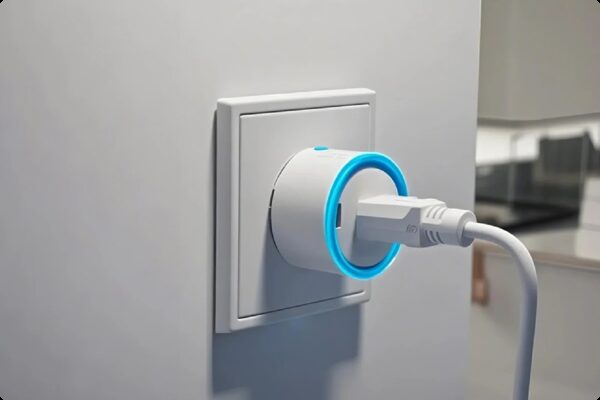
A hub controls what it is wired or paired to, and nothing else. The clearest limits come from the devices themselves.
- Heating. A hybrid heating system can be run with a smart controller used like a thermostat to control the temperature in your home20. A hub that integrates that controller can schedule it alongside everything else.
- Plugs and appliances. Smart plugs connect to Wi-Fi or a hub, take commands from an app or voice assistant, and open or close an internal switch controlling whether electricity flows to the plugged-in device4.
- Storage heaters. Dimplex Quantum smart control requires compatible heaters, a smartphone, home Wi-Fi and a Dimplex Hub remote control via the Dimplex app on new models21. Without the hub, the smart functions are unavailable.
- The tariff. Except by switching, you do not control the tariff your energy supplier sets17.
- The supply itself. Smart meters do not alter the gas or electricity coming into the home, only how usage is measured and shared3.
The in-home display is a separate matter again. The IHD simply displays data from your smart meter and cannot record information22. A hub that logs and acts on history is doing something the display was never designed to do. For households that want their own data rather than a supplier's view of it, a consumer access device is the route, and the in-home displays page explains what the standard display does and does not show.
Data, privacy and where your energy information is stored
Energy data in a smart home sits in three places, and it is worth separating them. The meter holds consumption data. The hub holds automation logic and, often, a local history. The manufacturer's cloud holds whatever the app syncs.
On the meter side, the position is narrow and consistent. Smart meters do not hold data that could be used to identify you, such as your name, address or bank account details22. Personal details such as name, address and bank account details are not stored or transmitted by the smart meter, which only measures gas and electricity use23. The only information a smart meter holds is about how much energy you have used and what tariff you are on24. Personal information such as your name, address and bank details are not stored on your smart meter25.
Ownership and consent are set out separately. Smart meter data is classified as personal data, owned by the consumer, and the consumer is the source of consent for any onward data-sharing26. Electralink stores data on smart meter installation numbers and location, supplier switching, and industrial and commercial consumption, among other datasets26. The data shared through a smart meter is used for billing, for offering new products and services with permission, and for making the energy system more efficient by recording demand more accurately27.
On the hub side, the maker's statement for the Home Control Unit is that no personal data is collected apart from the IP address6. That is a maker's claim about its own product, and it is the only figure available on the point. It sits alongside the local-mode design, which means automation data need not leave the premises at all if the unit is run offline.
For a household's independence, the practical position is that the metering layer is regulated, narrow and consumer-owned, while the hub layer is a commercial arrangement with whatever terms the maker sets. The smart meter data page covers the regulated side in full.
Where a hub fits, and what it does not replace
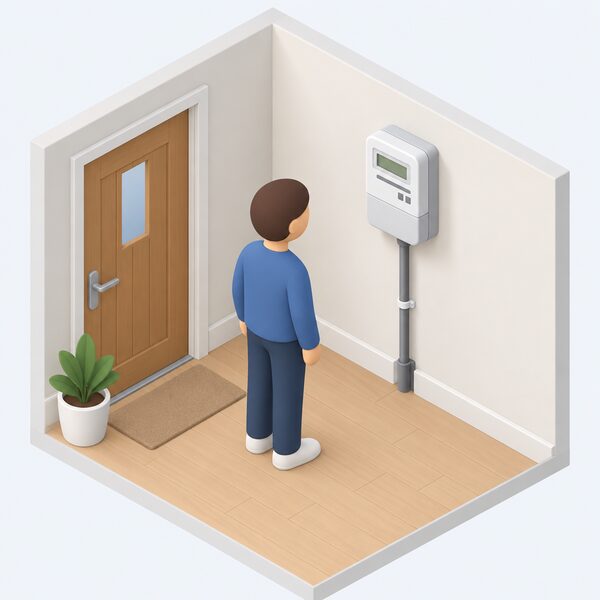
A hub is a control layer. It joins devices, runs schedules and automations, and, in the local-control designs, keeps doing so when the internet does not. It does not generate energy, does not change the tariff, and does not alter the supply coming into the home.
The dependence that remains is specific and worth naming. The household still depends on the grid for power, on a supplier for the tariff, on the manufacturer for firmware and app support, and, for voice control and third-party integrations, on a cloud service. A hub with a local mode and an energy-device interface reduces the second and third of those to a minimum; it cannot touch the first.
For anyone weighing a purchase, the questions that decide the outcome are whether the hub speaks the protocols of the devices already owned, whether it runs automations locally, how many devices it will take, and what happens to those devices if the maker retires the product. The home energy management systems page sets the hub in the wider picture, and the smart meters and home energy management guide covers the metering side that the hub builds on.
Sources27 cited
- Making home energy management work for consumers, Energy Systems Catapult, 2026-02-12
- What is a smart thermostat?, Smart Energy GB, 2026-08-19
- How do smart meters work?, Smart Energy GB, 2026-08-27
- What are smart plugs and do energy saving plugs work?, Smart Energy GB, 2026-08-19
- Zigbee FAQ, Connectivity Standards Alliance, 2026
- Home Control Unit, Homematic IP, 2026
- Are energy monitors the best way to measure your power usage?, Which?, 2026-03-31
- Wiser Non-relay 2nd Generation Hub, Drayton Controls, 2026-08-27
- Smart meter rollout: progress and lessons, Public Accounts Committee, 2023-10-20
- Do smart meters use 3G?, Smart DCC, 2024
- Support with energy bills, Energy UK, 2025-09-03
- How does tidal energy work?, Smart Energy GB, 2026-08-19
- Does a smart meter need Wi-Fi?, Smart DCC, 2026
- How do smart meters send readings?, Smart DCC, 2026
- Do I already have one?, Smart Energy GB, 2026-03-16
- Smart meters, Welsh Government, 2026
- How do smart meters save energy?, Smart DCC, 2026
- Zigbee, Connectivity Standards Alliance, 2026
- Smart homes, Electrical Safety First, 2026-09-19
- Hybrid heating, Cadent Gas, 2026-09-20
- Dimplex Quantum night storage heaters, Centre for Sustainable Energy, 2026-06
- Data access and privacy, Smart Energy GB, 2026-03-16
- Myth busting smart meter problems, Smart Energy GB, 2026-09-17
- Smart meters and Wi-Fi, Smart Energy GB, 2026-03-16
- Protecting data on the smart meter network, Smart DCC, 2026
- Data protection and smart meter data, Open Energy, 2026-09-20
- Get help with your smart meter, Ofgem, 2026
 Zigbee, Matter and ThreadWhich smart plugs, meters and heating controls will still work together in ten years, and what happens to them when your broadband goes down?
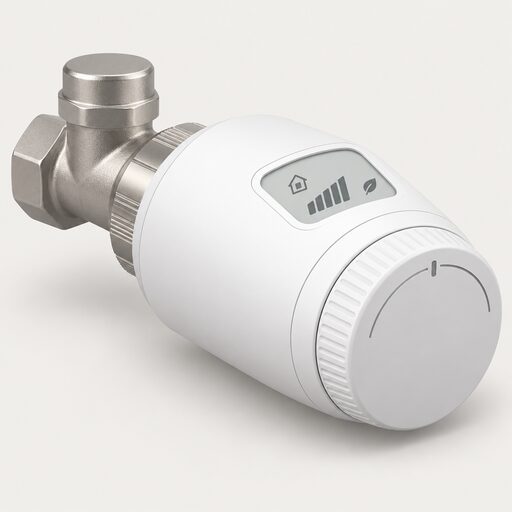 Controls and Energy IndependenceIf the broadband goes down, will your heating still come on?
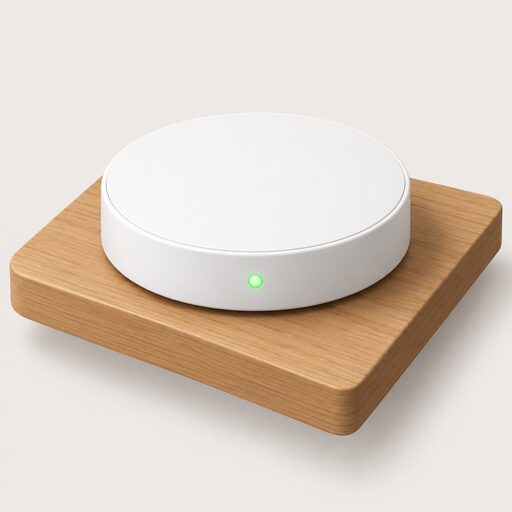 Zigbee, Matter, KNX and Wi-FiWill your smart thermostat and radiator valves keep working if the broadband goes down, and can gear from different brands talk to each other?
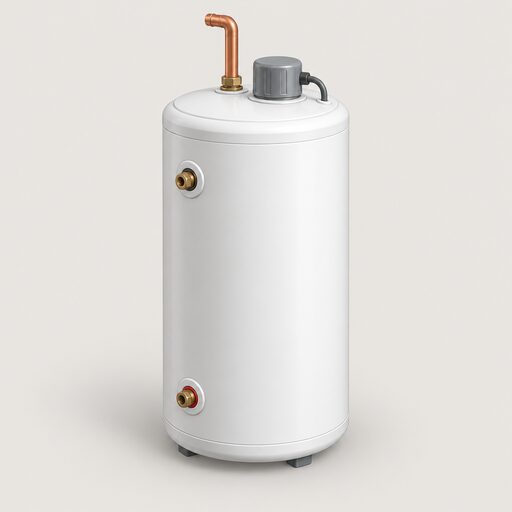 What a HEMS DoesWhat does a home energy management system actually do, and is it worth having one?
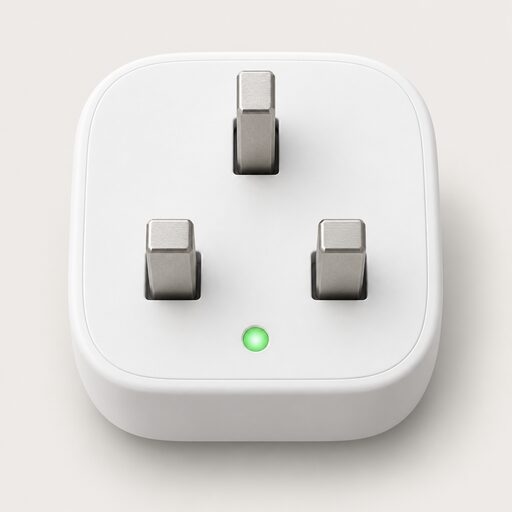 Smart Plugs and MonitoringWhich appliances are worth putting a smart plug on, and will it really show you what each one costs to run?
 Local Control vs the CloudCan your solar, battery or charger still work if the maker's app or servers disappear?