In this guide
A smart home subscription fee is now part of the running cost of some energy devices, and the pattern is uneven. Vaillant's Smart Home Subscription is available free of charge, and the myVaillant app it runs through is the interface rather than the product1. Ariston NET is described by its maker as a free app for your smartphone2. The Sync Energy app is built for homeowners and installers with two experiences in one app3. None of these carries a published monthly charge today.
What each of them does carry is a dependency. Vaillant states that the subscription services are only fully functionable when used in conjunction with the myVAILLANT connect internet gateway and the myVaillant app, and that without the gateway installed with subscription services activated you will not receive any benefits1. The app reaches the boiler or heat pump through the manufacturer's servers, so the household's control passes through a company's infrastructure rather than staying in the home.
The contrast with the meter itself is sharp. A smart meter does not need, or connect to, the public internet or your home Wi-Fi4. It reports over its own dedicated network, and the supplier is obliged to take all reasonable steps to ensure it automatically sends gas and electricity readings5. The meter is the independent part of the picture; the apps layered on top are the dependent part.
What a subscription or cloud account actually buys you
A cloud account buys three things: a route to the device from outside the home, a place for the data to sit, and a promise of continued service. The first two are technical. The third is contractual, and it is where the terms matter most.
Vaillant's subscription terms set out what the household provides. The data collected includes your name, address, email address and phone number, plus technical information including system information and messages, operating parameters, configurations and settings, energy consumption, technical events, changes and system notifications1. That is a detailed operating record of the heating system, held on the maker's servers. Where a paid tier exists, the monthly fee may be paid by debit or credit card, Apple Pay or Google Pay, and the first monthly fee is payable at the time you sign up to the plan1.
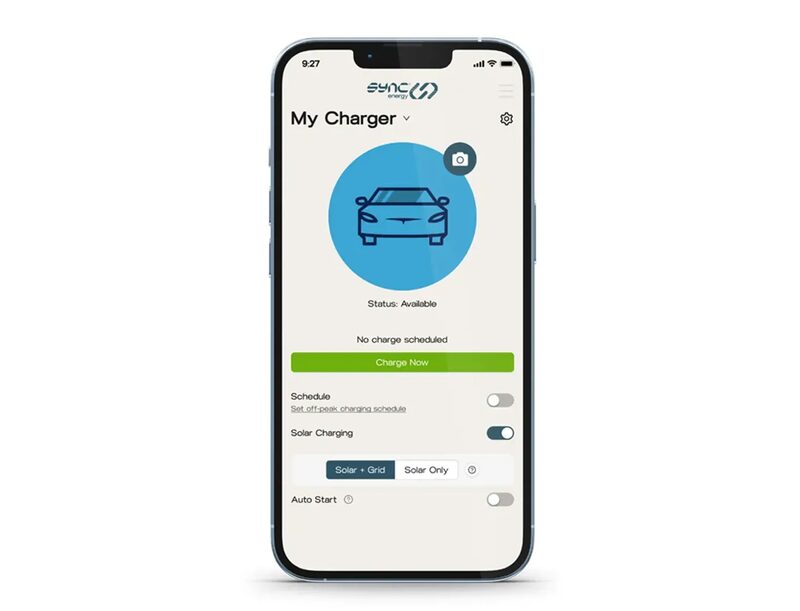
The benefit side is real. Vaillant's gateway provides consumption monitoring so a household can check whether a boiler or heat pump is operating efficiently6. Ariston NET lets a household manage a boiler remotely, find reports on consumption and receive technical support online2. The Sync Energy app monitors energy generation, usage and storage in real time and automates charging, storage and energy usage schedules3.
What the account does not buy is permanence. Vaillant reserves the right to terminate a subscription and stop providing the services at its discretion for any reason, issuing a prorated refund based on time remaining in the month1. A free service can be withdrawn on the same terms as a paid one, and the household's access goes with it.
Free today, paid tomorrow: the pricing models behind energy apps
The current UK pattern is free access with reserved rights, not a published subscription price. Vaillant's Smart Home Subscription is available free of charge1. Ariston NET is a free app2. The Sync Energy app publishes no charge3. A household reading only the headline would conclude that app control costs nothing.
The terms tell a different story. Vaillant's scheme rules reserve the right to terminate the subscription and stop providing the services at the maker's discretion for any reason1. That is the mechanism by which a free tier becomes a paid tier or disappears: the provider keeps the option, and the household holds no corresponding guarantee of continuity.
The wider market already prices some of this. Energy monitors and smart thermostats generally come at an additional cost and are operated via an app on a mobile device, with subscription costs for premium services9. That is the shape of the model: hardware sold once, features rented monthly.
Against that, the metering layer is free at the point of use and stays free. Smart meters are installed by energy suppliers at no extra cost8, and Ofgem's guidance is to contact your supplier to get a smart meter for free7. A smart meter replacement or upgrade is carried out at no cost to you10. The distinction matters for household budgeting: the regulated meter is free, the convenience layer above it is a commercial product with commercial terms.
Vaillant's Smart Home Subscription: free, on a 12-month rolling contract
Vaillant's Smart Home Subscription is available free of charge, and eligibility is defined by the scheme rules. A household must own or have use of a post 2006 model Vaillant boiler or heat pump, be at least 18, have an iOS or Android device, and have the myVAILLANT connect gateway installed with subscription services activated1. Without the gateway, Vaillant states you will not receive any benefits1.
The gateway is the load-bearing part. Vaillant describes myVAILLANT connect as compatible with all Vaillant eBUS appliances from 2006 onwards, including the heat pump range, and compatible with the sensoCOMFORT, VRC 700, sensoHOME, sensoROOM and sensoROOM pure heating controls6. The myVaillant app requires a minimum of iOS 13.4 or Android 106. A Smart Home Subscription is offered alongside for what Vaillant describes as better peace of mind when it comes to the heating system6.
The dependence is therefore threefold: on the maker's gateway hardware, on the maker's servers, and on a phone platform new enough to run the app. The heating system itself continues to run on its own controls if any of the three fails, but remote control and consumption monitoring stop.
| Element | Requirement or figure | Source |
|---|---|---|
| Subscription price | Free of charge | 1 |
| Boiler or heat pump | Post 2006 Vaillant model | 1 |
| Gateway | myVAILLANT connect installed, services activated | 1 |
| App platform | iOS 13.4 or Android 10 minimum | 6 |
| Compatible controls | sensoCOMFORT, VRC 700, sensoHOME, sensoROOM, sensoROOM pure | 6 |
| Appliance compatibility | All Vaillant eBUS appliances from 2006 onwards | 6 |
Ariston NET and Sync Energy: apps that cost nothing up front
Ariston NET is described by its maker as a free app for your smartphone, letting a household manage a boiler remotely, find reports on consumption and receive technical support online, all together in a free app2. The published description is phone-based; the maker does not state that a desktop or browser route exists.
The Sync Energy app takes a wider scope. It is built for homeowners and installers, with two experiences in one app, and unifies EV charging, solar management and energy cost optimisation in one interface3. For homeowners it offers Auto Solar Charge, Tariff Sense optimisation and real-time energy insights, alongside remote access to adjust the system at any time, real-time monitoring of energy generation, usage and storage, and automation of charging, storage and energy usage schedules3. For installers it provides guided commissioning, installation history tracking, integrated support resources and seamless customer handover3.
Both are free at the point of access and both depend on the maker's platform. Neither publishes a continuity guarantee. The practical question for a household is not the current price but what remains if the app is withdrawn: for Ariston NET, remote boiler management and consumption reports; for Sync Energy, the monitoring and automation of solar, storage and EV charging.
Energy Insights: free for now, but the supplier reserves the right to charge
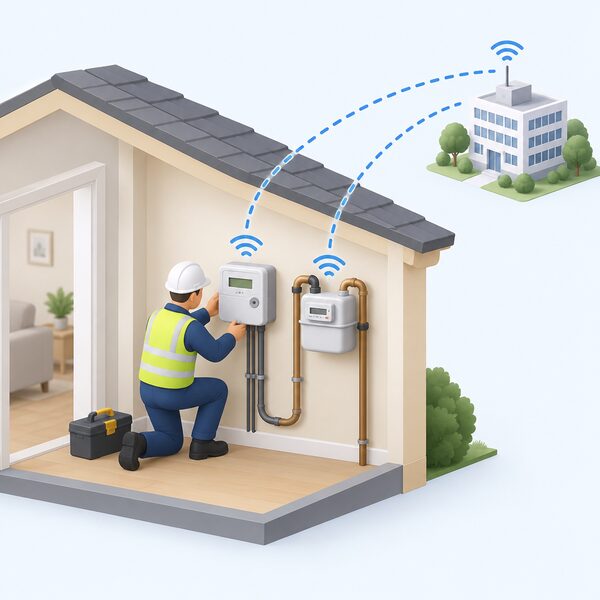
Supplier-side insights features follow the same pattern as the maker apps: free access today, with the commercial terms held by the provider. The underlying data comes from the meter, and the meter's data flow is regulated rather than commercial.
Energy suppliers must take all reasonable steps to ensure that smart meters automatically send them your gas and electricity meter readings5. That obligation is what makes an insights feature possible without the household doing anything. Smart meters provide accurate, not estimated, bills so you only pay for the energy you use11, and a household with one does not need to submit meter readings yourself12.
The free-at-point-of-use position is consistent across the official sources. There is no upfront charge for a smart meter13, and you can get a smart meter installed by your energy supplier at no extra cost8. Some providers may offer a free energy efficiency inspection during installation14. Where a smart meter installation fails due to a fault within the energy supplier's control, the consumer will receive compensation15.
That is the regulated layer, and it is durable. An insights feature built on top of it is a product decision by the supplier, and the supplier's right to charge for it later is a commercial matter rather than a regulatory one. The data keeps flowing either way; what changes is whether the household can see it through a free app.
What happens when the cloud service stops: local control and offline limits
When a cloud service stops, the device does not necessarily stop. What stops is the remote layer. Vaillant's terms allow the provider to terminate the subscription and stop providing the services at its discretion for any reason1, and the household's app access ends with it. The boiler or heat pump continues to run on its own controls.
The limits of app-dependent hardware are visible in the wider market. Smart plugs require a smartphone and wi-fi connection to function and are primarily used to turn things on and off remotely, usually with no built-in LCD screen16. Remove the network or the app and the plug has no local interface to fall back on. That is the design trade-off: convenience in exchange for a dependency.
The meter is different in kind. A smart meter does not need, or connect to, the public internet or your home Wi-Fi4, so its reporting survives a home broadband outage. The household's own tariff position is also outside its control in one respect: except by switching, you don't control the tariff your energy supplier sets, though you can change how much energy you use17.
Hardware requirements that shape your dependence: gateways, Wi-Fi and phone platforms
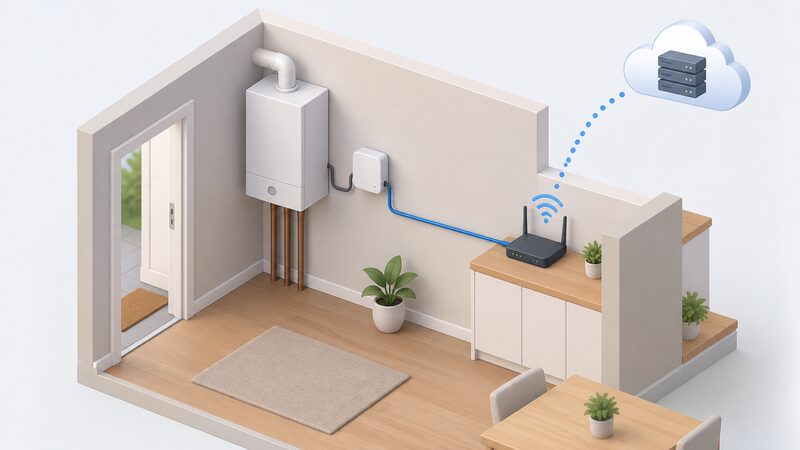
The hardware layer decides how deep the dependence goes. Vaillant's scheme rules require the myVAILLANT connect gateway to be installed on the device with subscription services activated, and state that without this you will not receive any benefits1. The gateway is not an optional accessory; it is the condition of the service.
The phone platform is a second condition. The myVaillant app requires a minimum of iOS 13.4 or Android 106. A household on an older handset is outside the supported range, and the app is the only interface the subscription offers.
The meter sits outside all of this. A smart meter does not need, or connect to, the public internet or your home Wi-Fi4. It reports over its own network, which is why a broadband outage does not stop billing data reaching the supplier. The supplier obligation runs alongside: energy suppliers must take all reasonable steps to ensure that smart meters automatically send them your gas and electricity meter readings5.
| Layer | What it needs | What fails without it |
|---|---|---|
| Smart meter | Its own dedicated network, not home Wi-Fi4 | Automatic readings and accurate billing5 |
| Maker gateway | myVAILLANT connect installed, services activated1 | All subscription benefits1 |
| App | iOS 13.4 or Android 10 minimum6 | Remote control and monitoring6 |
| Home network | Working broadband and router | App access to the appliance |
PSTI rules: what manufacturers of connected devices must now do in the UK
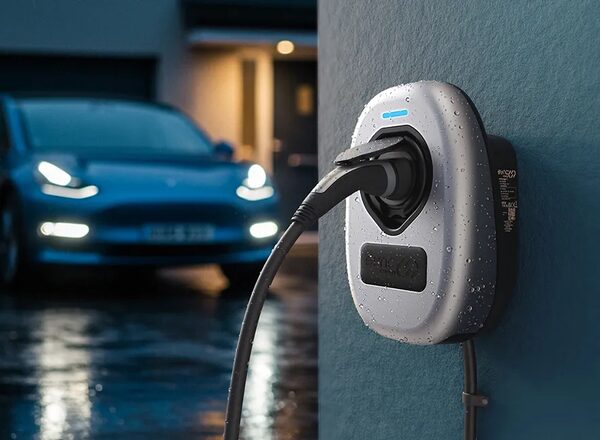
Connected energy devices sold in the UK now sit under a security regime, and the rules reach the appliance rather than only the app. Regulations can require energy smart appliances to meet requirements regarding cyber security, data privacy, interoperability, and grid stability18. That is a statutory floor for the device itself, separate from whatever the maker's app terms say.
The regime extends to specific device classes. For smart charge points, the regulations require that the charge point notifies the owner of an unauthorised change to the software, and that, in this circumstance, it doesn't connect to a communications network other than to make this notification requirement19. A device that has been tampered with is required to tell its owner and to stay off the network otherwise.
For the metering layer, the obligations run the other way, from supplier to household. Under their licence conditions energy suppliers are required to take all reasonable steps to install a smart meter where a meter is fitted for the first time or a traditional meter needs replacing due to a fault20. Energy companies must take all reasonable steps to install smart meters in their customers' homes, set out in the conditions of their licences to supply gas and electricity10.
The practical effect for a household is that the security of a connected energy device is now a regulatory matter, while the continuity of the app that controls it is not. A maker must meet security requirements; it is not obliged to keep a free service running.
How app dependence fits into household energy independence
Energy independence at household level has two parts: the ability to generate, store and manage energy on site, and the ability to see and control what the home is doing. Apps serve the second part, and they do it well while they last. The Sync Energy app, for instance, unifies EV charging, solar management and energy cost optimisation in one interface, with remote access and automated schedules3. For a home with solar and a battery, that is genuine operational control.
The dependence that remains is on the maker's servers, the maker's gateway and the maker's continued willingness to run the service. Vaillant's terms reserve the right to terminate the subscription and stop providing the services at its discretion for any reason1. A household that has built its routines around an app has built them around a commercial decision it does not make.
The counterweight is the metering layer, which is regulated and free. Smart meters are installed by energy suppliers at no extra cost8, and a smart meter replacement or upgrade is carried out at no cost to you10. The meter does not need, or connect to, the public internet or your home Wi-Fi4, so it keeps working when the home network does not. A household wanting to keep energy data in the home rather than in a manufacturer's cloud has options that do not run through an app at all, covered in local data access and Modbus and consumer access devices.
The honest position is that app control adds convenience and subtracts independence. The meter, the wiring and the appliance controls are the parts a household keeps. Everything above them is rented, whether or not a fee is charged today. For the wider picture of what monitoring contributes to self-sufficiency, see smart meters and energy independence, and for the security rules that apply to the devices themselves, connected device security rules.
Sources20 cited
- Boiler360 and Smart Home Subscription terms and conditions, Vaillant, 2026
- Cube S NET UK boiler accessory, Ariston, 2026-09-17
- Sync Energy app, Sync Energy, 2026-09-17
- Does a smart meter need Wi-Fi?, Smart DCC, 2026
- Smart meter performance, Ofgem, 2026
- myVAILLANT connect internet gateway, Vaillant, 2026
- Getting a smart meter, Ofgem, 2026
- How to get a smart meter, Smart DCC, 2026
- Do I have to accept a smart meter?, Which?, 2026-05-12
- What is a smart meter?, Which?, 2026-04-07
- Smart meter benefits for you, Smart Energy GB, 2026-08-18
- Get help with your smart meter, Ofgem, 2026-09-17
- Smart meters, Welsh Government, 2026
- Heat Pump Ready Programme Stream 2 Wave 2 projects, GOV.UK, 2026-05-28
- Final decision on smart meter guaranteed standards of performance, Ofgem, 2026-01-30
- Are energy monitors the best way to measure your power usage?, Which?, 2026-03-31
- Understanding your rights, Energy Ombudsman, 2026-09-20
- Energy smart appliances and load control research briefing, House of Commons Library, 2026-09-20
- Guide to EVSCP regulations 2021, GOV.UK, 2026-09-18
- Smart meters, Energy Ombudsman, 2026-09-20
 Smart Thermostat SubscriptionsDo you have to pay a monthly fee to use your smart thermostat, and what do you actually get for it?
 Controls and Energy IndependenceIf the broadband goes down, will your heating still come on?
 Energy Independence and MakersWhich brands let you keep control of your heating, solar or car charging, and which tie you to their app and their cloud?
 Energy IndependenceA heat pump runs your heating on electricity instead of gas or oil, so how much does that really cut what you pay and how exposed you are when fuel prices jump?
 Heating and Energy IndependenceCan you heat your home without relying on gas or oil, and what would that take?
 Financing an InstallationPaying monthly for a boiler, solar panels, battery or heat pump sounds simple, but who actually lends you the money and what happens if the work goes wrong?