

In this answer
Short answer
The short answer is that a fuse upgrade is usually free and a full supply upgrade usually is not. UK Power Networks states that it can upgrade a domestic fuse to 80 or 100 amps free of charge, and that where an installer can complete the work without upgrading the electricity supply there are no costs to pay the network operator1. Where the connection itself has to be enlarged, the cost sits with the householder as a chargeable connection project.
What decides which of those applies is the load the heat pump adds, measured against the rating of the existing supply. The installer carries out the assessment, and the network operator is notified either before installation or, in defined circumstances, within 28 days afterwards3. In Northern Ireland the property owner nominates an installer, who carries out checks and submits the application to NIE Networks4.
The Boiler Upgrade Scheme does not pay for supply upgrades. It funds eligible heat pumps: air source, ground source, and air-to-air at £2,500 for residential properties only5. The grant is paid to the installer when the voucher is redeemed, so the owner benefits through a lower upfront cost rather than a cash payment7.
Who pays for an electricity supply upgrade: the short answer
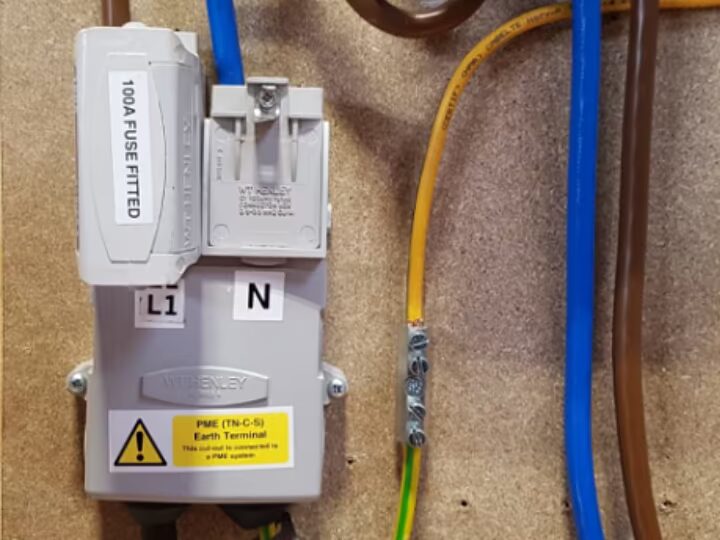
The dividing line is between the fuse and the connection. A fuse upgrade, taking a domestic supply to 80 or 100 amps, is described by UK Power Networks as free of charge2. The same operator states that where installers can complete their work without upgrading the electricity supply, there are no costs to pay it1. That covers the common case: a heat pump added to a house whose existing supply already has the headroom.
A full supply upgrade is different. It is a chargeable connection project, and the householder commissions it. Electricity North West states that for most domestic customers there is no charge for the connection, but that for larger heat pumps a supply upgrade may incur a cost8. UK Power Networks adds that where its teams need to make upgrades to the power supply, the cost and timing of each project vary depending on a number of factors1. No published national price list exists for that work, so figures are quoted per project.
The wider cost picture matters because the supply question sits inside it. The government's heat and buildings analysis puts heat pump installation costs higher than gas boilers, in part due to the need for additional retrofitting11. Running costs dominate the lifetime total: an official estimate puts upfront, running and installation cost at approximately 15 to 20%, 55 to 65% and 20% respectively of the total cost of a heat pump12. A supply upgrade, where it is needed, is a one-off addition to the upfront share.
For a household's energy independence, the supply upgrade is the point at which the home stops being a passive gas customer and becomes an electrically heated property with a connection sized for its own generation and heating load. The dependence that remains is on the network operator for capacity and on the grid for the electricity itself.
Why heat pumps can need a supply upgrade
A heat pump runs on electricity, and the heat energy delivered to the home is much more than the electrical energy used to move it13. That efficiency is the reason a heat pump can heat a house from a supply that would not run the same house on direct electric heating. It is also why the electrical demand is real but usually modest.
The load is not trivial at the top of the range. Guidance for the Boiler Upgrade Scheme states that heat pumps over 12kW typically require 18 amps from a dedicated electrical supply14. A domestic single-phase supply rated at 80 or 100 amps can carry that alongside normal household demand in most cases, which is why the fuse upgrade route is common and the full supply upgrade is not.
Two other factors push some properties over the line. The first is the state of the existing electrical installation. Independent guidance notes that older properties may require upgrades to the consumer unit or electrical improvements15. That is wiring inside the house, not the network connection, and it is a separate cost from anything the network operator does. The second is the presence of other high-power equipment. The connection rules cover installing high power equipment such as ground source heat pumps, microgeneration, large motors and welders2.
Insulation bears on the decision too, though indirectly. Official guidance warns that if a home is not well insulated, installing a heat pump may increase energy bills instead, because electricity is more expensive than gas16. A poorly insulated home needs a larger heat pump to hold temperature, and a larger heat pump is more likely to trigger a supply assessment. Fabric first is not a slogan here; it changes the size of the electrical question.
Distribution network operators and how to apply
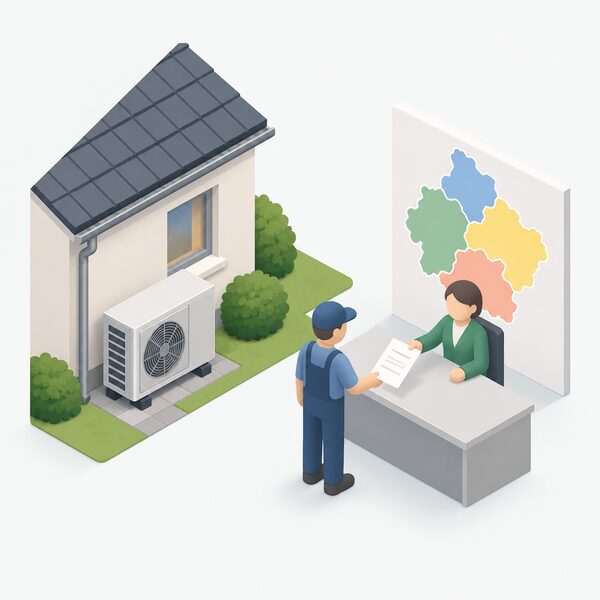
The distribution network operator owns the wires and the fuse, and it is not the company that sends the bill. Every time an installer or customer installs a heat pump at an existing property, they must inform their network operator accordingly3. That duty applies whether or not an upgrade turns out to be needed.
The route depends on the assessment. If the proposed addition or alteration is assessed by the installer to be within the existing rating of the supply equipment and the maximum demand is 60A or less, it can be installed and the network operator notified retrospectively within 28 days3. Above that, the work goes through the apply to connect route before installation. Local authority guidance sets out the same two paths: the local distribution network operator will need notifying either before, via apply to connect, or within 28 days once the installation is complete, completed by the installer18.
Anyone competent to install a heat pump can submit the form, including an installer working on behalf of the customer3. In Northern Ireland the process is stated more tightly: homeowners or property owners must choose the equipment and nominate an installer, who carries out checks and submits the application on their behalf4.
For heat pumps, the supply to the property will also need to be assessed by the local distribution network operator, usually requested via an electricity supply assessment from the Energy Networks Association19. That is the practical answer to finding the right operator: the assessment route runs through the industry body, and the installer normally raises it.
When the upgrade is free and when it is not
Free covers more ground than most householders expect. UK Power Networks states that it can upgrade a domestic fuse to 80 or 100 amps free of charge2, and that a household may only need a free fuse upgrade rather than a full supply upgrade20. Independent guidance summarises the position as network operators usually upgrading a property to 80A or 100A single phase for free21.
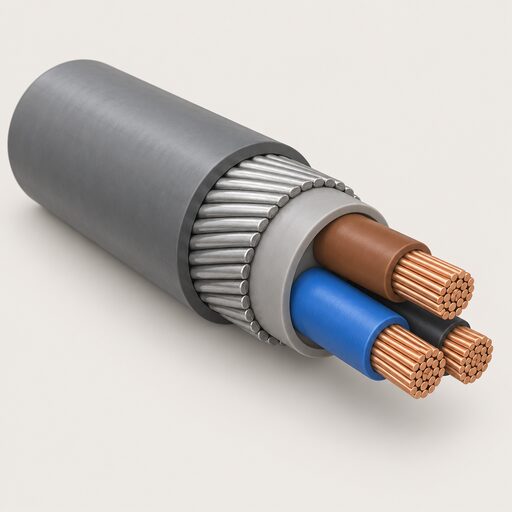
Chargeable work begins where the connection itself has to change. Electricity North West states that for most domestic customers there will be no charge for the connection, but that for larger heat pumps a supply upgrade may incur a cost8. The clearest published figure is for three-phase: Electricity North West gives the average cost of upgrading to three phase power, rated at 80A per phase, as £5370.008. That is a chargeable service.
The trigger for three-phase is specific. Electricity North West states that it applies where a property currently has a single phase supply rated between 60 and 100A and now requires more than 100A after maximum demand and diversity calculations8. For a domestic heat pump that is an unusual outcome, but it is the test.
Where a three-phase supply already exists, the cost position changes again. Which? reports that if you have a three-phase supply then you will need to pay to upgrade the cable, fuses and meter21. So the presence of three-phase does not make later enlargement free.
| Situation | Who pays | Evidence |
|---|---|---|
| Fuse upgrade to 80A or 100A | Network operator, free of charge | UK Power Networks2 |
| No supply upgrade needed | No cost to the network operator | UK Power Networks1 |
| Larger heat pump requiring supply upgrade | Householder, chargeable project | Electricity North West8 |
| Three-phase upgrade, 80A per phase | Householder, £5370.00 average | Electricity North West8 |
| Existing three-phase supply needing enlargement | Householder pays for cable, fuses and meter | Which?21 |
Costs, timescales and what to expect
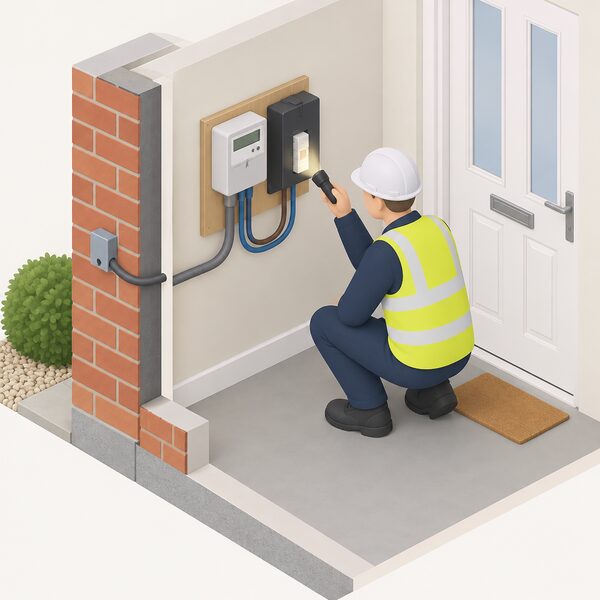
There is no national schedule of supply upgrade prices, and the network operators say so. UK Power Networks states that where its teams need to make upgrades to the power supply, the cost and timing of each project can vary depending on a number of factors1. The one published average in the material is the £5370.00 figure for a three-phase upgrade rated at 80A per phase8. For anything else, prices are quoted per project after assessment.
Timescales follow the same pattern. The only fixed clock in the rules is the 28-day retrospective notification window, which applies where the installer assesses the addition as within the existing rating of the supply equipment and maximum demand is 60A or less3. Where an upgrade is required, the project runs to the network operator's own programme, and no standard duration is published.
The grant side has its own timing. Ofgem's installer guidance states that payments are usually made within five working days of approval10. That is the installer's payment after the voucher is redeemed, not a payment to the householder, and it does not accelerate any network works.
What a household should expect in practice is a sequence: the installer surveys, calculates the load, checks the fuse rating, and either notifies retrospectively or applies to connect. If the assessment shows the existing supply is adequate, the electrical side costs nothing beyond the installer's own work. If it does not, the householder is commissioning a connection project from the network operator, with the cost and the date set by that operator.
Grants and schemes that can help with supply upgrades
No grant in the material pays for an electricity supply upgrade. The Boiler Upgrade Scheme funds heat pump installation, not connection works. Ofgem lists the eligible technologies as air source heat pumps, ground source heat pumps, and air-to-air heat pumps at £2,500 for residential properties only5. The scheme exists to cover the upfront cost of replacing a fossil fuel heating system with an air source or ground source heat pump22.
The scheme's rules also constrain how it combines with other funding. The installation cannot be funded by more than one source of public funds, and an applicant cannot apply if they have already received government funding or support for a heat pump or biomass boiler9. That matters where a household is also looking at a local authority or devolved scheme.
Some of those schemes do reach further than the heat pump itself. Green Homes Wales offers a project cost top up that can be used alongside a Boiler Upgrade Scheme grant, and it can support the costs of the heat pump technology, supply and fitting or labour, as well as associated pipework and radiator costs23. That is broader than the Boiler Upgrade Scheme, but it is still aimed at the heating system rather than the electrical connection.
In Scotland, Home Energy Scotland sets out grant and loan funding, and states that replacement heat pumps are not eligible for grant funding, with an interest-free loan of up to £7,500 available instead24. Energy supplier schemes and grants are directed at paying off energy debt25, which is a different purpose again.
The practical position is that a household facing a chargeable supply upgrade meets that cost itself. The grant landscape reduces the cost of the heat pump, and in Wales can extend to pipework and radiators, but the connection charge sits outside all of it. For energy independence, that is the residual tie: the home can generate and store its own heat, but the capacity of the wire into it remains a network operator's decision and, where enlargement is needed, a householder's bill.
Sources25 cited
- Heat pump cost, time and what's involved, UK Power Networks, 2026-09-17
- What do you need to upgrade, UK Power Networks, 2026-09-17
- Frequently asked questions about connecting to the networks, Energy Networks Association, 2026-09-17
- EVs and heat pumps, NIE Networks, 2026-09-19
- Boiler Upgrade Scheme: installers, Ofgem, 2026-09-17
- Boiler Upgrade Scheme, Ofgem, 2026-09-17
- Boiler Upgrade Scheme guidance for property owners, Ofgem, 2026-07
- Heat pumps, Electricity North West, 2026-09-19
- Boiler Upgrade Scheme, Find Government Grants, 2026-09-18
- Boiler Upgrade Scheme guidance for installers, Ofgem, 2026-04-28
- Heat and buildings, UK Parliament POST, 2026-09-19
- Energy in buildings and industry 2025: heat and buildings, Department for Energy Security and Net Zero, 2025-06
- Renewable heating: what are the options for your home, Energy Saving Trust, 2024-03-01
- Heat pump installation guidance, HHIC, 2026-09-17
- Is your home suitable for a heat pump?, CPA, 2026-02-18
- Air and ground source heat pumps, Croydon Council, 2026-09-17
- Connecting to the networks: FAQ, Energy Networks Association, 2026-09-17
- Building regulations renewables guidance, Bedford Borough Council, 2026-09-17
- Heating and heat pump factsheets, CIBSE, 2026-09-17
- Adding more power, UK Power Networks, 2026-09-17
- An introduction to heat pumps, Which?, 2025-09-22
- Obtaining funding, Community Energy England, 2026-09-20
- Green Homes Wales, Development Bank of Wales, 2026-09-17
- Grants and loans, Home Energy Scotland, 2026-09-17
- Get help with your home or business energy bills, Ofgem, 2026-09-17
 Electricity Supply and WiringWill your fuse box cope with a heat pump, and will the mains supply need upgrading?
 Check Supply Capacity FirstAdding a heat pump, car charger or home battery can push your electricity supply past what it can safely handle.
 Energy IndependenceA heat pump runs your heating on electricity instead of gas or oil, so how much does that really cut what you pay and how exposed you are when fuel prices jump?
 Heat Pump Running CostsWhat does a heat pump cost to run each year, and is it cheaper than a gas boiler?
 Heat Pump Electricity TariffsA heat pump tariff gives you cheaper electricity for part of the day, so running your heating costs less than on a standard rate.
 Replacing a Gas or Oil BoilerSwapping a gas, oil or LPG boiler for a heat pump changes how your home is heated and how much it costs.