
In this answer
Short answer
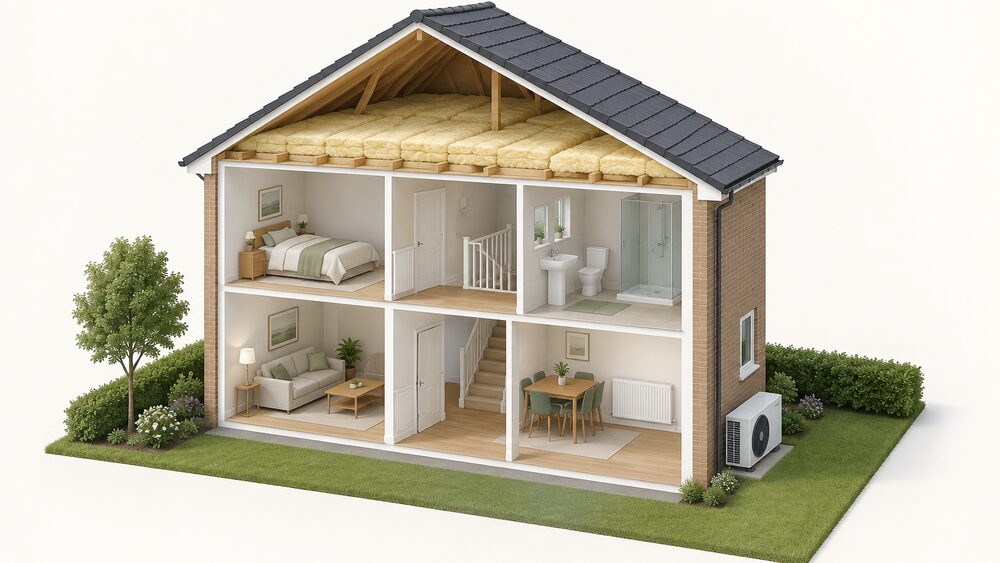
Insulation is not a legal precondition for a heat pump in the UK, but it is the sequencing rule that most official and independent guidance points to. Independent retrofit guidance states that a heat pump "works best in a well-insulated home with radiators sized for low-temperature heating"1. Official guidance for Northern Ireland goes further, stating that a property should be properly insulated before renewable technologies are installed2.
The reason is physics and cost, not regulation. Heat pumps run at lower temperatures than gas or oil boilers, so they need longer run times and often larger radiators3. In a leaky home that means the unit works harder for longer, and one council warns plainly that if a home is not well insulated, installing a heat pump may increase energy bills instead, because electricity is more expensive than gas4.
The practical answer for most households is that insulation and emitter sizing come first, the heat pump second, and that no single insulation standard is imposed. What follows sets out what the guidance actually says, how much insulation is enough, what to top up first, when a heat pump can go in without extra fabric work, and how subsidy rules treat insulation.
Insulation before a heat pump: what the guidance actually says
The guidance is consistent in direction and light on hard mandates. Independent retrofit guidance frames the heat pump as a system that "works best in a well-insulated home with radiators sized for low-temperature heating"1. Official guidance from a local authority states that heat pumps are best suited to buildings with good insulation levels, and that insulation may need to be added internally or externally if homes do not already have good levels10. That is a suitability statement rather than a prohibition: nothing in the material reviewed here bans a heat pump in a poorly insulated property.
Northern Ireland's official advice is the most direct on sequencing, stating that a property should be properly insulated before installing renewable technologies2. The same source notes that installing loft and cavity wall insulation not only lowers the amount of heat escaping, but could also cut fuel bills11.
Planning rules are separate from insulation rules and vary by nation. In Scotland, domestic air source heat pumps are subject to prior notification to the planning authority on siting and design12, and Scottish householder permitted development guidance discusses installation, alteration or replacement of an air source heat pump in its Section 613. In Wales, within a Conservation Area an air source heat pump cannot be installed on a wall or a roof which fronts a highway, or positioned nearer to any highway bounding the curtilage than the nearest part of the dwellinghouse14. Welsh proposals also record that installations are not permitted within a Conservation Area, on a listed building or on a scheduled monument15. In England, a listed property will usually need listed building consent before an air source heat pump goes in, even where planning permission is not required16.
For the household, the sequence is: fabric and emitters first, then the heat pump, with planning and consent checks running alongside rather than after.
Why insulation matters: lower running costs and smaller emitters
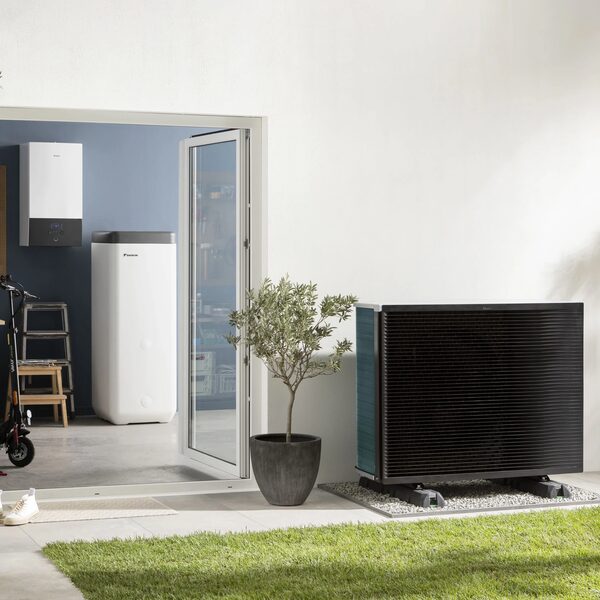
The case for insulating first is about how the heat pump performs, not whether it switches on. Independent guidance states that a well-insulated home allows a heat pump to run more efficiently, reducing energy consumption and maintaining stable temperatures, while in homes with poor insulation heat pumps may need to run for longer periods, leading to higher energy bills17.
The counter-position is stated just as plainly. One independent guide records that heat pumps are no cheaper to run than gas or liquid fuel boilers, and are best suited to homes that already have plenty of or large radiators3. A consumer body quotes Dr Jan Rosenow saying a household could save more than 50% on running costs with a heat pump compared to a gas boiler, but that this requires high quality installation, high efficiency and a heat pump tariff18. The insulation body's position is that a heat pump operating at a low coefficient of performance can end up costing more to run than a gas boiler5. Against that, the Energy Saving Trust states that generally heat pumps should be cheaper to run than most other fuel types because they are so much more efficient19.
The range across these sources is wide because the variables are wide: fabric, emitter sizing, installation quality, tariff and the price gap between electricity and gas. Insulation narrows the range by reducing the heat load the pump has to meet, which is what allows it to run at lower flow temperatures and higher efficiency.
"A well-insulated home allows a heat pump to run more efficiently, reducing energy consumption and maintaining stable temperatures."
For energy independence, this is the point where a household's exposure shifts. Better fabric reduces the total energy the home must buy, whatever the source. It does not remove dependence on electricity, a supplier or the grid, and a heat pump adds a dependence on the electricity price relative to gas.
How much insulation is enough: no new-build standard required
There is no published threshold in the material reviewed here that a home must reach before a heat pump can be installed. The nearest thing to a standard appears in grant rules rather than building rules. The Boiler Upgrade Scheme guidance records that installations in eligible self-builds do not need to supply evidence that the minimum required level of insulation is present, since these properties are required to be insulated in line with current building regulations20. That exemption exists precisely because the insulation requirement is assumed, not because it is waived.
For existing homes, the practical benchmark is the condition of the fabric rather than a number. Official guidance for Northern Ireland states that a property should be properly insulated before renewable technologies are installed2. Independent guidance describes the target as a well-insulated home with radiators sized for low-temperature heating1.
Two regulatory points matter for what can be done. Planning permission is not normally required for fitting insulation where there is no change in external appearance21. And a warm roof system does not require ventilation22. Both remove common obstacles to fabric work.
Where the four nations differ is in the support and enforcement around insulation rather than in a heat pump precondition. Northern Ireland operates the Affordable Warmth Scheme and the NISEP whole house approach7. Scotland's housing stock data shows heat pumps at 2%, which sets the context for how much of the stock has been through this sequencing at all8. Wales and England rely more on building regulations and permitted development limits than on a stated insulation threshold.
What to top up first: loft, walls and floors
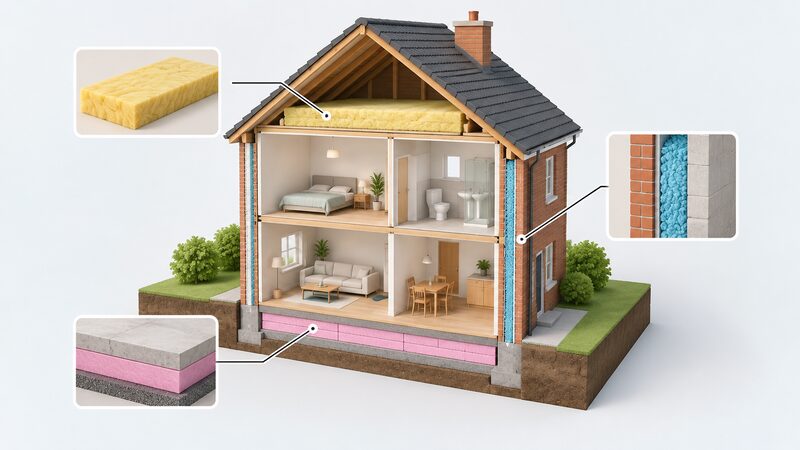
The order that official schemes use is a useful guide to priority. The Affordable Warmth Scheme in Northern Ireland lists its Priority 1 measures as installation or topping up of loft insulation to 300mm, roof, loft and eaves ventilation, providing a hot water cylinder jacket, providing cavity wall insulation where suitable for the property, draught proofing of doors and windows, and removal and replacement of ineffective cavity wall insulation7.
The loft threshold is echoed in seasonal advice: any home with 4 inches (100 mm) or less should have it topped up6. Cavity wall insulation is not automatic. Official guidance states that prior to installing cavity wall insulation, the wall should be assessed to ensure its condition, construction type and suitability24.
The NISEP scheme in Northern Ireland applies a whole house rule: when a heating system is being installed, both loft and wall insulation should also be installed, where suitable for the property and if required23. That is the clearest example in the material of insulation and heating being treated as one job rather than two.
Two practical notes. Before insulating hot pipes, the heating and hot water should be turned off so the pipes are not hot enough to burn25. And the materials themselves are defined in legislation and tax guidance as insulation for walls, floors, ceilings, roofs or lofts, or for water tanks, pipes or other plumbing fittings26.
For independence, this is the cheapest reduction in the energy a home must buy, and it is work that stays with the house rather than with a supplier or an app.
When a heat pump can work without extra insulation

There are cases where the fabric work is not the binding constraint. A supplementary heating appliance can operate alongside a heat pump, so long as the heat pump can provide the full space heating demands of the property28. That allows a wood stove or similar to remain as a secondary source without disqualifying the installation.
Self-build properties are the other clear case. Heat pumps may be eligible for BUS funding where all other scheme rules are met9, and new-build properties are generally not eligible except for certain self-build properties that meet specific criteria29. Because those homes are built to current building regulations, the insulation question is settled by construction.
Where a heat pump is going into an older property without fabric work, the evidence points to a specific risk rather than a ban. One council states that if a home is not well insulated, installing a heat pump may increase energy bills instead, because electricity is more expensive than gas4. Independent guidance makes the same point in performance terms: in homes with poor insulation, heat pumps may need to run for longer periods, leading to higher energy bills17.
Radiators and heat emitters: the other half of the equation
Insulation reduces the heat a home loses; emitters determine whether the heat pump can deliver that heat at a temperature low enough to be efficient. Independent guidance states that because heat pumps are most efficient when producing heat at lower temperatures than conventional boilers, more radiators are often needed, or improved building insulation is required, when one is installed in place of a liquid fuel or gas heating system3. The same source notes heat pumps run at lower temperatures than gas or oil boilers, so they need longer run times and often larger radiators3.
This is why insulation and radiator sizing are usually discussed together. A better-insulated home needs less emitter capacity to meet its heat load at a given flow temperature, so fabric work can reduce the amount of radiator replacement required. Conversely, a poorly insulated home may need both larger emitters and a higher flow temperature, which works against efficiency.
The installed base gives a sense of how early this is for most households. In Scotland, heat pumps account for 2% of the housing stock, as of 20248. That figure is for Scotland specifically; the material reviewed here does not give an equivalent for England, Wales or Northern Ireland.
Subsidy rules: when insulation affects eligibility
The Boiler Upgrade Scheme does not impose an insulation precondition on most applicants, but it does impose grant history rules. A property is not eligible if a previous BUS grant has already been received for installing a heat pump or biomass boiler at the same address9. The same restriction appears in both the April 2026 and July 2026 versions of the property owner guidance30.
The insulation evidence rule applies narrowly. Installations in eligible self-builds do not need to supply evidence that the minimum required level of insulation is present, since these properties are required to be insulated in line with current building regulations20. For self-builds, heat pumps may be eligible for BUS funding where all other scheme rules are met9.
Other schemes treat insulation differently. Warm Homes: Social Housing Fund Wave 3 states that properties are not eligible for the installation of low carbon heating measures if that property has previously received funding under the Renewable Heat Incentive or Boiler Upgrade Scheme31. The Heat Pump Ready Programme Round 2 innovation funding competition required applications to indicate which barrier the project would address, including in-property changes required for heat pump installations, or internal and external space requirements32.
For a household planning the sequence, the grant rules matter in two ways: they can restrict eligibility based on past grants rather than insulation, and they can fund the fabric work and the heat pump as separate measures. Checking grant history before committing to a heat pump is the step that most often changes the plan.
Sources32 cited
- Your home retrofit guide, Low Carbon Hub, 2025-10-30
- Hydropower, nidirect, 2026-09-17
- Heat pump guide: air source vs ground source explained, The IAA, 2026-01-27
- Air and ground source heat pumps, Croydon Council, 2026-09-17
- The role of insulation in the Warm Homes Plan, NIA-UK, 2026-03-02
- Keeping your home warm in winter, Met Office, 2026-09-20
- Affordable Warmth Scheme, Northern Ireland Housing Executive, 2026-09-17
- Scottish House Condition Survey 2024: key findings, Scottish Government, 2024
- Boiler Upgrade Scheme guidance for property owners v5.1, Ofgem, 2026-07
- Heat pumps, New Forest District Council, 2026-09-17
- Heating technologies to suit your home, nidirect, 2026-09-17
- Permitted development rights: impact assessments, Scottish Government, 2026-09-17
- Householder permitted development rights guidance, Scottish Government, 2021-04-01
- Planning permission for heat pumps, Welsh Government, 2026-09-17
- Changes to permitted development rights: summary of responses, Welsh Government, 2025-12
- Air source heat pumps, Westmorland and Furness Council, 2026-09-17
- Does turning off the heat pump affect heating, Nesta, 2025-01-21
- Air source heat pump costs and savings, Which?, 2026-04-14
- In-depth guide to heat pumps, Energy Saving Trust, 2026-07-16
- Summary of updates to Boiler Upgrade Scheme guidance for property owners v2.4, Ofgem, 2023-12
- Insulation: planning permission, Planning Portal, 2026-09-17
- Building regulations: roof, Welsh Government, 2026-09-17
- NISEP list of schemes 2026-27, Utility Regulator, 2026-04
- Approved Document L Volume 1 consultation version, Welsh Government, 2026-09-17
- Insulating tanks and radiators, Energy Saving Trust, 2025-11-03
- Energy-saving materials, legislation.gov.uk, 2026-09-17
- VAT energy-saving materials and grant-funded heating supplies, HMRC, 2026-09-17
- Boiler Upgrade Scheme guidance for installers V5, Ofgem, 2026-04-28
- Boiler Upgrade Scheme guidance for property owners V5, Ofgem, 2026-04-28
- Boiler Upgrade Scheme guidance for installers v5.1, Ofgem, 2026-07
- Warm Homes: Social Housing Fund Wave 3 scheme guidance addendum, MHCLG, 2026-06
- Heat Pump Ready Programme Round 2 innovation funding competition, GOV.UK, 2026-04-21
 Insulation a Heat Pump NeedsWill a heat pump still work if your home is not well insulated, and would you need to add loft, wall or floor insulation first?
 Fabric First ApproachWhy insulate before replacing the boiler or fitting a heat pump?
 Order of Energy ImprovementsInsulating and draught-proofing first means you can then buy a smaller heat pump or boiler, so what order saves the most money?
 Sizing and Heat LossHow do installers work out what size heat pump your home needs, and why can a unit that is too big cost more to run than one that is slightly small?
 The Full Heat Pumps GuideWill a heat pump keep my house warm in winter, and what does one cost to buy and run?
 Heat Pump Electricity TariffsA heat pump tariff gives you cheaper electricity for part of the day, so running your heating costs less than on a standard rate.