

In this answer
Short answer
Yes, some heat pumps can cool a home in summer. In hot weather some models can be used in reverse to cool a building, which is what makes them a year-round system rather than a winter-only one1. The capability is not universal: it depends on the model, and on whether the unit is reversible2.
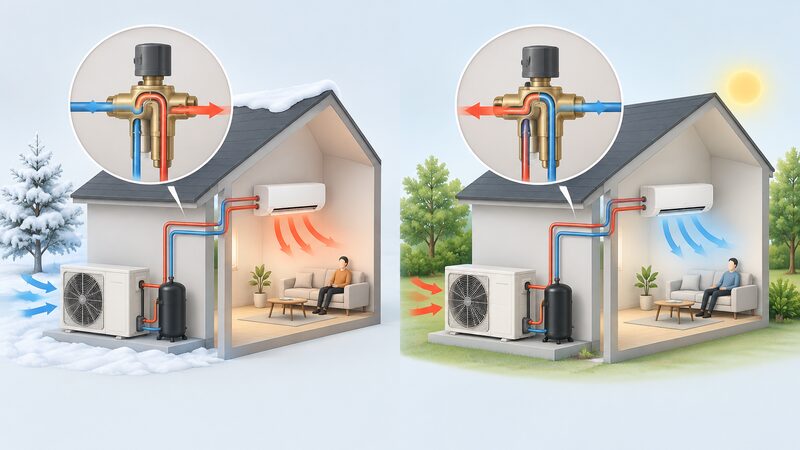
The mechanism is the same one that runs a domestic refrigerator, worked the other way round. A heat pump is a device that can provide heating, cooling and hot water for buildings, districts and even for industry, and when operated in reverse it removes heat in the same way as an air conditioner3. Many heat pumps function as heating and cooling systems, and can even provide summer air conditioning5.
What that means for a household is a shift in what the system is for. A heat pump that only heats is a replacement for a boiler. A reversible one also addresses summer overheating, which is a growing concern in UK homes. The sections below set out which types can cool, how the cooling reaches the rooms, what it costs to run, and where the limits sit.
Which types of heat pump can cool: air-to-air, air-to-water and ground source
Heat pump types include air source, ground source, and air-to-air10. The cooling question splits along those lines rather than along the heating performance of each.
Air-to-air heat pumps are the clearest case. They transfer heat from the outside air into a home using electricity, through fan coil units or blowers, and can both heat and cool air depending on what is needed11. Independent guidance describes them as ideal for park homes because they provide both heating in winter and cooling in summer, and notes that they can provide cooling that is very useful in a heatwave13. They are also reported to have lower running costs than other types of electric heating and plug-in air conditioning2.
Air-to-water heat pumps, the most common domestic type in Great Britain, heat rooms through radiators or underfloor heating7. Cooling through a water-based system is possible in principle but is a design question, not a standard function, and it is not the same as the air-to-air case.
Ground source heat pumps transfer heat from the ground outside to heat a home and its domestic hot water14. The official description of eligible heating systems covers ground source units transferring energy from the natural heat stored in the earth, and notes that heat pumps do not have to provide domestic water heating to be eligible but may do so, and may also provide water cooling16. That is the clearest official acknowledgement that a water-based heat pump can be specified for cooling as well as heating.
"Fixed air source heat pumps can be reversed so that they can draw heat from inside a building, thus providing cooling during the summer as well as indoor heating for colder periods of the year"
How cooling works: the refrigeration cycle in reverse
A heat pump does not generate heat. It moves it. The underlying process is known as the refrigerant cycle, and the device that does the work can be thought of as a refrigerator operating in reverse4. In heating mode it gathers warmth from outside, at a temperature low enough that a boiler could not use it, and lifts it to a temperature that warms a home.
In cooling mode the same circuit runs the other way. Operated in reverse, the heat pump removes heat from inside the building in the same way as an air conditioner4. The heat is not destroyed; it is rejected to the outside air or ground. That is why the European Heat Pump Association notes that heat pumps can both heat and cool, and can also recover and reuse the heat generated when cooling19.
The practical consequence is that cooling is not a separate appliance bolted onto the heating system. It is the same compressor, the same refrigerant circuit and the same external unit, with a reversing valve that changes the direction of flow. A household that installs a reversible unit gets one piece of equipment doing two jobs across the year, rather than a heat pump plus a separate air conditioning unit.
Can an air-to-air heat pump cool as well as heat?
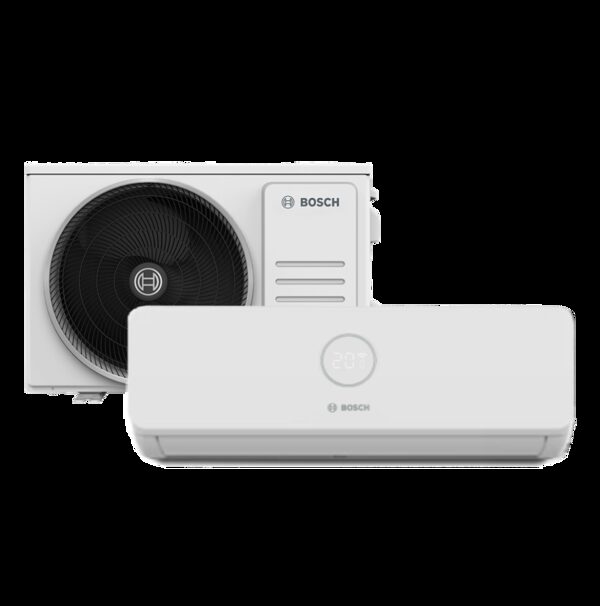
Yes, where the unit is reversible. If the unit is reversible, it can provide both heating or cooling, but not all do this2. That single condition decides the answer for any specific model.
Air-to-air heat pumps move heat between the outside air and the inside of a home through fan coil units or blowers, and reversible versions heat and cool the air depending on what is needed11. They are a good fit for park homes, where an air-to-air heat pump provides both heating in winter and cooling in summer13. Independent guidance also notes that air-to-air heat pumps can provide cooling that is very useful in a heatwave6.
The comparison with portable cooling matters here. Air-to-air heat pumps are reported to have lower running costs than other types of electric heating and plug-in air conditioning2. A plug-in unit cools one room and exhausts warm air through a window or duct; a fixed air-to-air system distributes cooled air through the home and forms part of the heating system for the rest of the year.
In southern Europe, air-to-air heat pumps are used as air conditioning units to provide space cooling20. That is the same equipment doing the same job, described by what it is used for rather than by what it is called. In the UK the heating function is usually the reason for the purchase and the cooling function is the second benefit, but the hardware is identical.
Cooling through underfloor heating and water-based systems
Water-based heat distribution is where cooling gets more complicated. Heat pumps can work with radiators or underfloor heating, but some types can work without either21. Radiators are sized for heating, with a small surface area relative to the room, and they are a poor way to distribute cooling. Underfloor heating is the better fit.
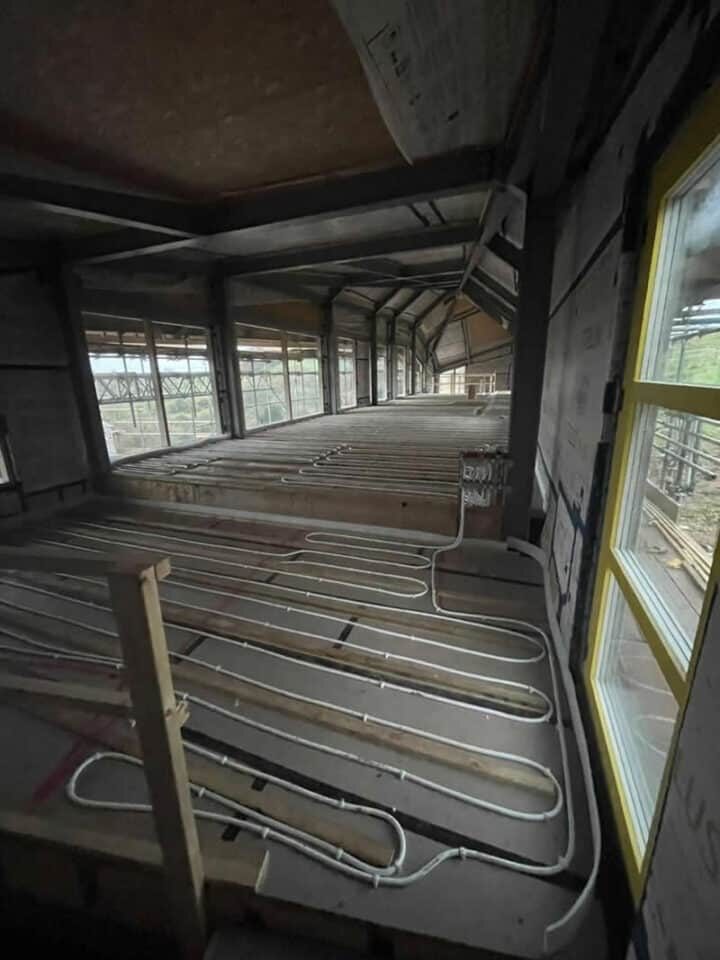
Underfloor heating can be either a wet system that pumps warm water through pipes under the floor, or a dry system of electric coils22. The wet version is the one that pairs with a heat pump. Water-based underfloor heating is easy to combine with low carbon heating systems like heat pumps, and because it has a larger surface area than radiators it can be run at lower boiler or heat pump flow temperatures, saving money on energy bills8. Underfloor heating is often installed in combination with a heat pump and works with all types of heating systems23.
That lower flow temperature is the key to both efficiency and cooling. With underfloor heating the flow temperature could be lower compared with radiators, and this should result in the heat pump running much more efficiently8. A system designed to circulate water at a modest temperature in winter can, with the right controls and design, circulate cooler water in summer to take the edge off a hot floor and room.
Existing radiators may need upgrading or resizing when a heat pump is fitted, and underfloor heating systems work particularly well with heat pumps because they provide consistent warmth at lower temperatures15. A household planning a heat pump and interested in summer cooling is therefore choosing a distribution system at the same time as choosing the heat source.
What cooling means for running costs and summer comfort
The published running cost figure for heat pumps is £800 to £1,050 a year, which makes them one of the cheapest electric heating options6. That figure covers heating. Cooling is additional operation, and no separate published figure for cooling cost exists in the material available here. A household should treat the heating figure as the baseline and expect cooling to add to it.
Several factors drive running costs in either mode. Lowering the heat pump's flow temperature reduces the reaction time of the heating system and has a big impact on running costs24. Topping up wall, floor and loft insulation before installing a heat pump will help reduce its running costs25. Heat pumps can keep homes comfortable on smart tariffs by heating steadily at times when electricity is cheaper, without noticeable change for most households26.
On the savings side, Dr Jan Rosenow is quoted as saying that a household could save more than 50% on running costs with a heat pump compared to a gas boiler, but that this requires high quality installation, high efficiency and a heat pump tariff27. The same claim appears elsewhere as a household saving as much as 50% and more on running costs compared with a gas boiler, under the same three conditions28. Those conditions are demanding, and the figure is a modelled potential rather than a guarantee.
For summer comfort specifically, the value of cooling is not captured in a running cost figure. It is the difference between a home that overheats and one that does not. A well-designed heat pump system should provide a consistent temperature around a home throughout the year, even during the coldest days29. Where the system is reversible, that consistency extends into the warm months.
Cooling and household energy independence
A heat pump changes what a home depends on. A gas boiler depends on the gas grid and on imported gas. A heat pump runs on electricity, and the more of that electricity comes from British sources, the less the household is exposed to imported fuel.
The independent analysis is direct on this point. Households with a heat pump and electric vehicle are far less dependent on foreign oil and gas imports, and make more use of British electricity9. The same analysis states that insulating homes and running electric heat pumps and cars on an even partly renewable grid would boost energy independence9. That is the strategic case, and it applies to a heat pump whether or not it ever runs in cooling mode.
The dependence that remains is real and should be stated plainly. A heat pump still needs a grid connection and a supplier. It still needs a manufacturer for parts, warranty and servicing. Where the system is controlled through an app or a cloud service, that is a further dependency the household does not control. Cooling capability does not change any of this; it adds a function to a system that is already grid-connected.
There are also practical dependencies inside the home. For exhaust air heat pumps, whole-home heating depends on the size of the home, how much hot water is needed, and how airtight the home is30. Those same variables shape what a system can deliver in cooling. A household considering a heat pump for summer cooling is therefore considering the whole system: the heat source, the distribution, the controls and the tariff.
"Households with a heat pump and electric vehicle are far less dependent on foreign oil and gas imports, make more use of British electricity"
Planning and eligibility points that touch cooling
Air source heat pump installation sits under permitted development in England, subject to conditions. One of those conditions is that the unit is not used solely for cooling purposes31. A reversible heat pump whose primary purpose is heating, with cooling as a secondary function, sits within that framing. A unit installed purely as an air conditioner would not.
On the support side, the official description of eligible heating systems for the Domestic Renewable Heat Incentive notes that heat pumps do not have to provide domestic water heating to be eligible, but may do so, and may also provide water cooling16. That confirms that a water-based heat pump specified with a cooling function is not disqualified from support on that ground alone.
The cost picture is significant. Depending on the type, a heat pump can cost between £14,000 and £28,000 in Great Britain7. That is the installed cost range across types, and it is the figure a household should hold alongside any running cost claim. Cooling capability is one factor in choosing between types, and air-to-air units sit at a different point in that range from ground source.
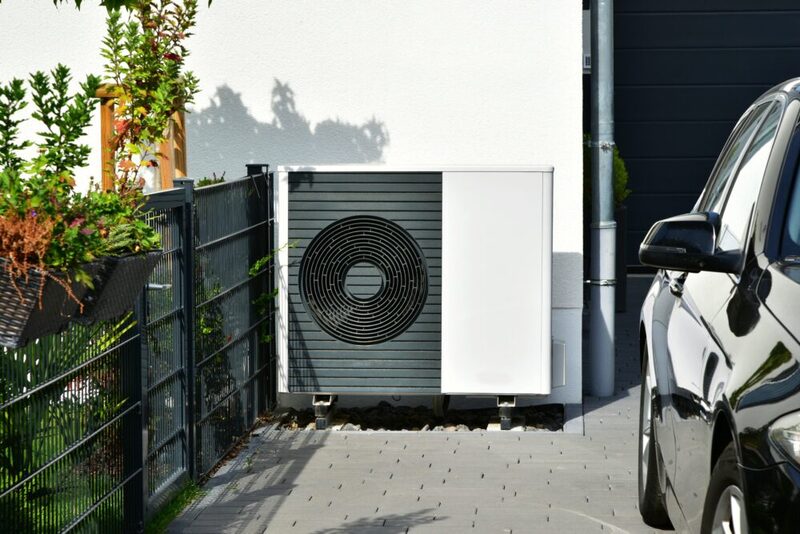
Sources31 cited
- What heating options are available off the grid?, OFTEC, 2026-09-20
- How a heat pump can cool your home, Which?, 2026-07-17
- About heat pumps, European Heat Pump Association, 2026-04-24
- Heat pumps, CIBSE, 2026-09-17
- Heat pumps vs boilers, The CPA, 2025-02-18
- Electric heating, Centre for Sustainable Energy, 2026-06
- How do heat pumps work, Smart Energy GB, 2026-03-16
- Underfloor heating, Energy Saving Trust, 2025-10-02
- Household energy buying British, Energy and Climate Intelligence Unit, 2024-04-15
- Air source heat pumps, Energy Saving Trust, 2026-07-16
- Heating your home with renewable energy, Which?, 2025-09-22
- Heating your home, Energy Saving Trust, 2026-05-19
- Park homes, Centre for Sustainable Energy, 2026-07
- How heat pumps work: a guide for homeowners, NICEIC, 2025-09-17
- Is your home suitable for a heat pump?, The CPA, 2026-02-18
- Eligible heating systems, Ofgem, 2026-09-17
- VAT energy-saving materials and grant-funded heating supplies, HMRC, 2026-09-17
- Heat pumps, REA, 2026-09-17
- Cooling matters: the other side of heat pumps, European Heat Pump Association, 2026-07-31
- How the UK compares to the rest of Europe on heat pump uptake, Nesta, 2023-08-08
- Underfloor heating system, NICEIC, 2026-09-17
- Underfloor heating, Uswitch, 2025-12-10
- How to ensure a heat pump runs efficiently, Energy Saving Trust, 2026-05-19
- Is now a good time to get a heat pump?, Energy Saving Trust, 2025-12-12
- How smart meters work with heat pumps, Smart Energy GB, 2026-04-24
- Air source heat pump costs and savings, Which?, 2026-04-14
- An introduction to heat pumps, Which?, 2025-09-22
- The best way to run your central heating to save money, ivie, 2026-09-20
- Heat pump fact check, Energy Saving Trust, 2026-07-01
- Exhaust air heat pumps, Energy Saving Trust, 2025-06-05
- Planning permission: air source heat pump, Planning Portal, 2026-09-17
 Using a Heat Pump for CoolingCan a heat pump cool your home in summer as well as heat it in winter?
 Cooling and Heat PumpsCan an air conditioner heat your home as well as cool it?
 The Full Heat Pumps GuideWill a heat pump keep my house warm in winter, and what does one cost to buy and run?
 Heat Pump Running CostsWhat does a heat pump cost to run each year, and is it cheaper than a gas boiler?
 Which Homes Suit a Heat PumpMost UK homes can have a heat pump fitted, so the real question is whether yours makes it easy or expensive.
 How They Perform in UK HomesHow well do heat pumps really work in UK homes, and why do some run far better than others?