

In this guide
A heat pump can cool a home as well as heat it, but only some of them, and only under conditions that are worth understanding before anything is bought. The mechanism is the same refrigeration cycle run in reverse: fixed air source heat pumps can be reversed so that they draw heat from inside a building, providing cooling during the summer as well as indoor heating for colder periods of the year1. Which? puts the same point more cautiously: if the unit is reversible, it can provide both heating or cooling, but not all do this2.
The distinction that matters most is between air-to-air and air-to-water. An air-to-air system warms the air inside a building instead of heating water in radiators or underfloor heating pipes, and it usually has one unit outside and at least one unit inside, connected by pipes carrying a refrigerant3. Some hydronic, air-to-water heat pumps can also provide cooling by reversing the process of transferring heat from one place to another, but again not all can2. Cooling through radiators or underfloor pipes is a different engineering problem from cooling through an indoor air unit, and it brings condensation risk with it.
On money, the figures are narrower than most households expect. Energy Saving Trust gives about £1,900 to heat a single room and about £3,700 to heat a three-bedroom semi-detached house3. Which? gives around £1,900 to install a single-unit system to serve a single room2. The Boiler Upgrade Scheme offers £2,500 towards an air-to-air heat pump, but only in an off-gas grid property replacing a liquefied petroleum gas heating system4.
How an air-to-air heat pump cools: the same cycle run in reverse
Cooling is not a separate appliance bolted onto a heating system. It is the refrigeration circuit doing what it already does, with the direction of heat movement flipped. HMRC's own technical manual describes fixed air source heat pumps that can be reversed so that they draw heat from inside a building, thus providing cooling during the summer as well as indoor heating for colder periods of the year1. The outdoor unit becomes the place heat is dumped, and the indoor unit becomes the place heat is collected.
Which? adds the qualification that matters commercially: reversibility is a feature, not a default. If the unit is reversible, it can provide both heating or cooling, but not all do this2. A cooling-only unit is a different product from a reversible one, and the planning rules treat it differently, as the section below sets out.
For air-to-water systems the picture is more complicated. Which? notes that some hydronic heat pumps can also provide cooling by reversing the process of transferring heat from one place to another, but not all can2. Where they can, the cooling is delivered through the same wet emitters used for heating, which means chilled water in radiators, underfloor loops or fan coil units. That is where condensation becomes a real design consideration rather than a theoretical one: pipework and emitters that sit below the dew point of the room air will attract moisture, and the lower the flow temperature, the greater the risk. The practical consequence is that air-to-water cooling is usually designed around a floor temperature limit or a fan coil rather than a conventional radiator.
Ground source systems approach cooling differently again. A ground loop sits in soil that stays at a relatively stable temperature year round, so circulating fluid through it can reject heat to the ground without running a refrigeration cycle at all. This is often described as passive cooling, and it uses far less electricity than active cooling because the compressor is not doing the work. The trade-off is that the cooling capacity available is modest and depends on the ground loop design, and the same loop is the household's winter heat source, so the two duties have to be balanced.
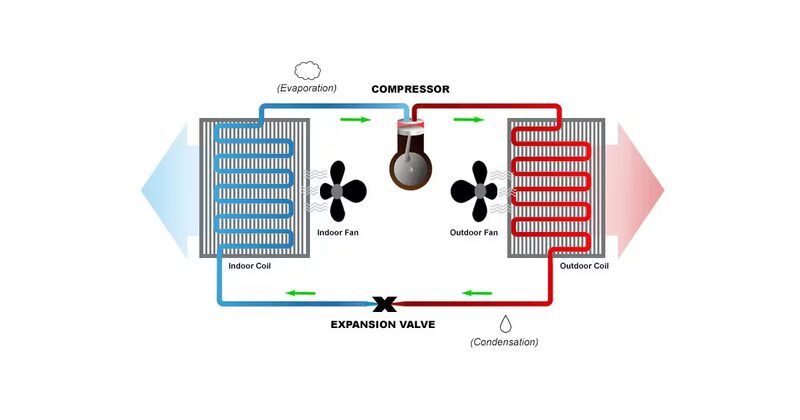
Heating and cooling in one unit: what an air-to-air system does
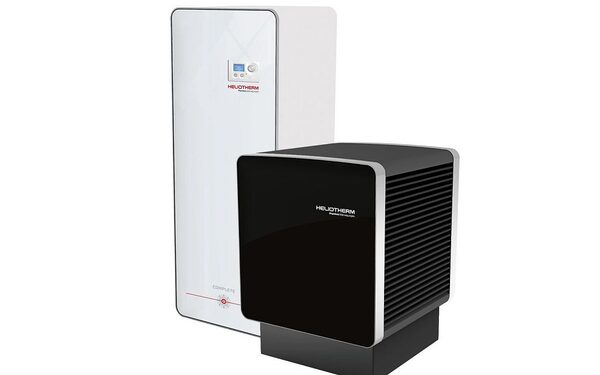
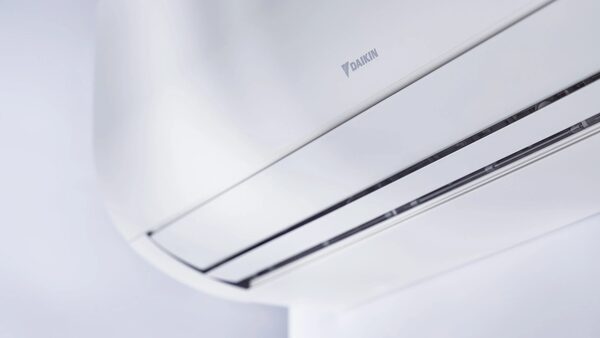
An air-to-air heat pump is a split system: usually one unit outside and at least one unit inside, connected by pipes carrying a refrigerant between the two3. The indoor unit warms the air inside the building instead of heating water in radiators or underfloor heating pipes3. That single design choice explains most of the system's strengths and most of its limits.
The strength is that the same hardware delivers both services. Parliament's written evidence describes air to air heat pumps, often known as air conditioning units, as also providing an alternative, efficient heating option4. A household that installs one for summer comfort gets winter heating from the same unit, and the running cost of that heating is set by the same efficiency principles as any other heat pump.
The limit is coverage. Which? states that individual wall-mounted monobloc units only heat and cool one room, so they are not a whole-house solution2. A multi-split system with several indoor units addresses that to a degree, but each indoor unit still serves its own space, and the outdoor unit has to be sized for the combined load. Energy Saving Trust notes that air-to-air systems are more often installed in smaller properties, such as flats and park homes, and that their outdoor units are typically smaller than those of air-to-water heat pumps3.
There is also a ventilation point that catches people out. Energy Saving Trust states that air-to-air heat pumps do not blow fresh air into the room, instead recirculating the existing air3. Cooling a room with recirculated air is not the same as ventilating it. Fresh air still has to come from windows, trickle vents or a mechanical ventilation system, and in a well-sealed home that is a separate design question from the heating and cooling itself.
"They don't blow fresh air into the room, instead they recirculate the existing air."
Air-to-air vs air-to-water: which suits which home
The two families of heat pump cool in fundamentally different ways, and the choice usually follows the building rather than the preference.
| Air-to-air | Air-to-water | |
|---|---|---|
| What it heats | Air inside the building3 | Water in radiators or underfloor pipes3 |
| Cooling delivery | Indoor air unit | Chilled water through wet emitters, where supported2 |
| Typical properties | Smaller properties such as flats and park homes3 | Wider range, including larger homes |
| Hot water | Not usually provided3 | Requires a water storage cylinder9 |
| BUS grant | £2,500, off-gas grid LPG replacement only4 | £7,5006 |
Air-to-air suits a smaller house or flat with relatively few rooms, especially one that overheats in warm weather, which Which? describes as the case where an air-to-air heating and cooling system can be especially cost-effective2. The same source notes that these units only heat and cool one room, so they are not a whole-house solution2. In a flat, that limitation is often acceptable: one indoor unit in a living space covers the room that actually overheats.
Air-to-water suits a home that already has, or is prepared to have, a wet distribution system. It brings hot water with it, because heat pumps require a water storage cylinder to provide hot water, similar to older generations of gas boiler systems9. Cooling is possible on some models but not all, and where it is, the emitters and flow temperatures need designing for it2.
For a household weighing the two, the useful framing is what the system has to do across the year. A flat that needs summer cooling and some winter top-up heat is a different proposition from a house that needs full winter heating, hot water and occasional summer cooling. The air-to-air versus air-to-water comparison sets out the wider trade-offs, and the air-to-air heat pump guide covers the heating side in more detail.
Costs and running costs: from £1,900 for a single room to £3,700 for a semi
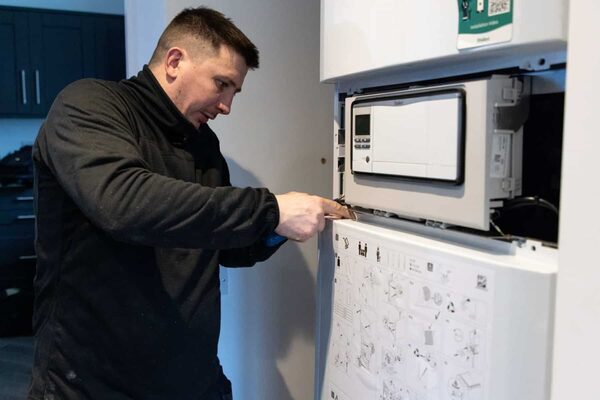
Installation figures for air-to-air systems are given per room or per property rather than per kilowatt. Energy Saving Trust gives about £1,900 to heat a single room and about £3,700 to heat a three-bedroom semi-detached house3. Which? gives around £1,900 to install a single-unit system to serve a single room2. These are capital costs, not running costs, and prices are installer-quoted rather than published.
For comparison, wet heat pump installations sit in a much higher band. The Public Accounts Committee reported a wider range in the cost of installing a heat pump of between £8,000 and £15,000 depending on the work that needed to be done to the home10. Scottish Government guidance on a small home and apartment heat pump gives a cost, combined with installation, estimated to be around £6,000 to £8,000 depending on whether any radiators need to be replaced11. Boiler Upgrade Scheme statistics for England and Wales give a nominal median cost of an air-to-water heat pump of £12,908 in 2026 Q2, April to June12.
Running costs are harder to pin down, and the honest position is that the data is thin. Energy Saving Trust states that there is currently not much data on how air-to-air systems perform in the UK, so it is difficult to know how much money they save3. For heat pumps generally, official statistics give an annual heating cost of £2,100 to £2,500 for a three-bedroom semi-detached house in Great Britain regions, as of March 202613. That figure is for heat pumps as a category and is not specific to air-to-air cooling.
Grants and MCS certification: the £2,500 Boiler Upgrade Scheme route
Air-to-air heat pumps are now inside the Boiler Upgrade Scheme, but on narrow terms. The scheme offers £2,500 towards an air-to-air heat pump5, and the approved grant category is an air-to-air heat pump in an off-gas grid property that is replacing a liquefied petroleum gas heating system6. The grant is available in residential properties only14.
The restriction that catches most households is the addition rule. Which? states that the grant cannot be used to add an air-to-air heat pump as an additional heating or cooling system alongside a gas or oil boiler2. In other words, the £2,500 is for a replacement of an LPG system off the gas grid, not for bolting summer cooling onto an existing fossil fuel heating setup.
The comparison with wet systems is stark. The Boiler Upgrade Scheme offers £7,500 towards an air source heat pump, sometimes called an air-to-water heat pump6, and £7,500 towards a ground source heat pump, including water source heat pumps and those on shared ground loops5. Ground source vouchers are valid for six months14. Boiler Upgrade Scheme statistics record 2,388 cumulative ground source voucher applications received in England and Wales between May 2022 and July 2026, with 2,024 vouchers issued and 1,567 redemptions paid12.
Energy Saving Trust's position, published on 11 September 2026, is that grants for air-to-air heat pumps are not available yet but will be in the future3. That sits alongside the scheme rules that already provide £2,500 for the off-gas grid LPG replacement case, and the two are best read together: the general route is still developing, while a specific replacement category already exists. The heat pump grants guide covers the schemes across the four nations, and the air-to-air grant eligibility page explains why the technology has historically been excluded.
Certification is moving in parallel. The MCS archive lists a news item dated 8 September 2026 on air-to-air heat pumps entering the MCS scheme, described as the next phase of implementation. Certification matters because it is what makes a technology visible to the grant system and to warranty and quality frameworks, and the standards and certification guide sets out how that structure works.
Planning permission and where the units go
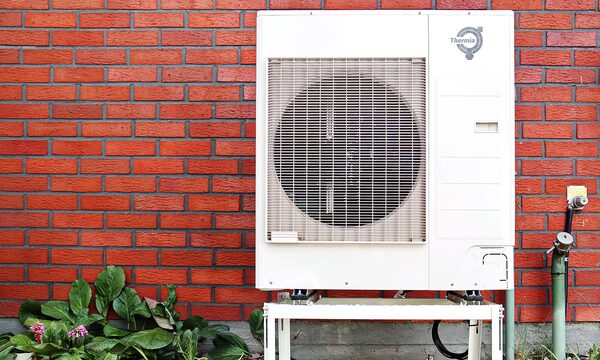
Air-to-air units are now included within air source heat pump permitted development rights, as long as they are used for heating, not just cooling16. That single condition does most of the work in this section: a reversible unit installed for both heating and cooling sits inside the permitted development framework, while a unit designed for the purpose of cooling only does not. Welsh Government guidance states plainly that it cannot be a unit designed for the purpose of cooling only17.
The general conditions for air source permitted development apply. The unit must be located within your property, and it must meet permitted development size and location limits18. Quantity limits bite on non-detached homes: where the property is not detached, meaning semi-detached or terraced, or is a block of flats, more than one air source heat pump requires planning permission19. New Forest District Council sets out the equivalent rule in terms of existing units: one existing air source heat pump on a non-detached dwelling or block of flats, or two existing units on a detached dwelling house, requires planning permission20.
Position on the wall is restricted. No unit can be installed on any part of a wall above the ground floor storey if fronting a highway21. Outside a conservation area, an air source heat pump cannot be installed on a wall of a dwellinghouse if that wall fronts a highway and the heat pump would also be installed on any part of that wall above the level of the ground floor storey17. In a conservation area, no units can be nearer to any highway than any part of the building21.
Listed buildings are a separate regime. If the property is listed, listed building consent is usually needed before installing an air source heat pump, even if planning permission is not required18. Bristol City Council notes that adding renewable energy solutions like solar panels or air and ground source heat pumps might be acceptable but will require listed and or planning consent22. Croydon Council states that planning permission and listed building consent are both needed for an air source heat pump on a listed building21.
Ground source systems are treated more simply. The installation of a ground source heat pump or a water source heat pump on domestic premises is usually considered to be permitted development, not needing an application for planning permission23. Installation within the curtilage, the garden or grounds, of a house or block of flats does not require planning permission, but listed building consent may be required if the property is listed20. In a listed building or conservation area, the Planning Portal advises contacting the council to check on local requirements23.
Hot water: why most models don't provide it, and the alternatives
Air-to-air heat pumps generally do not make hot water. Energy Saving Trust states that they do not usually provide hot water for taps and shower3. Which? allows for exceptions: some air-to-air systems can be connected to a domestic hot water tank to provide hot water, although not all do this2. A household considering one should establish which case applies to the specific model rather than assuming either way.
The reason is structural. An air-to-air unit warms the air inside the building instead of heating water in radiators or underfloor heating pipes3. There is no water circuit to draw from, so hot water has to come from somewhere else unless the system is one of the minority designed with a cylinder connection.
Wet heat pumps handle this differently, and the difference is worth stating because it shapes the whole system design. Heat pumps do not provide hot water on demand like a combi boiler, so another way to provide hot water is needed7. Unlike combi boilers, heat pumps do not provide hot water instantly, so a hot water cylinder is required21. Heat pumps require a water storage cylinder, similar to older generations of gas boiler systems9.
There is a scheduling consequence too. Official methodology notes that the heat pump will not provide any space heating until water heating demand is satisfied24. A cylinder has to be brought up to temperature before the heating circuit gets attention, which is why cylinder sizing and reheat times matter more with a heat pump than with a boiler.
For a household with an air-to-air system, the practical alternatives are a separate cylinder heated by an immersion or a dedicated hot water heat pump, or retaining an existing water heating appliance. The hot water cylinders guide and the hot water heat pump page cover those routes.
How well it performs in the UK: efficiency, SEER and the limits of the data
The performance picture for air-to-air cooling in the UK is genuinely incomplete, and it is better to say so than to imply a figure. Energy Saving Trust states that there is currently not much data on how air-to-air systems perform in the UK, so it is difficult to know how much money they save3. That is the honest baseline for anyone comparing quotes.
What exists is broader heat pump performance evidence. Official guidance reports analysis of monitored heat pump performance data from over 1,100 UK heat pump installations25. Welsh Government guidance states that heat pumps were found to perform efficiently and effectively at temperatures far below freezing in field data research from the UK, Germany, Switzerland, Canada, USA and China26. That is a cold weather finding rather than a cooling one, but it speaks to the underlying cycle's robustness.
On efficiency generally, Welsh Government guidance gives heat pumps as up to three times more efficient than other heating systems, and as potentially cutting a heating carbon footprint by up to 70%27. Those are headline figures for heat pumps as a category, not for cooling mode, and cooling efficiency is normally expressed as a seasonal energy efficiency ratio rather than a coefficient of performance. The UK data does not supply a SEER figure for domestic air-to-air units, so none is given here.
Deployment statistics give a sense of scale and of what is counted. Heat pumps up to a capacity of 45kW are in scope of the quarterly deployment statistics28, and the June 2025 statistics cover hydronic heat pumps with a capacity up to 45kW installed in the United Kingdom29. Air-to-air units are not the focus of that series, which is one reason the performance evidence is thinner for them.
For a household, the practical implication is that cooling performance claims should be treated with caution unless they come with monitored data from a comparable UK installation. The heat pump efficiency guide explains how COP, SCOP and SPF differ, and the performance in UK homes page covers what field monitoring has shown.
Noise, air quality and the practical realities of living with one
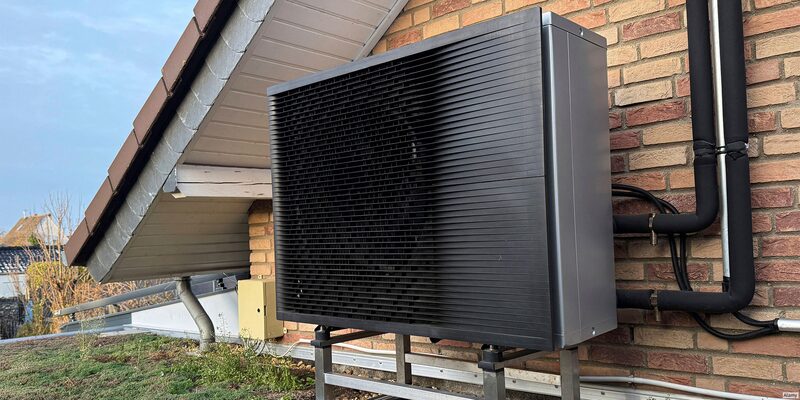
Noise is the most common practical objection to an outdoor unit, and the rules reflect that. For an air source heat pump on its own, noise levels must stay at or below 42 decibels from a metre away from any habitable room8. Pendle Borough Council notes that noise can also be an issue as the external fan units can generate a considerable level of noise30.
Assessment is not a single number. Westmorland and Furness Council lists the factors that bear on it: existing background noise levels, the characteristics of the noise, noise levels at all operating modes including defrost cycles, the distance between the unit and neighbouring properties, and noise barriers or mitigation measures18. Defrost cycles matter particularly in winter, when a unit may run at its loudest while the household least wants to notice it.
Welsh Government research on air source heat pump noise and permitted development found that one pump per house is optimal for low sound pressure levels in housing estate simulations31. The same research found that for an air-to-air heat pump used in listening tests, the single best descriptor of annoyance is the peak psychoacoustic roughness31. That is a technical way of saying that the character of the sound, not just its volume, drives how noticeable it is.
Air quality is a lesser but real consideration. An air-to-air unit recirculates the existing air rather than drawing in fresh air3, so it filters and moves what is already in the room. Filters need cleaning or replacing on a schedule, and a unit that is neglected will circulate dust as readily as cool air. The heat pump noise guide and the MCS 020 noise assessment page cover the assessment method in detail, and the siting and clearances guide covers where an outdoor unit can go.
What cooling does for a household's energy independence
Cooling capability changes what a heat pump is for, and that changes the independence calculation. A reversible air-to-air unit gives a household summer comfort without a separate air conditioning appliance, running on electricity the household already buys. Where that electricity comes from solar and a battery, the cooling load can be met without drawing on the grid at the time of day when demand is highest. The solar and battery page covers how that combination works in practice.
The dependence that remains is worth stating plainly. An air-to-air system still runs on electricity from a supplier, and it still depends on a manufacturer for parts, refrigerant and controls, and often on a cloud service or app for scheduling and monitoring. It does not provide hot water, so a household keeps a second appliance and a second fuel or electricity draw for that. And it does not remove gas dependence on its own: the Boiler Upgrade Scheme route for air-to-air is specifically the off-gas grid LPG replacement case6, and the grant cannot be used to add one alongside a gas or oil boiler2.
For a household already off the gas grid, the picture is stronger. Replacing an LPG heating system with a reversible air-to-air unit removes a delivered fuel entirely, and the £2,500 grant is aimed at exactly that case6. For a household on mains gas, an air-to-air unit is more likely to be an addition than a replacement, and additions do not reduce dependence on the existing heating fuel.
The wider context is that heat pump policy is moving toward electrified heat. The energy independence guide sets out how household-level choices connect to national fuel security, and the policy and targets page covers the rules coming. Refrigerant rules are part of that picture: the refrigerants guide explains how F-gas restrictions shape which units can be sold, which matters for anyone buying a split system now and expecting to service it for a decade or more.
Sources31 cited
- VAT Energy Saving Materials and Grant Funded Heating Supplies: VENSAV3080, GOV.UK, 2026
- How a heat pump can cool your home, Which?, 2026
- Air-to-air heat pumps, Energy Saving Trust, 2026
- Written evidence on heat pumps, UK Parliament, 2023
- Apply for the Boiler Upgrade Scheme: what you can get, GOV.UK, 2026
- Notice of approved grant categories and values for the Boiler Upgrade Scheme, GOV.UK, 2026
- Heat pump installation: a step by step guide, Energy Saving Trust, 2026
- Building regulations and renewables guidance, Bedford Borough Council, 2026
- What impact can heat pumps have in domestic heating today, GOV.UK, 2023
- Heat pump installation cost report, Public Accounts Committee, 2024
- Heat in buildings: multiple ownership and mixed use buildings, Scottish Government, 2023
- Boiler Upgrade Scheme statistics, July 2026, GOV.UK, 2026
- Heat pumps and domestic heating, House of Commons Library, 2026
- Boiler Upgrade Scheme guidance for installers v5.1, Ofgem, 2026
- Boiler Upgrade Scheme guidance for installers v5, Ofgem, 2026
- Planning guidance: heat pumps, Richmond Council, 2026
- Planning permission: heat pumps, Welsh Government, 2026
- Class G: installation or alteration of air source heat pumps on domestic premises, legislation.gov.uk, 2026
- Air source heat pumps: householder planning advice, Central Bedfordshire Council, 2026
- Air source heat pumps, Westmorland and Furness Council, 2026
- Air and ground source heat pumps, Croydon Council, 2026
- Making alterations to a listed building, Bristol City Council, 2026
- Heat pumps, Planning Portal, 2026
- Heat pump methodology: HEM TP 12, GOV.UK, 2026
- How to ensure a successful transition to heat pumps for households at risk of fuel poverty, GOV.UK, 2026
- Specialist ground source heat pumps for homeowners, Development Bank of Wales, 2024
- Your essential guide to heat pumps, Welsh Government, 2025
- Heat pump deployment tables, Q2 2026, GOV.UK, 2026
- Heat pump deployment statistics: June 2025, GOV.UK, 2025
- Fact sheet 5: air source heat pumps, Pendle Borough Council, 2026
- ASHPs: noise and permitted development rights in Wales, phase 1 report, Welsh Government, 2024
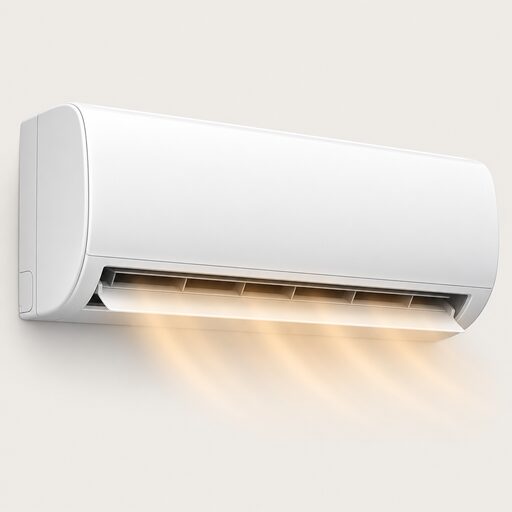 Air-to-Air Heating and CoolingAir-to-air heat pumps deliver warm air through indoor fan units rather than hot water to radiators.
 Radiators and EmittersWill your radiators still heat the house properly with a heat pump?
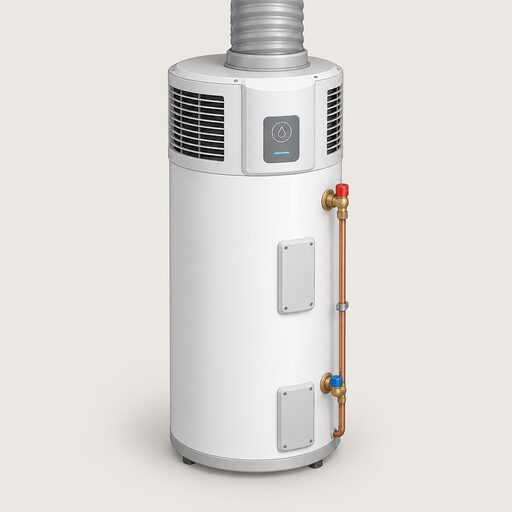 Hot Water Heat PumpsA hot water heat pump heats only the water in your cylinder, using air instead of a boiler flame.
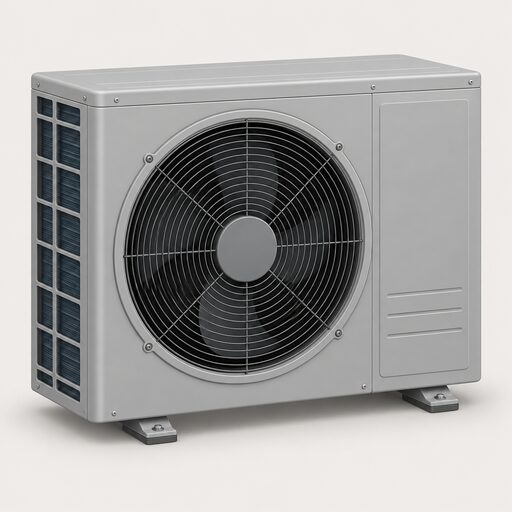 Cooling and Heat PumpsCan an air conditioner heat your home as well as cool it?
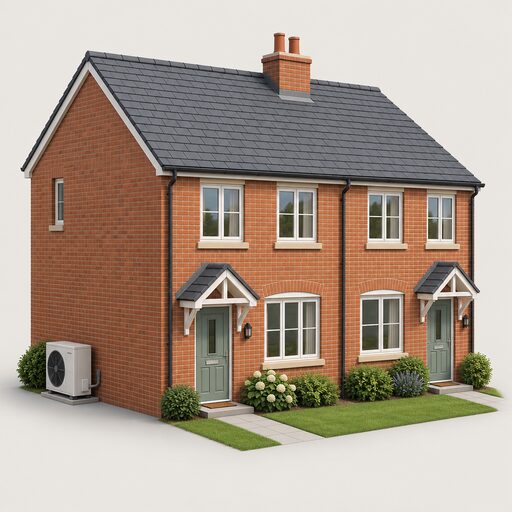 Which Homes Suit a Heat PumpMost UK homes can have a heat pump fitted, so the real question is whether yours makes it easy or expensive.
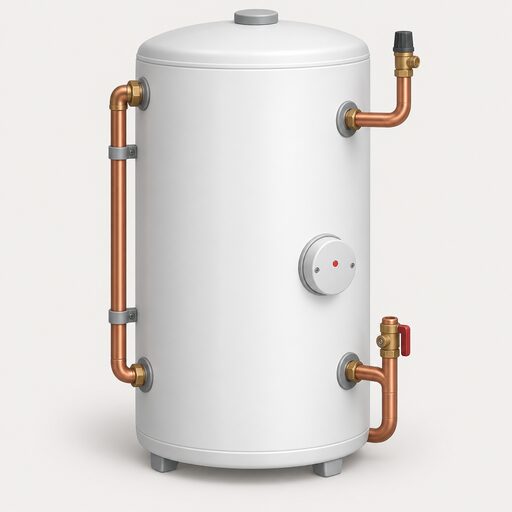 Air-to-Water Wet SystemsAir-to-water heat pumps feed radiators, underfloor heating and a hot water cylinder, and are the most common domestic heat pump in the UK.