

In this guide
There is no grant in the UK for standalone air conditioning. No public scheme in England, Scotland, Wales or Northern Ireland funds a cooling-only unit, and the planning rules that allow an air source heat pump to go in without an application carry the same condition: the unit must not be solely used for the purpose of cooling1. A household looking for help with cooling costs will not find a hot weather counterpart to the winter payments.
What does exist is a grant for a heat pump that cools as well as heats. The Boiler Upgrade Scheme pays £2,500 towards an air-to-air heat pump, £7,500 towards an air-to-water heat pump or a ground source heat pump, and £9,000 towards an air-to-water or ground source heat pump in an eligible off-gas grid property replacing an oil or liquefied petroleum gas system2. The scheme is administered by Ofgem, runs in England and Wales only, and opened on 23 May 20224.
The distinction matters because it decides who can be helped. A reversible air-to-air system is a heat pump that provides cooling in summer, so it fits the scheme's purpose. A split air conditioner bought for cooling alone does not, however efficient it is. The rest of this page sets out the amounts, the eligibility rules, the installer-led process and the support that cannot be combined with a Boiler Upgrade Scheme grant.
The short answer: grants exist for heat pumps that also cool, not for standalone air conditioning
The dividing line in every official document is whether the equipment is a heat pump or a cooling appliance. The Boiler Upgrade Scheme funds air-to-water heat pumps, air-to-air heat pumps, ground source heat pumps including water source heat pumps and shared ground loops, and biomass boilers3. A portable air conditioner, a monobloc cooler or a split system installed only to cool a bedroom is none of these, and no grant applies.
The same line appears in planning law rather than grant rules. Class G permitted development for air source heat pumps on domestic premises requires that the air source heat pump is not solely used for the purpose of cooling1. Councils restate it in their own guidance: the unit must not be used solely for cooling purposes, and it cannot be a unit designed for the purpose of cooling only7. Air-to-air units are now included within air source heat pump permitted development rights, as long as they are used for heating, not just cooling7.
So the practical position is that a household wanting cooling has two routes into public money, and both run through heating. The first is a reversible air-to-air heat pump, which the scheme treats as a heating system that happens to cool. The second is an air-to-water heat pump, which heats radiators or underfloor circuits and can, with the right emitters and controls, provide some cooling, though the scheme funds it as a heating replacement. A cooling-only installation attracts nothing.
Air-to-air heat pumps: the £2,500 grant that provides cooling as well as heating
The £2,500 air-to-air grant is the closest thing in the UK to public support for home cooling, and it is worth being precise about what it is. It is a capital grant towards the cost and installation of an air-to-air heat pump in a residential property, paid at £2,500 from 21 July 20262. The scheme describes it as £2,500 off the cost and installation of air-to-air heat pumps for residential properties only2.
An air-to-air heat pump moves heat between the outside air and the inside air, and reversing the cycle turns a heater into a cooler. That is why it qualifies where a cooling-only split does not. The grant is the same whether the household's main interest is winter heating or summer cooling, because the scheme assesses the technology, not the motive.
The amount is smaller than the air-to-water grant, and the gap is deliberate: £7,500 goes to air-to-water and ground source systems, which replace a boiler and a full central heating circuit, while £2,500 goes to a system that typically serves fewer rooms and does not produce hot water3. For a household weighing a multi-split air-to-air system against a traditional boiler replacement, the £2,500 reduces the capital cost but does not change the fact that the system provides no hot water cylinder.
The voucher for an air-to-air installation runs for three months, the same as air-to-water and biomass, and shorter than the six months allowed for ground source heat pumps6. That window shapes the project: the installer has to complete and commission the work inside it, or re-apply.
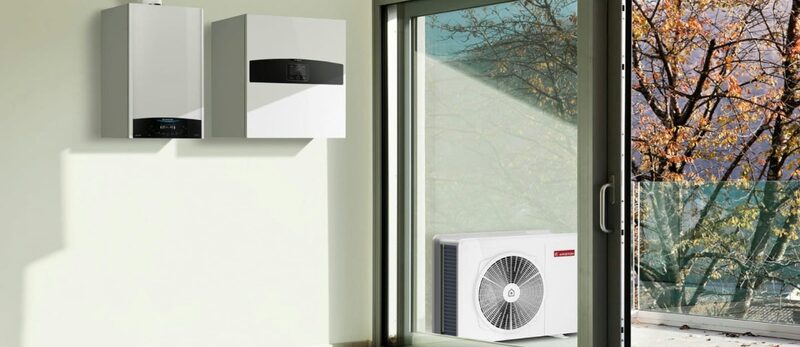
Boiler Upgrade Scheme at a glance: what it funds and who runs it
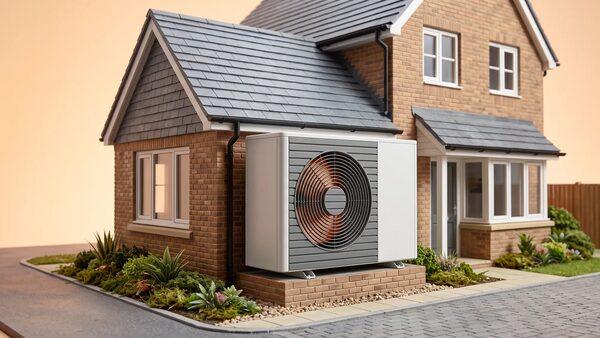
The Boiler Upgrade Scheme is a government scheme that provides upfront grants to help reduce the cost of installing heat pumps and biomass boilers in homes and non-domestic buildings4. It provides upfront capital grants towards the cost of installing approved heat pumps, and it launched on 23 May 2022 to support the decarbonisation of heat in buildings10. Ofgem is the scheme administrator, and installers apply to Ofgem for a grant voucher5.
The scheme supports the decarbonisation of homes and small and medium non-domestic buildings in England and Wales, and only properties in England and Wales are eligible3. It opened on 23 May 2022 and closes on 30 December 20295. As of 28 April 2026 the scheme has been extended to 2030, and applications properly made on or after 28 April 2026 fall under the current rules, with uplifted grants for eligible off-gas grid properties available on or after 21 July 20263.
The application is a two-stage process: the installer submits a voucher application, Ofgem issues the voucher, the installer submits a voucher redemption application, and the installer receives the grant payment11. The grant is applied upfront as a discount to the cost of the installation, and the household does not receive the grant directly: it is paid to the installer9.
| Element | Detail |
|---|---|
| Administrator | Ofgem5 |
| Opened | 23 May 202210 |
| Closes | 30 December 20295 |
| Extent | England and Wales3 |
| Grant type | Upfront capital grants10 |
| Installer requirement | MCS certified5 |
| Grant limit | One grant per property2 |
The scheme's budget has been a moving target. One parliamentary briefing records £295 million for 2025/26, with 2024/25 funding increased by £30 million, while other official guidance gives a figure of £450 million; the two figures are not reconciled12. Unspent budget is not carried over to the next scheme year, which is why the pace of applications matters to anyone planning work late in a year11.
Grant amounts: £2,500, £7,500 and the £9,000 off-gas-grid uplift
The grant depends on the technology and, for off-gas grid homes, on what is being replaced. The published values from 21 July 2026 are £2,500 for an air-to-air heat pump, £7,500 for an air-to-water heat pump or a ground source heat pump, and £9,000 for an air-to-water or ground source heat pump in an off-gas grid property replacing a heating system fuelled by oil or liquefied petroleum gas3.
| Technology | Grant | Conditions |
|---|---|---|
| Air-to-air heat pump | £2,500 | Residential properties only2 |
| Air-to-water heat pump | £7,500 | Standard rate3 |
| Ground source heat pump | £7,500 | Standard rate3 |
| Air-to-water or ground source, off-gas grid | £9,000 | Replacing oil or LPG heating3 |
The £9,000 uplift is the largest single amount available to a household, and it is targeted at the homes with the highest running costs to escape: those burning oil or LPG with no mains gas connection. The uplifted grant applies to air-to-water and ground source heat pumps, not to air-to-air systems, so an off-gas grid household wanting cooling through an air-to-air unit still sees £2,5003.
There is a conflict in the official material on the headline air source figure. One government page states £7,500 off the cost and installation of an air source heat pump, while other scheme rules describe grants of up to £7,50013. The £7,500 figure is consistent across the current guidance for air-to-water systems, and the £2,500 figure is consistent for air-to-air, but a household should treat the exact amount as confirmed at voucher stage rather than assumed from a headline.
The grant is a contribution, not a price. No published figure in the scheme material sets the total installed cost of any system, so the balance a household pays is installer-quoted and depends on the property, the number of indoor units and the work needed. The grant reduces the invoice; it does not cap it.
Eligibility: which properties, which systems being replaced, and which are excluded
The property must have a valid energy performance certificate, and the installer must be certified by the Microgeneration Certification Scheme5. The system being replaced must be a fossil fuel heating system such as gas, oil or LPG, or an electric heating system excluding existing heat pumps9. Funding will not be available for the replacement of existing low carbon heat systems, and a household cannot get a grant to replace a low carbon heating system14.
Several categories are excluded outright. Properties classed as social housing are not eligible for BUS funding, and this includes shared ownership properties9. New build properties which the developer is still building are not eligible, though a household moving into a finished new build with a fossil fuel boiler may be able to get a grant for a heat pump5. A property that has already been given government funding or support for a heat pump or biomass boiler is excluded, and a property is not eligible if a previous BUS grant has already been received for installing a heat pump or biomass boiler at the same address5.
Hybrid systems are outside the scheme: a household cannot get a grant for a hybrid heat pump system, for example a combination of gas boiler and air source heat pump2. There is one grant per property2.
For households on lower incomes, the Home Upgrade Grant route has been aimed at low income households in properties off the gas grid and in energy efficiency bands D to G, providing energy efficiency upgrades and low carbon heating12. That is a warmth and efficiency scheme rather than a cooling one, and it does not fund air conditioning.
How the installer-led application works, from voucher to discount
The application is installer-led, with the installer applying for the grant on the property owner's behalf13. Installers who are MCS certified can apply for and redeem Boiler Upgrade Scheme vouchers, and the installer provides the household's details to Ofgem, which emails the household asking them to consent to the installer applying on their behalf4.
The sequence runs as follows.
- The household agrees a quote with an MCS certified installer.
- The installer applies to Ofgem for a grant voucher, submitting the total quote amount including any VAT before the grant is deducted, the total cost of the heat pump unit without the grant deducted, the quote reference number and the date on the quote16.
- Ofgem emails the household to confirm consent.
- The installer completes and commissions the installation within the voucher window.
- The installer submits the redemption application and receives the grant payment11.
Installers are responsible for passing on the discount that the grant provides to the property owner, and the grant is applied upfront as a discount to the cost of the installation rather than paid to the household16. That structure protects the household from waiting for a payment, but it also means the household's protection is the installer's competence and solvency, not a direct relationship with Ofgem.
Where a retrofit installation has no valid EPC, the voucher application can use a utility bill or fuel receipt dated within the last three months from the date the voucher application is submitted3. General queries about an application go to the BUS Enquiries team at BUS.Enquiry@ofgem.gov.uk9.
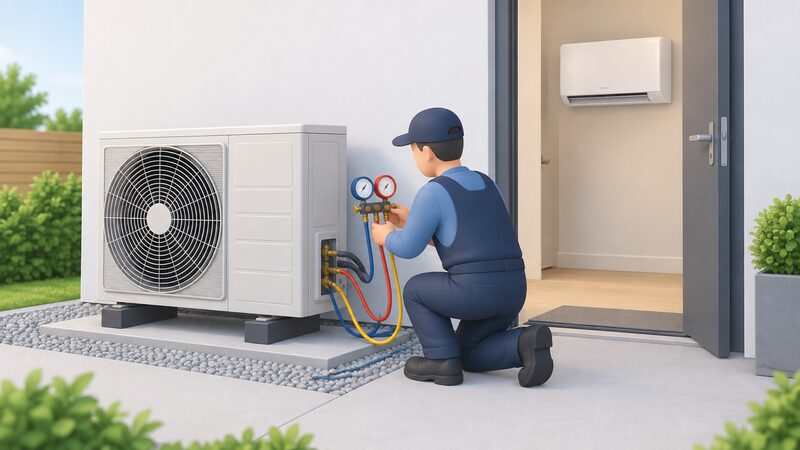
Where the scheme falls short for households wanting air conditioning
The scheme's limits for cooling are structural rather than administrative. It funds heating replacements, so a household that wants cooling and already has a working heating system has no obvious route: the grant is designed around replacing a fossil fuel or electric heating system, not adding a cooling appliance9. A home with a modern gas boiler and a hot bedroom in July is not the scheme's target.
The £2,500 air-to-air grant is also the smallest of the three headline amounts, and it applies to residential properties only2. A household wanting to cool several rooms with a multi-split system will find the grant covers part of the capital cost but does not scale with the number of indoor units, and the system produces no hot water, so a separate water heating arrangement remains.
The voucher window is short. Three months for air-to-air, air-to-water and biomass installations, and six months for ground source, with no extension possible once a voucher expires, though installers can re-apply for a new voucher6. In a trade with long lead times for equipment and labour, a three-month window can be missed through no fault of the household, and a re-application restarts the process.
The scheme also cannot be combined with other public funding on the same measure. Funding from BUS and ECO cannot be blended for the same measure or be included within an ECO4 project, and funding for measures delivered under ECO4 cannot be blended with other government schemes or grants15. A household hoping to stack a grant with an energy company obligation measure on the same installation will be told to choose one.
Other support: 0% VAT, ECO rules and what cannot be combined
VAT treatment is the other form of public support, and it is narrower than it is often described. Heating equipment that is not funded through an energy efficiency grant carries 20% VAT17. Where a qualifying reduced-rate grant scheme funds the installation, the reduced rate can apply to installing certain heating appliances, but the relief does not extend to installations of other energy-efficient products18. A qualifying scheme must have, as one of its objectives, the funding of the installation of energy-saving materials in the homes of qualifying persons19.
That means the VAT position follows the grant. An installation funded through a qualifying scheme can attract the reduced rate on the covered work; equipment bought outside such a scheme, including most cooling equipment, sits at the standard rate. Wind turbines are a Northern Ireland only entry in the same guidance, which shows how specific the relief is17.
The combination rules are strict across schemes. Funding cannot be blended within the ECO4 package of measures, and funding for measures delivered under ECO4 cannot be blended with other government schemes or grants15. Under the Warm Homes: Social Housing Fund Wave 3, funding from other government energy efficiency schemes does not count towards the 50% co-funding requirement20.
| Scheme | What it funds | Combination rule |
|---|---|---|
| Boiler Upgrade Scheme | Heat pumps and biomass boilers4 | Cannot blend with ECO for the same measure15 |
| ECO4 | Energy efficiency measures | Cannot blend with other government schemes or grants15 |
| Warm Homes: Local Grant | Insulation, efficient heating, renewables21 | Social housing capped at 10% of homes22 |
| Warm Homes: Social Housing Fund | Low carbon heating | Other government funding does not count to co-funding20 |
The Warm Homes: Local Grant is the main local authority route, delivered through councils. It funds insulation, energy-efficient heating systems and renewable energy installations, and it uses an EPC rating of D to G as its eligibility test21. Landlords can apply for multiple eligible homes but get full funding for only one home, and must pay half of the upgrade costs for any eligible homes upgraded after the first one24. Social housing must not exceed 10% of homes upgraded during a project, with clear justification required22.
Scotland, Wales and Northern Ireland: what each nation offers
The Boiler Upgrade Scheme does not cover Scotland or Northern Ireland, and its grants are not available there3. Each nation runs its own support, and none of it is aimed at cooling.
In Northern Ireland, the Affordable Warmth Scheme offers grant aid up to £10,000 for homes of solid wall construction needing insulation, and applications go through the NI Energy Advice Service, which sends an application form to households that meet the entry requirements; the completed form and supporting documents go to the local Grant Office25. Grants for home energy efficiency in Northern Ireland are available to homeowners and private tenants, and grant information and energy advice come from NI Energy Advice by email or on 0800 1114 45526. Belfast City Council directs residents to the same home heating support26.
In Scotland, Home Energy Scotland offers grants and loans, and people living in rural areas can apply for extra grant funding, with up to £1,500 extra for energy-efficiency improvements and up to £1,500 extra for clean heating systems12. That is warmth and efficiency support, not cooling.
In Wales, the Boiler Upgrade Scheme does apply, because the scheme covers England and Wales3. Welsh planning guidance on heat pumps restates the cooling condition: it cannot be a unit designed for the purpose of cooling only8. Warm Homes: Local Grant delivery runs through councils in England, with London boroughs running their own warmer homes programmes23.
What an air-to-air heat pump means for household energy independence
An air-to-air heat pump changes what a household buys from the grid, and it is worth being exact about how much. It replaces a fossil fuel heating system or an electric resistance heater with a system that moves heat rather than generating it, so the same comfort comes from less purchased energy. Where the grant applies, £2,500 of the capital cost is met publicly, which lowers the entry price of that switch2.
The independence is partial and it has a shape. The system runs on electricity, so the household remains dependent on the grid and on a supplier for every hour of heating and cooling. It removes a gas or oil connection from the heating side, which is a real reduction in exposure to fuel imports and to a boiler that cannot be repaired quickly, but it does not remove the meter. A household that adds solar panels and a battery reduces the imported share further; without them, the running cost tracks the electricity price.
There is also a manufacturer and installer dependency. The grant requires an MCS certified installer, and the warranty and servicing relationship sits with that company and the equipment maker5. The household does not hold the grant; the installer claims and receives it, and passes on the discount16. If the installer ceases trading before redemption, the household's position depends on the contract it signed, not on Ofgem.
The cooling benefit is the part that no other grant provides. A reversible air-to-air system gives a household mechanical cooling in summer without buying a separate cooling-only appliance, and it does so within permitted development rights as long as it is used for heating, not just cooling7. That is the practical meaning of the £2,500: not a grant for air conditioning, but a grant for a heat pump whose cycle happens to run both ways.
Sources26 cited
- Class G: installation or alteration of air source heat pumps on domestic premises, legislation.gov.uk, 2026-09-17
- Boiler Upgrade Scheme: what you can get, GOV.UK, 2026-09-17
- Boiler Upgrade Scheme guidance for installers v5.1, Ofgem, 2026-07-02
- Boiler Upgrade Scheme (BUS), Ofgem, 2026-09-17
- Boiler Upgrade Scheme: check if you're eligible, GOV.UK, 2026-09-17
- BUS guidance for property owners v5 draft, Ofgem, 2026-03-25
- Planning guidance: heat pumps, London Borough of Richmond upon Thames, 2026-04-22
- Planning permission: heat pumps, Welsh Government, 2026-09-17
- Boiler Upgrade Scheme guidance for property owners V5, Ofgem, 2026-04-28
- Boiler Upgrade Scheme annual report April 2025 to March 2026, Ofgem, 2026-07-31
- Boiler Upgrade Scheme quarterly report issue 17, Ofgem, 2026-08-31
- Research briefing CBP-9585, House of Commons Library, 2026-09-17
- Boiler Upgrade Scheme, Find government grants service, 2026-09-18
- Boiler Upgrade Scheme leaflet, Department for Business, Energy and Industrial Strategy, 2022-05
- ECO4 delivery guidance v3.2, Ofgem, 2025-12-08
- Boiler Upgrade Scheme installer guidance, Ofgem, 2022-07-21
- Tax on shopping: energy saving products, GOV.UK, 2026-09-17
- VAT energy saving materials and grant funded heating supplies: VENSAV4300, HM Revenue and Customs, 2026-09-17
- VAT energy saving materials and grant funded heating supplies: VENSAV4050, HM Revenue and Customs, 2026-09-17
- Warm Homes: Social Housing Fund wave 3 scheme guidance addendum, Department for Energy Security and Net Zero, 2026-06
- Home and business grants, schemes and advice, East Hertfordshire District Council, 2026-09-17
- Warm Homes Local Grant policy guidance, Department for Energy Security and Net Zero, 2026-07
- Apply for a Warm Homes Local Grant, Liverpool City Council, 2026-09-17
- Warmer Homes, Greater London Authority, 2026-09-17
- Affordable Warmth Scheme, Northern Ireland Housing Executive, 2026-09-17
- Home heating, Belfast City Council, 2026-09-20
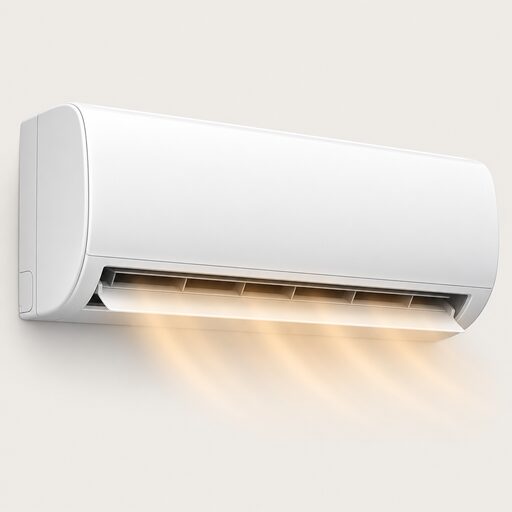 Air-to-Air Heating and CoolingAir-to-air heat pumps deliver warm air through indoor fan units rather than hot water to radiators.
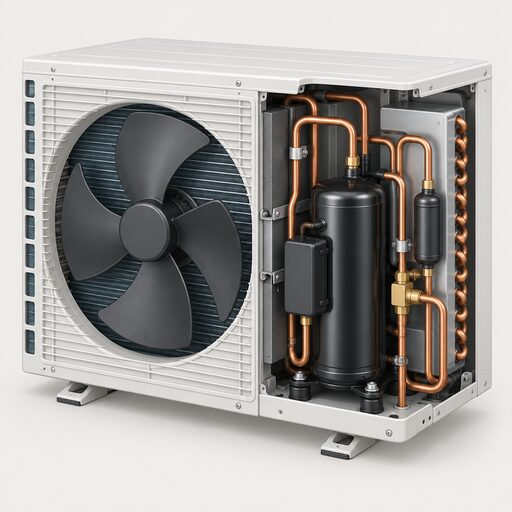 Air Source Heat PumpsHow an air source heat pump takes heat from outdoor air, the difference between air-to-air and air-to-water systems, typical efficiency, the £7,500 Boiler Upgrade Scheme grant, noise and planning limits, and what ownership means for a household's energy independence.
 How Much Does a Heat Pump CostA heat pump usually costs around eleven thousand pounds installed, though quotes vary a lot depending on your home.
 Ground Source Heat Pump CostWhat a ground source heat pump costs in the UK, splitting groundworks and drilling from the heat pump and internal works, and how the £7,500 Boiler Upgrade Scheme grant and the £9,000 off-gas-grid uplift change the figure.
 Air Conditioning CostPublished UK equipment prices and the parts of an installed price for portable, single split, multi-split and whole-house air conditioning.
 The Full Cooling and Air Conditioning GuideDo you really need air conditioning in a British summer, or would a fan and better shading do the job?