
In this guide
A ground source heat pump costs more than £10,000 to install, according to official guidance, and independent guidance puts the figure far higher: the Energy Saving Trust range cited by Uswitch is £28,000 to £57,000, depending on whether trenches or a borehole are used to lay the ground loop1. The gap between those two numbers is the whole story of ground source pricing. The heat pump itself is a box; the cost is the ground.
Official statistics give a median upfront cost of around £20,000 for ground and water source heat pumps in the UK, against around £10,500 for air-to-water3. That is the comparison that matters for a household weighing the two technologies, and it is a 2021 figure.
The Boiler Upgrade Scheme softens the number rather than transforming it. A ground source heat pump attracts £7,500 off the cost and installation, and an eligible off-gas-grid property replacing oil or liquefied petroleum gas attracts £9,0004. Both are upfront discounts applied through the installer, not cheques.
What a ground source heat pump costs in the UK
The published figures do not agree, and the disagreement is informative rather than a problem to be resolved. Croydon Council's retrofit guidance gives a single headline: cost more than £10,0001. The Energy Saving Trust range reported by Uswitch runs from £28,000 to £57,000, and the variable it names is the ground loop: trenches or a borehole2. Government statistics sit between the two, at a median upfront cost of around £20,000 for ground and water source heat pumps in 20213.
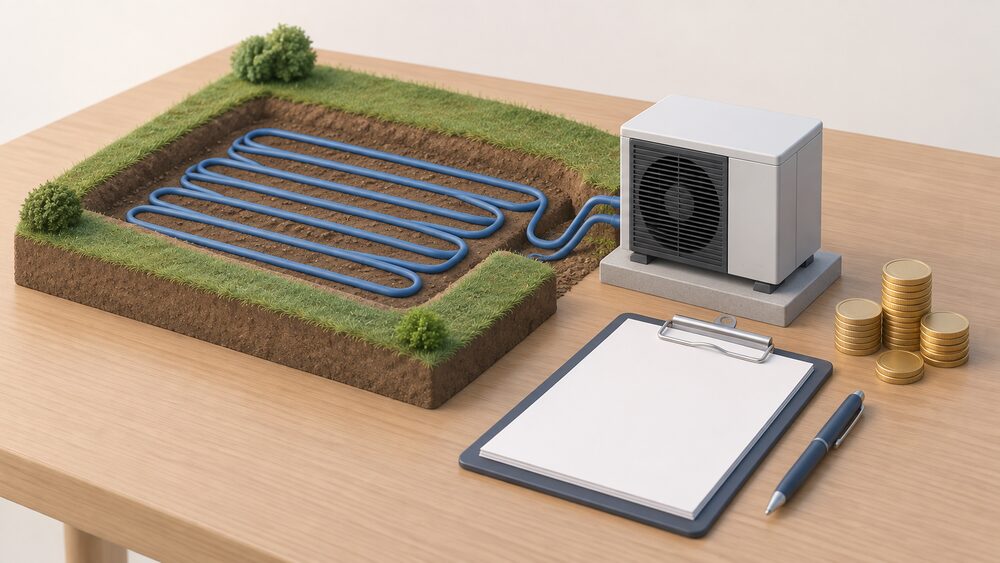
The reason for the spread is that a ground source installation is two projects. The first is the collector: horizontal trenches dug across a garden, or one or more vertical boreholes drilled where land is short. The second is the heat pump, the cylinder, the pipework and the electrical connection inside the house. A trench is cheap per metre and needs space; a borehole is expensive per metre and needs almost none. That single choice moves the total more than any brand decision.
Ground conditions add a second layer. Rock, made ground, archaeology, services and water table all affect drilling time and cost, and none of them are visible before a survey. Access matters too: a drilling rig needs a route to the loop field, and a narrow side return or a terraced back garden can rule out a borehole rig entirely.
For a household, the practical expectation is that a ground source quote will be installer-specific in a way an air source quote is not. There is no published UK price list that covers the groundworks, because the groundworks are priced per site. What the published figures give is the order of magnitude and the reason for the range, not a budget line.
The £7,500 grant, and the £9,000 off-gas-grid uplift
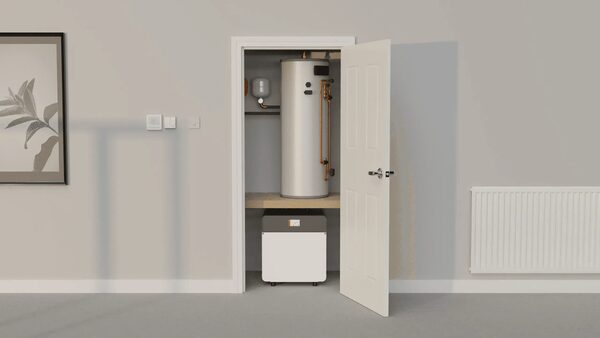
The Boiler Upgrade Scheme provides upfront capital grants towards the cost of installing approved heat pumps, and it is administered by Ofgem8. For a ground source heat pump the standard grant value is £7,500 off the cost and installation, and that figure covers water source heat pumps and those on shared ground loops as well4.
Where the property is off the gas grid and the heating system being replaced runs on oil or liquefied petroleum gas, the grant rises to £9,0005. Ofgem's installer guidance sets out the uplifted value explicitly, and the uplifted grant applies to applications properly made on or after 21 July 20266.
| Technology | Grant value | Voucher validity |
|---|---|---|
| Ground source heat pump | £7,500 | 6 months6 |
| Ground source heat pump, off-gas grid, replacing oil or LPG | £9,000 | 6 months6 |
| Air-to-water heat pump | £7,500 | 3 months6 |
| Air-to-air heat pump | £7,500 | 3 months6 |
The scheme opened on 23 May 2022 and closes on 30 December 20294. As of 28 April 2026 it has been extended to 20306. The £7,500 level itself is not new: the grant for air source and ground source heat pumps was increased to £7,500 from 23 October 2023, having previously been £5,000 and £6,000 respectively10.
One point of disagreement sits in the published material. Uswitch reports the scheme as offering homeowners up to £6,000 to install a ground source heat pump in place of existing gas or oil heating2. That figure does not match the £7,500 and £9,000 values in the official scheme rules and guidance, and the two figures stand unreconciled. The official figures are the ones the scheme is administered on.
What the grant covers and what it does not
The grant is a contribution to the cost and installation of the heat pump. It is not a schedule of works, and it does not itemise groundworks, drilling, radiators, cylinder or electrical upgrades. Ofgem describes the scheme as providing upfront capital grants to support the installation of heat pumps and biomass boilers in homes and non-domestic buildings11.
What the scheme does specify is the technology and its performance. Eligible technologies are air-to-water heat pumps, air-to-air heat pumps, ground source heat pumps including water source heat pumps and shared ground loops, and biomass boilers6. Ground source heat pumps must achieve an in situ seasonal coefficient of performance of at least 2.86. All heating systems installed under the scheme must meet the relevant MCS standards approved and published by the Secretary of State6.
Capacity limits apply. An individual heat pump system is capped at 45 kWth, a multi heat pump system at 70 kWth, and a shared ground loop system at 300 kWth total, with each connected heat pump not exceeding 45 kWth6. Those ceilings sit far above a typical house.
The grant also does not cover the loop field as a separate item, and it does not scale with the size of the groundworks. A property needing a deep borehole and a property needing a shallow trench attract the same £7,500, which is why the grant covers a larger share of a trench installation than of a drilled one.
Eligibility: who can claim the grant
The scheme supports the decarbonisation of homes and small and medium non-domestic buildings in England and Wales4. Only properties in England and Wales are eligible6. Scotland and Northern Ireland run separate arrangements, and the grant figures in this article do not apply there.
The property must be replacing a fossil fuel heating system such as gas, oil or LPG, or an electric heating system that is not already a heat pump8. The previous heating system being replaced must have been either a fossil fuel-based system or an electric heating system that does not include a heat pump6.
Several exclusions matter to households:
- Properties classed as social housing are not eligible for BUS funding, and that includes shared ownership properties8.
- Self-build properties are eligible for heat pumps only, not biomass6.
- A property is not eligible if a previous BUS grant has already been received for installing a heat pump or biomass boiler at the same address6.
- Only one voucher can be redeemed per property6.
The energy performance certificate requirement has changed. Croydon's guidance states that a property must have a valid energy performance certificate1, but Ofgem's installer guidance states that from 28 April 2026 properties are no longer required to have a valid EPC to apply for BUS6.
The installer must be certified by the Microgeneration Certification Scheme, a nationally recognised certification body4. That requirement is what connects the grant to the installation standards covered below.
How the grant is paid: upfront discount, not a cheque
The grant is an upfront capital grant, and Ofgem describes the scheme as providing upfront capital grants towards the cost of installing approved heat pumps11. In practice the installer applies the discount to the quoted price and recovers the grant from Ofgem. The householder does not receive a payment.
The application is a two-stage process. The installer submits the voucher application, Ofgem issues the voucher, the installer submits a voucher redemption application, and the installer then receives the grant payment12. Ofgem is the scheme administrator, and applications for a grant voucher go to Ofgem4.
The redemption application must be properly made within 120 days of the commissioning date6. That deadline sits behind the voucher deadline, and both have to be met.
General enquiries go to the BUS Enquiries team at BUS.Enquiry@ofgem.gov.uk8. Day-to-day questions about a specific installation go to the installer, who holds the voucher.
Installation standards: MCS certification and commissioning
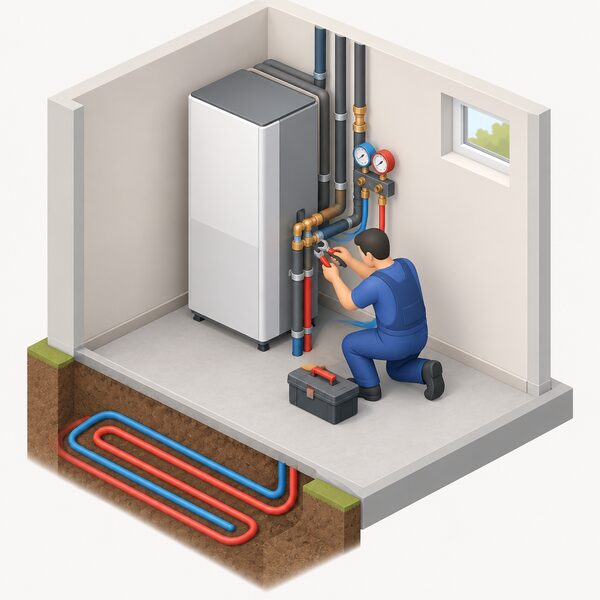
Every ground source installation claiming the grant has to be done by an MCS-certified installer, and the system has to meet MCS standards4. The Microgeneration Certification Scheme is the product and installation standard that the scheme rules point to, and it is the same standard that planning legislation in Northern Ireland defines for air source heat pumps14.
The performance requirement is the part that bites. A ground source heat pump must achieve an in situ seasonal coefficient of performance of at least 2.86. That is a measured figure from the installed system, not a laboratory rating, and it depends on the ground loop being correctly sized, the emitters being correctly specified and the system being commissioned properly.
Commissioning is what starts the clock. The redemption application must be properly made within 120 days of the commissioning date6, and the installation itself must be completed within the voucher period8.
There is support for the certification side. The MCS Certification Fund pays 75%, up to a maximum of £1,000, of the certification fees for MCS certification on heat pumps15. That is aimed at installers building the capability to work to the standard, and it is a Scottish Government measure.
For a household, the practical consequence is that the installer's certification is not a formality. It is the condition that makes the grant payable and the standard that the commissioning evidence is measured against.
Shared ground loops: costs and rules for multiple homes
A shared ground loop is a single buried collector serving several properties, with an individual heat pump in each home. The BUS grant covers them: £7,500 towards a ground source heat pump including water source heat pumps and those on shared ground loops4.
The capacity rules are set out separately for these systems. A shared ground loop system is capped at 300 kWth total, with each connected heat pump not exceeding 45 kWth6. That structure allows a terrace or a block to share one loop field while each household runs its own heat pump and its own heating controls.
Take-up has been very small. Ofgem's quarterly reporting shows 11 shared ground loop ground source heat pumps among grants paid cumulatively since launch, as at 30 November 202316, rising to 17 by 29 February 202417, and 29, or 0.05% of grants paid to date, by 29 August 202513. In the quarter from May to July 2025, two shared ground loop grants were paid13.
The RHI also shows how ground source performance has been treated historically. Ground source heat pumps with high temperature flows became eligible for the RHI as long as they had a seasonal performance factor of 2.5 or more, and the scheme's example annual payment for a ground source heat pump was £1,356.10 a year, based on a deemed heat demand of 10,000 kWh, an SPF of 3.4 and a tariff of 19.10p19. That scheme is closed to new applicants, and the figures are historical.
Running costs and efficiency: why ground source costs more to install but less to run
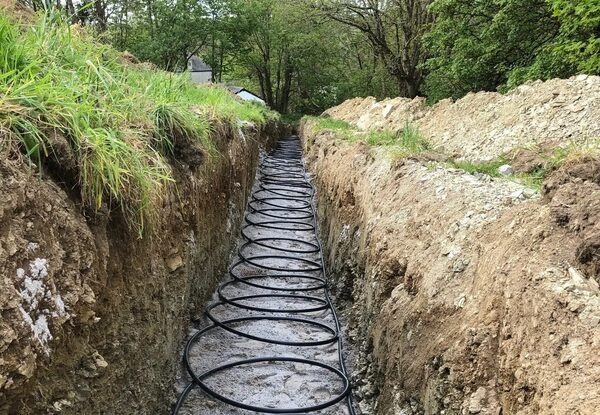
Ground source heat pumps are generally more efficient than air source, dependent on ground conditions, but have higher set-up costs20. That is the trade in one sentence. The ground stays at a more stable temperature than the air, so the pump works across a narrower temperature lift, and the efficiency advantage is largest when the air is coldest.
The installation cost difference has a physical cause. An air source heat pump is easier and cheaper to install than a ground source heat pump because it does not use buried pipes21. Ground source heat pumps are typically more expensive and require more space22.
What that buys is a system that heats the home and domestic hot water from a buried loop23. The dependence it leaves is on electricity. Fuel costs for a ground source or water source heat pump system will vary with the price of grid electricity, unless the electricity is generated on site14. A ground loop removes the fuel delivery, not the meter.
The running cost figures published in the market do not agree, and the disagreement is wide enough that no single number should be treated as a budget. One set puts annual running costs at £1,050 and £1,650; another puts them at £540 to £900. Yearly savings are given as between £520 and £2,500 depending on the type of fuel, and separately as £145 to £380.
The one comparison that is stable across sources is the direction of travel. A ground source heat pump will save much more money if it is replacing an electric or coal-based system, and may not be suitable if the home is on mains gas2. That is a statement about the fuel being displaced, not about the heat pump.
0% VAT on heat pump installations
Heat pump installations benefit from being exempt from VAT7. HMRC's guidance lists ground source heat pumps among the technologies qualifying for a lower rate of VAT, alongside air source heat pumps24.
The effect is that the quoted installation price does not carry the standard rate. For a project at the £28,000 to £57,000 end of the published range, that is a material difference to the total, and it applies to the installation rather than to the equipment alone.
The VAT position is separate from the grant. A grant-funded installation and a privately funded installation both attract the treatment, and the two do not interact.
Why the phase-out of gas boilers shapes the decision
The direction of policy is the reason a ground source quote is worth reading even where the running cost case is thin. The government has set out an intention to phase out the installation of new and replacement natural gas boilers from 2035, running in line with replacement cycle timelines so that almost all heating systems in 2050 are low carbon25. No legally binding regulatory decision has been made on that timeline.
The scheme itself runs to 30 December 2029, and as of 28 April 2026 it has been extended to 20304. The £2.7bn in funding to 2030 covers £7,500 towards the cost and installation of ground and air source heat pumps, including water source heat pumps26.
For a household, the phase-out matters in two ways. First, it sets the horizon over which a ground source installation is expected to be the last heating system fitted. Second, it makes the ground loop the durable part of the investment: the buried collector has no moving parts and no flue, and it is the part of the system that a future heat pump would reuse.
The dependence that remains is on the electricity grid and on a supplier. A ground loop is a source of heat, not a source of power, and the running cost of the system tracks the price of electricity unless that electricity is generated on site14. That is the honest limit of what a ground source heat pump does for a household's energy independence: it removes the fuel delivery and the flue, and it leaves the meter.
Sources26 cited
- Air and ground source heat pumps, Croydon Council, 2026-09-17
- Ground source heat pumps, Uswitch, 2026-01-06
- Energy innovation needs assessment: heat and buildings, Department for Energy Security and Net Zero, 2021
- Apply for the Boiler Upgrade Scheme: what you can get, GOV.UK, 2026-09-17
- Boiler Upgrade Scheme, Ofgem, 2026-09-17
- Boiler Upgrade Scheme guidance for installers v5.1, Ofgem, 2026-07-02
- Heat pump, Clean Energy Campaign, 2026-09-10
- Boiler Upgrade Scheme guidance for property owners v5, Ofgem, 2026-04-28
- Boiler Upgrade Scheme statistics, July 2026, Department for Energy Security and Net Zero, 2026-08-27
- Boiler Upgrade Scheme quarterly report, Issue 6, Ofgem, 2023-11-30
- Boiler Upgrade Scheme annual report, April 2025 to March 2026, Ofgem, 2026-07-31
- Boiler Upgrade Scheme quarterly report, Issue 14, Ofgem, 2025-11-26
- Boiler Upgrade Scheme quarterly report, Issue 13, Ofgem, 2025-08-29
- Low carbon equipment and building regulations: ground source heat pumps, Scottish Government, 2010-03
- Heat in buildings progress report 2025, Scottish Government, 2025-10-02
- Boiler Upgrade Scheme quarterly report, Issue 5, Ofgem, 2023-08-31
- Boiler Upgrade Scheme quarterly report, Issue 7, Ofgem, 2024-02-29
- Domestic Renewable Heat Incentive: eligible heating systems, Ofgem, 2026-09-17
- Renewable Heat Incentive guidance for consumers, RECC, 2026-09-17
- Advice on improving energy efficiency, Eryri National Park Authority, 2022
- Fact sheet 5: air source heat pumps, Pendle Borough Council, 2026-09-17
- F-gas regulation in Great Britain: HFC phasedown reform, Defra, 2025-09-02
- VAT energy saving materials and grant funded heating supplies, HM Revenue and Customs, 2026-09-17
- Energy saving products, GOV.UK, 2026-09-17
- Heat and Buildings Strategy, Department for Energy Security and Net Zero, 2035-01
- Carbon Budget and Growth Delivery Plan: heat and buildings investor factsheet, Department for Energy Security and Net Zero, 2026-06-23
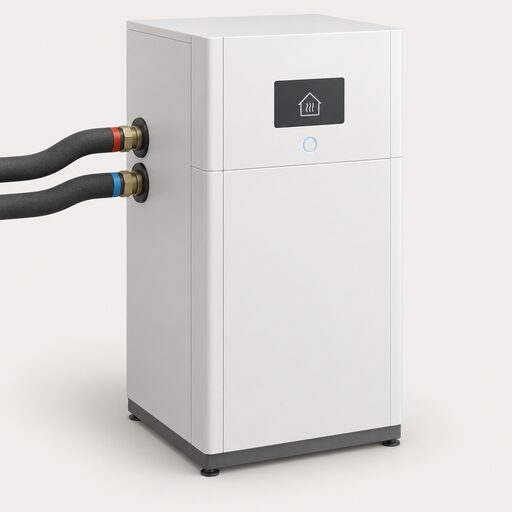 Ground Source Heat PumpsA ground source heat pump takes warmth from the ground to heat your home and water.
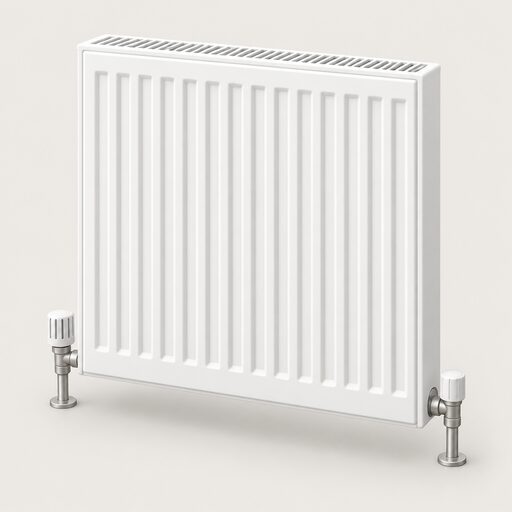 How Much Does a Heat Pump CostA heat pump usually costs around eleven thousand pounds installed, though quotes vary a lot depending on your home.
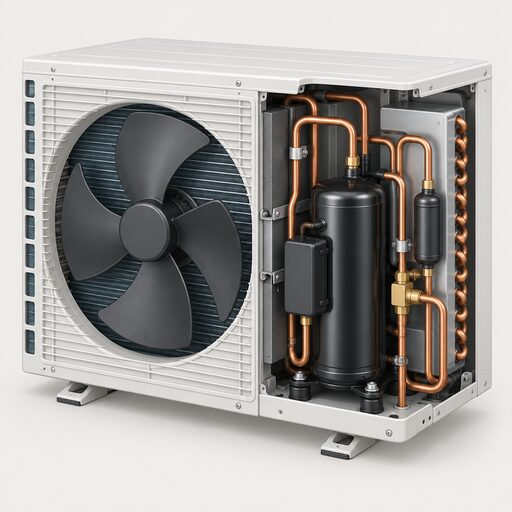 Air Source Heat PumpsHow an air source heat pump takes heat from outdoor air, the difference between air-to-air and air-to-water systems, typical efficiency, the £7,500 Boiler Upgrade Scheme grant, noise and planning limits, and what ownership means for a household's energy independence.
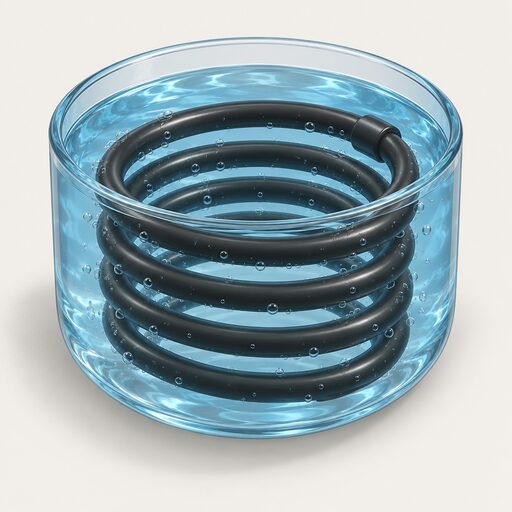 Water Source Heat PumpsYour home sits near a river, lake or the sea.
 High Temperature Heat PumpsHigh-temperature heat pumps deliver flow temperatures of roughly 65 to 80°C, close to boiler levels, so existing radiators can often stay in place.
 Cost of Energy IndependenceA heat pump and better insulation are the usual starting point, but what does the whole job really cost, and what help is there with the bill?