

In this answer
Short answer
The Boiler Upgrade Scheme pays £7,500 towards an air-to-water or ground source heat pump in England and Wales, and £5,000 towards a biomass boiler1. Households off the gas grid, heating with oil or LPG, can apply for an uplifted grant of £9,000 for an air-to-water or ground source heat pump2. Air-to-air heat pumps attract a smaller grant of £2,5003.
The grant is not paid to the householder. It is applied upfront as a discount to the cost of the installation, and the installer claims it back from Ofgem, the scheme administrator4. That single design choice shapes almost everything else about the scheme: who applies, what the quote must show, and what happens if the installer gets it wrong.
The scheme opened on 23 May 2022 and has paid just over 80,000 grants worth £560 million between May 2022 and March 20265. It has been extended to 2030, with funding set to rise each year from £400 million in 2026 to 2027 to £709 million in 2029 to 2030, totalling £2.7 billion over the period under the government's Warm Homes Plan6.
The grant amount: £7,500 for a heat pump, £5,000 for a biomass boiler
The headline figure is £7,500 for a heat pump, confirmed in the notice of approved grant categories and values for the scheme1. Independent guidance from MCS and from Community Energy England both put the heat pump grant at up to £7,5008. The same £7,500 applies to ground source heat pumps as to air source, though the two technologies differ sharply in installation cost and in what they need from the property.
Biomass boilers sit at a lower rate. The Carbon Budget and Growth Delivery Plan factsheet gives £5,000 off the cost and installation of a biomass boiler, alongside £2,500 grants for air-to-air heat pumps3. Air-to-air systems are a different proposition from the air-to-water units that dominate the scheme: they heat air directly rather than water, so they cannot feed a wet central heating system or a hot water cylinder.
The scheme's own guidance describes it as providing upfront capital grants towards the cost of installing approved heat pumps10. It is a capital contribution, not a running-cost subsidy, and it does not vary with household income, property size or the eventual cost of the installation.
One point of disagreement sits in the documents. The scheme rules state a grant of up to £7,500, while separate official guidance gives £5,000 for a heat pump. The two figures are not reconciled in the material available, and the £7,500 figure is the one carried by the approved grant values notice and by independent guidance1.
The £9,000 uplift for off-gas-grid homes
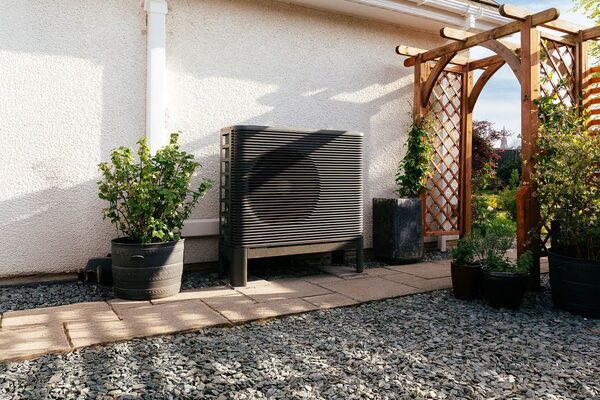
From 21 July 2026, eligible off-gas grid properties can apply for an uplifted grant of £9,0002. The uplift applies to air-to-water heat pumps and ground source heat pumps, and the property must not be fuelled by mains gas11. In practice that means homes heating with oil or LPG, which are the households the uplift was designed around.
The scheme rules describe it as the £9,000 uplifted grant value, available off the cost and installation of air-to-water or ground source heat pumps in eligible off-gas grid properties1. Official statistics confirm the same figure for off-grid properties heated by LPG or oil12. Independent guidance from the Low Carbon Hub repeats it: £9,000 if off the gas grid on oil or LPG heating13.
The uplift closes a gap that had been visible for years. Off-gas-grid homes typically face the highest upfront costs of any household switching to a heat pump, because they often need a full system replacement rather than a swap, and their existing fuel is the most expensive and most carbon-intensive available. Industry bodies representing oil and LPG users responded to the announcement as a funding increase for exactly that group14.
The £9,000 figure has been described as being in line with the funding available in Scotland14. Scotland operates its own domestic funding rather than the Boiler Upgrade Scheme, so the comparison is about parity of support rather than a shared scheme.
How the grant is deducted from your quote, and what it does not cover
The grant is applied upfront as a discount to the cost of the installation. The householder does not receive the grant directly; it is paid to the installer4. Installers must deduct the full grant value from the quote before any payment is made by the property owner2. MCS guidance to installers says the same thing from the trade side: discount the value of the grant from the total cost paid by the customer, and include this in the quote16.
The quote itself has to be itemised. It must show the total cost before any discount, the value of the grant, and the remaining amount the householder will pay after the grant is deducted4. That structure exists so a householder can see the grant as a line in the arithmetic rather than as a verbal promise.
The government has said it intends to implement the requirement in regulations for installers to deduct the grant amount from the upfront costs of the eligible plant17. Until that is in regulations, the deduction rests on the scheme guidance rather than on a statutory duty.
What the grant does not cover is as important as what it does. It is a contribution towards installation, not a full funding package. It does not cover the cost of radiators, pipework upgrades, insulation, or any remedial work a property needs before a heat pump can be fitted. It does not cover running costs. And it cannot be stacked with other government funding for the same measure.
Eligibility: which properties and heating systems qualify
The scheme supports homes and small and medium non-domestic buildings in England and Wales18. Eligible technologies are air-to-water heat pumps, ground source heat pumps and biomass boilers, with air-to-air heat pumps funded at the lower rate1. Non-domestic heat pumps up to 45kWth are eligible for grants under the scheme19.
A valid energy performance certificate is required18. Properties that are exempt from insulation requirements still have to submit a valid EPC at voucher application stage, a point Ofgem added to its guidance specifically to close off the assumption that exemption from insulation rules meant exemption from the EPC20.
Several categories are excluded outright. A household cannot get a grant for most new build properties, social housing, or a property that has already been given government funding or support for a heat pump or biomass boiler5. New build properties that the developer is still building are not eligible, though a householder who moves into a finished new build with a fossil fuel boiler may be able to get a grant for a heat pump5. One grant is available per property7.
Hybrid systems are excluded. A combination of gas boiler and air source heat pump cannot receive a grant7. That rules out the approach some households consider as a staged transition, where a heat pump is added alongside an existing boiler rather than replacing it.
| Technology | Grant | Conditions |
|---|---|---|
| Air-to-water heat pump | £7,500, or £9,000 off-gas-grid | Property must not be fuelled by mains gas for the uplift1 |
| Ground source heat pump | £7,500, or £9,000 off-gas-grid | Same uplift conditions1 |
| Biomass boiler | £5,000 | Separate technology category3 |
| Air-to-air heat pump | £2,500 | Lower rate than wet systems3 |
| Hybrid system | No grant | Gas boiler plus heat pump excluded7 |
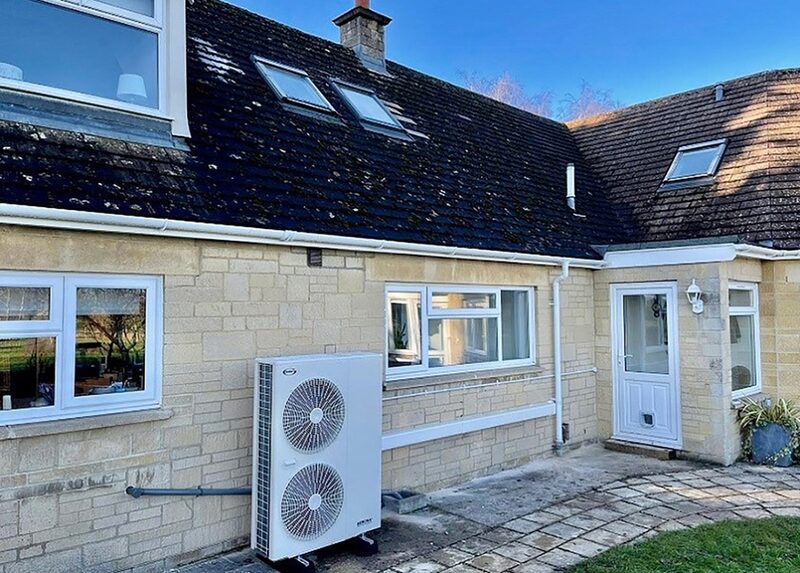
How long the scheme runs and how the amounts have changed

The scheme opened on 23 May 202218. Early guidance described it as running from 2022 to 2025, open to domestic and small non-domestic properties22. It has since been extended well beyond that window.
The scheme has been extended to 2030, with funding set to increase each year from £400 million in 2026 to 2027 to £709 million in 2029 to 2030, totalling £2.7 billion over the period under the government's Warm Homes Plan6. The government's grant-finding service lists the scheme as scheduled to close at 11:59pm on 30 December 202910.
The grant amount has risen over the scheme's life. The current £7,500 is an increase from the £5,000 to £6,000 grant that had been available between May 2022 and September 202323. An independent assessment in April 2024 noted that the government had increased and extended the heat pump grant24.
Take-up has been substantial but uneven. The scheme paid just over 80,000 grants worth £560 million between May 2022 and March 20265. Ofgem's annual report puts the total value of grants paid since the start of the scheme at £560.3 million as of 31 July 202610. Across the first four years of the scheme, over £560 million was paid out through grants25.
Budget figures for individual years are less settled. Scheme Year 4, running from April 2025 to March 2026, carried a budget of £295,000,00026. Separate official guidance gives a figure of £450 million, and the two are not reconciled in the documents available.
Brands and models sold in the UK
The grant is technology-neutral within its categories, so eligibility attaches to the installation rather than to a brand. Several models sold in the UK are listed as eligible for the Boiler Upgrade Scheme grant, including the NIBE S1156, the NIBE S2125-8 and the NIBE S1256-1327. Each of those listings states eligibility for the grant directly.
Eligibility is a property of the installation as a whole, not of the box. A model that appears on an eligibility list still has to be installed by an MCS-certified installer, in a qualifying property, with a valid EPC, and it must not have been installed or commissioned more than 120 days before the application. The grant follows the installation, not the product name.
Domestic manufacturing has grown alongside the scheme. Domestically manufactured heat pumps accounted for a third of UK heat pump sales in 202430. That figure describes the market rather than the grant, but it indicates how much of the equipment a household is likely to be offered is made in the UK.

What the grant means for a household's energy independence
The grant reduces the upfront cost of moving a home off a fossil fuel heating system, which is the point at which a household stops buying gas, oil or LPG for heat. That is a real transfer of dependence: from a fuel supply chain to an electricity supply, and from a boiler to a heat pump that can run on a grid increasingly fed by renewables.
The dependence that remains is worth stating plainly. A heat pump runs on electricity, so the household still relies on the grid and on a supplier. The grant does not fund a battery, solar panels or any form of self-generation, so it does not by itself make a home self-sustaining. It also does not cover the fabric work, such as insulation, that determines how much electricity the heat pump uses.
There is a wider policy context. An assessment of the government's energy security strategy scored it 3 out of 10, arguing the UK was going backwards on the measures that would reduce exposure to imported fuel31. The Boiler Upgrade Scheme is one of the levers intended to change that, by shifting domestic heat demand onto electricity generated at home rather than gas or oil brought in from elsewhere.
For an individual household, the practical effect is narrower and more concrete. The grant is a fixed sum, deducted from a quote, against a technology that replaces a fossil fuel boiler. It shortens the payback period on the switch. It does not remove the household's dependence on the grid, and it does not remove the need for the property to be ready for a heat pump before the grant is worth claiming.
Sources31 cited
- Notice of approved grant categories and values for the Boiler Upgrade Scheme, GOV.UK, 2026-07-21
- Boiler Upgrade Scheme guidance for installers v5.1, Ofgem, 2026-07-02
- Carbon Budget and Growth Delivery Plan heat and buildings factsheet, GOV.UK, 2026-06-23
- Boiler Upgrade Scheme guidance for property owners V5, Ofgem, 2026-04-28
- Check if you're eligible for the Boiler Upgrade Scheme, GOV.UK, 2026-09-17
- Boiler Upgrade Scheme annual report April 2025 to March 2026, Ofgem, 2026-07
- What you can get from the Boiler Upgrade Scheme, GOV.UK, 2026-09-17
- Ground and water source heat pumps, MCS Certified, 2026-06-09
- Obtaining funding, Community Energy England, 2026-09-20
- Boiler Upgrade Scheme, Ofgem, 2026-07-31
- Boiler Upgrade Scheme for installers, Ofgem, 2026-09-17
- ECO4 delivery guidance v3.2, Ofgem, 2025-12-08
- Future Homes Standard for your home's future, Low Carbon Hub, 2026-09-01
- OFTEC and UKIFDA respond to DESNZ announcement on Boiler Upgrade Scheme funding increase for oil and LPG users, OFTEC, 2026-04-21
- OFTEC and UKIFDA respond to DESNZ announcement on Boiler Upgrade Scheme funding increase for oil and LPG users, UKIFDA, 2026-04-24
- Boiler Upgrade Scheme installer grants and incentives, MCS Certified, 2026-07-21
- Amendments to the Boiler Upgrade Scheme: government response, GOV.UK, 2025-11
- Boiler Upgrade Scheme, Find Government Grants, 2026-09-18
- What the Heat and Buildings Strategy means for MCS certified installers, MCS Certified, 2021-10-21
- BUS property owner guidance V2.3, Ofgem, 2023-09-25
- Summary of updates to Boiler Upgrade Scheme guidance for property owners v2.4, Ofgem, 2023-12
- Home and business grants, schemes and advice, East Herts Council, 2026-09-17
- Boiler Upgrade Scheme research briefing CBP-9889, House of Commons Library, 2024-05-26
- UK going backwards: government's energy security strategy scores 3/10, Energy and Climate Intelligence Unit, 2024-04-05
- Boiler Upgrade Scheme statistics July 2026, GOV.UK, 2026-08-27
- Boiler Upgrade Scheme quarterly report issue 14, Ofgem, 2025-11-26
- NIBE S1156-13 heat pump, Quiet Mark, 2026-09-17
- NIBE S2125-8 heat pump, Quiet Mark, 2026-09-17
- NIBE S1256-13 heat pump, Quiet Mark, 2026-09-17
- Domestically manufactured heat pumps account for a third of UK heat pump sales in 2024, Heat Pump Association, 2025-10-21
- Boiler Upgrade Scheme quarterly report issue 17, Ofgem, 2026-08-31
 Ground Source Heat Pump CostWhat a ground source heat pump costs in the UK, splitting groundworks and drilling from the heat pump and internal works, and how the £7,500 Boiler Upgrade Scheme grant and the £9,000 off-gas-grid uplift change the figure.
 How Much Does a Heat Pump CostA heat pump usually costs around eleven thousand pounds installed, though quotes vary a lot depending on your home.
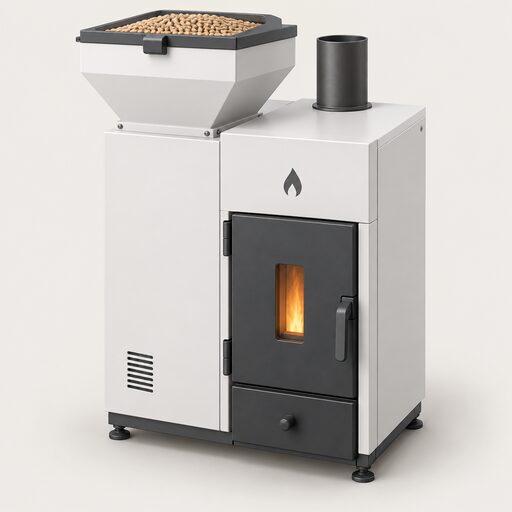 Biomass Boilers and StovesHow pellet and log biomass boilers and room stoves work in UK homes: the £5,000 Boiler Upgrade Scheme grant and its rural, off-gas-grid conditions, emissions limits, smoke control area law, fuel sourcing and the practical demands of storage and maintenance.
 Replacing a Gas or Oil BoilerSwapping a gas, oil or LPG boiler for a heat pump changes how your home is heated and how much it costs.
 Air Source Heat PumpsHow an air source heat pump takes heat from outdoor air, the difference between air-to-air and air-to-water systems, typical efficiency, the £7,500 Boiler Upgrade Scheme grant, noise and planning limits, and what ownership means for a household's energy independence.
 High Temperature Heat PumpsHigh-temperature heat pumps deliver flow temperatures of roughly 65 to 80°C, close to boiler levels, so existing radiators can often stay in place.