
In this guide
A hot water cylinder is the part of a heating system that decides how much hot water a home has, at what pressure it arrives, and how easily the property can later move to a heat pump. Three families of product do that job in UK homes: vented cylinders fed from a cold water tank in the loft, unvented cylinders fed directly from the mains, and thermal stores that hold primary heating water rather than tap water.
The unvented cylinder is the type most often specified in modern work. It is supplied directly from the mains water, delivers mains pressure hot water throughout the property, and needs no cold water storage tank, which frees loft space1. It stores water at pressures generally between 1.5 bar and 3 bar and at temperatures up to 60 to 70°C, and because it holds water under pressure it is a controlled installation: Building Regulations Part G3 requires a competent person holding the G3 qualification to install it, with a minimum of two independent safety devices3.
That regulatory weight is the price of the performance. A vented cylinder is simpler, cheaper and needs almost no maintenance, but its pressure comes from a tank in the roof rather than the mains6. A thermal store sits between the two: it gives mains pressure hot water without the G3 requirement, because the water it stores is central heating water, not drinking water7.
Vented, unvented or thermal store: which suits which home
The three types are not interchangeable, and the choice is usually settled by the property rather than by preference.
A vented cylinder works with a cold water storage tank, normally in the loft, and relies on gravity and the head of water above the outlets. It is the traditional arrangement in older homes and it is the cheapest to maintain: vented cylinders tend to be cheaper and require almost no maintenance6. The most common vented models are direct, heated by an immersion heater, or indirect, heated by a boiler using an internal coil6.
An unvented cylinder is supplied directly from the mains water and delivers mains pressure hot water throughout the property2. Maker guidance puts it in modern homes, renovations, or properties wanting mains pressure hot water throughout, and puts the direct version in properties without a gas supply or boiler system, electric-only heating setups, small flats or properties with minimal hot water demand, and as a backup in properties with unreliable boilers1.
A thermal store holds heated water in a large, well-insulated cylinder, often called a buffer or accumulator tank10. It is filled with primary central heating water rather than potable tap water, and provides hot water to taps and showers through a high surface area coil7. Because the stored water is not drinking water, the store can serve radiators and taps from the same body of water, and combi thermal stores combine hot water storage and central heating in a single cylinder7.
The dividing line in law is drawn by capacity and by how the system is fed. Building Regulations apply where a system is supplied directly from the water mains with no open-ended pipe for venting and with a storage capacity greater than 15 litres11. Below that threshold, or with an open vent, the G3 regime does not bite in the same way.
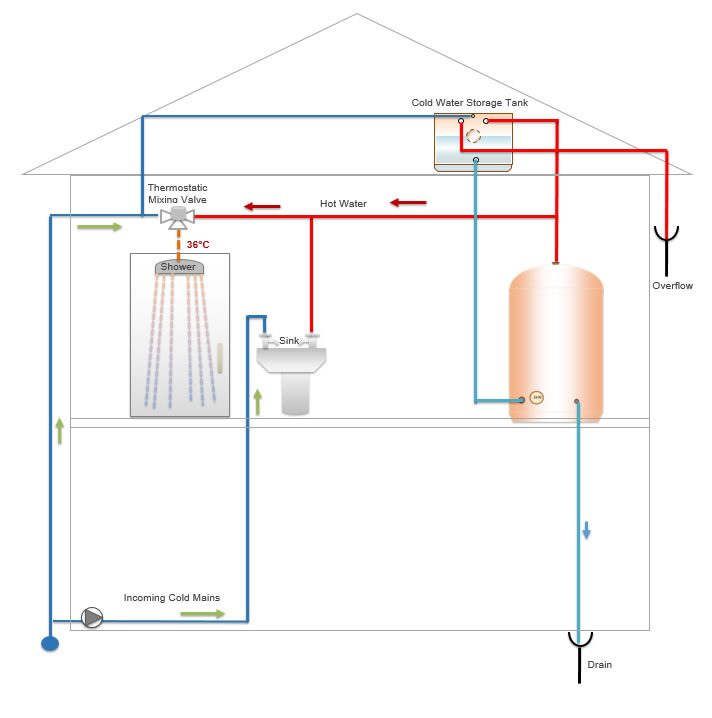
An unvented cylinder heats mains water under pressure, with no cold tank
The defining feature of an unvented cylinder is that it takes its water straight from the incoming mains and stores it under pressure, so the hot tap behaves like the cold tap. It is fed directly from the cold mains water feed and does not require a cold water storage tank2. Removing the tank saves loft space, and the cylinder can be sited where the old tank and its pipework used to be2.
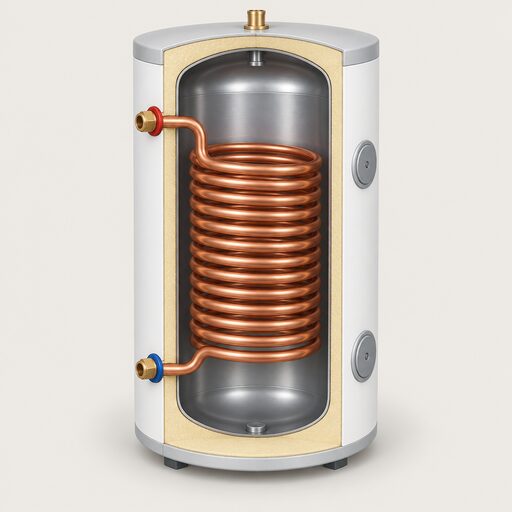
Heating is done in one of two ways. A direct cylinder uses an immersion heater built into the cylinder. An indirect cylinder takes heat from an external source: hot water from a boiler, heat pump or solar thermal system circulates through a coil inside the cylinder, transferring heat without the two water supplies mixing1. The same split applies across the market, with unvented cylinders typically heated either by an immersion heater or via an external heat source such as a boiler, heat pump or solar thermal system9.
That coil arrangement is what makes the cylinder a hub rather than a single-fuel appliance. Unvented cylinders are listed as suitable for electric, gas, solar thermal and heat pumps, and can also take solar PV with the relevant controls12. The most common models are direct, using electric immersions, or indirect, heated via a gas or oil boiler, solar thermal technology or other renewable energy such as heat pumps3.
For a household, the practical consequences are pressure and independence. Mains pressure at 2 to 3 bar gives excellent flow to showers and multiple taps, which is the main reason the type is specified in renovations9. The dependence that remains is on the mains itself: flow and pressure come from the incoming supply, so a cylinder cannot outperform the water main, and an interruption to that supply interrupts the hot water as well as the cold.
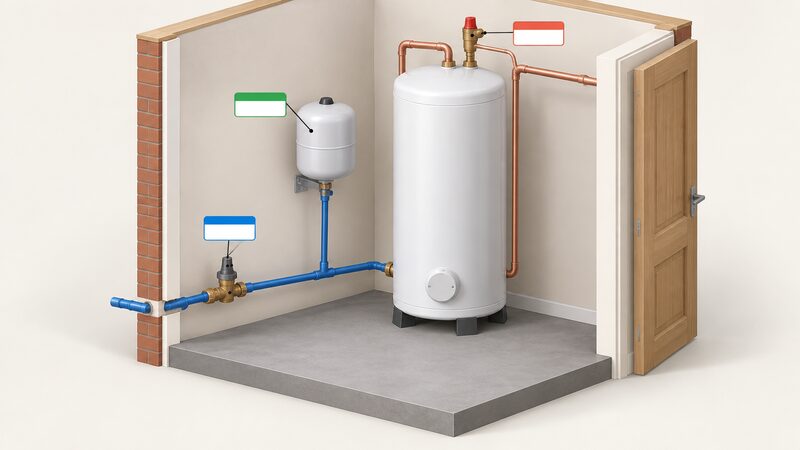
Operating pressure and temperature: 1.5 to 3 bar, up to 60 to 70°C
Unvented cylinders operate at mains pressure and store water at temperatures up to 60 to 70°C4. The stored pressure is generally between 1.5 bar and 3 bar3. One maker's stainless steel range is listed with an operating pressure of 3 bar and a primary heat exchanger maximum working pressure of 6 bar, with the temperature and pressure relief valve set to relieve at 7.0 bar9.
Those figures matter because they set the safety envelope. The relief valve is the last line of defence, and it is set well above normal operating pressure but below the point at which the vessel or its pipework would be at risk. The regulatory concern behind the G3 rules is stated plainly: the need to prevent stored water exceeding 100°C and to ensure that any discharge from safety devices is conveyed safely13.
Temperature is a separate control problem, and it is where health and safety pull in opposite directions. UK building regulations advise that water cylinders, but not thermal stores, need to regularly reach temperatures of more than 60°C8. At 60°C or over, bacteria such as Legionella are killed off14. Heat pump systems handle this with a sterilisation cycle that periodically heats the cylinder to above 60°C, and general heat pump guidance suggests heating to 60°C perhaps once a week10. A cylinder thermostat set to 60°C is described as fine for most people15.
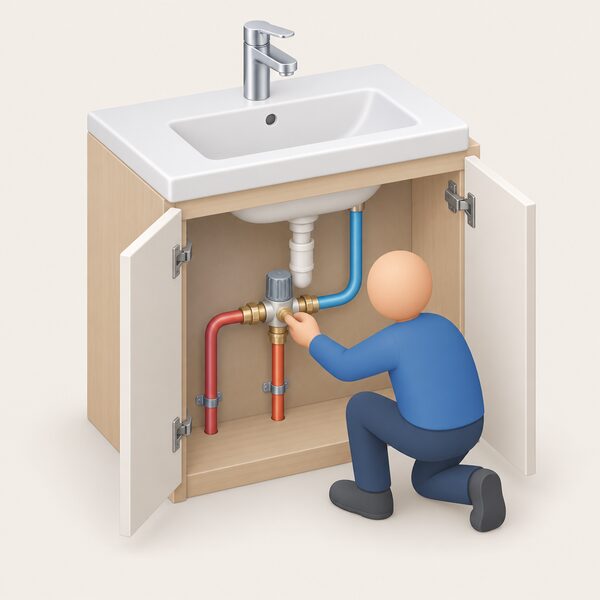
Scalding is the counterweight. Because an unvented cylinder stores water hot enough to kill bacteria, the outlet temperature at a tap can be high enough to burn, which is why thermostatic mixing valves appear in the list of components supplied with thermal stores and why the safety literature treats burns and scalds as a plumbing health hazard7. The stored temperature and the delivered temperature are not the same thing, and the difference is managed at the outlet.
| Parameter | Typical figure | Source basis |
|---|---|---|
| Stored pressure | 1.5 to 3 bar | Maker guidance3 |
| Mains pressure delivered | 2 to 3 bar | Maker product data9 |
| Stored temperature | up to 60 to 70°C | Maker guidance4 |
| Relief valve setting | 7.0 bar | Maker product data9 |
| Legionella control | more than 60°C regularly | Independent guidance8 |
| Cylinder thermostat | 60°C | Independent guidance15 |
Safety devices and the legal basis: Part G3 and the two-device rule
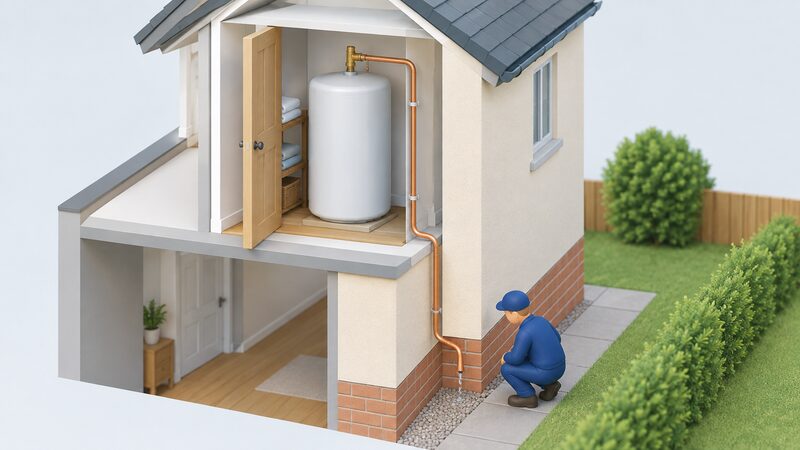
An unvented cylinder is a pressure vessel in a home, and the rules treat it as one. The legal basis is Part G of the Building Regulations, Approved Document G, and the requirement is that unvented cylinders must be installed by a competent person who holds the G3 qualification, also known as the Unvented Hot Water Storage Systems certificate1.
The hardware requirement is a minimum of two independent safety devices in addition to any thermostat1. Northern Ireland's Technical Booklet P states the same rule in the same terms: unvented hot water storage systems should incorporate a minimum of two independent safety devices in addition to any thermostat5. The thermal cut-out on each heating source must comply with BS EN 60335-2-73+A2, or with BS EN 257 where the stored water is heated by a gas burning appliance5.
Older guidance adds the components that make the two-device rule work in practice: a check valve complying with BS 6282: Part 1: 1982 to prevent the expansion of water to the cold supply, and an expansion vessel complying with BS 6144: 1990 sized to accommodate all the expansion of the water on heating17. The key components of a modern installation are the pressure reducing valve, the expansion vessel, the temperature and pressure relief valve, and the discharge pipe1.
Product standards sit underneath the installation rules. Unvented hot water storage system products should comply with BS EN 12897: 200618. Where cylinders are heated primarily by electricity, whether vented or unvented, official guidance describes a two-element arrangement: two thermostatically controlled electrical heating elements, with the lower element capable of heating at least 85% of the cylinder contents and the upper element capable of heating at least 60 litres of water18.
Installation, notification and annual servicing
Installation of an unvented cylinder is a notified activity. Building Regulations Part G requires that the installation is notified to the relevant local authority building control unless the installing engineer is registered with a Competent Person Scheme such as NAPIT or APHC4. The installer must hold a current Unvented Hot Water (G3) qualification, and for oil-fired systems an OFTEC registered engineer with G3 qualification is the relevant trade4.
Handover is part of the job. The installer should provide a commissioning checklist and hand over all documentation including the manufacturer's installation manual, warranty registration details, and a record of the safety valve settings4. Official guidance for Wales puts the same duty in household terms: the installer should leave a completed installation record and commissioning certificate11.
Servicing is annual and is not optional in practice. Unvented cylinders require annual servicing by a qualified engineer, and annual maintenance so the system meets safety regulations1. An annual check is vital to ensure safety and must be carried out by a qualified engineer, and it validates the manufacturer's warranty3. The same requirement is repeated across maker guidance: unvented cylinders must be installed by a G3 qualified installer and serviced annually12.
"An annual check is vital to ensure your safety and must be carried out by a qualified engineer. It not only validates the manufacturer's warranty."
The warranty consequence is worth stating plainly. A 25 year warranty on a cylinder body is a long commitment from a manufacturer, and it is conditional on an annual service being carried out by a qualified engineer3. A household that skips the service is not merely risking the safety devices; it is risking the warranty term that makes the cylinder a long-life purchase.
There is a difference in the devolved nations on who may sign the work off. Northern Ireland guidance from 1994 requires installation by a person holding a current Registered Operative Identity Card for the installation of unvented hot water storage systems, issued by the Association of Installers of Unvented Hot Water Storage Systems (Scotland and Northern Ireland), the Institute of Plumbing, the Construction Industry Training Board or an equivalent body17. Elsewhere, the installation of an unvented cylinder is notified to the relevant local authority building control unless the installing engineer is registered with a Competent Person Scheme such as NAPIT or APHC18.
Sizing: match the cylinder to the property, not today's occupants
Sizing is a design decision, and the regulations treat it as one. New hot water storage vessels in dwellings have to be appropriately sized19. That is a performance requirement rather than a volume, which is why the practical figures come from maker guidance and case studies rather than from a table in the regulations.
For a typical 3-bedroom home with one bathroom and standard usage, a 150-litre unvented cylinder is usually sufficient9. At the smaller end, a ground source heat pump project used a 100-litre unvented cylinder, one per flat, in both blocks20. Maker guidance advises seeking the opinion of a plumber or heating installer before deciding which size cylinder would suit9.
The reason sizing is not simply a headcount is that a cylinder has to serve the property's future as well as its present. A cylinder sized for today's occupants can be undersized for a household that grows, for a bathroom that is added, or for a heat pump that needs a larger volume of stored water because it runs at lower flow temperatures. The Future Homes Standard work makes the same point from the other direction: in many cases, the internal layout of homes will need to be adapted to accommodate a hot water cylinder21.
Physical size is a separate constraint from volume. Cylinders of the same nominal capacity come in different shell diameters and heights, and insulation adds to both. One maker's sizing guide lists a 40-litre cylinder at 720 mm shell height with a 280 mm shell diameter, and the same capacity at 645 mm with a 300 mm shell, 480 mm with a 350 mm shell, 415 mm with a 375 mm shell, and 375 mm with a 400 mm shell22. Lagging adds to the footprint: 35 mm foam lagging adds 70 mm to the diameter and 35 mm to the height, 50 mm lagging adds 100 mm and 50 mm, and 100 mm lagging adds 200 mm and 100 mm22.
| Nominal capacity | Shell height | Shell diameter |
|---|---|---|
| 40 litres | 720 mm | 280 mm |
| 40 litres | 645 mm | 300 mm |
| 40 litres | 480 mm | 350 mm |
| 40 litres | 415 mm | 375 mm |
| 40 litres | 375 mm | 400 mm |
| 50 litres | 900 mm | 280 mm |
Where a cylinder has to fit a fixed cupboard, the diameter and the lagging allowance usually decide the choice before the volume does.
Space, siting and the airing cupboard
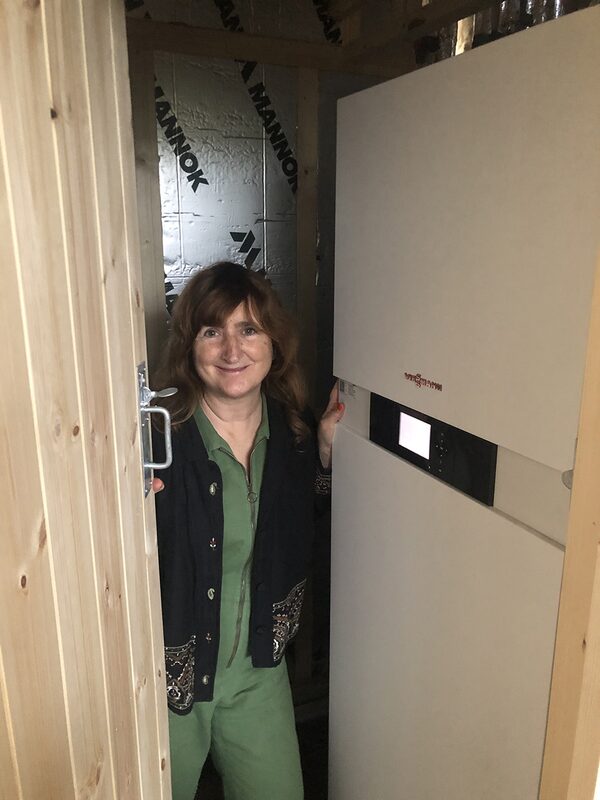
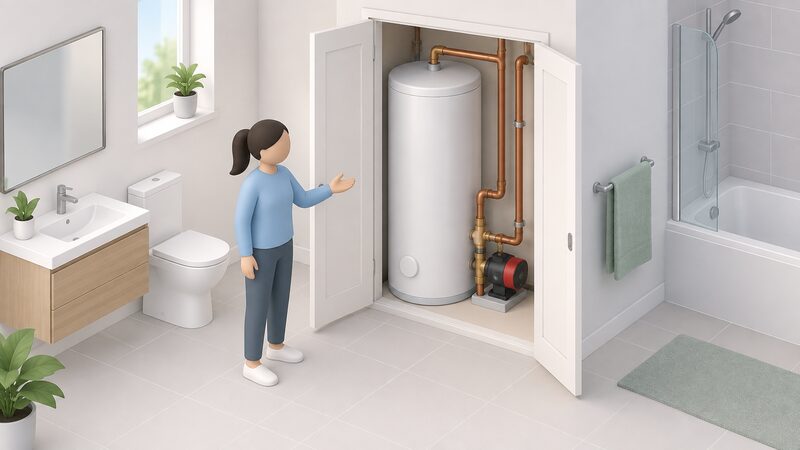
A cylinder needs a home, and in many properties the airing cupboard is it. In one solar water heating case study, the cylinder and the pump that connects it to the solar collector are hidden away in a cupboard in the bathroom23. In another, an intelligent hot water cylinder was located in the loft alongside an air handler, which had the bonus of allowing an existing airing cupboard to be freed up24.
Solar thermal adds to the space requirement. A larger hot water cylinder is likely to be needed and this will take up extra room25. That is a direct consequence of storing solar gain for use later in the day rather than heating water on demand.
Where space is genuinely short, the cylinder is not the only option. In one case study, the occupants chose a heat battery instead of a hot water cylinder because there was not enough space in the flat, and it was installed in the utility room26. That is the clearest statement of the trade-off: a cylinder stores hot water, a heat battery stores heat, and the second can fit where the first will not.
Cylinder location also interacts with the heat pump itself. In many models the hot water cylinder is built into the case of the heat pump as a fully integrated system; in others it is separate27. An integrated unit removes the separate cupboard requirement but ties the cylinder to the outdoor unit, which matters for maintenance access and for the noise and siting rules that apply to the heat pump.
Thermal stores: mains pressure hot water without the G3 requirement
A thermal store is the alternative for a household that wants mains pressure hot water without the pressure-vessel regime. It provides mains pressure hot water without pumps, and it does so because the water it stores is not the water that comes out of the tap7.
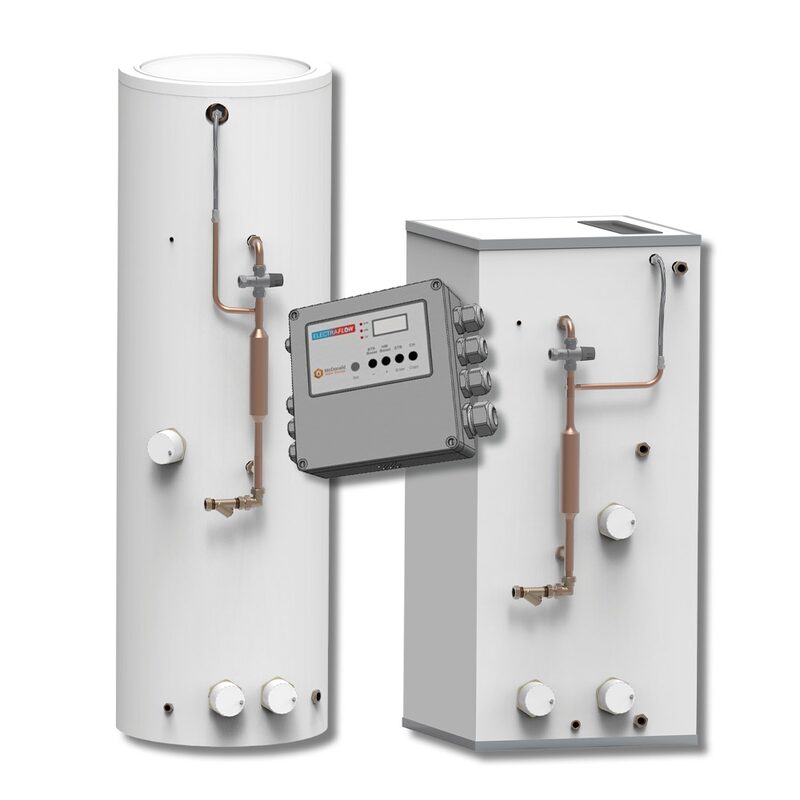
The store is filled with primary central heating water, as opposed to potable hot water7. Hot water for taps and showers is drawn through a high surface area coil, giving an unlimited hot water supply at operating temperature7. Because the stored water is heating water, the same body of water can serve the radiators, and combi thermal stores combine hot water storage and central heating in a single cylinder7.
Thermal stores are compatible with multiple heat sources: heat pumps, solar, biomass, gas and oil7. Units are supplied with immersion heaters, pressure reducing valves, check valves, drain valves, expansion vessels, thermostatic mixer valves and, on the combination model, float valves7. That component list is a reminder that a thermal store is a system rather than a single vessel.
The regulatory treatment is different in a way that matters for anyone comparing the two. A separate thermal store, whether hot water only or integrated, is treated as if it were a cylinder for the purposes of the Standard Assessment Procedure16. But the legionella rule is drawn differently: UK building regulations advise that water cylinders, but not thermal stores, need to regularly reach temperatures of more than 60°C8. The reason is that the store does not hold potable water, so the bacterial risk that drives the cylinder rule does not arise in the same way.
Cost, warranty and what a cylinder means for energy independence
Prices for cylinders are installer-quoted, and no published price is given here. What the evidence does support is the shape of the cost and the warranty position.
On maintenance, vented cylinders tend to be cheaper and require almost no maintenance6. Unvented cylinders carry an annual service requirement, which is a recurring cost that a vented cylinder does not have1. Against that, the warranty on one maker's unvented range is 25 years on the cylinder body against material defects and manufacturing faults, with 2 years on all components3. That is a long body warranty, and it is conditional on the annual service.
For households weighing cover, some service plans fund the cylinder as part of a heat pump package. One plan funds an air-source heat pump, an unvented hot water cylinder and installation pipework for both, and a separate plan funds an unvented hot water cylinder and installation pipework in a heat-pump system28. Those are cover products rather than installation prices, and they are described here as what they fund, not as a recommendation.
The independence question is where a cylinder earns its place. A cylinder decouples hot water from the moment of use: it stores heat, so it can absorb energy when that energy is cheap, abundant or self-generated, and release it when the tap is opened. That is the same argument the industry makes when it describes the hot water storage cylinder as a thermal battery29. A cylinder paired with solar thermal, solar PV with the relevant controls, or a heat pump lets a household use its own generation or a low-carbon source for hot water rather than burning gas on demand12.
The dependence that remains is real. An unvented cylinder takes its pressure and flow from the mains, so it is only as good as the incoming supply2. A vented cylinder depends on a tank in the loft and the head of water it provides6. A thermal store depends on whatever heat source charges it, and on the coil and controls that transfer that heat to the tap7. None of the three stores energy indefinitely, and all three lose some heat while standing.
Cylinders and the road to zero-emissions heating
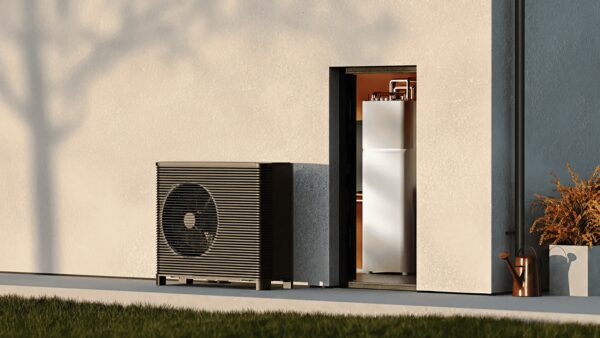
The cylinder has moved from a plumbing detail to a policy subject, because a heat pump needs somewhere to put its hot water. Unvented indirect cylinders are generally considered the better match for heat pumps, as they deliver mains pressure hot water and work efficiently at lower flow temperatures2. Copper unvented cylinders are widely recognised as the best and most cost effective solution to use with heat pump systems, whether air or ground source12.
The coil is the technical reason. A heat pump runs at lower flow temperatures than a boiler, so the cylinder's heat exchanger has to transfer heat effectively at a smaller temperature difference, which is why heat pump cylinders use a specially designed coil3. A cylinder built for a boiler may not perform as intended when the heat source changes.
The regulatory direction of travel reinforces the point. Approved Document L Volume 1 takes effect in England for building work not connected with higher-risk building work on 24 March 2027, and for work connected with higher-risk building work on 24 September 202719. The Future Homes and Buildings Standards are intended to come into force for non-higher-risk building work on 24 March 2027, followed by a 12-month transition period, with the amending regulations due for higher-risk building work on 24 September 202730. In Scotland, the Heat in Buildings strategy proposes converting around 50% of homes and an estimated 50,000 non-domestic properties to zero or low emissions heating by 2030, alongside a 68% reduction in combined building emissions compared with 2020, with a proposed backstop of 2045 for low or zero emissions heating in existing buildings31. In Wales, existing social housing must have a Target Energy Pathway to achieve EPC A by 2034, or a later date authorised by the Welsh Government32.
One option that was considered and not taken is worth noting for households planning ahead. A proposal to treat the hot water cylinder as a future-proofing measure was not proposed to be included in the Part L and F review outcome18. The cylinder's role in the transition is therefore a matter of system design rather than a standalone regulatory requirement.
For a household, the practical reading is that the cylinder is the component most likely to outlast the boiler or heat pump it is paired with, and the one that most constrains a later switch. A cylinder sized and coiled for a heat pump is ready for one; a cylinder sized for a combi replacement is not. The heat pumps compared with boilers page sets out the wider comparison, and solar thermal water heating covers the collector side of a cylinder-led system. For the regulatory background, see building regulations for heating, and for the storage alternative where space is short, heat batteries and zero emission boilers.
Sources32 cited
- What is an unvented cylinder, Newark Cylinders, 2026-07-24
- Vented vs unvented hot water cylinders: what's the difference, Newark Cylinders, 2026-09-04
- Vented vs unvented hot water cylinder, McDonald Water Storage, 2024-08-14
- Who can install, OSO Hotwater, 2026-06-02
- Technical Booklet P, Building Control Northern Ireland, 2012-10
- Vented hot water cylinders, McDonald Water Storage, 2024-08-14
- Bespoke thermal stores and thermal store cylinders, Newark Cylinders, 2026-09-14
- How to ensure a heat pump runs efficiently, Energy Saving Trust, 2026-05-19
- Unvented cylinders, Newark Cylinders, 2026-08-05
- Thermal energy stores, Energy Saving Trust, 2025-05-15
- Quick guide to the Building Regulations Q and A, Welsh Government, 2021-12
- Unvented hot water cylinders, McDonald Water Storage, 2024-08-14
- Heat Pump Association news, Heat Pump Association, 2026-09-17
- Burns and scalds, CIPHE, 2026-09-17
- How to use your heating controls, Age UK, 2026-03-23
- RdSAP 10, BRE, 2024-02-12
- Technical Booklet P 1994, Building Control Northern Ireland, 1994
- Part L and F review stage 2a government response, Welsh Government, 2021-10
- Approved Document L Volume 1: Dwellings, UK Government, 2026
- Ground source heat pump CP746, NEA, 2018-09-06
- Future Homes Standard ready, Future Homes, 2026-09-17
- Domestic cylinder sizing guide, McDonald Water Storage, 2026-09-17
- Solar water heating case study, CAT, 2026
- Unico's 3 in 1 system, CIPHE, 2025-03-19
- Your home guide to solar water heating, OFTEC, 2026-09-20
- Michael and Joan's air source heat pump, Energy Saving Trust, 2022-04-20
- Exhaust air heat pumps, Energy Saving Trust, 2025-06-05
- Homeserve boiler cover, Uswitch, 2026-09-17
- CIPHE TechTalk: connected cylinders, CIPHE, 2026-09-17
- Future Homes and Buildings Standards consultation response, UK Government
- Heat in Buildings strategy, Scottish Government, 2021-02
- Heat strategy Wales, Welsh Government, 2024-07
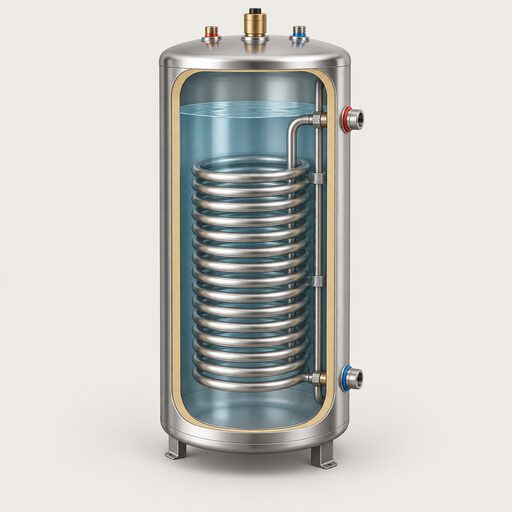 Hot Water Cylinder ManufacturersWhich hot water cylinder brands are actually made in the UK, and which are imported?
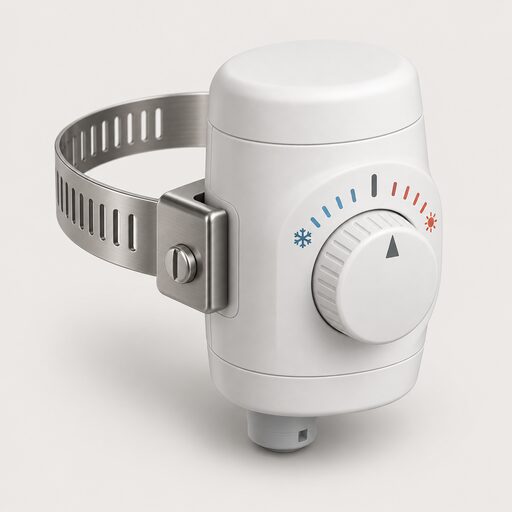 Hot Water Cylinder ControlsWhat temperature should a hot water cylinder thermostat be set to, and does it need its own timer apart from the heating?
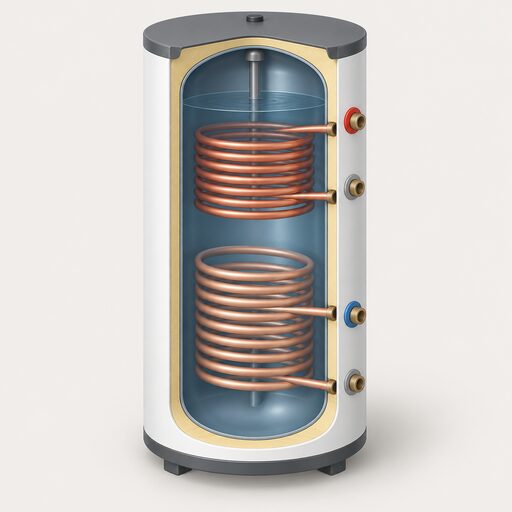 Cylinders and ControlsHow much of the sun's heat can your home actually keep?
 Hot Water CylindersA heat pump needs a cylinder to store hot water, so swapping a combi means getting one.
 Hot Water Heat PumpsA hot water heat pump heats only the water in your cylinder, using air instead of a boiler flame.
 Which Homes Suit a Heat PumpMost UK homes can have a heat pump fitted, so the real question is whether yours makes it easy or expensive.