In this guide
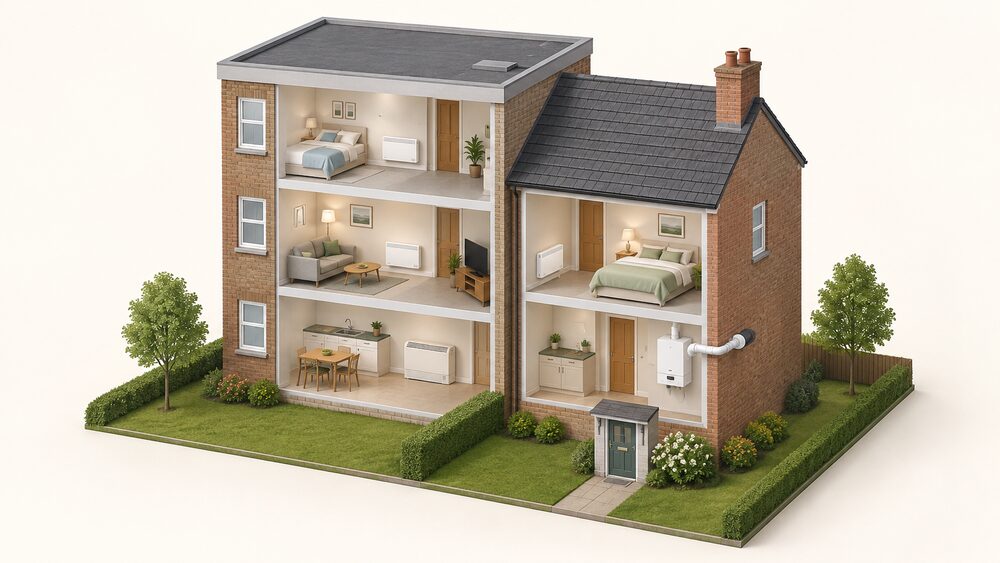
The best heating system for a flat is usually the one the building will physically accept, not the one with the lowest running cost on paper. Flats are the dwelling type most likely to be served by communal heating, at 11% of flats in England against 0.2% of houses and bungalows1. In Scotland, flats have higher levels of electricity as the main heating fuel, at 16%, than all three house types2. Where a flue route and permission exist, a gas boiler remains possible; where they do not, electric heating is the usual answer, and electricity is around four times more expensive than gas per unit3.
That gap is the single fact that shapes every decision on this page. Mains gas was estimated in March 2026 to be the cheapest way to heat a standard three-bed semi-detached house in the UK, and electric storage heaters the most expensive4. The same comparison puts storage heaters at £3,000 to £3,800 a year for that house type in Great Britain regions5. Fabric, flue access, space and planning constraints decide what a household can install; the fuel price decides what it costs to run once installed.
Electric heating: the usual answer for flats
Electric heating is any system that uses electricity as the main energy source to heat a home3. For a flat, that definition covers a wide field: panel heaters, radiators, infrared panels, storage heaters, underfloor heating and electric boilers. What they share is that they need no flue, no gas supply and no combustion air, which is precisely why they fit buildings where a gas boiler cannot go.
The practical case is strongest where the alternatives are closed off. A flat in a block may have no external wall available for a balanced flue, no route to a chimney, and no way to run a gas supply to the right elevation. Communal heating, where it exists, removes the decision entirely: 11% of flats in England have it, against 0.2% of houses and bungalows1. In Scotland, flats are the dwelling type most likely to use electricity as the main heating fuel, at 16%2. That is not a preference expressed by households so much as a constraint expressed by the building.
The cost of that constraint is real and should be stated plainly. Electricity is around four times more expensive than gas per unit3, and an official consultation reached the same conclusion, putting the retail price of electricity at approximately four times that of gas per kWh7. A flat heated by direct electric heaters therefore pays a premium for every unit of heat it uses, and no amount of efficiency at the heater changes that. The efficiency is at the point of use, not at the meter.
What electric heating does deliver is independence from the gas network and from a flue. It does not deliver independence from the grid or from a supplier: the dwelling remains connected, and the running cost tracks the electricity price. For a flat with no flue route, that is the trade being made.

Storage heaters: how they work and what they cost
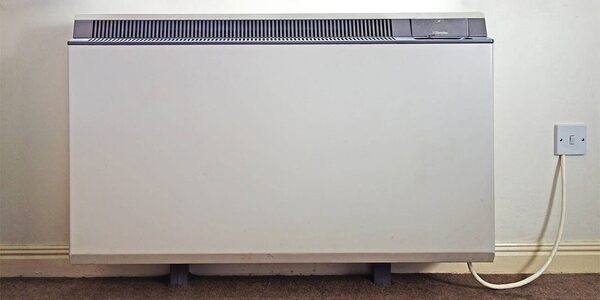
Storage heaters work by charging up when electricity is cheaper, then releasing heat gradually through the next day3. That is the whole principle: the heater stores heat overnight and gives it back slowly, which is why the tariff matters as much as the appliance. Official guidance treats electric storage heaters on an off-peak or Economy 7 tariff as efficient heating8.
The cost picture is the sharpest fact on this page. In the March 2026 comparison of heating a standard three-bed semi-detached house, electric storage heaters were the most expensive option, at £3,000 to £3,800 a year in Great Britain regions5. The same comparison found mains gas the cheapest4. Installation is quoted at £900 to £1,400 per room3, which means a whole-house installation is a per-room calculation rather than a single figure.
Storage heaters are not a single product. The Dimplex Quantum range and the Dimplex storage heater range more broadly are the best-known examples in the UK, and there are dedicated pages on storage heaters and on Dimplex storage heaters for the detail. What matters at the level of home type is that they need floor or wall space in each room they serve, they need an off-peak tariff to make sense, and they need the electrical capacity to charge them all overnight.
For a household, the independence question is straightforward. A storage heater removes the gas connection and the flue, and it shifts consumption to a cheaper overnight window. It does not remove the grid, the supplier or the standing charge, and it does not remove the need for a tariff that suits the appliance.
Running costs: electricity around four times the price of gas per kWh
The running cost gap is the fact that decides most of these cases, and it is consistent across sources. Independent guidance states that electricity is around four times more expensive than gas per unit3. An official consultation, written at the time it was published, puts the retail price of electricity at approximately four times more expensive than gas per kWh7. Two different kinds of source, the same ratio.
The official cost comparison for March 2026 gives the ordering directly. Mains gas was estimated to be the cheapest way to heat a standard three-bed semi-detached house in the UK, and electric storage heaters the most expensive4. The figures behind that comparison put storage heaters at £3,000 to £3,800 a year for the same house type in Great Britain regions5. The gap is not marginal, and it is not closed by choosing a more efficient electric appliance, because electric resistance heating is already assumed to be 100% efficient at the point of use9.
That assumption is worth understanding properly. Official building guidance assumes electric resistance heating is 100% efficient9, meaning every unit of electricity drawn is converted to heat inside the dwelling. It says nothing about how that electricity was generated or what it cost. A heat pump moves heat rather than generating it and is assessed differently, but for resistance heating the efficiency figure is a ceiling, not an advantage.
| Fuel or system | Position in the March 2026 comparison | Annual cost, three-bed semi-detached |
|---|---|---|
| Mains gas | Cheapest way to heat4 | Not given in this comparison |
| Electric storage heaters | Most expensive way to heat4 | £3,000 to £3,8005 |
The table carries the citation markers for both rows. Where a household is off the gas grid, the comparison changes shape, because mains gas is not an option at all. An off-gas grid home is defined in one official scheme as one that does not use mains gas for heating purposes10. For those homes the choice is between electricity, oil, LPG and solid fuel, and the comparison is between those, not against gas.
Gas boilers: where central heating still fits, and where it doesn't
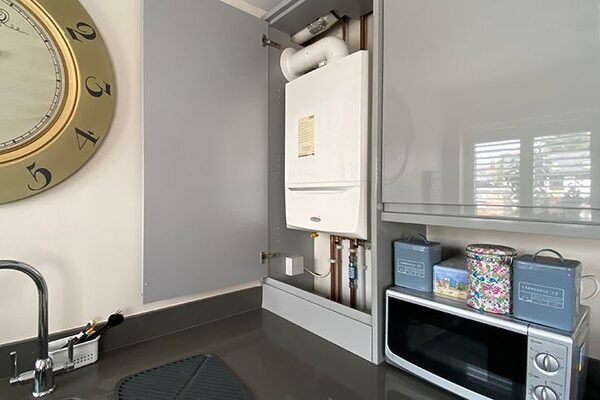
A gas boiler needs three things a flat or an awkward building may not have: a gas supply, a flue route to outside, and somewhere to put the appliance and its condensate discharge. Where all three exist, mains gas remains the cheapest way to heat a standard three-bed semi-detached house4, and the case for it is a running cost case rather than a technical one.
Where they do not exist, the constraint is physical. Traditional buildings, flats and rural properties were frequently noted in an official consultation as being less suitable for both energy efficiency improvements and clean heating systems11. That finding is about feasibility, not preference: the buildings themselves resist the standard measures. A flat with no external wall at the right elevation cannot take a balanced flue. A listed building cannot take an external wall alteration without consent. A solid wall house cannot be cavity-filled because there is no cavity.
For new builds the position is different again, and it is now a rule rather than a constraint. Fossil fuel gas and oil boilers cannot be used as a mains heating system in new-build homes and buildings, under the New Build Heat Standard that took effect on 1 January 202512. That applies in Scotland. A new build elsewhere in the UK is governed by the building regulations and the Future Homes Standard rather than by this standard, and there is a dedicated page on the Future Homes Standard and new build heating.
The independence picture for gas is the mirror of the electric one. A gas boiler gives the lowest running cost of the mainstream options, and it ties the household to the gas grid, to a supplier and to a fuel whose installation is being phased down over time. That phase-down is covered below.
Flats, rented homes and off-gas-grid houses: which system suits which home
The dwelling type does more to determine the system than any other single factor. The table below sets out what the evidence supports for each.
| Home type | What the evidence shows | Practical implication |
|---|---|---|
| Flats | 11% have communal heating in England1; 16% of Scottish flats use electricity as main heating fuel2 | Flue access and building consent are the limiting factors |
| Off-gas-grid homes | Defined as not using mains gas for heating10 | Choice is between electricity, oil, LPG and solid fuel |
| Private rented homes | A fixed heating system is required in a private rented house13 | The system must be fixed, not portable |
| New builds in Scotland | Fossil fuel boilers cannot be the mains heating system from 1 January 202512 | Electric or heat pump systems are the route |
| Traditional, rural and flat conversions | Frequently noted as less suitable for efficiency improvements and clean heating11 | Fabric and feasibility work comes before system choice |
For rented homes, the requirement is specific: there must be a fixed heating system in a private rented house13. That is a minimum standard, not a specification, and it does not dictate the fuel. In Scotland, private rented properties would still be required to meet the minimum energy efficiency standard even if a clean heating system had already been installed, under proposals consulted on in November 202314. That distinction matters, because it means a clean heating system alone does not discharge the energy efficiency obligation.
For off-gas-grid homes, the grant landscape is broader than it is often assumed to be. The Warm Homes: Local Grant is open to all fuel types, including on-gas-grid households heated by mains gas and off-gas-grid households heated by electricity, oil, coal or liquid petroleum gas15. That is an England scheme. In Northern Ireland, the Better Energy Homes Plus scheme offered a natural gas central heating system if on the gas network or an oil central heating system where gas is not available, alongside cavity wall and loft insulation, LED light bulbs and a hot water tank jacket16. The four nations differ, and the grant pages for England, Scotland, Wales and Northern Ireland set out the detail.
Maintenance and safety: no annual service, a check every five years
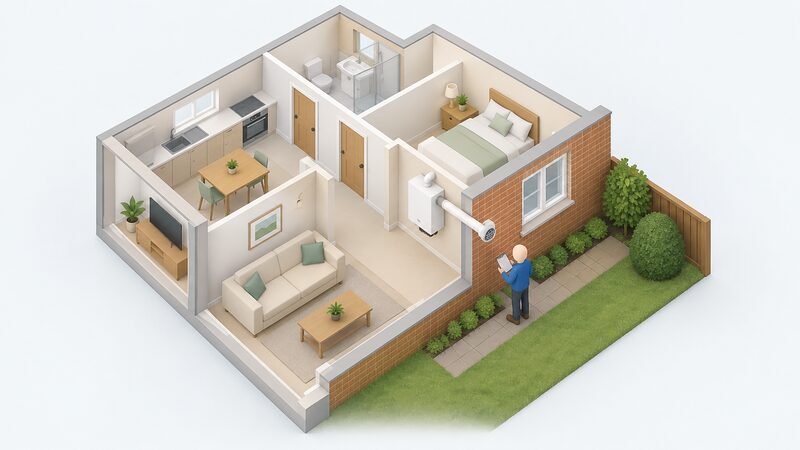
Electric heating needs very little maintenance, and independent guidance states that safety checks should only be needed every five years3. That is a materially different regime from a gas boiler, which requires an annual service by a registered engineer. For a flat or a park home where access for a service visit is awkward, the lower maintenance burden is a genuine practical advantage.
The five-year figure is a safety-check interval, not a service schedule, and it should not be read as a statement that electrical installations never need attention. Storage heaters in particular draw significant current over a concentrated overnight window, and the circuits and supply capacity have to be adequate. One official scheme rule requires a load check by a qualified electrician where required before heating units are provided, with a maximum of 10 heating units in a dwelling heated by an electric heating system17. That ceiling exists because the electrical supply, not the room count, is often the binding constraint.
For gas and oil boilers, the maintenance picture is the opposite. Independent guidance puts the typical life of a gas or oil boiler at at least ten years, which is why replacement happens so infrequently6. Maker figures differ on the upper end: one product page states up to 15 years, another states 10 to 15 years, and the two have not been reconciled. There is more on this on the boiler lifespan page and on boiler servicing and maintenance.
"gas and oil boilers tend to last for at least ten years and are therefore only replaced very infrequently"
For households on a heat network rather than an individual system, consumer protection rules add a further layer. Ofgem guidance states that a domestic premises must not be disconnected at any time if occupants include a person with a medical condition meaning they need to receive or may need a supply of heating or hot water throughout the year18. That protection applies to heat network customers and is worth knowing where communal heating serves a block.
Planning restrictions that can limit your options: Article 4 directions
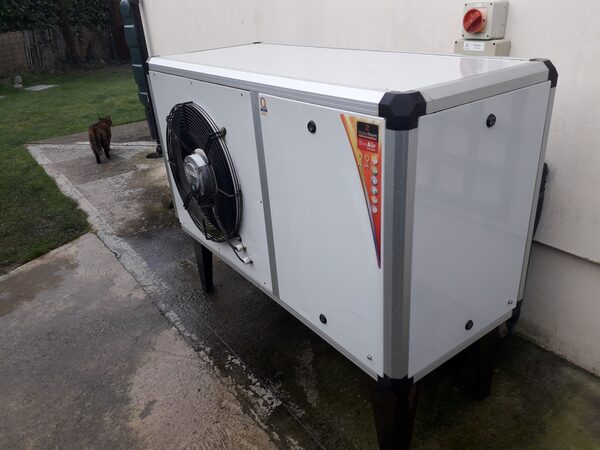
Permitted development rights are what allow many heating installations to proceed without a planning application, and they can be removed. Permitted development rights may have been removed by an Article 4 direction19, and the same point is made in Welsh guidance on external walls20. These directions are most common in conservation areas19.
The practical consequence is direct: where an Article 4 direction covers the area, an application for planning permission will be required21. One local authority illustrates how localised this can be, noting that only one conservation area in its area has an Article 4 Direction21. A household cannot assume either way, and the guidance is that a solicitor should have informed the buyer whether an Article 4 direction exists when the property was purchased20.
For heat pumps specifically, the permitted development rules carry their own conditions. The unit can be heating only, or a combined heating and cooling unit, but cannot be cooling only22. It must not be installed within 1 metre of the boundary of the curtilage23. It cannot be installed on a building or land within the curtilage if the dwellinghouse or block of flats is a listed building24. A wind turbine must not also be installed on the same building or within its curtilage26. And permitted development rights for air source heat pumps are more restricted for flats and shared buildings, where planning permission is more likely to be required27. The volume limit for an outdoor compressor unit on a block of flats is 0.6 cubic metres including any housing28.
For listed buildings, the position is firm rather than discretionary: development is not permitted if the air source heat pump would be installed on a building, or on land within the curtilage of a dwellinghouse or block of flats, that is a listed building24. A listed building therefore needs consent, and the options narrow accordingly. There is more on the general rules on the building regulations for heating systems page.
What the planned gas boiler phase-out means for your choice
The direction of travel is set, and it differs by nation and by whether the property is on or off the gas grid. In Scotland, the stated intention was to phase out the need to install new or replacement fossil fuel boilers in off gas areas from 2025 and in on gas areas from 203012. That is a Scottish position, consulted on in November 2023.
For grant-funded work, the Boiler Upgrade Scheme is primarily for properties replacing a fossil fuel heating system such as gas, oil or LPG, or an electric heating system excluding existing heat pumps30. That definition matters for a flat or a park home considering a switch, because it sets out what counts as the system being replaced.
The wider UK position is a proposal rather than a rule. The UK Government has proposed phasing out the sale of most new fossil fuel boilers from 2035, with exemptions for unsuitable homes. That is the framing used in industry analysis of the policy. The exemptions matter for exactly the home types this page covers: traditional buildings, flats and rural properties were frequently noted as being less suitable for clean heating systems11, and an unsuitable home is the category the exemptions are designed to catch.
For a household, the practical reading is this. A gas boiler installed now will not be removed by any of these proposals; they concern new installations and replacements. But a decision made now about a flat, a solid wall house or a rural property is a decision about what the next system will be, and the feasibility constraints that make gas difficult today are the same constraints that make a heat pump difficult tomorrow. The gas boiler ban page covers the policy timeline in full.
Sizing and installation: quotes from at least three installers

Independent guidance recommends getting quotes from at least three installers for any new electric heating system3. That is a recommendation about process, not about which system to choose, and it applies with equal force to a flat, a park home and a solid wall house.
Sizing is where home type bites hardest. A flat with limited wall space may not be able to accommodate the emitters a whole-house calculation would suggest. A solid wall house loses heat faster than a cavity-walled one, so the same room needs more output. A large rural house may need more than one heating circuit: official guidance for wet heating systems in new dwellings with a floor area of 150m2 or greater states that a minimum of two independently controlled heating circuits should be provided9. That is a new-build requirement, but it illustrates the principle that a large or awkwardly shaped property needs zoning rather than a single circuit.
Building regulations also recognise that some properties cannot meet the standard target. Where ceiling height would be adversely affected, a lower performance target may be appropriate31. That is a concession to the physical reality of a flat with restricted ceiling height, and it is the kind of constraint that shapes what can actually be installed rather than what would ideally be specified.
For a household, the sequence is: establish what the building will accept, establish what the electrical or gas supply can support, then get quotes from at least three installers3. The independence question sits at the end of that sequence. A system that removes the gas connection but leaves the household on the grid at four times the unit price has traded one dependence for another, and the evidence on running costs should be weighed before the work is commissioned.
Sources31 cited
- Low carbon technologies in English homes, Ministry of Housing, Communities and Local Government, 2023
- Key attributes of the Scottish housing stock, Scottish Government, 2023
- Electric heating, Energy Saving Trust, 1 July 2026
- Heating cost comparison, March 2026, House of Commons Library, March 2026
- Heating cost comparison, March 2026 (PDF), House of Commons Library, 2026
- Boiler retirement: using trigger points to support homeowners, Which?, 10 July 2026
- Delivering net zero for Scotland's buildings: consultation analysis, Scottish Government, 29 January 2026
- Current Decent Homes Standard summary table, Department for Communities, 5 August 2025
- Approved Document L, Volume 1: Dwellings, Ministry of Housing, Communities and Local Government, 2026
- Warm Homes: Social Housing Fund Wave 3 scheme guidance addendum, Ministry of Housing, Communities and Local Government, June 2026
- New Build Heat Standard factsheet, Scottish Government, 1 January 2025
- Heat in Buildings Bill: business and regulatory impact assessment, Scottish Government
- Regulations to modify the Repairing Standard, Scottish Government, 1 March 2024
- Delivering net zero for Scotland's buildings: consultation, Scottish Government, November 2023
- Heat pump deployment quarterly statistics, UK 2026 Q1, Department for Energy Security and Net Zero, 11 June 2026
- Better Energy Homes Plus annual report 2024-25, Utility Regulator Northern Ireland, 2024/25
- Area Based Scheme: information released, Scottish Government, August 2024
- Heat networks consumer protection guidance, Ofgem, 5 September 2025
- Planning permission: flue, chimney or soil and vent pipe, Welsh Government, 17 September 2026
- Planning permission: external walls, Welsh Government, 17 September 2026
- Solar panels, Wirral Council, 17 September 2026
- Air source heat pumps, Bracknell Forest Council, 17 October 2025
- Class G: installation of air source heat pumps, legislation.gov.uk, 17 September 2026
- Class G: installation of air source heat pumps, legislation.gov.uk, 1 September 2026
- Class G: installation of air source heat pumps, legislation.gov.uk, 17 September 2026
- Air source heat pump guide, Eastleigh Borough Council, May 2025
- Air source heat pumps, Westmorland and Furness Council, 17 September 2026
- Air source heat pumps: householder planning advice, Central Bedfordshire Council, 17 September 2026
- Air source heat pump permitted development, Cornwall Council, 17 September 2026
- Boiler Upgrade Scheme guidance for property owners, Ofgem, 25 March 2026
- Building regulations: ceilings and floors, Planning Portal, 2026
 Permitted Development by HomeCan you put up solar panels or a heat pump without asking the council?
 Heating Controls by Home TypeCompares the control arrangements that suit flats, terraces, open-plan conversions, large detached houses, solid-wall period homes and new builds.
 The Full Your Type of Home GuideLiving in a flat, an old listed house or somewhere off the gas grid changes what energy help you can get and what you are allowed to install.
 Radiators and EmittersWill your radiators still heat the house properly with a heat pump?
 Insulation by Home TypeFlats, terraces, semis, detached houses, bungalows and park homes all have different walls, roofs and shared spaces, so what you can insulate varies.
 Batteries by Home TypeLooks at how house type, occupancy pattern, electrical supply and available space change what storage can achieve, from flats and terraces to rural and off-grid properties.