In this guide
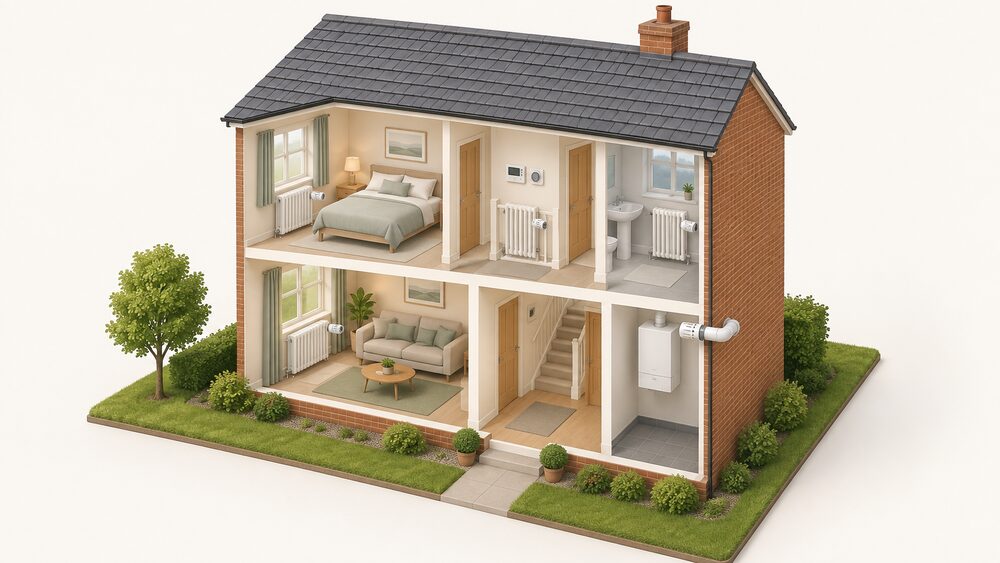
The controls a home needs are set by its shape, its heating system and its tenure, not by the brand on the box. A flat with underfloor heating and one wet circuit needs something different from a 200 square metre detached house with two heating circuits, and a leasehold block brings constraints that no thermostat can solve. The minimum core controls for a central heating system are a programmer for time control, at least one room thermostat and thermostatic radiator valves (TRVs)1.
The rules draw a line at 150 square metres. For wet heating systems in new dwellings with a floor area of 150m2 or greater, a minimum of two independently controlled heating circuits should be provided2. Below that, a single zone is generally accepted, and in smaller homes and flats it is rarely worthwhile heating an individual room rather than the whole house3.
The savings case is well documented but the figures vary. Turning a thermostat down from 22°C to 21°C is put at around £120 a year in Great Britain and £80 in Northern Ireland1. Installing heating controls is separately estimated to save £100 a year in Great Britain1. What follows sets out how those numbers and the rules apply to each type of home.
Why the right controls depend on the home you live in
The starting point is the heat source and how it behaves. A heat pump works at a lower, consistent temperature, more consistent throughout the house, so the household does not get the feeling of one room being cold and another warm5. That changes what controls are for: rather than firing a boiler hard and shutting it off, the controls hold a steady temperature across a longer period, which is why weather compensation and zoning matter more than rapid response.
For a boiler, the controls are about time and temperature. Zone controls heat different rooms at different times of the day automatically, through separate programmable heating circuits for different parts of the house1. That is the mechanism behind most of the advice that follows.
Tenure and building type then narrow the options. Permitted development rules for air source heat pumps are more restricted for flats and shared buildings, and planning permission is more likely to be required6. Guidance is based on national rules, but additional local rules may also affect what permissions are needed7. For a flat in a block, that can rule out the outdoor unit that would make some control strategies worthwhile in the first place.
Self-build guidance takes a different angle, recommending smart systems that control lighting, heating and cooling based on occupancy and time of day8. That is a design-stage instruction rather than a retrofit one, and it points to the split in this subject: new homes can be wired and zoned as a whole, while existing homes work with what is already in the walls.
The practical consequence is that a control specification should be written after the heat source, the floor area and the tenure are known. A flat, a terrace, an open-plan conversion and a large detached house each fail in different ways if the controls are chosen first.
Thermostat types: manual, programmable, wireless and smart
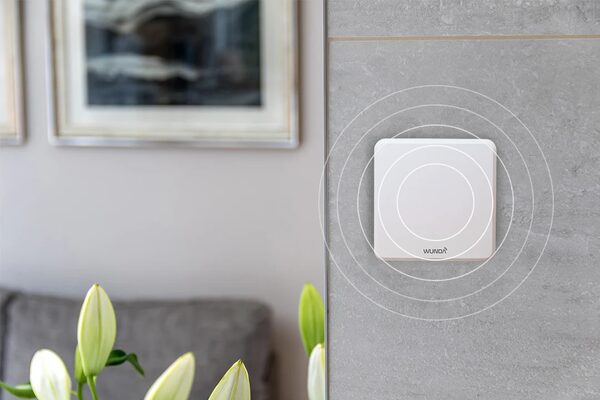
Four families of room thermostat are sold in the UK, and the differences that matter are how they are programmed, whether they are wired, and whether they control hot water.
Manual thermostats set a temperature and nothing else. Programmable thermostats add time control, so the home follows a schedule. Wireless models separate the thermostat from the boiler, which matters where a cable run is impractical or where the thermostat needs to move. Smart thermostats add connectivity: Hive and Nest connect to wifi so heating and hot water can be controlled through a phone, tablet or desktop9. Most smart thermostats allow multiple routines to be programmed, so the home sits at the desired temperature at the desired times10.
Hot water control is the split that catches buyers out. Honeywell evohome includes hot water control and remote control via smartphones or tablets4. The Google Nest Smart Thermostat E is listed as having no hot water control, and supports self or professional installation11. The Bosch Room Thermostat II is listed for self installation, with no hot water control, program modes, frost protection and a child lock11. The Habi Wireless Smart Thermostat is listed with professional installation recommended, hot water control, frost protection, no GPS tracking, no motion sensor, manual and frost modes, a child lock, multi-zone support and Matter11.
| Thermostat | Installation | Hot water control | Notable features |
|---|---|---|---|
| Bosch Room Thermostat II | Self installation | No | Program modes, frost protection, child lock11 |
| Google Nest Smart Thermostat E | Self or professional | No | Modulating and learning, frost protection, GPS tracking11 |
| Habi Wireless Smart Thermostat | Professional recommended | Yes | Multi-zone, Matter, child lock, no GPS or motion sensor11 |
| Honeywell evohome | Not stated | Yes | Remote control via smartphone or tablet4 |
Smart thermostats are also recognised in official scheme rules: Smart Thermostat appears as a measure type under the Smarttherm category12. That matters for households in fuel poverty or on certain benefits, because it means the measure can be funded rather than bought outright.
What a room thermostat does, and what it saves
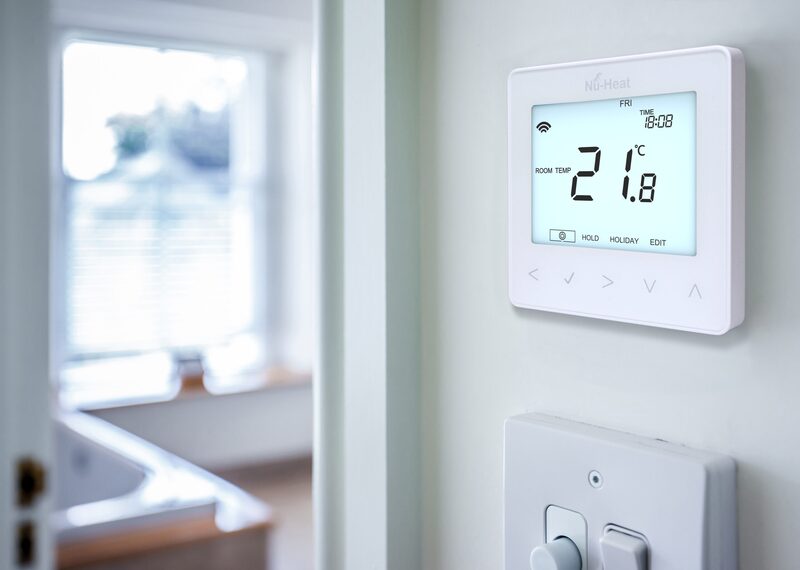
A room thermostat switches the heating on and off to hold the air temperature at the set point. It does not control individual radiators, and it does not control hot water unless the model is designed to. Heating controls more broadly help control when the heating system operates and the temperature in each room13.
The savings figures come from several sources and they do not agree, which is worth stating plainly.
| Source | Measure | Saving |
|---|---|---|
| Energy Saving Trust | Thermostat down 1°C, 22°C to 21°C | Around £120 a year in GB, £80 in NI1 |
| Energy Saving Trust | Installing heating controls | £100 a year in GB1 |
| Smart Energy GB | Thermostat down one degree | Around £60 a year9 |
| Confused.com | Thermostat down 1°C | Up to £90 a year14 |
| East Herts Council | Thermostat down 1°C | Up to 25% of heating bills and associated carbon15 |
| Confused.com | Smart thermostat and controls | Up to £110 a year14 |
The £120 and £80 figures are the most specific, because they name the starting point and the nations. The £60 figure is attributed to Energy Saving Trust research and is lower. The 25 per cent figure is a percentage rather than a cash amount and is the outlier.
Northern Ireland guidance repeats the one degree message in its own right: turning the thermostat down by just one degree Celsius could save as much as 10 per cent on heating bills16. That is a percentage framing rather than a cash one, and it sits alongside the £80 figure for the same nation.
For a household's independence, a room thermostat is the cheapest form of local control there is. It needs no app, no account and no internet connection, and it keeps working when the broadband fails.
The right temperature: 18 to 21°C by day, 16 to 18°C at night

Energy Saving Trust states that a thermostat should be set to the lowest comfortable temperature, which for most people is between 18°C and 21°C1. A separate guide puts the comfortable range for living spaces at 18°C to 21°C, and gives a bedroom figure of 16°C to 18°C18. For healthy adults, a setting between 18°C and 21°C is often cited as the ideal comfort and efficiency zone19.
The night figure is where the sources diverge most. The bedroom range of 16°C to 18°C is a room temperature rather than a thermostat setback, and the two are not the same thing. A setback of a couple of degrees below the daytime setting achieves a similar effect without naming a fixed number.
Storage heaters have their own rules, and they are worth setting out because they are often left on the wrong settings. The output control should be set to high if needed but set back to low by bedtime, and set to the lowest setting or the frost control symbol overnight20. The input control should be set depending on the expected next day temperature20. That is a manual routine rather than a programmed one, and it is the main reason storage heating costs more than it needs to.
Where to put a thermostat, and why placement matters
Placement decides whether a thermostat measures the home or measures a draught. The best place to put a smart thermostat is where the temperature is relatively consistent4. In practice that means an internal wall, away from windows and doors, at a height where it is not blocked.
The specific exclusions are consistent across sources. A thermostat should not be blocked by furniture or curtains, should be kept away from heat sources such as electric fires or heaters, and should be protected from draughts and placed away from sources of draughts such as windows or the front door14. If a room has additional local heating, the thermostat should not be in that room, and a wireless thermostat should be moved out of the locally heated room, otherwise it will disrupt control3.
That last point covers wood stoves, open fires and supplementary electric heaters. A thermostat sitting beside a stove reads the stove, not the house, and the rest of the home goes cold while the room with the stove stays warm.
There is one formal exception to room-by-room control. Thermostatic room controls may not be technically feasible in dwellings with low heat demand, for example less than 10W/m2, or in dwellings with buffer zones of high thermal mass2. That is a narrow case, mostly relevant to very efficient new builds, and it is a technical exemption rather than a general permission to leave controls out.
Zoning: one thermostat for houses under 150 square metres, more for larger homes
The 150 square metre threshold runs through the building rules, and it is the single most useful number for deciding how many zones a house needs.
For new dwellings with wet heating systems and a floor area of 150m2 or greater, a minimum of two independently controlled heating circuits should be provided2. The same requirement appears in the Welsh Approved Document L21 and in the 2021 edition with 2023 amendments22, and the consultation version for Wales repeats it23. Scottish guidance sets out the same principle: dwellings with a total floor area over 150 m2 should be provided with at least two space heating zones with independent time and temperature controls24.
Below the threshold, the picture is more varied, and it depends on the fuel and the system.
| System and dwelling size | Zoning requirement |
|---|---|
| Wet system, new dwelling, 150m2 or more | Two independently controlled heating circuits2 |
| Electric heating, under 150m2 | At least two space heating zones with independent temperature control, one assigned to the living area24 |
| Solid fuel central heating, 150m2 or less | At least two space heating zones with independent temperature control, one assigned to the living area24 |
| Oil-fired wet system, 150m2 or less | May have a single space heating zone with independent time control, plus TRVs outside reference rooms or electronic temperature control24 |
| Electric wet central heating, 150m2 or less | May have a single space heating zone24 |
The BEAMA guidance gives the count in a single table: one zone for new dwellings under 150m², two zones for new dwellings at 150m² or above, one zone for a boiler replacement under 150m², two zones for a boiler replacement at 150m² or above, and one zone for radiator or hot water cylinder replacement25. It also notes that for dwellings over 150m2, separate heat zones could be achieved through individual networked thermostatic radiator controls and a central smart control that offers zoning25. That is the retrofit route for a house that was never plumbed as two circuits.
The Welsh landlord guidance takes a different angle again, requiring that occupants of centrally controlled space heating systems be allowed to control temperature within their dwelling26. The ECO4 guidance requires independent programming of temperature and heating times in at least two different areas or zones of a premises27. Both point the same way: control belongs with the occupant, and in larger or shared buildings that means more than one zone.
For a household, zoning is the difference between heating the rooms in use and heating the whole footprint. It is also the control feature most likely to be missing in an older large house, where the pipework was laid as a single circuit.
Controls for flats: small spaces, underfloor heating and wall space
A flat is usually a single zone, and the guidance says so: in smaller homes and flats, it is rarely worthwhile heating an individual room and it is generally better to heat the whole house3. That is a statement about cost-effectiveness rather than a rule, and it reflects the fact that a small, well-insulated flat loses heat between rooms quickly enough that zone control saves little.
The constraints in a flat are physical and legal rather than thermal. Permitted development rules for air source heat pumps are more restricted for flats and shared buildings, and planning permission is more likely to be required6. That limits the heat sources available, and therefore the control strategies that make sense.
Wall space is the other constraint. A room thermostat needs an internal wall away from draughts, and a flat with a large window wall and a small hallway may have few suitable positions. A wireless thermostat solves the siting problem by separating the unit from the boiler, and it can be moved if the first position proves wrong.
Underfloor heating is common in flats, particularly conversions, and it changes the control requirement. All underfloor heating systems should have controls to adjust the operating temperature2. Zoning allows control of the temperature of individual rooms, and smart, programmable thermostats can keep the home heated on a schedule to help minimise bills28. Underfloor heating is often installed in combination with a heat pump and works with all types of heating systems28.
Leasehold adds a layer that no thermostat addresses. Where heating is communal, the household controls the temperature in its own dwelling but not the generation of the heat, and the Welsh landlord guidance requiring occupants to be allowed to control temperature within their dwelling is the relevant standard26. That is a genuine limit on independence: the controls are local, the heat source is not.
Underfloor heating needs a thermostat in each room and a timer
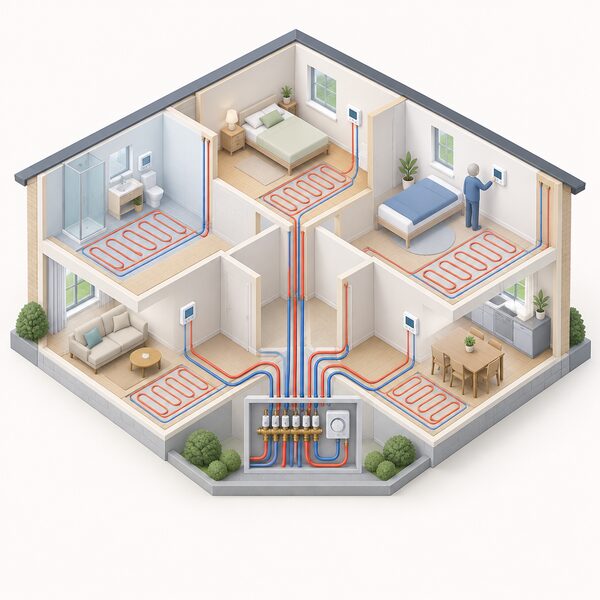
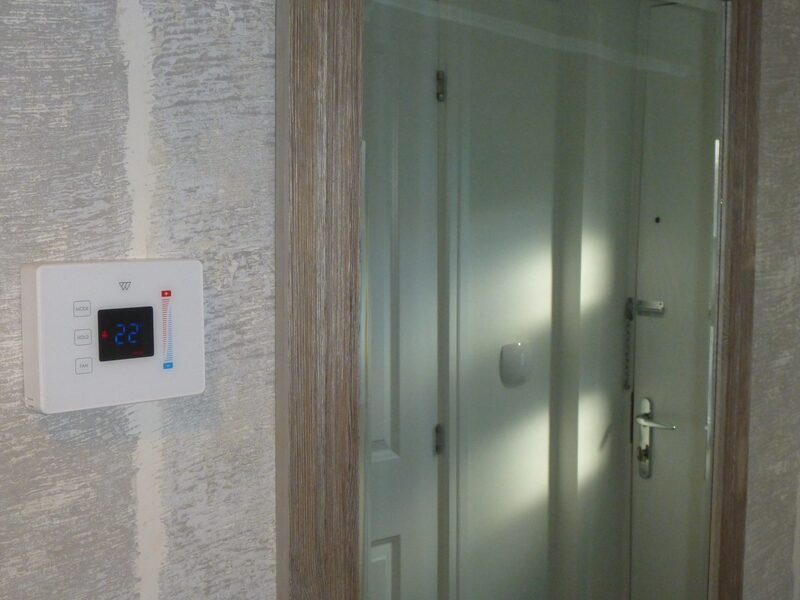
Underfloor heating is controlled room by room, not as a single block. A case study of a rural off-gas home with a heat pump reports a thermostat in each room, which reduces the temperature overnight5. That is the arrangement the guidance points to: zoning allows control of individual room temperatures, and programmable thermostats hold a schedule28.
The formal requirement is that all underfloor heating systems should have controls to adjust the operating temperature2. In practice that means a manifold with zone valves or actuators, a thermostat per zone, and a timer or programmer driving the whole system. Without the timer, the floor is warm whenever the thermostat calls, which is expensive on a time-of-use tariff.
Underfloor heating suits low-temperature heat sources, which is why it is often paired with a heat pump28. That pairing is also why the controls matter more than they would with a boiler: a heat pump runs at a lower, consistent temperature, and the system is designed to hold that temperature rather than to respond quickly5. A thermostat that switches the whole floor on and off in short bursts works against the design.
The trade-off for a household is response time. A screeded floor takes hours to warm and hours to cool, so the schedule has to lead the occupancy rather than follow it. That is a control design question, not a thermostat feature, and it is the main reason underfloor heating in a flat needs a timer rather than a manual dial.
Thermostatic radiator valves: room-by-room control on existing radiators
TRVs are the cheapest form of room-by-room control, and the building rules now expect them. For heating systems in new dwellings, or when a heat generator such as a boiler is replaced in an existing dwelling, each room should be provided with thermostatic room controls able to separately adapt the heating output in each room served2. The same wording appears in the 2021 edition with 2023 amendments22 and in the Welsh document21.
TRVs control the temperature of each room by opening and closing automatically to control the flow of hot water through the radiator they are fitted to, and they can be manually adjusted to different settings12. A TRV gives better control over individual room temperatures, and it is encouraged to place TRVs on existing radiators29. Central heating system controls, including thermostatic radiator valves, are listed among energy-saving materials31.
There is one rule that is routinely broken. Thermostatic radiator valves should not be used in the same room as the thermostat, and heat emitters in the same room as the thermostat should have manual controls2. A TRV fighting a room thermostat in the same room produces short cycling and a house that never settles.
Programmable TRVs extend the idea. Some models can be connected via wifi to smart heating controls, letting a new zone be created for each room1. They are TRVs with timing control as well, letting each radiator come on at different times and heat each room separately1. That is the retrofit answer for a large house with a single circuit: networked TRVs plus a central smart control can deliver zoning without new pipework25.
The recommended use is straightforward: TRVs on individual radiators to adjust the temperature in different rooms based on usage, turning down TRVs in unused rooms19. For a household, TRVs are the control that most directly reduces waste, because they stop paying to heat rooms nobody is in.
Smart thermostats: app control, hot water and what they cost
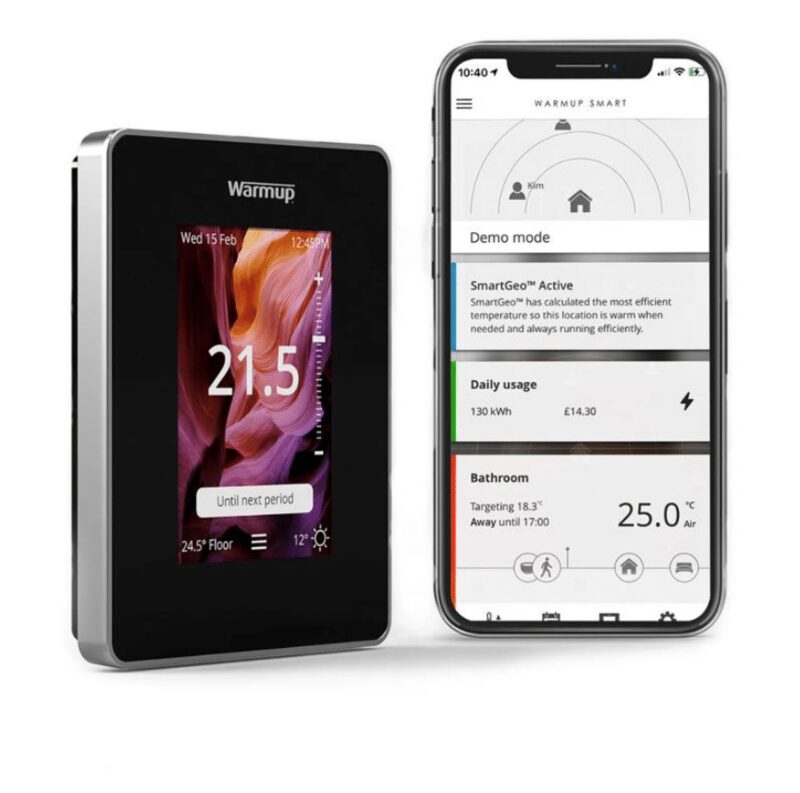
Smart thermostats add remote control, scheduling and data. They can be programmed or remotely controlled to manage the home's temperature, and a quick tap on a phone can save hours of wasted heat and energy10. The saving methods are specific: remote switching off via phone, more sophisticated sensors to avoid temperature extremes, and heating or pre-heating certain rooms while leaving unused rooms untouched10.
Cost is the first practical question. Most smart thermostats cost between £100 and £200, but some have add-ons such as installation which push the total higher4. That is a published range and it excludes the cost of any wiring changes, which are installer-quoted.
Hot water control is the second question, and it depends on the model. Hive and Nest connect to wifi so heating and hot water can be controlled through a phone, tablet or desktop9. Honeywell evohome includes hot water control4. The Google Nest Smart Thermostat E and the Bosch Room Thermostat II are both listed without hot water control11. A household with a cylinder should check this before buying, because a thermostat without hot water control leaves the cylinder on its own programmer.
Installation varies by model. The Bosch Room Thermostat II is listed for self installation11. The Google Nest Smart Thermostat E supports self or professional installation11. The Habi Wireless Smart Thermostat comes with professional installation recommended11. Mains wiring is a separate matter from pairing a wireless unit, and the manufacturer's instructions govern what is permitted.
The independence question is the one that rarely appears in the marketing. A smart thermostat that depends on a cloud service, an app and a broadband connection adds a dependency that a manual or programmable thermostat does not have. The heating still runs if the internet fails, but the scheduling, the remote control and the data do not. For a household weighing up smart thermostats, that trade-off between convenience and dependence is the one worth naming.
Sources31 cited
- Thermostats and heating controls, Energy Saving Trust, 2026-02-10
- Approved Document L Volume 1: Dwellings, HM Government, 2026-04
- Heat the whole house or one room, Uswitch, 2026-08-20
- What are smart thermostats, Uswitch, 2026-02-05
- Air source heat pump for rural off-gas home, Energy Saving Trust, 2026-01-05
- Air source heat pumps, Westmorland and Furness Council, 2026-09-17
- Heat pumps: building regulations, Planning Portal, 2026-09-17
- Self-build homes: sustainability, Planning Portal, 2026
- Ultimate energy saving tips guide, Smart Energy GB, 2026-04-24
- How a smart thermostat can save you money this winter, ivie, 2025-11-18
- How to buy the best smart thermostat, Which?, 2026-09-17
- ECO4 New Measures and Products Guidance v3.0, Ofgem, 2025-07-29
- Thermostats and heating controls, Home Energy Scotland, 2026-09-20
- Energy saving tips for the home, Confused.com, 2025-10-14
- Home and business grants, schemes and advice, East Herts Council, 2026-09-17
- Insulation, nidirect, 2026-09-02
- Energy efficiency in the home, nidirect, 2026-09-02
- Maintaining the ideal home temperature, Smart Energy GB, 2026-08-17
- The best way to run your central heating to save money, ivie, 2026-09-20
- Getting the most from Economy 7, National Energy Action, 2026-09-10
- Building Regulations Approved Document L Volume 1, Welsh Government, 2026-04
- Approved Document L Volume 1, 2021 edition with 2023 amendments, HM Government, 2026
- Approved Document L Volume 1 consultation version, Welsh Government, 2025-08
- Domestic Building Services Compliance Guide 2022, Scottish Government, 2022-06
- Part L 2022 Heating Controls Guidance, BEAMA, 2022
- Fitness for human habitation guidance for landlords, Welsh Government, 2022-01-13
- ECO4 Guidance: New Measures and Products, Ofgem, 2022-07-04
- Underfloor heating system, NICEIC, 2026-09-17
- Building regulations: energy efficiency, Welsh Government, 2026-09-17
- Building regulations: energy efficiency, Planning Portal, 2026
- Building Act 1984, Schedule 8, legislation.gov.uk, 2026-09-17
 Air Conditioning in FlatsExplains the lease, freeholder and landlord consents that govern fixed air conditioning in flats, and building safety points for higher-risk buildings.
 Choosing Heating by Home TypeWhat heating can you actually have in a flat, a park home, a listed building or a new build?
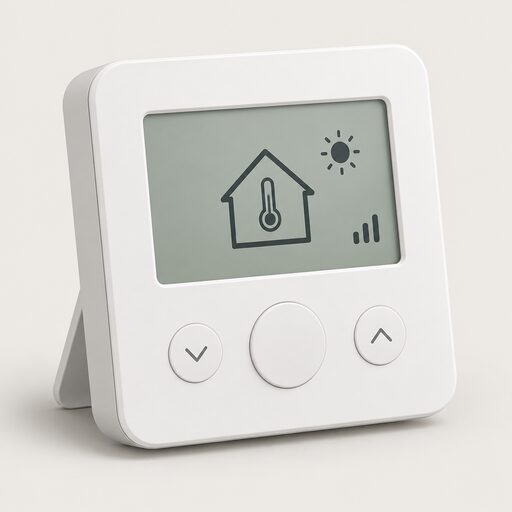 Room Thermostats ExplainedExplains mechanical, digital, programmable, wired, wireless and smart room thermostats, how they call for heat and switch it off, where to site them, how many zones a home needs under the building regulations, and what one degree on the dial is worth.
 Insulation by Home TypeFlats, terraces, semis, detached houses, bungalows and park homes all have different walls, roofs and shared spaces, so what you can insulate varies.
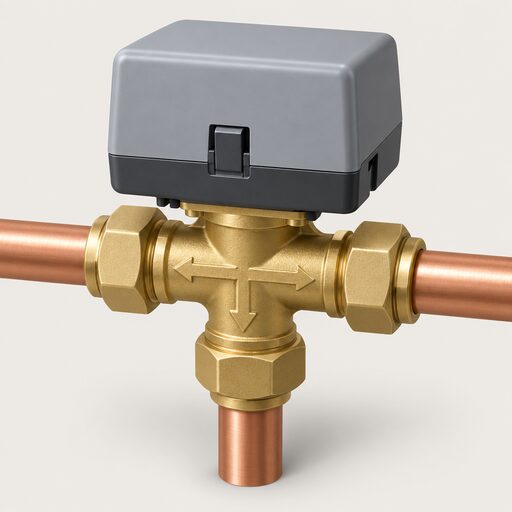 Heating Control WiringYour heating and hot water come on together when you want them apart, and the wiring is usually why.
 Batteries by Home TypeLooks at how house type, occupancy pattern, electrical supply and available space change what storage can achieve, from flats and terraces to rural and off-grid properties.