
In this answer
Short answer
Thermostatic radiator valves do save energy, and the strongest evidence comes from independent testing rather than manufacturer claims. In a project at Salford Energy House, trimming room temperatures with both traditional and smart TRVs on an air source heat pump system produced space heating energy savings of between 6 and 8%, and the tests found the valves did not significantly affect the heat pump's coefficient of performance1. That is the figure to hold on to: a real, measured saving on the heat actually delivered to the house, not a marketing estimate.
The Energy Saving Trust puts a cash figure on adding valves to a system that already has a programmer and a room thermostat: about £30 a year in Great Britain and £40 a year in Northern Ireland2. The difference reflects the different energy markets and support structures rather than any difference in how the valves work. Savings of this size are modest, and they depend on the house, the heating system and how the valves are used.
What TRVs do is give room-by-room control instead of one thermostat setting the whole house. A valve regulates the flow of hot water to its radiator based on the room's temperature, so a warm room stops drawing heat while cooler rooms keep going3. That is the mechanism behind the saving, and it is also the reason a badly set system saves nothing at all.
How much energy TRVs save: 6 to 8% in independent tests
The Salford Energy House work is the most useful single piece of evidence because it tested valves on a real heat pump system in controlled conditions. The trimming scenarios tested resulted in space heating energy savings of between 6 and 8%, and the project was designed to assess the impact of both analogue and smart TRVs on air source heat pump performance and to inform future modelling of TRVs deployed alongside heat pumps1. Traditional TRVs had a similar impact on system behaviour as trimming with lockshield valves, which matters because it shows the saving comes from limiting room temperature, not from the electronics1.
Other figures in circulation are larger and come from different methods. Nesta estimated that readjusting existing TRVs outside the living room to one setting lower could save individual households 5.5% of a typical annual gas bill, which it put at £685. A later Nesta release described an additional £78 per household per year from turning down radiator valves outside the living room by one setting6. The Centre for Sustainable Energy suggests that using TRVs and heating controls properly could save around £100 per year on bills7. These are modelled or survey-based estimates rather than measured tests, and they assume the household actually changes its settings.
The Welsh Government's Part L impact assessment gives a different unit entirely: 447 kWh of gas saving per annum for dwellings that have no TRV already installed8. That is a per-dwelling figure for a specific regulatory scenario, not a percentage, and it applies to the group of dwellings modelled in that assessment.
The honest summary is that a household should expect a saving in the low single digits to around 8% of heating energy, with the higher end requiring valves that are set sensibly and a house where rooms genuinely differ in temperature. The Energy Saving Trust notes that actual savings vary by property type, size and location, existing insulation levels, heating system, occupancy patterns, energy tariffs, installation quality and how people use their home after improvements9. That caveat applies to every figure above.
Where the savings come from: room-by-room control instead of one thermostat
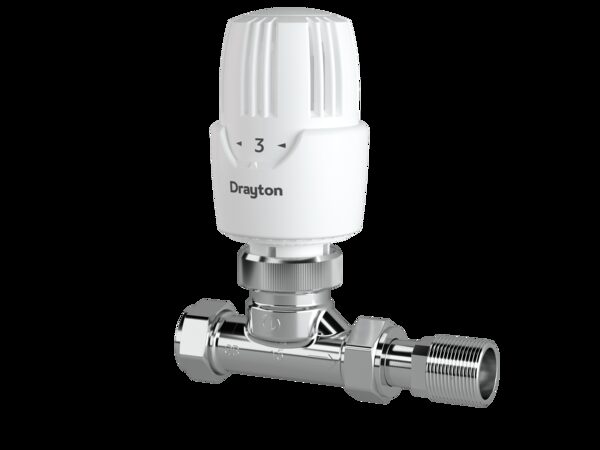
A single room thermostat measures one place and calls for heat for the whole house. TRVs break that into rooms. A valve regulates the temperature in an individual room by controlling the flow of water through each radiator, and it automatically adjusts the heat output of each radiator to maintain a comfortable room temperature, reducing hot water flow once the desired temperature is reached10. The saving is not that heat is moved around; it is that radiators in already-warm rooms stop taking hot water, so the boiler has less to do.
The valves also respond to heat the house gets for free. They can respond to free heat gains, such as sunshine warming a room naturally, by reducing or shutting off the radiator10. A south-facing living room on a bright afternoon will close its valve while a north-facing bedroom stays open. No central thermostat can do that, because it only knows the temperature where it is mounted.
The scale of the opportunity across a housing stock is large. One manufacturer estimates that fitting TRVs on all the radiators that do not have them could save 130 TWh of energy every year across Europe12. That is a manufacturer's modelling figure for a continent, not a prediction for any one home, but it shows why regulators treat the valves as a baseline control rather than an optional extra.
For a household, the independence argument is straightforward. Room-by-room control reduces the gas or electricity the house must buy, and it does so with a device that needs no app, no account and no internet connection. A manual TRV is one of the few energy-saving measures that keeps working during a broadband outage or if a manufacturer withdraws its cloud service. The trade-off is that it must be set by hand and it cannot be scheduled remotely.
Manual, electronic and smart TRVs: how the claimed savings differ
Manual TRVs are the baseline. A traditional TRV typically has five settings, allowing adjustment between 15°C and 23°C13. They need no batteries and no wiring, and the Salford testing found they behaved much like trimming with lockshield valves1.
Electronic TRVs add a motor and a schedule. One manufacturer states that using them can only reduce energy usage by a limited amount because they do not regulate the temperature through the central system13. That is a maker's own position on its own product category, and it sits below the 6 to 8% measured in the independent heat pump test, so the two should not be read as a single agreed number.
Smart TRVs add app control, zoning and, in some cases, occupancy detection. Independent guidance notes that smart radiator valves typically cost between £35 and £80 each, about five times more than a traditional TRV4. A smart thermostat, by contrast, usually costs £100 to £200, with add-ons such as installation pushing some systems higher14. The wider caution applies here too: a smart thermostat could save money, but savings are not guaranteed and depend on the home, heating habits, existing controls, energy prices and how the thermostat's features are used15.
| Type | Typical cost each | Power | Control |
|---|---|---|---|
| Manual TRV | Baseline, no published figure | None needed | Five settings, 15°C to 23°C13 |
| Electronic TRV | No published figure | Battery | Schedule, maker states a limited saving13 |
| Smart TRV | £35 to £804 | Battery | App, zoning, occupancy |
One manufacturer's auto-balancing TRV is claimed to save on average 8.8% on energy costs, described as proven technology in its launch announcement16. That is a maker's claim for a specific product and should be read as such, not as an independent result.
Where TRVs fall short: rooms, boilers and systems where they help less
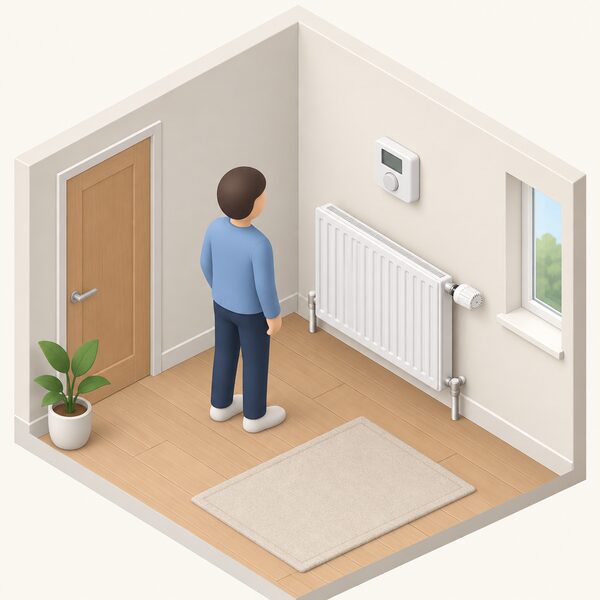
The first limit is the room with the main thermostat. Independent guidance is clear that a TRV should not be used in the room where the main boiler thermostat is, because the TRVs and the thermostat will compete with each other4. If that radiator closes, the thermostat stops sensing demand and the rest of the house goes cold. That valve should be left fully open.
The second limit is the system. A minimum control set is both time and temperature controls that can turn the boiler off when there is no demand, with TRVs recommended in each room17. TRVs are a layer on top of that, not a replacement. Building Regulations require a TRV on any new radiator installed, which confirms their status as a required baseline rather than a complete control system18.
The third limit is the heat pump. Although the Salford tests found no significant effect on coefficient of performance, the same guidance advises that households with air source heat pump systems wishing to limit internal temperatures should initially reduce the flow temperature and programme setbacks, with TRVs used as a secondary measure1. In other words, on a heat pump the valve is not the first lever to pull.
The fourth limit is the house itself. The degree of saving depends on the degree of insulation, the heat source, the heat output of the radiators and the number of rooms where a TRV is used12. A well-insulated open-plan home with even temperatures has less to gain than a draughty house with rooms that vary. And a valve that is never adjusted saves nothing: the savings in the Nesta work came specifically from readjusting valves outside the living room to one setting lower5.
TRVs and the move away from gas heating
TRVs are not a heating technology in themselves; they are a control that works with whatever heat source is present. That makes them relevant to the shift away from gas, because the same valve that trims a gas boiler's output also trims a heat pump's.
The regulatory direction is set. In Wales, the Part L impact assessment modelled 447 kWh of gas saving per annum for dwellings that have no TRV already installed8. Building Regulations in England and Wales require a TRV on any new radiator18. Ofgem's ECO4 measures table lists TRV as an eligible measure, which places the valve inside the government's energy efficiency scheme framework20.
The wider context is that gas consumption is already falling. Energy UK reports that the gas Typical Domestic Consumption Values have been reduced by 15 to 20%, and the electricity values by 7 to 14%, with reasons including warmer weather and increased energy efficiency, as well as people using less energy as a response to higher energy bills21. TRVs sit inside that trend rather than driving it.
For a household thinking about a heat pump, the practical point is that TRVs are compatible and do not degrade performance, but they are not the main efficiency lever. Flow temperature and scheduling come first1. For a household staying on gas, the valve is a cheap way to stop heating rooms that are already warm. Either way, the valve reduces the amount of purchased energy the house needs, which is the part of energy independence a household can control directly. What it does not do is remove dependence on the grid, a supplier or a fuel: the boiler or heat pump still runs on gas or electricity bought from someone else.
How to get the most from TRVs: settings, placement and common mistakes
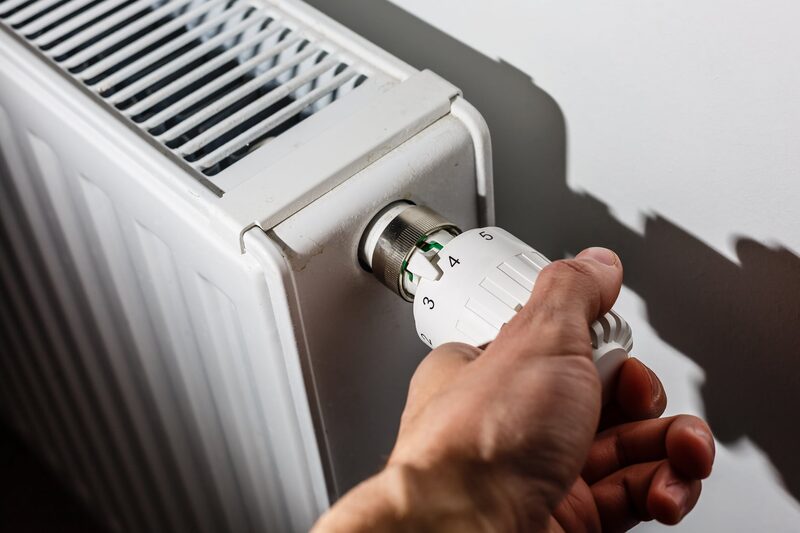
The Energy Saving Trust suggests setting TRVs at 3 to 4 for the rooms used most and turning them down to 2 to 3 for bedrooms and rooms used less2. A traditional valve's five settings span roughly 15°C to 23°C, so those numbers map to real temperatures rather than arbitrary positions13.
In unused or unheated rooms, valves can be turned to the frost setting so radiators use the minimum amount of energy needed to protect the home23. That is a protection setting, not a comfort setting, and it is the right choice for a spare room or a garage-adjacent space in winter.
The common mistakes are predictable. Setting every valve to maximum defeats the purpose, because a valve that never closes never saves anything. Fitting a TRV in the thermostat room creates the competition described above4. Fitting valves but never adjusting them leaves the Nesta-style savings on the table, since those came from turning valves outside the living room down by one setting5. And expecting a valve to fix a system with no boiler interlock is a category error: the minimum requirement is time and temperature controls that can turn the boiler off when there is no demand17.
For households weighing up whether to go further, the related questions are covered elsewhere on this site. How TRVs work explains the mechanism in detail, smart TRVs covers app-controlled valves and zoning, and whether smart heating controls actually save money sets the savings evidence in a wider context. The full guide to heating controls covers how valves, thermostats, programmers and zoning fit together.
Sources23 cited
- BEAMA Air Source Heat Pump TRV Salford Energy House Test, BEAMA, April 2026
- Take Control of Your Heating at Home, Energy Saving Trust, September 2026
- Radiator Valves, Smart Energy GB, April 2026
- Best Smart Radiator Valves, Which?, September 2026
- Cut the Cost of Heating Bills This Winter, Which?, October 2022
- Wallet Warmers: British Families Can Save £160 on Annual Bills, Nesta, September 2023
- Energy Saving Tips for Winter, Centre for Sustainable Energy, December 2025
- Part L Wales Impact Assessment: Domestic Existing and New Build, Welsh Government, May 2022
- Our Data, Energy Saving Trust, September 2026
- Smart Heating Controls: What They Do and Why They Matter, BEAMA, April 2025
- Central Heating Controls, tado°, July 2026
- The Added Value of Thermostatic Radiator Valves in Energy Saving, Myson, August 2023
- Thermostatic Tap Comfort Guide, Netatmo, September 2026
- What Are Smart Thermostats?, Uswitch, February 2026
- What Is a Smart Thermostat?, Smart Energy GB, August 2026
- Drayton Announces Launch of Its New Innovative Auto-Balancing TRV, Drayton Controls, October 2023
- Homeowner FAQs, Drayton Controls, November 2023
- Building Regulations: Energy Efficiency, Planning Portal, 2026
- Building Regulations: Extensions and Energy Efficiency, Welsh Government, 2026
- ECO4 Measures Table v4.0, Ofgem, July 2025
- Energy UK Explains: Typical Domestic Consumption Values, Energy UK, July 2026
- Energy UK Explains: Typical Domestic Consumption Values, Energy UK, August 2023
- Protect Pipes in Winter, Home Energy Scotland, December 2025
 Do Smart Controls Save Money?Do smart heating controls really cut your bills, and by how much?
 The Full Heating Controls GuideA room thermostat, a programmer and valves on your radiators are the basics.
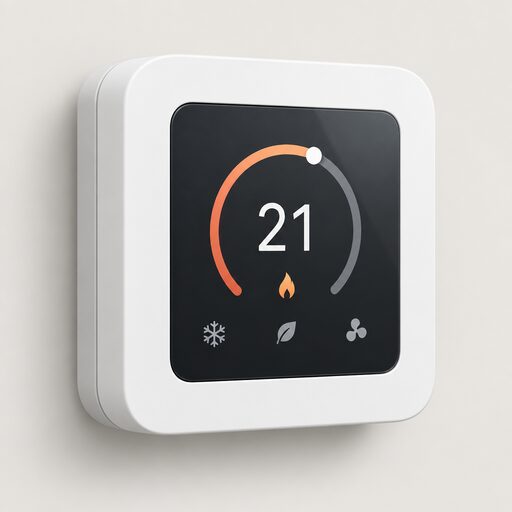 Heating Controls CostA smart thermostat usually costs between about a hundred and two hundred and fifty pounds, but fitting can push that higher.
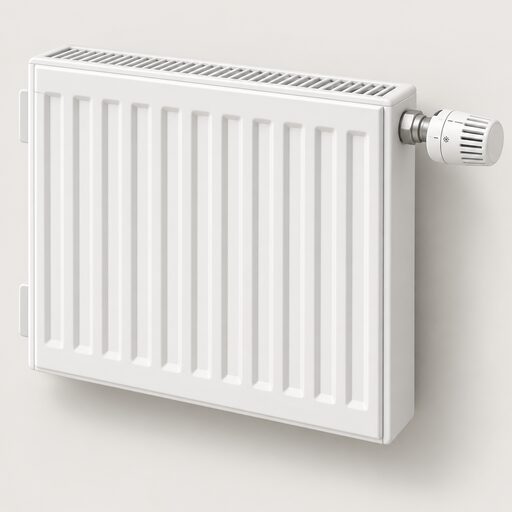 Changing Habits SavingsWhat the evidence says behavioural change saves: around £90 to £120 a year for one degree off the thermostat, £100 to £110 a year for using a full set of heating controls, and £304 to £351 a year for a bundle of small changes.
 Smart Thermostats ExplainedWhat does a smart thermostat actually do, and is it worth it?
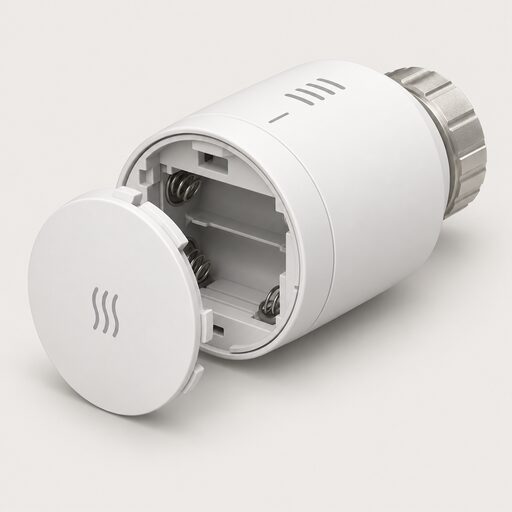 Smart TRVs ExplainedSmart radiator valves let you heat one room without heating the rest, on a schedule you set from your phone.