
In this answer
Short answer
Yes. Time-of-use tariffs for heat pumps exist in the UK, and some suppliers offer electricity tariffs designed specifically to minimise heat pump running costs1. The Energy Saving Trust puts it directly: switching to a heat pump time-of-use tariff that charges a different rate at different times of day can save money on bills2. Parliament's own research briefing notes that additional savings are possible with flexible electricity tariffs3.
The headline numbers are worth stating plainly. Nesta modelled a time-of-use tariff for heat pumps saving customers £318, or 18% of annual energy bills4. Energy UK puts the air source heat pump saving with a time-of-use tariff at £2605, and Nesta reports heat pump owners could save up to £600 a year just by switching to one6. Off-peak rates on some tariffs run as low as 7p per kWh7.
What the tariff does not do is remove dependence. The heat pump still draws from the grid, still needs a supplier, and still needs a smart meter to be billed on time-of-use rates at all8. The saving depends on the household's heating pattern lining up with the cheap hours. Where it does not, official guidance is blunt: time-of-use tariffs can increase fuel bills9.
Yes, time-of-use tariffs for heat pumps exist in the UK
The existence question has a short answer and a longer one. The short answer is that heat pump tariffs are a live product category: some suppliers offer specific electricity tariffs designed to minimise heat pump running costs1. The Energy Saving Trust frames the mechanism as a rate that changes by time of day, so the heat pump can run when electricity is cheaper2. Parliament's briefing treats flexible tariffs as an additional savings route on top of the heat pump itself3.
The longer answer is about how thin the market still is. In Nesta's heat pump user survey, only 6% of respondents said they were currently on one of these time-of-use tariffs12. That is a small share of a small installed base, and it explains why the tariffs are often described as emerging rather than standard. Nesta's own conclusion is that time-of-use tariffs are likely to be beneficial to many heat pump owners, and that policy should ensure they are available to as many households as possible through enabling actions such as the smart meter rollout and ongoing research into the end-user experience13.
For a household, the practical meaning is this: the tariff exists, it is not universal, and whether it is offered depends on the supplier and on the meter in the home. The independence gain is real but partial. A heat pump on a time-of-use tariff is still a grid-connected appliance on a supplier's terms; what changes is the household's ability to choose when it buys its electricity, and to pay less for the hours it can shift. That is a shift in control over timing, not a shift away from the grid.

How the three-level tariff structure works
The structure that gets called a heat pump time-of-use tariff is not a single shape. The Energy Saving Trust's integrated electric home case study describes one as a time of use tariff that offers three levels14. Three levels means three prices across the day: a cheap block, a mid-rate, and an expensive peak. The point of the middle level is that it gives the household somewhere to put load that cannot be moved into the cheapest hours.
Pricing models differ between suppliers. Which? reports two approaches: a set, cheaper rate per kWh regardless of where you live, or a discount compared with your region's standard tariff10. The first is simpler to compare; the second ties the saving to whatever the regional standard rate happens to be.
A dynamic time-of-use tariff works differently again. Ofgem's research describes it as offering a different price per unit of energy depending on the time of day, with the times and rates set in advance or published ahead15. That is the half-hourly end of the market, and it is where the price can move sharply.
| Structure | How the price is set | What it suits |
|---|---|---|
| Three-level heat pump tariff | Cheap, mid and peak blocks across the day14 | Households that can shift some, not all, heating |
| Set cheaper rate | A flat cheaper rate per kWh, wherever you live10 | Simple comparison against a standard tariff |
| Regional discount | A discount against your region's standard tariff10 | Households already tracking regional rates |
| Dynamic time-of-use | A different price per unit depending on time of day15 | Homes with battery or solar to absorb the swings |
The three-level design is the one most often marketed at heat pump owners because a heat pump cannot be switched on and off like a charger. It has thermal mass, and a well-insulated home holds heat for hours. That is what makes a mid-rate block useful: the household can pre-heat in the cheap window and coast through the peak.
Off-peak rates: 7p to 10p per kWh on some tariffs
The cheap rate is the whole point, and the published figures vary widely. One independent guide gives Octopus Go as an example, with off-peak rates as low as £0.07/kWh from 23:30 to 05:307. That is an electric vehicle tariff rather than a heat pump one, but it shows the floor that off-peak pricing reaches in the UK market.
At the other end, official guidance for the Domestic RHI uses a set tariff rate of 10.92 pence per kWh as an example payment formula for an air source heat pump with one heat meter and one electricity meter16. That is a scheme rate rather than a retail tariff, but it sits in the same band and shows where official figures place heat pump electricity.
For comparison, Economy 7 tariffs are assumed at 34.38p for on-peak and 15.43p for off-peak, with a 58:42 split17. The gap between 7p and 15.43p is the difference between a purpose-built flexible tariff and a legacy restricted-meter one.
The peak rate matters as much as the cheap one. Which? reports that some heat pump tariffs come with a pricier peak rate between 4pm and 7pm, and that peak rates have been seen up to as much as 50% pricier than standard tariff rates10. A household that heats hardest in that window can lose more than it gains.
What you can save: around £318 a year, or 18%
The savings estimates in circulation do not agree, and the disagreement is worth setting out rather than smoothing over. Nesta modelled a time-of-use tariff for heat pumps saving customers £318, or 18% of annual energy bills4. Energy UK's figure for an air source heat pump with a time-of-use tariff is £2605. Nesta separately reports that heat pump owners could save up to £600 per year just by switching to a time-of-use tariff6. The Energy Saving Trust says switching to a heat pump appropriate tariff can save up to £330 a year on heating bills18.
The spread comes from what each estimate assumes. The £318 figure is modelled against annual energy bills as a whole4. The £260 figure is an air source heat pump line in a table5. The £600 figure is a maximum across heat pump owners rather than a typical case6. None of them is a quote, and none is net of the heat pump's full running cost.
Where a household adds solar and a battery, the numbers move again. Energy UK reports that a combination of a heat pump, solar and a battery can save households £810 more per year when operated flexibly than the same assets on a single-rate tariff5. Ofgem's draft impact assessment states that households with heat pumps could save more than £250 annually by shifting to a smart tariff and using their heat pump flexibly19.
The direction of travel is consistent even where the amounts differ: flexible operation pays, and the more controllable electrical load a home has, the more it pays. The dependence that remains is on the tariff staying available and on the household's willingness to run heating on the supplier's clock rather than its own.
Good Energy's heat pump tariff: around 12 months in duration
Fixed energy tariffs usually run for 12 months, but can be as long as three years, according to Uswitch11. Ofgem's research into consumer tariff choices tested 12-month fixed term, 24-month fixed term and standard variable options15. A heat pump tariff is normally built on a fixed term of that kind, which means the cheap rates are guaranteed only for the term.
That term length is the household's main exposure. When a 12-month term ends, the time-of-use rates that made the heat pump cheap to run stop applying unless a new deal is agreed, and the household typically falls to the supplier's standard variable tariff. The saving modelled at £318 a year4 is a saving for the duration of the tariff, not a permanent change to the cost of heating.
There is a second timing risk inside the term. Energy Saving Trust guidance on running a heat pump efficiently says to make sure the heat pump is not trying to heat hot water or the house overnight when outside air temperatures are significantly lower, unless on a time of use tariff20. The exception is doing real work: on a time-of-use tariff, overnight running is the cheap window, and the lower outdoor temperature is the trade the household accepts for the lower rate.
For a household weighing independence, the term length is the honest limit. A heat pump tariff buys a period of cheaper electricity in exchange for accepting the supplier's schedule, and it renews on the supplier's terms. It does not lock in a price for the life of the heat pump.
Whether a time-of-use tariff suits your household
Suitability turns on three things: whether the home has flexible electrical load, whether the heating pattern can be moved, and whether the meter supports the tariff.
On load, the National Energy Action guidance is that for households with heat pumps, electric hot water systems or solar technologies, these tariffs can offer meaningful savings21. The Energy Saving Trust's advice for a heat pump on its own is to look for a dynamic tariff or a heat pump tariff22. Where a home has a heat pump, solar panels and a battery, the guidance is that it will probably do best with a heat pump tariff that includes a peak rate, using the battery to power the heat pump during expensive periods22.
On heating pattern, the risk is real. Official guidance states that where heating patterns are not well aligned to the tariff, time-of-use tariffs can increase fuel bills9. Energy Saving Trust research on tariff types found some tariff types might actually increase energy bills23. Home Energy Scotland's rule of thumb is that heat pumps work well with single-rate tariffs, that Economy 7 rates do not always fit well with heat pump usage, and that heat pump tariffs usually need a smart meter24.
On the meter, the requirement is firm. Citizens Advice states that a smart meter is needed to get a heat pump or EV tariff8. MCS Certified guidance adds that allowing heating to run at times when electricity is cheaper through time of use tariffs and the demand flexibility service is part of how a heat pump is run well25.
"As a general rule of thumb, heat pumps work well with single-rate tariffs. Economy 7 rates offer cheaper nighttime rates"
The independence picture is mixed by design. A household on a heat pump time-of-use tariff gains control over when it buys power and can cut its bill by shifting load, but it remains dependent on the grid, on a supplier offering the tariff, on a smart meter communicating properly, and on a fixed term that will end. The tariff is a tool for cheaper operation, not a route off the network.
Sources25 cited
- Heat pump fact check, Energy Saving Trust, 2026-07-01
- In-depth guide to heat pumps, Energy Saving Trust, 2026-07-16
- Research briefing: heat pumps, UK Parliament, 2026-09-19
- Heatflex: the untapped potential of automated heat pump flexibility, Nesta, 2024-11-19
- Clean heat: supporting low-income households, Energy UK, 2026-06-11
- Tech-affluent households are starting to make use of time-of-use tariffs, Nesta, 2025-08-06
- Electric car charging guide, Carwow, 2025-07-16
- Deciding if a heat pump is right for you, Citizens Advice, 2025-12-08
- Warm Homes Plan technical annex, GOV.UK, 2026-09-17
- Time of use tariffs explained, Which?, 2026-04-23
- Energy tariffs explained, Uswitch, 2026-02-17
- Domestic heat pump flexibility modelling, Nesta, 2024-11-19
- Exploring the costs to consumers of Scottish clean heating requirements, Nesta, 2024-08-01
- Integrated electric home case study, Energy Saving Trust, 2026-08-12
- Understanding consumers' energy tariff choices, Ofgem, 2025-07
- Domestic RHI guide to metering, Ofgem, 2026
- Electric heating advice, Centre for Sustainable Energy, 2026-06
- Renewable technologies: what really cuts energy bills, Energy Saving Trust, 2026-08-12
- Smart meter Guaranteed Standards of Performance draft impact assessment, Ofgem, 2025-08
- How to ensure a heat pump runs efficiently, Energy Saving Trust, 2026-05-19
- Beyond retrofit: helping households benefit from the energy transition, National Energy Action, 2026-07-14
- Tariffs for renewable technology, Energy Saving Trust, 2026-08-12
- Flexible futures: integrating smart tariffs with low carbon home technologies, Energy Saving Trust, 2026-07-10
- Living with a heat pump, Home Energy Scotland, 2024-02
- Smart meters, MCS Certified, 2026-07-24
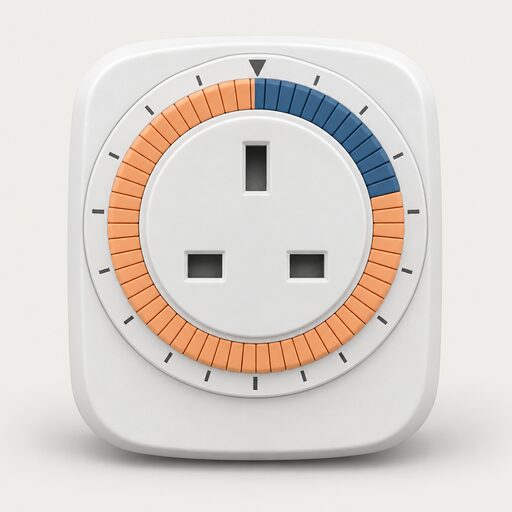 Heat Pump Electricity TariffsA heat pump tariff gives you cheaper electricity for part of the day, so running your heating costs less than on a standard rate.
 How Much Does a Heat Pump CostA heat pump usually costs around eleven thousand pounds installed, though quotes vary a lot depending on your home.
 The Full Tariffs GuideWhich energy tariff suits how you live, and will switching really save you money?
 Do Smart Controls Save Money?Do smart heating controls really cut your bills, and by how much?
 Heat Pump Running CostsWhat does a heat pump cost to run each year, and is it cheaper than a gas boiler?
 The Full Heat Pumps GuideWill a heat pump keep my house warm in winter, and what does one cost to buy and run?