
In this answer
Short answer
Charging an electric car does not require a smart meter. Getting an EV tariff almost always does. The Energy Ombudsman puts it plainly: for many EV-specific tariffs, particularly smart or time-of-use tariffs, a working smart meter is required1, and Smart Energy GB states that in most cases a smart meter is required to access EV tariffs2. Heat pump tariffs sit in the same family and carry the same condition3.
The reason is data, not hardware. A smart meter sends a reading to the supplier every 30 minutes, which is what allows a supplier to charge different rates at different times of day4. Without that half-hourly flow, a supplier has no way to bill an off-peak window accurately, so the tariff is not offered.
What follows is the requirement rule, supplier by supplier, what happens if a household refuses or cannot get a working meter, and how the same meter underpins solar, battery and export arrangements.
Why half-hourly readings are the deal-breaker
A time-of-use tariff is not simply a cheaper rate. It is a rate that changes through the day, and the change is only enforceable if the supplier knows when the electricity was used. Smart time-of-use tariffs use half-hourly smart meter readings to allow companies to charge lower rates when demand is lower and electricity is cheaper10. The meter is the evidence base for the bill.
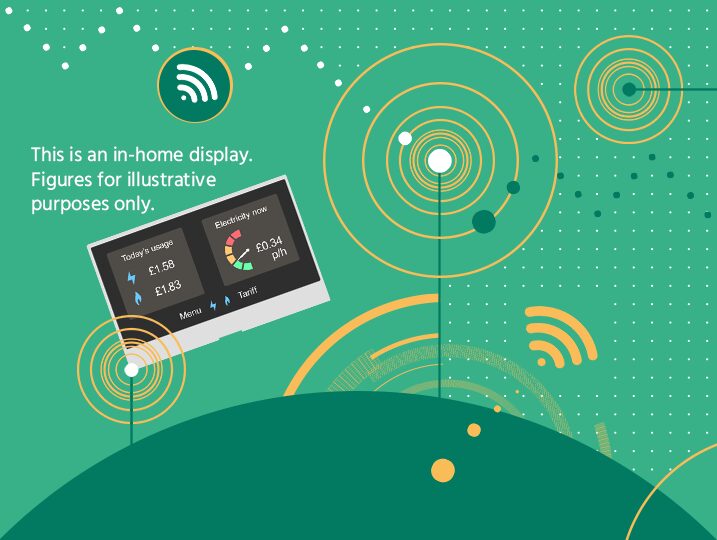
The mechanics are consistent across sources. A smart meter sends a meter reading to the supplier every 30 minutes4, and the initial electricity reading frequency is every half hour11. Government guidance describes the same function from the billing side: smart meters enable accurate billing by automatically recording energy use in half-hour periods, enabling suppliers to charge different rates at different times12. Smart Energy GB frames it as the supplier receiving half-hourly readings of electricity use, which is what allows different rates for different times of day13.
Two consequences follow. First, billing moves from estimated to actual usage, recorded in half-hour periods12. Second, the household gains access to tariffs it otherwise cannot buy: choosing half-hourly readings can open up new tariffs11. All smart meters can support tariffs that charge different prices at different times throughout the day and night, including Economy 7, and Economy 10 meters are also available14.
The independence point is worth stating plainly. A half-hourly meter gives a household the ability to buy electricity at the times when it is cheapest, which is a real gain in control over the bill. It does not remove dependence on the grid or on a supplier: the household is still buying every unit, and the cheap window is set by the supplier's tariff design, not by the household. What the meter changes is the household's ability to respond to price signals, not its ability to generate or store its own power.
Supplier by supplier: who insists and who does not
No supplier is identified here as offering an EV tariff without a smart meter. The direction of travel is the other way. Some suppliers are already offering smart meter-only tariffs and smart time-of-use tariffs15, which means the meter is a condition of the product rather than a preference.
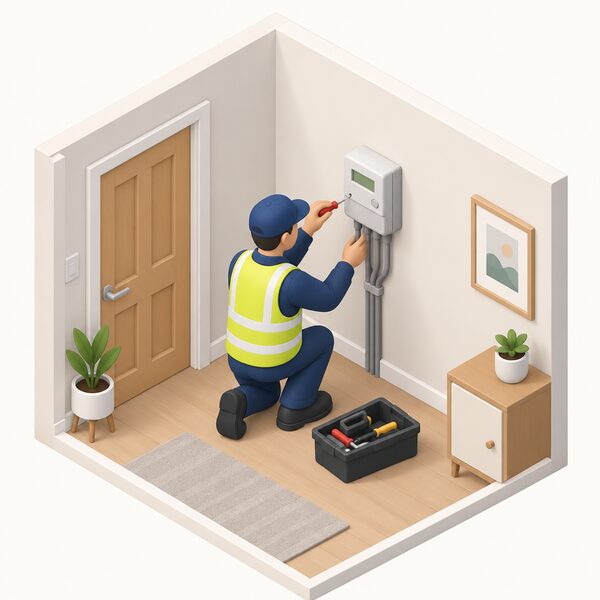
The obligation sits with the supplier, not the household. Gas and electricity suppliers are responsible for providing and fitting smart meters for everyone in Britain by the end of 2025 at no extra cost16. The installer is the energy supplier, so availability enquiries go to the supplier rather than to a separate body17. Citizens Advice has argued that suppliers should not just install smart meters where it is easiest but instead follow demand18, which matters in areas where installation has lagged.
| Question | Position |
|---|---|
| Is a smart meter needed for an EV tariff? | Yes, for many EV-specific tariffs, particularly smart or time-of-use tariffs1 |
| Is a smart meter needed for a heat pump tariff? | Yes, a smart meter is needed to get one of these tariffs3 |
| Is a smart meter needed to charge an EV at all? | No, but without one some EV-specific tariffs may be unavailable1 |
| Are smart meters compulsory? | No, suppliers must offer one but acceptance is the householder's choice7 |
| Who installs it? | The energy supplier17 |
| What does it cost? | Free, at no extra cost5 |
Some tariffs go further and require specific equipment as well as a meter: some are only available if certain equipment is installed, such as an EV charger or solar panels19. That is a separate condition from the meter, and it means a household can hold a smart meter and still not qualify for every EV product on the market.
What happens if you refuse or cannot get one
Refusal is permitted. Smart meters are not compulsory: energy suppliers are mandated to offer one to every household, but it is the householder's choice whether to accept7, and by law suppliers must offer smart meters to all their customers by a certain deadline while customers can decline the offer8.
Refusal has a cost, though not on the unit rate. The unit rate paid for energy does not change when a smart meter is installed, unless the tariff is changed at the same time20. What changes is access: refusing a smart meter can mean difficulty accessing all tariffs11, and it can mean excluding yourself from cheaper tariffs which are only available if you have a smart meter21.
For households on Radio Teleswitch meters, there is a middle path. A supplier may install a meter with the tariff pre-programmed; the household then sends manual readings and does not get the full benefits of a smart meter, but heating continues to work23. That is a workaround for a specific meter type, not a route to an EV or heat pump tariff, which depends on half-hourly data.
A faulty meter is a different problem from a refused one. A smart meter may stop recording the energy you use, or may no longer send readings to your supplier24. Where that happens, the tariff's data supply is broken and the supplier is the point of contact to restore it25.
Moving, switching and keeping the meter working
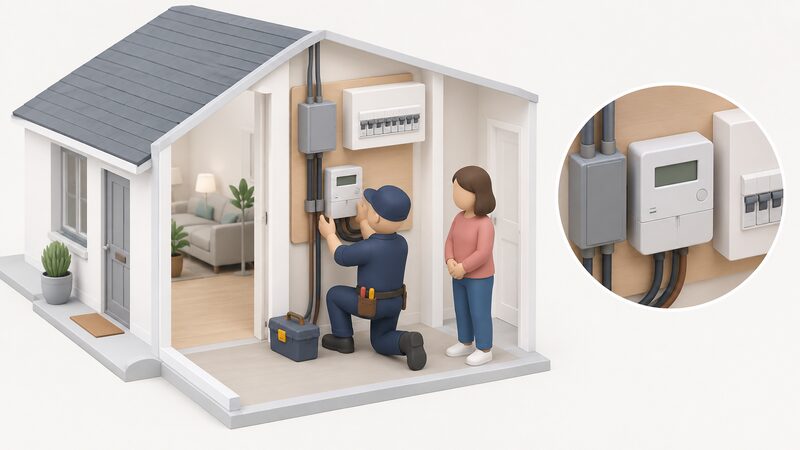
Switching supplier with a smart meter is possible, but not seamless. A household can switch suppliers if it has a smart meter, but the new supplier might not offer all smart meter services such as remote meter readings, and the meter may need replacing6. Going back the other way is harder: only under exceptional circumstances would a supplier be expected to change a smart meter to a traditional meter, and the supplier may charge the costs if it agrees14.
The half-hourly setting also persists. After switching tariff, or agreeing to send readings more often since 3 November 2022, the smart meter is set to send meter readings every half hour11. A household that moves off an EV tariff does not automatically return to monthly readings.
For anyone moving home, the practical sequence is to ask the new supplier about installing a smart meter at no upfront cost if the property does not have one26. Consumers without a smart meter can request one from their energy supplier at no extra cost27, and electricity suppliers have been contacting impacted customers to offer a smart meter upgrade at no extra cost28.
"You can get a smart meter installed by your energy supplier at no extra cost"
How this fits with batteries, solar and export tariffs
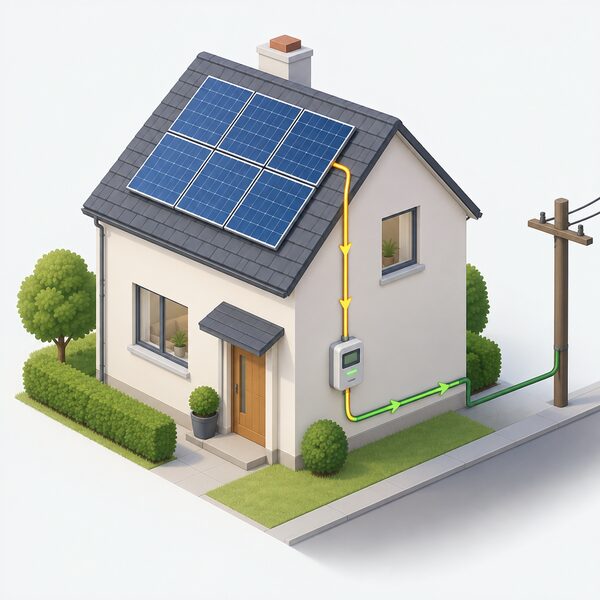
The smart meter is the common requirement across the technologies a household might add. To benefit properly from smart appliances, electric vehicles and home batteries, a household needs to be on a smart tariff29. An EV charger, heat pump or home battery makes smart tariffs much more valuable30, which is why the meter question keeps surfacing alongside them.
Export is the same story. To qualify for the Smart Export Guarantee, generators must have a smart meter to monitor exports9. The scheme required electricity suppliers to offer a tariff for power that solar and other technology generators export to the electricity grid31. Energy tariffs are being offered that pay for exporting renewable energy to the smart energy system, and these are obtained by getting a smart meter installed32.
Independent research into solar PV with electric heating examined smart time-of-use electricity tariffs offered by suppliers and suited to different technologies, including tariffs for storage heaters, heat pumps, solar PV and batteries, and electric vehicles33. The pattern is that one meter serves import, export and flexibility.
The independence picture is mixed and worth being honest about. A smart meter plus solar and a battery lets a household buy cheap, sell surplus and shift load, which is a genuine widening of control. It does not make the home self-sufficient. The meter is a communications device owned by the supplier's system, the tariff terms are set by the supplier, and the export payments depend on a scheme run under supplier obligations. A household that wants to reduce reliance on the grid entirely would need generation and storage sized for winter, which no tariff arrangement provides.
Sources33 cited
- EV tariffs and home charging: what consumers need to know, Energy Ombudsman, 2026-09-11
- Benefits for Britain, Smart Energy GB, 2026-04-24
- Deciding if a heat pump is right for you, Citizens Advice Wales, 2025-12-08
- Time of use tariffs: the benefits, Smart Energy GB, 2026-04-24
- How to get a smart meter, Smart DCC, 2026
- Problems with services, Isle of Anglesey County Council, 2025-10
- What is a smart meter?, Confused.com, 2026-07-03
- How to bleed a radiator, Uswitch, 2026-09-04
- Smart meters and the Smart Export Guarantee, Parliamentary Office of Science and Technology, 2026-06-25
- How to switch energy supplier, Which?, 2026-05-15
- Getting a smart meter installed, Citizens Advice, 2026-09-17
- Smart meters: your rights and expectations, GOV.UK, 2025-08-08
- Washing machine energy saving tips, Smart Energy GB, 2026-08-17
- Smart meters, Energy Ombudsman, 2026-09-20
- Smart meter costs: are smart meters free?, Smart Energy GB, 2026-03-16
- How to get a smart meter, Smart Energy GB, 2026-08-03
- Energy saving tips, National Grid, 2026-09-17
- The state of smart: consumer experiences of smart meters, Citizens Advice, 2026-02-03
- Time of use tariffs: all you need to know, Energy Saving Trust, 2026-05-20
- Do smart meters cost more?, Smart Energy GB, 2026-03-16
- Do you have to have a smart meter by law?, Smart DCC, 2026
- The Electricity and Gas (Energy Company Obligation) Order 2015, legislation.gov.uk, 2026-02-23
- RTS switch off, Home Energy Scotland, 2026-09-20
- Get help with your smart meter, Ofgem, 2026
- Get help with your smart meter, Ofgem, 2026-09-17
- Moving house energy checklist, Energy Saving Trust, 2026-05-01
- Understanding the Demand Flexibility Service scheme, Smart Energy GB, 2026-03-16
- Radio Teleswitch Service (RTS) switch off, Age UK, 2026-08-26
- Smart homes, lower carbon footprint, Energy Saving Trust, 2026-01-21
- Should I switch to a time of use tariff?, Energy Saving Trust, 2026-01-23
- The Smart Export Guarantee, House of Commons Library, 2026-09-17
- Myth busting smart meter problems, Smart Energy GB, 2026-09-17
- Evaluating solar PV with electric heating with North Devon homes: electricity tariffs, National Energy Action, 2025-07-03
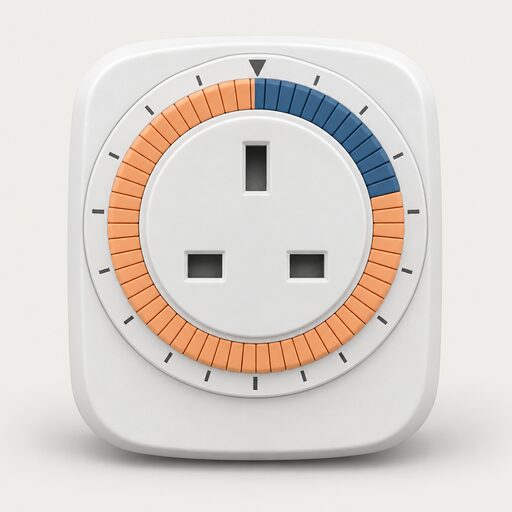 Heat Pump Electricity TariffsA heat pump tariff gives you cheaper electricity for part of the day, so running your heating costs less than on a standard rate.
 Meters and Time-of-Use TariffsDo you need a smart meter for a time-of-use tariff, and does it have to send readings every half an hour?
 Batteries and Smart TariffsA home battery can earn its keep if your electricity prices change through the day.
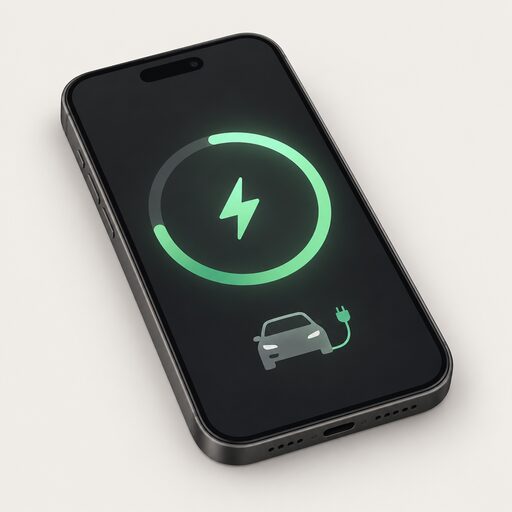 What Is a Smart Charger?A smart EV charger is an internet-connected home charge point that schedules charging around tariff prices, grid demand and household load.
 Supplier-Controlled ChargingSmart charging tariffs let your energy supplier decide when your car charges, usually overnight when electricity is cheaper.
 Smart Thermostat SubscriptionsDo you have to pay a monthly fee to use your smart thermostat, and what do you actually get for it?