
In this answer
Short answer
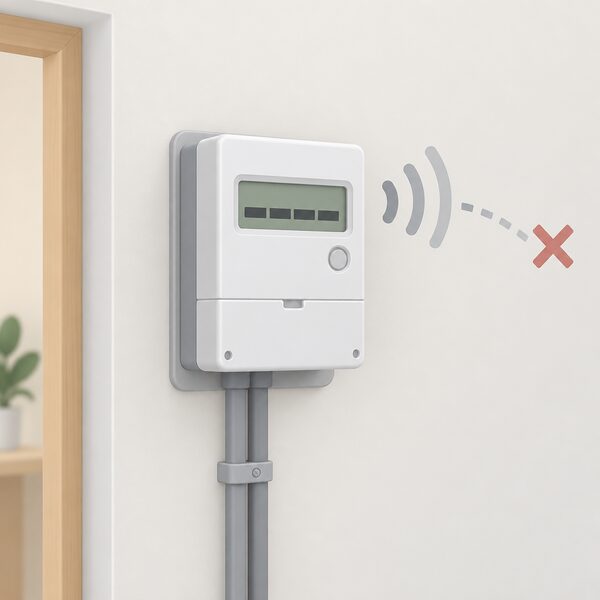
A smart meter that stops sending readings is the most common fault a householder can actually do something about. The meter is still measuring your energy accurately, but the readings are no longer reaching your supplier, so the account drifts onto estimated bills. Ofgem's guidance is blunt about the two ways a meter can fail: it "may stop recording the energy you use, or may no longer send readings to your supplier"1. Only the second is the communications fault described here.
The scale is real but not universal. Which? found 7% of respondents had experienced a smart meter not sending readings automatically in the past year, and 8% in an earlier survey2. One supplier's own review put the figure at 15%4. Smart Energy GB reports 3.5 million meters working in "traditional" mode, meaning they are not sending meter readings automatically to the energy supplier5.
The fix sits with your supplier, not with you. They are responsible for maintenance and will fix or replace the meter as needed6. In the meantime, the meter still records your usage accurately, and you can still take manual readings from it7.
Why readings stop being sent automatically
Automatic readings travel from the meter through the national communications network to your supplier. When that chain breaks, the meter keeps counting but the supplier stops seeing the numbers. Ofgem lists three causes for a meter not operating in smart mode: it loses connection with your supplier, it loses connection after you change supplier, or it has been installed without being connected to the national communication system7.
The third cause is worth dwelling on, because it is not a fault that develops over time. A meter installed without communications was never going to send readings, and the householder has no way of knowing at the point of installation. The first two are the ones that appear later, often without warning.
Supplier switching is the single most common trigger. Older first generation meters, known as SMETS1, may not be working in smart mode if you have switched supplier following the installation11. The Energy Saving Trust notes that some older meters are not easily switched between suppliers and do not necessarily give access to future data services such as advanced time of use tariffs12. That is a functional loss, not just an administrative one: a meter that cannot hold a smart connection cannot support a time of use tariff either.
For a household, the independence question is straightforward. A meter sending readings automatically means no manual reads, no meter reader visits, and bills built on actual consumption. A meter that has gone quiet hands part of that back to you: you become the data channel. The energy is still measured, but the household carries the administrative load until the connection is restored.
How common the problem is: 7 to 15% of customers
The published figures vary by source and by method, and the range matters more than any single number. Which?'s energy customer survey, run between September and October 2025, found 7% of respondents had experienced a smart meter not sending readings automatically in the past year2. An earlier Which? energy satisfaction survey, from autumn 2024, put the equivalent figure at 8%3. A supplier's own published review, dated June 2026, reported 15% of its customers had smart meters not sending readings automatically over the last year4.
The gap between 7% and 15% is not a contradiction so much as a difference in what is being counted. A customer survey asks people to recall a problem across a year. A supplier's own review counts cases in its own base. Neither is a measurement of the installed fleet at a single moment.
The fleet-level figure is different again. Smart Energy GB reports 3.5 million smart meters working in "traditional" mode, not sending meter readings automatically to the energy supplier, as of August 20255. That is a snapshot of meters in a state, not a count of households who noticed.
The consequence shows up in complaints. Ofgem's consultation records that smart meters now account for 30% of supplier complaints, "making smart meters the leading cause of consumer complaints"8. That is a striking figure for a device whose main job is to remove a task. It also explains why the regulator has been reviewing the protections around the technology.
How to tell your meter has stopped communicating
The symptoms are consistent and easy to check. Ofgem's guidance states that when communications are lost, bills may temporarily become estimated, manual readings may be needed, and the in-home display may stop updating correctly13. Any one of those three is a signal; two together is close to conclusive.
The bill is the most reliable indicator. A working smart meter should produce bills based on accurate meter readings and not estimates1. If your bill has switched to estimated readings, the supplier is not receiving automatic data. The Centre for Sustainable Energy notes that with a smart meter you may no longer need to submit meter readings, which is precisely why an estimated bill is anomalous rather than routine14.
The in-home display is the second check. If it has frozen, gone blank, or is showing figures that do not move, the communications link is the likely cause. The display is a separate device from the meter and can fail on its own, so a dead display alone does not prove the meter has stopped sending.
A third check is the meter itself. You can still take manual readings from a meter that is not in smart mode7. If the register advances normally when you press through the display, the meter is measuring. If it does not, the fault is different and more serious.
Should you send manual readings in the meantime
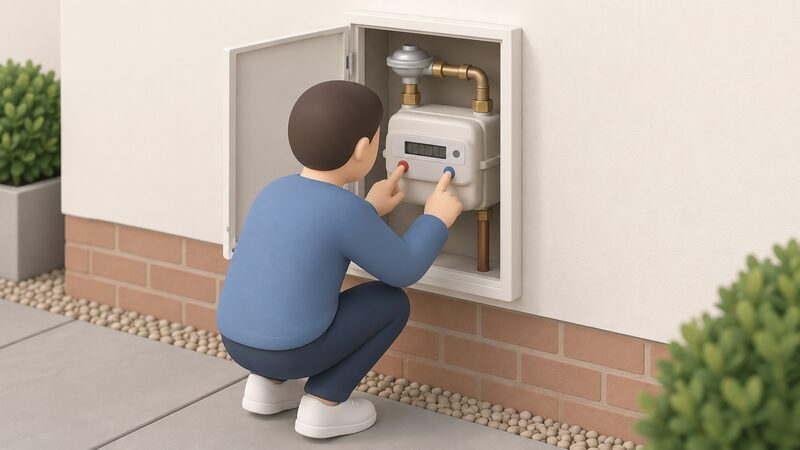
Yes, while the fault persists. A meter that is not operating in smart mode still records energy use accurately, and you can still take manual readings from it7. Submitting those readings keeps the account on actual consumption rather than letting estimates accumulate.
The general position is that once a meter is installed and working in smart mode, regular manual readings should not be needed15. There are still times when a reading is wanted: when switching supplier, when checking usage, or when resolving an account issue13. A communications fault is effectively a permanent version of those circumstances until it is fixed.
The practical risk of doing nothing is a bill built on an estimate that drifts away from reality. Estimates are corrected when a real reading eventually arrives, which can produce a large catch-up bill or credit. Sending readings monthly removes that risk at the cost of a few minutes.
"You will also still be able to take manual readings."
Older meters and the network switch-off
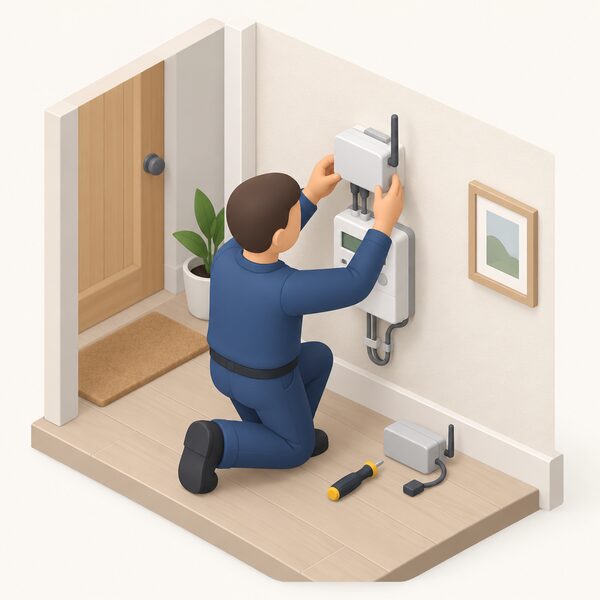
Some meters cannot send readings at all, and the reason is generational. Older smart meters may stop sending automatic readings after you switched to a new supplier16. Ofgem's own guidance warns that your meter may not work in smart mode when you move to the new supplier, and you may need to take meter readings manually and submit them to your new supplier instead17. Consumer guidance describes the same behaviour as meters going "dumb", particularly in older models17.
The network transition adds a second deadline. The smart meter network will transition to the 4G communications network before the 2G and 3G communications networks are switched off by 203310. Communications hubs using 2G or 3G, and associated metering devices where relevant, will need replacement with 4G-capable devices by the end of 203318. Older smart meters must be replaced ahead of that switch-off18.
In the interim, the network operator's position is that meters will keep working. Following the 3G switch-off, smart meters will switch seamlessly to the 2G network19. That covers the near term; the 2033 date is the one that forces hardware replacement.
For a household, this is the clearest case where a meter's independence from the grid of communications is limited by the manufacturer and the network, not by anything the household controls. A meter that cannot hold a smart connection cannot participate in time of use tariffs or flexibility schemes, and the household loses access to those options until the hardware is replaced.
What suppliers and Ofgem guarantee
The maintenance duty is settled. If your smart meter stops working, contact your supplier: they are responsible for maintenance and will fix or replace it as needed6. Getting a smart meter is free, and the supplier arranges it9. For the in-home display specifically, if you have had it for less than 12 months and it has broken or is not working as it should be, the supplier should fix or replace it free of charge under Ofgem rules; you may pay if you damaged it20.
The compensation regime is still being built. Ofgem consulted on automatic compensation for smart metering consumers where their energy supplier fails to meet certain expectations21. Citizens Advice has recommended that Ofgem press ahead with new Guaranteed Standards for smart meters, which would require suppliers to make automatic compensation payments to consumers with a smart meter not operating in smart mode, and that Ofgem should publicly report on suppliers' compliance with them22.
The final decision, published in January 2026, limits the scope of the new Guaranteed Standards to microbusiness customers with smart meters, excluding larger non-domestic customers and advanced meters23. The reasoning recorded is that the drafting references the Electricity and Gas Acts, which could inadvertently include advanced metering, and respondents asked for the definition to be updated to clarify the standards apply only to SMETS meters23. Ofgem intends to review the outcomes of the standards in the first quarter of 20278.
Where the household's independence stands
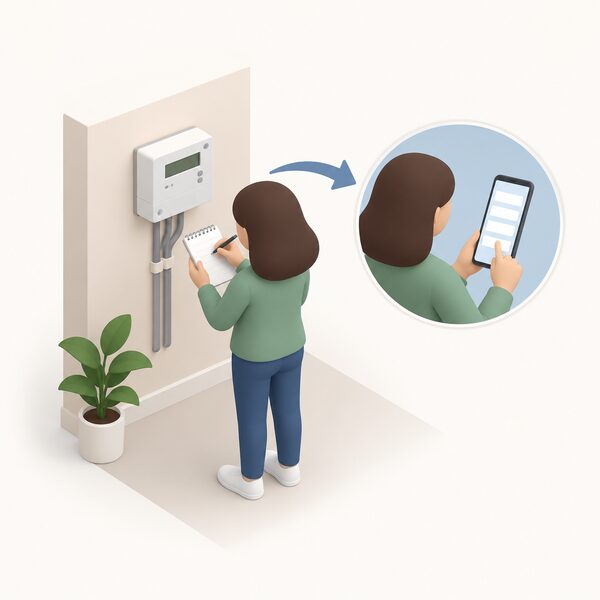
A smart meter that sends readings automatically removes a task and a dependency: no manual reads, no estimated bills, no meter reader visits24. When it stops sending, the household takes that task back. The meter still measures accurately, and manual readings remain possible, so the loss is administrative rather than a loss of control over consumption data.
What remains outside the household's control is the communications chain and the hardware generation. The meter depends on the national network, on the supplier's systems, and on a communications hub that will need replacing before 2G and 3G services end by 203310. A household cannot fix any of those. It can only report the fault, send readings in the meantime, and wait for the supplier to act on a duty that is theirs.
For households that want their energy data in their own hands regardless of the supplier's connection, separate monitoring and local data access are covered in smart meters and home energy management and in consumer access devices. The underlying communications architecture is set out in how smart meters communicate, and the generational differences in SMETS1 and SMETS2 meters.
Sources24 cited
- Get help with your smart meter, Ofgem, 2026
- Top energy company issues and how to solve them, Which?, 2025
- Energy company complaints, Which?, 2024
- 100Green energy company review, Which?, 2026
- What is a smart meter?, Which?, 2025
- Smart meters, Welsh Government, 2026
- Smart meter performance, Ofgem, 2026
- Smart meter Guaranteed Standards of Performance draft impact assessment, Ofgem, 2025
- Getting a smart meter, Ofgem, 2026
- Smart meters explained, Uswitch, 2026
- Do I already have one?, Smart Energy GB, 2026
- How to read your gas and electricity meter, Confused.com, 2025
- Smart Energy GB smart meter guidance, Smart Energy GB, 2026
- Understanding your gas or electricity bill, Centre for Sustainable Energy, 2026
- How do smart meters work?, Smart Energy GB, 2026
- What happens to credit if I switch, Uswitch, 2026
- What happens if your energy supplier goes out of business, Ofgem, 2026
- Smart Metering 2025 Costs and Benefits Report, Department for Energy Security and Net Zero, 2025
- Do smart meters use 3G?, Smart DCC, 2024
- Smart meter problems and solutions, Which?, 2026
- Smart meters: your rights and expectations, GOV.UK, 2025
- Fully operational: maximising consumer protection and transparency in smart metering, Citizens Advice, 2026
- Final decision: smart meter Guaranteed Standards of Performance, Ofgem, 2026
- Smart meters, SSEN, 2026
 Smart Meter Faults and FixesYour smart meter has stopped working.
 Take a Meter ReadingWhich numbers do you actually read on a gas or electricity meter, and which ones do you ignore?
 Why You Cannot Get a Smart MeterWhy can some homes not have a smart meter fitted, and what counts as a good enough reason?
 Meter Readings and EstimatesWhy is my energy bill estimated, and how often should my meter be read?
 Meter Standards and AccuracyHow UK smart meters are certified for accuracy, how their readings become a bill, what happens when a meter stops communicating, and how a metering or billing dispute is escalated to a supplier and then to the Energy Ombudsman.
 Get a Reading From a Smart MeterHow to bring up a meter reading on a smart electricity or gas meter when a manual reading is still needed, and the difference between the meter itself and the in-home display.