
In this answer
Short answer
Yes. A smart meter replaces estimated billing with billing based on the energy actually used. Ofgem's consumer guidance states that a smart meter means households "get bills based on accurate meter readings and not estimates"1, and the same wording appears across its help pages2. Smart Energy GB puts it more simply: the meter sends readings automatically, so "you get an accurate bill instead of an estimated bill"3.
The mechanism is automatic transmission. A smart meter sends your electricity and gas meter readings to your supplier without anyone reading a dial or typing a number into a website4. Readings travel over the secure network operated by the Data Communications Company, which is what allows a supplier to bill only for energy used5. Electricity use is recorded in near-real time and gas every half hour6.
What that changes for a household is the end of the periodic estimate, the catch-up bill and the credit balance that never quite matches reality. It also changes what a household can see: the same data that produces the bill feeds the in-home display and the supplier's app, which is where the independence question sits. The meter does not reduce dependence on the grid or on a supplier, but it removes one layer of guesswork between the two.
Accuracy in practice: what the supplier figures show
Independent statistics published for January to March 2026 give a per-supplier figure for bills accuracy on smart meters. Ovo Energy recorded 98.52%9, 100Green 99.8%10, ScottishPower 97.55%11, Octopus Energy 96.44%12 and British Gas 88.12%7. These are the same measure applied to each supplier, so the spread is a supplier performance spread rather than a technology limit.
| Supplier | Bills accuracy, smart meters, January to March 2026 |
|---|---|
| 100Green | 99.8%10 |
| Ovo Energy | 98.52%9 |
| ScottishPower | 97.55%11 |
| Octopus Energy | 96.44%12 |
| British Gas | 88.12%7 |
The gap between the top and bottom of that table is roughly eleven percentage points, which is the difference between near-perfect billing and a household having to query its bill regularly. Nothing in the figures suggests the meters themselves are the variable. The measure is about whether the bill the customer received matched the energy recorded.
Earlier evidence is thinner and older. A government-commissioned trial report from 2007 found that 27% of trialists felt the smart meter helped them get more accurate fuel bills, with 21% reporting lower bills13. That is a self-reported perception from a small early trial, not a billing accuracy rate, and it should not be read as one. It does show that accuracy was one of the two benefits householders noticed first, alongside cost.
For a household, the practical reading is that accuracy is the norm and the exceptions cluster around specific suppliers and specific connection problems. Where a bill looks wrong, the meter reading is the evidence, and it is available to the household directly.
What smart meters do not do
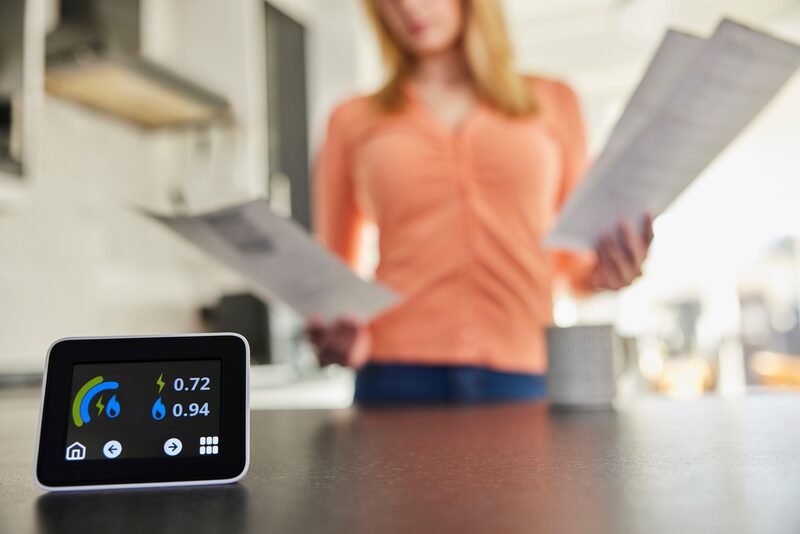
A smart meter does not cut a bill. The consumer bodies are consistent on this. Citizens Advice states plainly that "a smart meter won't automatically save you money"8. Smart Energy GB's guidance for carers notes that while a smart meter can help with utility bills by sending automatic meter readings, "it does not automatically save energy or money" and practical changes are needed to save energy14. The same point appears in Catapult's consumer material: smart meters will not automatically save you money, but the in-home display helps you keep track of how much energy you are using15.
What the meter provides is information. WW Utilities describes smart meters as providing valuable information that could help save money on energy bills16. The word "could" is doing real work there. The saving depends on what the household does with the half-hourly picture, not on the hardware.
Two further limits are worth stating. First, cost: Which? notes that energy companies should not tell customers smart meters are "free", because the cost is ultimately paid indirectly through energy bills17. Second, control: a smart meter cannot cut off power by itself18. The meter measures and reports; it does not act on the supply.
"A smart meter won't automatically save you money"
Where accuracy can still break down
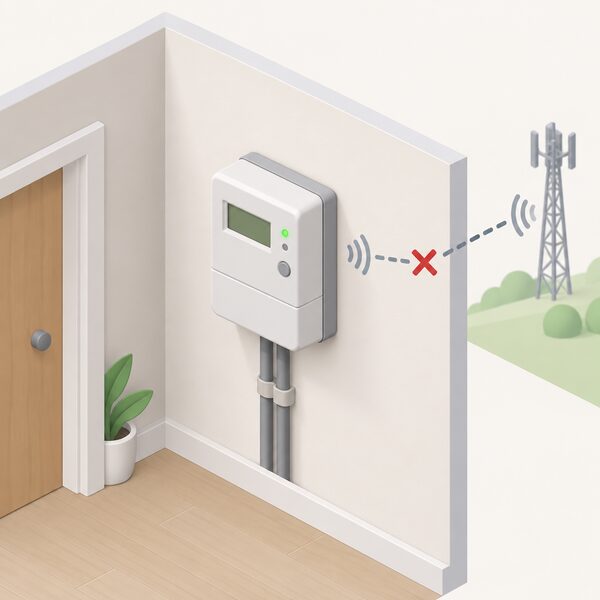
Accuracy depends on the meter staying connected and operating in smart mode. Ofgem lists the benefits of smart mode as real-time information on energy usage, more accurate bills, and access to more flexible tariffs19, which is a fair summary of what is lost when a meter drops out of it.
When communication fails, the effects are specific: bills may temporarily become estimated, a manual reading may be needed, and the in-home display may stop updating correctly20. The meter itself keeps measuring. A smart meter that is not in smart mode still accurately measures energy usage, working like a traditional meter20, and smart meters are just as accurate as traditional meters21. So the measurement is not in question; the transmission is.
Switching supplier or tariff is the other common trigger for a meter dropping out of smart mode. A meter in dumb mode still accurately measures energy usage, working like a traditional meter21, but the household loses the real-time usage information, the accurate bills without estimates and the access to more flexible tariffs that smart mode provides18. Older first-generation meters were the main source of this problem, and the differences between meter generations are set out in SMETS1 and SMETS2 smart meters. Persistent loss of smart mode is a fault to report, and the process for doing so is covered in smart meter faults and troubleshooting.
Readings, half-hourly data and what suppliers can see
The billing basis is half-hourly. Government guidance states that smart meters enable accurate billing by automatically recording energy use in half-hour periods, allowing suppliers to bill on actual rather than estimated usage24. Electricity is recorded in near-real time and gas every half hour6.
Suppliers are automatically allowed access to monthly consumption data to ensure accurate billing, with more detailed access depending on consumer consent25. That distinction matters for a household thinking about independence: the billing data flows by default, the granular data does not. What is collected, who can see it and how consent works is set out in smart meter data and what consent you give for smart meter data readings.
Manual readings are still occasionally needed, usually when switching supplier, checking usage, or resolving an account issue26. The meter normally sends readings automatically, so this is the exception. How to read the meter directly, including the gas meter's A and B buttons, is covered in how to read a smart meter.
All smart meters can support tariffs that charge different prices at different times of day and night, including Economy 7, and Economy 10 meters are also available27. That capability is what makes time-of-use billing possible, and it depends on the same half-hourly record. The tariff side is covered in smart meters and time-of-use tariffs.
Suppliers being held to account
The regulatory position has two parts: what suppliers must do, and what happens when they fail.
On the first, the government requires energy suppliers to offer smart meters to their customers, but customers do not have to have one28. The rollout obligation sits on the supplier, not the household. Progress against it is tracked in the UK smart meter rollout.
On the second, Ofgem publishes supplier performance data covering smart meters, including billing accuracy19, and sets guaranteed standards of performance with compensation triggers. The January 2026 decision confirms that a failed installation caused by a fault within the supplier's control triggers compensation22, a position first set out in the March 2025 standards document23. The standards themselves, including response times for faults, are covered in smart meter guaranteed standards.
Where a billing dispute cannot be resolved with the supplier, the Energy Ombudsman handles smart meter complaints27. The route through a complaint is set out in smart meter faults and troubleshooting.
The independence picture is mixed and worth stating plainly. A smart meter reduces dependence on the estimating process and on a household's own admin, and it gives the household a direct record of what it used. It does not reduce dependence on the grid, on a supplier, or on the communications network that carries the readings. When that network fails, billing reverts to estimate until it is restored. The meter is a better instrument, not a source of supply.
Sources28 cited
- Get help with your smart meter, Ofgem, 2026
- Get help with your smart meter, Ofgem, 2026
- What is a smart meter? Easy read, Smart Energy GB, 2026
- Get help with your smart meter, Ofgem, 2026
- How accurate are smart meters?, Smart DCC, 2026
- What is a smart meter?, Smart Energy GB, 2026
- British Gas: supplier details, Citizens Advice, 2026
- Getting a smart meter installed, Citizens Advice, 2026
- Ovo Energy: supplier details, Citizens Advice, 2026
- 100Green: supplier details, Citizens Advice, 2026
- ScottishPower: supplier details, Citizens Advice Scotland, 2026
- Octopus Energy: supplier details, Citizens Advice, 2026
- Final Warm Plan report, Ofgem, 2008
- How carers could prepare for higher energy bills, Smart Energy GB, 2026
- Smart metres, Energy Systems Catapult, 2025
- Smart meters, WW Utilities, 2026
- What is a smart meter?, Which?, 2026
- Can a smart meter cut off power?, Smart Energy GB, 2026
- Smart meter performance, Ofgem, 2026
- Smart meters not working, Smart Energy GB, 2026
- Smart facts, Smart Energy GB, 2026
- Final decision: smart meter guaranteed standards of performance, Ofgem, 2026
- Smart Meter Guaranteed Standards of Performance, Ofgem, 2025
- Smart meters: your rights and expectations, GOV.UK, 2025
- Written evidence to the Science and Technology Committee, UK Parliament, 2016
- How can I read a smart meter?, Smart Energy GB, 2026
- Smart meters, Energy Ombudsman, 2026
- Getting a smart meter, Ofgem, 2026
 Meter Standards and AccuracyHow UK smart meters are certified for accuracy, how their readings become a bill, what happens when a meter stops communicating, and how a metering or billing dispute is escalated to a supplier and then to the Energy Ombudsman.
 The Full Smart Meters GuideDo smart meters really save you money, and how do you use one to cut your bills?
 Meter Readings and EstimatesWhy is my energy bill estimated, and how often should my meter be read?
 Meters and Energy IndependenceDo smart meters really save you money, and can you still get one fitted for free?
 Take Control of Your EnergyHow do you read your own energy use and keep hold of your meter readings?
 What Does a Smart Meter Cost?There is no upfront charge for a smart meter or a standard installation: the cost is recovered indirectly through energy bills.