
In this answer
Short answer
Half-hourly settlement is the change that moves Britain's electricity market onto half-hourly data. It is not a tariff and not a device in the home: it is how electricity is bought and settled between suppliers, generators and the market. A third of Britain's electricity metering systems now operate under half-hourly settlement arrangements, and more than 11.3 million smart meters have been migrated to it1.
For a household the effect arrives indirectly, through the meter and then the bill. Smart meters enable accurate billing by automatically recording energy use in half-hour periods, so a supplier can see when electricity was used rather than only how much2. That is what makes a tariff with different prices at different times of day possible, and it is why the reform matters to anyone considering a time of use product.
The direction of travel is set. The programme aims for all electricity market trading in the UK, for both domestic and non-domestic customers, to be based on accurate half-hourly data by October 20263. What that does to an individual bill depends on the tariff taken and the pattern of use, not on the settlement change by itself.
What half-hourly settlement is
Settlement is the accounting that decides who pays whom for the electricity that was actually consumed. Under the old arrangement, consumption was largely settled in half-hourly blocks for larger sites but domestic supply was settled on profiles, meaning a supplier's purchases were matched to an assumed shape of household demand rather than to what each home used in each half hour. Market-wide half hourly settlement replaces that assumption with metered data.
The programme's own description is narrow and worth taking literally: MHHS will result in changes in how suppliers are settled when purchasing electricity to match their customers' demand6. It changes the buying side of a supplier's business. It does not, on its own, rewrite a household's contract, and it does not set a unit rate.
What it does is make the half hour the unit of account across the market. Once suppliers are settled on what their customers actually used in each half hour, the cost of serving a household at 18:00 on a winter weekday separates from the cost of serving it at 02:00. That separation is the raw material for time of use pricing, and it is why the reform is described as a route to more flexible tariffs rather than as a price change in itself.
The scale is already substantial. A third of Britain's electricity metering systems operate under half-hourly settlement arrangements, and the migration of more than 11.3 million smart meters to half-hourly settlement is under way1. The reform is therefore not a future prospect for a large part of the market; it is the current operating basis, extending to the rest.
For a household's energy independence, this is a mixed picture. It reduces dependence on estimated profiles and on a supplier's assumptions about when a home uses power, and it gives a household's own metered behaviour a direct role in what its supply costs to serve. It does not remove dependence on the grid, on a supplier, or on the wholesale market: a household still buys electricity from someone, at a price set largely by factors outside its control.
Why it is being rolled out to all households
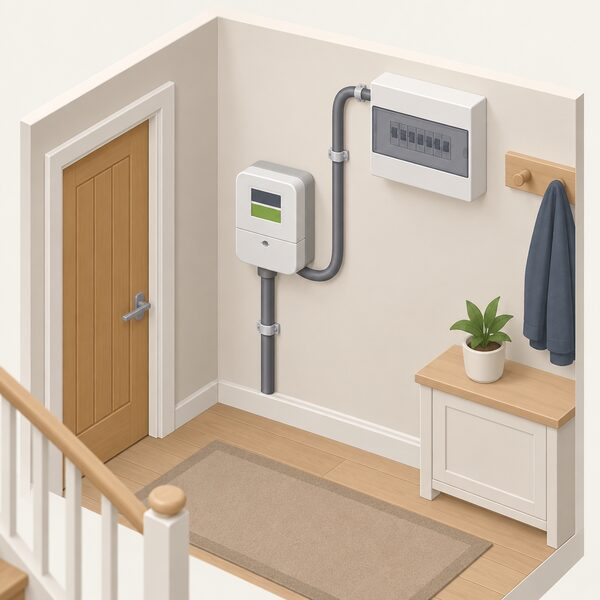
The rollout began in September 2025, when market-wide half hourly settlement was due to begin rolling out7. The programme's target is that all electricity market trading in the UK, domestic and non-domestic, is based on accurate half-hourly data by October 20263. The reason for extending it to households rather than leaving domestic supply on profiles is that households are where much of the flexible demand sits: a washing machine, a heat pump or a car charger can be moved in time in a way that a steelworks cannot.
The policy context is a grid with more variable generation and a system operator that pays for flexibility. The introduction of market wide half hourly settlement was described as adding further complexity to household energy decisions8, which is a fair warning: the reform creates the conditions for more varied tariffs, and more varied tariffs ask more of a household's attention.
There is a distributional question attached. Time of use tariffs reward those who can shift load, and a household that cannot shift much, because of work patterns, health needs or a flat with no off-street charging, gains less. Citizens Advice has argued that time of use tariffs need to work for consumers generally, not only for the households best placed to respond4. That is the main caveat on the reform: the mechanism is neutral, the benefit is not evenly spread.
How your meter and supplier record your usage
A smart meter records electricity use in half-hour periods and sends those readings to the supplier. The half-hourly recording of energy use enables your supplier to charge different rates for use at different times of the day or week9. Gas is handled differently: a smart meter records electricity use in near-real time, and every half hour for gas10. In Wales the same interval is described for gas, with updates on gas usage every half hour11.
The practical consequence is that a household can see its own pattern. If you have had a smart meter for a while, you can usually download your half-hourly usage data from your supplier or your online account12. That download is the single most useful thing a household can hold: it shows the shape of the day, which is what any time of use decision turns on.
In the home, an in-home display shows near real-time data on energy use13, which is finer than the half-hourly record sent to the supplier. The two are not the same thing. The display is for the household; the half-hourly record is what settlement and billing rest on. A consumer access device can pull the same data into a household's own system, which is covered in consumer access devices.
| What is recorded | Interval | Where it goes |
|---|---|---|
| Electricity consumption | Half-hourly to the supplier9 | Settlement and billing |
| Gas consumption | Every half hour10 | Billing |
| In-home display reading | Near real-time13 | The household only |
The MPAN, or Meter Point Administration Number, identifies the electricity supply point and can be found on a copy of the electricity bill for that supply14. It is not the meter serial number, and it is not the MPRN used for gas. It matters here because it is how a property is matched to its supply in the market's records, and it appears on switching and connection paperwork.
What it means for your bills and tariffs
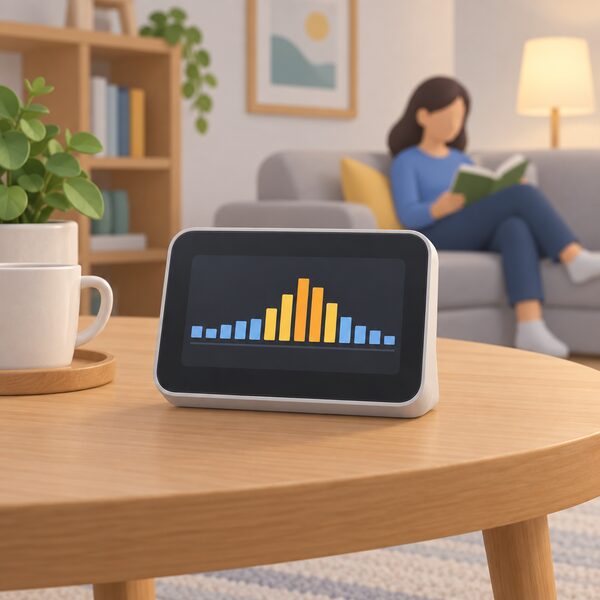
Settlement does not set a price. What it changes is the menu. Following market-wide half hourly settlement, suppliers are expected to offer more time of use tariffs15, and flexible tariffs are settled on a half-hourly basis16. The most exposed product is the pass-through tariff, where half-hourly costs for each bill element are provided directly to the household, meaning unit rates change each day with different prices for each half hour, set a day in advance17. That is a genuine transfer of wholesale risk to the household, in both directions.
Uptake is still small. As of September 2025, only 2.3% of households had a modern time of use tariff4. The gap between the mechanism and the market is the story of the next few years: the plumbing is being installed well ahead of household participation.
Time of use tariffs encourage use of energy outside peak times, with lower energy costs as a result12. The saving is not automatic. It depends on how much load a household can move and how the peak windows are drawn. Economy 7 remains the older model, and the two figures given for its off-peak window differ: one describes seven hours during the night18, another gives 22:00 and 08:3014. The two are not reconciled here, and a household on an Economy 7 supply should read its own meter's switching times rather than assume either.
"These tariffs encourage you to use your energy outside of peak times, with lower energy costs as a result."
For a household's independence, a time of use tariff is a trade. It converts some control over cost into a requirement to pay attention, and it makes the household's own timing part of its energy position. It does not reduce dependence on the grid or on a supplier, and a pass-through tariff increases exposure to wholesale price movement rather than reducing it.
Smart meters and the data behind half-hourly settlement
The data layer is where the reform meets privacy. Half-hourly data for any purpose beyond the core use is opt-in only18. That is the governing rule for anything a household is asked to consent to. Separately, the designated settlement body will eventually hold smart meter data in order to facilitate half-hourly settlement, but that body does not yet exist18. The governance is therefore still being built while the migration runs.
Smart meter data can be recorded at much finer intervals than half-hourly: smart meter data recorded at half a second intervals is one example cited in parliamentary research19. That is a capability, not the settlement interval, and the distinction matters when consent is discussed. Settlement runs on half hours; the meter itself can see more.
Coverage underpins all of it. Smart meters are now installed in half of UK properties5, and billing based on actual rather than estimated usage, with energy use automatically recorded in half-hour periods, is the stated basis of the system2. Where a meter is not operating in smart mode, there is a proposed remedy: if a consumer's smart meter is not operating in smart mode for over 90 days, the consumer will receive compensation, under guaranteed standards that are proposed and not yet implemented20.
The dependence that remains here is on the supplier and on the data infrastructure. A household's half-hourly record sits with its supplier and, in time, with a settlement body. Consent governs the wider uses, and the detail of what is collected and who can see it is set out in smart meter data.
What households can do to prepare
Preparation is mostly about information, not equipment. The first step is to establish whether the property has a smart meter and whether it is operating in smart mode, since a meter in dumb mode cannot support a half-hourly tariff. The second is to download the half-hourly usage data from the supplier or online account12 and look at the shape of the day: when the peaks fall, and how much load sits inside them.
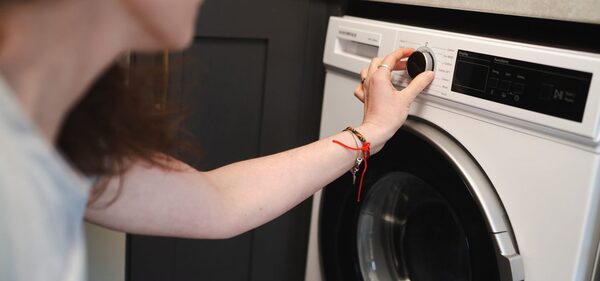
The third is to understand what can be moved. Time of use tariffs reward shifting, and the appliances that shift well are the ones with a delay function or a timer. The same logic applies to heating: a heat pump's running cost under a time of use tariff depends on how it is scheduled, which is why the interaction between flexible tariffs and heat pumps has attracted modelling17.
Installation itself is a known quantity. Installation takes a couple of hours, with each supply switched off during the changeover21. For a household without a smart meter, that is the practical gate to any half-hourly product, and the process is described in smart meter installation.
The wider policy direction is toward more household flexibility, and the support landscape is broad: the Warm Homes Plan is available to all households and is intended to help roll out clean technology to millions, cutting bills and securing energy independence22. None of this is a recommendation for any product or tariff. It is the context in which a household decides whether a half-hourly price signal is worth taking on, and what it would need to change to benefit from one.
Sources22 cited
- Clean Flexibility Roadmap: July 2026 update, GOV.UK, 2026-06
- Smart meters: your rights and expectations, GOV.UK, 2025-08-08
- EUK explains market-wide half-hourly settlement, Energy UK, 2024-10-09
- Smart timing: making time of use tariffs work for consumers, Citizens Advice, 2025-09-09
- Smart meters in the UK, UK Parliament POST, 2026-06-07
- Energy price cap technical approach: market-wide half hourly settlement, Ofgem, 2026-03-25
- Consumer engagement with smart electricity tariffs, Which?, 2025-09
- Supporting households with low carbon technology combinations, Energy Saving Trust, 2026-07-15
- How smart meters work with heat pumps, Smart Energy GB, 2026-04-24
- How to use a smart meter to save money, Smart Energy GB, 2026-04-24
- Smart meters, Welsh Government, 2026
- Should I switch to a time of use tariff, Energy Saving Trust, 2026-01-23
- How do smart meters save energy, Smart DCC, 2026
- Connecting to the networks: frequently asked questions, Energy Networks Association, 2026-09-17
- Citizens Advice response to Ofgem's call for input on the future of domestic, Citizens Advice, 2024-05-24
- Can time of use tariffs make heat pumps cheaper to run, Nesta, 2025-02-17
- Domestic heat pump flexibility modelling, Nesta, 2024-11-19
- Data protection and smart meter data, Open Energy, 2026-09-20
- Smart meter data and settlement, UK Parliament POST, 2026-09-17
- Final decision: smart meter guaranteed standards, Ofgem, 2026-01-30
- How to get a smart meter, Smart DCC, 2026
- Warm Homes Plan, GOV.UK, 2026-06-26
 Agile and Dynamic TariffsAgile tariffs change the price of your electricity every half hour, so what you pay depends on when you use power.
 Time-of-Use Tariffs ExplainedCan you pay less for electricity by using it at different times of day?
 Meters and Time-of-Use TariffsDo you need a smart meter for a time-of-use tariff, and does it have to send readings every half an hour?
 Demand Flexibility and the GridGetting paid to shift your electricity use away from peak times is now a real option for households with a smart meter.
 Supplier-Controlled ChargingSmart charging tariffs let your energy supplier decide when your car charges, usually overnight when electricity is cheaper.
 Batteries and Smart TariffsA home battery can earn its keep if your electricity prices change through the day.