In this guide
A home battery earns its keep by moving electricity through time: buying or generating when power is cheap, using or selling it when power is dear. That only works if the household is on a tariff whose prices actually vary by the hour, and the gateway to those tariffs is a smart meter. Smart time of use tariffs need a smart meter that communicates with your supplier every half hour, and customers need a smart meter to get all the benefits from new flexible energy tariffs1.
The clearest UK example is Octopus Flux, a three-rate tariff for solar and battery owners, and its automated sibling Intelligent Octopus Flux, which charges the battery when power is cheapest and exports between 4pm and 7pm3. Intelligent Octopus Flux pays 23p per kWh for exports to Octopus customers who have solar panels and a battery3. The trade-off is control: on the automated version the supplier decides when the battery charges and discharges, and the tariff was temporarily unavailable in September 2026 because energy prices were particularly volatile.
This page sets out what a time of use tariff is, how the Octopus Flux family works, what a battery and meter must support, where the risks sit, and what stacking a battery with a smart tariff does and does not do for a household's energy independence.
Why a smart meter is the gateway to time-of-use tariffs
A time of use tariff is only as good as the meter behind it. These tariffs use your smart meter to log electricity use, and charge you different rates during different time windows6. That is a different arrangement from a single unit rate, and it depends on the meter being able to record and report consumption in short intervals rather than once a quarter.
The technical requirement is specific. Smart time of use tariffs need a smart meter that communicates with your supplier every half hour2. A meter that has dropped out of smart mode cannot do this, and the household is left on whatever fallback arrangement the supplier applies. Ofgem's guidance is blunt about the failure mode: your smart meter may stop recording the energy you use, or may no longer send readings to your supplier7. Where that happens, you will also still be able to take manual readings8.
The benefit is not only cheaper off-peak units. Access to time of use tariffs means cheaper rates during off-peak hours and incentives for energy usage on high-supply days6. That second element matters for a battery: a tariff that rewards consumption when the grid is flush with renewable generation gives the battery something to do beyond the overnight cycle.
A battery is what makes these tariffs worth having. Energy Saving Trust puts it directly: do you have, or plan to get, an EV, heat pump or home battery? These make smart tariffs much more valuable2. Without a flexible load, a household can shift some appliance use but cannot store anything. With a battery, the cheap window becomes a charging window and the expensive window becomes a discharging window.
The dependence that remains is on the meter and the network behind it. A household on a time of use tariff is not independent of its supplier; it is more exposed to that supplier's tariff design, because the price it pays now varies by the hour. The smart meter is the instrument that makes the arrangement possible, and it is owned by the supplier's world, not the household's.
What a time-of-use tariff is: from Economy 7 to smart flexible rates
Smart time of use tariffs are a type of pricing structure that varies the cost of electricity based on the time of day you use it9. The idea is old; the execution is new. Economy 7 and Economy 10 are older time of use tariffs that need compatible meters, while newer flexible tariffs typically rely on smart meters instead1. The difference is granularity and flexibility: a fixed overnight window against rates that can change by half hour and by season.
Dedicated smart storage battery tariffs typically have cheaper rates overnight so you can charge up your battery and use the power during the day when it would be pricier to buy10. That is the simplest version of battery arbitrage: buy low, use high, and let the battery carry the difference. It requires no solar panels and no export arrangement, only a battery and a meter that can prove when the electricity was taken.
The tariff landscape is not uniform, and the terms matter as much as the rates. Energy Saving Trust advises asking about any flexibility in the tariff, such as the ability to switch between tariffs or opt out of time of use pricing9. A household that cannot leave a tariff without penalty has taken on a commitment, not just a price.
There is also a public policy dimension. Shifting electricity demand to off-peak times or times of high renewable generation can reduce or defer costly investment in additional electricity generation capacity and network reinforcement11. That is the argument for these tariffs existing at all: they are a demand-side tool as much as a consumer offer. The same document lists demand side response, time of use tariffs, electric vehicles, switching and micro-generation among the technologies and services covered11.
For a household, the practical question is whether the cheap window is long enough and cheap enough to cover the battery's round-trip losses. A battery does not return everything it stores, so the spread between the cheap rate and the avoided rate has to be wide enough to absorb that loss. The sources do not give a single figure for that spread, because it depends on the tariff and the battery.
| Tariff type | Meter requirement | When prices vary | Typical use with a battery |
|---|---|---|---|
| Economy 7 or Economy 10 | Compatible meter | Fixed overnight window | Charge in the off-peak window1 |
| Smart time of use | Smart meter, half-hourly reporting | By half hour and season | Charge and discharge against the price signal2 |
| Dedicated battery tariff | Smart meter | Cheaper overnight rates | Charge overnight, use during the day10 |
Octopus Flux: the three-rate tariff for solar and battery owners
Octopus Flux is the tariff most often named in connection with home batteries, and its structure is worth setting out precisely. It is an import and export tariff with matching import and export prices, and it includes battery storage12. The tariff page carried a last updated date of 16 September 2026.
The export side of the family is where the numbers are clearest. Intelligent Octopus Flux pays 23p per kWh to Octopus customers who have solar panels and a battery3. That is a striking figure against the same supplier's standard Smart Export Guarantee rate of 4.1p per kWh, which is open to anyone3. The gap between those two numbers is the whole argument for the tariff: a household with a battery and solar can export at a rate several times the standard SEG rate, provided it accepts the tariff's conditions.
Those conditions are the substance of the deal. The Intelligent Flux export tariff was available to customers on the Intelligent Flux import tariff, who had solar PV and battery storage but also allowed Octopus to control their battery exports13. Control is the price of the higher rate. The household hands the supplier the decision about when the battery discharges to the grid.
The wider market context is that suppliers have been offering smart export tariffs for years. As far back as June 2019, some energy suppliers, including Octopus and Bulb, were already offering new smart tariffs, with some exceeding those offered under the previous subsidy scheme14. That history matters because it shows the model is not new, even though the specific rates change.
Intelligent Octopus Flux: automated charging and discharging
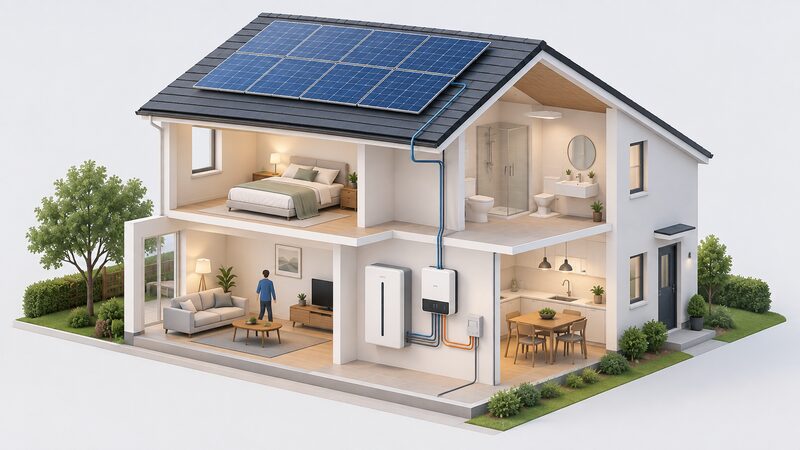
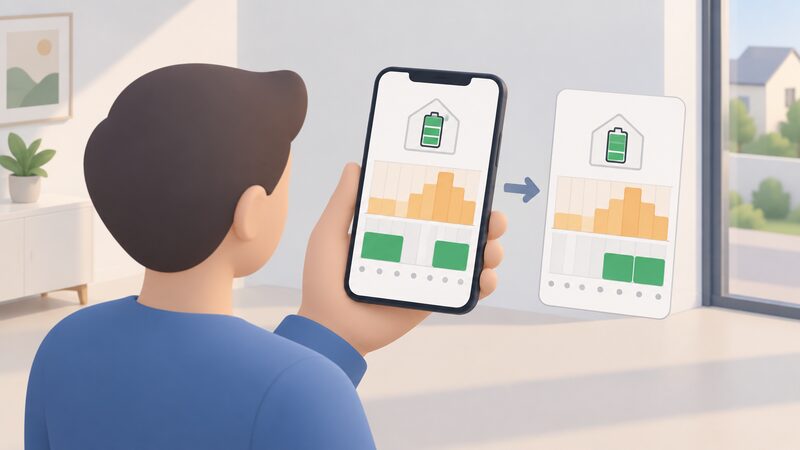
The automated version of the tariff does the scheduling for the household. Intelligent Octopus Flux is an import and export tariff with automated management to charge the battery when power is cheapest and export between 4pm and 7pm3. The evening export window is the point: it targets the period when grid prices are typically highest, and the battery is positioned to sell into it.
The economics are the reason the tariff exists. A battery that charges on cheap power and discharges into an expensive evening window is performing arbitrage, and the supplier is effectively renting the household's battery to do it. The household gets a share of the value through the export rate; the supplier gets dispatchable capacity at the time it is most useful.
The availability caveat is important and should be stated plainly. The tariff was temporarily unavailable in September 2026 because energy prices were particularly volatile, with customers pointed to Octopus Flux and the Charge Pack add-on instead. A tariff whose rates are high enough to be attractive is also a tariff the supplier may withdraw when wholesale prices move against it. That is a structural feature of the model, not a one-off.
For a household weighing this up, the relevant question is what happens to the battery when the tariff is withdrawn. A battery is a physical asset that outlives any tariff. If the automated tariff disappears, the battery can still be charged on a cheap overnight rate and discharged into the home, which is the simpler arbitrage described above. The household loses the premium export rate but not the asset.
The dependence here is worth naming. On an automated tariff, the household's battery is partly operated by the supplier, through a cloud connection, against a tariff the supplier sets and can change. That is a real transfer of control, and it is the trade for the higher rate.
Manual scheduling or automatic optimisation: which suits your setup
There are two ways to run a battery against a time of use tariff, and they suit different households.
Manual scheduling means setting charge and discharge windows in the battery's own app or inverter settings, against a tariff the household has chosen. The battery charges in the cheap window and discharges in the expensive one, on a fixed pattern. This works with any battery that supports timed charging, and it does not depend on the supplier's platform being available. The household keeps control and takes on the job of adjusting the schedule when the tariff changes.
Automatic optimisation hands the decision to software. Some of that software belongs to the supplier, as with Intelligent Octopus Flux. Some of it belongs to third parties: Zapmap's smart charging product charges an electric vehicle at the cheapest time based on your existing tariff and preferences15. The principle is the same whether the load is a car or a battery: the software watches the tariff and moves the load.
The choice has practical consequences. A supplier-controlled tariff may pay more, because the supplier can dispatch the battery when it is most valuable to the grid. A manually scheduled battery keeps working if the supplier's platform has an outage, and it keeps working if the household switches supplier. The sources do not give a single answer on which is better, because the answer depends on the tariff on offer at the time.
Eligibility and switching requirements: Export MPAN, MCS documents and compatible batteries
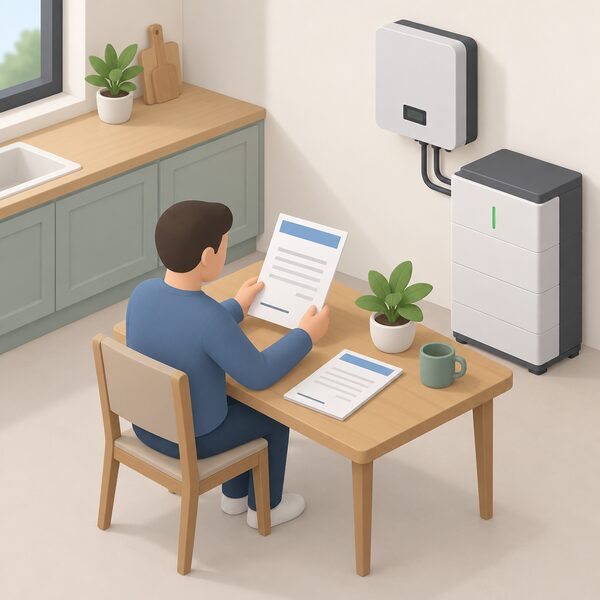
The administrative side of stacking a battery with an export tariff is where households most often come unstuck, because the requirements sit with the meter and the installer rather than with the battery.
The metering requirement is explicit. An eligible installation must have an export MPAN to manage exported electricity volumes to the SEG licensee16. Without that identifier, there is no mechanism for the exported units to be attributed and paid for. This is a metering arrangement rather than a battery feature, and it has to be in place before export payments can flow.
The installation requirement is about certification. For domestic battery storage, the installation must be Microgeneration Certification Scheme (MCS) certified, and not all batteries have the capability to export stored renewable energy in the first place4. That second point is easy to miss: a battery that can only discharge into the home cannot earn export income, whatever tariff the household is on.
The scheme itself is broad on generation technology. The Smart Export Guarantee covers solar PV panels, a wind turbine, hydro, anaerobic digestion and micro combined heat and power17. Energy Saving Trust lists the same set as technologies that generate renewable electricity18. A battery is not itself a generating technology under the scheme; it is a storage device that sits alongside one, which is why the co-location rules matter.
Those rules exist and are documented. Ofgem's guidance for generators includes an appendix on the co-location of battery storage with installations receiving a Smart Export Guarantee tariff19. That is the framework that governs how a battery and a generating installation share an export arrangement.
The switching requirements are the supplier's own. Octopus Flux and Outgoing Octopus both require an import tariff with the same supplier12. A household cannot take the export side of the deal while buying its import electricity elsewhere.
- Export MPAN: required so exported volumes can be attributed to the SEG licensee16
- MCS certification: required for domestic battery storage installations4
- Export capability: not all batteries can export stored renewable energy4
- Same-supplier import tariff: required by Octopus Flux and Outgoing Octopus12
- Co-location rules: Ofgem guidance covers battery storage alongside SEG installations19
Smart meter requirements: SMETS2 or Secure SMETS1, and the 14-day connection wait
The meter is the piece of equipment that decides whether any of this is possible, and the two generations behave differently.
Second generation smart meters, known as SMETS2 meters, were designed to connect directly to the national secure network, allowing supplier switching while retaining smart functionality20. In practice that means SMETS2 meters allow consumers to switch supplier while retaining smart functionality, including automatic meter readings21. They are automatically connected to the smart meter network so all energy firms should be able to operate them22.
First generation meters are the problem case. SMETS1 meters were installed before the national smart metering network became available20, and they do not always allow the consumer to change energy supplier without losing the ability to send meter readings automatically23. The upgrade path has been running for years: those with first generation smart meters will be upgraded to SMETS2 in due course if they have not been already20. Suppliers had until the end of 2023 to enrol first generation meters onto the national network or replace them with second generation meters22.
There is a hard deadline beyond that. Any remaining first generation SMETS1 smart meters which have not been upgraded to SMETS2 will need to be physically replaced prior to 2033, in line with SMETS1 communication provider contracts, as these have been designed with an integrated 2G Communications Hub5. The 2G and 3G networks are being switched off by 2033, and the smart meter network will transition to 4G before then5.
For a household on a time of use tariff, the practical implication is that a SMETS1 meter that has dropped out of smart mode cannot support half-hourly pricing reliably. The meter may work in smart mode again if you change tariffs or suppliers24, but that is a possibility rather than a guarantee.
| Meter generation | Supplier switching | Automatic readings | Time of use support |
|---|---|---|---|
| SMETS2 | Retains smart functionality21 | Yes, automatic21 | Half-hourly reporting2 |
| SMETS1, enrolled | May retain functionality | Usually automatic | Depends on enrolment status22 |
| SMETS1, not upgraded | May lose smart functionality23 | Manual readings may be needed23 | Physical replacement before 20335 |
Where the risks lie: volatile rates, smart mode dropouts and cutting-edge teething problems
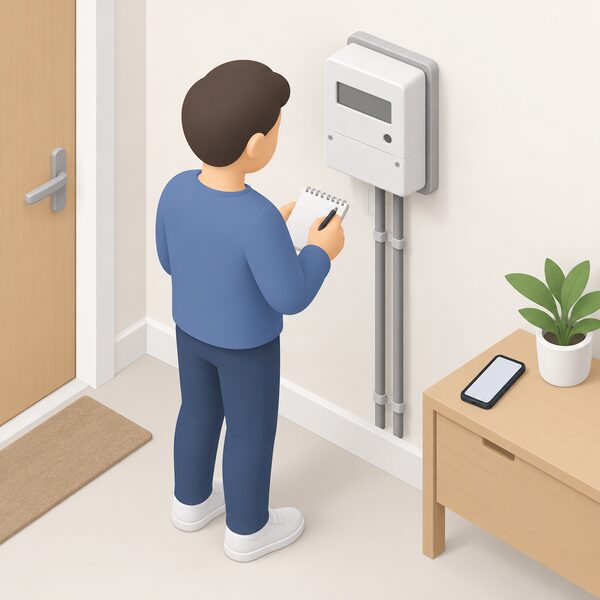
The risks of stacking a battery with a smart tariff fall into three groups: tariff risk, meter risk and compatibility risk.
Tariff risk is the most visible. Intelligent Octopus Flux was temporarily unavailable in September 2026 because energy prices were particularly volatile. A tariff that pays 23p per kWh for exports is attractive precisely because the underlying wholesale spread is wide, and it can be withdrawn when that spread narrows. The contract terms matter as much as the rate: Energy Saving Trust advises understanding the terms of the contract, including any early termination fees or contract duration9.
Meter risk is quieter but more disruptive. A meter that leaves smart mode takes the tariff's mechanics with it. Ofgem notes that your meter may not work in smart mode when you move to the new supplier, and you may need to take meter readings manually and submit them to your new supplier instead24. The Energy Ombudsman adds that only under exceptional circumstances would a supplier be expected to change a smart meter to a traditional meter, and the supplier may charge the costs if it agrees22.
Compatibility risk is the one households discover last. Some battery tariffs only work with specific systems10. A battery bought without checking the tariff compatibility list may be perfectly good hardware that cannot access the tariff the household wanted.
There is also a structural point about who controls the price. Except by switching, you don't control the tariff your energy supplier sets, but you can change how much energy you use25. A battery increases how much a household can change its consumption pattern, but it does not give the household any say over the rates themselves.
How stacking a battery changes your energy independence
A battery on a smart tariff changes the shape of a household's dependence rather than removing it. The household still buys electricity from a supplier, still relies on the grid for whatever the battery cannot cover, and still depends on a meter and a cloud platform to make the tariff work. What changes is the household's exposure to the most expensive hours.
The gain is real. A battery that charges on cheap overnight power and discharges during the evening peak avoids the highest unit rates, and on an export tariff it can sell into the same peak. Intelligent Octopus Flux pays 23p per kWh for exports to Octopus customers with solar panels and a battery3, against a standard SEG rate of 4.1p per kWh from the same supplier3. The spread between those two figures is the value of accepting supplier control.
The dependence that remains is worth stating plainly. On an automated tariff, the supplier decides when the battery charges and discharges, through a connection the household does not own. The tariff can be withdrawn, as Intelligent Octopus Flux was in September 2026. The meter can drop out of smart mode, taking the half-hourly pricing with it. And the export arrangement depends on an export MPAN and an MCS-certified installation16.
There is a further layer for households with older arrangements. Households already receiving Feed-in Tariff payments continue to get them until the end of the contract, and the SEG does not affect this18. But charging and discharging is less efficient, so a DC-coupled battery could affect a feed-in tariff where one is held26. The two schemes can coexist, but the battery's losses are not free.
Some battery makers have offered their own trading arrangements. Moixa will pay £50 per year to trade excess power stored in your battery using web-connected GridShare26. That is a maker-level service rather than a tariff, and it illustrates the same trade: the household gives up some control of the battery in exchange for a payment.
The honest summary is that a battery plus a smart tariff buys flexibility, not independence. It reduces the cost of the electricity a household buys and increases what it can earn from what it exports. It does not remove the supplier, the meter, the network or the platform. For a fuller picture of where storage sits in a household's overall position, see Home Battery Storage for UK Homes: The Full Guide and Home Batteries and Household Energy Independence.
Sources26 cited
- Energy flexibility and smart meters, Smart Energy GB
- Should I switch to a time of use tariff, Energy Saving Trust
- Smart Export Guarantee rates: the best and worst SEG tariffs, Which?, 2026-04
- Battery storage advice, Centre for Sustainable Energy, 2025-10
- Smart meters explained, Uswitch, 2026-07-29
- Five top tips from Which? to cut your energy bills, Climate Action Wales
- Get help with your smart meter, Ofgem, 2026-09-17
- Smart meter performance, Ofgem, 2026
- Time of use tariffs: all you need to know, Energy Saving Trust
- Time of use tariffs explained, Which?
- Smart meters: unlocking the future, Department for Business, Energy and Industrial Strategy, 2022-07
- Smart Export Guarantee, Solar Energy UK, 2026-05-12
- Smart Export Guarantee annual report, year 5, Ofgem, 2025-12
- New laws to guarantee payment for solar homes providing excess electricity, Department for Business, Energy and Industrial Strategy, 2019-06-09
- Smart charging, Zapmap, 2026
- Draft licence conditions, Department for Business, Energy and Industrial Strategy, 2026-09-17
- Energy incentives and schemes, South Cambridgeshire District Council, 2026-09-17
- Smart Export Guarantee, Energy Saving Trust, 2026-05-20
- Guidance for generators: co-location of electricity storage and hydrogen production, Ofgem, 2024-03-20
- Upgrading Britain's first generation smart meters, Smart DCC, 2026
- How do you know if you have a smart meter, Smart DCC, 2026
- Smart meters, Energy Ombudsman, 2026-09-20
- How to get a smart meter, Smart DCC, 2026
- What happens if your energy supplier goes out of business, Ofgem, 2026
- How do smart meters save energy, Smart DCC, 2026
- Solar panel battery storage, Which?, 2026-05-14
 Supplier-Controlled ChargingSmart charging tariffs let your energy supplier decide when your car charges, usually overnight when electricity is cheaper.
 Meters and Time-of-Use TariffsDo you need a smart meter for a time-of-use tariff, and does it have to send readings every half an hour?
 Payback and SavingsHow long until a home battery pays for itself, and why do quoted payback times vary so much?
 Which Tariffs Your Meter AllowsHow meter type decides which energy tariffs a household can access, from single-rate and two-rate meters to smart, prepay and restricted configurations, and the constraints faced by flats, rented homes and homes without a working smart connection.
 Heat Pump Electricity TariffsA heat pump tariff gives you cheaper electricity for part of the day, so running your heating costs less than on a standard rate.
 Time-of-Use Tariffs ExplainedCan you pay less for electricity by using it at different times of day?