In this guide
For most houses in Scotland, a home battery does not need planning permission. Domestic microgeneration equipment has been permitted development since the Town and Country Planning (General Permitted Development) (Domestic Microgeneration) (Scotland) Amendment Order 2009 came into force on 12 March 2009, and a battery installed alongside solar PV or serving the house normally sits inside those householder rights1. The controlling instrument is the Town and Country Planning (General Permitted Development) (Scotland) Order 1992, as amended, which applies to Scotland only2.
The position changed in two stages. The Town and Country Planning (General Permitted Development) (Scotland) Amendment Order 2024 was laid before the Scottish Parliament on 28 March 2024 and came into force on 24 May 2024, covering solar canopies, battery storage associated with a solar canopy, and equipment housing for recharging vehicles in qualifying parking areas2. That class is not automatic: it requires an application to the planning authority for prior approval of design and siting2.
Scotland's installed base is substantial. Scotland held 12.24% of Feed-in Tariff installed capacity, 0.80 GW, at 31 March 2025, and 12.25% at 30 September 20243. Solar PV makes up 37.89% of installed capacity in Scotland3. Scotland ranks second regionally by installed capacity but only eighth by accredited installations, at 65,4325.
What the Scottish rules actually say
The Scottish permitted development regime rests on the 1992 Order, cited as the Town and Country Planning (General Permitted Development) (Scotland) Order 1992, instrument 1992 No. 223 (S. 17), made on 11 February 1992 and laid before Parliament on 21 February 19922. Its main provisions cover application, citation and commencement, interpretation, permitted development, directions restricting permitted development, notice and service of article 4 directions, cancellation of article 4 directions, directions restricting development in respect of minerals under class 54 or 66, and revocations and savings2.
Householder rights were extended by the Domestic Microgeneration Amendment Order 2009, made under sections 30 and 31 of the Town and Country Planning (Scotland) Act 1997, laid before the Scottish Parliament on 6 February 2009 and in force from 12 March 20091. The 2016 Amendment Order further amended Class 6H of Part 1A of Schedule 1 to the 1992 Order, under sections 30, 31 and 275 of the 1997 Act8. The 2023 Miscellaneous Amendment Order, made under sections 26(2)(f), 30, 31 and 275 of the 1997 Act, was laid on 10 February 2023 and came into force on 31 March 20239.
The 2024 Amendment Order was made under sections 30, 31 and 275 of the Town and Country Planning (Scotland) Act 1997 and is subject to negative procedure10. Its amendments do not apply to development begun before 24 May 20242. The Scottish Government's own review of permitted development rights records that the 2024 changes support the roll-out of electricity network infrastructure11.
"Development which does not meet the criteria or thresholds within the legislation will not be considered to be permitted development and requires to gain planning permission"
Solar canopies, battery storage and prior approval
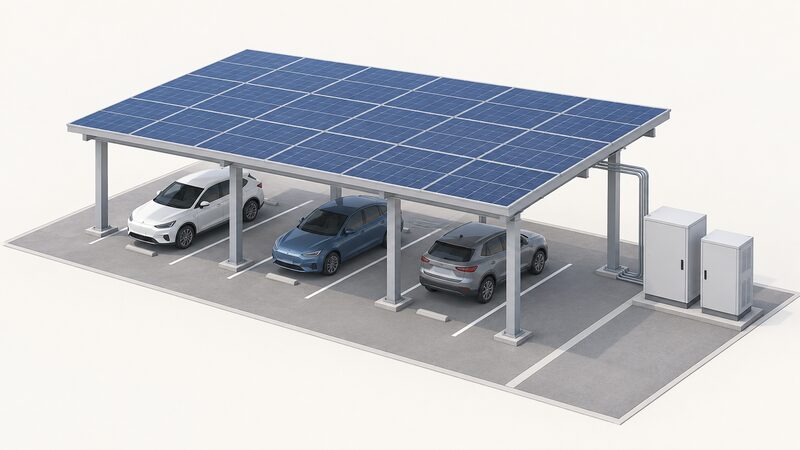
The 2024 amendment order is the instrument that names battery storage directly. It covers the installation, alteration or replacement, within a qualifying parking area, of a solar canopy, equipment necessary for its operation, battery storage associated with a solar canopy, and equipment necessary for the battery storage2. The definition is broad: "battery storage" means equipment and apparatus for the storage of energy which is converted from electricity and is stored for the purpose of its future reconversion into electricity2.
The class is conditional. An applicant must apply to the planning authority for a determination as to whether the prior approval of the authority will be required in respect of the design and siting of the battery storage or equipment2. That is a lighter process than full planning permission, but it is not a free pass, and it introduces a determination stage that a householder should build into the project timetable.
The 2024 order also excludes a long list of locations. Permitted development rights under the class do not apply on a site of archaeological interest, in a national scenic area, in a historic garden or designed landscape, on a historic battlefield, in a conservation area, in a National Park, in a World Heritage Site, or in the curtilage of a listed building2. Those exclusions mirror the pattern used elsewhere in the Scottish order, including the 2011 non-domestic microgeneration order, which excluded sites of archaeological interest, the curtilage of a listed building, National Scenic Areas, historic gardens and designed landscapes, conservation areas and National Parks13.
Battery storage and the householder microgeneration classes
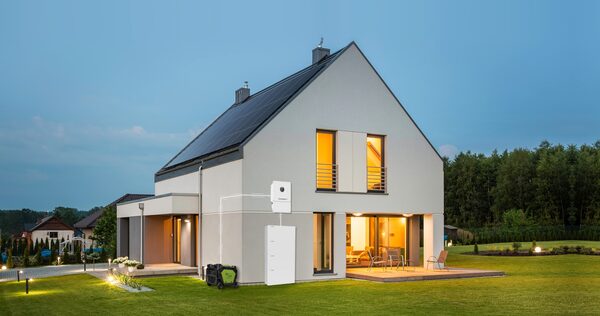
Away from the 2024 order, the householder route runs through the microgeneration classes. Scottish Government householder permitted development guidance, updated in April 2021, confirms that the relevant class covers the installation, alteration or replacement of solar PV or solar thermal equipment14. The 2011 non-domestic microgeneration order, which set the pattern later followed for domestic equipment, allowed for solar photovoltaic and solar thermal equipment and required that equipment not go beyond the boundary of the site on which the building is located13.
The definition of an electrical storage battery used in the wider UK legislation is instructive for what a Scottish householder can expect to be treated as ancillary. An electrical storage battery is within the relevant sub-paragraph if it is intended for use solely for storing energy converted from electricity that was supplied to the residential accommodation or building in question, or generated by a microgeneration system15. That wording appears in the 2024 England amendment order and in the 1994 Act schedules, and it captures the ordinary domestic case: a battery charged from the house supply or from the roof.
The practical consequence is that a battery charged from the grid or from on-site generation, serving one dwelling, is treated as equipment serving that dwelling rather than as a separate development. Where a battery is proposed as a standalone structure, in a separate building, or in a protected location, the analysis changes and the criteria and thresholds in the legislation decide the outcome12.
Where a battery needs planning permission in Scotland
The permitted development route fails in a defined set of circumstances, and the Scottish Government's position is that development which does not meet the criteria or thresholds within the legislation will not be considered to be permitted development and requires to gain planning permission12.
- Protected locations. Sites of archaeological interest, national scenic areas, historic gardens and designed landscapes, historic battlefields, conservation areas, National Parks, World Heritage Sites and the curtilage of listed buildings are excluded from the 2024 order2.
- Flats and non-householder buildings. The householder classes are framed around dwellinghouses; the microgeneration classes for non-domestic buildings sit in a different instrument with their own boundary condition13.
- Development begun before 24 May 2024. The 2024 amendments do not apply to development begun before that date, so a scheme already started is assessed under the earlier rules2.
- Standalone structures and enclosures. A battery in its own building, or an enclosure that is itself development, is assessed on its own merits rather than as ancillary equipment.
- Article 4 directions. The 1992 Order provides for directions restricting permitted development, and for notice, service and cancellation of article 4 directions2. Where a direction is in force, permitted development rights are withdrawn.
Building warrants: a separate Scottish system
Planning permission and building standards are separate regimes in Scotland, and a battery project can engage one without the other. Building standards are devolved, and the building warrant system sits outside the permitted development order entirely. The 1992 Order deals with planning, not with construction standards, and its provisions are limited to application, interpretation, permitted development, directions restricting permitted development, article 4 directions, minerals directions and revocations2.
Electrical installation work in a dwelling is generally handled through the competent person scheme route rather than a building warrant, but structural work, a new enclosure, a change of use, or work that alters the building's compliance with building standards can require a warrant. The dividing line depends on the work proposed rather than on the battery itself, and it is checked with the local authority before work starts.
Scotland's wider policy context matters here. The Scottish Government's heat in buildings programme has been moving toward a regulatory framework for building energy performance, and the draft Buildings (Heating and Energy Performance) and Heat Networks (Scotland) Bill explanatory notes set out the authorisation route for use of Part 6 powers of the Heat Networks (Scotland) Act 2021, noting that their use needs to be authorised in another way18. That is a heat networks measure rather than a battery measure, but it illustrates how Scottish building and energy regulation is being layered, and why a battery installation is best checked against both planning and building standards.
How Scotland compares with the rest of the UK
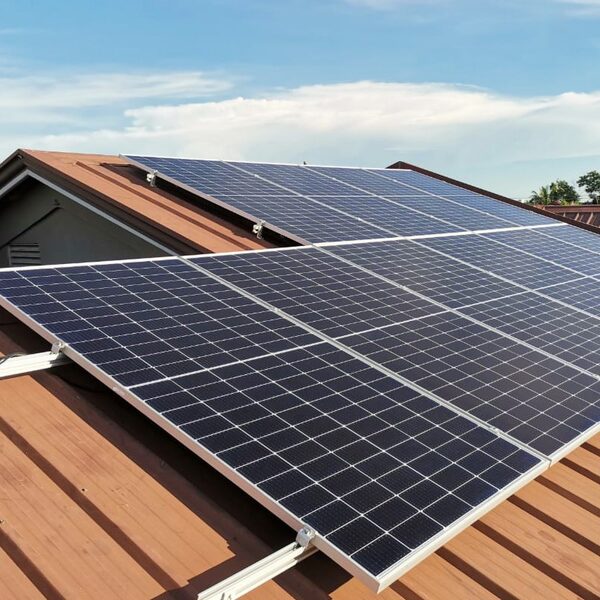
Scotland operates under its own order, and the differences are structural rather than cosmetic. The Town and Country Planning (General Permitted Development) (Scotland) Order 1992 applies to Scotland, while England and Wales work under the Town and Country Planning Act 1990 and separate general permitted development instruments2. The Feed-in Tariff guidance states the territorial basis plainly: the Town and Country Planning Act 1990 applies in relation to installations in England and Wales, or the Town and Country Planning (Scotland) Act 1997 in Scotland19.
The Scottish Government has stated an explicit parity aim. In its 2015 consultation on permitted development rights for non-domestic solar panels and domestic air source heat pumps, it said that for air source heat pumps and solar panels Scottish Ministers want to ensure that there is parity in permitted development rights between Scotland and England12. Its preferred option was Option 6: adopt the principles of the provisions from England but apply them in a way that is consistent with existing approaches to permitted development rights in Scotland12. The implementing instrument was to be an amendment to the 1992 Order20.
England has since moved further. The Town and Country Planning (General Permitted Development) (England) (Amendment) Order 2026 was laid before Parliament on 30 July 2026 and comes into force on 27 August 202621. The 2011 England amendment order was made on 30 August 2011, laid before Parliament on 6 September 2011, and commenced on 1 October 2011 for all purposes other than those of article 2(4)22. Scotland's equivalent instruments follow their own timetable, with the 2024 order laid on 28 March 2024 and in force on 24 May 20242.
| Nation | Instrument | Battery position |
|---|---|---|
| Scotland | 1992 Order as amended; 2024 amendment order from 24 May 2024 | Prior approval for solar canopy battery storage; householder microgeneration classes otherwise2 |
| England | 2015 Order as amended; 2026 amendment order in force 27 August 2026 | Separate regime; 2026 order laid 30 July 202621 |
| Wales | Town and Country Planning Act 1990 basis | Separate Welsh instrument19 |
| Northern Ireland | Separate planning system | Not covered by the 1992 Scottish order2 |
What drives battery installation in Scotland
The drivers are the same as elsewhere in the UK, and the evidence base is Scottish. The Scottish Government's microgeneration strategy records that the Home Renewables Loans Scheme was delivered by the Energy Saving Trust as scheme administrator, and that support was boosted to provide additional support for renewables24. Business Energy Scotland is likewise administered by Energy Saving Trust25.
The technical case is set out in the research on low cost, low carbon homes. At Etopia Homes in Corby, Northamptonshire, the finding was that householder's use of solar generated electricity is maximised by battery storage and exported to the grid; at Active Homes in Neath, South Wales, the finding was that householder's use of solar generated electricity is maximised by battery storage26. Those are English and Welsh sites, but the mechanism is the same in Scotland: storage shifts self-consumption rather than changing the resource.
Scotland's housing stock shapes the opportunity. The Scottish Government's technical feasibility work records 340,000 homes with electric storage heating in 201727. That is a large population of electrically heated homes for which a battery changes the economics of when power is drawn. Scotland's renewable electricity pipeline stood at 12.6 GW of capacity either under construction, awaiting construction or in planning in 201828.
The Feed-in Tariff data shows how the Scottish base was built. By 15 June 2012, Scotland had 16,261 photovoltaic installations registered under the scheme, comprising 15,995 in one band, 237 in another, 6, 23, and a total installed capacity of 52.961 MW24. The 2015 consultation recorded 35,261 domestic installations registered and 831 non-domestic registered installations12.
What it means for household energy independence

A battery in Scotland does three things for independence and leaves three dependencies intact. It raises self-consumption of on-site generation, which the research on low cost, low carbon homes identifies as the core benefit26. It shifts when grid electricity is drawn, which matters in a country where solar PV makes up 37.89% of installed capacity and where 340,000 homes had electric storage heating in 20173. And it keeps a dwelling's stored energy on site rather than exported at the moment of generation.
The dependencies remain. The battery is charged from the grid when on-site generation is short, so the household still relies on a supplier and on the network. The equipment itself comes from a manufacturer, and monitoring typically runs through a maker's app or cloud service. And the planning position is not permanent: permitted development rights can be withdrawn by an article 4 direction, for which the 1992 Order sets out the notice, service and cancellation procedure2.
The grant position has narrowed. The Home Energy Scotland Grant and Loan Scheme supported 3,216 battery storage measures in 2023-24 and 1,406 in 2024-256. A change from 6 June 2024 removed solar PV and battery storage from eligibility under the scheme, even when packaged with a heat pump7. Further changes removed hybrid heat pumps, solar PV and battery as eligible measures, along with changes to the eligibility of self-builders6. A household planning storage in Scotland should therefore treat grant support as uncertain and check the current scheme rules before committing.
For the wider picture on sizing, siting and what storage delivers, see Home Battery Storage for UK Homes and Where a Home Battery Can Be Installed. Households comparing the four nations should read Planning Permission for Home Battery Storage in England, Planning Permission for Home Battery Storage in Wales and Planning Permission for Home Battery Storage in Northern Ireland.
Sources28 cited
- The Town and Country Planning (General Permitted Development) (Domestic Microgeneration) (Scotland) Amendment Order 2009, legislation.gov.uk, 2009-03-12
- The Town and Country Planning (General Permitted Development) (Scotland) Amendment Order 2024, legislation.gov.uk, 2024-05-24
- Feed-in Tariffs Quarterly Report, Issue 64, Ofgem, 2026-06-29
- Feed-in Tariffs Quarterly Report, Issue 59, Ofgem, 2024-09-30
- Feed-in Tariffs Annual Report, Scheme Year 13, Ofgem, 2023-12
- Heat in Buildings Progress Report 2025, Scottish Government, 2025-10-02
- Heat in Buildings Progress Report 2024, Scottish Government, 2024-25
- The Town and Country Planning (General Permitted Development) (Scotland) Amendment Order 2016, legislation.gov.uk, 2016-02
- The Town and Country Planning (General Permitted Development and Use Classes) (Scotland) Miscellaneous Amendment Order 2023, legislation.gov.uk, 2023-03-31
- Explanatory Note to the 2024 Amendment Order, legislation.gov.uk, 2024-03
- Scottish Government Review of Permitted Development Rights, Scottish Government, 2026-09-19
- Permitted Development Rights for Non-Domestic Solar Panels and Domestic Air Source Heat Pumps: Consultation, Scottish Government, 2015-06
- Permitted Development Rights for Non-Domestic Solar Panels and Domestic Air Source Heat Pumps, Scottish Government, 2015-06-22
- Householder Permitted Development Rights Guidance, Scottish Government, 2021-04-01
- Town and Country Planning Act 1990, Schedule 8, Part II, legislation.gov.uk, 2026-09-17
- Town and Country Planning Act 1990, Schedule 7A, Part 2, legislation.gov.uk, 2026-09-17
- The Town and Country Planning (General Permitted Development) (England) (Amendment) Order 2024, legislation.gov.uk, 2024-01-10
- Draft Buildings (Heating and Energy Performance) and Heat Networks (Scotland) Bill Explanatory Notes, Scottish Government, 2025-11-18
- Feed-in Tariff Guidance for Renewable Installations, Ofgem, 2016-06-20
- Energy Efficient Scotland Route Map, Scottish Government
- The Town and Country Planning (General Permitted Development) (England) (Amendment) Order 2026, legislation.gov.uk, 2026-08-27
- The Town and Country Planning (General Permitted Development) (Amendment) (England) Order 2011, legislation.gov.uk, 2011-10-01
- The Town and Country Planning (General Permitted Development) (Amendment) (England) Order 2011, Explanatory Note, legislation.gov.uk, 2011-08-30
- Microgeneration Strategy for Scotland, Scottish Government, 2012-06-22
- Heat in Buildings Strategy: Quality Assurance Policy Statement, Scottish Government, 2022-05
- Building for 2050: Low Cost, Low Carbon Homes, UK Government, 2022-12-05
- Technical Feasibility of Low Carbon Heating in Domestic Buildings, Scottish Government, 2017
- Annual Energy Statement 2019, Scottish Government, 2018
 Planning Permission in WalesDo you need planning permission for a home battery in Wales?
 Home Energy Planning ScotlandDo you need planning permission for solar panels or a heat pump in Scotland?
 Planning Permission in NIDo you need planning permission for a home battery in Northern Ireland, and does it matter whether it goes inside the house or in an outbuilding?
 Planning Permission in ScotlandDo you need planning permission for a heat pump in Scotland?
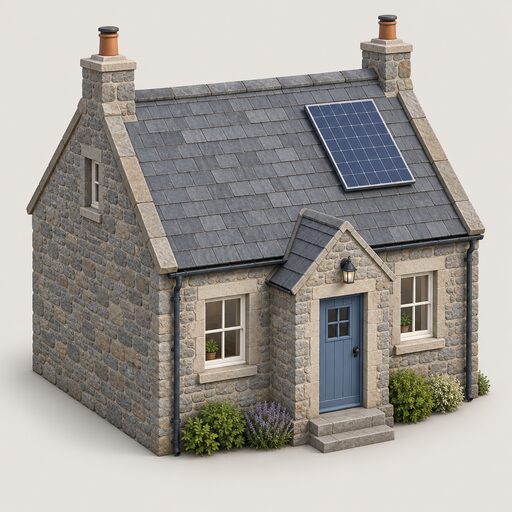 Planning Permission ScotlandMost solar panels on Scottish homes go ahead without planning permission, but flats, conservation areas and listed buildings change that.
 Planning Permission in EnglandWhen a domestic battery or its enclosure falls within permitted development in England, when an application is needed, and how the position differs for outbuildings, listed buildings and conservation areas.