In this guide
A lead acid solar battery is the older, cheaper way to store solar or wind power at home, and it is still common in off-grid cabins, boats and 12V or 24V systems. It comes in three main forms: flooded (open cells with liquid acid that need topping up), AGM and gel (both sealed). Lead-acid remains a common choice for residential projects but is less popular than lithium-ion, and it generally needs replacing after five to seven years, against a typical 10 to 15 years for lithium-ion1.
The central limit is depth of discharge. Lead-acid batteries, including AGM and gel, typically have a recommended maximum depth of discharge of 50% to prevent irreversible damage2, so only about half the rated capacity is there to use. They typically provide around 700 to 1,000 charging cycles, and their biggest advantage is affordability3. A 4kWh lead-acid battery is quoted at around £2,0004.
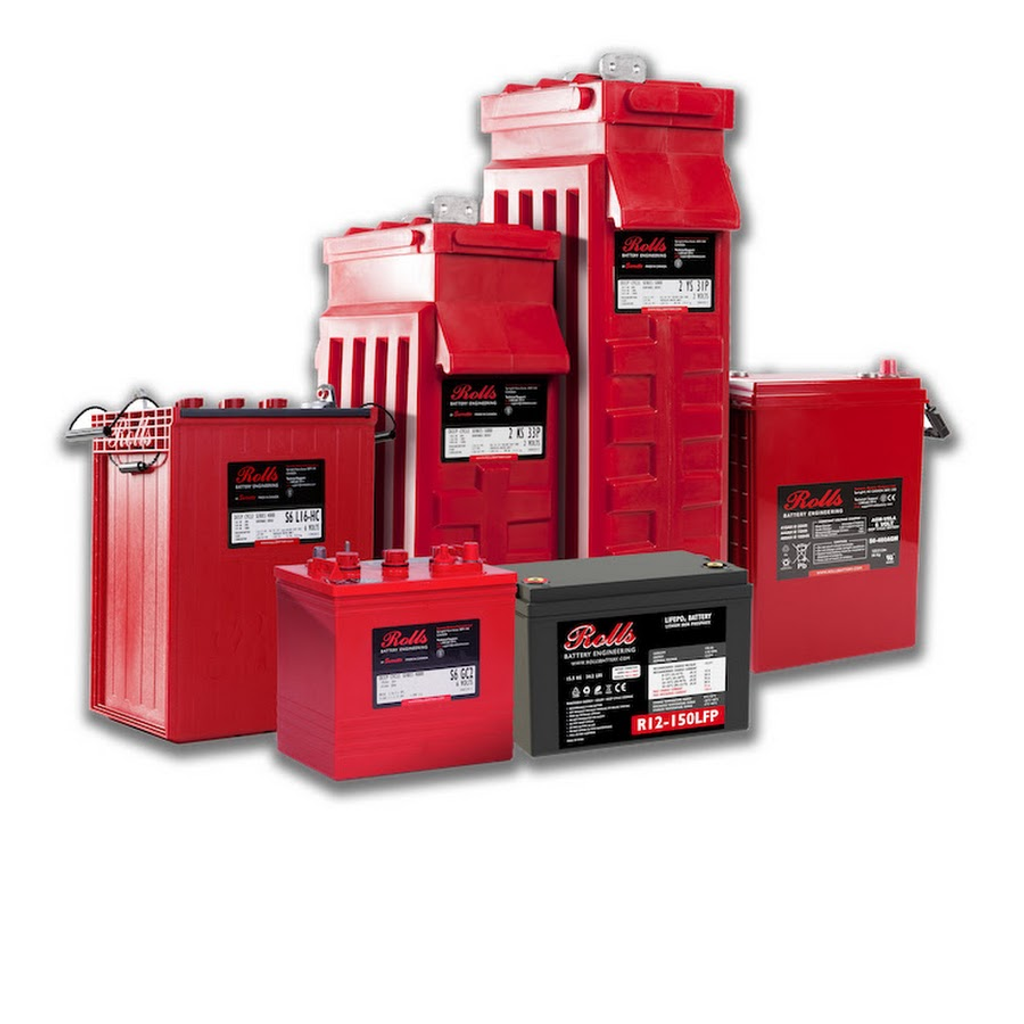
They persist because they are cheap, widely understood, recyclable and, in the right duty, durable: Rolls deep-cycle batteries have been operating for up to 15 years on Scottish island minigrids5. They also bring heavier banks, shorter replacement cycles and, for flooded types, regular maintenance.
Lead-acid, AGM and gel: what each type is and where it fits
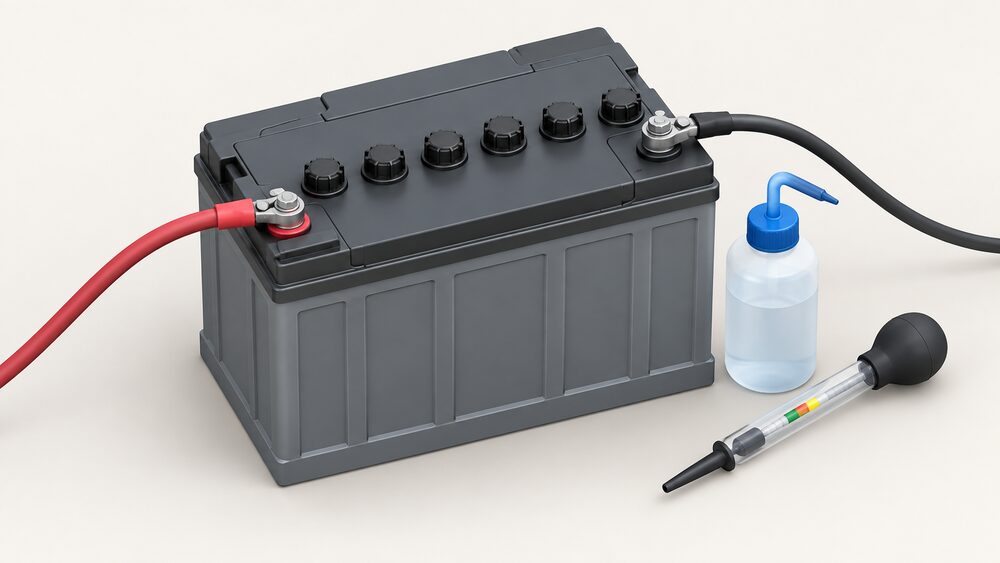
All three types share the same chemistry: lead dioxide as the cathode material, sponge lead as the anode and a sulfuric acid solution as the electrolyte6. What differs is how the electrolyte is held.
- Flooded (liquid or "water") batteries keep the acid as a free liquid. They need regular water refilling and proper ventilation to manage hazardous gas emissions6.
- AGM batteries are sealed valve-regulated (VRLA) units. Victron states its AGM and gel ranges use high purity materials and lead calcium grids, giving particularly low self-discharge so they will not go flat during long periods without charge7.
- Gel batteries are also sealed VRLA units, with the electrolyte held as a gel. Marlec offers a choice of AGM or gel deep cycle batteries "to suit different application and system requirements"8.
| Type | Maintenance | Where it is typically used |
|---|---|---|
| Flooded | Water refilling, ventilation for gas6 | Larger fixed off-grid banks |
| AGM | Sealed, low self-discharge7 | Off-grid, backup, leisure systems |
| Gel | Sealed, low self-discharge; long deep discharges7 | Off-grid systems with irregular recharging |
Lead-acid in its AGM, gel and flooded forms is listed alongside lithium iron phosphate and NMC lithium as one of the common battery types for off-grid solar systems9. Off-grid inverters still accept it: Livoltek lists "water battery" and gel battery as compatible lead-acid types10.
The flooded type is often described as the most tolerant of rough use: it can tolerate deep discharges of up to 50% of its nominal capacity but requires maintenance every six months11. Sealed AGM and gel trade some of that ruggedness for freedom from topping up, which suits cabins and outbuildings visited only occasionally. For the wider comparison of chemistries sold for homes, see home battery chemistries and the direct comparison of lithium-ion vs lead-acid solar batteries.
Lifespan: five to seven years for most lead-acid, longer for gel in the right duty
The most repeated figure is five to seven years1, but published lifespans range far wider, because life depends on how deeply and how often a battery is cycled, its temperature and its maintenance. Every figure below is a maker's guidance rather than independent testing.
| Type | Stated lifespan | Source |
|---|---|---|
| Lead-acid (general) | 3 to 5 years | 6 |
| Lead-acid (AGM/gel), real world | 3 to 5 years | 12 |
| Lead-acid, older or low-cost systems | 3 to 7 years; 500 to 1,500 cycles | 13 |
| AGM | around 4 to 8 years | 14 |
| Flooded | 5 to 10 years (around 400 to 500 cycles) | 11 |
| Gel | 5 to 10 years | 11 |
| Gel (Marlec) | more than 5 years expected life | 8 |
| Lead-acid used infrequently | up to twelve years | 15 |
Cycle counts vary as much as years. One maker states a lead-acid battery usually provides only 300 to 500 cycles6; Plymouth Energy Community, an independent adviser, gives around 700 to 1,0003. The difference reflects how deeply each assumes the battery is discharged and whether the figure is for a cheap leisure battery or a heavy deep-cycle unit.
Gel stands out in the right duty. Marlec states that with gel "higher number of deep cycles are possible and a > 5 year expected life"8, and Zendure puts gel at 5 to 10 years11. By comparison, Marley states lead-acid batteries "often cost less but may only last five to seven years"16. At the other extreme, one supplier states the life of a lead-acid battery can be anywhere between 6 months and 5 years depending on usage and maintenance17, which shows how quickly a neglected or over-discharged battery fails.
For the household, the practical consequence is replacement. SolaX states that a short lead-acid lifespan "usually requires 3 replacements for every 1 lithium battery install"12. More detail on how batteries wear is in battery cycle life and degradation and how long a home battery lasts.
Deep discharge: the 50% rule and why gel tolerates long discharges
Almost every source converges on the same limit. Lead-acid including AGM and gel has a recommended maximum depth of discharge of 50%2, and the MCS standard for battery installations states that "the depth of discharge must be 50% for lead acid batteries"18. In practice that halves usable capacity: a 200Ah lead-acid battery only provides 100Ah of usable energy6. See battery capacity and usable capacity for how nominal and usable figures relate.
Discharging beyond that causes sulfation and plate damage in most lead-acid batteries, and leaving a battery partly discharged for long periods adds to it. Two types are marketed as exceptions:
- Gel. Marlec's own words on its gel range:
"Gel Technology delivers general power and long/deep discharges without the need for immediate recharge."
- Heavy-duty AGM. Victron states its AGM Super Cycle battery "resists sulfation and plate softening, even after repeated 100% depth of discharge (DoD) cycles"19. That is the maker's claim for that one model, not a property of AGM in general.
Self-discharge is the other half of the picture. A lead-acid battery can lose 4% to 8% of its stored energy every month17, while Victron states its AGM and gel ranges have particularly low self-discharge so they will not go flat during long periods without charge7. For a holiday cabin left for weeks in winter, that combination (tolerance of deep discharge and slow self-discharge) is the reason gel is still chosen.
Wiring batteries together: series for voltage, parallel for capacity
Lead-acid batteries are usually sold as 12V blocks, and a bank is built by combining them. Connecting in series adds voltages at the same amp-hour rating; connecting in parallel adds amp-hours at the same voltage. Victron's sizing guidance shows the result for the same stored energy: approximately 5kWh of lead-acid battery is 100 Ah at 48 Vdc, 200 Ah at 24 Vdc or 400 Ah at 12 Vdc20.
That is why a 12V bank becomes 24V by pairing batteries in series: the energy is unchanged, the current at a given power halves, so cables and losses shrink. System voltage is usually matched to the load: 12V and 24V suit leisure and small off-grid systems, while larger homes move to 48V. Victron's lithium range, for comparison, builds banks for 12V, 24V or 48V and allows a maximum of 50 batteries in a 12V or 24V bank21; no equivalent single figure is published here for lead-acid banks, where the battery maker's instructions set the limit.
Small inverters are built around these voltages. Victron's Sun Inverter powers 230V AC household equipment from "leisure" or "automotive" batteries rated at 12V or 24V22.
Mixing chemistries is a separate question. Some equipment is designed to join them: the Cyrix-Li-ct will parallel connect a lead acid starter battery and a LiFePO4 battery23, which is common in vehicles and boats. That is a managed link between two separate batteries, not a single storage bank. For expansion in general see adding more batteries later.
Choosing a charge controller that suits lead-acid, AGM and gel
Each lead-acid type charges differently, which is why controllers carry separate battery-type settings. Flooded batteries tolerate, and need, a higher charge that gasses the electrolyte; sealed AGM and gel must not be overcharged because they cannot be topped up. The exact charging voltages are set by each battery maker, and the controller is configured to match.
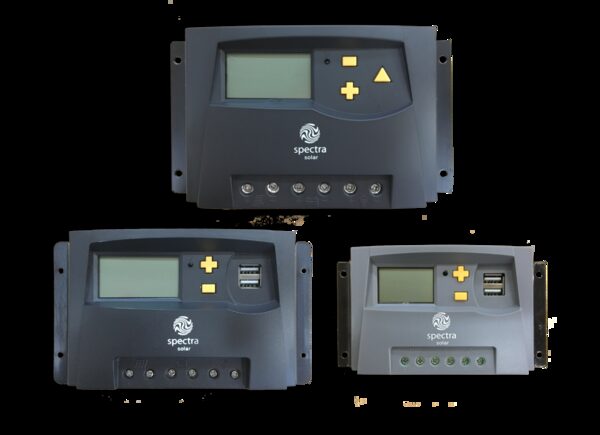
Controllers sold in the UK list the types they support. Marlec's Spectra range shows how this differs even within one family24:
| Model | Battery types supported |
|---|---|
| SmartSolar MPPT 150/35 | Lithium, AGM, gel, flooded |
| MPPT Terrain Controller | Lead acid, AGM, gel (other types by programming) |
| HRDi Charge Controller | Lead acid, AGM, gel (other types via interface cable) |
| Rutland 1200 Marine Hybrid Controller | Lead acid, AGM, gel |
Victron's SmartSolar MPPT 100/30 and 100/50 controllers auto-select a 12 or 24 V battery25, and are listed at £96.10 and £137.92 respectively (VAT position not stated)26. A controller that also handles lithium keeps open a later change of chemistry without replacing the controller.
Charging to completion matters as much as the setting. LuxPower's reliability checklist for off-grid systems says to "Confirm the battery reaches absorption or float stage at least once during available sun hours"27. A lead-acid bank that never reaches full charge through a run of dull winter days is the pattern that shortens its life. For how controllers and inverters join a battery to the rest of a system, see AC and DC coupled battery systems.
Monitoring state of charge: the BMV-702 and Victron's monitors
Voltage alone is a poor guide to a lead-acid battery's charge, because it sags under load and recovers at rest. A shunt-based monitor counts current in and out and reports state of charge directly, which is what makes the 50% limit practical to keep.
Victron sells six battery monitor models in the UK, listed from £25.8328. The BMV-702 is one of the established units for 12V and 24V banks. Its optional temperature sensor is sold separately:
"This optional temperature sensor is designed for the BMV-712 and BMV-702 battery monitors."
Temperature matters for lead-acid because both capacity and correct charging voltage change with it. Listed prices for the BMV-702 itself differ between retailers and some exclude VAT, so no single figure is given here.
Other devices in a system also log data. Victron's SmartSolar MPPT 100/30 and 100/50 store battery voltage, current and temperature, as well as load output current, PV voltage and PV current25. On lithium systems the battery management unit takes over monitoring: the Victron Lynx Smart BMS acts as a battery monitor indicating state of charge percentage and more30. A lead-acid bank has no built-in BMS, so an external monitor does that job. See battery monitoring and apps and battery management systems.
Costs and availability in the UK
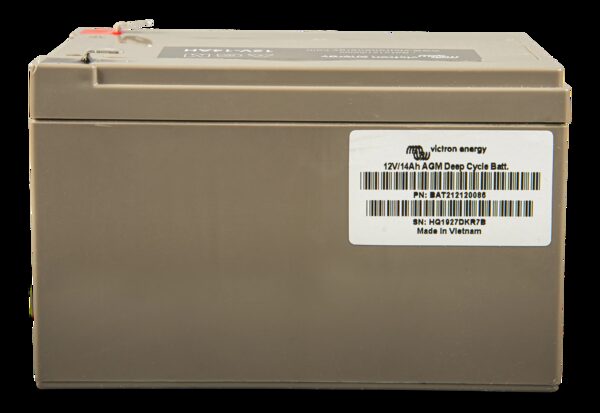
Lead-acid is the cheapest chemistry to buy. Marley states lead-acid batteries have a lower price, "making them a viable option for tight budgets"1. The figures below are makers' and independent guides' published ranges; none states whether VAT is included, and actual system prices are installer-quoted.
| Item | Price | Source |
|---|---|---|
| 4kWh lead-acid solar battery | around £2,000 (cost per kWh 56p) | 4 |
| Lead-acid batteries, average cost | £2,000 to £5,000 | 31 |
| Solar battery storage, all chemistries | typically £2,000 to £12,500 | 32 |
| Most popular UK solar batteries | £2,500 to £10,000 | 33 |
| Adding a battery to a rooftop PV system | around £2,000 to £6,000 | 34 |
| Victron LiFePO4 12.8V/100Ah Smart (lithium comparison) | £567.41 | 35 |
The Which? figure of around £2,000 to £6,00034 is for adding sufficient capacity to a typical UK rooftop system and is not specific to lead-acid.
The low upfront price is only part of the cost. SolaX states that lead-acid has a lower initial price but higher long-term replacement and maintenance costs6, and SAJ states lead-acid batteries "are cheaper upfront but end up costing more over time due to shorter life, lower usable capacity, and required maintenance"36. Because only about half of the capacity is usable2, the price per usable kWh is roughly double the price per rated kWh. For wider cost guidance see home battery cost.
Deep-cycle AGM and gel batteries remain widely stocked by UK off-grid specialists, including Marlec's AGM and gel range8 and Rolls batteries5.
Rolls batteries and the Scottish island minigrids: what 15 years in service shows
The strongest UK evidence for lead-acid's durability comes from community island grids. Rolls batteries have been installed on several minigrid projects on the Scottish Isles of Eigg, Muck, Rum, Fair Isle and Foula, where they have been operating for up to 15 years5. The maker lists applications from residential off-grid, grid-tied or backup installs to large-scale uses such as diesel generator replacement and island mini-grid systems5.
Fifteen years is far beyond the five to seven years usually quoted1, and in line with the 10 to 15 years typically given for lithium-ion1. The difference is duty and design. Island minigrids use large, heavy deep-cycle banks, sized so the daily discharge stays shallow, and they are professionally maintained, charged and monitored. That is the opposite of a small leisure battery run down hard and left partly flat. The service figure comes from the battery's own distributor and describes these projects, not a guarantee for a single home.
What it shows for a household is that lead-acid life is largely a matter of sizing and care. A bank oversized relative to the daily load, kept above half charge and fully charged regularly, lasts much longer than one worked to its limit. See the Rolls deep-cycle batteries page for the range itself and off-grid battery systems for how such systems are laid out.
Sizing a lead-acid bank for an off-grid home
Because only half the capacity is usable, a lead-acid bank is larger than a lithium one for the same job. Victron's rule of thumb is that 1 kWp of installed PV requires approximately 5kWh of lead acid battery, and each additional 1 kWp of AC PV requires a proportional 5 kWh increase20.
Guidance on whole-home sizing ranges widely:
- About 15 kWh for an average daily consumption of 10 kWh11.
- A considerably larger bank to keep critical loads running for several days37.
- 5 to 12 or more batteries for true energy independence in cabins, rural homes or areas with unreliable grid36.
These differ because they assume different numbers of days without sun. The higher figures allow for several dull days, which in a UK winter is the design case. With lead-acid the rated figure is roughly double the usable energy wanted6, so weight and floor space grow quickly. See home battery sizing.
What running on lead-acid means for household energy independence
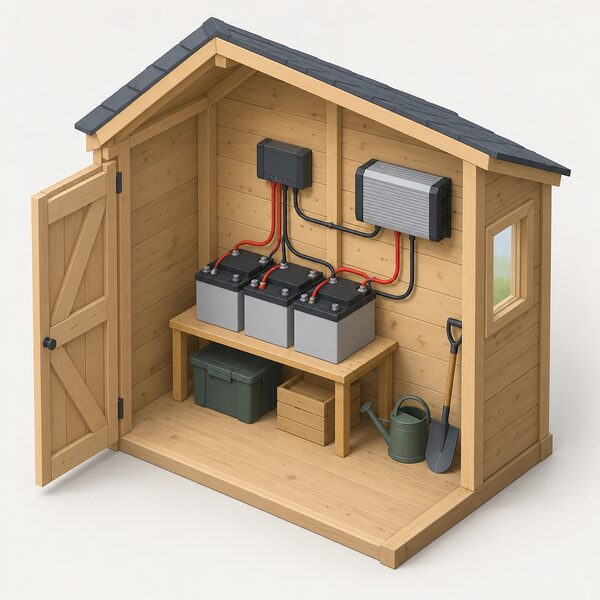
A lead-acid bank gives a household genuine independence in one important sense: it is simple, needs no app, cloud account or communication protocol, and works with a wide range of charge controllers and inverters24. Nothing depends on a single manufacturer's software staying online, and the technology is well understood by off-grid installers. Its biggest advantage is affordability3, and it can be recycled: Plymouth Energy Community notes that because it contains lead, responsible disposal is important, "but well-established recycling systems already exist to manage this safely"3.
The dependence that remains is on replacement. With typical lives of five to seven years1 and a stated three replacements for every one lithium install12, a household buys the product repeatedly, and each purchase depends on the supply of new batteries. Flooded banks add maintenance every six months11. Self-discharge of 4% to 8% a month17 and the 50% depth limit2 mean more generating capacity and more battery are needed to cover the same load. SoEnergy lists lithium-ion's advantages as higher depth of discharge, higher energy density, longer lifespan, faster charging and lower self-discharge17.
Lead-acid therefore suits particular situations: small 12V or 24V systems, occasional-use buildings where gel's slow self-discharge and deep-discharge tolerance help, and large well-managed banks such as the island minigrids. For the wider picture see home batteries and energy independence, battery recycling and disposal and the main home battery storage guide.
Sources37 cited
- What type of battery is best for solar, Marley
- Depth of discharge, SolaX Power, 2026-02-04
- Everything you need to know about battery storage, Plymouth Energy Community
- Solar battery cost, Jackery UK, 2026-04-29
- Rolls battery, Wind and Sun
- LiFePO4 vs lead-acid battery, SolaX Power, 2026-04-20
- Gel and AGM batteries, Victron Energy
- Off-grid batteries, Marlec, 2025-01-02
- Off-grid vs hybrid inverter, SolaX Power, 2026-03-13
- Learning centre, Livoltek
- Solar battery storage: the complete guide, Zendure, 2025-11-05
- How long do solar batteries last, SolaX Power, 2026-06-25
- How long do solar panels last, Jackery UK, 2026-06-30
- How long do solar batteries last, Jackery UK, 2026-05-29
- How long does a solar battery last, EcoFlow UK, 2025-06-16
- How long do solar batteries last, Marley
- How do solar batteries work and store energy, So Energy, 2024-06
- MCS 032 battery storage standard, MCS, 2025
- AGM Super Cycle battery, Victron Energy
- AC coupling, Victron Energy, 2026-09-01
- smallBMS NG datasheet, Victron Energy
- Sun Inverter, Victron Energy
- Cyrix-Li datasheet, Victron Energy
- Spectra regulators, Marlec, 2026-08-26
- SmartSolar MPPT 100/30 and 100/50 datasheet, Victron Energy
- Victron SmartSolar MPPT 100/30 and 100/50, Wind and Sun
- Off-grid inverter and battery system checks, LuxPower
- Battery monitors, Wind and Sun
- Temperature sensor for BMV-702, Victron Energy
- Victron Lynx BMS, Wind and Sun
- Backup battery for home guide, Jackery UK, 2026-04-29
- Battery storage for solar panels, The CPA, 2026-01-06
- 10kW solar battery price UK, Jackery UK, 2026-06-04
- Could solar panels save you £500 a year, Which?, 2026-06-17
- Victron lithium battery 12.8V and 25.6V Smart, Wind and Sun
- How many batteries does a home need, SAJ, 2026-07-22
- What size LiFePO4 battery for solar, LuxPower, 2026-07-15
 Cycle Life and DegradationHow long will a home battery actually last, and what decides that?
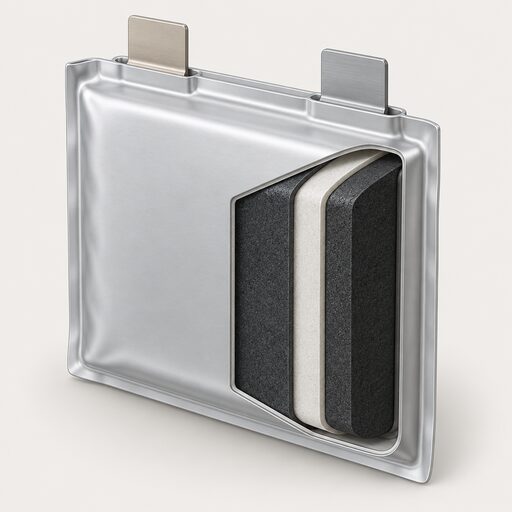 Solid-State BatteriesAre solid-state batteries on sale yet, and should you wait for one?
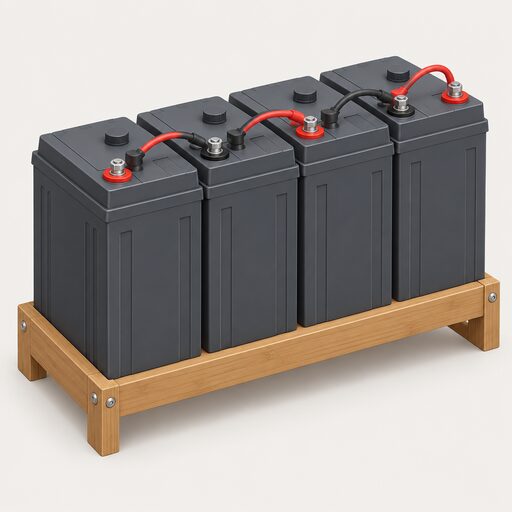 Off-Grid Battery SystemsHow many days of power do you need when there is no sun?
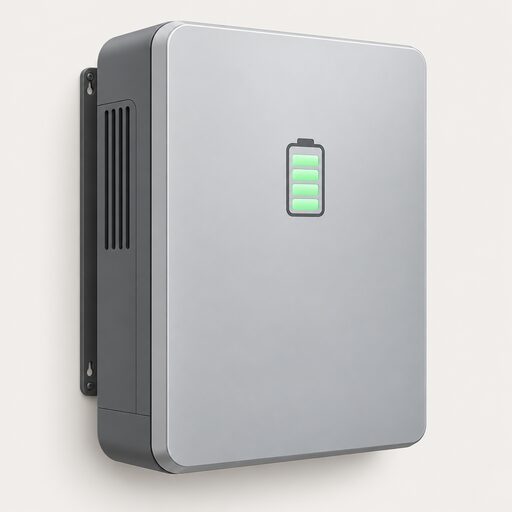 The Full Home Batteries GuideA home battery stores cheap or solar power for later, but will it really cut your bills enough to be worth it?
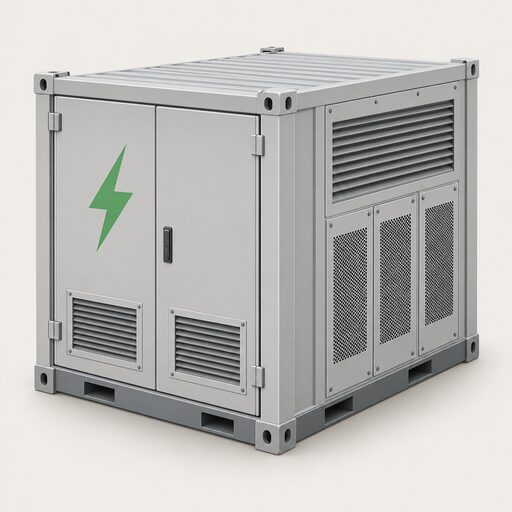 Grid-Scale Battery StorageConnected and pipeline battery capacity in Great Britain, what these assets are paid to do, how long they can run, and how grid batteries differ in purpose and scale from a home battery.
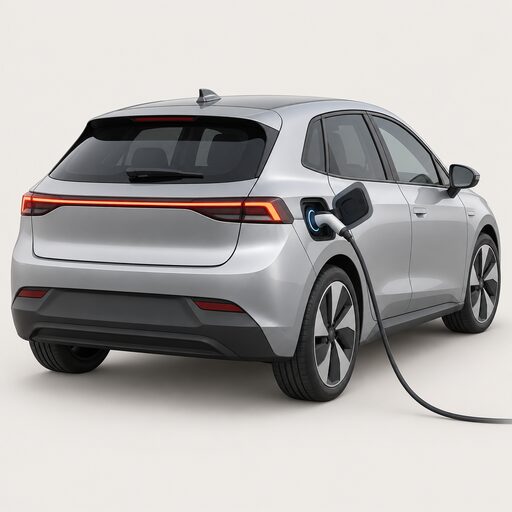 V2G and V2H ChargingCan your electric car earn money by sending power back to your home or the grid?