In this guide
A home battery warranty is normally two promises in one document. The product warranty covers defects in materials and workmanship; the performance warranty covers output, in this case retained storage capacity, over time1. Most UK-sold home batteries carry a ten-year term, and the longest mainstream terms run to fifteen years. Which nails down when the cover really ends: it is usually whichever of three limits arrives first, the years, a cycle count or a total energy throughput.
The benchmarks to hold in mind are these. Battery systems often come with a ten-year warranty2, and most quality batteries carry at least a ten-year manufacturer warranty3. Around 70 per cent retained capacity after ten years is the common guarantee, with the industry spread running from 60 to 80 per cent of original nominal energy4. The Enphase IQ Battery 5P and the IQ Battery 5P with FlexPhase are covered for fifteen years up to 6,000 cycles, ending on the earlier of fifteen years from the activation date or 6,000 discharged cycles5.
The conditions matter as much as the headline. Registration windows, continuous internet connectivity, installation by a qualified installer, siting away from temperature extremes and short defect-reporting deadlines all appear as terms that can cut a warranty short. Separately, and independently of any manufacturer promise, statutory consumer rights in England and Wales expire six years from delivery of the goods, and in Scotland five years5.
What the warranty actually covers: product and performance
The split is standard across solar and storage. A product warranty covers defects in materials and workmanship, while a performance warranty covers output over time1. For a battery, the myenergi libbi warranty puts the product side plainly: it covers manufacturing defects and component failures under normal use, provided the system is installed and operated as specified10.
The performance half is narrower than buyers often assume. In the Solarwatt documentation the performance warranty applies only to the battery module and not to other components of the product or any AC sensor11. So the cell stack may carry a decade of retained-capacity cover while the inverter, controller, gateway or sensors sit on shorter terms in the same document. Enphase runs exactly that structure: fifteen years on the IQ Battery 5P with FlexPhase, ten years from the activation date on the IQ System Controller, and five years from the activation date on the system shutdown switch, IQ Gateway, Mobile Connect, consumption CT and communications kit5.
Exclusions are worth reading as carefully as the term. The SolaX residential battery warranty does not include any accessories and tool kit items provided with the product4. The GivEnergy single-phase battery warranty excludes any maintenance works conducted or arranged by the buyer, giving cleaning of the battery pack as an example12.
Two further layers sit outside the battery box. Workmanship, meaning the quality of the installation itself, is a separate promise: an OFTEC-style workmanship warranty is fully transferable between owners of a property13. Installed equipment sold alongside a battery may carry its own shorter terms, for example the 3-year product and 1-year workmanship warranty quoted on E.ON Next home EV chargers.
For a household, the practical test when comparing documents is which components are named, what the retained capacity figure is, and what ends the cover first. Capacity, depth of discharge rating, warranty and expected lifetime are the selection factors a buyer is pointed at14.
Length: ten years is the norm, fifteen the outer edge

Ten years is the anchor. Battery systems often come with a ten-year warranty2, warranties typically cover batteries for ten years or a certain number of cycles15, and most quality batteries come with at least a ten-year manufacturer warranty3. Electric home batteries carry warranties generally covering ten years16. Product-level examples match: Powervault states a ten-year warranty on its home batteries17, the SolarEdge Home Battery is listed at ten years18, SunPower Home Energy Storage at a ten-year warranty on product and performance1, and the myenergi libbi battery modules at ten years from the date of installation or commissioning10.
Above that sit fifteen-year terms. The Enphase IQ Battery 5P and the 5P with FlexPhase are both stated at fifteen years up to 6,000 cycles6. Longer terms also appear in official material: an Ofgem ECO4 approved innovation measure describes an unreplaceable battery with a twelve-year manufacturer's warranty20.
The term should be read against expected life rather than treated as a lifespan claim. The Energy Saving Trust puts the typical lifespan of a home battery at about ten to twelve years7; Home Energy Scotland says batteries tend to last between ten and fifteen years8. Those two independent figures overlap but are not identical, and both are estimates rather than guarantees. A ten-year warranty therefore covers roughly the period in which a battery would be expected to be working anyway, which is the point: the warranty is protection against early failure and faster-than-modelled fade, not a promise of a fixed service life.
Warranty length on car batteries is written differently again and is not a good guide: EV battery warranties run at least eight years or 100,000 miles21, with most manufacturers offering seven or eight years22 and some five to eight23. Home storage is not mileage-limited, so the limiting factor is cycles or throughput instead.
Retained capacity: the 70% after ten years benchmark
Most manufacturers guarantee around 70 per cent capacity after ten years4, and one maker's guidance describes that figure as guaranteeing at least 70 per cent capacity after ten years of intensive daily cycling24. The wider industry spread is 60 to 80 per cent of original nominal energy, with 70 per cent the common standard4. End-of-life capacity thresholds in warranty documents cluster at 60, 70 or 80 per cent25.
The variation across real documents is large enough to matter:
| System | Retained capacity promise |
|---|---|
| Enphase IQ Battery 5P (storage warranty, effective 15 Sept 2025) | at least 70% of nameplate rating at the end of the 10th year5 |
| BYD Battery-Box Premium | 60% of usable energy for 10 years from the warranty start date, or minimum throughput energy, whichever comes first9 |
| Rayleigh RI-ENERGYSET series battery module | at least 80% of usable capacity for 120 months, for systems in self-consumption mode with an internet connection26 |
| Senec battery modules | 100% with standard warranty; 70% with prolonged warranty27 |
Note the conditions attached to the highest figure. The 80 per cent Rayleigh promise applies to systems operating under self-consumption mode with an internet connection, and its 120 months runs from the earlier of installation at the end user's property or two months after sale to another business26. A high headline number with narrow qualifying conditions is not necessarily stronger than a lower number with none.
Falling below the threshold does not stop a battery working, it means less stored energy each cycle. By comparison, for EV cells the maker guidance is that once capacity falls below 80 per cent drivers may start to notice a fall in range and performance23. Household systems also hold back capacity by design: when the battery gets down to a set level, maybe 20 per cent of the total storage capacity, the system will stop discharging7. That reserve is a control setting, not degradation, but it affects what a household actually gets out of a pack. The mechanics of fade are covered in more detail under battery cycle life and degradation and usable capacity.
Throughput and cycles: the limit that can end cover early
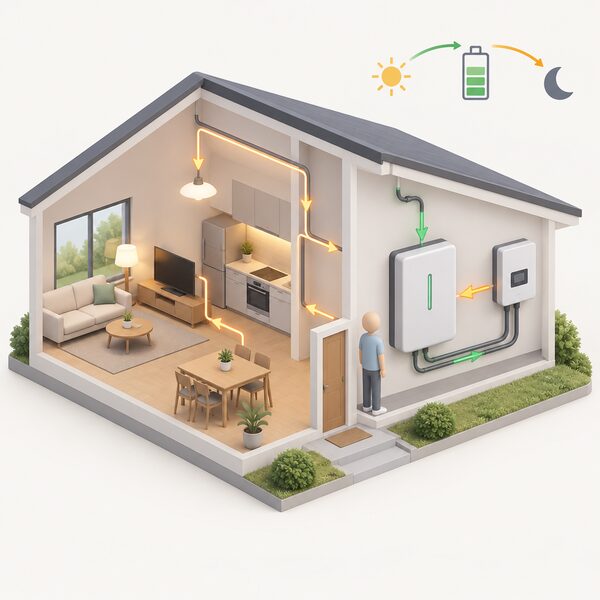
A warranty period is often defined not only by time but by usage limits such as the number of cycles or total throughput energy28. Many battery warranties end when the system reaches its throughput limit, even if the time period has not expired25, and the warranty usually ends when either the cycle limit or the time limit is reached, whichever comes first4. Tesla's Powerwall 2 battery modules are listed at ten years or energy throughput, whichever comes first, with the remedy being replacement or payment of current market price27.
The two ways of writing the usage limit behave differently. Cycle counting is the older method: many manufacturers advertise warranties based on a fixed number of charge and discharge cycles, such as 10,000 cycles over ten years29. The risk is in the definition.
"With some battery systems, even a brief discharge followed by a recharge can be counted as a full cycle."
Multiple cycles can therefore accumulate within a few hours, meaning the cycle limit may be reached much sooner than expected30. That matters most to households on time-of-use tariffs, where a battery may charge and discharge in short bursts several times a day. Enphase sets its limit at 6,000 discharged cycles across fifteen years5; electric home batteries generally are described as having a limited cycle life of 3,000 to 5,000 cycles16.
Throughput sidesteps the definition problem. Battery throughput is the total amount of energy a battery can charge and discharge over its entire lifetime, usually measured in kWh or MWh25. SunPower guarantees a total energy throughput in MWh determined by the storage capacity of the battery system, instead of a maximum number of charge and discharge cycles30, across a ten-year period, with the allowance varying according to storage capacity31. Throughput energy is described as offering a precise evaluation of how much energy a battery can deliver before reaching the end of its effective life, incorporating depth of discharge28.
Throughput limits can also be imposed as a penalty for operating outside the maker's control system. If a myenergi libbi battery pack is connected to a third-party system or manually operated outside the myenergi Controller, the warranty expires when a maximum of 3MWh per kWh of usable capacity has been reached, and five years applies to the hybrid inverter and controller32. That is a direct trade between third-party control and warranty length, and it bears on any plan to use a battery with grid services or a virtual power plant.
Conditions that can void the warranty
Voiding conditions cluster around installation, siting, connectivity and who touches the equipment afterwards.
- Self-installation. Attempting a DIY installation with high-voltage DC runs carries extreme risk and will instantly void product warranties24. See DIY home battery builds.
- Siting. Installing a battery in uninsulated areas that experience ambient temperature extremes can void coverage24. Ventilation and temperature limits are set out separately.
- Moving the unit. Moving the battery after its first installation, even to the same address, voids the SolaX warranty unless a qualified installer re-tests it4.
- Unauthorised parts. Replacing the battery or accessories without prior consent from SolaX can void the claim4.
- Self-arranged repair. Under the myenergi product warranty, if you arrange your own installer to conduct any repair, the warranty will be void33.
- Regulatory compliance. GivEnergy requires that installation, use and maintenance comply with all applicable laws, regulations, safety standards and the product and installation manuals12.
- Connectivity. Enphase requires that covered products be continuously connected to the internet during the limited warranty period, except where interrupted by causes outside the owner's reasonable control5.
- Bespoke additions. Connecting a wind turbine to an existing battery using a bespoke arrangement carries the expensive risk of invalidating warranties for the battery, inverter and possibly the turbine34.
Registration deadlines are the quiet trap. Failing to register a warranty with the manufacturer within thirty days of installation is listed by Which? among common mistakes that invalidate boiler warranties35, and the same discipline applies to storage. With SolaX, if the system was not registered within ninety days, the warranty automatically starts six months after the battery left the factory, which can silently remove months of cover4. Activation deadlines go further still: the Enphase warranty does not cover IQ Batteries activated after the "Energize by" date printed on the battery or packaging5. Stock that sits in a warehouse too long can therefore arrive uncovered.
Usage rules can also apply to portable products. Jackery's warranty does not apply to the battery cell unless the cell is fully charged within seven days after purchase and at least once every six months thereafter36.
Start dates, registration and the activation clock
The warranty clock rarely starts on the day a household signs a contract. Four patterns appear:
| Approach | Example |
|---|---|
| Installation or commissioning date | myenergi libbi battery modules: 10 years from the date of installation or commissioning10 |
| Earlier of installation or a factory-linked date | SolaX residential batteries: earlier of the installation date or 6 months after the production date4 |
| Fixed period after production, with a delivery alternative | BYD Battery-Box Premium: first day after 6 months from the production date, or at the buyer's choice the first day after 30 days from the delivery date if proven in writing9 |
| Registration or portal activation | Enphase: the earlier of the date the product is registered with Enphase or the date it is activated at the original location via the Installer Portal5 |
| Date of purchase | Jackery: measured from the date of purchase by the original consumer purchaser36 |
The practical consequence of a production-linked start is that a battery bought from older stock begins its warranty behind schedule. The Rayleigh RI-ENERGYSET 120-month term runs from the earlier of installation at the end user's property or two months after sale to another business or personnel26, which again favours fast-moving stock. Where a start date depends on registration, the registration is normally the installer's job, and evidence that it was done belongs with the handover paperwork described under the installation process.
Enphase: fifteen years on the IQ Battery 5P, with strict deadlines
The Enphase storage warranty effective on or after 15 September 2025 is one of the longest and one of the most conditional documents in the UK market. Its covered territory is Scotland, England and Wales, and it is governed by and construed in accordance with the laws of England5. Northern Ireland is not named in that territory statement.
| Item | Enphase term |
|---|---|
| IQ Battery 5P with FlexPhase | 15 years from the activation date or 6,000 discharged cycles, whichever is earlier5 |
| IQ System Controller | 10 years from the activation date5 |
| IQ Gateway, System Shutdown Switch, Mobile Connect, Consumption CT, Communications Kit | 5 years from the activation date5 |
| Retained capacity | at least 70% of nameplate at the end of year 105 |
| Connectivity | must be continuously connected to the internet throughout the warranty period5 |
| Transfer | transfer fee payable within 30 days of transfer to the new owner5 |
| Covered territory | Scotland, England and Wales, governed by the laws of England5 |
| Restocking fee | higher of 15% of the original purchase price or the retail value of missing parts5 |
| Repair or replacement cover | remainder of the original warranty period or 90 days from receipt, whichever is later5 |
The hardware itself is an all-in-one, AC-coupled storage system with a total usable energy capacity of 5.0 kWh, usable in single-phase and three-phase installations19. AC coupling is explained under AC and DC coupled systems, and the product in detail on the Enphase IQ Battery 5P page.
One exclusion deserves emphasis for anyone planning around medical need:
"Covered Products are not intended for use as a primary or backup power source for life-support systems, other medical equipment, or any other use where product failure could lead to injury, loss of life, or catastrophic property damage."
The connectivity requirement is the term with the widest reach. A fifteen-year promise conditional on permanent internet connection ties the household to a working router, a maker's cloud and a maker's account for the whole period. That is a real dependency, discussed further under monitoring a home battery.
Inverter warranties and extensions: Solplanet
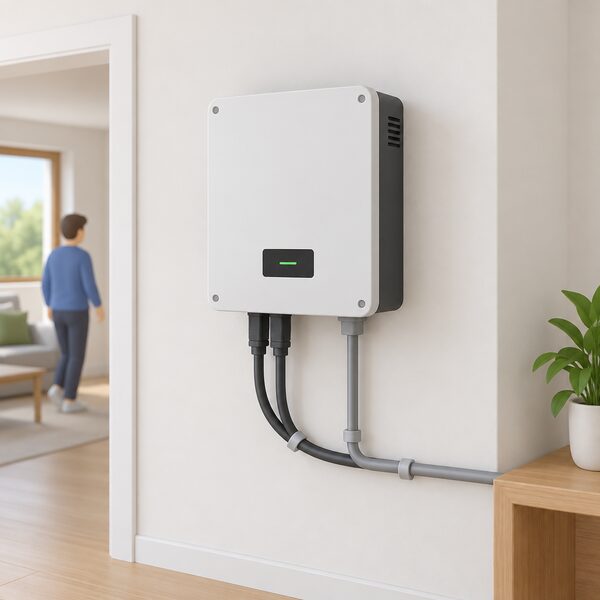
Battery warranties usually sit beside a separate inverter warranty, and inverters are frequently the shorter of the two. Solplanet offers end-users a standard warranty of up to five years, and states that the warranty can also be extended for up to ten years37. The document does not resolve how the five-year and ten-year figures relate, so both are given as published.
Solplanet also states that its terms are offered "without affecting the legal warranty provided by any wholesaler or retailer"37, which is the correct position: a manufacturer's promise is additional to, not a substitute for, the rights a buyer holds against the seller. On claims handling, the maker says that if necessary its logistics network will deliver a replacement inverter directly to the end user, and that problems should be raised with its customer support department or through the online claim form37.
Sungrow's marketing material speaks to system benefits rather than warranty structure, describing reduced waste from a home solar power system and a house guarded from potentially dangerous power outages. Those are maker claims about products, not warranty terms, and the specific extension arrangements for Sungrow inverters are not set out here. The Sungrow home batteries page covers that range.
The general point for a household is that a system's weakest warranty sets the practical exposure. A ten-year battery module behind a five-year inverter means the electronics may need replacing at the household's cost while the cells are still covered.
Warranties and statutory consumer rights
A manufacturer warranty is a voluntary extra. Statutory rights run against the seller and have their own clock: for goods purchased in England and Wales these rights expire six years from delivery of the goods, and in Scotland five years from delivery5. Those periods are shorter than a ten or fifteen-year warranty, so for older faults the manufacturer document is often the only live route; for early faults a household may have both.
Making a warranty claim is a contractual process: Citizens Advice describes needing details of what the problem is when claiming under a warranty or guarantee38. Manufacturers add their own evidence requirements, for example myenergi asking for proof of purchase of the product and its serial numbers32.
Installation work is governed separately again. Workmanship warranties cover the quality of the installation and are fully transferable between owners, passing automatically to a new owner if the home is sold, for the duration of the warranty period13. Consumer-protection schemes listed by RECC add backstops: Home Improvement Protection offers cover up to ten years and up to £50,000, with a thirty-day defect reporting limit, and Homepro is listed at ten years with a £100 figure and a thirty-day reporting limit39. Those schemes matter most when the installer, rather than the manufacturer, has stopped trading.
Where a dispute concerns an energy supplier rather than a product, the Energy Ombudsman route requires complaining to the supplier first, waiting eight weeks or receiving a deadlock letter, holding sufficient evidence including the date the complaint was raised, and confirming the supplier name matches the bill40.
Making a claim: deadlines, RMA numbers and replacements
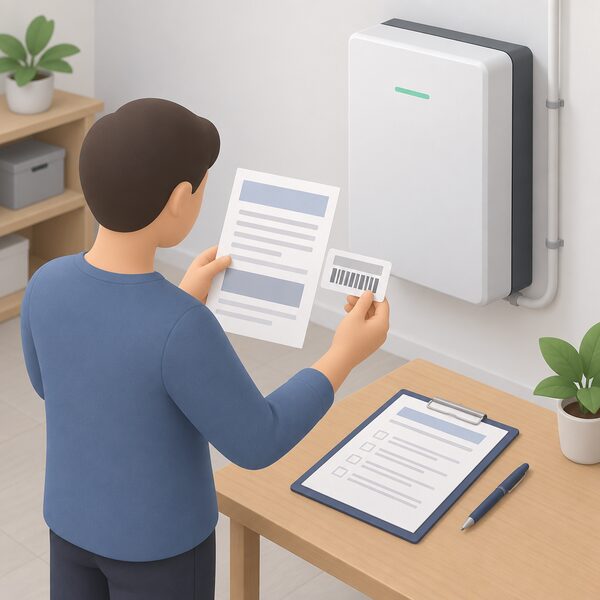
Claims fail on timing more often than on substance.
- Report the fault immediately. BYD requires notification of the defect or deterioration within thirty days of the original buyer becoming aware of it9. Scheme-based cover uses the same thirty-day window39.
- Go through the installer or the maker's stated channel. Solplanet directs claimants to customer support or an online claim form37; Enphase gives +44 (0)1908 8289285. Arranging an independent repair can void cover outright33.
- Gather evidence. Proof of purchase, serial numbers and the nature of the fault32.
- Return within the RMA window. Enphase requires the allegedly defective covered product to be received within sixty days of it providing an RMA number, and may charge a restocking fee of the higher of 15 per cent of the original purchase price or the retail value of missing parts5.
- Check the cover on the replacement. Under the Enphase terms the warranty continues on the repaired or replacement product for the remainder of the original period or ninety days from receipt, whichever is later5. A replacement does not restart the clock.
Recalls follow a different path from warranty claims and can be more generous. In the LG ESS home battery recall, LGESEG stated it would replace all affected batteries for free or provide a new module and remove the battery from the premises, with owners required to register the affected battery via the serial number checker page or by telephone or web41. Recall handling is covered under battery recalls and safety notices and the LG ESS recall.
Backup use, and what the warranty does not promise
Backup is where marketing and warranty text diverge most sharply. Not all batteries can deliver electricity during a power cut42, and network operator guidance is that in some cases storage devices can provide back-up supplies for use in a power cut, but this is not always possible and should be checked with the installer43. Which? makes the same point: if the aim is protection against power cuts, not all systems are suitable, and the installer should be asked whether the battery will work in an outage and for how long44. The hardware side is set out under battery backup in a power cut.
Even where backup works, the warranty may exclude critical use, as the Enphase life-support exclusion shows5. A warranty is a promise about defects and capacity, not about availability of supply on any given day.
Transfer on sale
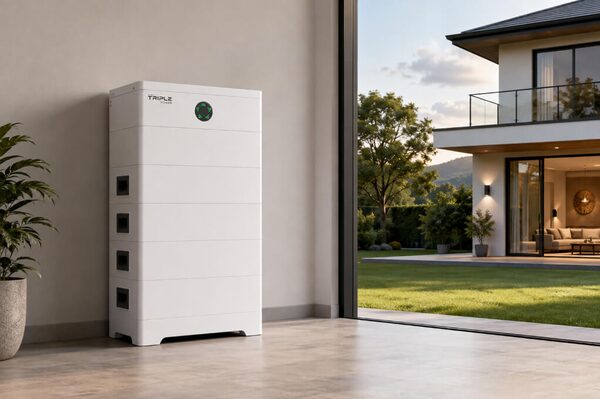
Battery warranties generally follow the property when the equipment stays put, but the mechanism differs. The myenergi warranty is transferrable to a new owner of the property if the product is left behind, arranged through customer service32. The Rayleigh RI-ENERGYSET warranty is non-transferable except where the products are installed in a building, in which case it transfers to any subsequent purchaser of that building or of the products, so long as they remain installed26. Enphase permits transfer but requires the applicable transfer fee set out in its change of ownership form to be paid within thirty days of the date of transfer5. Workmanship warranties pass automatically to the new owner for the remainder of the period13.
Because two of these require an active step within a short window, warranty transfer sits with the conveyancing paperwork rather than being assumed.
What a warranty means for household energy independence
A battery raises the share of electricity a home meets itself. MCS defines grid electricity independence as the percentage of electricity consumed in the property over a year met by behind-the-meter solar or electrical energy storage45, and more homegrown energy is described as meaning greater energy independence46. Batteries can also be charged from the grid at cheaper, lower-carbon times, the model behind the FlexBat concept of a mini home battery that stores grid energy when low-carbon power is abundant and takes over the load at carbon-intensive times47.
The warranty is where the remaining dependencies become visible in writing. A fifteen-year Enphase term requires continuous internet connection and an activation record in the maker's portal5. A myenergi libbi loses its full term and falls to a 3MWh per kWh throughput cap if operated outside the maker's controller32. Powervault batteries are described as maintenance free, with proactive remote monitoring and remote fixes or site visits17: convenient, and another live link to a company. Every one of those clauses ties a self-generating household to a manufacturer's continued existence, its cloud service and its spare parts supply for a decade or more.
That is the honest position. Storage reduces dependence on a supplier's unit rate and on the timing of grid imports, and it does not remove dependence on the grid connection, the installer's continued trading, or the manufacturer's corporate survival. Independent advice on the trade-offs is available from the Energy Saving Trust, described as an independent organisation and trusted voice on energy efficiency solutions48. Reading the warranty before purchase, specifically the start date, the usage limit, the connectivity clause and the reporting deadline, is the part of the buying process that determines whether a promise is worth anything ten years later. The broader picture is set out on the home battery storage guide and under home batteries and household energy independence.
Sources48 cited
- SunPower Home Energy Storage warranty, SunPower, 2026-07-14
- Solar panel battery storage, Which?, 2026-05-14
- Smart solar battery tracking, E.ON Next, 2026-06-01
- Solar battery warranty guide, SolaX Power, 2026-06-23
- Enphase Energy Limited Warranty, storage systems, UK, Enphase, 2025-09-15
- IQ Battery 5P, Enphase, 2026-09-17
- Battery storage advice, Energy Saving Trust, 2026-08-19
- Battery storage, Home Energy Scotland, 2026-09-20
- BYD Battery-Box Premium HVS and HVM limited warranty, Europe, BYD, 2026-09-17
- myenergi libbi system warranty, myenergi, 2026-09-17
- Solarwatt battery warranty terms, Solarwatt, 2022-03-23
- Single-phase battery warranty document, GivEnergy, 2026-09-17
- Workmanship warranty, OFTEC, 2026-09-20
- How many storage batteries are needed to power a house, Duracell Energy, 2024-05-25
- Solar battery storage, Fuse Energy, 2026-04-13
- Comparing home battery storage: electric batteries vs heat battery, Sunamp, 2025-11-13
- Powervault for home, Powervault, 2026-09-19
- The best solar batteries explained, Good Energy, 2026-07-14
- IQ Battery 5P with FlexPhase, Enphase, 2026-09-17
- ECO4 Approved Innovation Measures v1.6, Ofgem, 2024-01
- EVs: the facts, SMMT, 2025-09-22
- Electric car myths busted, Uswitch, 2024-11-26
- Electric car batteries, EDF, 2026-09-17
- Best home battery storage UK, Jackery, 2026-07-02
- Battery throughput and life cycle, SolaX Power, 2026-07-15
- RI-ENERGYSET series warranty, Rayleigh Instruments, 2026
- Battery system warranty comparison, Solarwatt, 2026-09-17
- Battery life 101: key metrics and influencing factors, Alpha ESS, 2025-04-08
- SunPower warranty: a guarantee for greater returns, SunPower, 2026-08-25
- SunPower warranty: a guarantee for greater returns, UK, SunPower, 2026-08-25
- Storage warranty built on real performance, SunPower, 2026-08-11
- myenergi libbi system warranty terms, myenergi, 2026-09-17
- myenergi limited product warranty v2.0, myenergi, 2026-09-17
- Domestic wind power, Centre for Alternative Technology, 2023-10-01
- Common mistakes that can invalidate your boiler warranty, Which?, 2025-10-22
- Jackery warranty and returns, Jackery, 2026-09-20
- Solplanet warranty, Solplanet, 2026
- Claim using a warranty or guarantee, Citizens Advice, 2026-09-17
- Insurance providers listing, RECC, 2026-09-17
- Raise a dispute: eligibility checklist, Energy Ombudsman, 2026-09-19
- LG ESS home batteries recall notice, LG Energy Solution, 2026
- Battery storage advice, Centre for Sustainable Energy, 2025-10
- Storage and renewable energy, Electricity North West, 2026-09-19
- Solar panel battery storage: backup in power cuts, Power NI, 2026-09-20
- MCS-032 2025 V1.0, MCS, 2025-01-01
- Solar Energy Scotland manifesto, Solar Energy UK, 2026-09-17
- Alternative energy markets innovation portfolio report, Energy Systems Catapult, 2023-12-21
- Additional help, National Energy Action, 2026-04-21
 Cycle Life and DegradationHow long will a home battery actually last, and what decides that?
 Warranties and DegradationHow long do solar panels actually last, and what do the warranties really cover?
 Payback and SavingsHow long until a home battery pays for itself, and why do quoted payback times vary so much?
 Manufacturer WarrantiesHow long does a boiler, heat pump or solar panel warranty actually last, and what do you have to do to keep it valid?
 EV Batteries and DegradationDoes fast charging really wear an electric car battery out, and does keeping it between certain levels make it last longer?
 Capacity and Usable CapacityA battery sold as ten kilowatt hours rarely gives you all ten to use.