

In this guide
A home battery cannot simply be wired in and switched on. In Great Britain, connecting generation or storage to the distribution network runs through two Energy Networks Association engineering standards: G98, which covers equipment rated less than 3.68kW per phase and works by notification, and G99, which covers anything larger and requires prior approval from the distribution network operator (DNO)1. The threshold is the number that decides which route a household takes, and it applies to the combined installation, not to the battery in isolation.
The distinction matters because the two routes put the work in a different order. Under G98 the installer fits and commissions the system and then informs the network operator3. Under G99 the DNO checks whether the grid can take the extra electricity load before the system is up and running4. Storage is treated as demand when it imports from the distribution network and as generation when it exports to it, so a battery is assessed on both sides of the meter5.
Northern Ireland does not follow the Great Britain arrangements. Connection requirements there are set out separately by Engineering Recommendation G98/NI, and different versions of G98 and G99 are in use6. Applications go through NIE Networks and, for installers, the ENA's Connect Direct website8.
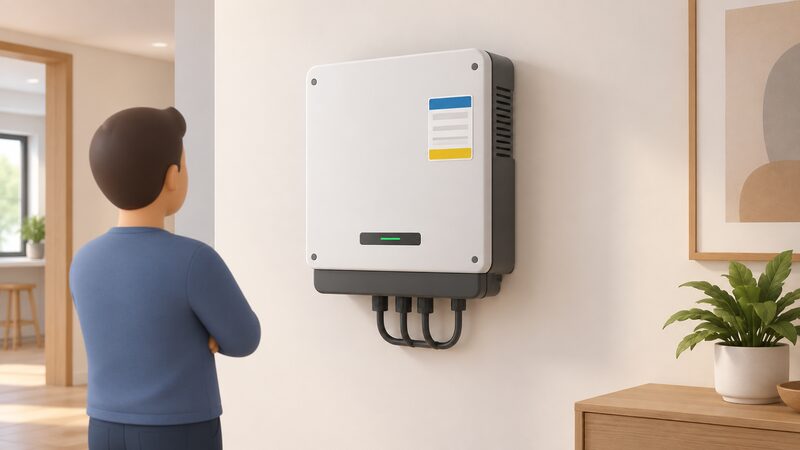
G98 and G99: the ENA connection standards your battery must comply with
G98 is a UK engineering standard written by the Energy Networks Association, and it was previously known as G831. Engineering Recommendation G98 was introduced in May 20186. Compliance is not optional or administrative: it is an obligation under the Electricity, Safety, Quality and Continuity Regulations 20021. A battery inverter that cannot demonstrate conformity with the relevant standard has no lawful route onto the network.
The standards work through manufacturer declarations as well as installer practice. For generation equipment rated less than 3.68kW per phase, manufacturers must always lodge their declarations of full compliance in the ENA LCT Register2. That register is what a DNO checks when it wants to know whether a particular inverter model is approved, and it is why the exact model matters more than the brand. A household buying a system is, in effect, buying into a type-tested device whose behaviour on the network has already been declared.
Storage sits inside this framework rather than beside it. Battery storage installations are covered by added guidance under ECO4, and the eligible use of an electrical storage battery includes storing electricity from one or more qualifying energy-saving materials and from the grid11. That dual description is the clearest statement of what a home battery is from the network's point of view: a device that can absorb surplus generation and also draw from the network when it suits the household.
The practical consequence for energy independence is that the connection standard is the price of admission to grid interaction. A battery that complies can import, export and shift load. A battery that does not cannot be connected at all, however good its cells are. The standard does not restrict what the household does with the energy; it governs how the device behaves when the network is under stress.
G98 or G99: which application your battery storage needs
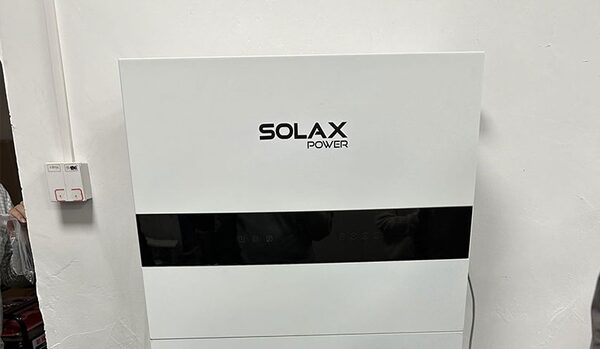
The dividing line is capacity. G98 covers generation equipment rated less than 3.68kW per phase, and anything larger falls into a G99 application1. Guidance for larger installations is explicit: "Apply to connect" is for installations exceeding 3.68kWp and requires a G99 application4. A parallel scheme document confirms that G99 applications cover installations over 3.68kWp which require prior approval from the DNO9.
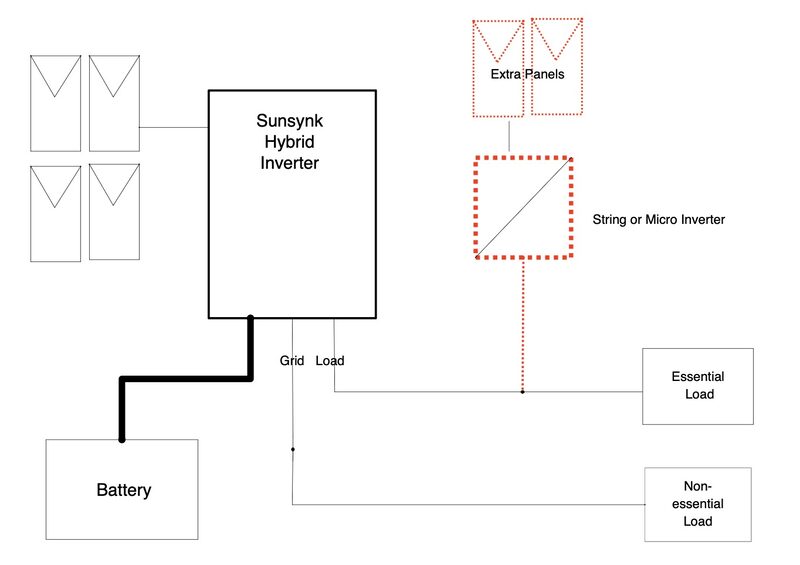
For a battery paired with solar, the figure that counts is the combined installation. A 3kWp array with a 5kWh battery may sit under the notification route if the inverter rating stays below the threshold; a larger array with a bigger hybrid inverter does not. This is where export limitation earns its place. By capping what the system sends to the network, an installation can be designed to stay within a threshold rather than crossing into a full G99 application. In Northern Ireland, export limiting must comply with NIE Networks Policy 21/007 and EREC G5/4-113.
| Route | Applies to | Approval timing |
|---|---|---|
| G98 | Generation equipment rated less than 3.68kW per phase2 | Installer fits and commissions, then informs the network operator3 |
| G99 | Installations over 3.68kWp4 | Prior approval from the DNO before the system runs4 |
| G98/NI and G99/NI | Northern Ireland, under separate arrangements6 | Through NIE Networks and Connect Direct8 |
The reason the threshold exists is not bureaucratic caution. Batteries are small compared with the largest forms of storage: you would need hundreds of batteries to create the same power as pumped storage, and the electricity they can deliver is much more limited14. Individually that is trivial. Collectively, on one feeder, it is not, which is why the network operator wants to know before rather than after.
What the network operator checks when reviewing an application
The DNO's core question is whether the local network can absorb what is being added. It needs to check whether the grid can take the extra electricity load before the system is up and running4. NIE Networks describes the same exercise in more detail: it reviews the capacity available at the premises and determines whether the existing electricity supply can safely accommodate the increased loading15. The information in the application is also used to assess and monitor the local network15.
That monitoring is cumulative, not individual. If lots of properties on the same circuit are adding equipment like heat pumps or electric cars, the operator may need to upgrade cables or equipment to keep everything working15. The stated purpose is to check how much electricity an area uses and whether it can handle the new equipment, to avoid power cuts and keep the supply safe and steady15. A battery application is therefore assessed against a background of everything else happening on the same circuit.
Storage's dual nature shapes the review. DNOs treat storage as demand when it is importing from the distribution network and as generation when it is exporting to it5. A battery that charges overnight and discharges at peak is, from the network's perspective, a load at one time and a generator at another, and both behaviours have to be acceptable at the point of connection.
How the application process works, and the installer's role
The G99 Fast Track route exists to make a common case quick. To qualify, the generator's installation needs to meet the requirements of one of three Small Generation Installation categories16. The application itself carries information about the installer, the installation details, a straight line diagram or schematic of the proposed installation, information about the proposed additional generating units and electricity storage, target installation dates, and the MPAN and details of existing installations where applicable16.
The installer normally drives this. NIE Networks states that the installer will usually understand which application applies to the installation, and typically it is them who fills in the application form and submits the relevant documents3. The same division of labour appears in other domestic energy schemes: for the Boiler Upgrade Scheme, it is the installer's responsibility to gather and upload supporting evidence to the BUS Portal17, and ECO and GBIS applications go through a Trustmark-registered or approved installer18.
The sequence under the notification route is short. The installer fits and commissions the system, then informs the network operator3. Under the approval route the order reverses: the DNO checks the grid first, and only then does the system go live4. For a household, that means the practical timeline for a larger battery is set by the network operator's queue, not by the installer's diary.
Once commissioning documents are logged and verified, the operator confirms it. A DNO response is an email confirmation indicating that the commissioning documents have been logged in the system and that the system complies with G98 or G99 standards16. That email is the record that the installation is properly connected, and it is worth keeping with the system paperwork.
Applying in Northern Ireland: NIE Networks and the Connect Direct route
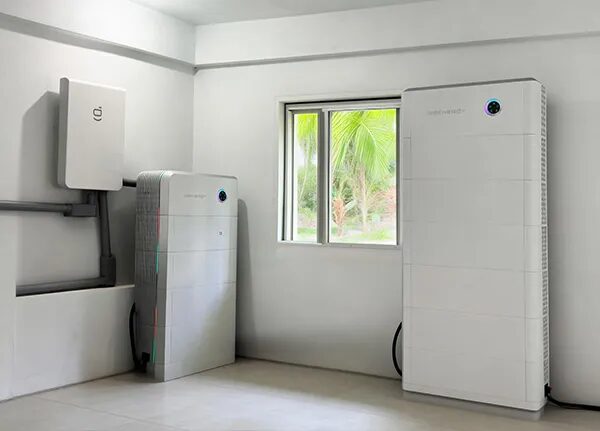
Northern Ireland has different connection arrangements, and different versions of Engineering Recommendations G98 and G99 are in use there6. Connection requirements are set out separately by Engineering Recommendation G98/NI7. A household in Northern Ireland therefore cannot assume that guidance written for Great Britain applies unchanged.
NIE Networks handles generation connections covering solar, wind and other generation for businesses or farms, alongside upgrades to existing supplies and new supplies19. Installers submit all applications through the ENA's Connect Direct website8. Before applying, the inverter's approval status should be confirmed: the ENA Type Test Register, reached via the Connect Direct website, shows whether a given inverter is compliant and approved for use in Northern Ireland13.
The G99/NI Fast Track route has its own evidence list. Datasheets are required for all existing and new equipment, such as PV panels and inverters, along with a compliance certificate with test results13. Export limiting must comply with NIE Networks Policy 21/007 and EREC G5/4-113. G99/NI itself covers capacities that exceed the G99/NI Fast Track limits19.
| Item | Requirement |
|---|---|
| Inverter approval | Check the ENA Type Test Register via Connect Direct13 |
| Datasheets | For all existing and new equipment, e.g. PV panels, inverters13 |
| Certification | Compliance certificate with test results13 |
| Export limiting | Must comply with NIE Networks Policy 21/007 and EREC G5/4-113 |
| Submission channel | ENA Connect Direct website8 |
Contact details are straightforward. NIE Networks can be reached on 03457 643 643, with customer service available 8.30am to 5.00pm Monday to Friday, excluding public and bank holidays10. A WhatsApp service runs 7.30am to 11.30pm, seven days a week, including public and bank holidays10. For a downed line or a risk to the public, the number is 99920.
The technical evidence: loss of mains testing, logic interfaces and declarations
Loss of mains protection is the technical heart of a generation connection. It is what stops a battery inverter from energising a network that the operator believes is dead, and it is tested to a defined standard. One inverter datasheet records loss of mains testing according to BS EN 62116, with the assessment marked as a pass21.
The evidence trail around that test is not always a witnessed certificate. Where a DNO has not attended, the alternative evidence is the G59 or G99 test certificate which the DNO has not witnessed, along with correspondence from the DNO stating that they did not wish to witness the test22. That pairing, the certificate plus the operator's written decision not to attend, is what makes an unwitnessed test acceptable.
The wider case for storage on the network is well established. Domestic battery energy storage systems were described as being on the verge of offering economic advantages to consumers, through maximising the use of renewable generation or by third parties using the battery to provide grid services23. The technology focus is lithium-ion, which now dominates new designs of battery energy storage systems23. Consultation responses on battery treatment were strongly supportive: 63 responses for batteries retrofitted to energy-saving materials and 60 for standalone batteries, all supportive24.
For a household, the technical evidence is what converts a battery from a private appliance into a network-connected asset. The declarations, the type test register entry and the loss of mains test are the documents that let the system interact with the grid at all.
Multiple applications, changes to your installation, and quotes already issued

The form used depends on the site. G98 Form A covers installations of generation or storage at multiple premises, and G98 Form B covers a single premise9. Anything larger than the notification threshold falls into a G99 application1. A household adding a second battery to an existing system is changing the installation, and the combined capacity is what determines whether the original route still applies.
Changes to an installation are not automatically covered by the original approval. The network operator's assessment is based on the equipment described in the application, and adding capacity changes the loading the network sees. Where a household is considering expansion, the relevant question is whether the enlarged system still sits under the original threshold or needs a fresh application. Guidance on adding capacity later is set out in modular and stackable battery systems.
Costs are handled separately from approval. NIE Networks provides a budget quote tool that can give a provisional cost for a new connection but cannot provide a cost for complex work such as housing developments. A statement of charges sets out typical costs for the main items of expenditure, excluding VAT, for a new or modified connection to the network. For a detailed cost proposal of a connection or alteration that will definitely be proceeding, an application form is submitted through a Connections account. Where an address is not yet available in the quote tool, the data is updated regularly.
Feed-in Tariff statistics give a sense of how installations age out of support over time: two additional installations reached the end of their support period in quarter 3 of FIT Year 1612. That is a reminder that connection status and tariff status are separate things, and that a system's paperwork has a life of its own.
What approval means for your home's energy independence
Approval is what makes a battery a grid participant rather than an island. A compliant, approved system can charge at lower electricity prices overnight or during certain times during the day and discharge at peak hours25. That time-of-use behaviour is the mechanism by which a battery reduces what a household buys at the most expensive hours, and it depends entirely on being connected on terms the network operator has accepted.
What approval does not do is remove dependence. The battery still relies on the grid for the energy it imports, on a supplier for the tariff that makes charging worthwhile, and on the manufacturer for the inverter's continued compliance and support. The connection standard governs behaviour at the boundary; it does not make the household self-sufficient. A battery that is approved for G98 or G99 is approved to interact, not to stand alone.
There are also non-network consents that can bear on a battery installation. Listed Building Consent will be required for most energy efficiency works, including internal works such as internal wall insulation26. Where a property is listed or in a conservation area, the connection application is only part of the picture, and planning and heritage consents may run on a separate track. The relevant planning position by nation is set out in planning permission for home battery storage in England, Scotland, Wales and Northern Ireland.
The honest summary is that G98 and G99 are the terms on which a home battery is allowed to touch the network. Meeting them is a condition of connection, not a measure of independence. The independence a battery delivers comes from what the household does with the stored energy, and the connection standard is what makes that possible in the first place. For the wider picture, see home battery storage and home batteries and household energy independence.
Sources26 cited
- Micro generation and storage connections, Electricity North West
- Connecting generation to the electricity networks, Energy Networks Association
- G98/NI installations: what's Stage 1 and Stage 2, NIE Networks
- Building regulations renewables guidance, Bedford Borough Council
- G98 for Single Premises, Energy Networks Association
- G98 Single Premises Summary Guide, Energy Networks Association
- Plug-in solar interim product specification, Department for Energy Security and Net Zero
- Your connections process, NIE Networks
- G98 connection procedure notice, Sell2Wales
- Connections, NIE Networks
- VAT energy saving materials and grant funded heating supplies, HM Revenue and Customs
- Feed-in Tariffs quarterly report, issue 63, Ofgem
- G99/NI fast track: what you need to start your application, NIE Networks
- How does storage help us balance the grid, National Energy System Operator
- What we do with your application, NIE Networks
- G99 Fast Track process, Electricity North West
- Boiler Upgrade Scheme guidance for installers, Ofgem
- GBIS and ECO4 flex statement of intent, Birmingham City Council
- Connect generation, NIE Networks
- Additional works, NIE Networks
- SOFAR product datasheet, Energy Networks Association
- Feed-in Tariffs guide: commissioning, Ofgem
- Domestic battery energy storage systems, Department for Energy Security and Net Zero
- VAT energy saving materials relief: summary of responses, HM Revenue and Customs
- Smart meters, MCS Certified
- Improving energy saving and sustainability in conservation areas and listed buildings, Brighton & Hove City Council
 Telling the Network OperatorWho tells the network operator you are having a home EV charger fitted, and when?
 Telling the Network OperatorFitting a generator, solar panels or a battery that works alongside the grid usually means telling your network operator.
 G98 and G99 Grid ConnectionDoes your solar system need telling the network or asking it first?
 Grid Connection in NIConnecting a generator at home in Northern Ireland means different rules depending on its size.
 Planning Permission in NIDo you need planning permission for a home battery in Northern Ireland, and does it matter whether it goes inside the house or in an outbuilding?
 G98 and G99 Grid ConnectionConnecting a wind turbine, hydro turbine or micro-CHP unit at home raises the question of whether it needs G98 or G99.