
In this guide
Export limitation is a condition a distribution network operator can place on a solar installation, capping how much power the system is allowed to push onto the local network. It is not a cap on how much the panels generate; it is a cap on what leaves the property. An Export Limitation Scheme is designed to ensure that the power exported from a customer's property does not exceed a safe limit, because exporting too much power can overload the network or raise voltages to unsafe levels1.
Most homes never meet the condition. If total generation capacity is 3.68kW or less, an export limitation scheme is not required, and most domestic solar PV systems fall under that threshold2. Above it, or where a site connects generation without intending to export at all, a scheme may be required unless total capacity is less than the site's minimum demand3.
The practical consequence is that export capacity needs establishing early in the project, because it can have a significant impact on the size of the system and its financial performance4. A limit set at zero, or at a low figure, changes what a system can earn and sometimes what size of array makes sense.
What export limitation is and why it matters
An export limit is a ceiling on the flow of electricity from a property to the distribution network. It is enforced by equipment at the property, not by the network, and it exists because the low-voltage network was not designed for large numbers of homes pushing power outward at the same time. The Energy Networks Association describes the devices used for this: export limiting devices allow a limit to be set above which the generation will not export8.
The reason a network operator cares is voltage and loading. An Export Limitation Scheme is designed to ensure that the power exported from a customer's property does not exceed a safe limit, as exporting too much power can overload the network or raise voltages to unsafe levels1. That is a network-wide concern rather than a property-level one: a single installation is rarely the problem, but a street of them on a sunny midday can be.
For a household, the limit matters in three ways. It can determine whether a connection is approved at all. It can determine the size of array that is worth installing, since export capacity needs establishing early in the project because this can have a significant impact on the size of the system and the financial performance4. And it can determine what the system earns, because surplus electricity that cannot be exported cannot be sold. Selling surplus energy you do not use back to the grid is the normal arrangement for a domestic system9, and a limit narrows or closes that route.
Permission to export is not automatic. You will need permission to export any surplus electricity, and for many sites this is a key constraint4. On domestic rooftops the constraint is usually mild, because most homes sit under the 3.68kW threshold. On larger arrays, on three-phase supplies, and on commercial or shared buildings, it becomes the first question rather than the last.
G98 and G99: the UK grid connection standards
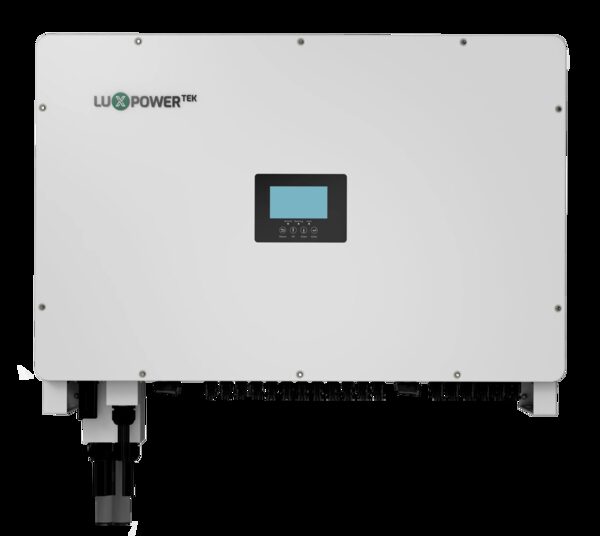
Two engineering recommendations govern how generation connects to the low-voltage network in Great Britain. Engineering Recommendation G98 covers generation up to 3.68kW, and Engineering Recommendation G99 covers generation above 3.68kW9. Both are published by the Energy Networks Association: G98 is a UK engineering standard written by ENA, and it replaced the earlier G8310.
G98 is the connect and notify route. Systems with the ability to export up to 3.68kWp can be notified to the DNO within 28 days of being installed4. The installation happens first and the paperwork follows, which is why the standard is described as being for smaller solar PV systems that are under 3.68kWp in size5. It applies to small-scale electricity generation such as solar panels or wind turbines with a capacity of 3.68kW or less per phase2.
G99 is the apply first route. Systems with an export capacity greater than 3.68kWp need pre-approval via the apply to connect process before connection to the network4. The government's solar roadmap, published in June 2025, states the split plainly: Engineering Recommendations G98 up to 3.68kW, and G99 above 3.68kW9.
The phase arrangement matters as much as the total. Export capable connections using single-phase power are limited to 3.68 kWp output, while three-phase power extends to 11.04 kWp5. A three-phase property therefore has a higher ceiling before a full G99 application is needed, and the G98 11.04 kWp limit is the figure that applies to buildings other than dwellings5.
Both standards carry a compliance obligation on the equipment, not just the installer. The product being installed, usually the solar PV inverter or electrical energy storage system, must be fully G98 or G99 compliant11. Equipment that is only compliant with G83 or G59 will not be compliant with the new G98 or G99 requirements11, which is why older inverters sometimes have to be replaced rather than reconfigured.
"G98 is a UK engineering standard written by ENA."
G98 or G99: which applies to your installation
The dividing line is 3.68kWp of export capacity, and it is a hard line rather than a guideline. Below it, the installation is notified after the fact. Above it, approval is needed before anything is connected.
The Welsh Government's Barcud Solar Panel Installation Scheme Specification sets out the split for its own grant work: the document covers all on-roof installations up to 3.68kWp, which is the maximum capacity for G98 install and notify installations, while G99 applications cover installations over 3.68kWp which require prior approval from the DNO and fall outside the document's scope12. Local authority guidance draws the same line: G98 is for smaller solar PV systems that are under 3.68kWp in size, and apply to connect is for larger installations exceeding 3.68kWp and requires a G99 application5.
| Situation | Route | Timing |
|---|---|---|
| Up to 3.68kW per phase, single phase | G98 | Notify within 28 days of installation4 |
| Up to 11.04 kWp, three phase | G98 | Notify within 28 days of installation5 |
| Above 3.68kWp | G99 | Prior approval before connection4 |
| No export intended | Export Limitation Scheme | Unless capacity is below minimum demand3 |
Where a household intends to install generation but does not want to export power to the grid, an Export Limitation Scheme is needed unless the generation capacity is lower than the site's minimum demand3. That is a different trigger from the 3.68kW threshold: it applies to a decision not to export, rather than to a size of system. The same operator states that if the total capacity of generation connected to a property is not greater than 3.68kW then an Export Limitation Scheme is not needed3.
There is a further exemption worth knowing. An EREC G100 Export Limitation Scheme is not required where the export capacity limitation of the inverter is set by the manufacturer of the equipment3. In that case the limit is a property of the product rather than a scheme assembled on site, and the evidence route is different.
For plug-in solar, the network rules are tighter still. Current network requirements under Engineering Recommendation G98 Issue 2 Amendment 1 restrict this to one device per household13. The withdrawn interim product specification used the same standard reference, requiring plug-in solar to comply with the technical requirements for connection and parallel operation with low-voltage distribution networks in Great Britain under Engineering Recommendation G98 Issue 2 Amendment 114.
How export limitation works in practice
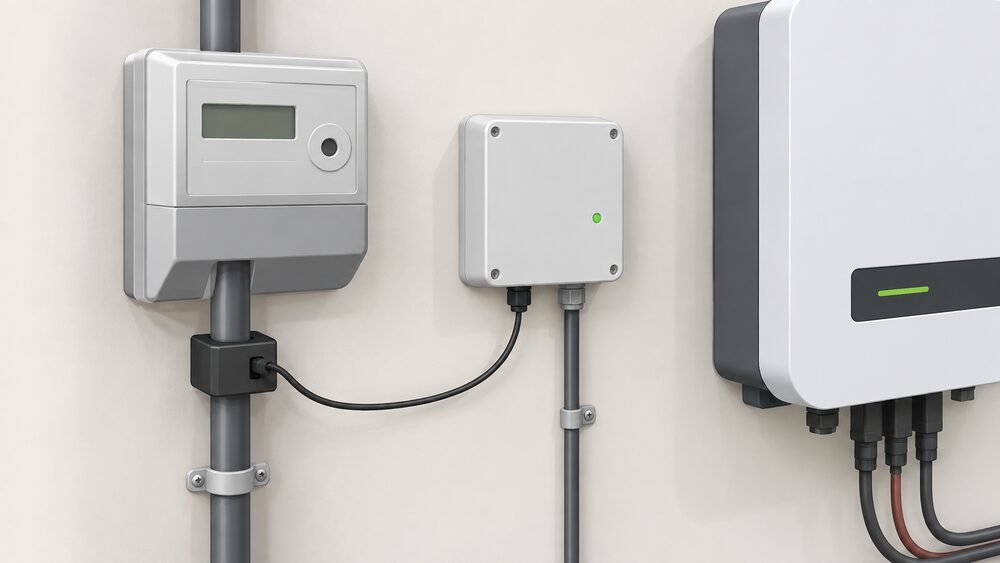
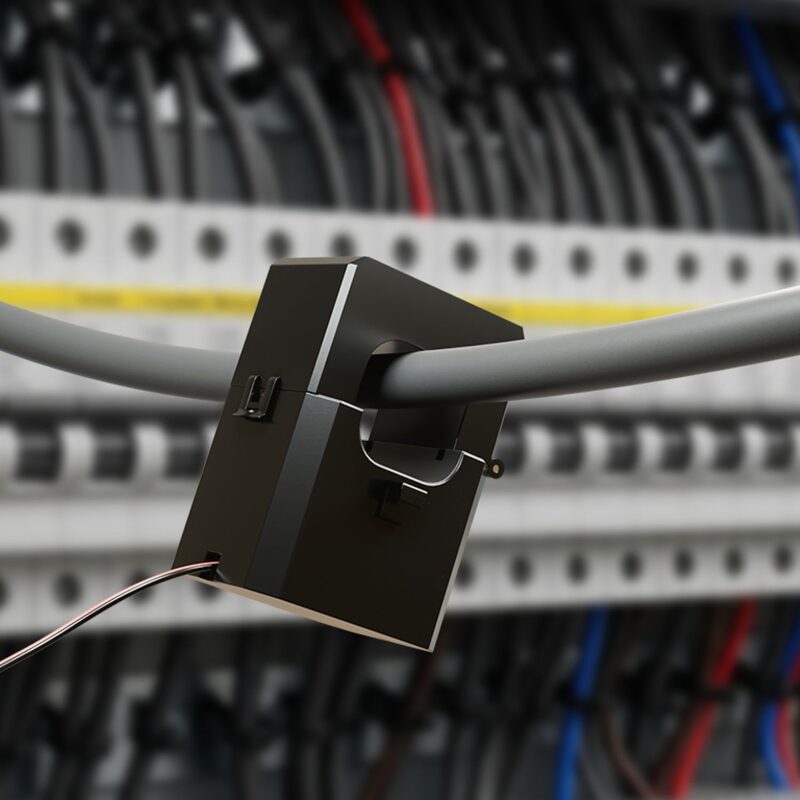
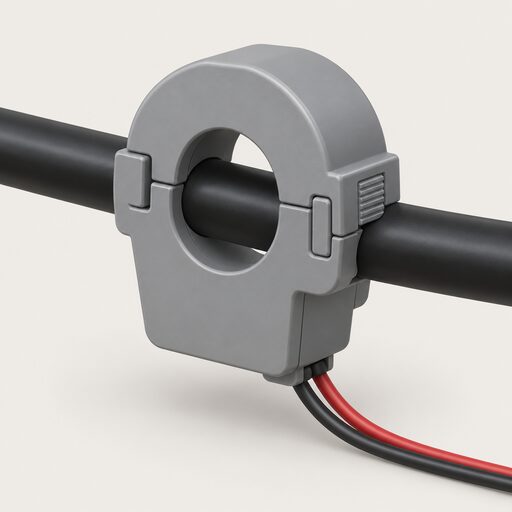
An export limiting scheme is a small control loop. A current transformer, or CT, is clamped around the incoming supply cable at the meter position and measures the direction and size of power flow. That measurement goes to an export power manager, sometimes built into the inverter and sometimes a separate unit. When the measurement shows export approaching the agreed limit, the controller instructs the inverter to reduce output until the flow falls back below it.
The Energy Networks Association describes the outcome rather than the wiring: export limiting devices allow a limit to be set above which the generation will not export8. The limit can be set at a positive figure, allowing some export, or at zero, which is a hard no-export condition.
Zero export conditions do appear in practice. In its call for evidence on solar carports and EV charging, the government noted that some DNOs would require export limitation for a period of time, potentially at zero15. That is a temporary connection condition rather than a permanent design, but it shows the range of what an operator can ask for.
Two practical points follow. First, the CT must be installed in the right place, on the supply side of the meter, or the controller reads the wrong flow and either over-limits or fails to limit. Second, the setting is normally locked and documented, because the network operator needs evidence that the limit is enforced and cannot be casually raised later.
Inverters with export limitation support
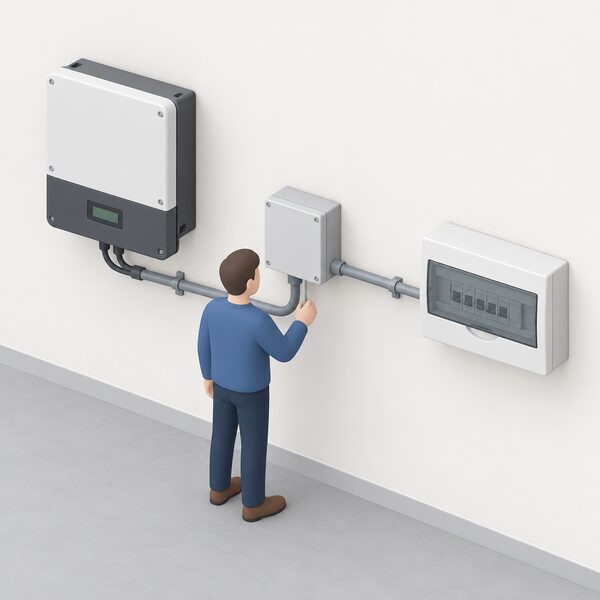
Export limitation is increasingly a firmware feature rather than a separate box. Where the inverter's own export capacity limitation is set by the manufacturer, an EREC G100 Export Limitation Scheme is not required3. That is the cleanest arrangement for a household: the limit is a property of the product, evidenced by the maker, and there is no additional control equipment to install, commission or maintain.
Where the inverter cannot enforce a limit on its own, a separate device is used. Export limiting devices allow a limit to be set above which the generation will not export8. These sit between the inverter and the supply, or alongside it, and they carry their own compliance evidence.
The distinction matters for the connection application. A manufacturer-set limit is a statement about the product. A site-assembled scheme is a statement about the installation, and it has to be commissioned and recorded as such. Both can satisfy a network operator, but they generate different paperwork.
For plug-in solar, the compliance route is a register rather than a scheme. Manufacturers shall register compliant devices on the ENA Type Test Register, on the ENA Direct Connect platform, prior to placing them on the market14. A household buying a plug-in kit can check that the specific model is on the list of devices that meet UK standards, by looking for the model on the ENA Connect Direct LCT device register16.
Where to check: the ENA and the connection process
The Energy Networks Association publishes the standards and maintains the device register. G98 is a UK engineering standard written by ENA, and it replaced G8310. The obligation behind it sits in the Electricity, Safety, Quality and Continuity Regulations 200210. The standards themselves are distributed through the ENA resource library, and each distribution network operator applies them through its own connection process.
The connection process runs through the DNO for the area. For small-scale generation of 3.68kW or less per phase, the route is notification after installation2. For larger installations, the route is an application before connection4. Some operators run a fast-track process for G99 applications, which shortens the assessment for straightforward cases6.
For plug-in solar specifically, the check is the register. A household can look for the model on the ENA Connect Direct LCT device register16. The register exists because the product specification requires manufacturers to register compliant devices on the ENA Type Test Register before placing them on the market14.
There is a separate and easily missed condition on the money side. Having a solar system installed by a non-accredited installer could mean that the household is not eligible to apply for the Smart Export Guarantee17. That is a scheme eligibility rule rather than a connection rule, but it sits in the same part of the project, and it is decided by who does the work rather than by what the network allows.
An export MPAN is also required. An eligible installation must have an export MPAN to manage exported electricity volumes to the SEG licensee18. Without it, there is no route for the exported volume to be recorded and paid for, whatever the connection standard allows.
Does export limitation affect export tariff payments?
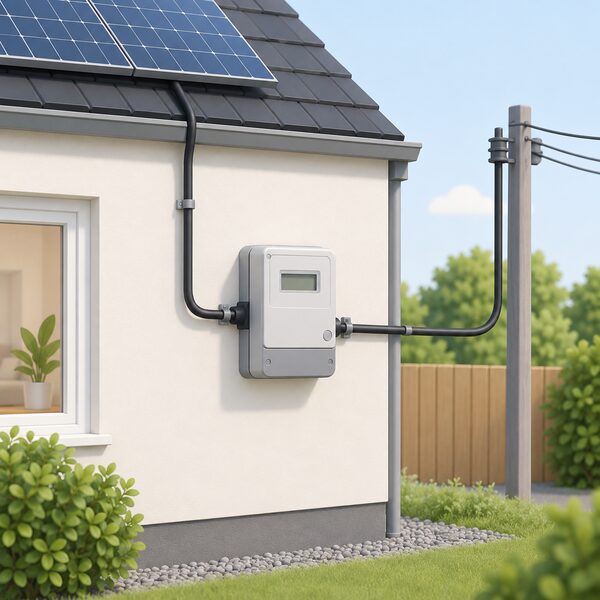
Yes, directly, because export payments follow exported volume. The Smart Export Guarantee is the scheme to sell surplus solar electricity to the grid19, and it is governed by the Smart Export Guarantee Order 2019 and Conditions 57 and 58 of the Standard Conditions of the Electricity Supply Licence20. A limit reduces the volume that reaches the grid, and a zero limit removes it.
The closed Feed-in Tariff scheme works differently, and the difference matters for older installations. Deemed export is only an option where the Total Installed Capacity of the installation is 30kW or less and no export meter is fitted7. Exported electricity can be deemed for installations with a TIC of 30kW or less21. Installations are only eligible for deemed export if they have a capacity of 30 kilowatts or less and do not have an export meter fitted22.
That creates an odd position for a limited system. A deemed export arrangement pays on an assumed proportion of generation rather than on measured export, so a limit that reduces actual export does not necessarily reduce the payment. A metered arrangement pays on what is measured, so a limit reduces it pound for pound.
The wider point is that export income is one of two returns from a solar system, and the smaller one for most homes. Self-consumption is the other, and an export limit does not touch it. A system that is limited to zero still displaces imported electricity whenever the property is using power at the same time as the panels are generating.
Where a limit changes system sizing
Export capacity is a design input, not an afterthought. The export capacity needs establishing early in the project because this can have a significant impact on the size of the system and the financial performance4. A household that discovers a low or zero export limit after the array is specified may find the array is larger than the connection can justify.
The threshold structure shapes the decision. A single-phase connection at or below 3.68kWp sits in the notify-afterwards route4. A three-phase connection can reach 11.04 kWp under the same route5. Above those figures, a G99 application is needed before connection4, and the outcome of that application determines what can be installed.
For most homes the practical ceiling is not the network at all. For solar panels on domestic properties the installation is not limited by the potential output of the panels23, which is a statement about permitted development rather than about connection, but it removes one common worry. The binding constraint is the connection, and for a typical single-phase house that means 3.68kWp before the process changes.
Where a limit is imposed, the sensible design response is to size for self-consumption rather than for export. A smaller array that is fully used on site earns more per kilowatt installed than a larger one whose surplus cannot leave. That is a design judgement rather than a rule, and it depends on the household's daytime load.
What export limitation means for energy independence
An export limit is a reminder that a grid-connected solar system is not independent of the grid. The property remains connected, remains supplied, and remains subject to the network operator's conditions on what it may send outward. The limit is the clearest expression of that relationship: the household can generate, but the network decides how much of the surplus it will accept.
What the household keeps is the self-consumption. Electricity generated and used on site never touches the network, is never subject to an export limit, and never depends on a supplier or a tariff. That is the part of the return that is genuinely within the household's control.
What remains dependent is the export route and the payment for it. Selling surplus energy you do not use back to the grid depends on a connection, an export MPAN18, and a supplier signed up to the Smart Export Guarantee19. A limit narrows that route; a zero limit closes it.
There is also a product-level dependence. Where the export limit is set by the manufacturer of the inverter3, the household relies on that maker's firmware and on the register listing that keeps the model compliant16. Where a separate device enforces the limit8, the household relies on that device continuing to work and on its setting remaining as commissioned.
None of this makes export limitation a reason to avoid solar. It makes it a condition to establish early, before the array size is fixed and before the connection is applied for, because it is one of the few parts of a solar project that is decided by someone other than the household.
Sources24 cited
- Micro generation and storage connections, Electricity North West
- Installations up to 3.68kW per phase at a single premises, Scottish and Southern Electricity Networks
- G99 fast track process, Electricity North West
- Solar panels safety advice, Electrical Safety First
- Building regulations and renewables guidance, Bedford Borough Council
- Installations above 3.68kW per phase but 50kW or less, Scottish and Southern Electricity Networks
- Feed-in Tariffs Annual Report, Scheme Year 13, Ofgem, December 2023
- G98 Single Premises, Energy Networks Association
- UK Solar Roadmap, Department for Energy Security and Net Zero, June 2025
- Plug-in solar, Electricity North West
- New G98 compliance, Flexi-Orb, May 2019
- Barcud Solar Panel Installation Scheme Specification, Sell2Wales, June 2026
- Plug-in solar interim product specification, Department for Energy Security and Net Zero, July 2026
- Plug-in solar interim product specification (withdrawn), Department for Energy Security and Net Zero, June 2026
- Solar carparks and EV charging call for evidence, Department for Energy Security and Net Zero, May 2025
- Plug-in solar electrical safety study, Department for Energy Security and Net Zero, June 2026
- Solar panels, London Borough of Bromley
- Draft licence conditions, Department for Business, Energy and Industrial Strategy
- Solar panels, Oxfordshire County Council
- Smart Export Guarantee: electricity suppliers, Ofgem
- Feed-in Tariffs guidance for renewable installations, Ofgem, December 2021
- Key terms explained: Feed-in Tariffs, Ofgem
- Permitted development rights for non-domestic solar panels, Scottish Government, June 2015
- Permitted development rights for non-domestic solar panels, Scottish Government, June 2015
 Export Metering and LimitationYour solar panels are capped so they cannot send much power back to the grid.
 Electricity Network ChargesWhy are network charges on my bill so high, and who decides how much they are?
 Solar and Battery Import TariffsWhat does a special import tariff actually get you when you have solar panels or a home battery?
 The Full Solar Panels GuideHow much do solar panels cost, and what could they save you each year?
 Solar Export PaymentsIf you have solar panels, how do you actually get paid for the electricity you send back to the grid?
 Export Tariff EligibilityTo get paid for solar power you send to the grid, you need a certified installer, your network operator told about the connection, and a meter that records what you export.