In this guide
Connecting a solar array to the grid is not a matter of wiring it up and switching on. Any generating equipment that runs in parallel with the low-voltage distribution network has to meet an Energy Networks Association engineering recommendation, and which one applies depends almost entirely on size. G98 covers small-scale generation of 3.68kW or less per phase, and works as a notification: the installer tells the distribution network operator (DNO) within 28 days of commissioning1. G99 covers everything above that, and is an application that needs written acceptance before the system is energised3.
The threshold is the single most useful number for a householder to know. On a standard single-phase supply, 3.68kWp is the ceiling for the notification route, and most residential solar systems sit under it5. On a three-phase supply the equivalent G98 limit is 11.04kWp6. Above either figure, the connection falls under G99 and the process changes from telling the network to asking it.
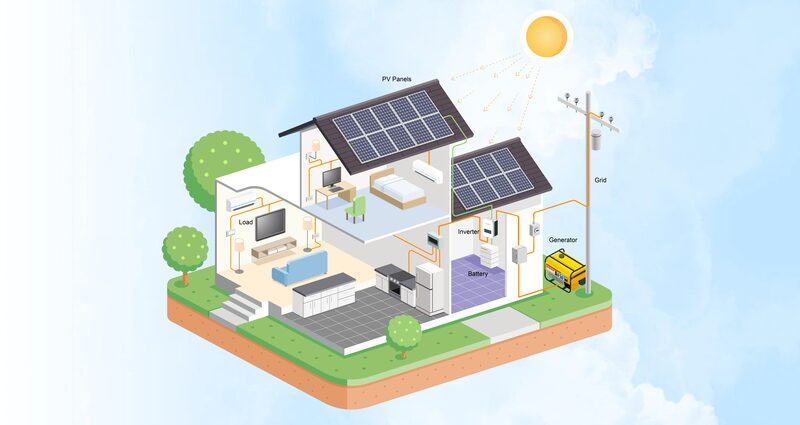
Both standards exist for the same reason: to stop embedded generation from destabilising the network it sits on. The inverter must disconnect when voltage or frequency drifts outside set limits, must not reconnect until the supply is stable, and must be certified to the standard before it is installed7. That is what makes a grid-connected array safe to run alongside everyone else's, and it is also what defines the boundary of a household's independence: the array can supply the home and export the surplus, but it stays tied to the network's rules and the network's permission.
What G98 and G99 actually are
G98 is a UK engineering standard written by the Energy Networks Association, and it replaced the earlier G834. It sets the technical requirements for connecting small-scale generation, such as solar panels or wind turbines, with a capacity of 3.68kW or less per phase, and for running that generation in parallel with the low-voltage distribution network1. The obligation behind it sits in the Electricity, Safety, Quality and Continuity Regulations 2002, which is why the process is not optional4.
G99 is the companion document for larger connections. Where G98 is a notification, G99 is an application: the DNO assesses the proposed connection against the network's capacity and issues acceptance before the system can be commissioned11. The current published basis for compliance testing is Engineering Recommendation G99 Issue 1, Amendment 9, dated 3 October 20228. An earlier amendment, Issue 1 Amendment 8 dated 1 September 2021, appears on equipment datasheets as the compliance reference for specific inverters12.
The distinction matters because it determines who does what and when. Under G98 the equipment is installed, then the DNO is told. Under G99 the DNO is asked first, and the answer can be no, or yes with conditions such as export limitation. The product being installed, usually the solar PV inverter or the electrical energy storage system, must be fully G98 or G99 compliant for either route to be available7.
The figures that decide the route

Three numbers separate a notification from an application. The first is 3.68kW per phase, the G98 capacity limit for small-scale generation on a single-phase supply1. The second is 11.04kWp, the equivalent limit where the connection is three-phase6. The third is 28 days, the window in which a system exporting up to 3.68kWp must be notified to the DNO after installation2.
| Parameter | G98 | G99 |
|---|---|---|
| Capacity, single-phase | 3.68kW or less per phase1 | Above 3.68kW per phase11 |
| Capacity, three-phase | 11.04kWp6 | Above 11.04kWp6 |
| Process | Notification after installation2 | Application before connection11 |
| Deadline | Within 28 days of installation2 | Acceptance required before energising11 |
| Compliance reference | G98 Issue 2 Amendment 113 | G99 Issue 1 Amendment 9, 3 October 20228 |
The 11.04kWp figure is not a domestic threshold in the ordinary sense. It appears in connection guidance as the G98 limit for buildings other than dwellings, and as the three-phase export limit for export-capable connections6. For a house on a single-phase supply, the practical ceiling is 3.68kWp, which is why so many domestic arrays are sized at or just under it.
The 28-day notification window is a deadline, not a grace period, and it applies to the export capability of the system rather than to its total panel rating. A system with the ability to export up to 3.68kWp can be notified to the DNO within 28 days of being installed2. Where export is limited to below that figure by a device setting, the notification still applies, but the network sees a smaller export figure.
What drives the choice between them
Size drives the route, but size is not only about panels. The figure the DNO cares about is the generation capacity in kW, described in application guidance as the proposed total capacity of the installed generation3. That is the inverter's output rating, not the sum of the module nameplate figures, and it is the number that decides whether the installation is notified or applied for.
Battery storage changes the calculation. Storage connections in the UK are governed through technical requirements including G98 and G99, so an inverter and battery combination has to be certified as a unit14. A hybrid inverter that charges a battery from the grid and discharges to the home is a generating unit in the network's terms, and its export capability counts toward the threshold.
Adding capacity later triggers the same test again. A worked example describes a householder applying to the DNO via a G99 application for permission to connect a further 2.5kWp of solar, because the addition took the installation past what the existing connection allowed5. The lesson is that the connection agreement attaches to the installation as a whole, not to the original array.
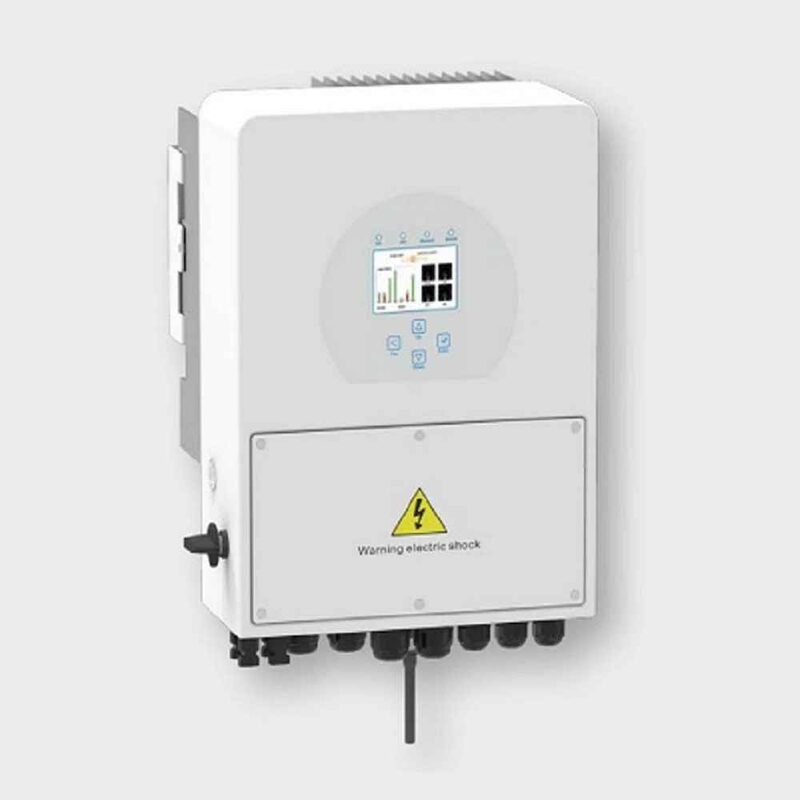
Certification is the other driver. The product being installed, usually the solar PV inverter or electrical energy storage system, must be fully G98 or G99 compliant7. Manufacturers publish the certification alongside the model: the SolaX UK X3-HYBRID G4 materials list G98 and G99 certification, and Victron's MultiPlus-II carries G98 and G99 certification for the 48/3000 to 48/10000 models only14. A model without the certificate cannot be connected under either route, whatever its output.
How the process runs, step by step
The sequence is short but the order matters, because connecting before acceptance is a breach of the connection obligation.
- Establish the generation capacity in kW, which is the proposed total capacity of the installed generation3.
- Confirm the inverter or storage system holds current G98 or G99 certification for the model being fitted7.
- For G98, install and commission, then notify the DNO within 28 days2.
- For G99, submit the application and wait for written acceptance before energising11.
- Keep the notification or acceptance with the installation records, alongside the electrical certificate.
For most domestic solar installations under G98/NI, Stage 1 is the standard process, with Stage 2 reserved for cases that need more assessment10. In Great Britain the equivalent split is between notification and application, and the DNO for the area handles it: new solar panel and battery storage grid connections in Crawley, for example, require notification to UK Power Networks under the G98/G99 process11.
The information the DNO wants is consistent. Generation capacity is the proposed total capacity of the installed generation in kW, and it sits alongside the address, the connection type and the protection settings3. Where the network cannot accept the full export, the acceptance may be conditional on export limitation, which is a separate device and a separate set of settings.
Protection settings the inverter must hold
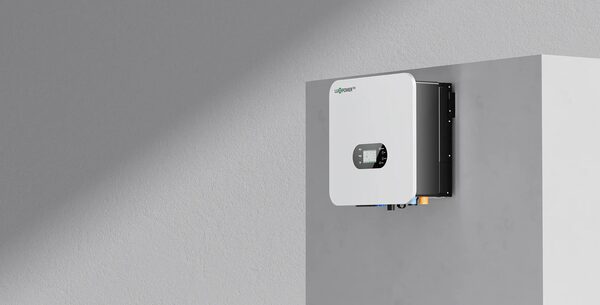
The technical heart of both standards is what the inverter does when the grid misbehaves. A compliant power generating unit disconnects from the grid when voltage or frequency leaves the permitted window, and stays disconnected until the supply returns to normal. Test data for a compliant unit records no reconnection at 1.16 pu, 0.78 pu, 47.4 Hz and 52.1 Hz, and active power ceasing within 5 seconds of an instruction being received8.
Loss of mains protection is tested to BS EN 62116, and the recorded run-on time in one test was 351 ms8. A separate figure of 357 ms appears in the same test documentation, and the two are not reconciled; where a specific run-on time matters, the test report for the exact model is the reference. The unit in that test used an electromechanical relay to disconnect from the grid, with no solid-state switching device available8.
The interface requirements are equally specific. A compliant unit provides an input port that can be used to shut down the module, with a high-level description of the logic interface covering whether the signal is AC or DC8. The maximum signal values recorded are 240 V AC and 110 V DC, and the relay status convention is 1 for closed and 0 for open8. Cyber security compliance is declared by the manufacturer against the requirements in section 9.1.7 of the standard8.
| Setting | Recorded value |
|---|---|
| Reconnection at over-voltage | None at 1.16 pu8 |
| Reconnection at under-voltage | None at 0.78 pu8 |
| Reconnection at over-frequency | None at 52.1 Hz8 |
| Reconnection at under-frequency | None at 47.4 Hz8 |
| Active power ceasing | Within 5 s of instruction8 |
| Loss of mains test standard | BS EN 621168 |
| Logic interface signal | 240 V AC or 110 V DC maximum8 |
These are not settings a householder chooses. They are built into the certified firmware of the inverter, and they are the reason a grid-connected array cannot be used to back-feed a dead network during a power cut.
Across the four nations: where G98 does not reach
Engineering Recommendation G98 applies to Great Britain only9. That single sentence changes the process for households in Northern Ireland, which has its own connection arrangements administered through NIE Networks, including a G98 NI route with a Stage 1 and Stage 2 process10. Stage 1 is described as the standard process for most domestic solar installations under G98/NI10.
The Northern Ireland position also differs at the building regulations level. Part F of the building regulations in Northern Ireland has been consulted on separately, and the supporting documentation sits with the Northern Ireland departments rather than with the Great Britain framework6. A householder in Belfast is therefore working to a different set of documents from one in Bristol, even where the physical installation is identical.
Scotland, Wales and England sit within the Great Britain framework, so G98 and G99 apply as written, and the DNO for the area administers them. The differences that remain are commercial and administrative rather than technical: which network operator covers the postcode, how quickly it turns applications around, and whether the local network has headroom for the export proposed.
What the connection means for energy independence
A grid connection is what makes a domestic array economically useful, and it is also what limits how independent the household can become. The connection allows surplus generation to be exported and paid for, and it allows the home to draw power when the array is not producing. It also means the installation operates under the network's rules, at the network's thresholds, and with the network's permission.
The scale of what domestic solar now contributes is substantial. National solar generation averaged 109.7 GWh per day across 21 to 22 June 2026, scaled from a domestic solar capacity of 6.3 GW within 23 GW of total national solar capacity16. Solar's share of Great Britain's power reached 9.6% in July 2025, up from 9.6% a year earlier17. For a household, the connection is the mechanism by which its own generation joins that total.
Self-sufficiency is measured, in the industry's own definition, as the percentage of electricity consumed in the property over a year which is met by either behind the meter solar or electrical energy storage18. That definition is the honest one for this subject: it counts what the home supplies itself, and it excludes what the grid supplies. A G98 connection with no battery will show a lower figure than the same array with storage, because export happens instead of self-consumption.
The dependence that remains is structural. The array needs the grid to export to, needs a supplier to be paid through, and needs the DNO's acceptance to be connected at all. Where the network cannot accept the export, the connection is granted on condition that export is limited, which reduces the household's ability to sell surplus. The engineering recommendations are the terms on which a home becomes a small generator, and they are worth reading before the panels go on the roof rather than after.
Sources18 cited
- Micro generation connections up to 3.68kW per phase, SSEN Distribution
- Solar panels safety advice, Electrical Safety First, 2026-09-17
- Building regulations renewables guidance, Bedford Borough Council
- Micro generation and storage connections, Electricity North West
- Batteries and 70% self-supply, Spirit Energy
- Part F consultation document, Northern Ireland Department of Finance, 2021-10
- New G98 compliance, Flexi-Orb, 2019-05-02
- Victron inverter type test report, Energy Networks Association, 2023-03-23
- Plug-in solar interim product specification, Department for Energy Security and Net Zero, 2026-07
- G98 NI installations: Stage 1 and Stage 2, NIE Networks, 2026-09-19
- Solar panel installation in Crawley, Fuse Energy, 2026-08-29
- SOFAR inverter type test report, Energy Networks Association, 2023-07-12
- Plug-in solar interim product specification (withdrawn), Department for Energy Security and Net Zero, 2026-06
- Choosing hybrid inverters and LFP batteries for colder climates, SolaX Power, 2026-08-10
- Victron inverters, Wind and Sun, 2026-09-20
- UK solar homes power equivalent of five hours of daily air con use during heatwave, Ember, 2026-06-21
- 2026 set for record solar power take-up, Solar Energy UK, 2025
- MCS 032 self-sufficiency standard, MCS Certified, 2025-01-01
 Telling the Network OperatorFitting a generator, solar panels or a battery that works alongside the grid usually means telling your network operator.
 G98 and G99 NotificationAdding a home battery usually means telling your network operator first, but sometimes you can just let them know afterwards.
 Solar Panel InstallationHow long will the panels actually take to fit, and what happens on the day?
 MGD 003 Self-ConsumptionBuying a battery with solar panels means asking how much of your own solar you will actually use instead of sending it to the grid.
 Solar Mounting SystemsWill your roof take the extra weight of solar panels, and will it still keep the rain out afterwards?
 Electrical Safety for GenerationWho signs off the wiring when you fit solar panels or a small wind turbine, and how do you know it is safe?