
In this guide
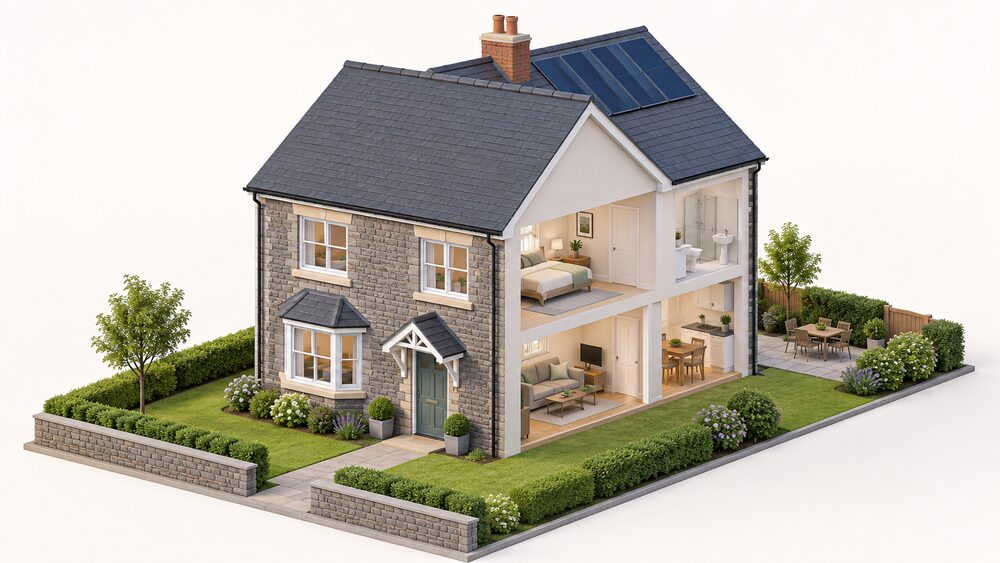
Most roof-mounted solar on a Welsh house is permitted development. Fixing solar PV or solar thermal panels to the roof of a single dwelling house is, in many cases, likely to be considered permitted development with no need to apply for planning permission1. The Welsh Government's own guidance says the same: installing solar panels will generally not need planning permission1. The rights that make this possible are Class A and Class B, inserted into the General Permitted Development Order 1995 by the Town and Country Planning (General Permitted Development) (Amendment) (Wales) Order 20122.
The conditions are where the detail lives. Panels must be sited, so far as is practicable, to minimise their effect on the external appearance of the building and the amenity of the area, and they must be removed as soon as reasonably practicable when they are no longer needed3. On a pitched roof the panels should not project more than 200mm from the roof slope or wall surface, and on a flat roof the highest part of the equipment cannot be more than 600mm above the highest part of the roof, excluding the chimney3.
Where permitted development does not apply, planning permission is required. That covers listed buildings and their grounds, scheduled monument sites, walls fronting a highway in a conservation area or World Heritage Site, and any installation that cannot meet the conditions4. Wales has its own amendment orders and its own capacity thresholds for non-domestic solar, so the position is not simply the English one with a different address6.
What permitted development means in Wales
Permitted development is a grant of planning permission written into legislation. It means the installation is lawful without an application, provided it complies with the conditions attached to the right. The Welsh rights for solar sit in Class A and Class B of the General Permitted Development Order 1995, as amended for Wales2. Class A covers the installation, alteration or replacement of solar PV or solar thermal equipment on a dwellinghouse or on a building within the curtilage of a dwellinghouse. Class B covers stand-alone solar within the curtilage of a dwellinghouse2.
The Welsh amendment order that created these classes was made in 2012, and it amended the 1995 Order in accordance with Article 28. Two further Welsh amendment orders followed: the Town and Country Planning (General Permitted Development) (Amendment) (Wales) Order 2013, instrument number 2013 No. 1776 (W. 177), which applies in relation to Wales, and the 2019 Order, which substituted Part 24 and dealt with development by local authorities9.
The practical effect is that a householder in Wales does not apply for permission for a standard roof installation. What the householder does instead is check that the installation meets every condition. If it does, the work is permitted development. If it does not, the fallback is an application: householder planning permission for a house, full planning permission for a flat11. A Lawful Development Certificate can be applied for to prove that an existing or proposed solar panel does not require planning permission and complies with the permitted development limitations and conditions5.
The distinction matters for energy independence because it determines whether a household can act on its own timetable. A permitted development installation can be surveyed, ordered and fitted without waiting on a planning determination. An installation that needs permission is exposed to the local authority's timescale, and in a sensitive designation, to the possibility of refusal.
The conditions your installation must meet
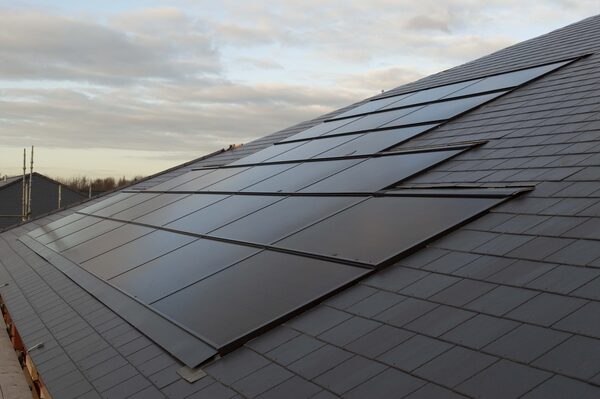
The conditions are cumulative. Failing any one of them takes the installation outside permitted development, and planning permission is then required7. Councils state this directly: if you cannot comply with the conditions, you will need to obtain planning permission12.
The siting condition is the one most often quoted. Equipment on a building should be sited, so far as is practicable, to minimise the effect on the external appearance of the building and the amenity of the area3. The same wording appears across council guidance, which suggests it is the standard the Welsh rights carry13. It is a qualitative test, not a measurement, and it is the reason a panel array placed on the most visible elevation can attract attention even where the array itself is lawful.
The dimensional conditions are measurable. On a pitched roof, panels should not be installed above the highest part of the roof, excluding the chimney, and should not project more than 200mm from the roof slope or wall surface3. On a flat roof, the highest part of the solar PV equipment cannot be more than 600mm higher than the highest part of the roof, excluding the chimney3. These figures come from the Planning Portal's account of the right, which is written for England and notes that the policy in Wales may differ3. The Welsh classes are framed in the same terms, but a householder relying on a specific dimension should confirm it with the local planning authority.
The removal condition is easy to overlook and is a genuine obligation. When no longer needed, equipment should be removed as soon as reasonably practicable3. Council guidance repeats it in near-identical words: equipment must be removed as soon as is practicable when no longer needed15. A local listed building consent order in one London borough uses the same formula for the solar equipment it covers, which shows how consistently the condition is drafted16.
"When no longer needed equipment should be removed as soon as reasonably practicable."
Siting and appearance: minimising the effect on the building
The siting condition is not a formality. It asks whether the installation has been placed, as far as is practicable, to reduce its effect on how the building looks and on the amenity of the area around it3. Councils phrase it as a requirement that panels should as far as possible be sited to minimise their effect on the external appearance of the building and the amenity of the area17. Others say panels should be positioned to minimise visual impact18.
In practice this pushes installations towards roof slopes that are less prominent from the street, and towards layouts that follow the roof's geometry rather than cutting across it. It also explains why pre-application advice is worth taking where the roof slope faces the highway, especially in a conservation area: one council describes its pre-application service as highly recommended in exactly that situation5.
The condition applies to all installations, not only those in designated areas. Council guidance for conservation areas repeats the same two limbs, that the panels shall, so far as is practicable, be installed so as to minimise the effect on the external appearance of the building and be sited so as to minimise the effect on the amenity of the area14. Stand-alone panels carry a narrower version: the panel should be sited, so far as is practicable, to minimise the effect on the amenity of the area1.
For a household, the siting condition is the main reason to think about appearance before ordering equipment rather than after. It does not prevent a well-planned array, and it does not require the panels to be invisible. It requires the householder to have taken the building and its surroundings into account. Where a roof is awkward, a different mounting approach can keep the installation inside the right: solar mounting systems covers the options, and roof-integrated solar describes systems that sit flush with the roof covering.
Where permitted development does not apply: listed buildings, conservation areas and protected land
The exclusions are specific and they are the part of the Welsh rules most likely to affect a household in an older or protected property.
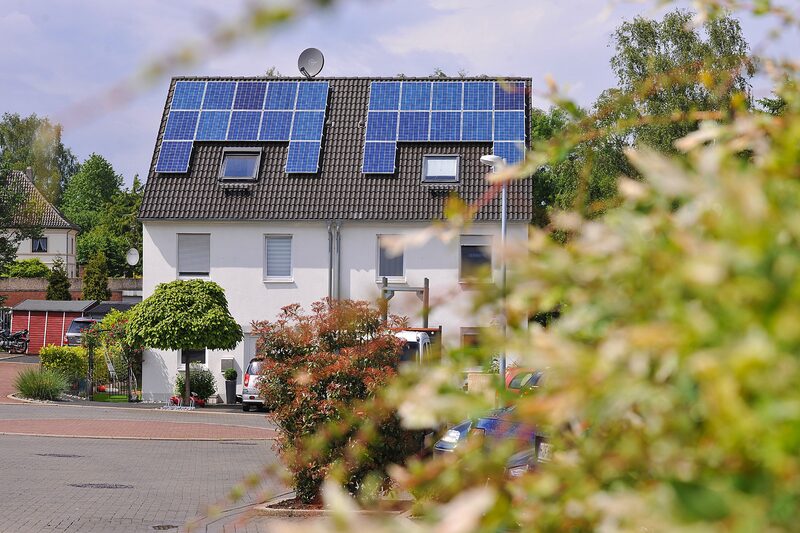
Listed buildings. Panels must not be installed on a listed building under permitted development5. The right is also withdrawn for a building within the garden or grounds of a listed building, and for a site designated as a scheduled monument5. Where a listed building is involved, planning permission and listed building consent are both required7. Council guidance states the curtilage point in the same terms: permission is needed if the equipment would be installed on a building within the curtilage of a listed building15. Scottish householder guidance, which is a different regime but uses comparable drafting, confirms that development is not permitted on a listed building or within the curtilage of a listed building, and that permitted development rights do not apply within a World Heritage Site21.
Conservation areas. The position is more permissive than many householders expect. Roof-mounted panels in a conservation area do not require planning permission provided they meet the general rules18. Permitted development rights apply to conservation areas, with the exception of those covered by an Article 4 Direction13. One council confirms that none of the Article 4 Directions affecting some of its conservation areas remove permitted development rights for solar panels7. Where an Article 4 Direction does bite, planning permission is required: two councils cite specific areas where directions mean permission will be needed to install solar panels22.
Walls fronting a highway. This is the sharpest conservation area restriction. Panels must not be fitted to a wall which fronts a highway in a conservation area or a World Heritage Site3. Councils repeat it, adding that highway includes roads, paths and public rights of way12. Planning permission is required when installing solar panels or other equipment on a wall fronting a highway within a conservation area14. One authority notes that planning consent is required when panels are fitted on the principal or side elevation walls and are visible from the highway1.
Protected land generally. The permitted development right for stand-alone solar equipment was updated on 27 August 20264. The Planning Portal's guidance on that right relates to the planning regime for England and notes that the policy in Wales may differ, so a Welsh householder should treat the English detail as indicative rather than binding4.
Stand-alone solar equipment and the 50kW non-domestic threshold
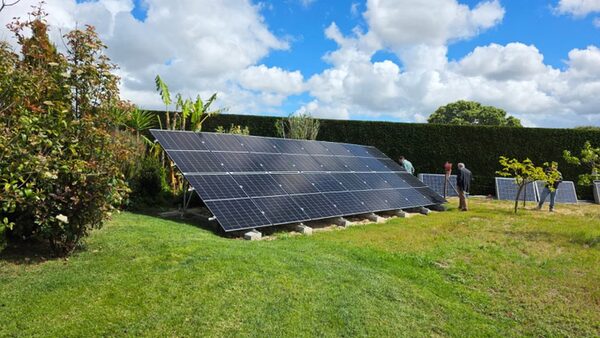
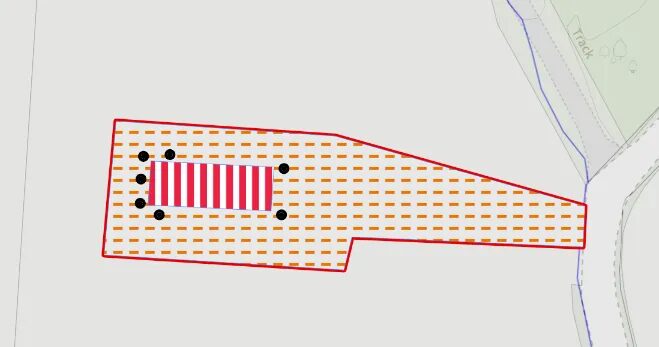
Stand-alone solar is defined in Welsh legislation as solar PV or solar thermal equipment which is not installed on a building8. It is the ground-mounted case, and it has its own class, Class B, covering installation, alteration or replacement within the curtilage of a dwellinghouse2.
The conditions for stand-alone equipment are tighter than for roof-mounted panels. The installation should be at least 5 metres from the boundary of the property12. Where any part of the equipment is within 5 metres of the boundary of the property's grounds or gardens, planning permission is required19. Further installations will require planning permission, so the right is effectively a one-off for a given property12. Permission is also required where there is already a stand-alone ground-mounted solar installation within the grounds or gardens19. For a household considering a garden array rather than a roof array, ground-mounted solar sets out how the mounting and spacing work.
For non-domestic buildings, Wales sets capacity thresholds. Permitted development rights are applicable for installations where capacity does not exceed 50kW for the generation of electricity and 45kW for the production of heat6. Those are the Welsh figures, and they apply to domestic and non-domestic solar panel installations in Wales6. Scotland's consultation on the same subject recorded the existing rights there as up to 45kW electricity or 50kW thermal, which is the reverse pairing, a reminder that the four nations do not align26.
Above the threshold, or where the conditions fail, an application follows. Planning permission for solar panels on an industrial building is required if the installation is used for any purpose other than those of the undertaking concerned, if it is within 5 metres of any boundary of the curtilage of the premises, or if the external appearance of the building is materially affected25. For office buildings, planning permission would be required in the vast majority of cases14. A council planning note on installations under 50kW records that planning permission would normally be required for development involving a medium scale (4 to 50kW) standalone or ground mounted solar PV installation, and describes the 50kW ceiling as roughly 200 solar PV panels27.
| Installation | Welsh permitted development position |
|---|---|
| Roof-mounted solar on a dwellinghouse | Permitted development, subject to conditions2 |
| Stand-alone solar within the curtilage | Class B permitted development, at least 5m from the boundary, one installation2 |
| Non-domestic solar, up to 50kW electricity | Permitted development6 |
| Non-domestic solar thermal, up to 45kW heat | Permitted development6 |
| Office building | Permission required in the vast majority of cases14 |
| Industrial building, within 5m of curtilage boundary | Permission required25 |
When you do need to apply for planning permission
An application is needed whenever the installation falls outside the right. The triggers, gathered from council guidance, are these:
- The property is a listed building, or the panels would go on a building within the curtilage or grounds of a listed building5.
- The site is a scheduled monument5.
- The panels would be fitted to a wall which fronts a highway in a conservation area or a World Heritage Site3.
- The property is covered by an Article 4 Direction that removes the solar right13.
- The installation cannot meet the siting, projection, height or removal conditions7.
- The stand-alone installation is within 5 metres of the boundary, or a stand-alone installation already exists on the site12.
- The non-domestic installation exceeds 50kW electricity or 45kW heat, or fails the industrial building conditions6.
The application type depends on the property. For a house, householder planning permission; for a flat, full planning permission11. Councils offer pre-application advice, and one notes that you can contact the council to get advice before making an application19. Where the proposal sits in a conservation area, one authority advises applying to the local authority for prior approval, submitting a form to the local planning authority28. Another recommends checking with the planning department first through its duty planning officer service to find out whether panels can be installed within a conservation area12.
A Lawful Development Certificate is the other route, and it is the one that produces a document rather than a decision. It proves that an existing or proposed solar panel does not require planning permission and complies with the permitted development limitations and conditions5. For a household that expects to sell the property, or that wants certainty before spending on equipment, that certificate is the record that the installation was lawful from the start.
The legal basis: the GPDO 1995 and the Welsh amendment orders
The Welsh solar rights are not a standalone instrument. They are amendments to the Town and Country Planning (General Permitted Development) Order 1995, and the chain of orders is worth knowing because it explains why Welsh guidance sometimes reads differently from English guidance.
The Town and Country Planning (General Permitted Development) (Amendment) (Wales) Order 2012 amended the 1995 Order in accordance with Article 28. It inserted Class A, for the installation, alteration or replacement of solar PV or solar thermal equipment on a dwellinghouse or a building within its curtilage, and Class B, for stand-alone solar within the curtilage of a dwellinghouse2. The 2012 Order is the origin of the domestic solar right in Wales.
The Town and Country Planning (General Permitted Development) (Amendment) (Wales) Order 2013 carries instrument number 2013 No. 1776 (W. 177) and applies in relation to Wales10. The Town and Country Planning (General Permitted Development) (Amendment) (Wales) Order 2019 amended the 1995 Order again, substituting Part 24 and addressing development by local authorities9.
English guidance describes the equivalent rights as sitting in Schedule 2, Part 14 (Renewable energy) of the Town and Country Planning (General Permitted Development) Order 2015, as amended3. That is the English consolidation. Wales retained the 1995 Order as the vehicle for its amendments, which is why a Welsh householder reading English council pages will see a different order cited for what looks like the same right. The substance of the domestic solar class is comparable; the instrument is not.
The Planning Portal's December 2023 note on amendments to permitted development rights in England describes more scope for solar panel installation, subject to meeting the specific eligibility criteria in the relevant permitted development rights, with planning permission needed otherwise29. Those amendments are English. Welsh rights continue to derive from the Welsh amendment orders to the 1995 Order, and the Welsh Government's own guidance on non-domestic solar permitted development is the reference point for capacity thresholds in Wales6.
For a household, the legal basis matters in one practical way: it identifies which conditions apply. A condition that appears in the English 2015 Order is not automatically a Welsh condition. Where a council page quotes a dimension or a restriction, the safe reading is that it reflects the right as that authority applies it, and the Welsh amendment orders are the governing text.
What owning solar in Wales means for energy independence
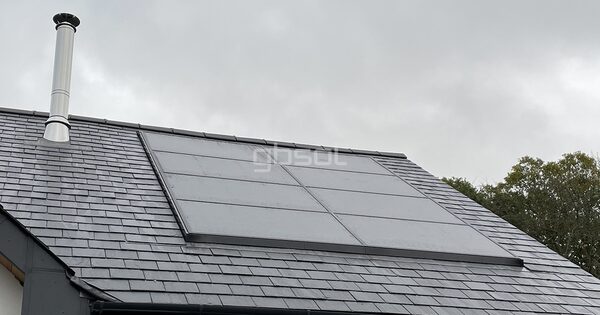
Planning is the gate, not the prize. Once an installation is lawful, the household's independence depends on how much of its own demand the array covers and how much still comes from the grid.
The Welsh picture is already substantial. In 2021, over 80% of locally owned renewable electrical and heat capacity in Wales was focused in the domestic sector, largely due to the installation of solar PV and heat pumps, including around 56,200 domestic solar PV projects and over 10,500 domestic heat pumps30. That is a large base of households generating on their own roofs, and it is the reason the permitted development route matters: it lets that base grow without a planning application for every roof.
What solar does not remove is the grid. A grid-connected array exports when it generates more than the house is using and imports when it generates less, so the household remains a customer of a supplier and dependent on the network for winter evenings and for the peaks that a battery cannot cover. Planning permission has no bearing on that relationship; it only determines whether the array can be installed. The connection itself is a separate matter, covered in connecting solar to the grid.
The dependence that planning rules do shape is the dependence on a decision by someone else. A permitted development installation keeps that decision with the household. An installation in a listed building, in the grounds of one, on a wall fronting a highway in a conservation area, or above the non-domestic capacity thresholds hands part of it to the local planning authority. For a household weighing up a roof array against a ground array, or a standard roof against a roof-integrated system, the planning route is one of the variables: roof-integrated vs on-roof solar compares the two, and solar panels and household energy independence sets the planning question in the wider context of what a home can and cannot supply for itself.
Sources30 cited
- Planning permission: solar panels, Welsh Government
- The Town and Country Planning (General Permitted Development) (Amendment) (Wales) Order 2012, legislation.gov.uk
- Planning permission: solar equipment mounted on a house or a block of flats or on a building, Planning Portal
- Planning permission: stand-alone solar equipment, Planning Portal
- Solar panels and permitted development, London Borough of Richmond upon Thames
- Permitted development rights and non-domestic solar photovoltaic and thermal panels, Welsh Government
- Solar panels and planning permission, Cornwall Council
- The Town and Country Planning (General Permitted Development) (Amendment) (Wales) Order 2012, Article 2, legislation.gov.uk
- The Town and Country Planning (General Permitted Development) (Amendment) (Wales) Order 2019, legislation.gov.uk
- The Town and Country Planning (General Permitted Development) (Amendment) (Wales) Order 2013, legislation.gov.uk
- Solar panels, Wirral Council
- Solar panels guidance, London Borough of Islington
- Renewable energy: solar panels and heat pumps, Rother District Council
- Solar panels guidance, City of York Council
- Solar panels planning permission, Bath and North East Somerset Council
- Draft local listed building consent order for the Clifton conservation area, Bristol City Council
- Planning frequently asked questions, London Borough of Hammersmith and Fulham
- Planning and solar, Frome Town Council
- Solar panels, Bristol City Council
- Solar Together planning guidance, domestic, London Borough of Camden
- Circular 1/2024: householder permitted development rights, Scottish Government
- Solar Together, Swindon Borough Council
- Solar Together Norfolk, South Norfolk and Broadland District Council
- Solar panels, London Borough of Lambeth
- Solar panels, City of York Council
- Permitted development rights for non-domestic solar panels and domestic air source heat pumps, Scottish Government
- Solar note under 50kW, Maidstone Borough Council
- Do I need building regulations approval to add underfloor heating?, Planning Portal
- Updates in December to permitted development rights for solar panels, Planning Portal
- Energy generation in Wales 2021, Welsh Government
 Home Energy Planning WalesSolar panels and heat pumps often need no planning permission in Wales, but the rules differ from England.
 Planning Permission EnglandMost homes in England can have solar panels fitted without planning permission, but does yours count as one of the exceptions?
 Planning Permission WalesDo you need planning permission for an air conditioning unit outside your home in Wales?
 Permitted Development by HomeCan you put up solar panels or a heat pump without asking the council?
 Planning Permission NIDo you need planning permission for solar panels in Northern Ireland?
 Planning Permission ScotlandMost solar panels on Scottish homes go ahead without planning permission, but flats, conservation areas and listed buildings change that.