
In this answer
Short answer
Solar panels on a flat roof are permitted development in most cases, but the flat roof rules are not the same as the pitched roof rules. In England, the highest part of the solar PV or solar thermal equipment on a flat roof cannot be more than 600mm above the highest part of the roof, excluding the chimney1. That is the figure that governs the common domestic case, and it is tighter than the 1.5 metre limit that appears in the Northern Ireland legislation for flat roofs2.
The right itself is broad. Placing solar panels on the roof of a house or flat, or a building within the grounds, is in most cases permitted development, whether in a conservation area or otherwise3. The 2026 amendment order, in force from 27 August 2026, restructured the domestic classes so that houses and blocks of flats are treated under separate eligibility rules, with houses gaining the potential for larger installations in a wider range of locations4.
What follows sets out the height and protrusion limits nation by nation, how ballast and frames are measured, when permission is needed anyway, and what the 2026 changes mean for flats and dwellinghouses.
Permitted development: what it means for flat roof solar
Permitted development is a national grant of planning permission written into the General Permitted Development Order. A household does not apply for it; the installation is lawful if it meets the conditions. Installing solar panels is one of the standard examples of permitted development work9. Local authority guidance describes the right as allowing the installation of most solar panels, subject to meeting the requirements set out in the relevant pages10, and confirms that the installation of solar panels is permitted development subject to conditions11.
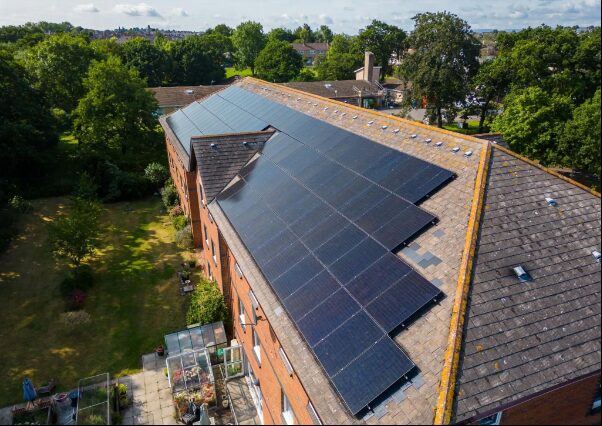
The scope is wider than the roof of the house. Permitted development covers the installation, alteration or replacement of solar PV or solar thermal equipment on the roof of a dwellinghouse or any building within the curtilage of a dwellinghouse2. That means a flat-roofed garage, extension or garden building inside the grounds can carry panels under the same right, and the flat roof height limit applies to it just as it does to the main roof.
For a household, the practical effect is that the planning system is not normally the constraint. The constraints are the physical ones: the height the mounting system adds, the distance from the roof edge, and whether the property sits in a designation that removes or narrows the right. Where the right applies, the household gains generation without a planning fee or an application period, which is the first step towards using its own roof as a power source rather than buying every unit from a supplier. The dependence that remains is the same as for any grid-connected array: the network, the supplier and the metering arrangements still sit between the panels and the household's consumption.
The 600mm height limit on flat roofs in England and Wales
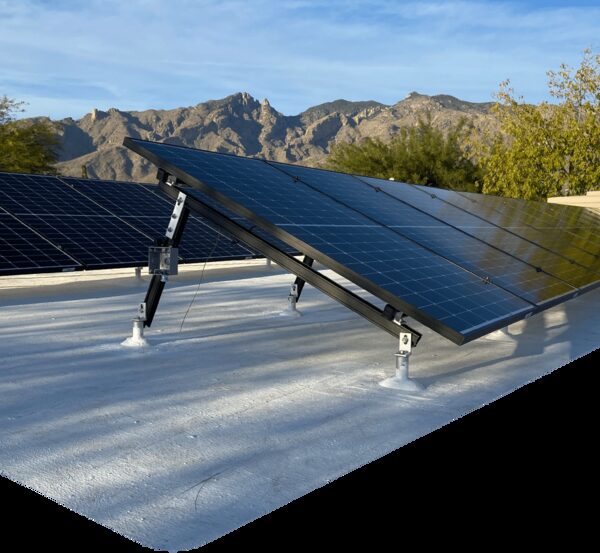
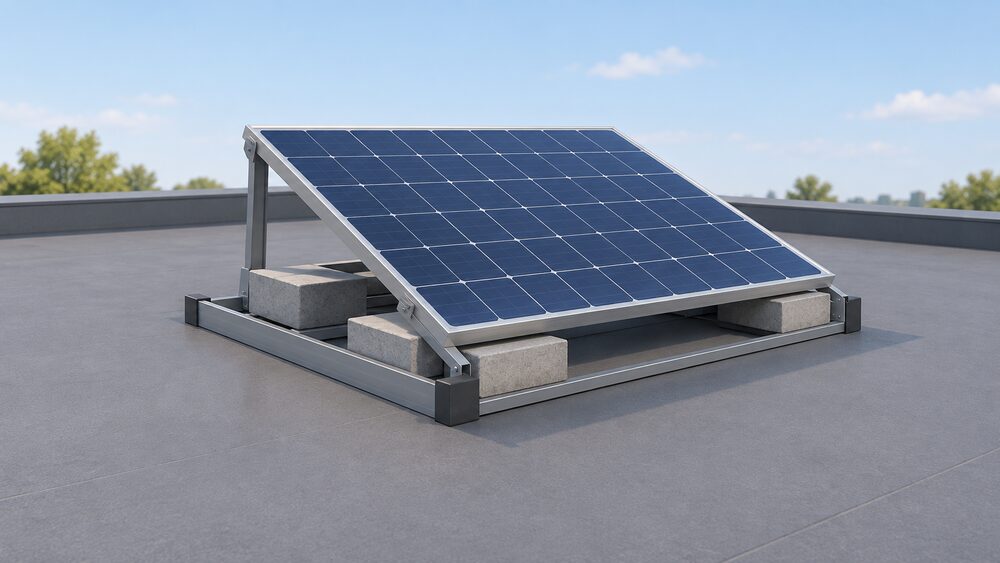
The 600mm figure is the one most flat roof installations are measured against. The 2026 amendment order states that, in the case of solar PV or solar thermal equipment on a flat roof, the highest part of the equipment must not be more than 0.6 metres above the highest part of the roof, excluding the chimney4. Planning Portal guidance gives the same limit in the same terms: on a flat roof the highest part of the solar PV equipment cannot be more than 600mm higher than the highest part of the roof, excluding the chimney1. The explanatory memorandum to the 2023 order had already described the domestic limit as no higher than 0.6 metres above the highest part of the roof, excluding the chimney12.
The reason a flat roof gets its own figure is that a flat roof has no slope to lie against. On a pitched roof the panels follow the plane of the roof and the limit is expressed as a projection, 200mm from the roof slope or wall surface7. On a flat roof the panels are tilted towards the sun on a frame, so the measurement is vertical: from the highest point of the roof surface to the highest point of the equipment.
Wales applies the same domestic permitted development framework for roof-mounted solar, and Welsh Government guidance confirms that in many cases fixing solar panels to the roof of a single dwelling house is likely to be considered permitted development with no need to apply for planning permission13. Welsh Government material also records that most types of solar panels on domestic and non-domestic properties are permitted development14. The permitted development regime for solar panels has different limits on projections and in relation to protected areas, so the height figure is not the only condition that matters15.
Scotland: the 1m protrusion limit
Scotland does not use the 600mm height figure. It uses a protrusion test. Flat roof systems can be installed under permitted development provided they do not protrude more than 1m from the roof surface6. The Scottish legislation sets the same order of limit for dwellings: solar PV or solar thermal equipment is not permitted development if it would protrude more than 1 metre from the outer surface of an external wall, roof plane, roof ridge or chimney of the dwelling16. For non-domestic buildings in Scotland the equivalent limit is 1 metre from the surface of the building16.
Scotland has also moved on capacity. The previous permitted development limit for rooftop solar installations was 50kW, and that upper limit has been removed6. Permitted development rights exist for non-domestic solar panels up to 45kw electricity or 50kw thermal17. The Scottish Government has consulted on permitted development rights, and the supporting impact assessment sets out the England comparison alongside the Scottish position, including the 1 metre protrusion allowance from a flat roof excluding chimneys and the requirement that equipment sit not closer than 1 meter to the edge of the flat roof in the English framework17.
For a Scottish household the practical difference is that a flat roof array can stand further above the roof surface than in England, provided it stays within the 1 metre protrusion. That gives more room for a steeper tilt, which matters on a flat roof because the tilt angle drives how much of the year's generation arrives in the winter months. The trade-off is visual: a taller array is more visible from the street and from neighbouring properties, and the Scottish limits are written in terms of protrusion rather than height above the roof plane.
When flat roof solar does need planning permission
Permitted development is not universal. Rooftop solar falls under permitted development rights for most domestic properties, but planning permission is usually required for flats or maisonettes in conservation areas, National Landscapes and national parks, and listed buildings require consent18. Solar panels on listed buildings need planning permission and listed building consent19. Installation is not permitted development if the solar PV or solar thermal equipment would be installed on a block of flats that is a listed building, or on a building within its curtilage4.
Flat roofs carry an extra step in protected areas. If solar equipment is to be installed on a flat roof on Article 2(3) land, the developer must apply to the local planning authority for prior approval1. Article 2(3) land is the designation that covers conservation areas and comparable protected landscapes, so a flat roof array in a conservation area is not automatically outside permitted development, but it does require the prior approval route rather than no application at all.
An article 4 direction can also remove the right. Planning permission may be required if the site is subject to an article 4 direction restricting permitted development rights for development of this nature20. Where permission is needed, it can be applied for19.
Ballast, frames and how the limits are measured
Flat roof arrays are usually held down by weight rather than fixed through the waterproofing. The mounting system, whether a ballasted tray, a frame or a rail set, sits between the roof surface and the panel, and it adds height. The limit is written against the equipment, so the highest part of the solar PV or solar thermal equipment is what is measured, and the frame that carries the panel is part of that assembly.
The measurement runs from the highest part of the roof, excluding the chimney, to the highest part of the equipment. A chimney is excluded from the calculation, so a chimney stack does not raise the reference point. On a flat roof with a parapet, the roof surface and the parapet are not the same thing, and the permitted development wording refers to the plane of the flat roof rather than to any upstand around it.
The English framework also sets a distance from the roof edge: equipment must sit not closer than 1 meter to the edge of the flat roof17. That condition interacts with the height limit, because a ballasted system needs enough weight and enough setback to resist wind uplift, and pushing the array towards the middle of the roof to satisfy the edge distance can change how the rows are laid out and how much of the roof is usable.
For a household, the practical consequence is that the usable flat roof area is smaller than the roof's footprint. Edge setback, row spacing to avoid one row shading the next, and the height limit together determine how many panels fit. A flat roof that looks generous on a plan can carry fewer panels than expected once those three constraints are applied.
Flats, dwellinghouses and the restructured solar classes
The 2026 amendment order changed how the domestic classes are organised. The rules are split into distinct rules for houses and blocks of flats, with houses gaining the potential for larger installations in a wider range of locations on buildings or within the property boundary5. The order substituted the Class A paragraph A.1 and Class B paragraph B.1 headings and inserted new dwellinghouse and plug-in solar restrictions21. The amended rules came into force on 27 August 20264.
The eligible buildings are a dwelling house or a block of flats, and this does not apply to individual flats, or a building situated within the curtilage of a dwelling house, a block of flats or outbuildings23. That distinction matters for anyone in a purpose-built block: the block as a whole can benefit from the right, but an individual flat within it is not the unit the right is written for. Local authority guidance states that these permitted development rights apply to houses, and that a flat resident considering solar panels should contact the local planning authority for guidance13.
Plug-in solar was folded into the same restructuring. Plug-in solar panels are considered permitted development for flats, subject to restrictions, and landlord or freeholder permission is needed to fix panels to the outside of the building24. The 2026 order added plug-in solar restrictions alongside the dwellinghouse and block of flats provisions21.
The stand-alone class was updated on the same date. The permitted development right for stand-alone solar equipment within the grounds of a house or block of flats was updated on 27 August 2026, with a 12-month transitional period ending 27 August 20278. Under the rules prior to that date, only the first stand alone solar installation was permitted development, and further installations required planning permission8. Class B covers the installation, alteration or replacement of stand alone solar within the curtilage of a building other than a dwellinghouse or block of flats25, and Class A covers solar PV or solar thermal equipment on a building other than a dwellinghouse or block of flats25. The permitted development rights relating to solar panels are Class A and Class B19.
For a household, the restructured classes mean the question is not simply whether solar is permitted development, but which class the property falls into and which set of conditions applies. A house with a flat-roofed garage and a garden array may be dealing with roof-mounted equipment under one class and stand-alone equipment under another, each with its own limits and its own date of effect.
Sources25 cited
- Planning permission: solar equipment mounted on a house or a block of flats or on a building, Planning Portal, 2026-08-27
- The Planning (General Permitted Development) Order (Northern Ireland) 2015, Schedule 2 Part 2, legislation.gov.uk, 2015
- Solar photovoltaics and planning in conservation areas, West Suffolk Council, 2026-09-17
- The Town and Country Planning (General Permitted Development) (England) (Amendment) Order 2026, legislation.gov.uk, 2026-08-27
- Changes to permitted development rules for domestic solar installations, Planning Portal, 2026-08-28
- Scottish Government eases planning restrictions for solar energy, Solar Energy UK, 2026-09-17
- Solar panels advice note, Bedford Borough Council, 2022-06
- Planning permission: stand-alone solar equipment within the grounds of a house or a block of flats, Planning Portal, 2026-08-27
- What is permitted development, Wandsworth Borough Council, 2026-09-17
- Installing solar panels on your home, Brighton and Hove City Council, 2026-09-17
- Renewable energy: solar panels and heat pumps, Rother District Council, 2026-09-17
- Explanatory memorandum to the 2023 permitted development order, legislation.gov.uk
- Planning permission: solar panels, Welsh Government, 2026-09-17
- Annex: Welsh Government response to each recommendation of the Preparing Wales for Renewable Energy 2050 report, Welsh Government, 2024-06-14
- Planning permission: roof, Welsh Government, 2026-09-17
- The Town and Country Planning (Permitted Development and Miscellaneous Amendments) (Scotland) Regulations 2024, legislation.gov.uk, 2024-05-24
- Permitted development rights: supporting impact assessments, Scottish Government
- Rooftop solar and planning, Parliamentary Office of Science and Technology, 2026-06-25
- Solar panels and planning permission, Cornwall Council, 2026-09-17
- Planning frequently asked questions, London Borough of Hammersmith and Fulham, 2026-09-17
- The Town and Country Planning (General Permitted Development) (England) Order 2015, Schedule 2 Part 14, legislation.gov.uk, 2026-08-27
- The Town and Country Planning (General Permitted Development) (England) Order 2015, Schedule 2 Part 14 data, legislation.gov.uk, 2026-08-27
- Solar Together domestic planning guidance, Southampton City Council, 2026-09-17
- Plug-in solar panels, Which?, 2026-09-15
- The Planning (General Permitted Development) Order (Northern Ireland) 2015, Schedule Part 37, legislation.gov.uk, 2026-09-17
 Planning Permission EnglandMost homes in England can have solar panels fitted without planning permission, but does yours count as one of the exceptions?
 Planning Permission WalesDo you need planning permission for solar panels on your house in Wales?
 Permitted Development by HomeCan you put up solar panels or a heat pump without asking the council?
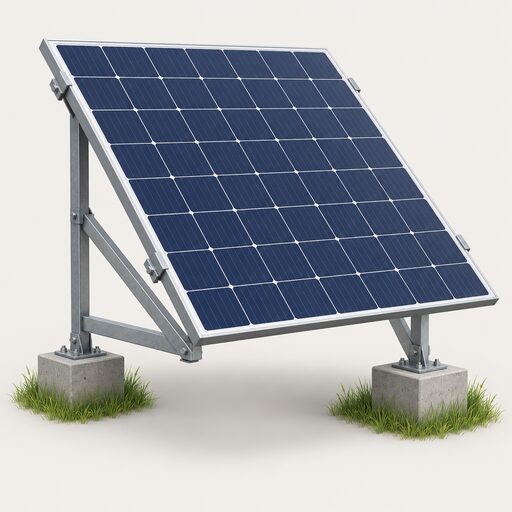 Ground-Mounted SolarGround-mounted solar panels sit on a frame in your garden instead of on your roof, which helps if your roof is shaded, small or facing the wrong way.
 Planning Permission ScotlandMost solar panels on Scottish homes go ahead without planning permission, but flats, conservation areas and listed buildings change that.
 Panels by Home TypeCan your house have solar panels, and how many will fit?