
In this guide
Solar panels on most homes in England do not need planning permission. The installation of solar panels is usually permitted development, meaning no planning application is required, provided the work complies with the criteria set out in the legislation1. The right sits in Part 14 (Renewable Energy) of the Town and Country Planning (General Permitted Development) (England) Order 2015, which is the principal order setting out classes of development for which planning permission is granted automatically, subject to stated conditions and exemptions2.
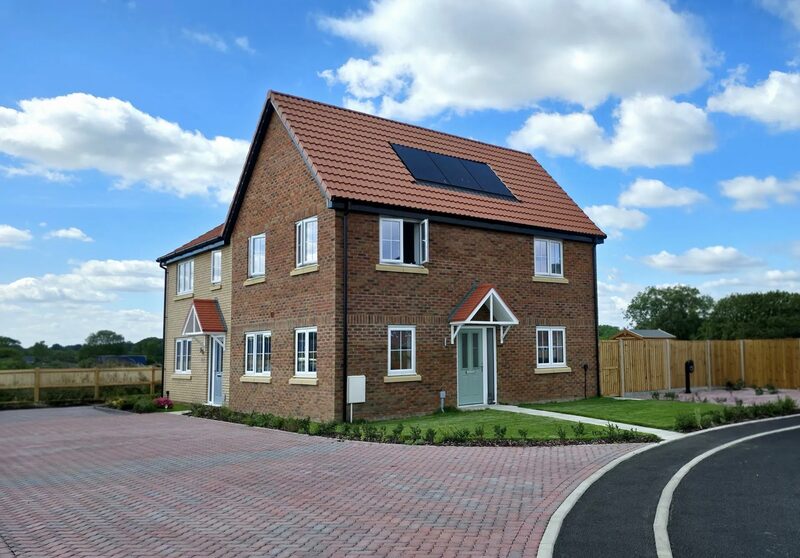
The exceptions matter more than the rule for a minority of homes. Planning permission is required for panels on flat roofs, for panels on listed buildings (which also need listed building consent), and for panels fitted to a wall facing a public road in a conservation area4. Where a local authority has issued an Article 4 direction, the permitted development right is removed for the property or area it covers, and an application becomes necessary7.
The practical effect is that the planning system is rarely the obstacle to a household putting panels on a pitched roof. It becomes the obstacle in specific places: conservation areas with wall-mounted arrays, listed buildings, flat roofs, and streets where a council has withdrawn the right. This page sets out the figures, the conditions, how the position differs across the four nations, and what the rules mean for a household's energy independence.
What the permitted development right covers
The domestic right is split into two classes. Class A covers the installation, alteration or replacement of solar equipment on domestic premises, and Class B covers stand-alone solar equipment within the grounds of a house or block of flats5. Both sit in Part 14 of the 2015 Order, which is the instrument that grants planning permission for the classes of development described as permitted development in Schedule 2, subject to the Order and to regulations 73 to 76 of the Conservation of Habitats and Species Regulations 20109.
The Order itself is England-only legislation, cited as 2015 No. 596, made on 18 March 2015, laid before Parliament on 24 March 2015 and coming into force on 15 April 20153. It replaced an earlier regime that had been amended repeatedly: the 2008 amendment order, made 10 March 2008, amended the 1995 Order, and a further amendment order was made on 30 August 2011 and laid before Parliament on 6 September 201111. The current version is the latest available revised text13.
For a householder, the significance is that the right is not a general permission to do as one likes with a roof. It is a conditional grant. Bristol City Council's guidance is explicit that if any of the listed points apply to an installation, an application for planning permission is needed14. The conditions are cumulative: meeting one does not excuse failing another.
The conditions that decide whether permission is needed
The central condition is siting. Panels must be sited, so far as is practicable, to minimise their effect on the external appearance of the building and on the amenity of the area14. That wording gives a householder latitude but also a test: an array placed where it is highly visible, when a less visible position would have worked, does not satisfy it.
Three further triggers appear consistently in council guidance. Planning permission is required for panels on flat roofs4. It is required for panels on listed buildings, which need both planning permission and listed building consent5. And it is required when panels are fitted to a wall facing a public road, defined in planning terms as a highway, which includes adopted roads but not footpaths, in a conservation area4.
For stand-alone equipment, the trigger is different. Wirral Council lists more than one stand-alone solar panel as a circumstance in which planning permission is required7. Ground-mounted arrays are therefore not covered in the way a single panel within the grounds would be.
| Circumstance | Permission needed? | Source |
|---|---|---|
| Pitched roof on a house or flat, sited to minimise visual effect | No, permitted development | 1 |
| Flat roof | Yes | 4 |
| Listed building | Yes, plus listed building consent | 5 |
| Wall fronting a highway in a conservation area | Yes | 6 |
| More than one stand-alone panel in the grounds | Yes | 7 |
| Property covered by an Article 4 direction | Yes | 7 |
Where Article 4 directions remove the right
A local planning authority is allowed to remove permitted development rights in some or all of its area by issuing what is called an Article 4 direction8. The mechanism is not specific to solar: it can remove specified rights related to operational development or change of use, with temporary or permanent effect, and where it applies, a particular development cannot be carried out under permitted development and therefore needs a planning application15.
Article 4 directions are made when the character of an area of acknowledged importance would be threatened, and they are most common in conservation areas2. They can apply to a single property or to a whole area17. Once confirmed, a direction can remain in place permanently, and an immediate direction must be confirmed by the local planning authority within six months of coming into effect to remain in force15. A direction cannot prevent development that has already been commenced or carried out, and it cannot be used to restrict changes between uses in the same use class15.
The coverage is patchy, which is why local checking matters. Wirral Council states that there is only one conservation area in Wirral to have an Article 4 Direction, Bromborough Pool7. Swindon's guidance names the Railway Village Area and the Bishopstone Conservation Area as places where Article 4 Directions apply, so planning permission is required to install solar panels18. In both cases the direction, not the conservation area designation itself, is what removes the right.
Your solicitor should have informed you of whether an Article 4 direction exists when you purchased your property, though the guidance notes that this is not always reliable and the local authority should be checked directly19.
Conservation areas, listed buildings and local consent orders
Conservation areas are frequently described as if they removed the right outright. They do not. Richmond Council states that in many cases, even in conservation areas, homes can have solar panels without requiring planning permission from the council under permitted development4. The specific exception is a wall fronting a highway: planning permission is required when installing solar panels or other equipment on a wall fronting a highway within a conservation area6. A roof array on a house in a conservation area, sited to minimise visual effect, can still fall within the right.
Listed buildings are different. Solar panels on listed buildings need planning permission and listed building consent5. Some authorities have used local listed building consent orders to pre-approve certain installations rather than require a case-by-case application. The Royal Borough of Kensington and Chelsea made an order in January 2022, under the Planning (Local Listed Building Consent Orders) (Procedure) Regulations 2014 and sections 26D to G and 28A and Schedule 2A of the Planning (Listed Buildings and Conservation Areas) Act 1990, consenting the installation of microgeneration solar PV panels and associated equipment on Grade II listed buildings20.
That consent is conditional. Details of the position, size, fixing, colour and finish of the solar PV array and associated equipment must be submitted to and approved in writing by the local planning authority before works commence20. A household in that borough therefore has a route to consent without a full application, but not a route to installing first and asking afterwards.
How the position differs across England, Scotland, Wales and Northern Ireland
The permitted development right described on this page is England-only. The Planning Portal states plainly that its guidance relates to the planning regime for England and that the policy in Wales may differ21. The 2015 Order is cited as the Town and Country Planning (General Permitted Development) (England) Order 2015, and its territorial extent is England3.
Wales has its own permitted development regime, and Welsh Government guidance on external walls notes that permitted development rights may have been removed by an Article 4 direction, with the same advice that a solicitor should have informed a buyer at purchase19. The Welsh position on solar specifically is set out on our Wales planning page.
Scotland's position has been the subject of its own consultation. The Scottish Government consulted in 2010/11 on permitted development rights for microgeneration equipment including air source heat pumps and solar panels, and in 2015 set out a preferred option of adopting some of the provisions from England, implemented through an amendment to the Town and Country Planning (General Permitted Development) (Scotland) Order 199223. Development falling within the criteria and thresholds established by those rights would not require planning permission but would remain required to gain non-planning consents such as a building warrant24. The full position is on our Scotland planning page.
Northern Ireland operates a separate system again, covered on our Northern Ireland planning page. For non-domestic solar in Scotland, the consultation noted that planning applications attract a fee of £202 for each 0.1 hectare of the site area, subject to a maximum of £2,01623.
| Nation | Regime | Key point |
|---|---|---|
| England | Town and Country Planning (General Permitted Development) (England) Order 2015 | Domestic solar usually permitted development1 |
| Wales | Devolved permitted development regime | Policy may differ from England; Article 4 directions apply21 |
| Scotland | Town and Country Planning (General Permitted Development) (Scotland) Order 1992, as proposed to be amended | Building warrant still required24 |
| Northern Ireland | Separate system | See linked page |
Building Regulations, grid registration and other consents
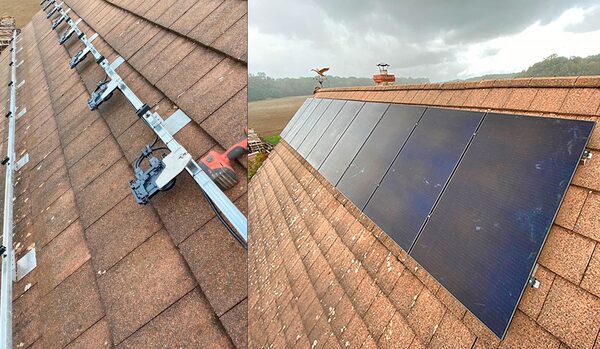
Planning permission is not the only consent that can apply. Installing solar panels may require approval under the Building Regulations, and York Council identifies two reasons: the additional loading on the roof structure and the associated electrical works25. That is a separate regime from planning, and a permitted development installation can still need building regulations approval.
There is also a grid notification. A household must register the installation with UK Power Networks, usually done by the installer26. This is not a planning matter, but it is a legal step in commissioning a system, and it sits alongside the planning position rather than replacing it. Our page on G98 and G99 grid connection covers the notification process.
Where a household wants certainty that an installation is lawful, a Lawful Development Certificate can be applied for, to prove an existing or proposed solar panel does not require planning permission and complies with the permitted development limitations and conditions4. This is a formal route to a written confirmation, useful at sale or where a neighbour disputes the position.
What the rules mean for household energy independence
The planning position is, for most English homes, permissive. Homes can often have solar panels without requiring planning permission, covered by permitted development so long as certain conditions apply5. The installation of solar panels and equipment on residential buildings may be permitted development with no need to apply to the local authority for planning permission27. That matters for energy independence because it removes a procedural barrier that would otherwise delay or deter a household from generating its own electricity.
What the right does not do is remove the dependencies that remain after installation. A grid-connected system still relies on the network to absorb export and to supply power when generation is low, and the registration with UK Power Networks is a condition of that connection26. The household still buys from a supplier for the balance of its demand. Planning permission, or its absence, changes none of that.
The direction of national policy is toward more rooftop solar, not less. The government has stated its intention of ensuring solar panels are fitted on new homes in England as standard28, and has reported record installation figures with a regional breakdown29. Clean power records have been reported as continuing to be broken6. None of this changes the rules a householder faces today, but it indicates that the permitted development route is likely to remain the default for domestic installations.
The limits are worth stating plainly. A household in a flat-roofed property, a listed building, a conservation area with a wall-mounted array, or a street covered by an Article 4 direction does not have the same easy route. For those homes, the planning system is a real gate, and the time and cost of an application sit alongside the cost of the system itself. The independence the technology offers is real, but it is conditional on a planning position that varies street by street.
Sources29 cited
- Planning permission: solar equipment mounted on a house or a block of flats or on a building, Planning Portal, 2026-09-17
- Permitted development rights, Planning Portal, 2026-09-17
- The Town and Country Planning (General Permitted Development) (England) Order 2015, legislation.gov.uk, 2026-09-17
- Solar panels and permitted development, Richmond Council, 2026-07-06
- Planning and solar, Frome Town Council, 2025-09-02
- Solar panels and planning permission, Cornwall Council, 2026-09-17
- Solar panels, Wirral Council, 2026-09-17
- Permitted development rights for householders: technical guidance, Ministry of Housing, Communities and Local Government, 2026-09-17
- The Town and Country Planning (General Permitted Development) (England) Order 2015 (PDF), legislation.gov.uk, 2015-03-18
- The Town and Country Planning (General Permitted Development) (England) Order 2015, legislation.gov.uk, 2026-09-17
- The Town and Country Planning (General Permitted Development) (Amendment) (England) Order 2008, legislation.gov.uk, 2008-03-10
- The Town and Country Planning (General Permitted Development) (Amendment) (England) Order 2011, legislation.gov.uk, 2011-08-30
- The Town and Country Planning (General Permitted Development) (England) Order 2015: latest available revised, legislation.gov.uk, 2026-09-17
- Planning permission for solar panels, Bristol City Council, 2026-09-17
- When is permission required, Ministry of Housing, Communities and Local Government, 2014-03-06
- Planning permission: flue, chimney or soil and vent pipe, Welsh Government, 2026-09-17
- Permitted development rights, Cornwall Council, 2026-09-17
- Solar Together, Swindon Borough Council, 2026-09-17
- Planning permission: external walls, Welsh Government, 2026-09-17
- Draft local listed building consent order, Royal Borough of Kensington and Chelsea, 2022-01
- Planning permission: stand-alone solar equipment, Planning Portal, 2026-09-17
- Planning frequently asked questions, London Borough of Hammersmith and Fulham, 2026-09-17
- Permitted development rights for non-domestic solar panels and domestic air source heat pumps, Scottish Government, 2015-06
- Permitted development rights for non-domestic solar panels and domestic air source heat pumps (PDF), Scottish Government, 2015-06
- Solar panels guidance, City of York Council, 2026-09-17
- Solar panels, London Borough of Hammersmith and Fulham, 2026-09-17
- Solar photovoltaic (PV) panels, London Borough of Bromley, 2026-09-17
- Britain continues to break clean power records, Department for Energy Security and Net Zero, 2026-05-28
- First regional solar breakdown as installations hit record highs, Department for Energy Security and Net Zero, 2026-09-17
 Planning Permission ScotlandMost solar panels on Scottish homes go ahead without planning permission, but flats, conservation areas and listed buildings change that.
 Planning Permission WalesDo you need planning permission for solar panels on your house in Wales?
 Permitted Development by HomeCan you put up solar panels or a heat pump without asking the council?
 Planning Permission NIDo you need planning permission for solar panels in Northern Ireland?
 Home Energy Planning ScotlandDo you need planning permission for solar panels or a heat pump in Scotland?
 Listed Buildings and AreasYour home is listed or sits in a conservation area, so do you need permission before adding solar panels, insulation or a heat pump?